


ベストを選ぶ ミートスライサー刃 は、お客様の具体的なニーズによって異なります。スライスしたい肉の種類や、処理する量を考慮してください。例えば、 カスタムブレード デリ肉用の刃や、冷凍食品用の波刃が必要な場合でも、, Nanjing Metal は、すべてのスライスがお客様の基準を満たすよう、高品質な選択肢を提供しています。適切な業務用ミートスライサー刃は、安全性を向上させるだけでなく、作業をより迅速かつ効率的にします。詳細情報やカスタムブレードのご要望については、Nanjing Metalに直接お問い合わせください。以下は、工業用ミートスライサー刃の現在のトレンド、その用途、および市場の洞察を示す表です。
| セグメント | サブカテゴリー | 市場の洞察 |
|---|---|---|
| スライサータイプ | 手動、自動、半自動 | 企業の間で自動スライサーの人気がますます高まっています。. |
| ブレードタイプ | 波刃(セレーション刃)、平刃(スムーズ刃)、冷凍肉用刃 | 各ブレードタイプは、食肉加工工場における特定のタスクに最適化されています。. |
| 用途 | 食肉加工、フードサービス、家庭用 | ほとんどのミートスライサー刃は、大規模な商業業務で使用されています。. |
| 市場規模(2024年) | 世界全体で1,254.62百万米ドル | より多くの企業が高度なスライスソリューションに投資するにつれ、需要が高まっています。. |
重要なポイント
- 食材に適したブレードタイプを選択してください。骨なし肉やチーズには平刃を使用します。冷凍肉や硬い肉には波刃を使用します。特殊な作業には専用刃を使用します。これにより、最適なスライスが可能になります。.
- ニーズに合ったブレード材質を選択してください。炭素鋼は切れ味が良く、硬い肉のカットに適しています。ステンレス鋼は洗浄が容易で、食品に対して安全です。硬化鋼は長寿命です。.
- 作業に合わせてブレードのサイズと機能を選択してください。スライスする量や肉の種類を考慮することで、作業を迅速化し、高い品質を維持できます。.
- スライサーは頻繁に清掃し、メンテナンスを行ってください。これにより、刃の切れ味が維持され、錆びを防ぐことができます。また、食品の安全性も保たれます。.
- Nanjing Metalのような信頼できるブランドのカスタムブレードをご検討ください。これにより、カット速度の向上、廃棄物の削減、工場の特殊なニーズへの対応が可能になります。.
ミートスライサー刃の概要
工業用ミートスライサー刃は、大規模な食品工場において重要です。これらの刃は、家庭や小さな厨房で使用されるものとは異なります。. 工業用ミートスライサー は、迅速かつ正確なスライスのために設計されています。多くの場合、自動ブレード動作やプログラム可能な設定を備えており、作業者の負担を軽減し、生産性を向上させます。.
ミートスライサー刃の種類
ミートスライサーを選ぶ際は、主なブレードタイプを理解しておく必要があります。
- 平刃(スムーズブレード):これらのブレードは、直線的で鋭い刃先を持っています。骨なし肉、調理済み食品、チーズのスライスに使用されます。平刃は、きれいで均一なスライスを作成します。薄く均一なスライスを求める場合に最適です。.
- 鋸歯状の刃:これらのブレードは、ギザギザの刃先(波刃)を持っています。硬い肉、冷凍食品、または硬い外皮のある食材に使用されます。波刃は、滑ることなく厚い食材や冷凍食材をしっかりと捉えてカットします。.
- 特殊ブレード:これらのブレードは、特殊な作業用に設計されています。調理済みの鶏肉、魚、あるいは包装資材などの非食品をカットするものもあります。特殊刃は、特定の作業に合わせて異なる形状やコーティングを施すことができます。.
ヒント:大規模な工場では、, 丸刃(円形刃)が一般的です 大量の肉を素早くスライスできるためです。直線刃や湾曲刃は、ダイスカットや皮むきなどの特殊な作業に使用されます。.
ほとんどの業務用ミートスライサー刃は、ステンレス鋼またはハイス鋼(高速度鋼)で作られています。これらの材質は、ブレードの強度と衛生状態を維持するために不可欠であり、食品工場において非常に重要です。.
一般的なブレードサイズ
工業用ミートスライサー刃は、さまざまな機械に対応するために多くのサイズが用意されています。最も一般的なサイズは以下の通りです。
- 10-inch (250 mm)
- 12-inch (300 mm)
- 14-inch (350 mm)
- 16-inch (400 mm)
大型のブレードは、より大きな肉のカットや作業の迅速化に役立ちます。小型のブレードは、精密なスライスやスペースが限られている場合に適しています。常に、作業内容とお使いのミートスライサーのタイプに合ったブレードサイズを選択してください。.
ポイント:自動機能やプログラム機能は、スライスの厚さを均一に保ち、労力を削減するのに役立ちます。そのため、工業用ミートスライサー刃は、耐久性、優れた切れ味、および衛生性を維持できるように設計されています。.
工業用ミートスライサー刃のブレード材質

Picking the right blade material is very important in big factories. Each material has its own good points for slicing different foods and following food safety rules. Here are the main choices you will see in the industry.
炭素鋼
Carbon steel blades are common in places that slice a lot of meat. Carbon steel gives a sharp edge that cuts red meats and frozen foods easily. This material is good if you change blades often and want to save money.
利点:
- Carbon steel blades stay sharp for a long time, so slicing is easy.
- They cut tough and frozen meats fast.
- You can sharpen these blades again, so they last longer.
検討する:
- Carbon steel blades can rust if you do not dry and clean them.
- You must clean them well to keep food safe.
Typical Uses:
- High-volume meat processing
- Slicing red meats and frozen foods
Tip: If you clean your meat slicer blade after every shift, it can last about 30% longer. Taking care of your blade helps it work better and last longer.
ステンレス鋼
Stainless steel is the best choice when you need to keep food safe. These blades are used in poultry and seafood plants, where cleaning happens a lot. Stainless steel blades do not rust, so they are great for wet places.
利点:
- Stainless steel blades do not rust, even in wet air.
- They are easy to clean, which helps keep food safe.
- These blades last longer in places with lots of water.
検討する:
- Stainless steel blades may wear out faster if you use them a lot.
- You might need to get new blades more often for hard or frozen foods.
Typical Uses:
- Poultry and seafood processing
- Places with strict cleaning rules
注記: Cleaning stainless steel with special chemicals makes it easier to remove sticky food. This helps you keep your meat slicer blade clean and working well.
硬化鋼
Hardened steel blades are best for tough jobs and long work hours. These blades are made stronger with heat, so they last longer and stay sharp. Use them when you need a blade for hard or frozen meats and do not want to change blades often.
利点:
- Hardened steel blades last a long time, even with hard work.
- They do not wear out fast and stay sharp for many hours.
- Special coatings can make these blades last up to 50% longer.
検討する:
- Hardened steel blades need a pro to sharpen them.
- You must follow a care plan to keep them working well.
Typical Uses:
- Long production lines
- Slicing hard or frozen meats
- Jobs where you cannot stop to change blades
Table: Performance Comparison of Blade Materials
| ブレード材質 | Average Blade Life (Cutting Hours) | Failure Rate Under Overload | Rust Formation Time (High Humidity) |
|---|---|---|---|
| ステンレス鋼 | 100–150 | 4× faster failure | > 48 hours |
| 高速度鋼(HSS) | 50–100 | 3× faster failure | 該当なし |
| Carbon Steel (High-Carbon) | 該当なし | 該当なし | Rust starts within 48 hours |
You should pick the blade material that fits your job. Use carbon steel for lots of red meat, stainless steel for places where food safety is most important, and hardened steel for long, tough jobs.
Remember: Cleaning, oiling, and checking your blade can help it last up to 30% longer. Special coatings and sharpening also help your blade work its best.
産業におけるミートスライサー刃の用途

Industrial meat slicer blades are very important in food factories. You see these blades in places that slice meat, cheese, and other foods. Each job needs a different blade type and material for the best results. Picking the right blade helps you work faster, stay safe, and make good products.
食肉加工
Meat slicer blades are used most in meat processing plants. These places handle lots of beef, pork, poultry, and frozen meats. The main blade types here are smooth and serrated. Smooth blades cut deli meats and boneless cuts into even slices. Serrated blades are better for tough or frozen meats because they grip and cut easily.
Blade material is very important in meat processing. Stainless steel and carbon steel are common choices. Stainless steel does not rust and is easy to clean, so it helps with hygiene. Carbon steel blades stay sharp longer and are good for slicing lots of meat. Good blades can help you waste up to 15% less meat. This saves money and helps you make more products. Keeping blades in good shape also helps stop food safety problems. Bad blade care can cause about 30% of food safety issues in the industry.
Tip: Always pick the blade type and material that matches the meat you slice. This helps you get the best cuts and quality.
Cheese and Other Food Products
Meat slicer blades are also used for cheese, vegetables, and other foods. Cheese factories often use smooth blades made from stainless steel or ceramic. These materials help you get even slices and keep blades clean. Some blades have a titanium coating to last longer and stay sharp.
People want very thin slices of cheese and deli foods. Thin and ultra-thin slicers are popular now. These blades can make slices as thin as 0.5 mm, which is good for sandwiches and ready-to-eat meals. The table below shows how slicing thickness and use affect the market:
| Slicing Thickness Category | 厚さ範囲 | 2023 Revenue Share | Growth Rate | 注記 |
|---|---|---|---|---|
| Ultra-Thin Slicers | 0.5ミリメートル | 該当なし | 6.2% CAGR | High demand for precise slicing |
| Thin Slicers | 0.5-1 mm | ~40% | 該当なし | Most popular for cheese and deli meat |
| Medium Slicers | 1-2 mm | 該当なし | 該当なし | Used for vegetables and fruits |
| Thick Slicers | >2 mm | 該当なし | 該当なし | For specialty and bulk products |
Cheese makes up over 32% of the food slicer market. Food factories are the biggest users, showing how important good slicing is. Automatic slicers and controls help you get the same thickness every time and waste less food. These tools make work faster and help you make better products.
Specialty Industrial Applications
Some factories use meat slicer blades for special jobs. They might use custom blades to cut packaging, portion seafood, or slice plant-based foods. Specialty blades can have different shapes or coatings for certain tasks. For example, a curved blade can skin fish, and a coated blade can cut sticky foods.
It is important to match the blade to your product and job. Special jobs often need very exact cuts and special blades. Using the right blade helps you keep quality high and meet what customers want. New technology, like smart sensors and laser markings, helps blades work better and last longer.
Note: Always check what your factory needs before picking a blade. The right blade helps you work faster, stop delays, and make the best products.
ミートスライサー刃の選び方

Picking the right meat slicer blade helps your factory work better. It also keeps workers safe and makes your food look good. You should think about a few things before you buy a blade. Follow these steps to get the best results for your business.
Matching Blade to Product
First, think about what food you want to slice. Different foods need different blades for the best results. Smooth blades are good for boneless meats and cheese. Serrated blades are better for frozen meats or foods with hard outsides. Specialty blades help with tricky foods like fish or sticky items.
You also need to think about how thick you want each slice. If you want thin, even slices for deli meats or cheese, pick a blade made for that job. For thick cuts or big batches, choose a blade that can handle it without losing quality.
Tip: Always use the right blade for your food. This helps you get the best slices and keeps your work easy.
Considering Production Volume
How much food you slice matters when picking a blade. Factories that slice a lot need blades that stay sharp and work well for a long time. The size of your machine and the type of meat also matter.
Here is a table to help you see which blade works for different jobs:
| Belt Width (mm) | Blade Diameter (mm) | Max Meat Thickness (cm) | Production Capacity (kg/hr) | Meat Type Impact |
|---|---|---|---|---|
| 200 | 150 | 4.5 | 200-250 | Lower density meat (e.g., chicken breast) |
| 600 | 350 | 12 | 1000-1100 | Higher density meat (e.g., beef) |
Bigger blades and wider belts help you slice more meat faster. If you cut beef or other tough meats, you can move more food each hour. You can also switch blade sets to change how thick you cut and work faster.
Tip: Check how much food you slice each day. Pick a blade that matches your needs so you can keep up and do a good job.
メンテナンスと清掃
Taking care of your meat slicer keeps it safe and working well. You need to clean it often so food does not build up and make people sick. Good care also helps your blade last longer and cut better.
Follow these steps to keep your slicer in good shape:
- Clean and sanitize the blade every 4 hours if you use it all day. This stops food from sticking and keeps the blade safe.
- Clean the whole machine at the end of each day. Take it apart, wash all the pieces, and put it back together after drying.
- Check the blade after cleaning for any damage or loose parts. This helps you find problems early and stop accidents.
- When cleaning, unplug the machine, take out food bits, wipe with sanitizer, rinse, and let it air-dry.
- For deep cleaning, take the slicer apart, wash with cleaner, scrub hard spots, rinse, and dry before putting it back together.
Note: Cleaning your slicer often stops rust, germs, and sickness. It also keeps your blade sharp and safe to use.
Budget and Longevity
You want a blade that lasts a long time and does not cost too much to keep. Look for blades that are strong and do not rust easily. Chromium-plated carbon steel blades stay sharp and do not rust, so you do not need new ones as often. Some slicers have sharpeners built in, which helps your blade last longer and saves money.
Here are some tips to help you pick a good blade:
- Pick blades that are strong and easy to use. This means less time fixing them and less tired workers.
- Slicers that use less energy save you money and last longer.
- New features like smart alerts can tell you when to fix your slicer and help you avoid big repairs.
- Even if a blade costs more at first, you save money later by wasting less food and making better cuts.
- A good blade means better food, less waste, and faster work.
Tip: Spending more on a good blade saves you money over time. You get better cuts, need fewer new blades, and keep your team safe.
If you need a new blade, always follow the maker’s directions. This keeps your slicer working well and your workers safe.
カスタムミートスライサー刃

Benefits of カスタムブレード
Custom meat slicer blades help your factory work better. You can pick a blade that fits your needs. This makes your work faster and easier. When you use a blade made for your job, you waste less material. You also get better results. For example, if you change the blade tolerance from ±0.005mm to ±0.02mm, you can waste 35% less material. Your production time can also be 20% shorter. You save money because you do not need new blades as often. Custom blades help you follow safety and hygiene rules, which is very important in food factories.
| Tolerance (mm) | 材料廃棄物(%) | Production Cycle Time | Cost Increase (%) |
|---|---|---|---|
| ±0.01 | 5-10 | 遅い | +75 |
| ±0.02 | 2 | 20% shorter | 標準 |
| ±0.05 | <2 | 速い | より低い |
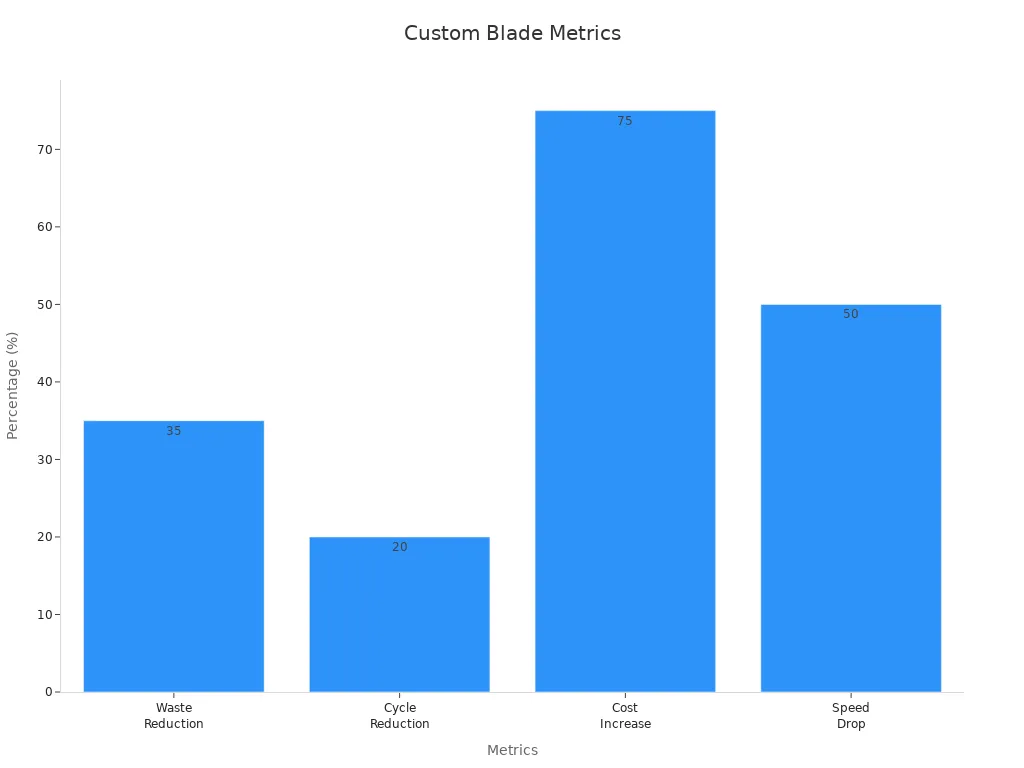
Custom blades help your factory run smoother. You throw away less scrap and spend less time fixing machines. These blades also help you keep up with new machines and new ways of working.
Nanjing Metal Custom Solutions
Nanjing Metal is a trusted company that makes custom industrial blades. They have been making blades for 20 years. Their team knows how to design blades for many jobs. Nanjing Metal uses strong materials and modern machines to make blades that fit your needs. Their custom blades last longer and cut faster. You will have less downtime at work.
| パフォーマンスメトリック | 標準ブレード | カスタムブレード | 改善 |
|---|---|---|---|
| 切断速度 | 100ユニット/時間 | 140ユニット/時間 | +40% |
| ブレードの寿命 | 1,000サイクル | 2,000サイクル | +100%(2倍長い) |
| メンテナンスダウンタイム | 月10時間 | 月5時間 | -50% |
Custom blades from Nanjing Metal are also better for the environment. You use fewer blades, so there is less waste and less CO2. Many customers say they waste 25% less and use 15% less energy. The company has ISO9001 quality checks and puts customers first. This makes them a good choice for reliable and efficient blades.
When to Choose Customization
Pick custom blades if your factory has specific needs. If you slice unique foods, need a certain thickness, or want to work faster, custom blades are best. Custom blades are also good if you must follow strict hygiene rules or want special coatings. As more factories use meat slicers, more people need blades that fit their machines.
Custom blades help you stop downtime, make better slices, and use new technology. Some factories saw 70% fewer blade changes each week after switching. Scrap rates also dropped by 66%. These changes show that custom blades help every part of your work.
Tip: Custom blades help you follow rules, save money, and keep your factory running well.
If you want to know more or need a custom blade, you can お問い合わせ 今日は南京Metalのセールスエンジニアです。
ミートスライサーを安全に使用する方法
Industrial meat slicers help you work faster, but safety is very important. You need to know how to use a meat slicer the right way. This keeps you and your team safe. Follow these steps to set up, use, and take care of your slicer for the best results.
インストールとセットアップ
Put your slicer on a flat, steady table. Make sure it does not move when you use it. Check that all safety parts, like blade guards and stop switches, are there. Before putting in the blade, wear cut-resistant gloves. Always follow the maker’s steps for putting in the blade. Tighten the blade well and make sure it spins easily. Plug in the slicer and test the safety switches. If your slicer has sensors or auto shut-off, check that they work before you start.
Tip: Always check all safety parts before turning on the slicer. This easy step can stop many accidents.
Operation Tips
Use both hands when you use the slicer. Keep your fingers away from the blade at all times. Set the thickness before you start slicing. Never reach over the blade. Use the food pusher or carriage to move meat to the blade. If you need to change the blade or clean the slicer, turn off the power and unplug it first. Regular care, like sharpening and oiling the blade, helps your slicer work well. Some slicers can clean and sharpen themselves, which saves time and helps you work more.
- Always make sure the blade is sharp. A dull blade can slip and hurt you.
- Clean the slicer after every use. This helps stop food from making people sick.
- Check safety parts like blade guards and switches before each shift.
Note: Cleaning and caring for your slicer lowers the chance of accidents and keeps it working well.
安全上の注意
You must follow strict safety rules when using industrial slicers. Wear safety gear, like gloves and aprons. Never skip safety parts. Training is very important for safe use. Studies show that using both written steps and live demos gives the best cleaning and safety results.
| Training Method | Cleaning Time | Hygiene (ATP-B) | Perceived Effectiveness |
|---|---|---|---|
| No Instruction | Fastest | Highest fail | Least effective |
| Written Instruction | もっとゆっくり | Lower pass rate | Often not followed |
| Demonstration | 改善された | Better hygiene | More effective |
| Written + Demonstration | 最高 | Best hygiene | Most effective |
If you use the blade wrong or do not clean it well, you can spread germs like Salmonella and Staphylococcus. Always clean your slicer every four hours and after each shift. Use the right cleaning products and follow all safety steps. If you want to sharpen a meat slicer blade, use the built-in sharpener or follow the maker’s guide.
Tip: Good training and regular cleaning keep your team and your food safe.
Picking the best slicing blade for your factory depends on what you slice, how much you make, and the quality you want. You need to choose a blade style and material that fits your product. Custom blades can help you work faster and reach your goals. If you want expert help or a custom blade, you can contact a Nanjing Metal sales engineer. Make your slicing better for the best results.
よくある質問
What is the best blade type for slicing frozen meat?
You should use a serrated or toothed blade for frozen meat. This type grips and cuts through hard surfaces easily. Serrated blades help you get clean slices without slipping.
How often should you replace industrial slicer blades?
You need to check your blade’s sharpness daily. Replace it when you see dull edges or uneven cuts. High-volume factories may need new blades every few weeks.
Can you use the same blade for meat and cheese?
You can use one blade for both, but you should clean it well between uses. For best results, use a smooth blade for cheese and boneless meats. This helps you get even slices.
Where can you get custom industrial slicer blades?
You can order custom blades from a trusted manufacturer like Nanjing Metal. This company has 20 years of experience making industrial machine blades for many industries.
How do you contact a sales engineer for more help?
You can contact a Nanjing Metal sales engineer for expert advice or to request a custom blade. They will help you choose the right solution for your needs.
参照
Microserrated Circular Meat Cutting Blade
How to Choose the Right Circular Slitter Blades for Long-Lasting Performance

 English
  Spanish
  Italian
  French
  Portuguese
  Russian
  German
  Arabic
  Hindi
Hindi  Vietnamese
  Indonesian
  Japanese
  Korean