

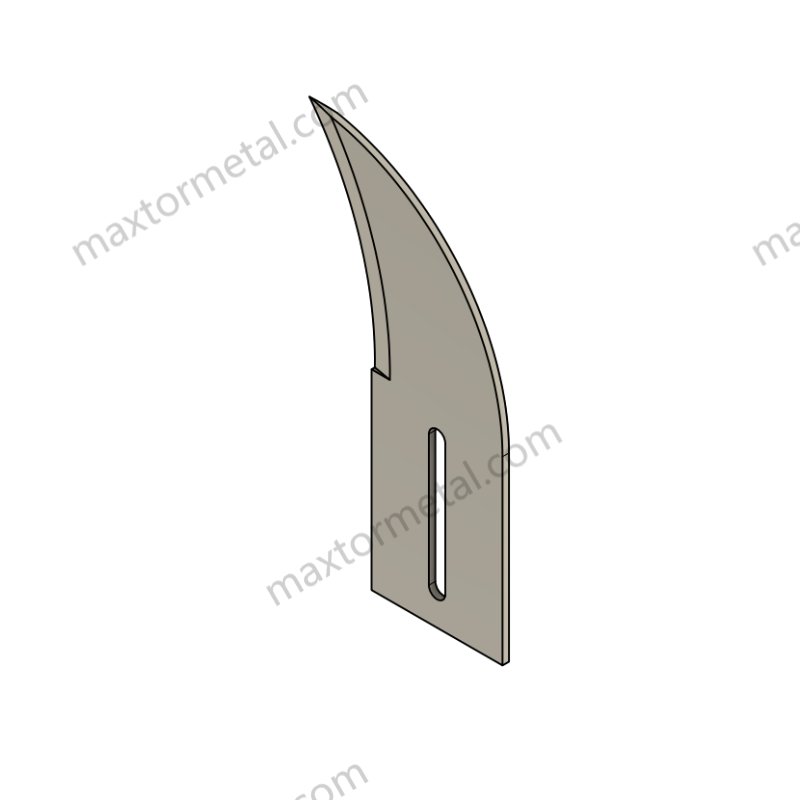
You want every カスタムブレード in your facility to be completely safe. Using food grade steel is essential for ensuring that food industrial blades are safe to come into contact with food. Food safety standards like NSF and FDA require stainless steel blades to have a smooth surface that is easy to clean and resistant to rust. Choosing the wrong materials can allow bacteria to hide or contaminate food. Selecting the right steel helps protect both your products and your customers.
重要なポイント
- Pick the right food grade steel type. The 200 series is good if you want to save money. The 300 series does not rust easily. The 400 series stays sharp and lasts longer.
- Use blades that have smooth and shiny surfaces. This stops bacteria from growing. It also makes cleaning much easier.
- Choose steels like 304 or 316 because they do not rust. These steels keep blades safe and clean. They also last a long time in wet or sour foods.
- Make sure blades follow FDA and NSF safety rules. Keep the right papers to protect your business and your customers.
- Take care of blades by cleaning them gently. Dry them fast and sharpen them often. This helps blades last longer and saves you money.
1. Food Grade Steel Types
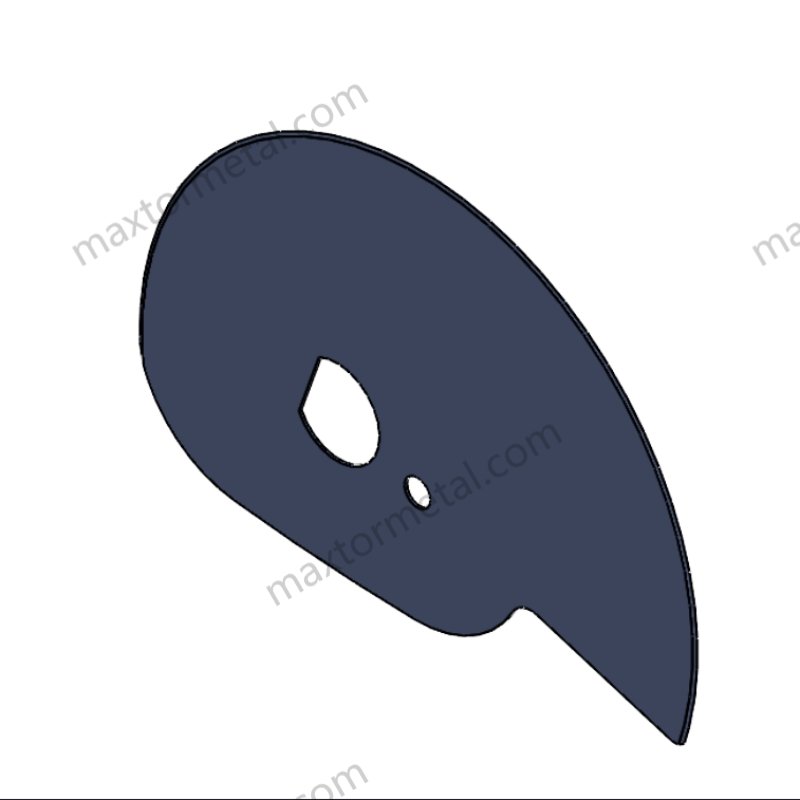
When picking a blade for food processing, you should know which food grade steel type fits your needs. Each stainless steel series has its own benefits for safety, cleanliness, and how well it works. Here are the most common types used in industrial blades.
SAE 200 Series
の 200 series stainless steels are a cheaper choice for food processing. These steels use manganese instead of some nickel. This makes them cost less, but they do not fight rust as well.
201ステンレス鋼
- 説明: 201 stainless steel fights rust and is tough. It costs less than other grades. But it does not last as long in rough places.
- アプリケーション: 201 is used in light-duty food processing blades and utensils. It is good when you want to save money and do not need the strongest blade.
202ステンレス鋼
- 説明: 202 stainless steel is like 201 but fights rust a bit better. It is still cheaper than higher grades.
- アプリケーション: 202 is used for parts that do not touch food much and for cheap blades. It is best where there is not much risk of rust.
ヒント: If you need a blade for simple food prep and want to spend less, the 200 series is a good pick. But remember, it may not last long in wet or sour places.
SAE 300 Series
The 300 series is the main choice for food grade steel. These grades have more nickel, so they fight rust and last longer.
304ステンレス鋼
- 説明: 304 stainless steel is the most used food grade steel. It does not rust or stain and can handle many cleaning chemicals. Its smooth surface is easy to clean and stops bacteria from growing.
- アプリケーション: 304 is used in many food processing blades, slicers, mixers, and storage tanks. It works well in most food places.
316ステンレス鋼
- 説明: 316 stainless steel has molybdenum, which helps it fight salty and sour things even better. This makes it great for hard food processing jobs.
- アプリケーション: 316 is best for blades that cut seafood, dairy, or sour foods. It can handle tough cleaning and salty or sour places.
注記: Both 304 and 316 stainless steels do not react with food. They keep your food’s taste, smell, and color the same.
SAE 400 Series
The 400 series is harder and keeps its edge longer. These steels are best when you need a sharp blade that lasts.
420ステンレス鋼
- 説明: 420 stainless steel has more carbon, so it is hard and stays sharp. It fights rust from food and water, but not as well as the 300 series.
- アプリケーション: 420 is used in cutting blades, knives, and tools that need to stay sharp. It is often picked for kitchen tools and heavy-duty food processing.
440ステンレス鋼
- 説明: 440 stainless steel is the hardest and most wear-resistant food grade steel. It still fights rust, but not as much as 304 or 316.
- アプリケーション: 440 is used for high-performance industrial blades and special cutting tools. It is best when you need a blade to stay sharp for a long time.
知っていましたか? The 400 series can be heat-treated to make it even stronger. This is why it is great for pro knives and cutting tools.
Comparison Table: Stainless Steel Series for Food Processing Blades
| SAE Series | Structure | 主な特性 | 代表的な用途 |
|---|---|---|---|
| 200シリーズ | オーステナイト系 | Cheaper, okay at fighting rust | Light-duty blades, utensils, budget food processing |
| 300シリーズ | オーステナイト系 | Great at fighting rust, easy to clean | General-purpose blades, slicers, mixing equipment |
| 400シリーズ | Martensitic/Ferritic | Very hard, keeps edge, okay at fighting rust | Cutting blades, knives, special tools |
Corrosion Resistance Comparison
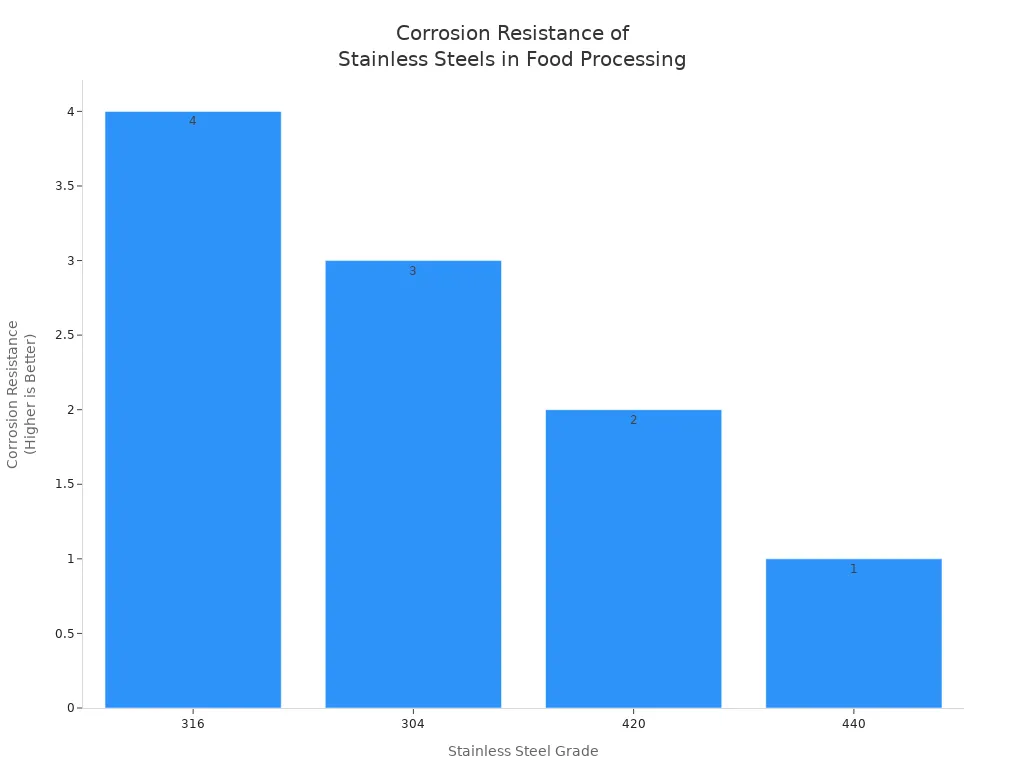
- 316 stainless steel is best at fighting rust, especially in salty or sour places.
- 304 stainless steel gives strong protection for most food processing.
- 420 and 440 stainless steels are very hard but do not fight rust as well.
Why Choose a Trusted Manufacturer?
When you pick a blade for food processing, you want it to be safe and reliable. Nanjing Metal, also called Maxtor Metal, is a trusted food blade maker. With 20 years of work, Nanjing Metal has a skilled team for design and making blades. The company makes custom industrial blades and is known for quality and safety.
ヒント: Always pick a maker with lots of experience in food grade steel blades. This helps make sure your blades meet strict rules for cleanliness and how well they work.
2. Contamination Prevention
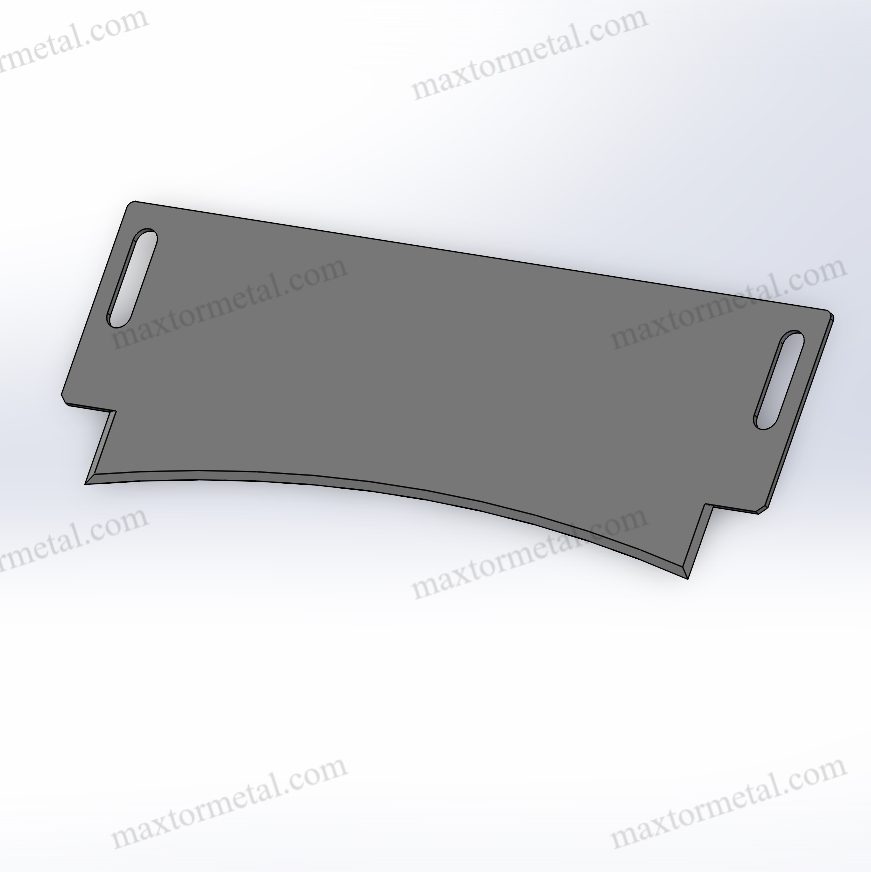
To keep food processing blades safe, you need the right material and finish. Germs can spread fast if they find places to hide on your tools. You should pick blades that stop germs from sticking and growing. 食品グレード鋼 helps stop contamination by using special surface treatments and safe, non-toxic materials.
Smooth Surface Finish
あ smooth blade surface helps keep bacteria away. Polished blades make it hard for germs and food bits to stick.
Surface Treatment Techniques
There are many ways to make a blade’s surface smooth and easy to clean:
- Mechanical polishing takes away scratches and grooves. This makes the blade flat.
- Electropolishing uses electricity to smooth out tiny bumps. It gives the blade a shiny, non-stick finish.
- Alloying with copper or silver can help fight bacteria.
- Laser irradiation, etching, and plasma treatments change the surface. These methods make it harder for bacteria to live there.
- Antimicrobial coatings like PTFE or titanium dioxide make a very smooth, water-repellent layer.
- Hydrophilic polymer coatings, such as polyethylene glycol, help keep bacteria and proteins away.
- Composite coatings, like nickel-graphene oxide, give both antibacterial and anti-corrosive benefits.
ヒント: Electropolishing is a top pick in the food industry. It makes blades easier to clean and helps them resist rust.
Impact on Bacterial Adhesion
A polished, non-porous blade gives germs fewer places to hide. Removing tiny cracks and rough spots keeps bacteria from settling in. This makes cleaning faster and better. Studies show smooth finishes lower the risk of germs because bacteria cannot stick or form biofilms. You also protect food from metal pieces and other dangers that come from rough or damaged blades.
Non-Toxic Composition
You also need to know what metals are in your blades. 食品グレード鋼 uses a special mix of metals to keep food safe.
Food Grade vs. Regular Steel Composition
食品グレード鋼 has lots of chromium and nickel. These make a layer that stops rust and keeps germs away. Regular steel may have more bad metals or impurities. These can get into food, especially with sour or salty foods. Groups like the FDA and NSF have strict rules for what metals can be used in food tools. They say food contact materials cannot have too much of any dangerous metal.
Examples of Restricted Elements
これは、 toxic elements are not allowed で 食品グレード鋼:
| 材質タイプ | Toxic Elements Restricted | Relevant Regulations and Standards |
|---|---|---|
| ステンレス鋼 | Lead, Cadmium, Mercury, Arsenic | FDA CPG 7117.05, NSF/ANSI 51-2012 |
| Steel, Cast Iron, Plating | Lead, Cadmium, Mercury, Arsenic (dissolution limits) | CMAFDA CPG 7117.05 (AOAC 973.32) |
The FDA and NSF use sensitive tests to check for these metals. They make sure blades do not let harmful substances get into food.
選択する 食品グレード鋼 helps you follow these safety rules. You lower the risk of foodborne illness and keep customers safe from toxic metals. The right steel also keeps blades strong and easy to clean.
3. Corrosion Resistance
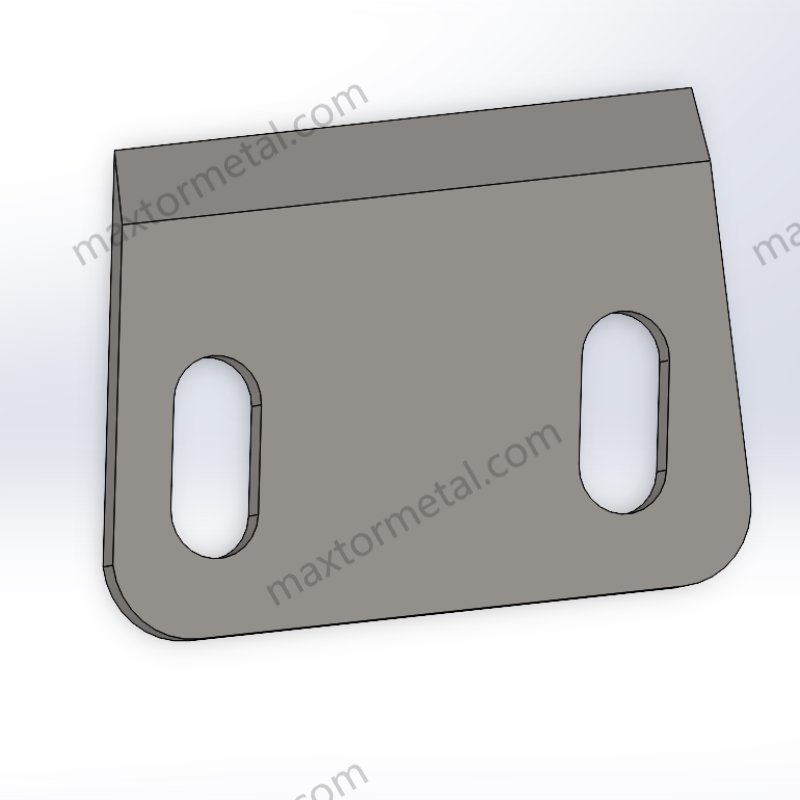
Corrosion resistance is very important in food processing. Blades are always around water, acids, cleaners, and salty foods. These tough things can cause rust and damage if you use the wrong steel. Picking the right steel keeps your tools safe, clean, and lasting longer.
Importance in Food Processing
Food Safety and Hygiene
Corrosion makes blades rough and rusty. These spots can trap food and germs. Cleaning gets harder when blades are damaged. Rust can get into your food and change how it tastes or looks. Using corrosion-resistant blades keeps food safe from these problems. Stainless steel has a 酸化クロム層 that protects it. This layer fixes itself if scratched. It keeps the blade smooth and stops germs from hiding. Your blades do not react with food, so food stays fresh and safe.
- Corrosion resistance keeps your tools strong and clean.
- Smooth blades are easier to wash and sanitize.
- You follow food safety rules because blades do not add bad stuff to food.
ヒント: Check your cleaning steps. Do not use rough scrubbers or hot chlorine cleaners. These can hurt the blade’s protective layer.
Blade Longevity and Cost Efficiency
Rust and corrosion make blades wear out faster. When a blade rusts, you need to buy a new one sooner. This costs more money and time. Corrosion-resistant blades last longer, so you save money. They also stay sharp, so you do not sharpen them as much.
- Stainless steel blades do not rust in wet or sour places.
- You buy fewer new blades each year.
- Longer blade life means you spend less on fixing or replacing them.
Maintenance and Downtime Reduction
When you fix or change a blade, work stops. Corrosion-resistant blades help you avoid these stops. You spend less time fixing and more time working. Cleaning and storing blades right makes them last even longer.
- Buy good, corrosion-resistant blades to need less fixing.
- Make a plan to check blades often and catch problems early.
- Store blades the right way to stop surprise breaks.
注記: Corrosion-resistant blades help you keep working and avoid losing time.
Resistant Grades
You can pick from many corrosion-resistant blades. Each type is good for different jobs.
304ステンレス鋼
304 stainless steel is the most used for food blades. It has at least 18% chromium and 8% nickel. This mix helps it fight many acids and cleaners. You can use 304 blades for cutting, mixing, and general food work. The smooth surface is easy to clean and stops germs from sticking.
316ステンレス鋼
316 stainless steel is even better at fighting rust. It has molybdenum, which helps against salty and harsh chemicals. If you cut salty or sour foods, 316 is best. It handles tough cleaning and keeps blades in good shape.
420ステンレス鋼
420 stainless steel is hard and fights rust well. You see it in sharp tools that get cleaned a lot. It does not fight rust as well as the 300 series, but it works for knives and blades that need to stay sharp.
440ステンレス鋼
440 stainless steel is the hardest and wears down the slowest. It still fights rust, so it is good for special and tough blades. If you need a blade to stay sharp for a long time, 440 is a great pick.
| 学年 | 主な特徴 | 最適なユースケース |
|---|---|---|
| 304 | Excellent corrosion resistance, easy to clean | General food processing, slicers, mixers |
| 316 | Superior resistance to chlorides and acids | Seafood, dairy, acidic food processing |
| 420 | Good hardness, moderate corrosion resistance | 切削工具、ナイフ |
| 440 | 最高の硬度、優れた耐食性 | 高性能な特殊ブレード |
知っていましたか? 電解研磨と化学的不動態化処理を施すことで、刃の防錆性能をさらに向上させることができます。これらの処理により、酸化クロム層が固定され、清掃が容易になります。
4. Regulatory Standards
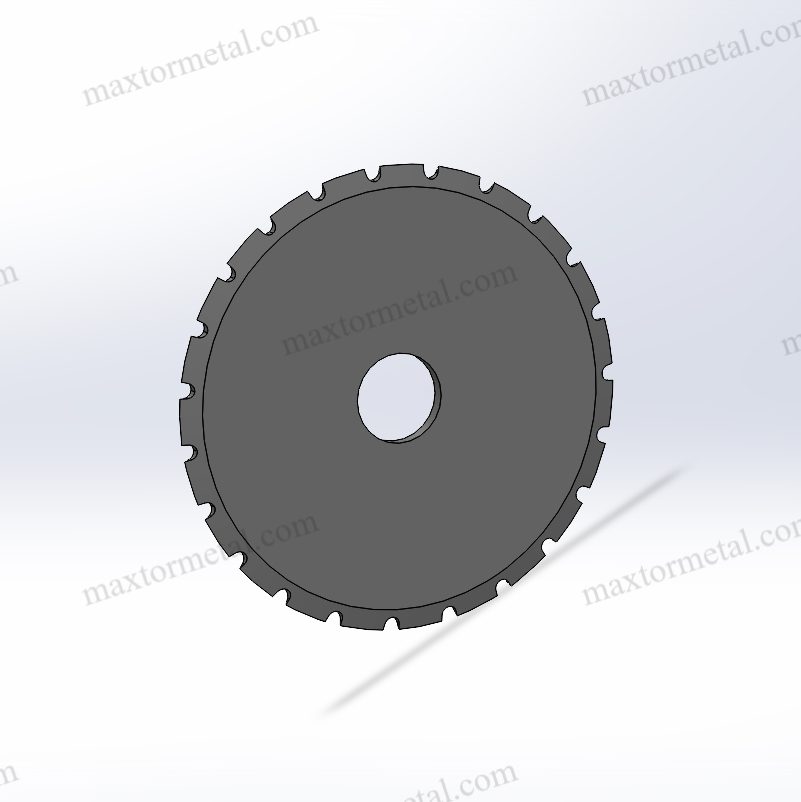
食品加工用の刃物を選ぶ際には、安全規則を遵守しなければなりません。これらの規則は、顧客と事業の安全を守るために不可欠です。ステンレス鋼製の刃物など、食品に接触する材料は、国内外の基準を満たしている必要があります。これらの規則を遵守しない場合、罰金を科せられたり、事業を失ったりする可能性があります。
FDAおよびNSF準拠
FDA食品接触材料規制
米国食品医薬品局(FDA)は、食品に接触する材料に関する規則を定めています。304、316、430などの承認されたステンレス鋼を使用しなければなりません。FDAによると、食品接触面は滑らかで清掃しやすいものでなければなりません。細菌が潜むようなひび割れがあってはなりません。
食品接触材料に関するFDAの主な規則をまとめた表を以下に示します。
| FDA規制(21 CFRパート) | 食品接触材料への適用範囲と関連性 |
|---|---|
| パート1 | 食品の保管、製造、包装、または輸送に使用される材料における食品接触物質に関する一般規則。 |
| 第174部 | 間接的な食品添加物に関する規則および食品接触材料の制限値。 |
| 第186部 | 一般的に安全と認められている物質(GRAS)を一覧表示します。 |
| 第170部 | 食品に接触する材料における食品添加物に関する規則。 |
| 第171部 | 食品添加物の承認を申請する方法。 |
| 第180部 | 食品添加物は短期間のみ使用が許可される。 |
| 第181部 | 1958年以前に承認された食品原料。 |
規則に従うには、以下のいずれかのことを少なくとも1つ行う必要があります。
- 連邦規則集(CFR)第21編に記載されている材料を使用してください。
- GRASステータスの材料を選択してください
- 事前承認書のある材料を使用してください
- 規制基準(TOR)免除を取得する
- 食品接触物質届出書(FCN)を提出してください。
供給業者に保証書を請求してください。この保証書には、刃が食品接触に関するFDAの基準を満たしていることが示されています。
NSF/ANSI規格51認証
NSF/ANSI規格51は、業務用食品機器に使用される材料に関する規則を定めている。刃は以下のテストに合格する必要があります。
- お手入れ簡単
- 錆びにくい
- 破損に強い
- 引っ掻きに強い
- 耐熱性
- コーティングは剥がれない
NSF/ANSI 51規格は、ステンレス鋼、アルミニウム、銅、ガラス、木材など、多くの材料を対象としています。この認証では、申請から年次工場検査まで、あらゆる段階がチェックされます。すべての試験に合格した材料のみが、食品接触に安全とみなされます。
ヒント: NSF/ANSI 51認証は、刃が食品に使用できる安全性を備えていることを示しています。これは、水のみを対象とするNSF/ANSI/CAN 61とは異なります。
文書化およびトレーサビリティに関する要件
刃物がすべての規則に従っていることを示す記録を保管する必要があります。これらの記録には以下が含まれます。
- 検査結果
- 適合証明書
- サプライヤーからの保証書
- 各バッチのトレーサビリティペーパー
これらの書類を提示できない場合、罰金が科せられたり、製品の回収を命じられたりする可能性があります。適切な記録管理は、あなたのビジネスと顧客を守るために不可欠です。
国際規格
EU食品接触材料規則(EC 1935/2004)
ヨーロッパで刃物を販売する場合は、以下の規則に従う必要があります。 規則(EC)No 1935/2004この規則では、食品接触材料は食品を変化させたり、安全性を損なうものであってはならないと規定しています。適切な製造工程を遵守し、完全なトレーサビリティを確保する必要があります。この規則に従わない場合、製品は販売禁止または回収される可能性があります。
| 結果の種類 | 総コストに占める推定割合(%) |
|---|---|
| 事業の中断 | 33 |
| 収益損失 | 26 |
| 生産性損失 | 24 |
| 評判の低下 | 10-15 |
| その他 | 2-7 |
規則を守らないと、取引上の問題や健康上のリスクが生じる可能性があります。金銭的な損失も非常に大きくなる可能性があります。
ISO 22000 食品安全マネジメントシステム
ISO 22000は、食品安全に関する国際的な規格です。この規格は、食品安全システムを構築するために用いられます。この規格は、リスクを管理し、刃物が食品に安全であることを証明するのに役立ちます。多くの購入者は、購入前にISO 22000認証を求めています。
その他の地域認証(例:中国のGB 4806)
他国にはそれぞれ独自の規則があります。例えば、中国では食品接触材料にGB 4806規格が用いられています。刃物を販売する国ごとに、その国の規則を確認する必要があります。現地の規則を遵守することで、リコールや貿易上の問題を回避できます。
グローバルなトレーサビリティとコンプライアンス文書
原材料から完成品まで、すべての刃物を追跡する必要があります。適切な追跡は、問題を迅速に発見し解決するのに役立ちます。以下の点に注意してください。
- バッチ番号
- サプライヤー証明書
- テストレポート
- 出荷記録
製品の追跡ができない場合、リコールが発生したり、売上が失われたり、企業の評判が損なわれたりする可能性があります。
5. Easy Maintenance
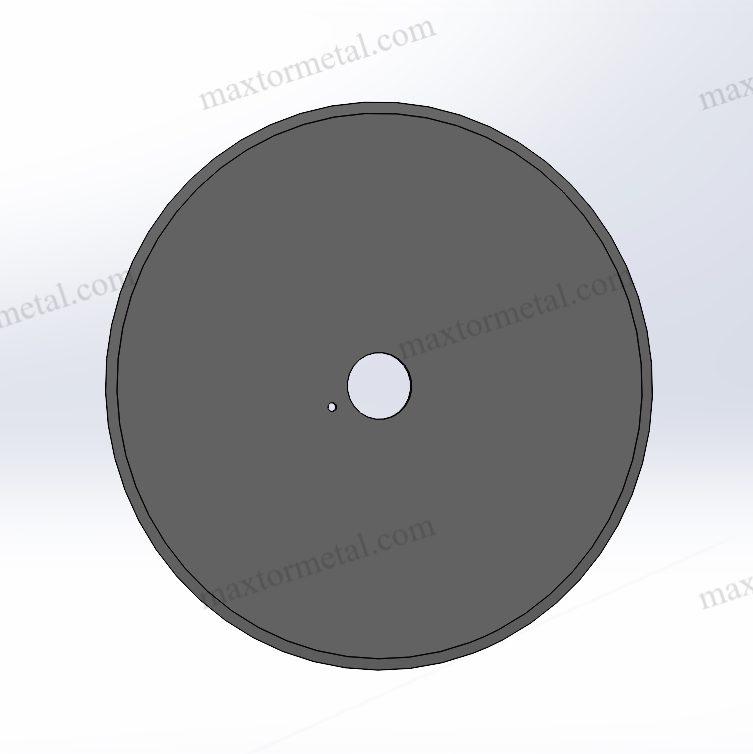
刃を清潔に保ち、正常に機能させることは重要です。これは食品の安全性を確保し、作業を円滑に進めるために不可欠です。食品加工においては、洗浄しやすく、汚れにくく、長持ちする道具が必要です。 食品グレード鋼 刃の手入れは簡単で確実です。
清掃と衛生
滑らかで非多孔質の表面
食べ物や雑菌が付着しない刃が欲しいですよね。 食品グレード鋼 表面が滑らかで汚れが染み込みにくいため、細菌や汚れが隠れる心配がありません。お手入れも簡単で、細菌の拡散リスクを低減できます。電解研磨などの光沢のある仕上げは、お手入れをさらに容易にします。汚れを拭き取り、刃をきれいにするのも簡単です。
汚れや臭いに対する耐性
ステンレス鋼は汚れがつきにくく、嫌な臭いも残りません。刃に食品の臭いや色が残る心配もありません。そのため、使うたびに道具を清潔で安全な状態に保つことができます。また、表面が滑らかなので、強力な洗剤を使っても刃を傷つけたり、臭いが残ったりすることはありません。
一般的な清掃方法
刃を清潔で安全に保つための手順は以下のとおりです。
- 刃に付着した食べかすを取り除くため、刃をすすいでください。
- 洗う 脂肪とタンパク質を除去するための特別な石鹸.
- 石鹸の残りカスを洗い流すために、もう一度すすいでください。
- 安全な化学薬品または熱湯(約77℃で30秒間)で消毒してください。
ヒント: 必ず安全な洗剤を使用し、刃を傷つける可能性のある刺激の強い化学薬品は使用しないでください。4番研磨仕上げのような滑らかな表面仕上げは、より速く、より効果的に洗浄するのに役立ちます。
衛生管理のためのダウンタイムを削減
お手入れが簡単な刃は時間を節約します。すぐに作業に戻ることができます。滑らかな表面はゴシゴシこする必要がありません。つまり、作業量が減り、生産ラインの稼働が滞りません。
使用時の耐久性
耐腐食性および耐摩耗性
食品グレード鋼 水、酸、洗剤にも強く、錆びたり穴が開いたりする心配もありません。そのため、刃の切れ味と安全性を長く保つことができます。また、日常的な使用や洗浄による摩耗も起こりにくい素材です。
ブレード寿命の延長
丈夫な刃は長持ちし、費用を節約できます。頻繁に新しい刃を購入する必要がなくなるからです。良質な刃を使用する工場は、稼働停止時間が短くなり、コストも削減できます。
| ブレード管理戦略 | ブレード1枚あたりのコスト | 年間コスト(替刃300枚分) | 年間節約額 |
|---|---|---|---|
| ニューブレード | $300 | $90,000 | 該当なし |
| 再研磨 | $120 | $36,000 | $54,000 |
刃を研ぎ、手入れをすることで、刃の寿命を2~3倍延ばすことができます。これにより無駄が減り、作業効率も向上します。
交換頻度の低下
使用する際 食品グレード鋼 刃は交換頻度が少なくて済みます。つまり、新しい刃に費やす費用が節約できます。修理のために作業を中断する必要も少なくなります。刃は毎回切れ味抜群です。
メンテナンスのベストプラクティス
以下のことを行えば、刃物を鋭く安全に保つことができます。
- ガラスやスチールではなく、木製またはプラスチック製の板を使用してください。
- 優しく切って、刃に仕事を任せましょう。
- 刃先で食材をこすらないでください。刃の裏側を使ってください。
- 刃はぬるま湯と中性洗剤で手洗いしてください。水に浸けたり、食器洗い機を使用したりしないでください。
- 錆びを防ぐため、洗浄後はすぐに刃を乾かしてください。
- 替刃は、ブロック、ストリップ、またはケースに入れて保管してください。
- 刃物は、研ぎ棒や砥石を使ってこまめに研ぎましょう。
- 刃に損傷や錆がないか確認してください。
- メーカーの推奨するお手入れ方法と交換方法に従ってください。
注記: 刃物を正しく洗浄・保管することで、錆び、曲がり、切れ味の低下といった損傷を防ぐことができます。
食品加工においてより安全な刃を選ぶための基本を学びました。以下の5つの重要なポイントを覚えておいてください。
- 精密な切断は、製品の品質維持に役立ちます。
- 耐腐食性により、錆びや食品中の酸による損傷を防ぎます。
- メンテナンスが簡単なので、掃除が楽になり、時間も節約できます。
- 丈夫で硬い刃は、頻繁に使用しても長持ちします。
- カスタマイズすることで、作業効率が向上し、ニーズに合った作業が可能になります。
食品グレードの認証済み鋼材を選ぶことで、安全性が確保され、規則も遵守されます。専門家のサポートが必要な場合は、 Nanjing Metal20年の経験を持つ、有名な食品用刃物メーカーです。特注の刃物が欲しいですか? お問い合わせ 今日の彼らのセールスエンジニアたち。
よくある質問
食品グレードの鋼材は、通常の鋼材と何が違うのでしょうか?
食品グレードのステンレス鋼は、特殊な金属混合物を使用しています。錆びにくく、有害物質が食品に混入するのを防ぎます。お手入れも簡単で、食品の安全性を保ちます。
食品加工に使用できる安全な刃物かどうかは、どうすればわかりますか?
FDAやNSFなどの認証マークを探してください。これらの認証マークは、刃が厳格な安全基準を満たしていることを示しています。また、供給業者に試験結果や保証書を請求することもできます。
肉と野菜を切るのに同じ刃を使っても大丈夫ですか?
肉用と野菜用にはそれぞれ別の刃を使うべきです。こうすることで、細菌の拡散を防ぐことができます。柄の色分けやラベルを付けておくと、刃を簡単に区別できます。
参照
食品加工における高品質精密工業用ブレードとナイフの重要な役割:効率と安全性を高める秘訣
食品包装におけるイノベーション:産業用ナイフとブレードの応用:食品の安全性と効率性を高める鍵
食品安全の確保:工業用食品加工における食品グレードステンレス鋼ブレードの重要な役割
より鋭く、より賢く、より安全に:食品加工ブレード産業におけるイノベーションの推進

 English
  Spanish
  Italian
  French
  Portuguese
  Russian
  German
  Arabic
  Hindi
Hindi  Vietnamese
  Indonesian
  Japanese
  Korean