

適切な工業用切断刃の選択が重要である理由
工業用切断刃は製造業において不可欠な工具であり、材料を精密かつ効率的に成形します。適切な刃を選択することで、生産の合理化、廃棄物の削減、そして製品品質の向上が可能になります。.
レポート グランドビューリサーチ は、世界の切削工具市場が2023年からCAGR 5.1%で成長し、2030年までに$424億ドルに達すると予測しています。この成長は、高まる生産需要に対応するために、高度な切断刃への依存度がますます高まっていることを浮き彫りにしています。.
本ガイドでは、刃の種類、選定における重要要素、メンテナンスのヒント、およびサプライヤーの推奨事項について深く掘り下げて解説します。適切な切断刃がどのように業務を改善し、収益性を向上させるか、ぜひご一読ください。.
工業用切断刃の種類
工業用切断刃にはさまざまな設計があり、それぞれ特定の用途に合わせて調整されています。最適な選択を行うためには、これらの種類を理解することが極めて重要です。.
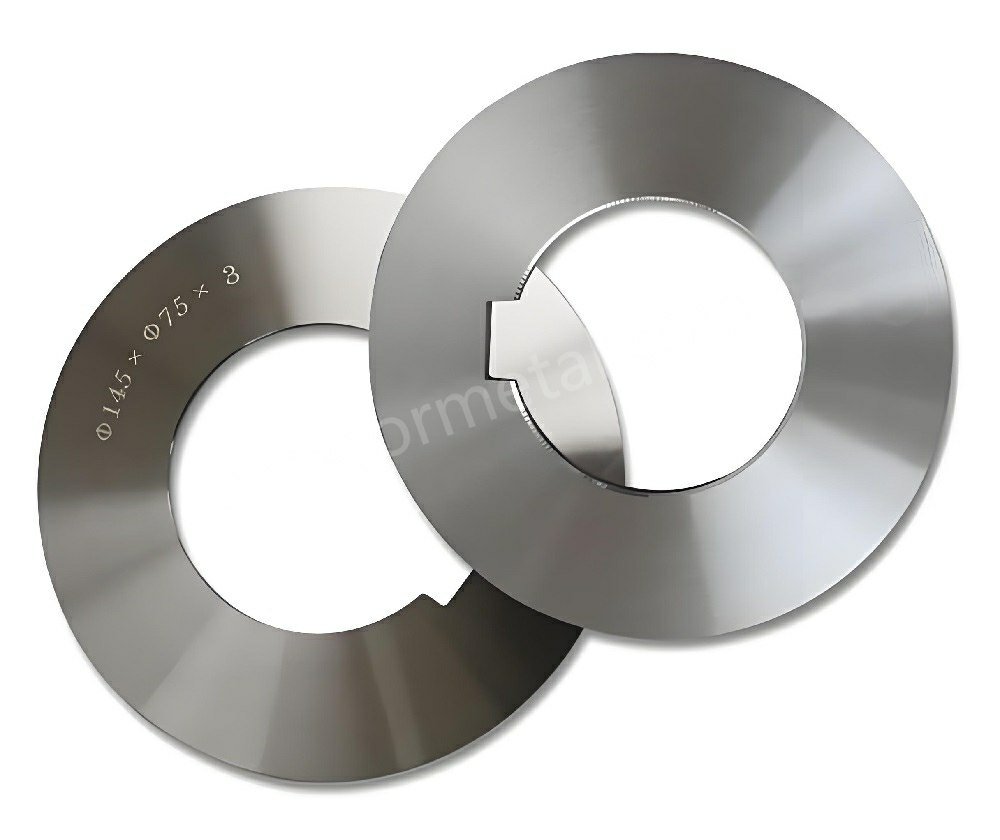
2.1 円形ブレード
- 用途: これらの刃は、金属板、木製パネル、複合材料の切断に最適です。.
- 利点: 丸刃は、高い切断速度、安定した精度、そして長寿命が特徴です。.
- 技術的特徴:
- 材料: ハイス鋼(HSS)または超硬合金で作られることが多い。.
- エッジジオメトリ: さまざまな切断ニーズに対応するため、平刃や鋸歯状の刃先があります。.
- 使用データ: Cutting Edge Technologyによる研究では、鉄鋼加工工場において丸刃の使用により切断速度が25%向上しました。.
2.2 ソーブレード(鋸刃)
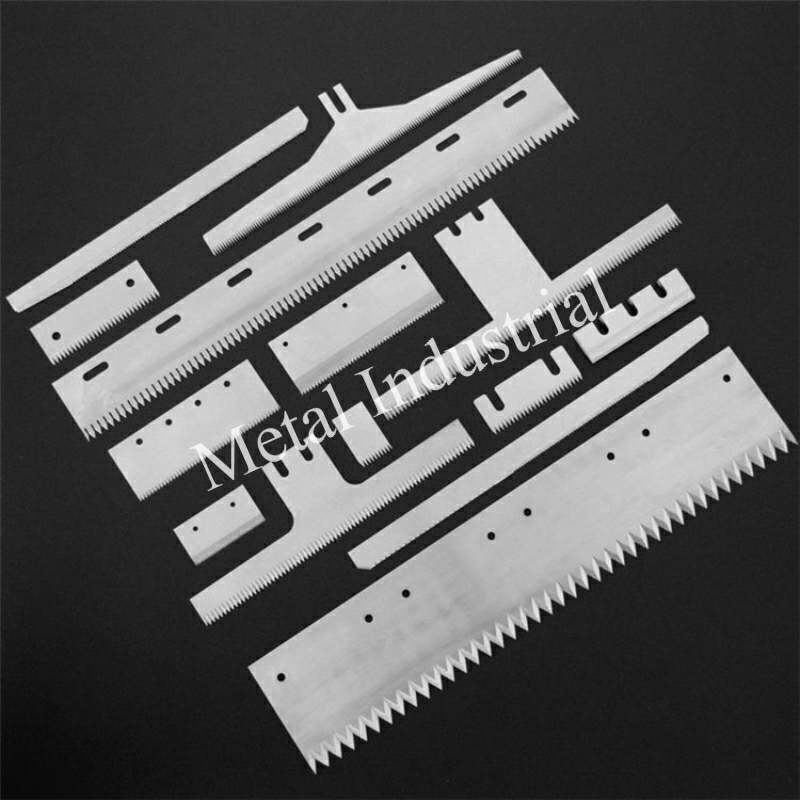
- 用途: バンドソー(帯鋸)刃は、金属、プラスチック、木材の精密切断に優れています。.
- 利点: 薄型の形状により、材料を無駄にすることなく、細かく複雑な切断が可能です。.
- 技術的特徴:
- 刃先パターン: バリアブルピッチ(不等ピッチ)の刃先により汎用性が向上し、切断時の振動が低減します。.
- 材料: 耐久性を高めるため、バイメタルまたは超硬チップ付き鋼で作られています。.
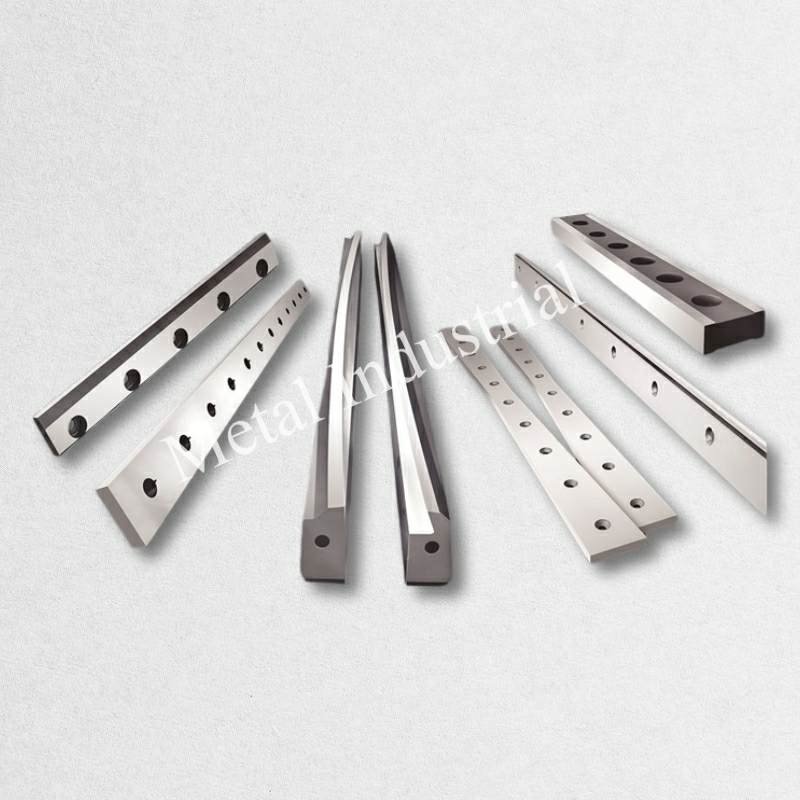
2.3 シャーブレード
- 用途: 厚手の金属板や高負荷材料の切断に使用されます。.
- 利点: これらの刃は耐久性が非常に高く、極度の応力に耐えることができます。.
- 技術的特徴:
- 素材構成: 高硬度の合金鋼で作られることが多い。.
- 耐久性に関する知見: 金属加工工場におけるシャー刃は、熱処理を施すことで、標準的な刃よりも通常15%長持ちします。.
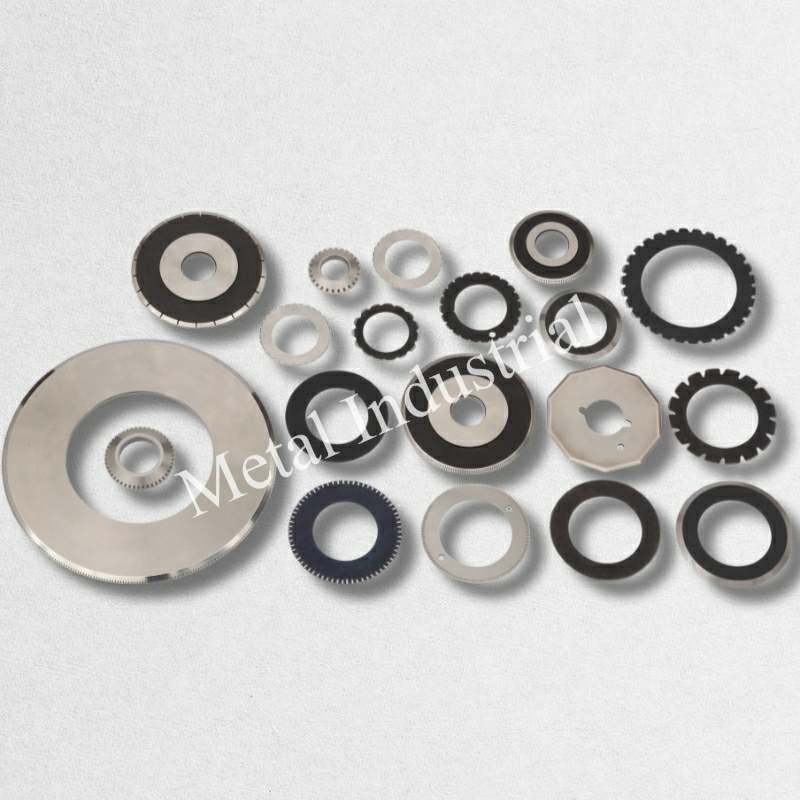
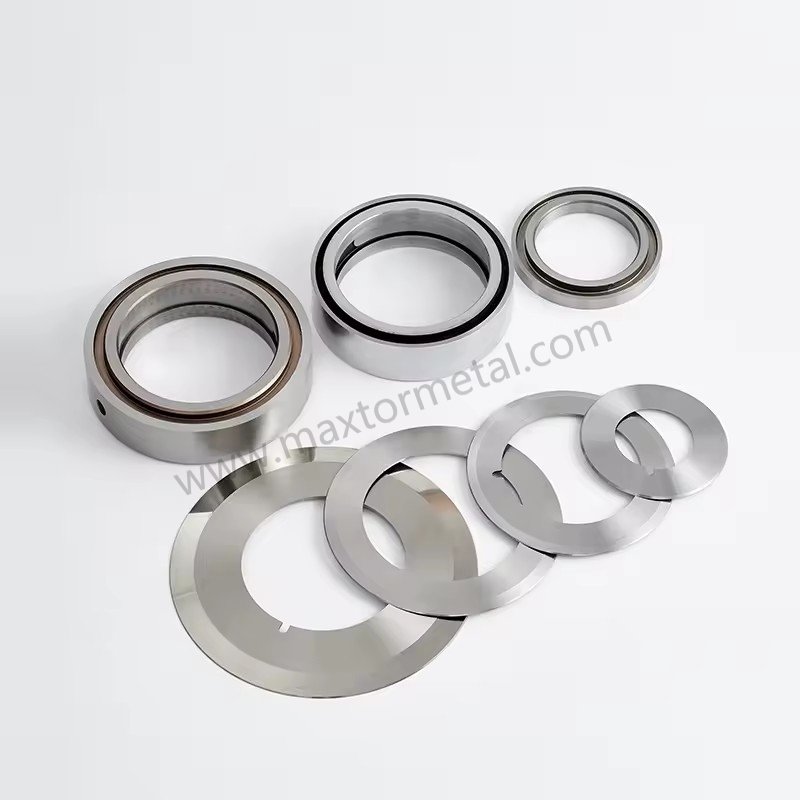
2.4 スリッターブレード
- 用途: 紙、フィルム、箔業界における高速操業に不可欠です。.
- 利点: スリッター刃は、クリーンで精密な切断を実現し、材料のロスを最小限に抑えます。.
- 技術的特徴:
- カスタマイズ: さまざまな外径や切断角度に合わせてカスタマイズ可能です。.
- データインサイト: Packaging World誌によると、包装ラインにおいてカスタムスリッター刃を導入したことで、効率が18%向上しました。.
| ブレードタイプ | アプリケーション | 材料 | 主なメリット |
| 円形ブレード | 金属、木材、複合材料 | HSS、超硬合金 | 高速、長寿命 |
| バンドソーブレード | 精密切断 | バイメタル、超硬チップ付き | 多用途、材料ロスの削減 |
| シャーブレード | 重切削・高負荷切断 | 高硬度合金鋼 | 極めて高い耐久性 |
| スリッターブレード | 高速加工 | カスタマイズ可能な合金 | クリーンで効率的な切断 |
それぞれの刃のタイプには独自の特長があるため、用途のニーズに合わせて最適な刃を選択することが不可欠です。.
切断刃を選定する際の重要な検討要素
適切な工業用切断刃を選定するには、性能や費用対効果に直接影響を与えるいくつかの要素を理解する必要があります。.
1 被削材との適合性
- ブレード素材 刃の材質はワーク(被削材)に適合している必要があります。例えば:
- 超硬ブレード: スチールやアルミニウムなどの金属に最適。.
- Diamond-Tipped Blades: Perfect for abrasive materials like composites.
- データインサイト: A 2022 survey by the Tooling Association found that carbide blades reduced tool changeover time by 30% in machining operations.
3.2 Blade Geometry and Design
- Tooth Configuration: Fewer teeth create faster cuts but may reduce precision. More teeth ensure smoother finishes.
- Thickness and Width: Thin blades suit detailed cuts; thick blades offer durability for heavy loads.
3.3 Operational Environment
- 耐熱性: For high-temperature cutting, consider blades with heat-resistant coatings.
- Wet vs. Dry Conditions: Stainless steel blades are ideal for wet cutting as they resist corrosion.
3.4 Cost vs. Performance
Investing in premium blades can save money over time. For example, high-quality blades reduce downtime by lasting longer. A study from Manufacturing Insights showed that premium blades cut operational costs by 15% over two years.
工業用切断刃の製造プロセス
4.1 Material Selection
The foundation of any industrial cutting blade lies in its material. The right alloy or composite ensures durability, efficiency, and precision.
- 高速度鋼 (HSS) Known for its toughness and heat resistance, HSS is widely used for blades that require frequent high-speed operations.
- 例: HSS blades maintain sharpness 20% longer than standard steel in high-temperature environments.
- 炭化物: This material offers exceptional hardness and wear resistance, making it suitable for cutting metals and abrasive materials.
- データインサイト: Studies show carbide blades last up to 5 times longer than HSS in metal fabrication.
- Diamond-Tipped Blades: These are the ultimate choice for cutting composites or extremely hard materials like ceramics.
- Market Data: Diamond-tipped blades account for 15% of industrial blade sales due to their growing use in high-precision industries.
4.2 Forging and Shaping
Blades are forged and shaped to meet strict dimensional tolerances.
- CNC加工: Computer Numerical Control (CNC) machines achieve accuracy within ±0.005 mm, essential for blades used in precision industries.
- AI-Driven Processes: AI optimizes tool paths and reduces waste during shaping, ensuring cost-effective manufacturing.
- Forging Techniques: Advanced forging ensures uniform grain structure, which enhances the blade’s strength and longevity.
| 方法 | 利点 | ユースケース |
| CNC加工 | High precision, reduced errors | Metalworking, Plastics |
| AI-Driven Processes | Optimized material use, faster production | High-volume manufacturing |
| 鍛造 | Enhanced structural integrity, improved wear resistance | 重負荷用途 |
4.3 Heat Treatment and Tempering
Heat treatment processes are critical to achieving the ideal balance of hardness and flexibility.
- 焼き入れ: Controls brittleness and ensures the blade can handle stress during cutting.
- Case Hardening: Increases surface hardness for improved wear resistance while maintaining a softer core for flexibility.
- データインサイト: Properly tempered blades can endure 25% more load compared to non-tempered counterparts, according to industry research.
4.4 Edge Grinding and Finishing
Precision grinding determines the blade’s sharpness and cutting efficiency.
- Diamond Grinding: Used for ultra-fine edges, especially in carbide and diamond-tipped blades.
- Surface Coatings: Friction-reducing coatings like titanium nitride improve cutting efficiency and reduce wear.
- Study Highlight: Blades with titanium nitride coatings exhibit 30% less wear in high-speed operations.
4.5 Quality Control and Testing
Every blade undergoes rigorous testing before it reaches the customer.
- Hardness Testing: Ensures the blade meets desired Rockwell hardness levels.
- Dimensional Accuracy Checks: Verifies the blade adheres to tight tolerances, typically within ±0.01 mm.
- Durability Testing: Simulates real-world conditions to evaluate lifespan.
- Industry Standards: Compliance with ISO 9001 and ISO 14001 is mandatory for high-quality manufacturers.
各産業における工業用切断刃の用途
5.1 Metalworking Industry
Metalworking relies on durable blades for cutting, shearing, and slitting operations.
- 用途: Cutting steel sheets, trimming aluminum extrusions, and slitting coils.
- ケーススタディ: A fabrication plant switched to carbide blades and increased output by 30%, saving $50,000 annually in reduced downtime.
5.2 Woodworking Industry
Woodworking demands precision and longevity from blades.
- 用途: Cutting wood panels, trimming veneers, and crafting furniture.
- Tips:
- Use blades with carbide teeth for hardwoods to reduce wear.
- Regularly clean resin buildup to maintain cutting efficiency.
5.3 Plastics and Composites
Blades must ensure clean, burr-free cuts in these industries.
- 課題: Plastics can melt under friction, while composites may fray.
- 解決策:
- Use diamond-tipped blades for composites.
- Apply friction-reducing coatings to prevent melting.
5.4 Food Processing Industry
Hygiene and precision are critical in food processing.
- 用途: Cutting bread, meat, and packaged food materials.
- Compliance: Blades must meet FDA or equivalent standards for hygiene and material safety.
6. Custom Industrial Cutting Blade Services by 南京Metal工業
6.1 Why Choose カスタムブレード?
Custom blades solve unique cutting challenges and improve efficiency.
- 利点:
- Tailored materials for specific applications.
- Optimized designs for maximum throughput.
6.2 Our Customization Process
- Consultation: Understand client needs.
- Prototyping: Develop testable models.
- 精密製造: Deliver high-performance blades with tight tolerances.
6.3 Case Studies: Proven Results
- 例: A client in the paper industry reduced waste by 20% and saved $40,000 annually using our slitter blades.
6.4 Benefits of Partnering with Us
- Expertise in high-performance blade manufacturing.
- Fast turnaround times and competitive pricing.
- Dedicated customer support and after-sales service.
切断刃の寿命を延ばすためのメンテナンスのヒント
7.1 Regular Cleaning and Inspection
- Use alcohol-based cleaners to remove residue.
- Inspect for cracks or dull edges weekly.
7.2 Proper Storage
- Store blades in a dry, organized rack to prevent rust.
7.3 Sharpening vs. Replacing
- Sharpen blades when cutting becomes uneven. Replace them when sharpening no longer improves performance.
| インジケータ | アクション |
| 鈍いエッジ | Sharpen |
| 不均等なカット | Sharpen |
| Persistent Chipping | Replace |
最適な切断刃サプライヤーの選び方
8.1 Evaluating Quality and Certifications
- Look for ISO-certified suppliers to ensure consistent quality.
8.2 Customization Options and Technical Support
- Choose suppliers that offer tailored designs and after-sales support.
8.3 Customer Reviews and Case Studies
- Check testimonials and success stories to gauge the supplier’s reputation.
8.4 Why Nanjing Metal Industrial Stands Out
- We offer expertise, reliability, and customer-centric service.
切断ニーズに対して最適な選択をするために
Choosing the right industrial cutting blade requires understanding your needs, the blade’s features, and its application. Whether you need a standard or custom solution, Nanjing Metal Industrial offers the expertise to meet your challenges.
お問い合わせ us today for a free consultation or quote!

 English
  Spanish
  Italian
  French
  Portuguese
  Russian
  German
  Arabic
  Hindi
Hindi  Vietnamese
  Indonesian
  Japanese
  Korean
1件のフィードバック