
Как выбрать производителя ножей для хлеборезок для долгосрочных поставок
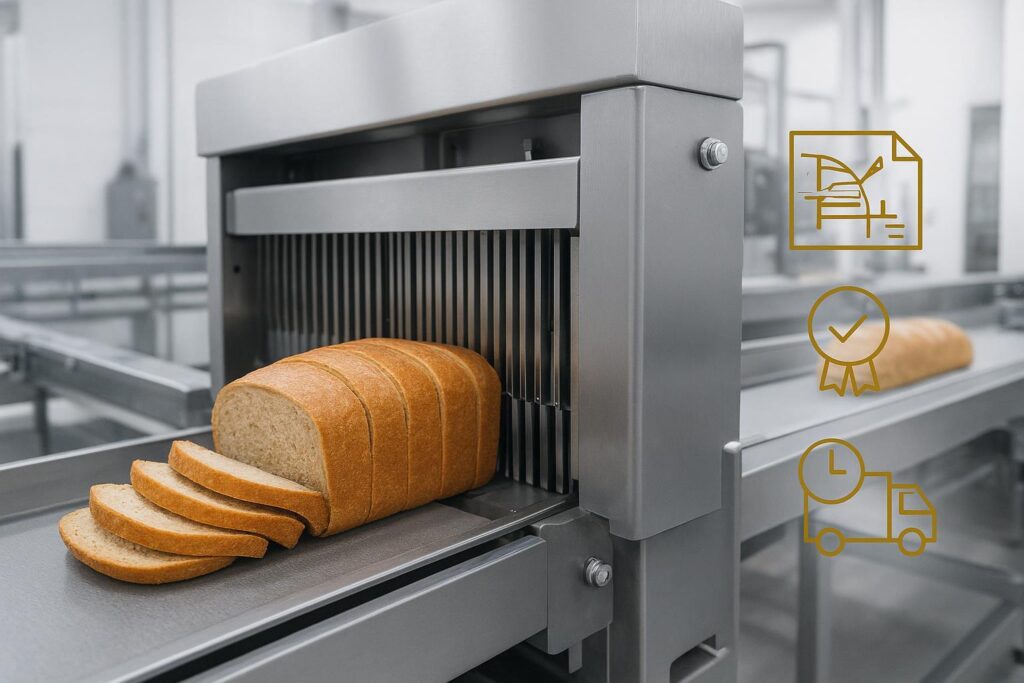
Choosing a bread slicer blade manufacturer is a long-term operations decision, not just a spare-parts purchase. If you qualify the supplier correctly—engineering capability, QA/compliance discipline, and supply reliability—you get cleaner slices, fewer crumbs and defects, longer run time between changeovers, and a lower total cost of ownership (TCO). This guide is written for industrial bread […]
Когда выбирать ножи для хлеборезки с ПТФЭ-покрытием, а когда — с твердым покрытием
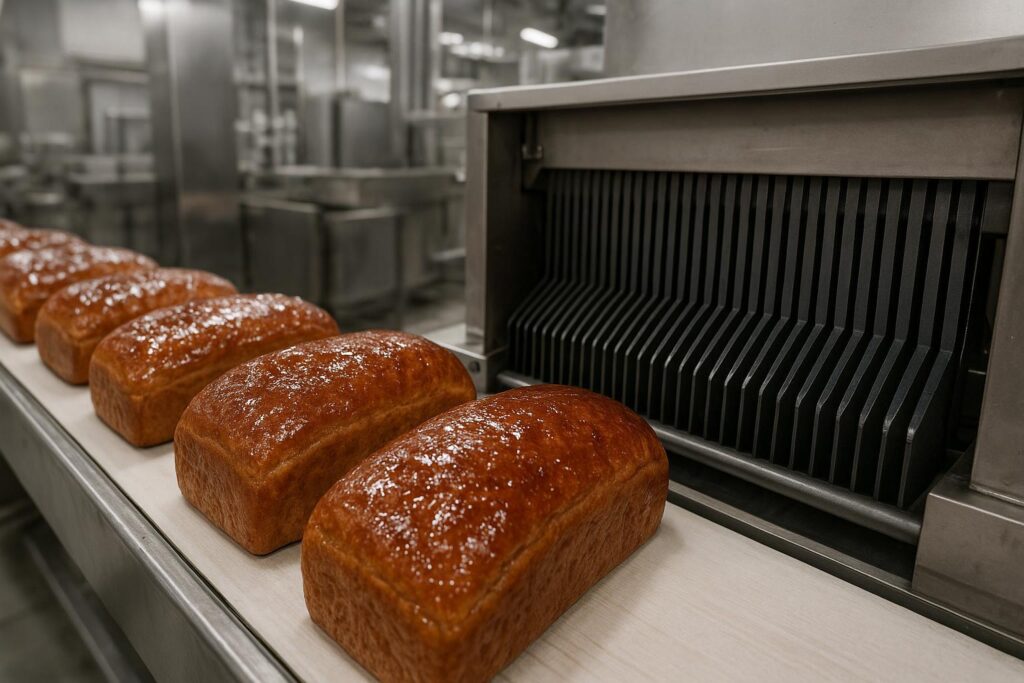
How PTFE helps on sticky breads PTFE (often called Teflon) is a non-stick, low-friction surface. In bread slicing, that matters when your biggest enemy isn’t “dullness” yet—it’s adhesion: sugars, glazes, warm crumb, and moisture building up on the blade path until the machine starts tearing, dragging, or jamming. In other words: if you’re evaluating non-stick coating for bread […]
Как заточка и покрытия помогают уменьшить количество хлебных крошек на производстве
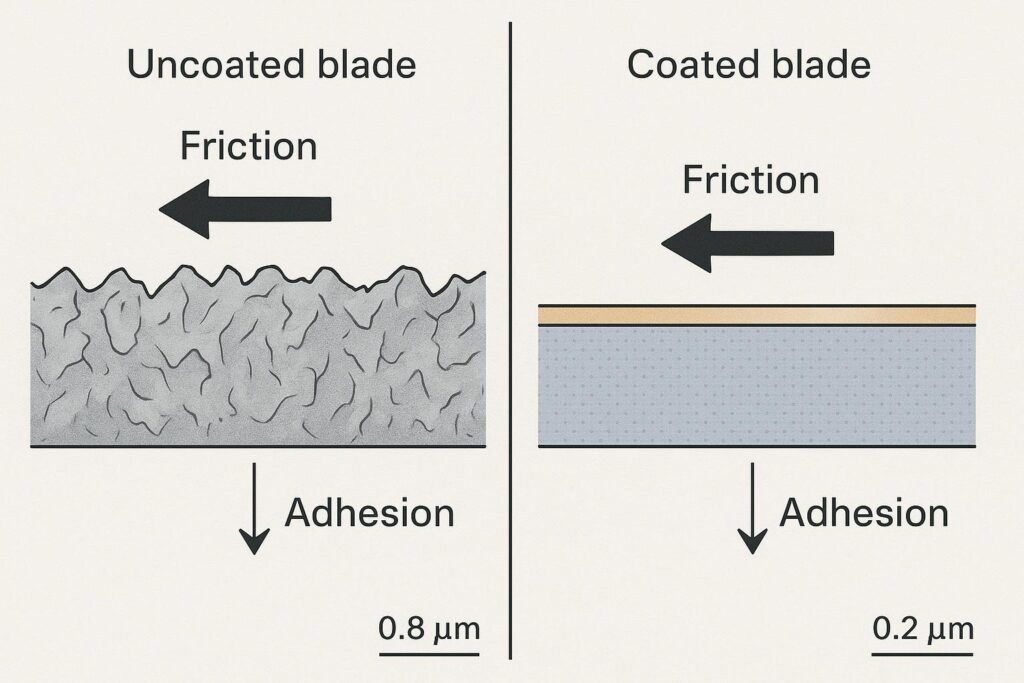
Bread crumb waste is easy to dismiss as “just housekeeping.” On an industrial slicing line, it’s a yield leak, an OEE problem, and a food-safety risk all at once. Disclosure: MAXTOR METAL supplies industrial cutting blades. The principles in this article are vendor-agnostic and focus on measurable process controls (crumb mass, thickness tolerance, downtime) so you […]
Лучшая сталь для пищевых ножей для нарезки в промышленных пекарнях
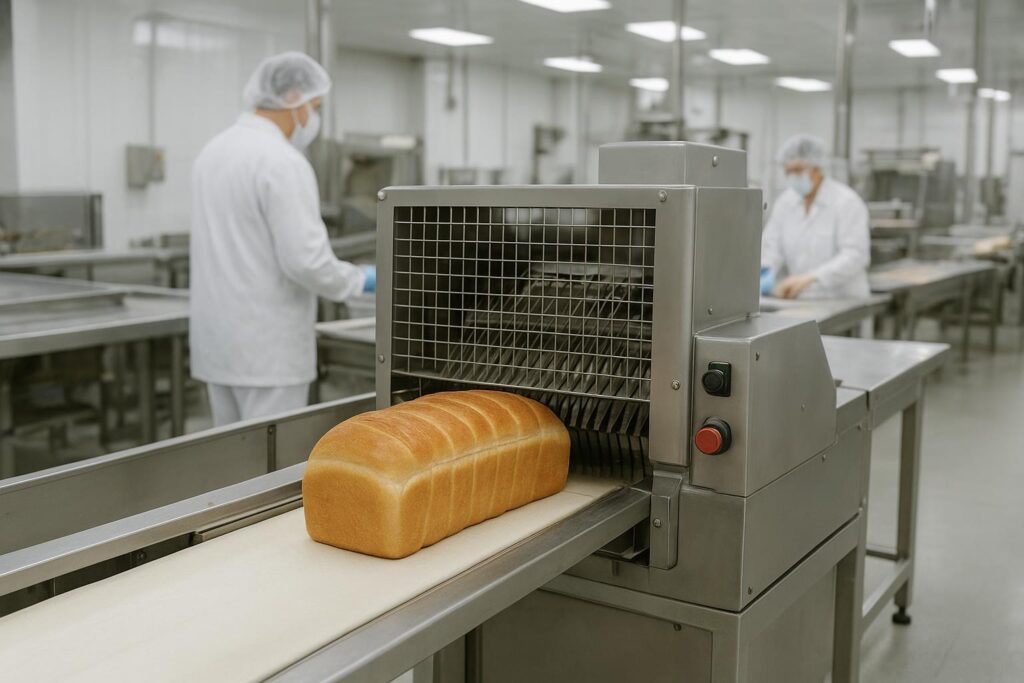
Choosing blade steel for food grade slicer blades isn’t a small consumables decision. If you’re comparing bread slicer blade steel options across suppliers, you need a spec that survives real sanitation and real run lengths. On high-throughput lines (600–1200 loaves/hour), blade material drives four outcomes that show up every shift: slice appearance, crumb generation, sanitation effort, and unplanned stops. […]
Обслуживание ножей хлеборезки: продление срока службы на 30%

Published: 2026-04-29 · Last reviewed: 2026-04-29 Food-safety and compliance note: This guide provides general best practices. Always follow your facility’s SSOP/HACCP programs and the slicer OEM’s model-specific instructions (including disassembly, tension/torque ranges, approved lubricants, and sanitation chemicals). If there is any conflict, the OEM manual and your validated food-safety plan take precedence. Document any changes as […]
Сравнение лезвий Scallop, V-Tooth и ABT: какой профиль режет лучше?

Edge geometry isn’t a cosmetic choice. In high-volume slicing, the edge shape determines how the blade enters the crust, how it shears the crumb, and how stable it stays at speed. That’s why the same slicer can look “mysteriously inconsistent” across SKUs—even when the blade material and thickness never change. Put simply: you’re tuning bread slicer blade […]
Замена ножей хлеборезки на проверенные альтернативы OEM

Safety note & accountability: This guide provides general maintenance guidance for industrial bread slicers. Always follow your machine’s OEM service manual, your facility’s lockout/tagout (LOTO) program, and applicable local regulations. If any step conflicts with OEM documentation, OEM requirements take priority. Technical review: Reviewed for safety emphasis and procedural clarity by MAXTOR METAL’s technical team (LOTO and […]
Почему хлеборезка рвет хлеб и как это исправить
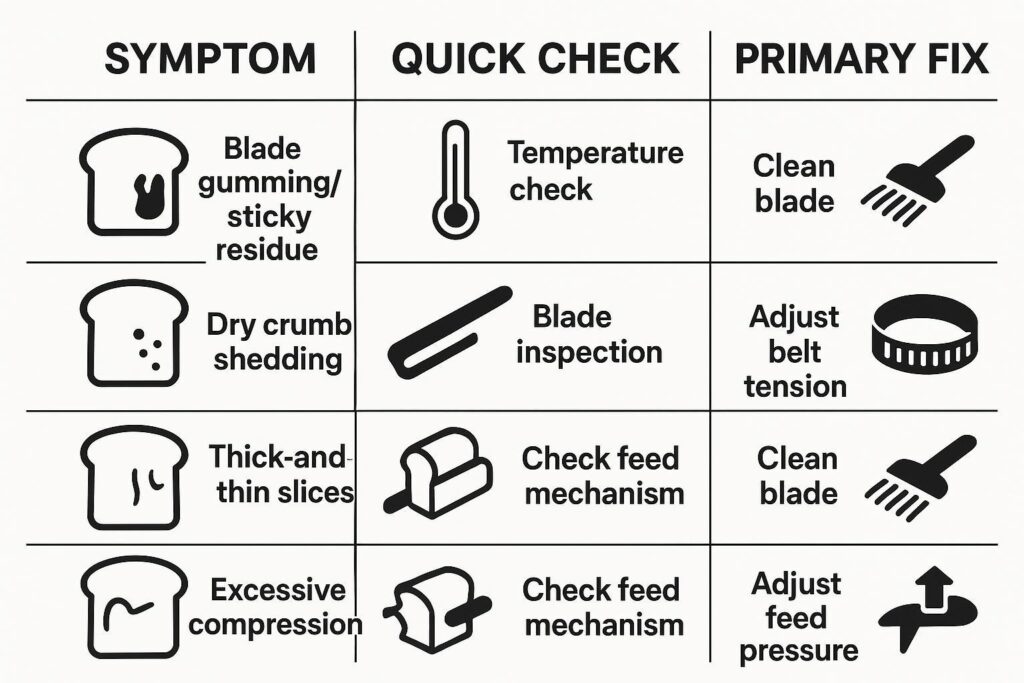
If bread slicer tearing bread is spiking waste, this guide gives fast, verifiable fixes. You’ll get temperature windows, mechanical checks, and line-control steps you can audit today. Targets 600–1200 loaves/hour lines with pan bread, crusty loaves, and buns. Safety & SOP note: Always follow your slicer OEM manual and your facility’s food safety program. Before inspecting, […]

 English
  Spanish
  Italian
  French
  Portuguese
  Russian
  German
  Arabic
  Hindi
Hindi  Vietnamese
  Indonesian
  Japanese
  Korean