Fundamentos Técnicos de Cuchillas Circulares
Las cuchillas circulares de corte longitudinal de precisión (también denominadas cuchillas rotativas de corte o hojas circulares de hendido) utilizan una cinemática rotativa continua en combinación con una contracuchilla inferior (Corte por Cizalla), una configuración de navaja (Corte por Cuchilla de Afeitar) o un rodillo yunque templado (Corte por Presión/Aplastamento) para ejecutar procesos ininterrumpidos de corte longitudinal, rebanado, rebobinado o marcado de bobinas en movimiento. Estas herramientas rotativas avanzadas están diseñadas específicamente para rebobinadoras cortadoras de alta capacidad, cortadoras-hendidoras de cartón corrugado y líneas automáticas de corte de electrodos para baterías de iones de litio.
1.1 OEM System Compatibility
This technical standard is engineered to meet or exceed the performance parameters of leading international slitting machinery manufacturers, including Kampf, Atlas, Goebel, Pasaban, Valmet, Dienes, Tidland, and ASHE.
1.2 Core Engineering Parameter Matrix
| Parámetros de ingeniería | Li-ion Electrode & Foil Classification | High-Speed Film, Tape & Paper | Heavy-Duty Silicon Steel & Slitting Lines |
| Materiales recomendados | Sub-micron Tungsten Carbide (WC) | M2/M42 HSS, SK5, SK7, 1065 Carbon | DC53, LD, D2 (1.2379) / SKD11 |
| Hardness Matrix | HRA 89 – 93 | HRC 62 – 64 (HSS) / HRC 56 – 60 | HRC 60 – 63 (DC53/LD) |
| Outer Diameter (OD) Range | 40mm – 350mm | 100mm – 680mm | 80mm – 500mm |
| Inner Diameter (Bore) Tolerance | H7 / G6 Precision Slide Fit | H7 Standard Fit | H7 Precision Fit |
| Tolerancia de espesor | ± 0.001mm to ± 0.002mm | ± 0.005mm | ± 0.003mm |
| axial (desviación lateral) | < 0.005mm | < 0.015mm | < 0.010mm |
| Radial Runout (Out-of-Round) | ≤0.010mm | ≤0.020mm | ≤0.015mm |
| Rugosidad del filo de corte (Ra) | Ra < 0.4µm (Mirror Polish) | Ra < 0,8 µm | Ra < 0.6µm |
| Side Face Roughness (Ra) | Ra < 0,8 µm | Ra < 1.6µm | Ra < 1.2µm |
| Dimensional Standard | ISO 2768-mK | ISO 2768-mK | ISO 2768-mK |
Descripción General de la Ingeniería de Producto: Cinemática de Cizallamiento Rotativo y Desgaste Tribológico
In modern high-speed longitudinal slitting systems, the cutting edge of a circular blade experiences complex cyclic shear stress fields combined with high-velocity three-body abrasive wear. Because the tool rotates continuously, every discrete micro-segment along the blade’s circumference undergoes a rapid transition into and out of the material stress zone, rendering it highly susceptible to rolling contact fatigue.
2.1 Kinematics of the Shear Overlap Zone
In a synchronized shear slitting system (where the upper male blade overlaps and intersects with the lower female blade), the quality of the slit edge is governed by the configuration of the overlapping geometry:
- Axial Side Clearance: For metallic foils, hard polymers, and silicon sheets, the physical horizontal gap between the upper and lower knives must be held strictly between 0.002mm and 0.01mm. If this clearance is exceeded, the substrate experiences localized bending and tensile elongation rather than true shear, generating catastrophic burrs. Conversely, an insufficient gap causes micro-rubbing, forcing an exponential increase in localized compressive stress and accelerating micro-chipping. For soft materials like paper and tissue, spring-loaded setups utilizing a constant pneumatic or mechanical axial preload are implemented to achieve a self-adjusting “zero-clearance” plane. For a complete commissioning and calibration guide covering overlap, cant angle, and micro-preload pressure in spring-loaded zero-clearance systems, see Sistema de corte por cizallamiento con resorte y tolerancia cero
- Overlap Depth: The vertical intersection depth of the male blade into the female channel must be calibrated between 0.5mm and 1.5mm. Excessive overlap depth increases the lateral friction contact area between the sides of the blades, transforming rotational kinetic energy into localized thermal energy, which softens the martensitic matrix of the cutting tip.
2.2 Fatigue Micro-Fractures & Dust Generation Kinetics
When a circular slitter runs at high linear velocities (e.g., 400–1200 m/min), any microscopic deviation in edge roughness (Ra) or structural homogeneity acts as a stress concentrator. As the blade dulls, the failure mode of the substrate shifts from clean shearing to compressive fracture. This transition creates micro-cracks in brittle coatings (such as battery cathode slurries) or fibers, discharging large quantities of microscopic debris and airborne dust. This dust can migrate onto the face of the blade, changing the friction coefficient (μ) and triggering a destructive thermal loop.
Aplicaciones Industriales: Análisis Específico por Sector
3.1 Lithium-Ion Battery Electrode Slitting
- Substrates: Copper foil, aluminum foil, and substrates double-coated with highly abrasive lithium iron phosphate (LFP) or nickel-manganese-cobalt (NMC) chemistries.
- Machinery: High-precision automated battery electrode slitting lines.
- Engineering Requirements: The abrasive slurry contains hard ceramic-like particles that aggressively erode iron-based matrices. This application mandates Sub-micron Grain Tungsten Carbide (WC) with an HRA of 89–93. Thickness tolerances must be held to ±0.001mm to prevent axial tracking drift, which eliminates coating delamination and edge detachment on the current collector.

3.2 High-Velocity Polymer Film Conversion
- Substrates: High-tensile BOPP, PET, and PI (Polyimide) films.
- Machinery: Kampf, Goebel, and Atlas high-speed slitter rewinders.
- Engineering Requirements: Thin polymer webs running at velocities exceeding 600 m/min are highly prone to static accumulation and frictional dragging. Thin-gauge circular blades made of SK5, SK7, or High-Carbon 1065 Spring Steel are specified. The cutting bevel must feature a mirror finish of Ra < 0.4µm to eliminate micro-grooves that pull on the polymer chains, preventing tensile tearing and static dust draw.
3.3 Silicon Steel & Transformer Core Slitting
- Substrates: Oriented and non-oriented electrical silicon steel sheets with high silicon content.
- Machinery: Heavy-duty rotary gang slitting lines.
- Engineering Requirements: Silicon steel exerts extreme elastic deformation resistance, creating severe counter-reactive normal forces during shearing. Conventional D2/SKD11 blades frequently suffer from localized chipping under these cyclic shocks. DC53 or LD Steel (HRC 60–63) is mandatory here, leveraging its uniform carbide distribution to absorb high-impact mechanical stress.
3.4 Advanced Composite Prepreg Conversion
- Substrates: Carbon fiber prepregs, fiberglass weaves, and resin-impregnated multi-layer textiles.
- Machinery: Continuous-feed rotary cutter modules.
- Engineering Requirements: Structural fibers possess extreme abrasive characteristics that blunt standard steel edges within hours. M2 or M42 High-Speed Steel (HSS) (HRC 62–64) enhanced with a physical vapor deposition (PVD) TiAlN coating is recommended. The coating acts as a thermal barrier, preserving the underlying edge hardness against continuous dry friction.
3.5 Sterile Food & Pharmaceutical Packaging Conversion
- Substrates: Multi-layer aluminum-plastic laminates and sterile medical pouch films.
- Machinery: Cleanroom-compliant slitting lines.
- Engineering Requirements: To prevent web delamination and meet rigorous sanitary standards, blades must resist oxidation when exposed to humidity or sanitizing agents. High-chromium Martensitic Stainless Steels (420 or 440C) are selected and optimized to a hardness of HRC 48–56, achieving a stable balance between corrosion resistance and edge acuity.
3.6 High-Speed Corrugated Board Slitting & Scoring
- Substrates: Heavy multi-wall corrugated board and linerboards.
- Machinery: High-speed corrugated slitter scorers.
- Engineering Requirements: The medium runs at high speeds and contains abrasive recycled fibers and silica particles. Tooling requires exceptional resistance to impact and abrasion. Acero de alta velocidad M2 is widely utilized, and the blades must be configured with an axial runout of <0.015mm to eliminate side-to-side wobble that causes crushed flutes or excess paper debris.
4.Problemas de Fallo Comunes y Soluciones de Ingeniería
4.1 Problem: Severe Slitting Dust Generation
- Causa principal: Micro-nicks along the ground bevel or an uncalibrated axial side clearance force the blade to crush the substrate instead of shearing it. This mechanical crushing fractures fibers and coatings, generating significant debris.
- Engineering Solution (Trade-Off Model): Specify a Super-Fine Mirror Polish on the blade bevels and faces, reducing the roughness to Ra < 0.1µm. While mirror polishing increases production cycle times and manufacturing costs by approximately 20%, it minimizes initial grinding micro-cracks and material dragging, reducing slitting dust by up to 80%. For a comprehensive root-cause analysis covering blade flank Ra, carbide microstructure selection, and the setup tolerances that prevent secondary dust generation—including field measurement protocols and regrinding guidelines—see Root-Cause Analysis of Slitting Dust Generation: Blade Flank Ra, Carbide Microstructure & Setup Tolerances.
4.2 Problem: Intermittent Edge Chipping (Micro-Chipping)
- Causa principal: High-hardness substrates (e.g., silicon steel, dense coatings) generate normal forces that exceed the fracture toughness of the blade’s alloy matrix. This issue is magnified by the presence of large, segregated primary carbides in standard cold-work steels like D2/SKD11.
- Engineering Solution: Replace D2/SKD11 with DC53 or LD Tool Steel tempered to HRC 60–63. DC53 undergoes a refining process that yields a fine, uniform matrix with double the impact toughness of SKD11, preventing micro-chipping under cyclic loads.
4.3 Problem: S-Curve Profile or “Snake Cuts”
4.4 Problem: Adhesive Accumulation and “Galling” (Material Sticking)
- Causa principal: When slitting pressure-sensitive adhesives, protective films, or soft aluminum foils, frictional heat causes adhesive polymers to melt or ductile metal to cold-weld onto the micro-roughness of the blade faces.
- Engineering Solution: Implement targeted surface modification coatings. For adhesive-backed tapes, apply a Hydrophobic Fluoropolymer (PTFE/Teflon) Coating. For non-ferrous aluminum/copper slitting, apply a Recubrimiento de carbono tipo diamante (DLC). The extreme hardness and minimal friction coefficient of DLC stop material transfer at the atomic level. Note that coated blades cannot be conventionally resharpened on their faces; they require specialized edge-only grinding or recoating. For a full engineering comparison of DLC and PTFE coating systems—including wear-limited vs transfer-limited diagnosis, field case data, and QA specification templates—see DLC vs PTFE Coatings for Slitting Blades: Engineer’s Guide.
Guía de Ingeniería de Materiales: Perfiles Metalúrgicos
The rotational kinematics of circular cutting demand tool materials that offer balanced resistance to rolling contact fatigue, compression, and abrasive wear.

- Sub-micron Grain Tungsten Carbide (WC)
- Metallurgical Matrix: Composed of ultra-fine sub-micron tungsten carbide hard phases bonded within a high-toughness cobalt (Co) matrix, with an average grain diameter of ≤0.6μ m.
- Mechanical Profile: Provides exceptional hardness (HRA 89–93) and excellent resistance to abrasive slurry wear. However, it exhibits low bending strength and high brittleness; any metal-to-metal collision or foreign body impact will cause catastrophic fracturing.
- DC53 / LD Matrix Steel
- Metallurgical Matrix: A cold-work tool steel designed to eliminate the coarse, segregated primary chromium carbides characteristic of traditional D2/SKD11 steels.
- Mechanical Profile: Achieves a heat-treated hardness of HRC 60–63. Its uniform microstructure yields double the impact toughness of SKD11, making it highly effective at preventing edge chipping when shearing high-tensile metals or thick polymers.
- M2 / M42 High-Speed Steel (HSS)
- Metallurgical Matrix: Heavily alloyed with Tungsten (W), Molybdenum (Mo), Chromium (Cr), and Vanadium (V) to form a dense distribution of thermally stable M6C and MC secondary carbides.
- Mechanical Profile: Possesses high “Red Hardness” (retaining structural integrity up to 500°C) and excellent impact resistance. This makes it suitable for high-speed corrugated paper and composite conversion lines experiencing high-frequency friction.
- 440C & 420 Martensitic Stainless Steels
- Metallurgical Matrix: Contains 12%–18% Chromium, which forms a passive chromium oxide film upon thermal hardening, embedded within a tempered martensitic matrix.
- Mechanical Profile: Delivers a controlled hardness of HRC 48–56. It provides reliable protection against oxidation, pitting, and chemical exposure in humid or sterile food and pharmaceutical converting facilities.
Tratamiento Térmico y Dureza: Lógica de Modificación Térmica
The dimensional stability and edge retention of a circular blade depend heavily on its internal crystalline matrix. Thermal processing errors will cause axial warping and distortion under high-speed rotation.
6.1 Multi-Stage Vacuum Gas Quenching & Tempering
To prevent decarburization and surface oxidation, all steel slitter blanks undergo heat treatment inside a high-vacuum furnace operating at 10-3mbar. The blades are brought up through multi-stage preheating cycles to eliminate thermal gradients and prevent warping in thin-disc configurations. They are austenitized at 1020℃-1100℃(depending on the alloy grade) and quenched using high-pressure, high-purity nitrogen gas (6–10 bar). This is followed by three distinct tempering cycles to minimize residual internal stresses.
6.2 Cryogenic Transformation for Ultra-Precise Tolerances
For high-specification applications requiring sub-micron thickness tolerances (±0.001mm), a comprehensive Deep Cryogenic Treatment (Sub-Zero Liquid Nitrogen Soaking at -196°C) is performed:

Cryogenic processing drives the near-total conversion of unstable retained austenite into hardened martensite while precipitating ultra-fine secondary \eta-carbides throughout the matrix. This provides two key engineering benefits:
- Elimination of Thermal Distortion: It prevents microscopic dimensional shift or axial bowing when the blade warms up under high-speed friction, ensuring a true cutting line.
- Extended Wear Life: Field performance data indicates that cryogenically treated slitter blades exhibit a 30% or greater increase in wear resistance compared to conventionally treated alternatives.
7.Geometría de la Cuchilla e Ingeniería del Filo
The geometric tolerances of a circular slitter directly impact its rotational stability. Even minor side-to-side variations can cause wavy cut paths or premature tool failure.

7.1 Geometric Tolerance Chains
- Bore-to-Shaft Concentricity: The central bore must be finished to an ISO H7 or G6 tolerance class to establish a precise slide fit with the slitter shaft. A bore clearance error as small as 0.01mm introduces an eccentric rotation axis, magnifying the Radial Runout and causing uneven material engagement.
- Axial Runout Control: Side wobble must be restricted to <0.005mm for high-precision applications and <0.020mm for general converting. Exceeding these limits causes the overlapping faces of the male and female knives to impact each other during rotation, generating micro-shocks that cause chipping, accelerated face wear, and ragged edges.
For a detailed treatment of ISO 286 fit selection, assembled TIR verification, and the assembly practices that keep runout repeatable at speed, see Tolerancia y excentricidad del orificio central: Optimización de los ajustes ISO 286 para cuchillas de corte de alta velocidad.
7.2 Bevel Profiling & Cut Dynamics
Blades can be ground to a Single Bevel, Double Bevel, or Compound Bevel configuration, with included angles ranging from 20° to 45°:
- Acute Bevel Angles (20° – 25°): Minimize the specific cutting force (kdo) and drag resistance. This configuration is suitable for delicate, non-woven materials and ultra-thin packaging films, though it offers lower structural edge strength.
- Obtuse Bevel Angles (35° – 45°): Provide a robust wedge profile with excellent mechanical backing. This is the standard configuration for processing tough substrates like silicon steel or abrasive mineral-filled sheets.
8.Proceso de Fabricación e Inspección de Calidad
- Ingot Metallurgy & Consolidation: High-purity tool steel blanks are processed via Electro-Slag Remelting (ESR). For tungsten carbide, blanks are produced using Hot Isostatic Pressing (HIP) vacuum sintering to ensure a void-free, homogeneous structure.
- CNC Core Machining: Precision turning of the central bore, drive notches, and locating faces to satisfy H7/G6 specifications.
- Vacuum Thermal Modification & Deep Cryogenics: Hardening and subsequent sub-zero processing at -196°C to eliminate residual stresses.
- Double-Disc Parallel Grinding: Multi-pass grinding under constant-temperature coolant lubrication to achieve flat, parallel sides with a thickness tolerance down to ±0.001mm.
- Rotary Edge Bevel Grinding: Using dedicated high-rigidity grinding centers equipped with vitrified diamond wheels to profile the cutting edge to a finish of Ra < 0.4µm.
- Quality Control Protocol:
- Laser Interferometric Axial Runout Verification: Every high-precision blade is evaluated across its entire circumference. Side wobble is mapped and documented to confirm compliance with the <0.005mm internal threshold.
- Surface Profilometry: Direct stylus measurement of the bevel’s surface finish (Ra).
- Multi-Point Rockwell Hardness Mapping: Verifies that the hardness variance across the blade face does not exceed 0.5 HRC.
Casos de Estudio: Rendimiento Documentado en Campo
Case Study A: Lithium-Ion Battery Anode Slitting (Graphite-Coated Copper Foil)
- Perfil del cliente: A tier-one manufacturer of electric vehicle battery cells.
- Initial Problem: The client was utilizing commercial-grade carbide rotary blades with a thickness tolerance of ±0.005mm and an edge roughness of Ra 0.8µm. Abrasive graphite particles caused material to adhere to the blade faces, limiting linear slitting speeds to 200 m/min. Micro-chipping occurred after 15 hours of operation, causing coating delamination and micro-burrs along the copper foil.
- Intervención de ingeniería: Installed Sub-micron Tungsten Carbide Blades featuring a mirror polish of Ra < 0.1µm and a thickness tolerance held strictly to ±0.001mm.
- Quantifiable Outcomes: Face adhesion was eliminated, allowing production speeds to be increased from 200 m/min to 550 m/min (a 175% increase in throughput). Individual blade service life rose from 15 hours to 120 hours between grinds, while micro-dust emissions fell by 88%.
Case Study B: High-Frequency Electrical Silicon Steel Gang Slitting Line
- Perfil del cliente: A steel service center specializing in transformer core laminations.
- Initial Problem: The line used standard D2 (SKD11) circular blades (HRC 58–60) to slit 0.35mm thick grain-oriented silicon steel. The material’s high deformation resistance caused micro-fractures along the blade edges within 32 operating hours. This dulling produced edge burrs exceeding 0.08mm, which caused electromagnetic performance loss in the final transformer stacks.
- Intervención de ingeniería: Transitioned to DC53 Matrix Steel Circular Blades subjected to vacuum quenching and deep cryogenic stabilization, achieving a uniform hardness of HRC 61–62.
- Quantifiable Outcomes: The high fracture toughness of DC53 eliminated micro-chipping. The required resharpening interval was extended from 32 hours to 145 hours of continuous operation. Slit edge burrs were maintained below ≤0.015mm, reducing sheet rejection rates by 92%.
Preguntas Frecuentes: Referencia de Ingeniería y Compras
- ¿Por qué la tolerancia de espesor es crítica al configurar刀轴 de corte longitudinal múltiple (gang-slitting) con anillos espaciadores?
- En un conjunto de corte longitudinal múltiple de varias cuchillas, las tolerancias de espsor individuales se acumulan a lo largo del eje. Una pequeña variación de ±0.01 mm por cuchilla puede dar como resultado un desplazamiento axial acumulado de más de 0.1 mm en una configuración de 10 cuchillas. Este desajuste altera la holgura lateral horizontal calibrada entre los filos superior e inferior, lo que provoca rebabas graves o colisiones entre las cuchillas. Reducir las tolerancias individuales a ±0.001 mm minimiza este error acumulativo.
- ¿Qué diferencia la estructura metalúrgica de carburos del acero DC53 de la del D2/SKD11 tradicional?
- El acero de herramientas D2 tradicional contiene grandes carburos primarios de cromo segregados (a menudo ≥20 μm de diámetro) que forman redes frágiles durante la solidificación. Estos grandes carburos pueden agrietarse bajo las altas fuerzas normales generadas al cortar acero al silicio. El DC53 se somete a una modificación química refinada y a un proceso de tratamiento que reemplaza estos grandes cúmulos por carburos secundarios finos y uniformemente dispersos, lo que duplica la tenacidad al impacto del material.
- Nuestra línea de corte longitudinal experimenta balanceo de la banda (web weaving) y bordes irregulares en película BOPP a 800 m/min. ¿Qué deberíamos verificar primero?
- Comience por comprobar la oscilación axial (desviación lateral) de las cuchillas superiores utilizando un indicador de carátula de alta precisión o un medidor láser. Si la oscilación supera los 0.020mm, la cuchilla cabeceará horizontalmente a través de la trayectoria de la banda, provocando un perfil de borde ondulado. A continuación, verifique que la rugosidad del filo esté por debajo de Ra 0.4µm; los filos más rugosos pueden enganchar las cadenas de polímero a altas velocidades, causando desgarros localizados.
- ¿Se pueden reafilar con éxito las cuchillas circulares de corte longitudinal de carburo de tungsteno? ¿Cuáles son las principales limitaciones?
- Sí, las cuchillas circulares de carburo se pueden reafilar, pero requieren una rectificadora de alta rigidez equipada con una muela de diamante con aglomerante de resina y un sistema de enfriamiento por inundación continuo y de gran volumen. El rectificado en seco o inestable crea intensos gradientes térmicos locales que inducen microfisuras a lo largo de la matriz frágil de carburo, lo que provoca fallos prematuros del filo en la línea de producción.
- ¿Cómo un acabado pulido espejo (Ra < 0.1µm) evita la generación de polvo de corte longitudinal?
- Un pulido espejo elimina las crestas y surcos de rectificado microscópicos presentes en los filos de las herramientas estándar. Esta superficie lisa reduce el coeficiente de fricción (μ) entre la cara de la cuchilla y el sustrato de la banda en movimiento. Sin microrrugosidades que rayen o tiren del material, la separación mecánica se mantiene como un corte limpio por cizalla, reduciendo las emisiones de polvo.
- ¿Qué es un sistema de "micro-precarga" asistido por resorte y cuándo debe implementarse?
- Para bandas delgadas y flexibles como papel tisú, papel de cigarrillos o películas delgadas de embalaje, establecer una holgura lateral física fija con espaciadores rígidos puede ser difícil. Un sistema de micro-precarga utiliza un mecanismo neumático o de resorte calibrado para aplicar una fuerza lateral constante, manteniendo un plano de corte con tolerancia cero que evita que el sustrato delgado se pliegue entre las cuchillas.
- ¿Es necesario el equilibrado dinámico para todas las cuchillas circulares de corte longitudinal?
- El equilibrado dinámico se vuelve esencial cuando la velocidad de la línea de corte supera los 1000 m/min. A estas velocidades, incluso una mínima asimetría de masa a lo largo del perímetro de la cuchilla genera vibraciones centrífugas de alta frecuencia significativas. Esta vibración degrada la estabilidad del plano de corte, acelerando el desgaste del filo y provocando una calidad de corte inconsistente.
- ¿Cuándo debo seleccionar un revestimiento de Teflón en lugar de un revestimiento de DLC para una aplicación de corte longitudinal?
- Seleccione un revestimiento de fluoropolímero (Teflón) cuando corte adhesivos sensibles a la presión, cintas de transferencia o apósitos médicos, ya que proporciona una excelente resistencia a la adherencia. Sin embargo, el Teflón tiene una baja dureza mecánica. Para cortar metales no ferrosos como papel de aluminio o cobre, elija un revestimiento de carbono tipo diamante (DLC); su alta dureza resiste el desgaste abrasivo al tiempo que evita la transferencia de metal y la soldadura en frío.
- ¿Por qué se prefiere el acero rápido M2/M42 en lugar del carburo de tungsteno para la conversión de papel de gran volumen?
- Las líneas de conversión de papel de alta velocidad se enfrentan frecuentemente a fluctuaciones en la tensión de la banda, empalmes y contaminantes externos ocasionales. Aunque el carburo de tungsteno ofrece una excelente resistencia al desgaste, su baja tenacidad a la fractura lo hace propenso a astillarse o romperse bajo impactos repentinos de tensión. El acero rápido (HSS) M2/M42 proporciona una alta dureza en caliente junto con una excelente tenacidad al impacto, lo que le permite soportar choques mecánicos sin fallos estructurales.
- ¿Cómo degrada una alta concentración de austenita retenida el rendimiento en campo de una cuchilla de corte longitudinal de precisión?
- La austenita retenida es una fase cristalina inestable y de alta energía a temperatura ambiente. Bajo la influencia del estrés mecánico cíclico y del calor por fricción generado durante el corte, puede transformarse en martensita. Esta transformación va acompañada de una expansión volumétrica localizada, que puede alterar el perfil plano de la cuchilla, lo que provoca un aumento de la oscilación axial (desviación lateral) y una pérdida de la precisión de corte.
- ¿Por qué las cuchillas de acero inoxidable 440C muestran un embotamiento acelerado al cortar materiales compuestos densos?
- El 440C es un acero inoxidable martensítico diseñado principalmente para resistir la corrosión. Para mantener sus propiedades inoxidables, una parte significativa de su cromo permanece dentro de la matriz de solución sólida, dejando menos carbono libre y elementos de aleación para formar carburos duros de vanadio o molibdeno. En consecuencia, su resistencia máxima al desgaste abrasivo es menor que la de los aceros de herramientas dedicados como el DC53 o el acero rápido (HSS) M2.
- ¿Cuáles son las consecuencias de una tolerancia de redondez del diámetro interior (diámetro del orificio) fuera de especificación en el ensamblaje del eje de una cortadora longitudinal?
- Si la tolerancia del diámetro interior supera la especificación H7/G6, la cuchilla quedará floja en el eje de la cortadora, creando un eje de rotación excéntrico. Esta excentricidad hace que el salto radial (excentricidad radial) se dispare, lo que significa que la cuchilla morderá el material a diferentes profundidades a lo largo de su rotación, provocando un desgaste cíclico y profundidades de corte inconsistentes.
- ¿Qué características hacen que los preimpregnados de fibra de vidrio sean altamente abrasivos para los filos de las herramientas?
- Las fibras de vidrio están compuestas por filamentos de sílice amorfa con una alta dureza física. Durante el corte longitudinal, estos filamentos actúan como finos abrasivos contra el filo de corte. Si el material de la cuchilla carece del volumen o la dureza de carburos secundarios suficientes, las fibras al pasar erosionarán rápidamente la matriz, redondeando el perfil del filo.
- ¿Cuál es el umbral de mantenimiento recomendado para programar el afilado durante los tiempos de inactividad?
- Las cuchillas deben programarse para su reafilado cuando el radio de microfiloβ(rβ)se desgaste hasta alcanzar entre 0,1 mm y 0,2 mm, o cuando la altura de la rebaba del producto supere los límites de calidad. Esperar a que se produzcan macrodesportilladuras o un embotamiento severo requiere la eliminación de una cantidad significativa de material durante el rectificado, lo que reduce el número total de ciclos de afilado y recorta la vida útil total de la herramienta hasta en un 60%.
- ¿Cuál es la diferencia principal entre una configuración de bisel simple (mono-bisel) y una de bisel compuesto? a single bevel and a compound bevel configuration?
- Un bisel simple presenta un plano inclinado continuo que conduce al filo de corte, lo que proporciona un perfil muy afilado con baja resistencia al corte. Por el contrario, un bisel compuesto introduce un micro-bisel secundario en la punta misma del filo. Este micro-bisel refuerza el filo de corte contra fuerzas normales elevadas y previene el desportillamiento, prolongando la vida útil de la herramienta en aplicaciones exigentes con solo un ligero aumento de la resistencia al corte.
" ¡Bienvenido a consultar!
Si no encuentras la cuchilla de tijera que buscas, también podemos personalizarla, consulta nuestra “Cuchillas Personalizadas” para saber cómo!
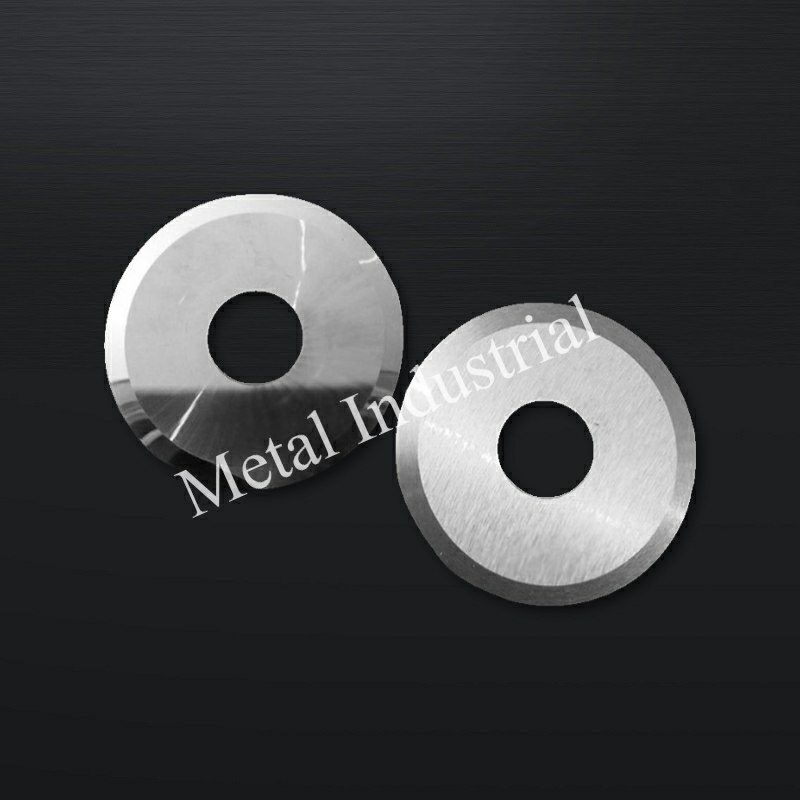
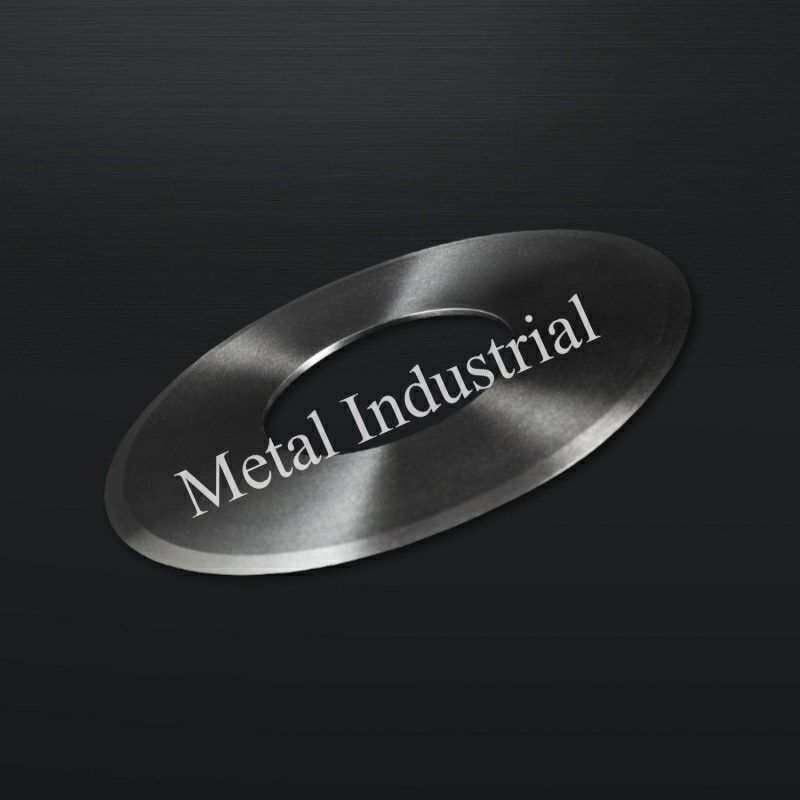
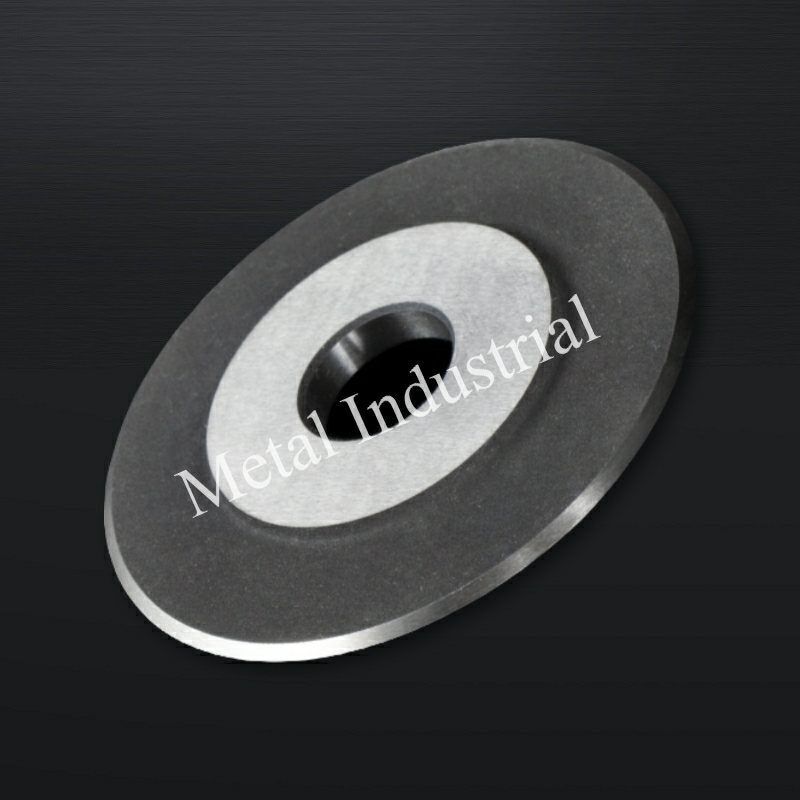
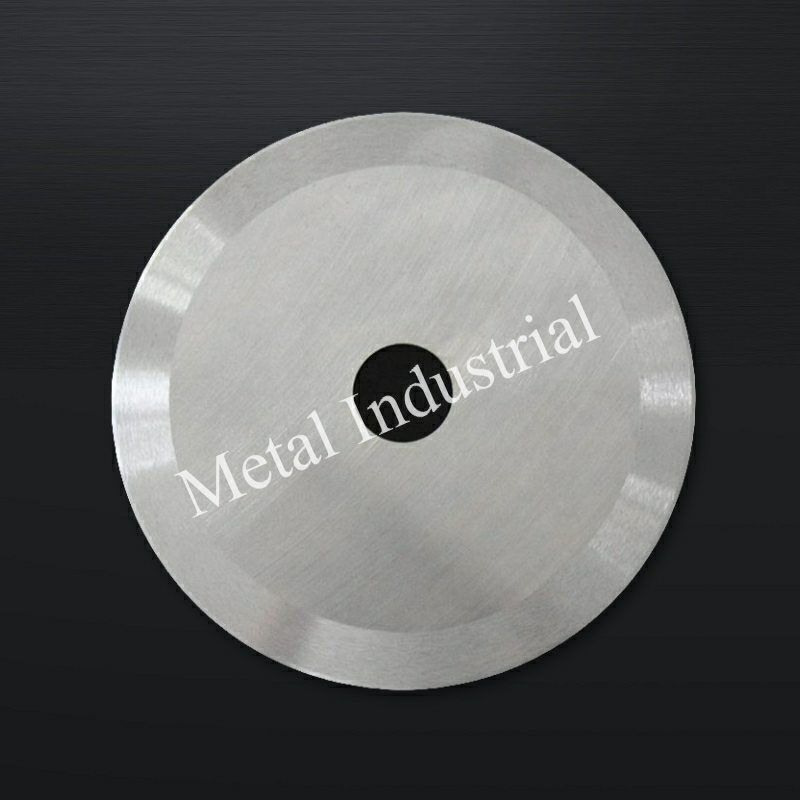
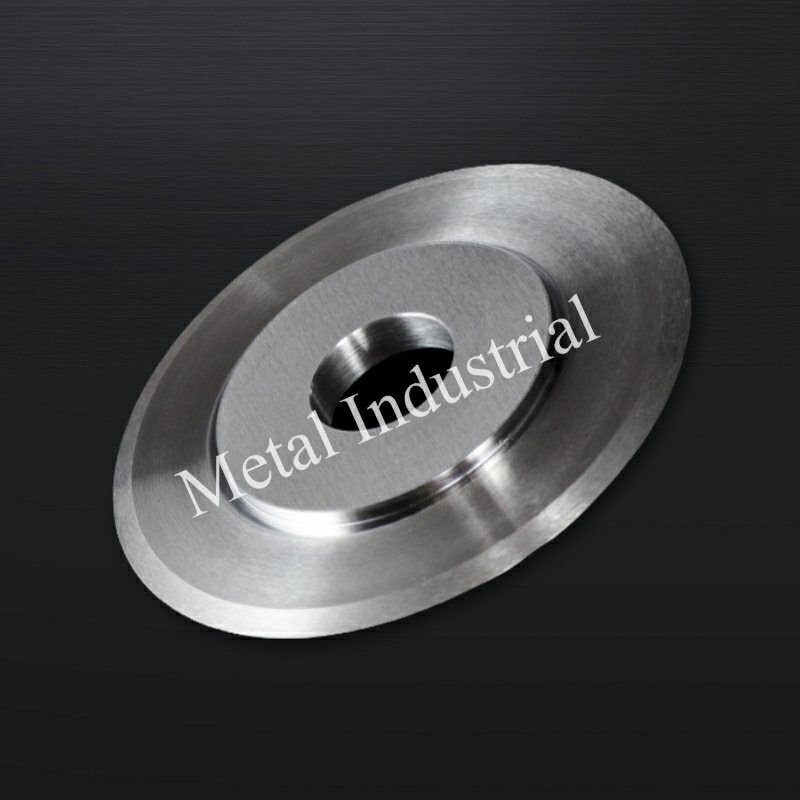
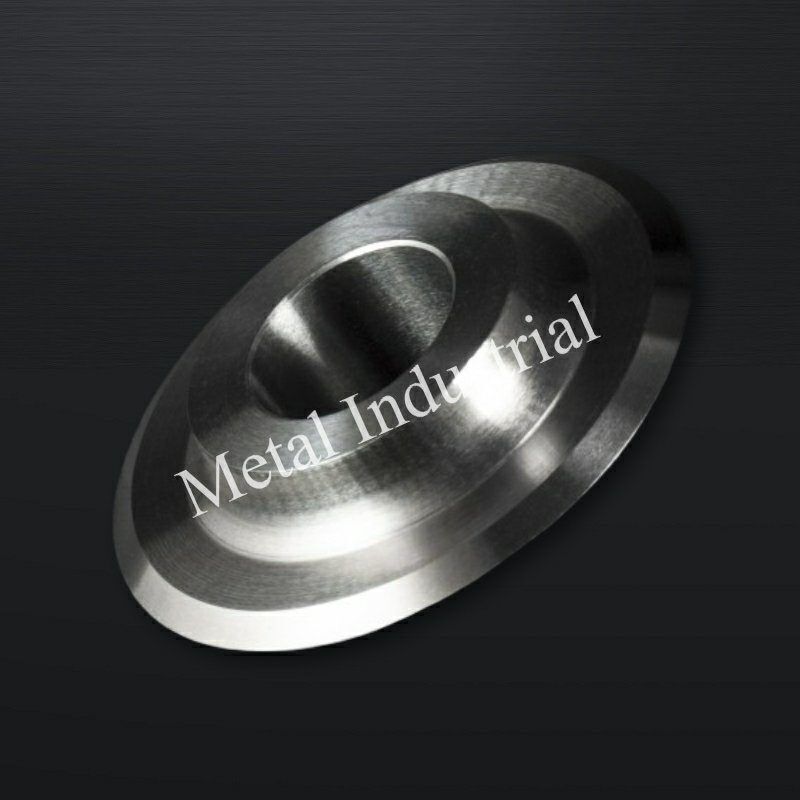
Exhibición de cuchillos circulares:


¿Por Qué Elegir METAL?
- Servicio de Importación Integral y sin Complicaciones
Disfrute de la comodidad de una importación sin interrupciones. Desde el transporte hasta el despacho de aduanas, manejamos todo el proceso. Solo tiene que pagar el IVA y esperar la llegada de sus productos.
- Precios Competitivos
Hemos visto nuestras cuchillas destacarse en innumerables aplicaciones y estamos listos para cualquier proyecto que nos presente. Espere precisión, durabilidad y precios competitivos inigualables.
- ODM y OEM Disponibles
Ya sea que nos proporcione dibujos, bocetos o muestras, podemos diseñar y fabricar para usted. También tenemos la experiencia para ayudar a modificar diseños y especificaciones existentes para mejorar casi cualquier aplicación de herramientas industriales. Por favor, contacte a nuestro equipo de ventas dedicado para discutir sus requisitos específicos.
- Control de Calidad Riguroso
Se realiza una serie de pruebas e inspecciones para controlar la calidad, incluyendo la inspección del primer artículo, la inspección de material entrante y materiales certificados, la inspección de calidad en proceso, y la inspección de calidad final.
- Adquisición Flexible, Cooperación Ilimitada
Ya sea usted un importador, distribuidor, mayorista o usuario final, le damos la bienvenida. Benefíciese de MOQ mínimos, consultas sin complicaciones y mayor libertad de compra.
- Monitoreo en Tiempo Real del Progreso de Producción
Considérenos su monitor exclusivo. Le proporcionaremos actualizaciones regulares sobre cada etapa crucial de su línea de producción. No importa la distancia, tendrá información en tiempo real sobre el progreso de su producto.


 English