

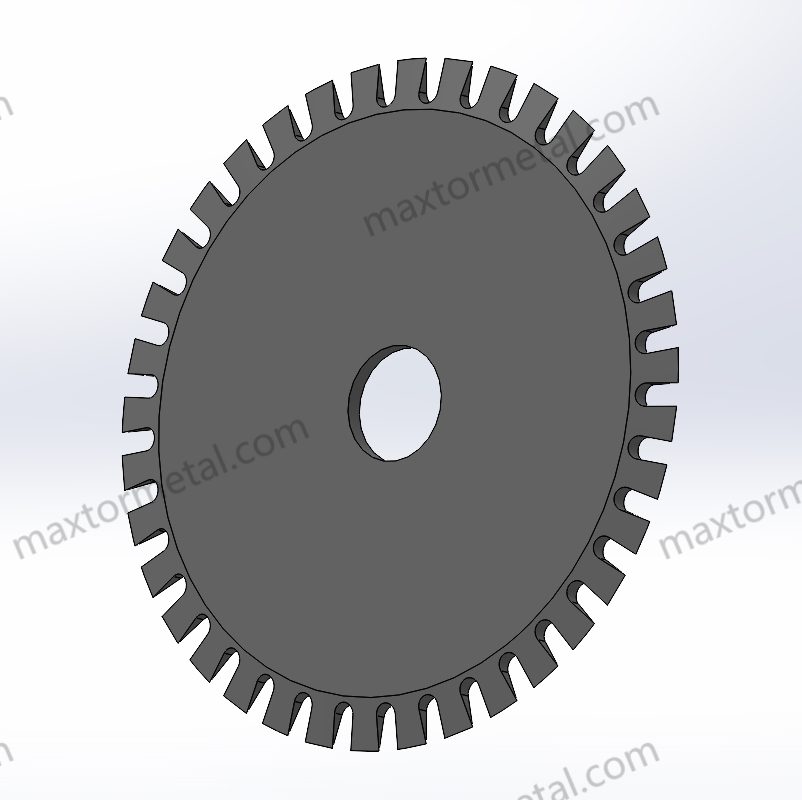
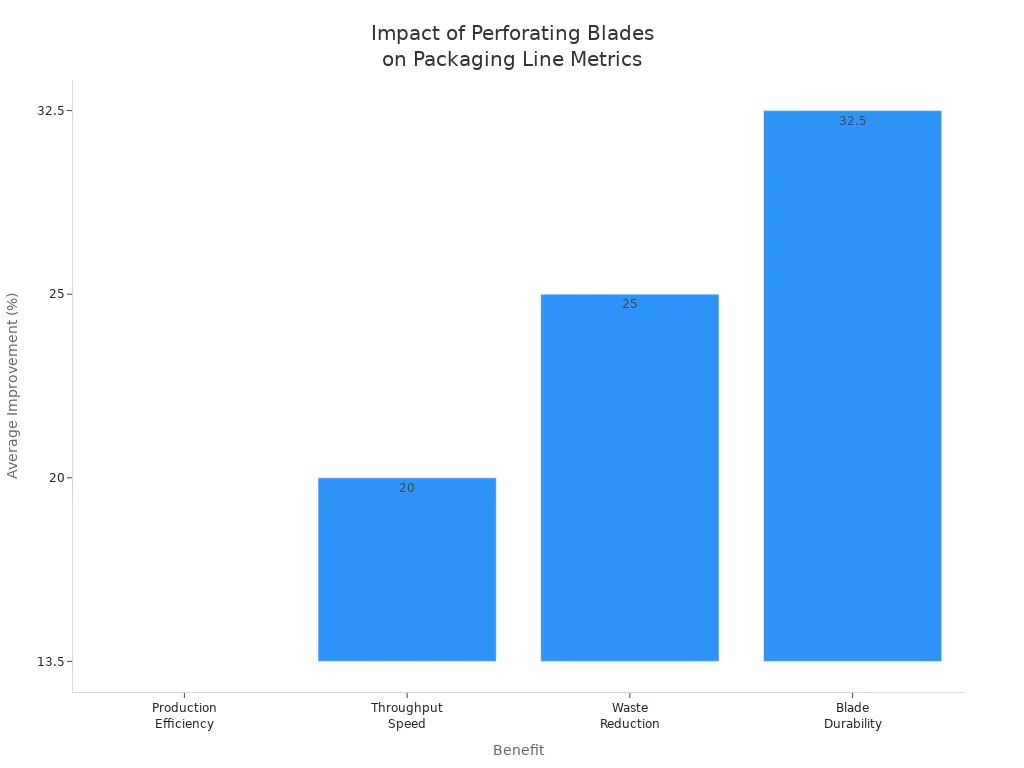
Anda memiliki pilihan penting saat memilih Pisau perforasi untuk kemasan. Sebuah studi pada tahun 2022 menunjukkan bahwa 68% dari masalah lini pengemasan berasal dari pemilihan pisau yang salah. Jika Anda memilih pisau yang tepat untuk material dan kebutuhan Anda, Anda membuat pekerjaan Anda lebih cepat dan produk Anda lebih baik. Pisau yang Anda pilih memengaruhi kecepatan, limbah, dan seberapa banyak biaya yang Anda keluarkan untuk perbaikan. Tabel di bawah ini menunjukkan bagaimana pisau perforasi canggih membantu Anda mendapatkan hasil yang lebih baik:
| Keuntungan | Deskripsi Dampak |
|---|---|
| Efisiensi Produksi | Pisau perforasi canggih dapat membuat lini kerja Anda 12-15% lebih baik setiap tahun. |
| Kecepatan Throughput | Menggunakan pisau terbaik dapat membuat lini berjalan hingga 20% lebih cepat. |
| Pengurangan Sampah | Pisau ini mengurangi limbah pengemasan sebesar 20-30%, yang menghemat uang dan membantu planet ini. |
| Daya Tahan Bilah | Lapisan seperti TiN atau DLC membuat pisau bertahan 25-40% lebih lama, sehingga Anda lebih jarang berhenti dan membeli lebih sedikit pisau. |
| Kualitas Produk | Perforasi yang baik menghasilkan potongan yang rapi dan bersih yang diperlukan untuk lembaran sobek, label, dan segel. |
| Kustomisasi | Pisau khusus yang dibuat untuk kebutuhan Anda membuat lini Anda lebih cepat dan produk Anda lebih baik. |
Anda dapat menghentikan kesalahan dan penundaan yang mahal dengan berbicara kepada para ahli dan bekerja sama dengan pemasok tepercaya seperti Maxtor Metal. Ikhtisar tentang pisau perforasi ini akan membantu Anda melihat betapa pentingnya pilihan yang cerdas.
Poin-poin Utama
- Pilih pisau perforasi yang sesuai dengan material pengemasan Anda. Ini membantu Anda mendapatkan potongan yang bersih dan mengurangi limbah. – Pilih material pisau seperti tungsten karbida atau high-speed steel. Material ini bertahan lebih lama dan membuat produksi lebih cepat. – Uji coba sampel pisau pada kemasan asli Anda. Ini membantu Anda menemukan kualitas potongan dan kekuatan pecah (burst strength) terbaik. – Bekerjalah dengan pemasok tepercaya dan para ahli untuk mendapatkan saran dan pisau kustom. Mereka juga dapat memberikan dukungan saat Anda membutuhkannya. – Rawat pisau Anda dan periksa secara berkala. Ini menjaga lini pengemasan Anda tetap bekerja dengan baik dan menghemat biaya.
Pisau Perforasi untuk Pengemasan: Faktor Kunci
Kompatibilitas Material
Saat Anda memilih pisau perforasi, pikirkan tentang apa yang akan Anda potong. Setiap material pengemasan membutuhkan jenis pisau tertentu. Menggunakan pisau yang salah dapat menyebabkan tepi yang kasar atau garis sobekan yang buruk. Hal ini bahkan dapat merusak produk Anda. Ada banyak material pengemasan yang mungkin Anda temui. Beberapa yang umum adalah:
- Plastik: Material ini ringan dan mudah ditekuk. Anda membutuhkan pisau yang memotong bersih tanpa melelehkan atau menarik film.
- Kaca: Kaca itu kuat dan tidak bereaksi dengan zat lain. Anda harus menggunakan pisau yang tidak membuatnya gompal atau retak.
- Logam: Logam membutuhkan pisau yang tetap tajam dan tidak cepat aus.
- Material biodegradable: Material ini membutuhkan pisau yang tidak merobek atau membuat tepinya berserabut.
- Laminasi: Laminasi memiliki beberapa lapisan. Anda membutuhkan pisau yang memotong semua lapisan dan menjaga garis tetap lurus.
Anda juga mungkin menemui material khusus seperti karet, bahan lengket, atau plastik tahan panas tinggi. Untuk material ini, Anda membutuhkan pisau dengan lapisan atau bentuk khusus. Jika Anda mencocokkan pisau dengan materialnya, Anda akan mendapatkan potongan yang lebih baik dan lebih sedikit masalah.
Tip: Selalu periksa bagaimana kemasan Anda bereaksi terhadap panas atau bahan kimia sebelum memilih pisau. Ini membantu Anda mencegah kerusakan atau reaksi buruk.
Material dan Daya Tahan Pisau
Memilih material pisau yang tepat membantu pisau perforasi Anda bekerja dengan baik. Maxtor Metal menggunakan material kuat seperti baja perkakas (tool steel), High-Speed Steel (HSS), stainless steel, dan tungsten karbida. Masing-masing memiliki kekuatan berbeda untuk masa pakainya.
| Bahan Pisau | Karakteristik Daya Tahan & Masa Pakai | Aplikasi Khas & Catatan |
|---|---|---|
| Perkakas Baja | Keras dan tangguh tetapi tidak bertahan lama; lebih murah; mudah diasah; tidak sekuat yang lain. | Digunakan dalam pengemasan, kertas, plastik; bagus jika Anda ingin menghemat uang dan tidak membutuhkannya bertahan lama. |
| Baja Kecepatan Tinggi (HSS) | Bertahan lebih lama dan menangani panas lebih baik daripada baja perkakas; bagus untuk pemotongan cepat; mudah diasah. | Digunakan untuk kertas dan film; perpaduan yang baik antara harga, kekuatan, dan perawatan yang mudah. |
| Karbida Wolfram | Paling keras dan paling tahan lama; menjaga tepi tetap tajam; tahan panas; terbaik untuk pekerjaan berat. | Sangat baik untuk pengemasan berat, karet, dan bahan keras; biaya lebih tinggi tetapi menghemat uang seiring waktu; dapat pecah jika terjatuh. |
| Besi tahan karat | Bertahan dalam jangka waktu sedang; tidak berkarat; bagus untuk tempat-tempat di mana Anda harus menjaga kebersihan. | Digunakan untuk pengemasan makanan, medis, dan steril; mudah dicuci; bertahan dalam jangka waktu sedang. |
Jika Anda menginginkan pisau yang bertahan lebih lama dan membutuhkan lebih sedikit pengasahan, pilih HSS atau tungsten karbida. Stainless steel bagus untuk pengemasan makanan dan medis karena tidak berkarat. Baja perkakas adalah yang terbaik jika Anda ingin menghemat uang dan tidak membutuhkannya bertahan lama. Memilih material pisau yang tepat berarti mengurangi waktu henti dan lini produksi yang lebih lancar.
Kecepatan dan Volume Produksi
Seberapa cepat Anda bekerja tergantung pada pisau yang Anda gunakan. Jika lini Anda cepat, Anda membutuhkan pisau yang tidak cepat aus. Pisau perforasi rotari adalah yang terbaik untuk lini cepat dan gulungan panjang. Pisau ini memberikan lebih sedikit tekanan pada material dan membantu Anda berjalan lebih cepat.
- Pisau perforasi bulat bagus untuk pekerjaan cepat dan besar. Pisau ini memotong dengan baik dan bertahan lebih lama.
- Pisau lurus menghasilkan potongan lurus. Gunakan pisau ini saat Anda membutuhkan garis yang sempurna.
- Pisau tungsten karbida dan HSS adalah yang terbaik untuk pekerjaan besar. Pisau ini menangani panas dan keausan, sehingga Anda lebih jarang berhenti.
Jika Anda memilih pisau yang tepat untuk pekerjaan Anda, Anda akan mendapatkan hasil yang lebih baik dan lebih sedikit waktu henti. Anda juga menghemat uang dengan menghasilkan lebih sedikit limbah dan memindahkan produk lebih cepat.
Pola dan Kekuatan Perforasi
Pola dan kekuatan jebol (burst strength) dari pisau perforasi Anda memengaruhi cara kerja produk Anda. Kekuatan jebol adalah seberapa besar gaya yang Anda butuhkan untuk menyobek sepanjang garis tersebut. Jika Anda menginginkan kemasan yang mudah dibuka, Anda memerlukan kekuatan jebol yang lebih rendah. Jika Anda menginginkan segel yang kuat, Anda memerlukan kekuatan jebol yang lebih tinggi.
Anda dapat mengubah pola dengan menggunakan bentuk gigi, rasio tie-to-cut, dan jarak yang berbeda. Sebagai contoh:
- Pola gigi halus memberikan hasil sobekan yang rapi dan kekuatan jebol yang lebih rendah.
- A wide tooth pattern makes the package stronger and keeps it closed until needed.
- The tie-to-cut ratio tells how much material stays between cuts. More ties mean stronger packages.
If you test different patterns, you find the best mix of easy opening and strong protection. Maxtor Metal can make custom blades to help you get the right burst strength and cut quality.
Note: Always test your perforating blades on real packaging. This helps you check burst strength and make sure your product is good enough.
Jenis-jenis Pisau Perforasi
Straight and Rotary Blades
Bahan yang Cocok
You can use straight and rotary blades for paper, plastic films, laminates, and light metals. These blades work well with flat sheets and rolls.
Aplikasi Umum
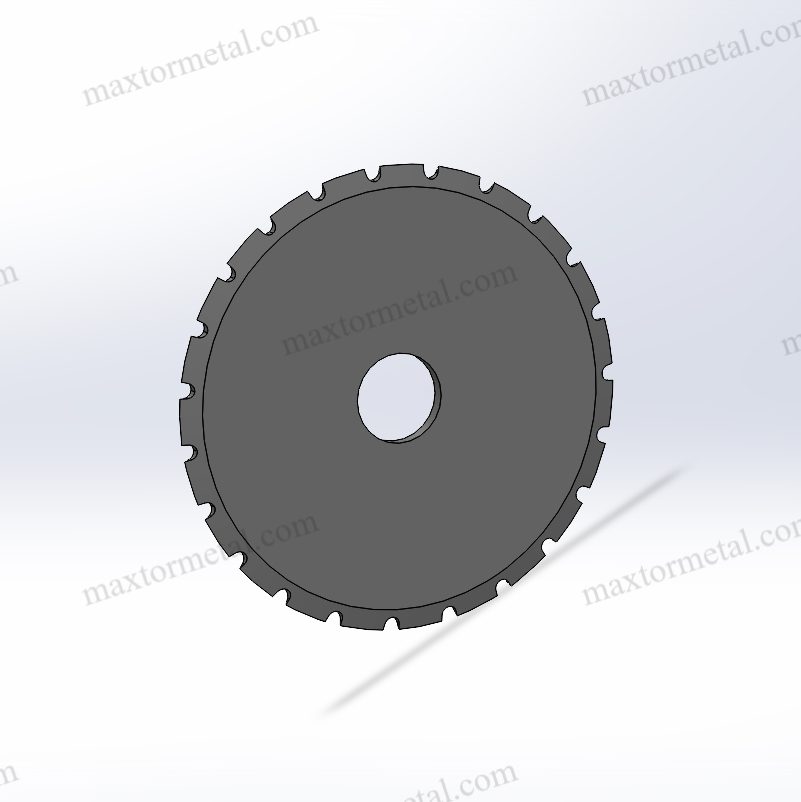
Straight blades are used for food wraps, flexible packaging, tear-off strips, and labels. Rotary blades are good for fast packaging lines and jobs that need nonstop cutting.
Key Advantages and Disadvantages
| Jenis Pisau | Keuntungan | Kekurangan |
|---|---|---|
| Pisau Lurus | Make neat, straight cuts; precise | Only cut in straight lines |
| Pisau Putar | Cut fast and last long | Need special machines sometimes |
Straight blades help you make neat lines and control how easy it is to tear. Rotary blades are best for big jobs and keep your line moving quickly.
Fitur Struktural
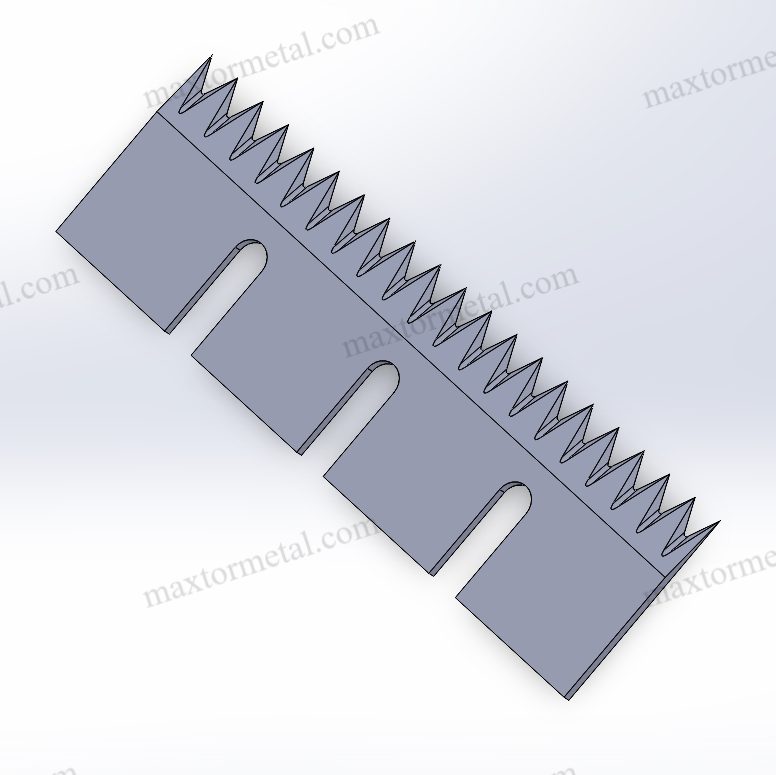
Straight blades have a straight edge for making straight cuts. Rotary blades are round and spin on a shaft for nonstop cutting.
Tip Seleksi
- Use straight blades for simple, straight cuts in flat materials.
- Pick rotary blades for fast, nonstop work.
- Try out blade samples to check how easy they tear and how clean the cut is.
- Ask Maxtor Metal for help with blade coatings and materials.
Industry Case Example
A snack company started using titanium-coated rotary blades. They changed blades 35% less and made 20% more products. Another factory used tungsten carbide rotary blades and saved $15,000 every year.
Toothed and Circular Blades
Bahan yang Cocok
Toothed and circular blades work with paper, films, foils, textiles, and nonwovens.
Aplikasi Umum
These blades are used for perforated labels, tear-off tickets, packaging films, and textile rolls.
Key Advantages and Disadvantages
| Jenis Pisau | Keuntungan | Kekurangan |
|---|---|---|
| Pisau Bergigi | Many patterns; teeth can change | Can leave rougher edges |
| Pisau Melingkar | Work fast and can be customized | Must be set up just right |
Toothed blades let you control how easy it is to tear things apart. Circular blades are good for roll-to-roll jobs and fast work.
Fitur Struktural
Toothed blades have jagged edges for different patterns. Circular blades are round and can have teeth or be smooth.
Tip Seleksi
- Pick the right tooth size and space for the tear you want.
- Use circular toothed blades for nonstop perforation.
- Test samples to make sure they meet packaging rules.
- Work for special blade shapes.
Industry Case Example
A label factory used micro-tooth blades and had 28% less downtime. Textile factories use circular blades for better tearing and less waste.
Custom and Specialty Options
Bahan yang Cocok
Custom blades are made for special films, multi-layer laminates, and other tricky packaging materials.
Aplikasi Umum
Custom blades are used in medical packaging, security labels, and special tear designs.
Key Advantages and Disadvantages
| Fitur | Keuntungan | Kekurangan |
|---|---|---|
| Pisau Kustom | Made for your needs; solve hard jobs | Cost more; take longer to get |
Custom blades help you match the tear and look to your product.
Fitur Struktural
Custom blades have special shapes, tooth patterns, or coatings for unique jobs.
Tip Seleksi
- Talk to Maxtor Metal for pisau khusus samples.
- Test blades to make sure they work for your packaging and rules.
- Use special blades for tamper-proof or breathable packages.
Industry Case Example
A box factory used custom micro-tooth blades and cut downtime from 14 hours to 5. Food companies use special blades for tamper-proof seals and easy-open packages.
Tip: Go over the perforating knives guide to pick the best blade for your packaging line.
Memilih Perforasi yang Tepat untuk Aplikasi Anda
Assessing Packaging Needs
Identify Packaging Material Types
Start by checking what materials you use for packaging. Each material, like film, paper, rubber, or metal, needs a special blade. Thin plastic film needs a blade that cuts cleanly and does not melt the edges. Thick rubber or metal needs a strong blade for tough jobs. When you match the blade to the material, you get better burst and tear strength. This helps you stop rough edges and wasting products.
Determine Product Protection Requirements
Think about how much protection your product needs. Some packages must stay sealed until the customer opens them. Others need to be easy to open. If you want strong seals, pick blades that give high burst strength. For easy-open packages, choose lower burst strength. You need to balance protection and easy opening. The right blade keeps your product safe and lets people open it easily.
Consider Packaging Design and Functionality
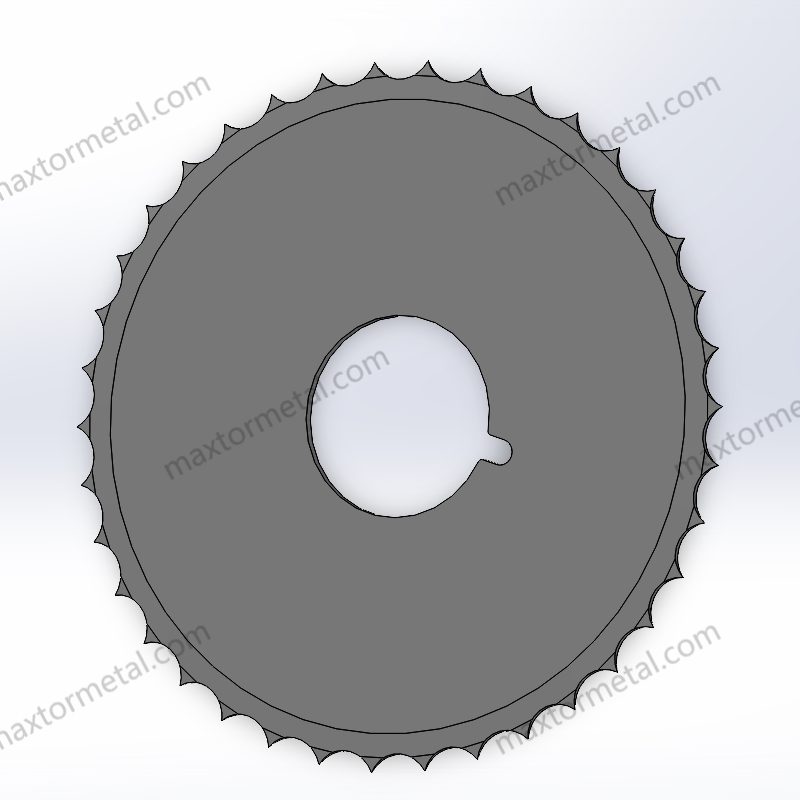
Look at your packaging design and what it needs. Does your package need a straight tear or a special shape? Do you want a perforated strip or a custom pattern? The blade you pick must fit your design. Rotary blades make long, straight lines. Toothed blades let you make different patterns. Custom blades help you get special shapes and features. Good design helps your product stand out and work better.
Evaluate Regulatory and Industry Standards
You must follow the rules for packaging in your industry. Some products, like food and medicine, need blades that do not rust or leave sharp edges. You may need to meet rules for burst strength or cut quality. Always check the rules before picking a blade. Following the standards keeps your products safe and helps you pass quality checks.
Step-by-Step Selection Process
Industry experts suggest using clear steps to pick the right perforating blade. You can use these steps to make smart choices:
- Find out what material you need to cut, like film, fabric, rubber, or metal.
- Decide if you want a smooth, serrated, or perforated cut.
- Measure how thick and dense your material is to know what the blade must do.
- Pick the blade type that fits your job, like slitter, crush cut, serrated, or rotary.
- Think about how fast your line runs and how much downtime you can handle. Choose a blade material and design that balances speed and durability.
- Make sure the blade fits your machine. Check the size, shape, and edge.
- Test sample blades on your real material. Look at the cut quality and burst strength.
- Change knife settings, like pressure, speed, and alignment, after testing.
- Ask blade suppliers or experts for advice and custom help.
- Watch how the blade works over time. Make small changes to keep cuts good and reduce repairs.
Tip: Always test sample blades before full production. This helps you find the best burst strength and cut quality for your packaging.
Consulting Experts and Suppliers
Engage with Technical Consultants for Guidance
You can get help from technical consultants who know about blades and packaging. They help you pick the right blade for your material and design. If you have a hard job, they can suggest custom solutions. Good advice saves you time and money.
Leverage Supplier Experience
Suppliers have lots of experience with perforating blades. They know how to match blade material and shape to your needs. You can ask them about picking the right knife material for your job. They help you avoid mistakes, like choosing the wrong blade size or edge.
Explore Customization and Prototyping Options
If you need a special blade, you can work with suppliers to design and test custom options. Suppliers offer quick prototyping and technical checks. You can order small batches for testing. This lets you try new designs and find the best burst strength for your package. Custom blades help you solve tough problems and make your product better.
Establish Ongoing Support and Quality Assurance
You should build a strong partnership with your supplier. They can help you with training, machine service, and blade care. Suppliers track blade performance and teach you how to measure efficiency. Ongoing support keeps your blades working well and your line running smoothly. Quality assurance means you get good blades every time.
Note: Working with trusted suppliers gives you technical support, quality control, and custom help. This keeps your packaging line efficient and your products safe.
Melakukan Perforasi pada Kertas dan Material Fleksibel
Material-Specific Considerations
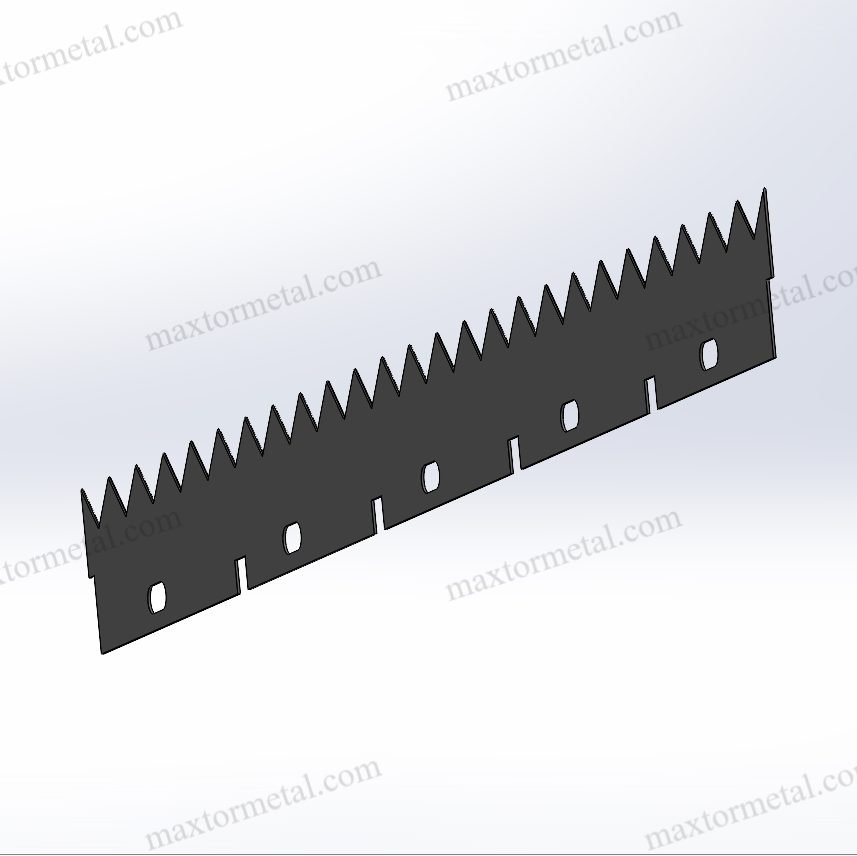
When you cut paper or flexible packaging, you must think about the material. Each packaging material acts differently when you cut or perforate it. LDPE is a common choice because it bends easily, keeps water out, and does not cost much. You can use LDPE for both big and tiny holes. It helps food stay fresh and is tough enough for shipping. PET/PE films need you to check how thick they are and how they handle heat when cutting. Companies like Amcor and Mondi have made new films and papers with holes to keep things fresh and help the planet.
| Jenis Bahan | Key Considerations and Properties |
|---|---|
| LDPE | Bends easily, keeps water out, cheap, good for big or tiny holes, keeps food fresh, strong for shipping |
| PET/PE Films | Need the right laser, ketebalan, and layers for clean holes and good air flow |
| Paper-Based Packaging | Tiny holes help food last longer and are better for the environment |
Optimizing Cut-to-Gap Ratio
The cut-to-gap ratio means how many cuts and spaces are in the line of holes. This pattern decides how easy it is to open the package and how strong it stays before opening. If you want a package that opens easily, use more cuts and smaller spaces. If you want a stronger seal, use fewer cuts and bigger spaces. The shape and space between the blade’s teeth also change how good the holes are. You should pick the blade pattern that fits your product.
Tip: Always test the cut-to-gap ratio on your packages before making a lot. This helps you stop weak seals or packages that are too hard to open.
Testing and Adjustments
You should always try out your blades before making a big batch. Start by making a few test cuts to see how the blade works. Change the pressure, speed, or how the blade lines up if you need to. Keep checking the cuts and make small changes to get better results. If you need help, ask your blade supplier for advice.
- Make a few test cuts to check the holes.
- Change pressure, speed, or blade position if needed.
- Watch the results and keep making them better.
- Ask experts for help if you have questions.
Testing and changing your process helps you get great results and keeps your packaging line working well.
Kesalahan Umum yang Harus Dihindari

Ignoring Material Differences
Some people think all blades work the same way. But every material needs its own blade. If you do not pay attention, you can hurt your blades and products. Here are mistakes people make:
- Using the wrong blade for the material, like a concrete blade on metal.
- Not thinking about if the material is hard or soft.
- Forgetting to check what is in the concrete before cutting.
- Picking the wrong diamond grit size or bond for the job.
- Using wide gullets for hard materials, which can make blades too hot.
If you make these mistakes, blades break and wear out fast. They get too hot and do not last long. You will see rough cuts, shaking, and messy edges. These problems mean more waste, higher costs, and safety issues. Always pick the right blade for your material and check the specs before you start.
Tip: Pick blades with the right bond and gullet size for your material. This helps you get smooth cuts and makes blades last longer.
Overlooking Production Demands
If you do not think about your production needs, blades will not last. You need to change machine settings and take care of your blades. The table below shows what happens if you forget about production demands:
| Menyebabkan | Effect on Blades and Line | Preventive Actions |
|---|---|---|
| Not changing machine settings | Blades wear out, cuts are uneven, line stops | Change speed, pressure, blade depth |
| Not doing blade maintenance | Blades get dull, too hot, cuts are rough | Clean, sharpen, and oil blades often |
| Bad installation or alignment | Cuts are crooked, jams happen, blades slip | Follow steps, check alignment |
| Not watching for blade wear | Bad quality, more waste, line stops | Check blades, replace or sharpen them |
| Material build-up and rust | Blades get damaged, rusty, do not last | Clean and dry blades, use oils |
| Not doing test runs | Setup mistakes, scrap, line stops | Test blades after you make changes |
You keep your line working well when you change settings and care for your blades.
Skipping Testing and Quality Checks
Testing and checking quality help you find problems early. If you skip these steps, you get bad cuts and waste products. You should use tools like vision systems, microscopes, and sharpness testers to look at blades. Workers can make quick choices and stop machines if they see problems. Regular checks and special inspections, like scanning electron microscopes, help you find tiny issues. You also get better results by using methods like Kaizen and Six Sigma.
Note: Testing and checking quality often keeps blades sharp, cuts neat, and products safe. You save money and stop downtime when you make inspections part of your work.
Picking the right perforating blade helps you make cleaner cuts. You will have less waste and your products will look better. Here are some things you should do:
- Pick a blade type and material that fits your packaging.
- Try out blade samples and change machine settings if needed.
- Get help from trusted suppliers for advice and Pisau Kustom.
Studies show that using custom blades and working with good suppliers makes cutting faster. You will change blades less often and customers will be happier. When you care about quality and work well with others, your packaging line works better and your products get noticed.
Tanya Jawab Umum
What materials can you cut with perforating blades?
Blades can cut many things. They work on paper, plastic film, laminates, textiles, rubber, and light metals. These blades give you neat cuts and strong perforations for each material.
How do you choose the right blade for your packaging line?
Pick a blade that matches your material and how fast you work. Try out sample blades before making lots of products. You can ask experts for help. The right blade shape and material give you better results.
How often should you replace perforating blades?
Check your blades often to see if they are dull or damaged. Change them if you notice rough cuts or more waste. Blades last longer, so you do not need to replace them as much.
Can you order custom perforating blades for special packaging needs?
Yes, Maxtor Metal lets you order custom blades. These blades are made for your special packaging, material, or tear pattern. Custom blades help you fix hard problems and make your products better.
Lihat Juga
Memahami Pisau Perforasi dan Aplikasi Praktisnya
Mengapa Pisau Perforasi Kemasan Digunakan Secara Luas di Industri Pengemasan

 English
  Spanish
  Italian
  French
  Portuguese
  Russian
  German
  Arabic
  Hindi
Hindi  Vietnamese
  Indonesian
  Japanese
  Korean
Tanggapan 6
Hello i think that i saw you visited my weblog so i came to Return the favore Im trying to find things to improve my web siteI suppose its ok to use some of your ideas
Thank you for your return visit.
Thank you for the auspicious writeup It in fact was a amusement account it Look advanced to far added agreeable from you However how can we communicate
Thank you for your kind message and recognition! I’m glad you liked the article. We can reach each other via email, WhatsApp, the contact form, or comments.
Your blog is a constant source of inspiration for me. Your passion for your subject matter is palpable, and it’s clear that you pour your heart and soul into every post. Keep up the incredible work!
Thank you for your kind message and recognition!