

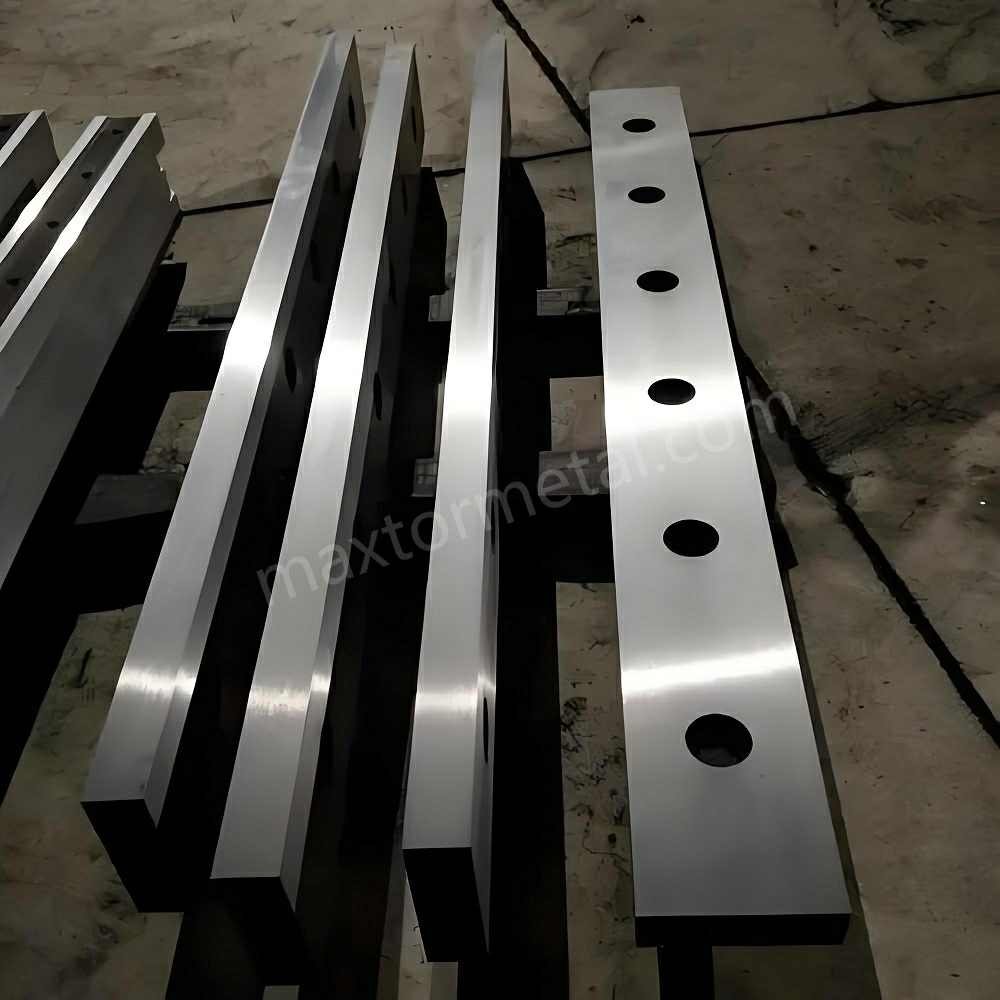
You will see that the rake angle is very important in industrial shearing. This angle changes how well you cut, how fast you work, and how long your blade lasts. The table below shows how different rake angles change shearing force and cut quality:
| Tipo di angolo di spoglia | Effetto sulla forza di taglio | Effetto sulla qualità del taglio |
|---|---|---|
| Rastrello positivo | Needs less shearing force | Makes cuts look better |
| Rake negativo | Needs more shearing force | Can make cuts look worse |
If you pick a sharper rake angle, your edges will look cleaner and smoother. Positive rake angles help the cutting face stay sharp, so you get better cuts. If you use a negative rake angle, your blade may be stronger, but the edge may not look as nice. You should match the rake angle to the material you are cutting. Softer metals need a sharp, positive rake angle. Harder or thicker metals need a less sharp angle to keep your blade safe. The Angolo del bisello della lama da taglio is also very important in this process. At Nanjing Metal Industrial, smart engineering makes sure every Shear Blade has the right rake angle for your job.
Punti chiave
- The rake angle changes how well the machine cuts. A positive rake angle makes cutting easier and the cut smoother.
- Picking the right rake angle is very important. Softer metals need a positive rake angle. Harder metals need a less sharp angle.
- A high rake angle can make cleaner cuts. But it might also bend or twist the material. You need to find the right balance for the best results.
- Taking care of shear blades helps them last longer. Clean them, sharpen them, and check the angles often for good cutting.
- Knowing how rake angle and shear blade bevel angle work together helps you get better cuts. It also helps stop burrs from forming.
- Change the rake angle for different material thicknesses. Thicker materials usually need a lower rake angle. This stops the blade from getting damaged.
- Always measure and set the rake angle before you start cutting. This helps you get clean cuts and keeps the blade sharp.
- Training and regular care can stop common mistakes with rake angles. This makes cutting better and safer.
Understanding Rake Angle and Shear Blade Bevel Angle
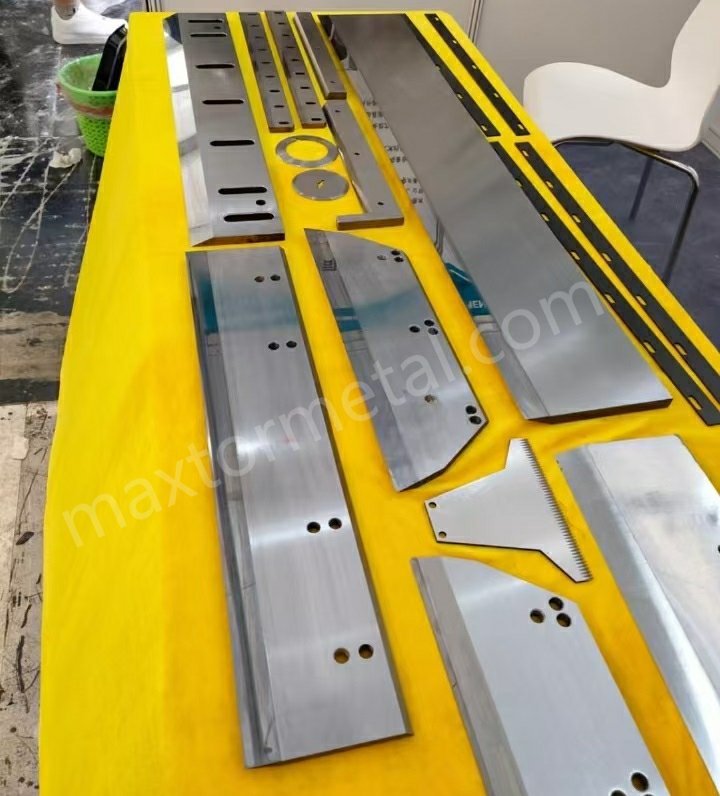
Rake Angle Definition in Shearing
When you work with industrial shearing, you need to understand the rake angle. The rake angle is the angle between the face of your cutting tool and the surface of the material you want to cut. This angle controls how the tool meets the material. You use the rake angle to decide how the blade will move through the metal. If you choose a positive rake angle, you make it easier for the blade to cut. You also help the chips move away from the cutting area. This means you use less power and get a smoother cut. If you use a negative rake angle, you make the blade edge stronger. This helps when you cut hard or brittle materials. The rake angle is important because it changes how the shear plane forms. The shear plane is where the material breaks and separates during cutting. You need to pick the right rake angle for the material you cut.
Shear Blade Bevel Angle Geometry
The shear blade bevel angle is the shape of the blade’s edge. You see this angle when you look at the blade from the side. The shear blade bevel angle works with the rake angle to control how the blade enters the material. If you set the shear blade bevel angle correctly, you get a sharp edge that cuts cleanly. The geometry of the shear blade bevel angle helps you focus the cutting force. You want the shear blade bevel angle to match the rake angle for the best results. When you set both angles right, you make the blade last longer and cut better.
Shear Angle and Cutting Mechanics
The shear angle is another key part of the cutting process. You use the shear angle to describe how the material slides and breaks as you cut. The shear angle works with the rake angle to control the way the material moves. If you use a high rake angle, you lower the force needed to cut. You also change the shear angle, which can make the material twist or bow. If you use a low rake angle, you need more force. This can make the cut less smooth and use more energy. You need to balance the rake angle and shear angle for the best cut.
Force Direction and Chip Flow
When you set the rake angle and shear blade bevel angle, you change the direction of the force. You want the force to move the chips away from the blade. If you use a high rake angle, you help the chips flow out. This makes the cut cleaner. If you use a low rake angle, the chips may not move as well. You may see more waste or rough edges. The shear angle also changes how the chips break off. You need to watch how the force and chip flow work together. This helps you get the best cut and keep your blade in good shape.
- A high rake angle can make the cut easier but may twist the material.
- A low rake angle needs more force and can make the cut rougher.
- The shear angle changes with the rake angle and affects how the material breaks.
- You need to set the shear blade bevel angle to match the rake angle for the best results.
Tip: Always check your rake angle, shear angle, and shear blade bevel angle before you start cutting. This helps you get clean cuts and keeps your blades sharp.
Rake Angle Impact on Shearing Quality and Efficiency
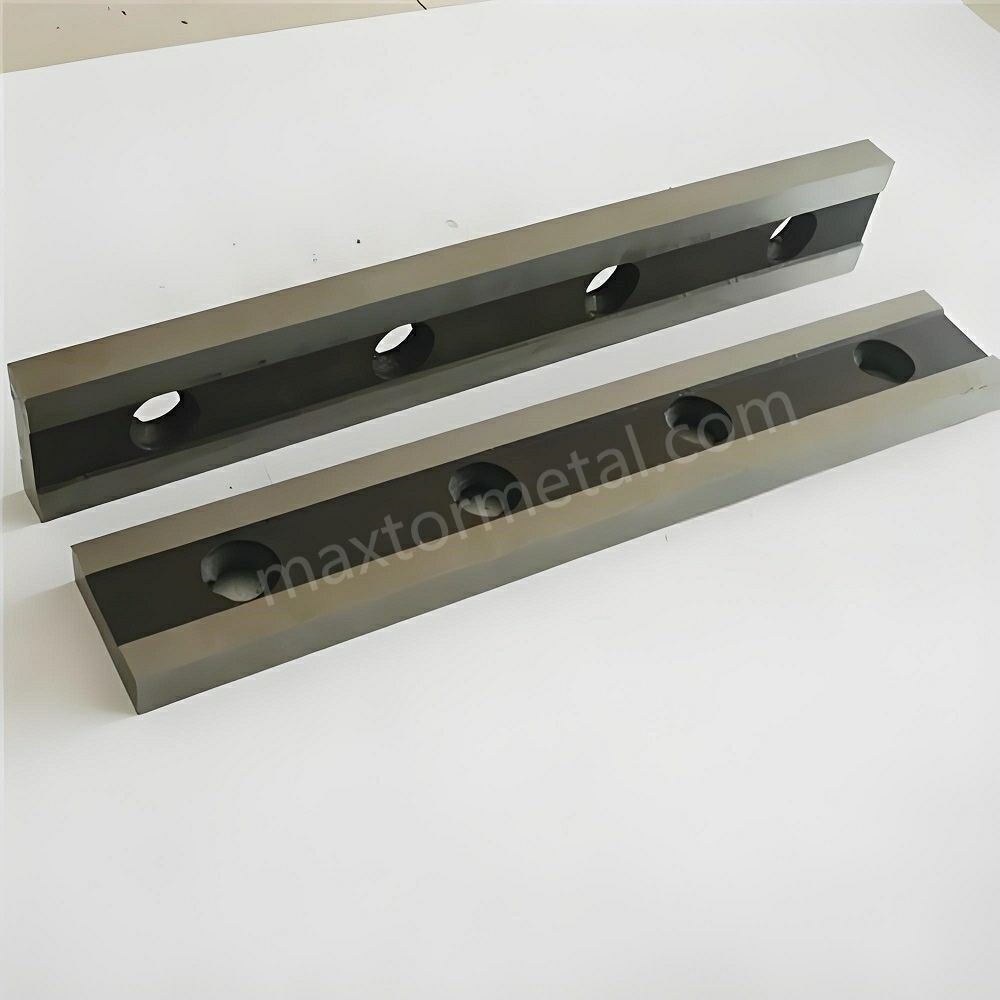
Cut Quality and Burr Formation
You want every cut to look neat and exact. The rake angle is very important for how your shear blades work. If you set the rake angle right, you get fewer burrs and a smoother edge. Burrs are tiny bits of metal that stick out after you cut. They make the edge rough and can cause trouble later.
Look at the table below. It lists the main things that change cut quality and burrs in industrial shearing:
| Fattore | Descrizione |
|---|---|
| Distanza della lama | The space between the top and bottom blades; it stops burrs and keeps the edge from bending. |
| Angolo di spoglia | Changes cutting force and how the material moves; best angles depend on how thick the material is. |
| Hold-Down Pressure | Holds the material still while cutting; must be set right to stop marks or moving. |
| Backstop Positioning | Makes sure cuts are correct; wrong settings make sizes wrong. |
| Spessore del materiale | Thicker pieces need changes in blade space and cutting force. |
| Durezza del materiale | Harder metals cut cleaner but need more force and wear blades faster. |
| Composizione del materiale | Different metals, like stainless steel or aluminum, need special settings for good cuts. |
| Condizioni della lama | Sharp, lined-up blades are needed for clean cuts; dull or crooked blades make more burrs. |
| Pratiche di manutenzione | Taking care of blades often keeps them working well and cuts looking good. |
If you use a bigger rake angle, you usually see smaller burrs. The table below shows how rake angle and feed rate change burr size:
| Angolo di spoglia | Velocità di avanzamento | Burr Height Change |
|---|---|---|
| Inferiore | Più alto | Increases |
| Più alto | Inferiore | Decreases |
A bigger rake angle and slower feed rate help you get a cleaner edge. You also make the size more exact. When you use the right shear angle, you stop the metal from twisting or bending. This helps you make parts that fit together well.
Edge Finish and Dimensional Accuracy
You want your finished parts to look smooth and fit just right. The rake angle helps you get a better edge. If you use a positive rake angle, you get a sharper edge and better size control. You avoid rough spots and keep the size correct. The shear angle also helps guide the cutting force. This stops the metal from bending or stretching. You get parts that match your plans every time.
Shearing Force and Energy Use
You need to think about how much force and energy you use when cutting. The rake angle changes how much force you need. If you use a positive rake angle, you need less force. You also use less power. This makes cutting easier and saves energy.
Shearing energy is easy to measure, so people use it to check tool space. Cutting with rake angles also has a lowest energy point; the energy goes down as you get closer to 0.20H space, but 0.20H was not big enough to show if energy goes up again at a bigger space.
Here are some key points about rake angle and energy use:
- A positive rake angle lowers cutting force, so cutting is smoother and uses less power.
- Negative rake angles make cutting harder and use more energy.
- The rake angle changes how well you cut and how much power you use.
The right rake angle helps you save energy and makes cutting work better. The table below shows how different things change energy use:
| Aspetto | Effect on Energy Consumption |
|---|---|
| Positive Rake Angle | Uses less power |
| Negative Rake Angle | Uses more power |
| Forza di taglio | Changes how much force you need to cut metal |
| Tool Wear and Life | Changes how long your tool lasts and works well |
| Chip Formation | Changes how chips look and how long tools last |
| Finitura superficiale | Changes how smooth and nice the cut looks |
Mechanical Force Analysis
When you use angled tools, you change how the blade touches the metal. The blade starts cutting at one spot and moves along the edge. This makes cutting easier and needs less force. Most big shear machines use rake angles up to 2°. If you use angles bigger than 5°, you might see more bending. You want to pick the best rake angle for your metal and its thickness. The shear angle also helps you control where the force goes. This keeps the cut straight and stops waste.
Blade Wear and Maintenance
You want your shear blades to last a long time. The rake angle changes how fast blades wear out and how much care they need. If you use the right rake angle, you put less stress on the blade. You also keep the edge sharp for more cuts. Taking care of your blades helps them last longer.
Here are some steps you should follow:
- Clean blades often with isopropyl alcohol and rags.
- Put oil on blades to keep them working well.
- Sharpen and grind blades often to keep them sharp.
- Check and fix blade space and line-up.
- Change old parts when needed.
- Handle blades carefully so they do not get damaged.
If you use Metal Industrial Shear Blades, you get blades made to last and work well. The special edge and good rake angle help you cut better and keep blades sharp longer. You can also get a blade made for special jobs. Visit the pagina lama personalizzata to learn more about your choices.
Blade Life and Regrinding
You need to watch for signs your blade is wearing out. If you see rough edges or more burrs, it may be time to sharpen your blade. Keeping the rake angle and shear angle right helps your blade last longer. Sharpening and lining up blades often keeps your cuts clean and your blades working well. Good care means you spend less time changing blades and more time cutting.
Tip: Always check your blade before starting a new job. Clean, sharp blades with the right rake angle give you the best results.
Shear Angle Trade-Offs: Force vs. Material Distortion

When you set up your shear, you must choose the right rake angle. This choice affects how much force you need and how your material behaves during cutting. You will see trade-offs between force and material distortion. Understanding these trade-offs helps you get the best results for your job.
Low Rake Angle Effects
Reduced Shearing Force Requirements
A low rake angle means the blade edge is closer to being straight up and down. When you use a low rake angle, you need less force to start the shear. The blade pushes straight down, so the cutting action happens quickly. This makes your machine work faster and helps you cut thin sheets or soft metals with less effort. You can run your shear at higher speeds because the cutting force stays low. This is helpful when you want to cut many pieces quickly.
Increased Material Distortion and Deformation
However, a low rake angle can cause problems with your material. The cutting force goes straight into the metal, which can make the piece twist, bow, or even curl. You may see these common issues:
- Twist: The cut-off piece may curl into a spiral or corkscrew shape. This happens a lot with thin sections.
- Bowing: The material may bend downwards during shearing. Long, thin strips show this problem the most.
You will notice more burrs and rough edges when you use a low rake angle. The cutting action can stretch or deform the metal, especially if you work with softer or ductile materials. You must check your parts for these defects after each cut.
Typical Applications and Limitations
You should use a low rake angle when you need to cut thin sheets, soft metals, or when you want to work fast. This setup works well for high-speed operations and for materials that do not need a perfect edge. You can use a low rake angle for aluminum, copper, or thin steel sheets.
But you must remember the limits. If you use a low rake angle on thick or hard metals, you may damage your blade or get poor results. You will also see more distortion in your parts. You must balance speed and quality when you choose a low rake angle.
High Rake Angle Effects
Higher Shearing Force Demands
A high rake angle means the blade edge leans forward more. When you use a high rake angle, you need more force to push the blade through the material. The cutting action spreads out over a longer area, so your machine must work harder. You may need to slow down your shear to keep control. This setup is common when you want a clean cut or when you work with thick or hard metals.
- UN high positive rake angle can lower the cutting force for some materials, making the process more efficient.
- A negative rake angle increases the force but gives the blade more strength for hard or brittle metals.
Improved Edge Quality and Dimensional Precision
You will see better edge quality when you use a high rake angle. The cutting edge slices through the metal, making a smooth and clean finish. You get less burr and a sharper edge. Your parts will match your size and shape plans more closely. The shear angle helps guide the force, so the material does not stretch or warp as much.
- Positive rake angles make the cutting edge sharper. This helps chips move away and lowers the force needed.
- Negative rake angles make the edge stronger but can leave a rougher finish.
Reduced Material Distortion
A high rake angle helps you control distortion. The cutting force spreads out, so the metal stays flat and does not twist or bow as much. You get parts that look better and fit together well. You can use a high rake angle for jobs where you need perfect edges and exact sizes.
But you must watch for some problems. Sometimes, a high rake angle can still cause twist or bow, especially in thin pieces. You may also need to adjust your shear angle for each type of metal or thickness.
Application Scenarios and Considerations
You should use a high rake angle when you want the best edge quality and size control. This setup works well for thick plates, hard metals, or when you need to avoid distortion. You may use a high rake angle for stainless steel, tool steel, or when you make parts for machines.
You must think about the extra force and time needed. A high rake angle can slow down your work because the blade moves over a longer path. You may need to set the rake angle for each job, which takes more time. You must also check for twist and bow in your cut pieces.
Suggerimento: adatta sempre l'angolo di spoglia e l'angolo di taglio al materiale e alle esigenze del lavoro. Questo aiuta a bilanciare la forza di taglio, la qualità del tagliente e la forma del pezzo.
Ecco una tabella che ti aiuterà a confrontare gli angoli di inclinazione bassi e alti:
| Tipo di angolo di spoglia | Forza di taglio | Qualità del bordo | Distorsione del materiale | Il migliore per | Sfide |
|---|---|---|---|---|---|
| Basso | Inferiore | Più ruvido | Più torsione/arco | Metalli sottili e morbidi | Più sbavature, meno precisione |
| Alto | Più alto | Più liscio | Meno torsione/curvatura | Metalli spessi e duri | Richiede più forza, installazione più lenta |
Come puoi vedere, l'angolo di spoglia e l'angolo di taglio interagiscono per controllare i risultati di taglio. Devi scegliere la configurazione giusta in base al materiale, allo spessore e alla qualità del taglio. Questo ti aiuterà a ottenere le migliori prestazioni dalle tue cesoie e dalle tue lame.
Selecting the Optimal Rake Angle for Shear Applications
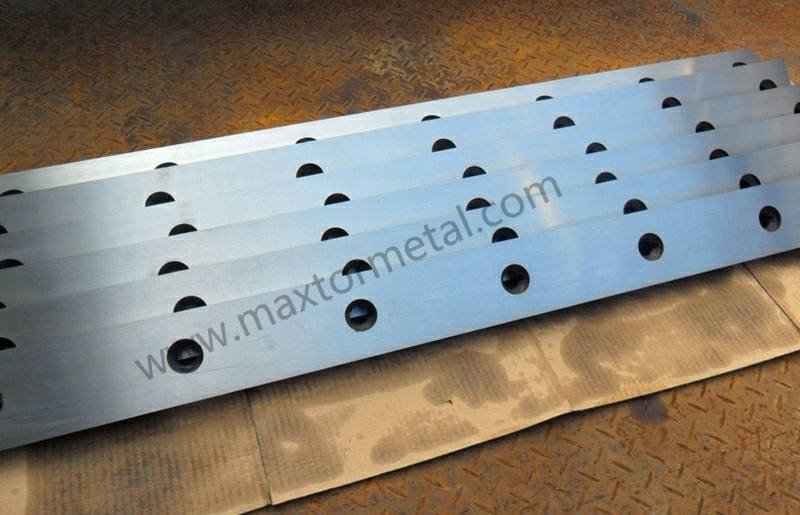
Tipo di materiale e spessore
Metal ad alta resistenza vs. morbidi
Devi scegliere l'angolo di spoglia corretto per il tuo metallo. I metalli duri come l'acciaio inossidabile richiedono un angolo diverso rispetto ai metalli teneri come l'alluminio. Se tagli metalli teneri, usa un angolo di spoglia positivo. Questo rende il taglio più facile e la superficie più liscia. Se tagli metalli duri, usa un angolo di spoglia negativo. Questo rende l'utensile più resistente e aiuta nei lavori più difficili. Per metalli molto duri, potrebbe essere necessario un angolo di spoglia pari a zero. Questo mantiene l'utensile rigido e resistente.
Ecco una tabella che mostra quale angolo di spoglia funziona per ogni metallo e cosa succede:
| Tipo di angolo di spoglia | Tipo di materiale | Effetti sulla lavorazione |
|---|---|---|
| Positive Rake Angle | Materiali più morbidi (ad esempio, alluminio) | Riduce le forze di taglio, migliora la finitura superficiale |
| Negative Rake Angle | Metalli duri (ad esempio acciaio inossidabile) | Aumenta la resistenza dell'utensile, migliore per operazioni pesanti |
| Angolo di spoglia zero | Materiali molto duri | Utilizzato negli utensili in metallo duro, mantiene la rigidità dell'utensile |
Controlla sempre il tipo di metallo che hai prima di impostare l'angolo di spoglia. Questo ti aiuterà a ottenere tagli migliori e a far funzionare le lame più a lungo.
Considerazioni sullo spessore per la selezione dell'angolo di spoglia
Anche lo spessore del metallo è importante per l'angolo di spoglia. Il metallo spesso richiede un angolo di spoglia inferiore. Questo evita un'eccessiva forza e protegge la lama. Il metallo sottile può richiedere un angolo di spoglia maggiore. Questo garantisce un taglio più netto e un bordo migliore.
La tabella seguente mostra quale angolo di spoglia da utilizzare per diversi spessori:
| Spessore del materiale (mm) | Angolo di inclinazione consigliato (gradi) |
|---|---|
| Fino a 2 | Poco meno di 1,5 |
| 0.5 | da 2 a 10 |
| Materiali non temprati | 0 |
Se tagliate lamiere sottili, usate un angolo di spoglia maggiore. Questo vi aiuterà a ottenere un bordo liscio e della giusta dimensione. Se tagliate lamiere spesse, usate un angolo di spoglia minore. Questo manterrà la lama salda e il taglio stabile.
Suggerimento: misura sempre lo spessore del metallo prima di impostare l'angolo di spoglia. Questo ti aiuterà a evitare errori e a ottenere tagli migliori.
Obiettivi applicativi e qualità del taglio
Precisione vs. produttività
Devi scegliere cosa è più importante per il tuo lavoro: tagli perfetti o lavoro veloce. Se vuoi tagli perfetti, usa un angolo di spoglia che offra un bordo liscio. Gli angoli di spoglia positivi sono i migliori per questo scopo. Ti aiutano a ottenere una finitura gradevole e la giusta dimensione. Se vuoi lavorare velocemente, usa un angolo di spoglia inferiore. Questo rende il taglio più facile e ti consente di procedere più velocemente.
Ecco alcuni punti che ti aiuteranno a scegliere:
- Gli angoli di spoglia positivi sono adatti per metalli teneri e lavorazioni accurate. Si ottengono tagli lisci e della giusta dimensione.
- Gli angoli di spoglia negativi sono più adatti per metalli duri e lavori difficili. Si ottiene un utensile resistente e duraturo.
Tagliando più velocemente, si spinge di più il metallo. Questo è importante se si vogliono tagliare molti pezzi rapidamente. Per un lavoro accurato, scegliere un angolo di spoglia che controlli le sollecitazioni nel metallo. Questo aiuta a trovare il giusto equilibrio tra tagli perfetti e lavoro veloce.
Bilanciamento tra qualità del taglio e velocità di produzione
Devi trovare il miglior mix tra qualità di taglio e velocità. Se vuoi ottenere un bordo migliore, usa un angolo di spoglia più alto. Questo ti darà un taglio più netto e di dimensioni migliori. Se vuoi lavorare più velocemente, usa un angolo di spoglia più basso. Questo rende il taglio più facile e veloce.
Ecco un elenco semplice per aiutarti a decidere:
- Utilizzare un angolo di spoglia maggiore per lavori che richiedono bordi perfetti e dimensioni esatte.
- Utilizzare un angolo di spoglia inferiore per lavori rapidi e quando si tagliano metalli sottili o morbidi.
- Prima di impostare l'angolo di spoglia, controllare sempre il tipo e lo spessore del metallo.
- Modificare l'angolo di taglio in base al lavoro da svolgere.
Impostando correttamente l'angolo di taglio, è possibile ottenere buoni tagli e lavorare velocemente. Testare sempre la configurazione prima di iniziare un lavoro impegnativo. Questo aiuta a evitare errori e a ottenere i migliori risultati.
Nota: l'angolo di spoglia e l'angolo di taglio corretti ti aiutano a raggiungere i tuoi obiettivi, che tu voglia tagli perfetti o un lavoro veloce. Modifica sempre le impostazioni in base al tipo di metallo e al lavoro da svolgere.
Best Practices for Rake Angle and Shear Blade Maintenance
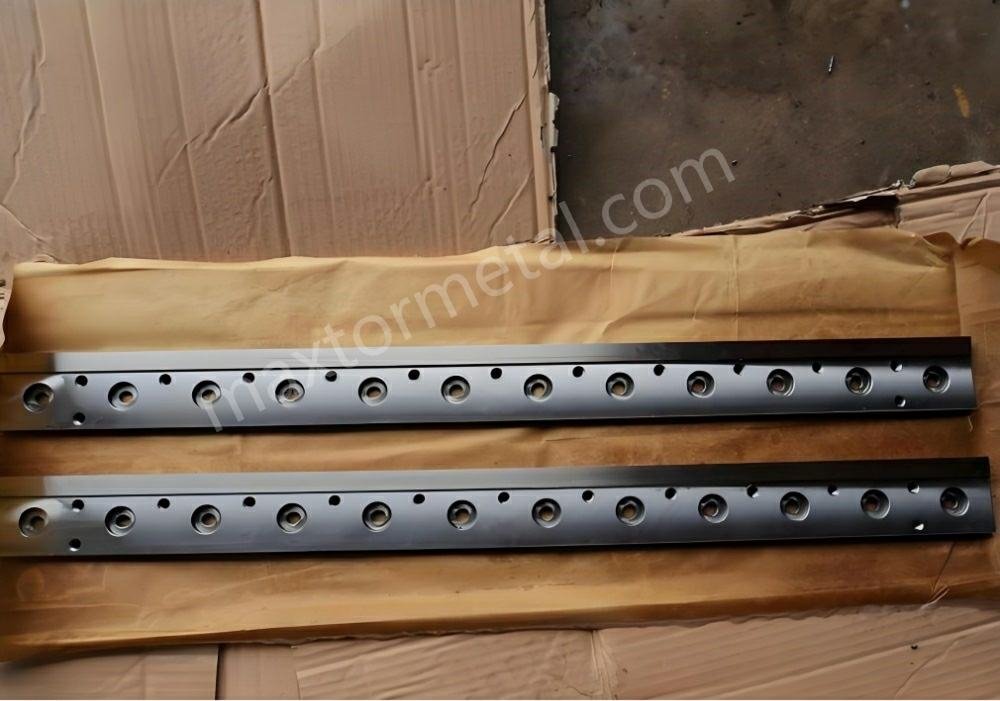
Impostazione e regolazione dell'angolo di spoglia
Calibrazione e misurazione
È necessario controllare l'angolo di spoglia prima di iniziare qualsiasi operazione di taglio. Una calibrazione accurata aiuta a ottenere il taglio migliore e mantiene la lama in buone condizioni. Utilizzare un goniometro o un goniometro digitale per misurare l'angolo di spoglia. Posizionare l'utensile contro la superficie della lama e confrontarlo con la superficie del materiale. Misurare sempre in diversi punti lungo la lama per assicurarsi che l'angolo rimanga lo stesso da un'estremità all'altra. Se si nota una differenza, regolare la lama fino a quando l'angolo di spoglia non corrisponde al valore desiderato.
Strumenti e attrezzature per la regolazione dell'angolo
Puoi utilizzare diversi strumenti per impostare l'angolo di spoglia della tua cesoia. Questi strumenti ti aiutano a effettuare modifiche rapide e precise:
- Goniometri e misuratori di angoli digitali per misurare l'angolo di spoglia.
- Chiavi e utensili dinamometrici per allentare e serrare i supporti delle lame.
- Calibri a spessori per il controllo del gioco delle lame.
- Viti di regolazione o sistemi idraulici sulla cesoia per la regolazione fine della posizione della lama.
Molte cesoie consentono di regolare l'angolo di spoglia per gestire materiali più spessi o duri. Ispezioni regolari e impostazioni corrette sono fondamentali per prestazioni ottimali.
Procedure di impostazione dell'angolo passo dopo passo
Per impostare l'angolo di spoglia della tua cesoia puoi seguire questi passaggi:
- Spegnere le cesoie e bloccarle per sicurezza.
- Pulire la lama e l'area di montaggio.
- Utilizzare un goniometro o un calibro digitale per misurare l'angolo di inclinazione attuale.
- Allentare i supporti delle lame con l'attrezzo giusto.
- Regolare la lama utilizzando le viti di regolazione della cesoia o il sistema idraulico.
- Misurare nuovamente l'angolo di inclinazione per verificare la regolazione.
- Stringere i supporti e controllare ancora una volta l'angolazione.
- Provare le cesoie su un pezzo campione per assicurarsi che il taglio sia perfetto.
Suggerimento: annotare sempre l'angolo di rastrellamento finale nel registro di manutenzione. Questo aiuta a monitorare le variazioni e a individuare tempestivamente eventuali problemi.
Errori comuni di calibrazione e come evitarli
Potresti riscontrare alcuni errori comuni durante l'impostazione dell'angolo di spoglia. Questi errori possono compromettere le prestazioni della tua cesoia:
- Misurazione di un solo punto sulla lama, saltando gli angoli irregolari.
- Utilizzo di strumenti usurati o sporchi che forniscono letture errate.
- Dimenticare di bloccare i supporti delle lame dopo la regolazione.
- Saltare il taglio di prova prima di iniziare un lavoro importante.
È possibile evitare questi problemi controllando l'angolo di spoglia in diversi punti, pulendo gli utensili ed effettuando sempre un taglio di prova. Annotare ogni regolazione nel registro di lavoro per un migliore controllo di qualità.
Mantenimento dell'angolo di smussatura della lama di taglio
Riaffilatura e controllo qualità
Per ottenere i migliori risultati di taglio, è necessario mantenere l'angolo di smusso affilato. L'affilatura regolare ripristina il filo corretto e mantiene l'angolo di spoglia come previsto. Le lame affilate garantiscono tagli puliti e precisi. Riducono inoltre i danni al materiale e aiutano a terminare il lavoro più velocemente. Mantenendo le lame affilate, se ne prolunga la durata e si rende il lavoro più sicuro. Si ottengono anche tagli più uniformi e precisi, il che è importante per lavori di precisione.
Quando si riaffila, è necessario:
- Assicurarsi che il bordo della lama rimanga parallelo alla base di montaggio.
- Ripristinare ogni volta l'angolo di smusso corretto.
- Controllare il calore di molatura per preservare la durezza e la durata della lama.
Segni di usura della lama e quando riaffilarla
Dovresti prestare attenzione a questi segnali che indicano che la lama della tua cesoia ha bisogno di essere riaffilata:
- Ulteriori sbavature o bordi irregolari sui tagli.
- La lama risulta smussata o striscia attraverso il materiale.
- Si notano scheggiature o crepe sul filo della lama.
- Per tagliare lo stesso materiale, la cesoia necessita di più forza.
Se notate uno qualsiasi di questi segnali, fermatevi e riaffilate la lama. Non aspettate che la lama sia troppo usurata. Una riaffilatura tempestiva mantiene l'angolo di spoglia e l'angolo di smusso in condizioni ottimali.
Procedure di controllo qualità per la coerenza dell'angolo di smusso
È necessario controllare l'angolo di smusso dopo ogni riaffilatura. Utilizzare un goniometro o un goniometro per misurare l'angolo lungo l'intera lama. Confrontare le letture con le specifiche originali. Se si notano differenze, regolare il processo di affilatura. Tenere traccia di ogni misurazione nel registro di manutenzione. Questo aiuta a individuare le tendenze e a risolvere i problemi prima che peggiorino.
Nota: angoli di smusso uniformi aiutano a mantenere l'angolo di spoglia corretto. Questo si traduce in risultati di taglio migliori e una maggiore durata della lama.
Pianificazione della manutenzione e tenuta dei registri
Dovresti stabilire un programma regolare per il controllo e la manutenzione delle lame delle tue cesoie. Annota ogni intervento di manutenzione in un registro. Includi la data, l'angolo di spoglia, l'angolo di smusso e le eventuali modifiche apportate. Questa registrazione ti aiuterà a pianificare la manutenzione futura e a individuare i modelli di usura delle lame. Una buona registrazione ti aiuterà anche a formare i nuovi membri del team e a mantenere la tua cesoia in perfetto funzionamento.
Un semplice programma di manutenzione potrebbe essere il seguente:
| Compito | Frequenza | Note |
|---|---|---|
| Controllo dell'angolo di spoglia | Settimanale | Misurare in più punti |
| Pulizia della lama | Dopo ogni turno | Rimuovere i detriti e la lama dell'olio |
| Controllo dell'angolo di smusso | Dopo la riaffilatura | Utilizzare un calibro per smussi |
| Riaffilatura delle lame | Secondo necessità | Fai attenzione ai segni di usura |
| Aggiornamento del registro di bordo | Ogni compito | Registrare tutte le misurazioni |
Mantenere un buon programma di manutenzione ti aiuta a sfruttare al meglio le tue cesoie e a mantenere le lame affilate e pronte per qualsiasi lavoro.
Common Rake Angle Mistakes and Solutions
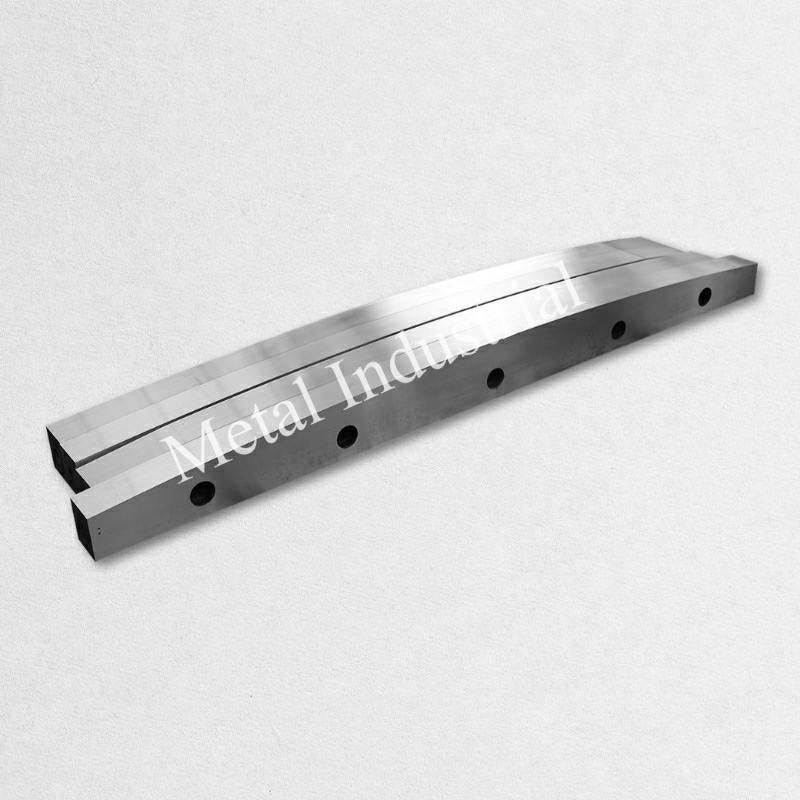
Errori frequenti nelle operazioni di taglio
A volte, si imposta l'angolo di spoglia sbagliato durante il taglio del metallo. Questo può causare problemi e spreco di materiale. Un grave errore è quando il metallo si torce o si arriccia dopo il taglio. Questo accade se si utilizza l'angolo di spoglia sbagliato per il metallo o il suo spessore.
Ecco una tabella che mostra i problemi più comuni, perché si verificano e come risolverli:
| Difetto | Descrizione | Causa | Soluzione |
|---|---|---|---|
| Torsione | Dopo il taglio, il metallo si attorciglia o si arriccia. | Angolo di spoglia eccessivo | Modificare l'angolo di spoglia in base alla forma del foglio, al tipo di metallo e al modo in cui si desidera tagliare. |
| Intrecciare | Il pezzo tagliato forma una spirale o un cavatappi. | Angolo di spoglia eccessivo | Ridurre l'angolo di spoglia fino a raggiungere quello necessario in base al metallo e allo spessore. |
| Torsione | Il foglio appare attorcigliato a formare una pergamena o una spirale. | Angolo di spoglia sbagliato | Pick the rake angle that fits the metal and how you plan to cut it. |
Twisting and curling often happen when the rake angle is too high. If you see these problems, check your settings right away. Always match the rake angle to the metal type and thickness. Using the wrong angle can also make rough edges, more burrs, and hurt your blade.
Incorrect Angle, Material Mismatch
Sometimes, people pick a rake angle that does not fit the metal they want to cut. If you use a high rake angle for thick or hard metals, the metal may twist and the edge may look bad. If you use a low rake angle for thin or soft metals, you may get more burrs and rough cuts. Using the wrong angle can also make your shear work harder and wear out the blade faster.
To stop these problems, always check the metal type and thickness before you set the rake angle. Use the right angle for each job. This helps you get clean cuts and keeps your machine working well.
Misure preventive
Training and Maintenance Schedules
You can stop most rake angle mistakes by following some easy steps. Good training and regular care help you avoid problems and keep your shear working well.
Here are some ways to stop rake angle mistakes:
- Select the Right Tools
Always pick blades and tools with a rake angle that matches the metal you want to cut. Check the specs before you start. - Fine-Tune Machine Settings
Change the blade gap, shear angle, and cutting speed to fit the metal. Small changes can help you get better cuts. - Invest in Advanced Equipment
Use good machines that let you set and control the rake angle easily. New machines help you get the same results every time. - Maintain and Calibrate Equipment
Plan regular care and checks for your shear. Clean and look at the blades, check the rake angle, and write down your settings. This keeps your machine working well.
Tip: Make a schedule for care and follow it. Teach your team to spot blade wear and wrong rake angles. Good habits help you get better cuts and keep blades working longer.
You should also keep a logbook for all care and changes. Write down the rake angle, metal type, and any changes you make. This record helps you find problems and fix them before they get worse.
If you follow these steps, you can stop most rake angle mistakes. You will get better cuts, waste less metal, and your blades will last longer. Your shear will work better, and you will spend less time fixing problems.
You can see how rake angle and shear blade bevel angle affect each cut. The right rake angle helps you get smoother edges. It also means you use less force and chips move better. Look at the table below to see how positive and negative rake angles change things:
| Fattore | Positive Rake Angle | Negative Rake Angle |
|---|---|---|
| Chip Formation | Easier, continuous | Segmented, rougher |
| Cutting Forces | Inferiore | Più alto |
| Finitura superficiale | Più liscio | Più ruvido |
Metal Industrial makes shear blades that help you pick the best rake angle. These blades cut well and last a long time. Always follow good steps and try not to make mistakes. If you need help, you can ask our sales engineers Qui.
Domande frequenti
What is a rake angle in industrial shearing?
The rake angle is the angle between the face of your shear blade and the material you want to cut. You use this angle to control how the blade slices through metal. The right rake angle helps you get cleaner cuts.
Why does the rake angle matter for cut quality?
You get smoother edges and fewer burrs when you set the rake angle correctly. A good rake angle lets your blade move through the material easily. This helps you make parts that fit together well.
How do you choose the best rake angle for different materials?
You should use a higher rake angle for soft or thin metals. For hard or thick metals, pick a lower rake angle. Always check your material type and thickness before you set the angle.
What happens if you use the wrong rake angle?
If you use the wrong rake angle, you might see rough edges, more burrs, or twisted parts. Your blade could also wear out faster. Always match the rake angle to your job.
How often should you check and adjust the rake angle?
You should check the rake angle before every new job. If you change materials or thickness, measure and adjust the angle. Regular checks help you keep your cuts clean and your blades sharp.
Can you adjust the rake angle on all shearing machines?
Most modern shearing machines let you adjust the rake angle. Some older machines may not have this feature. Always read your machine’s manual to see if you can change the angle.
What is the difference between rake angle and shear blade bevel angle?
The rake angle controls how the blade meets the material. The shear blade bevel angle is the shape of the blade’s edge. Both angles work together to help you get the best cut.
Vedi anche
Ottenere Tagli a Zero Bave con Lame da Taglio a Ghigliottina di Precisione

 English
  Spanish
  Italian
  French
  Portuguese
  Russian
  German
  Arabic
  Hindi
Hindi  Vietnamese
  Indonesian
  Japanese
  Korean