

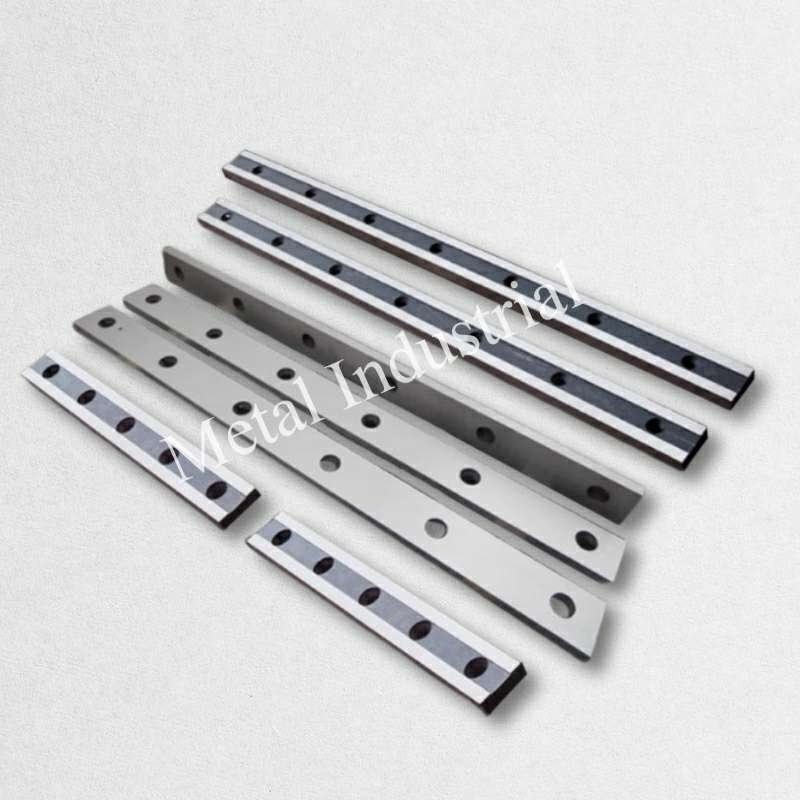
You often face unexpected issues with 금속 전단 블레이드 in industrial machinery. Partnering with Nanjing Metal ensures fast troubleshooting to keep your production line moving and reduce costly downtime. A McKinsey study shows that companies using predictive maintenance can cut downtime by up to 50% and lower maintenance costs by 30%. Problems like burrs, warping, and chipping disrupt sheet metal shearing, but with a 커스텀 블레이드 from Nanjing Metal, each blade endures millions of cycles and resists vibration, surface stress, and cracks. For more information or to 문의하기 Nanjing Metal, reach out today to keep your blades performing at their best.
주요 요점
- Keep metal shear blades sharp, clean, and well-aligned to avoid common problems like burrs, warping, chipping, and dullness.
- Regularly inspect blades before each shift and perform weekly and monthly maintenance to catch issues early and maintain cut quality.
- Use the right blade material and set proper blade clearance to reduce wear, prevent defects, and extend blade life.
- Replace blades promptly when you see signs of wear such as chips, cracks, dull edges, or increased cutting force to avoid downtime and damage.
- Consider custom blades for better cutting speed, longer blade life, and lower maintenance costs tailored to your specific production needs.
Common Problems
버스
You may notice burrs on the edge of your cut metal. Burrs are small, rough projections that form when the shear edge quality drops. Burr formation is one of the most common defects in metal shearing. These burrs can lower the quality of your finished product and make further processing difficult. Burrs often signal problems with blade sharpness or alignment. If you see burrs, check for blade wear or improper clearance. Burr formation also affects dimensional accuracy and can lead to more defects if not addressed.
워핑
Warping happens when the metal bends or twists after a cut. This material distortion can ruin the accuracy of your parts. Warping is a common defect that results from uneven force during cutting or from worn blades. You may see the metal curve or twist, which lowers the overall quality of your work. Warping also makes it hard to maintain dimensional accuracy and can cause problems in later steps.
치핑
Chipping means small pieces break off the blade or the metal during a cut. This defect can damage both the blade and the workpiece. Chipping often results from using the wrong blade material or from cutting very hard metals. You may see chips along the shear edge, which reduces shear edge quality and accuracy. Chipping also increases burr formation and can lead to more defects.
둔함
Dullness occurs when the blade loses its sharp edge. A dull blade cannot make a clean cut, which lowers the quality of the shear edge. Dullness leads to more burrs and poor dimensional accuracy. You may notice increased cutting force and more material distortion. Dull blades also cause more defects and reduce the overall quality of your products.
치수 오류
Dimensional errors happen when the cut part does not match the required size. These errors affect the accuracy and quality of your work. Dimensional errors often result from blade wear, misalignment, or material distortion. You may see parts that are too long, too short, or uneven. These errors can lead to more defects and lower the value of your finished products.
고르지 않은 절단
Uneven cuts mean the cut surface is not straight or smooth. This problem affects both the quality and accuracy of your parts. Uneven cuts often result from blade misalignment, dullness, or material distortion. You may see jagged edges or slanted cuts, which increase burr formation and other defects. Uneven cuts make it hard to achieve good shear edge quality and dimensional accuracy.
문제 해결
문제점 파악
버스
You can spot burrs by looking for rough, raised edges along the cut line. These small projections often appear after the shearing process and signal a drop in shear edge quality. During inspections, check for burrs on both sides of the cut. Use your fingers to feel for sharpness or unevenness. Automated inspection systems, such as machine vision, can help you detect burrs in real time. Regular checks at setup and during production help you catch burr formation early.
워핑
You identify warping when the metal bends or twists after a cut. Hold the part up and look for curves or twists along the length. Place the cut piece on a flat surface to see if it rocks or does not sit flat. Warping affects dimensional accuracy and can ruin the quality of your finished product. Technicians often use straightedges or gauges to measure the amount of distortion.
치핑
Chipping shows up as small missing pieces along the blade or the cut edge. You may see tiny notches or cracks on the blade itself. Inspect the blade under good lighting and use a magnifier if needed. Chipping lowers shear edge quality and can cause more defects in the shearing process. Watch for chips during both setup and routine checks.
둔함
You notice dullness when the blade edge looks rounded or worn. A dull blade cannot make a clean cut, so you may see more burrs and rough edges. You may also feel increased resistance during the shearing process. Compare the blade to a new one to check for loss of sharpness. Dullness often leads to poor dimensional accuracy and lower product quality.
치수 오류
Dimensional errors appear when the cut part does not match the required size. Use calipers or micrometers to measure the length, width, and thickness of the cut piece. Compare these measurements to your specifications. Even small errors can affect the accuracy and quality of your work. Regular sampling and statistical checks help you catch these defects early.
고르지 않은 절단
You can identify uneven cuts by looking for jagged or slanted edges. The cut surface may not be straight or smooth. Run your finger along the edge to feel for bumps or dips. Uneven cuts lower shear edge quality and make it hard to maintain dimensional accuracy. Automated sensors and visual checks help you spot this problem during production.
원인
버스
Burrs often form when the blade becomes dull or misaligned. Incorrect blade clearance can also cause burr formation. If you use the wrong blade material or set the machine incorrectly, you may see more burrs. High cutting force and worn dies increase the risk of burrs. Changes in material thickness or hardness can also lead to more burrs during the shearing process.
워핑
Warping usually happens when the cutting force is uneven. Worn or damaged blades can cause the metal to bend or twist. Incorrect machine settings, such as improper hold-down pressure, also lead to warping. If the material is too thin or soft, it may warp more easily. High-speed cuts and poor support during the shearing process increase the risk.
치핑
Chipping occurs when you use the wrong blade material or cut very hard metals. Excessive cutting force and improper blade clearance can cause chips. If the blade has micro-cracks or defects, it may chip during use. Changes in machine settings or material properties also contribute to chipping. Poor maintenance and lack of lubrication make the problem worse.
둔함
Dullness results from normal wear over time. Cutting abrasive or hard materials speeds up blade wear. Poor lubrication and lack of cleaning also cause dullness. If you use the blade beyond its service life, it will lose its sharp edge. Frequent cutting without regular maintenance leads to faster dulling.
치수 오류
Dimensional errors often come from blade wear or misalignment. Incorrect machine calibration and poor setup cause parts to be too long or too short. Material movement during the shearing process can also affect accuracy. Changes in material thickness or hardness may lead to inconsistent cuts. Lack of regular inspection increases the risk of dimensional errors.
고르지 않은 절단
Uneven cuts happen when the blade is misaligned or dull. Worn guides or supports can cause the material to shift during cutting. Incorrect blade clearance and poor machine setup also lead to uneven cuts. If the material is not held firmly, it may move and cause jagged edges. Variations in material thickness or hardness make the problem worse.
솔루션
버스
To fix burrs, start by inspecting the blade for wear or misalignment. Adjust the blade clearance to match the material thickness. Replace or sharpen the blade if needed. Clean the blade and remove any debris. Use proper machine settings to reduce burr formation. Run a test cut and check the shear edge quality before resuming full production.
워핑
Correct warping by checking the blade condition and replacing worn blades. Adjust the hold-down pressure to keep the material flat during the shearing process. Make sure the support table is level and free of debris. Use slower cutting speeds for thin or soft materials. Run a sample cut and measure for flatness and dimensional accuracy.
치핑
Address chipping by using the correct blade material for your application. Inspect the blade for cracks or chips and replace it if damaged. Adjust the cutting force and blade clearance to reduce stress on the blade. Lubricate the blade regularly to prevent overheating. Check machine settings and material properties before starting the shearing process.
둔함
Restore blade sharpness by removing the blade and sharpening it according to manufacturer guidelines. Replace the blade if sharpening does not restore the edge. Clean and lubricate the blade seat before reinstalling. Schedule regular maintenance to prevent dullness. Always use the right blade for your material to maintain shear edge quality.
치수 오류
Fix dimensional errors by recalibrating the machine and checking blade alignment. Measure and adjust the blade clearance for the material thickness. Inspect the support guides and replace if worn. Use precise measuring tools to verify cut dimensions. Implement regular sampling and statistical checks to maintain accuracy.
고르지 않은 절단
Solve uneven cuts by aligning the blade and checking for wear. Replace dull or damaged blades. Adjust the material supports and guides to prevent shifting during the shearing process. Set the correct blade clearance and machine settings. Run a test cut and inspect the edge for smoothness and straightness.
Troubleshooting Checklist
Technician’s Troubleshooting Checklist
- Inspect blades for visible wear, burrs, chipping, and dullness at setup and during production.
- Check blade alignment and clearance before each shift.
- Use calipers or micrometers to measure cut dimensions and verify accuracy.
- Monitor for warping by placing cut parts on a flat surface.
- Track the number of cuts per blade and compare to historical averages.
- Apply Acceptable Quality Level (AQL) sampling for final inspection.
- Segregate nonconforming parts and maintain traceability.
- Use machine vision or sensors for real-time defect detection.
- Record all findings and corrective actions in a maintenance log.
- Always follow safety procedures and use personal protective equipment.
Prevention
버스
You can prevent burrs by keeping blades sharp and properly aligned. Set the correct blade clearance for each material. Clean and lubricate the blade regularly. Use the right blade material for your application. Monitor the shearing process and inspect parts for burr formation.
워핑
Prevent warping by using even hold-down pressure and supporting the material during cutting. Replace worn or damaged blades promptly. Adjust machine settings for each material type. Keep the support table clean and level. Run test cuts to check for flatness and dimensional accuracy.
치핑
Reduce chipping by selecting the right blade material and maintaining proper blade clearance. Avoid excessive cutting force. Inspect blades for cracks or chips before use. Lubricate the blade to reduce heat and stress. Schedule regular maintenance to catch early signs of chipping.
둔함
Prevent dullness by sharpening or replacing blades on a regular schedule. Clean and lubricate blades after each use. Avoid cutting materials that exceed the blade’s rated hardness. Store blades in a dry, safe place to prevent corrosion. Keep a maintenance log to track blade performance.
치수 오류
Maintain dimensional accuracy by calibrating machines regularly and checking blade alignment. Use precise measuring tools for setup and inspection. Replace worn guides and supports. Monitor the shearing process for changes in material properties. Implement statistical process control to catch errors early.
고르지 않은 절단
Prevent uneven cuts by aligning blades and supports before each shift. Replace dull or damaged blades. Set the correct blade clearance and machine settings. Hold the material firmly during the shearing process. Inspect cut edges for smoothness and straightness.
Quick-Reference Table
| 문제 | 예방 팁 | 검사 빈도 |
|---|---|---|
| 버스 | Keep blades sharp, set correct clearance, clean blade | Before each shift |
| 워핑 | Use even hold-down, support material, replace blades | 주간 |
| 치핑 | Select right blade, avoid excess force, lubricate | 매 사용 전 |
| 둔함 | Sharpen/replace blades, clean after use, store safely | 각 근무조가 끝난 후 |
| 치수 오류 | Calibrate machine, use precise tools, replace guides | 주간 |
| 고르지 않은 절단 | Align blades/supports, hold material firmly | Before each shift |
유지
세척 및 윤활
Recommended Cleaning Frequency and Methods
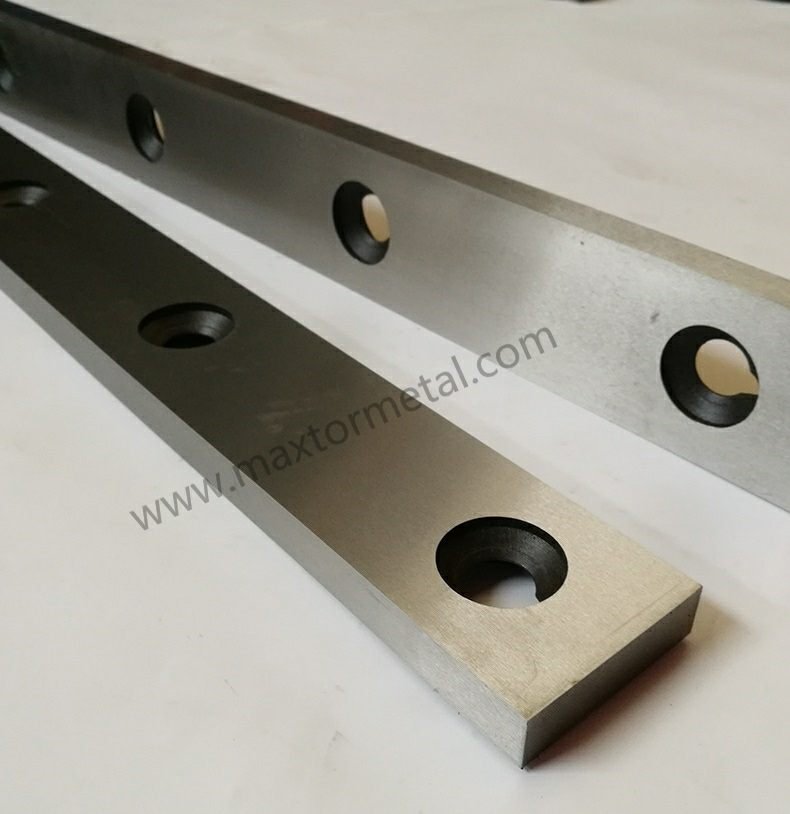
You should clean your metal shear blades after every shift. Daily cleaning helps remove metal dust, oil, and adhesive residue. Studies show that blades cleaned daily last 25–35% longer than those cleaned less often. Use a soft cloth or brush to wipe away debris. For sticky residues, use ultrasonic cleaning or a mild detergent solution. Avoid using abrasive pads that can scratch the blade surface.
Suitable Cleaning Agents and Tools
Choose cleaning agents that do not corrode metal. Mild detergents, isopropyl alcohol, and specialized blade cleaners work well. Use soft brushes, microfiber cloths, or ultrasonic cleaners for best results. Avoid steel wool or harsh chemicals, as these can damage the blade’s protective layer.
Lubrication Points and Types of Lubricants
Apply lubricant to the blade edge and pivot points before and after each shift. PTFE-based lubricants reduce friction by up to 55% and can extend blade life by 40%. Proper lubrication also lowers cutting force and improves energy efficiency. Always follow the manufacturer’s recommendations for lubricant type and application frequency.
Common Mistakes to Avoid During Cleaning and Lubrication
Do not skip cleaning or lubrication, even during busy periods. Improper lubrication causes 30–40% of premature blade failures. Never use abrasive tools or harsh chemicals. Avoid over-lubricating, which can attract dust and debris. Always dry blades thoroughly before storage to prevent rust.
정렬 및 교정
Step-by-Step Alignment Procedure
- Power off the machine and lock it out for safety.
- Loosen the blade mounting bolts.
- Use a straightedge to check blade alignment.
- Adjust the blade position until it is parallel to the cutting bed.
- Tighten bolts to the specified torque.
- Run a test cut and inspect the result.
Calibration Tools and Equipment
You can use calibration probes, laser displacement sensors, and micrometers. These tools help you achieve sub-millimeter accuracy. For example, a semi-automatic calibration probe can keep relative error within 0.1 mm. Laser scanners and point cloud registration methods also provide high precision.
| 방법 | 설명 | Quantitative Accuracy |
|---|---|---|
| Calibration probe | Robot touches feature points | Error ≤ 0.1 mm |
| Laser scanner + ICP | Fine matching for small blades | 높은 정확도 |
| Displacement sensor | Nine-point fitting | Error ≤ 2 mm |
정렬 불량의 징후
Watch for uneven cuts, increased burrs, or parts that do not meet size requirements. Misalignment can also cause extra noise or vibration during operation.
Preventive Measures for Maintaining Alignment
유지보수 루틴의 일환으로 정렬 상태를 매주 점검하십시오. 정밀 공구를 사용하고 단계별 절차를 따르십시오. 모든 조정 사항은 유지보수 일지에 기록하십시오.
점검 일정
일간, 주간 및 월간 점검 작업
- 일일: 블레이드 청소, 눈에 보이는 마모 점검 및 윤활유 도포.
- 주간: 정렬 상태 검사, 블레이드 간격(clearance) 점검 및 절단 품질 확인.
- 월간 간행물: 교정 및 정밀 검사를 포함한 전체 블레이드 유지보수 점검을 수행하십시오.
블레이드 상태 확인을 위한 주요 점검 포인트
마모, 이빠짐(칩), 균열 및 녹 발생 여부를 확인하십시오. 블레이드 두께를 측정하고 직선도를 점검하십시오. 장착 볼트의 체결 상태를 검사하십시오.
기록 보관 및 유지보수 일지
각 블레이드별로 유지보수 일지를 작성하십시오. 청소, 윤활, 정렬 및 모든 수리 내역을 기록하십시오. 철저한 기록은 마모 패턴을 파악하고 교체 계획을 세우는 데 도움이 됩니다.
즉각적인 조치가 필요한 징후
깊은 이빠짐, 균열 또는 심한 녹이 발견되면 블레이드를 교체하십시오. 절단 품질의 갑작스러운 변화나 큰 소음이 발생하면 장비를 즉시 정지하십시오.
보관 및 취급
적절한 보관 환경 요구 사항
건조하고 습도가 조절되는 구역에 블레이드를 보관하십시오. 습도가 40% 미만인 보관함을 사용하고 방습제를 추가하십시오. 이는 녹 형성을 늦추고 블레이드 수명을 연장합니다.
안전한 취급 기술
블레이드를 취급할 때는 항상 장갑을 착용하십시오. 낙하 사고나 단단한 표면과의 접촉을 방지하기 위해 블레이드 커버나 케이스를 사용하십시오.
녹 방지 및 보호 조치
청소 후 방청제를 도포하십시오. 중성 세제를 사용한 정기적인 청소는 보호층을 유지하는 데 도움이 됩니다. 오염을 방지하기 위해 다른 금속 근처에 블레이드를 보관하지 마십시오.
블레이드 운송 지침
완충재가 있는 용기에 담아 블레이드를 운송하십시오. 움직이지 않도록 고정하고 블레이드를 서로 직접 쌓아 올리지 마십시오.
Metal Shear Blades Basics
대체 이름
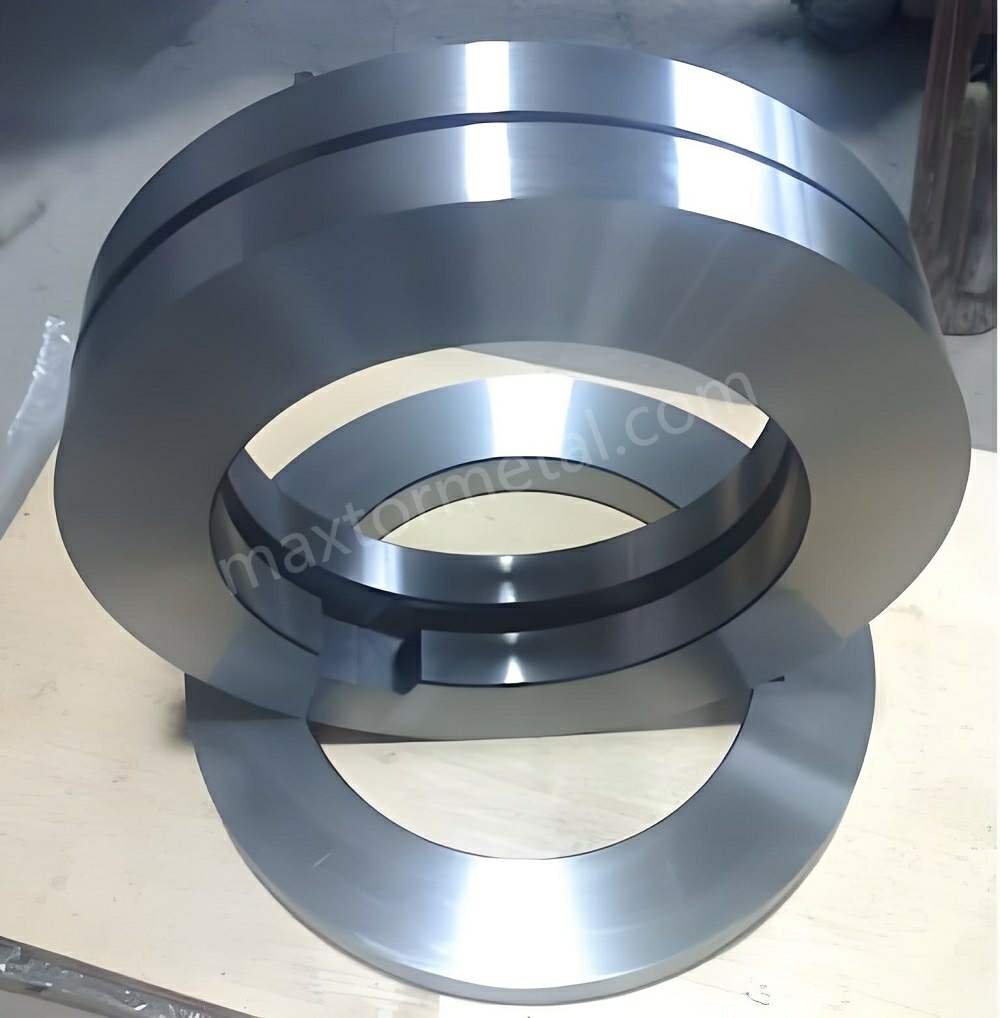
업계에서는 금속 시어 블레이드를 다양한 명칭으로 부릅니다. 이러한 명칭은 대개 장비 유형이나 특정 용도에 따라 달라집니다.
- 금속 전단기
- 회전식 금속 전단기
- 판금 전단기
- 전단 칼날
- 길로틴 블레이드
- 초퍼 칼날
- 전단 커터
- 고경도 전단 칼날
각 명칭은 고유한 특징이나 용도를 강조합니다. 예를 들어, 기요틴 블레이드와 초퍼 블레이드는 재활용 및 중작업용 절단에 흔히 사용됩니다. High hardness shear blades는 뛰어난 내구성과 정밀함이 특징입니다.
작동 원리
전단(shearing) 공정은 날카로운 블레이드를 사용하여 전단 응력을 가함으로써 금속을 절단하거나 변형시킵니다. 두 블레이드 사이에 금속을 배치하면, 하부 블레이드는 고정된 상태에서 상부 블레이드가 힘을 가하며 아래로 이동합니다. 이 작용으로 인해 금속이 직선을 따라 파단됩니다.
- 금속 시편을 준비하고 장비에 위치시킵니다.
- 장비가 상부 블레이드를 사용하여 제어된 하중을 가합니다.
- 금속이 전단 응력을 받아 변형되기 시작합니다.
- 금속이 더 이상 힘을 견디지 못할 때 절단이 일어납니다.
- 장비가 전단 강도 및 응력 곡선과 같은 데이터를 기록합니다.
블레이드의 날카로움과 경도는 전단 공정에서 매우 중요한 역할을 합니다. 엔지니어들은 이 방법을 사용하여 힘을 받을 때 금속이 어떻게 반응하는지 테스트합니다.
판금 전단(Sheet Metal Shearing)의 응용 분야
정밀한 절단이 필요한 다양한 산업 분야에서 금속 시어 블레이드가 사용됩니다.
항공우주 분야에서는 고급 전단 기술을 통해 고강도 강판에 대한 엄격한 공차를 달성할 수 있습니다.
자동차 제조업에서 전단 공정은 생산 속도를 높이고 폐기물을 줄여줍니다. 패널, 프레임, 브래킷을 절단할 때 이러한 블레이드가 작동하는 모습을 볼 수 있습니다.
통계적 공정 제어는 판금 전단 과정에서 품질과 효율성을 유지하는 데 도움이 됩니다. 블레이드 형상, 간격(clearance) 및 절단 각도를 최적화하면 더 매끄러운 단면을 얻고 블레이드 수명을 연장할 수 있습니다.
| 적용 분야 | 전단 공정의 장점 |
|---|---|
| 항공우주 | 높은 정밀도, 엄격한 공차 |
| 자동차 | 빠른 생산, 자재 낭비 감소 |
| Metal 제작 | 일관된 품질, 효율적인 작업 흐름 |
공통재료
시어 블레이드 제작에는 여러 가지 소재가 사용됩니다.
- High-Speed Steel (HSS): 인성과 내마모성을 제공합니다. 저탄소강 기준 2,000회 이상의 절단 작업을 처리할 수 있습니다.
- Tungsten Carbide: 극도로 단단하고 내구성이 뛰어납니다. 스테인리스강 절단 시 HSS보다 약 3배 더 오래 지속됩니다.
- Alloy Steel: 적당한 내마모성을 갖춘 비용 효율적인 소재입니다. 알루미늄과 같이 부드러운 금속에 우수한 성능을 발휘합니다.
- 탄소강: 저렴한 비용으로 인해 연질 소재에 사용됩니다.
- 특수 합금: 내식성과 같은 특정 요구 사항에 맞게 설계되었습니다.
대부분의 금속 전단 칼날은 60에서 70 HRC 사이의 경도를 가집니다. 열처리 및 표면 질화 처리는 내구성과 수명을 향상시킵니다. 전단할 금속의 종류와 전단 공정의 요구 조건에 따라 칼날 재질을 선택해야 합니다.
맞춤형 블레이드
이익
맞춤형 금속 전단 칼날은 산업 현장에서 많은 이점을 제공합니다. 칼날 설계를 귀사의 정확한 요구 사항에 맞춤으로써 더 나은 결과를 얻을 수 있습니다.
- 특정 소재 및 생산 라인에 맞춘 정밀한 절단이 가능합니다.
- 맞춤형 칼날은 유지보수 비용과 칼날 교체에 소요되는 시간을 줄여줍니다.
- 플라잉 전단 또는 냉간 전단과 같은 특수 설계는 생산성과 에너지 효율을 높여줍니다.
- 엔지니어링 팀이 귀사 공장의 요구 사양에 맞춰 절단력과 칼날 길이를 조정할 수 있습니다.
- 열처리된 맞춤형 칼날은 수명이 약 15% 더 길고 더 높은 응력을 견딜 수 있어 교체 비용이 절감됩니다.
- 업계 연구에 따르면 프리미엄 맞춤형 칼날은 2년에 걸쳐 운영 비용을 15% 절감할 수 있습니다.
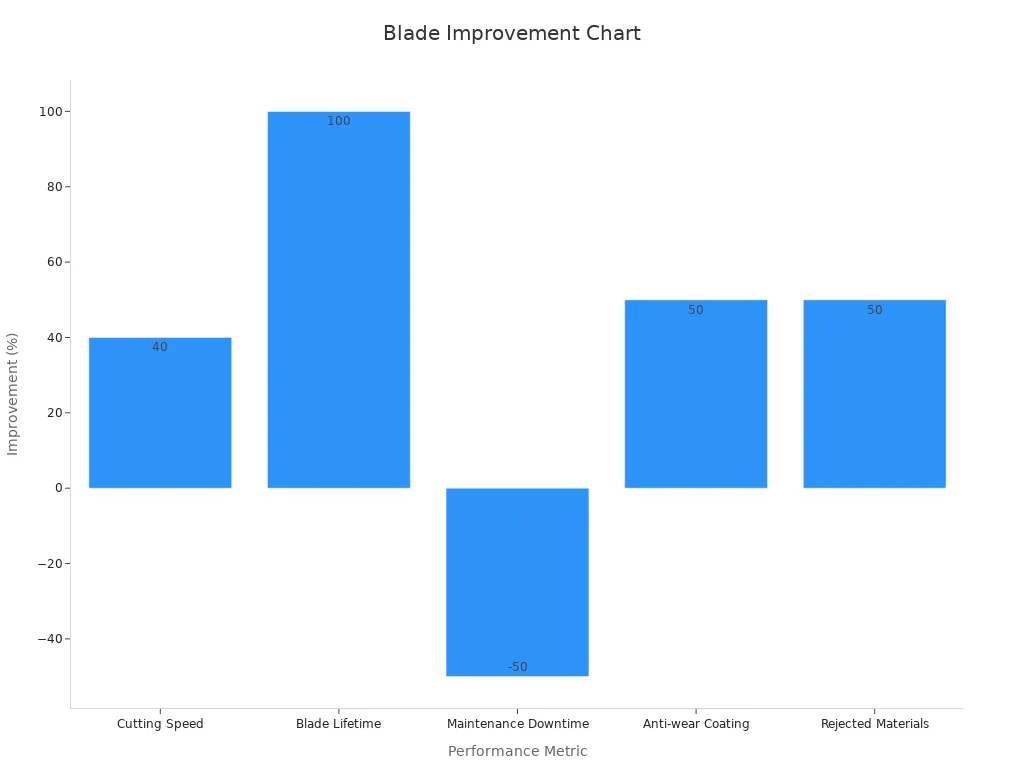
또한 운영 측면에서 측정 가능한 개선 효과를 확인할 수 있습니다. 아래 표는 맞춤형 칼날과 표준 칼날의 비교를 보여줍니다.
| 성과 지표 | 표준 블레이드 | 커스텀 블레이드 | 개선 |
|---|---|---|---|
| 절단 속도 | 100개/시간 | 140단위/시간 | +40% |
| 블레이드 수명 | 1,000회 사이클 | 2,000회 사이클 | +100%(2배 더 길다) |
| 유지 관리 다운타임 | 10시간/월 | 5시간/월 | -50% |
내마모성 코팅이 적용된 맞춤형 칼날은 가혹한 작업 환경에서 수명이 최대 50% 더 오래 지속됩니다. 정밀 칼날은 폐기물을 최대 25%까지 줄이는 데 도움이 됩니다. 작업자들은 에너지 사용량이 15% 감소했다고 보고합니다.
맞춤 제작이 필요한 시기
다음과 같은 요구 사항이 있을 때 맞춤형 칼날을 고려해야 합니다.
- 독특한 장비에 필요한 특수 형상 또는 크기
- 더 높은 절단 속도 또는 더 긴 칼날 수명
- 다운타임 단축 및 불량률 감소
- 절단하기 어려운 난삭재에서의 더 나은 작업 결과
- 에너지 사용량 및 폐기물 감소
맞춤형 칼날은 특히 생산 라인의 잦은 변경이나 까다로운 소재를 다룰 때 최적의 성능을 달성하도록 도와줍니다.
난징 금속 회사
Nanjing Metal 은 18년의 경험을 가진 신뢰할 수 있는 산업용 칼날 공급업체로 자리매김하고 있습니다. 이 회사는 맞춤형 산업용 칼날에 집중하는 숙련된 설계 및 제조 팀을 보유하고 있습니다. ISO9001 표준 및 고급 테스트 장비를 포함한 엄격한 품질 관리를 적용합니다. 많은 산업 분야에서 이들의 기술 지원과 사후 서비스를 신뢰하고 있습니다. 이들의 명성은 신뢰할 수 있는 제품, 빠른 대응, 고객 우선주의에서 비롯됩니다.
주문 프로세스
맞춤형 칼날 주문은 간단하고 효율적입니다.
- 귀사의 요구 사항을 당사 팀과 공유합니다.
- 전문가가 적합한 설계와 재질을 선택할 수 있도록 도와드립니다.
- 명확한 견적과 일정을 제공받습니다.
- 당사는 엄격한 품질 검사를 거쳐 칼날을 생산합니다.
- 배송 전까지 주문 상태를 추적하고 업데이트를 받으실 수 있습니다.
연구에 따르면 맞춤형 칼날 주문은 생산 비용을 50% 이상 절감하고 정밀도를 향상시킬 수 있습니다. 더 자세히 알아보거나 요구 사항을 논의하고 싶으시다면, 여기에서 영업 엔지니어에게 문의하십시오..
블레이드 교체
마모의 징후
눈에 보이는 칼날 가장자리 변형
칼날 가장자리가 휘어지거나 직선 형태를 잃는 것을 볼 수 있습니다. 이러한 변형은 칼날의 절단 방식에 영향을 미치고 전반적인 작업 품질을 저하시킵니다.
치핑 또는 균열
칼날을 따라 미세한 치핑이나 균열이 있는지 확인하십시오. 이러한 결함은 빠르게 커져 절단 중에 더 심각한 문제를 일으킬 수 있습니다.
과도한 버(Burr) 발생
절단된 금속에 버(burr)가 더 많이 발생하는 것을 발견했다면 칼날이 마모되었을 수 있습니다. 버가 너무 많이 발생한다는 것은 칼날이 요구되는 전단 품질을 유지하지 못하고 있음을 의미합니다.
무뎌진 절단날
날이 무뎌지면 깨끗한 절단면을 얻기 어렵습니다. 더 많은 힘을 가해야 하며, 칼날의 날카로움이 떨어집니다.
고르지 않은 마모 패턴
칼날이 다른 부분보다 더 빨리 마모되는 부분이 있는지 확인하십시오. 불균일한 마모는 불량한 절단으로 이어지고 제품 품질을 저하시킵니다.
필요한 절단력 증가
절단 시 저항이 더 많이 느껴진다면 칼날을 교체해야 할 수 있습니다. 이러한 과도한 힘은 칼날과 장비 모두에 손상을 줄 수 있습니다.
표면 변색 또는 녹 발생
칼날에 녹이나 어두운 반점이 생기면 점검하거나 교체해야 할 때임을 나타냅니다. 부식은 칼날을 약화시키고 성능에 영향을 미칩니다.
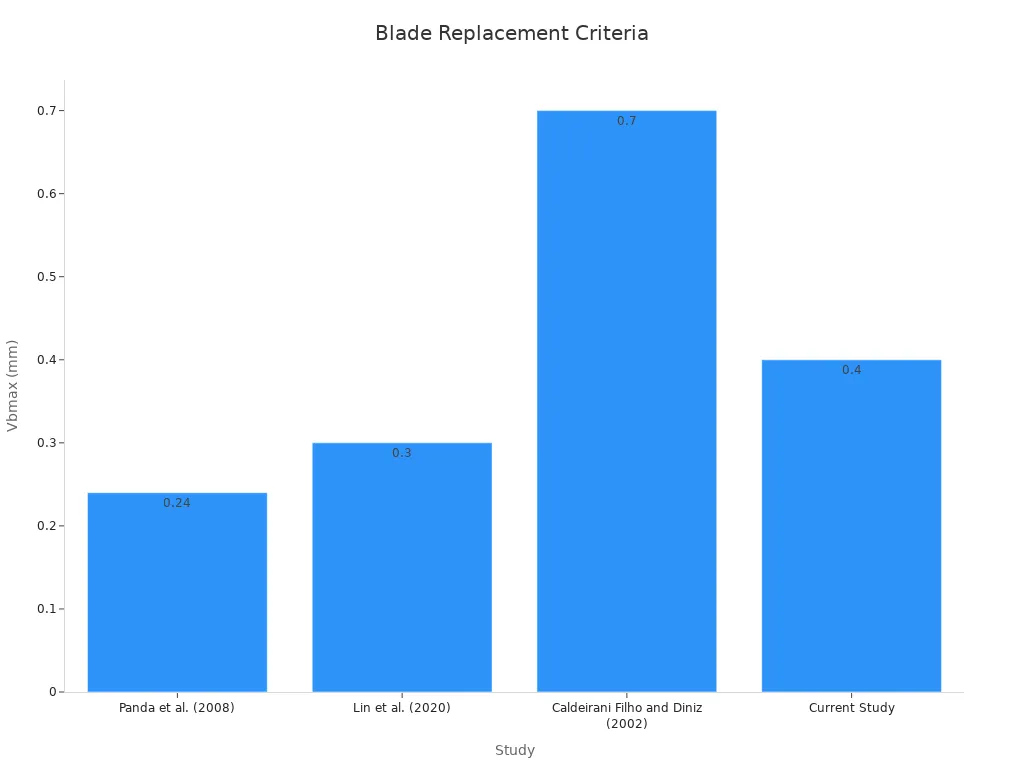
교체 기준
| 기준/연구 | Vbmax 임계값 (mm) | 근거/참고 사항 |
|---|---|---|
| Panda 등 (2008) | 0.24 | 이전 연구 참고 문헌 |
| Lin 등 (2020) | 0.3 | 이전 연구 참고 문헌 |
| Caldeirani Filho and Diniz (2002) | 0.7 | 이전 연구 참고 문헌 |
| Current Study | 0.4 | Expert consensus and visual inspection |
Normal operation wear ranges from 0 mm to 0.4 mm. You should replace the blade when flank wear (Vbmax) reaches about 0.4 mm. Predictive warning systems alert you before reaching this limit.
Minimum Blade Thickness Threshold
Replace the blade if it becomes thinner than the manufacturer’s minimum value.
Maximum Allowable Chipping Size
Do not use blades with chips larger than the recommended size.
Tolerance for Edge Straightness
Check that the blade edge stays within the allowed straightness tolerance.
Frequency of Required Sharpening
If you need to sharpen the blade too often, consider replacing it.
Manufacturer’s Recommended Service Life
Follow the service life guidelines for best shear quality.
Safety Compliance Standards
Always meet safety standards when deciding to replace blades.
Risks of Delay
Poor Shearing Quality and Increased Scrap Rate
Delaying replacement lowers shear quality and increases waste.
Damage to Machine Components
Worn blades can harm other machine parts.
Increased Operator Injury Risk
A damaged blade raises the risk of accidents.
Unexpected Downtime and Production Loss
Blade failure can stop production without warning.
Higher Maintenance and Repair Costs
Ignoring blade wear leads to expensive repairs.
Compromised Product Consistency
Old blades make it hard to keep product quality steady.
교체 단계
준비
Gather all tools and materials. Wear gloves, goggles, and safety shoes. Lock out the machine before starting.
블레이드 제거
Loosen bolts and carefully remove the blade. Hold the blade firmly to avoid drops.
검사 및 청소
Clean the blade seat and check for hidden damage or debris.
New Blade Installation
Place the new blade in the correct position. Tighten bolts to the right torque. Check alignment and calibration.
Post-Installation Checks
Run a test cut to check quality. Update your maintenance log.
안전 예방 조치
Stay alert during each step. Know emergency procedures.
Common Mistakes and How to Avoid Them
Do not misalign the blade. Always use the right torque. Never skip safety checks. Use only compatible tools and parts.
You can keep your metal shearing operations efficient by following a clear troubleshooting and maintenance routine. Regular inspection and timely blade replacement help you avoid unexpected breakdowns. Studies show that preventive maintenance reduces operational costs by up to 18% compared to reactive repairs. This approach extends equipment life and improves reliability. For ongoing problems, consult industry experts or explore custom blade solutions.
Want expert advice or a custom solution? 문의하기 a sales engineer today.
자주 묻는 질문
What should you do if your metal shear blade gets dull quickly?
You should check if you use the right blade for your material. Clean and lubricate the blade after each use. Sharpen or replace the blade when you see signs of wear.
How often should you inspect industrial shear blades?
Inspect blades before each shift. Look for chips, cracks, or rust. Weekly, check alignment and clearance. Monthly, perform a full maintenance check.
Regular inspections help you catch problems early and keep your machine running smoothly.
Can you use the same blade for different metals?
You should not use one blade for all metals. Harder metals need stronger blades. Using the wrong blade can cause damage or poor cuts.
- Use high-speed steel for soft metals
- Use tungsten carbide for hard metals
Why do you see burrs after shearing?
Burrs often appear when the blade is dull or misaligned. Incorrect clearance also causes burrs.
| 원인 | 해결책 |
|---|---|
| 둔한 칼날 | 날카롭게 하거나 교체하세요 |
| 정렬 불량 | Adjust blade |
| Wrong clearance | Reset clearance |
What safety steps should you follow when changing blades?
Always turn off and lock out the machine. Wear gloves and safety glasses. Use the right tools.
Safety first! Never skip these steps to avoid injury.
또한 참조
Metal 코일 슬리팅을 위한 롤 전단 블레이드의 내구성 향상: 블레이드 수명 연장을 위한 입증된 전략

 English
  Spanish
  Italian
  French
  Portuguese
  Russian
  German
  Arabic
  Hindi
Hindi  Vietnamese
  Indonesian
  Japanese
  Korean
5 응답