

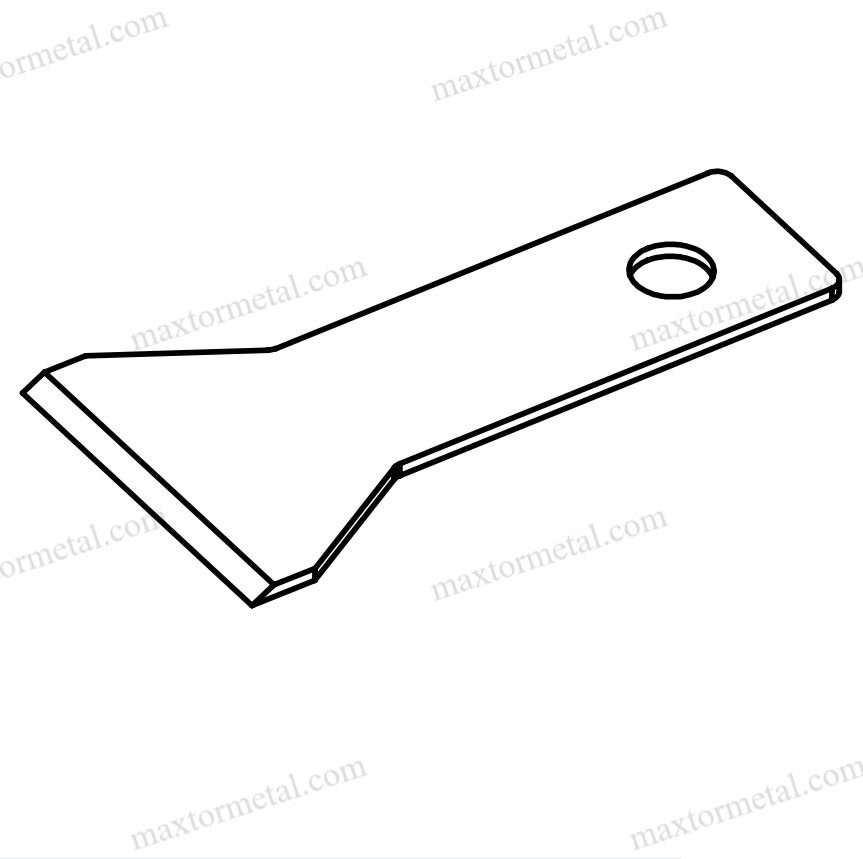
Выбор лучших ножи для гранулирования имеет решающее значение для эффективной переработки пластмасс. Необходимо учитывать правильный тип ножа, высококачественные материалы и точность конструкции. В 2025 году ножи для гранулирования играют жизненно важную роль в процессе грануляции, обеспечивая получение более качественных гранул, снижая затраты и поддерживая экологическую устойчивость. Исследования показывают, что использование ножей для гранулирования для достижения однородного размера частиц повышает эффективность производства и поддерживает стабильное качество гранул. Эта стабильность имеет важное значение для индустрии вторичной переработки пластмасс и ее различных этапов рециклинга. Мировой рынок гранулирования стремительно расширяется. Выбор ножей для гранулирования от надежных производителей гарантирует оптимальные результаты.
Ключевые выводы
- Правильный выбор ножа для гранулирования улучшает качество гранул, снижает энергопотребление и помогает оборудованию работать быстрее.
- Для каждого типа пластика и технологической задачи существуют различные типы ножей для грануляторов. Необходимо подбирать материал и форму лезвия в соответствии с вашим оборудованием.
- Регулярно очищайте, затачивайте и меняйте ножи, чтобы поддерживать эффективную работу грануляторов и избегать простоев.
- Изготовленные на заказ ножи для гранулирования лучше подходят к оборудованию, служат дольше и обеспечивают более высокое качество гранул. Они также помогают экономить средства в долгосрочной перспективе.
- Всегда изучайте руководство по эксплуатации вашего гранулятора и проверяйте тип пластика перед выбором ножей. Это поможет избежать ошибок.
Обзор ножей для гранулирования
Что такое ножи для гранулирования
Ножи для гранулирования — это специальные режущие инструменты, используемые в индустрии пластмасс. Эти лезвия нарезают полимерные стренги, расплавленные полимеры или экструдированные материалы на однородные гранулы. Ножи имеют различную форму, например, прямую, скошенную или V-образную. Каждая форма подходит для определенного типа гранулятора или технологической задачи. Большинство ножей для грануляторов изготавливаются из высокоуглеродистой стали, инструментальной стали или высокопрочных сплавов. Эти материалы обеспечивают твердость и износостойкость лезвий. Термическая обработка и покрытия, такие как нитрид титана или хром, увеличивают срок службы ножей и улучшают скольжение.
Некоторые важные технические характеристики определяют эффективность работы ножей для гранулятора:
- Обработка на станках с ЧПУ обеспечивает высочайшую точность кромок, вплоть до ±0,002 мм. Это снижает вибрацию ножа и продлевает срок его службы.
- Лазерная резка обеспечивает очень острую кромку лезвия. Это делает срез более гладким и увеличивает срок службы ножа на величину до 30%.
- Современные покрытия, такие как Diamond-Like Carbon, могут облегчить скольжение ножа на 40%.
- Криогенная обработка увеличивает срок службы стальных ножей на 25%.
- Датчики с искусственным интеллектом могут определять необходимость замены ножей с точностью до 95%.
| Спецификация | Значение / Диапазон |
|---|---|
| Режущая способность | Гранулы 1-8 mm |
| Выход | 500-2000 кг/ч |
| Материал лезвия | Сталь SKD-11 + карбид вольфрама |
| Отделка поверхности | Зеркальная полировка (Ra ≤0.1μm) |
| Твердость | HRC 58-62 (сердцевина), 1,500 HV (кромка) |
| Допуск на биение ножа | ±0,005 мм |
| Температурная стойкость | Непрерывная работа при 300°C |
| Гарантия | 15,000 рабочих часов |
Роль в процессе гранулирования
Ножи для грануляторов играют важнейшую роль в процессе гранулирования. Они нарезают пластик на качественные гранулы, которые необходимы для производства изделий из вторичного сырья. Острые и правильно установленные ножи помогают поддерживать стабильное качество гранул. Это обеспечивает более эффективную работу другого оборудования и последующих этапов переработки. Для успешного процесса гранулирования требуются острые, точно выровненные и прочные ножи.
Производители получают множество преимуществ при использовании более качественных ножей для грануляторов:
- Потребление энергии может снизиться на величину до 15%.
- Производительность может увеличиться на 20%.
- Автоматизация и интеллектуальное техническое обслуживание сокращают время простоев и снижают затраты.
- Качественные ножи образуют меньше мелкой фракции и предотвращают деструкцию пластика. Это позволяет использовать больше материала и получать более однородную продукцию.
Ножи для грануляторов должны обладать твердостью и вязкостью, соответствующими разрезаемому пластику. Правильная форма и острота лезвия обеспечивают чистый срез и высокое качество гранул. Это позволяет предприятиям получать стабильную по характеристикам продукцию и экономить средства, а также производить гранулы для самых разных областей применения.
Типы ножей для грануляторов
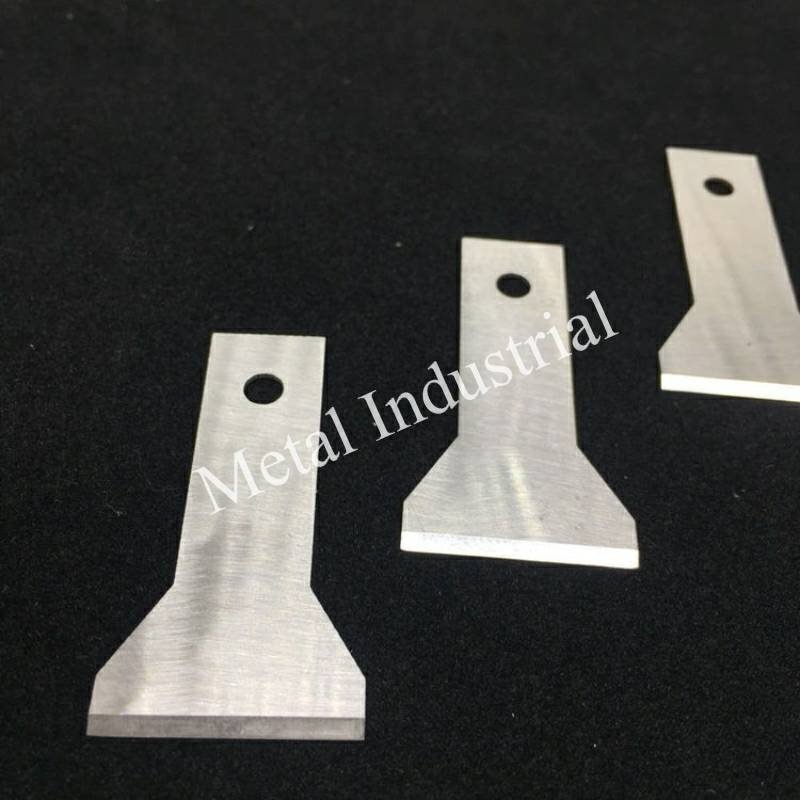
Гранулизатор Strand
Подходящие типы пластика
Системы стренгового гранулирования могут работать со многими термопластами. К ним относятся полипропилен, полиэтилен, ABS и полистирол. Операторы также используют их для реактопластов и эластомеров. Система работает как с первичным, так и со вторичным сырьем.
Основные преимущества и недостатки
- The system cuts plastic into pellets that are all the same size.
- It can run for a long time and make lots of pellets.
- You can use it with many kinds of plastics.
- You can change the blade to make different pellet shapes.
- It fits into most extrusion lines without big changes.
Note: Some materials need extra drying after using strand pelletizing systems.
Типичные сценарии применения
Strand pelletizing systems are good for small or medium jobs. Many recycling lines use them when pellet size is not the most important thing. Manufacturers use them for compounding, making masterbatch, and lab research. The system is popular because it works with many materials.
Water-Ring Pelletizer
Подходящие типы пластика
Water-ring pelletizing systems work with polyolefins like PE and PP. They also handle TPE, EVA, and some mixed plastics. These systems are good for polymers that melt well.
Основные преимущества и недостатки
| Аспект | Water-Ring Pelletizers (WRPs) | Underwater Pelletizers (UWPs) |
|---|---|---|
| Метод резки | Rotating knives cut at the die face | Knives cut in water |
| Pellet Shape | Pellets are round and flat | Pellets are more round |
| Метод охлаждения | Water ring cools and moves pellets | Pellets cool in a water bath |
| Cooling Water Management | Water is cleaned and used again | Water is also cleaned and reused |
| Пропускная способность | About 11,000 pounds per hour | Up to 70,000 pounds per hour |
| Polymer Compatibility | Works best with strong-melting polymers | Can handle more types of polymers |
| Sensitivity to Process Variations | Not very sensitive to changes in melt or pressure | More sensitive, can freeze at the die |
| Automation and Cost | Medium automation, lower cost, small size | More automation, higher cost, takes more space |
Water-ring pelletizing systems run all the time and cool pellets well. They make pellets that look good and have a nice surface. The system is small and does not cost too much. But it does not work well with sticky or thick materials. You also need to watch the water closely.
Типичные сценарии применения
Manufacturers use water-ring pelletizing systems for masterbatch and compounding. The system is good when you need nice-looking pellets and fast cooling. It is used in medium and large factories where pellet size matters.
Подводный гранулятор
Подходящие типы пластика
Underwater pelletizing systems work with engineering plastics like polyamide, PBT, and PET. They also handle sticky, soft, or heat-sensitive polymers. The system can process special resins that are hard for other systems.
Основные преимущества и недостатки
- Underwater pelletizing systems make pellets that are all the same size.
- Cutting and cooling happen at the same time, so pellets cool fast.
- These systems make less dust, so pellets stay clean.
- You can use them with many plastics, even sticky ones.
- They can make lots of pellets with little size difference.
- Underwater pelletizing systems use less power and space than strand systems.
- Pellet classifiers and water baths help keep pellets the right size.
Research shows pellet shape can change after cooling. The way pellets form is important for getting good results.
Типичные сценарии применения
Underwater pelletizing systems are best for big factories. Manufacturers use them for engineering plastics and special polymers. They are great for jobs that need lots of pellets that are all the same. The system is good for tough materials and special resin jobs.
Гранулизатор Die-Face
Подходящие типы пластика
Die-face pelletizing systems work with PVC, TPR, TPU, and other sticky or heat-sensitive plastics. The system is good for polymers that need to be cut right at the die.
Основные преимущества и недостатки
| Фактор | Die-Face Pelletizers (Plastic Pelletizer) | Alternative (Plastic Crusher) |
|---|---|---|
| Потребление энергии | Uses more energy per ton | Uses less energy per ton |
| Требования к техническому обслуживанию | Needs cleaning and knife changes often | Needs blade sharpening often |
| Initial Investment Cost | Costs more to buy | Costs less to buy |
| Operational Cost | Costs more to run each year | Costs less to run each year |
| Скорость обработки | Slower because of melting and cutting | Faster, just cuts plastic right away |
| ROI Period | Takes longer to earn back money | Earns back money faster |
| Качество вывода | Makes high-quality pellets | Makes crushed plastic, not as valuable |
| Аспект | Die-Face Pelletizers (Hot Die-Face System) | Cooling Pelletizers (Cold Pelletizing System) |
|---|---|---|
| Pelletizing Rate | Makes up to 22,679.62 kg/h (underwater), 13,607.77 kg/h (water spray), 4,989.52 kg/h (airflow) | Makes up to 6,803.89 kg/h (sliver), 1,814.37 kg/h (stretching) |
| Cutting State | Cuts melted polymer right away | Cuts cooled, solid polymer |
| Cutter Replacement Frequency | Needs new cutters less often | Needs new cutters more often |
| Noise Emission | Quieter, water blocks sound | Louder |
| Потребление энергии | Uses more energy, needs heating | Uses less energy, no heating needed |
| Maintenance Complexity | Harder to maintain, needs careful setup | Easier to use and clean |
| Operational Complexity | Needs careful control to stop freezing | Easier to run, but can have pellet size problems |
| Метод охлаждения | Uses water or air to cool pellets | Uses air or water, then dries pellets |
| Drawbacks | Can freeze at the die, costs more, harder to fix | Takes up more space, can make powder or scrap |
| Преимущества | Makes more pellets, better quality, less cutter wear, quieter | Costs less, easy to use, easy to clean, good for color mixing |
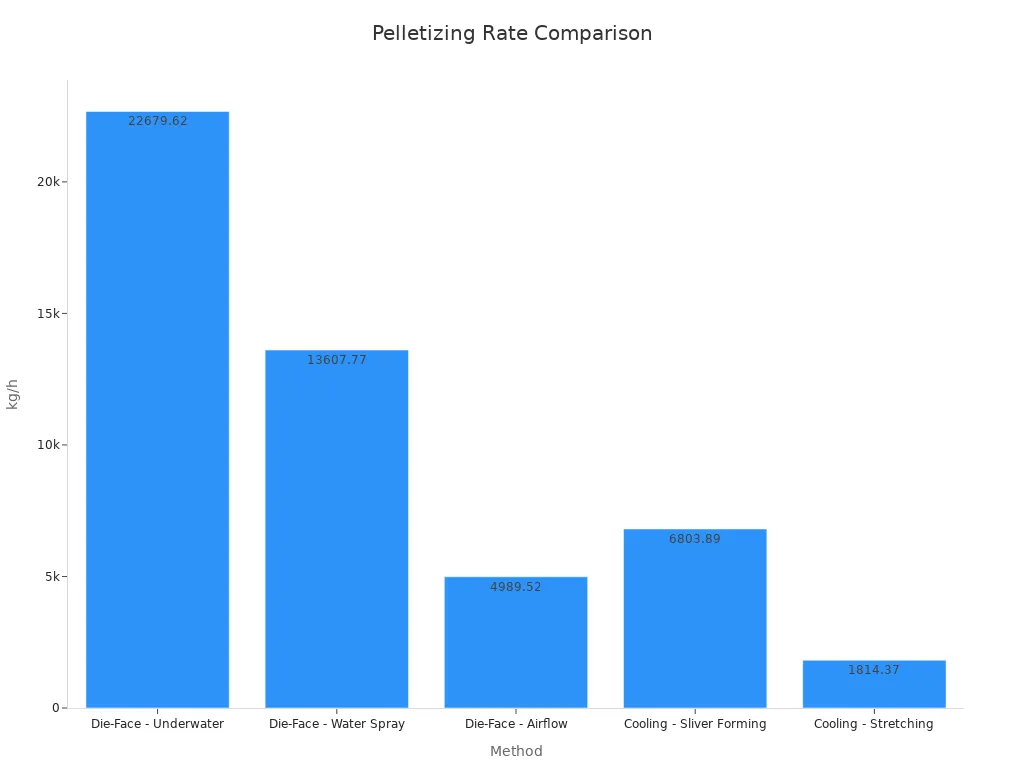
Die-face pelletizing systems make pellets that look very good. The system cuts melted polymer at the die, so cutters last longer and make less noise. You get more pellets and better quality. But you must watch the temperature and do regular maintenance to stop freezing and keep pellets the same.
Типичные сценарии применения
Die-face pelletizing systems are used for soft PVC, TPR, TPU, and special compounds. Manufacturers pick this system for sticky or heat-sensitive plastics. It is good for making high-quality pellets for special and valuable products.
Ключевые факторы выбора ножей для гранулирования
Совместимость материалов
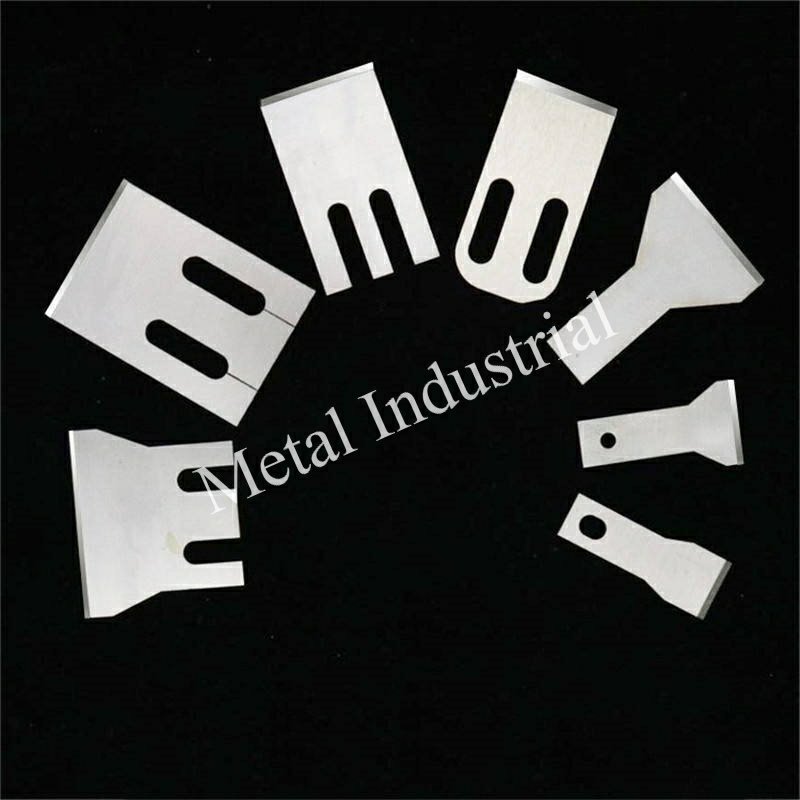
Material compatibility is very important when picking pelletizer knives. Each pelletizing system works with different plastics. These can be polyolefins or engineering resins. Operators must match the blade material to the plastic type. They also need to think about how rough any fillers are. For example, high-speed steel (HSS) and SKD11 are good for cutting tough or glass-filled plastics. D2 steel is hard and tough, so it works for most jobs. Carbide-tipped and powder metallurgy blades, like CPM M4, work best for fast lines and hard jobs. These special materials help the knives cut well and last longer, even in tough jobs.
Pelletizing knives also need to fit the machine brand. Big pelletizing system makers like EREMA, Gala, and NGR make their machines for certain blade shapes and materials. Operators should always check if the knife fits to get the best cuts and stop early wear.
Tip: Always check your pelletizer maker’s rules before picking blades for new or special plastics.
Точность резки
Точность резки имеет решающее значение для качества гранул и производительности. Лучшие ножи для грануляторов обеспечивают строгое соблюдение допусков и выполняют чистый, ровный срез. Специальные измерительные инструменты помогают операторам контролировать и повышать точность резки. В таблице ниже приведены основные измеряемые параметры и инструменты, используемые при гранулировании:
| Измеряемый параметр | Метод / используемый прибор | Точность / детали | Статистический / аналитический подход |
|---|---|---|---|
| Содержание влаги | Анализатор влажности (MA50/1.R, Radwag) | Точность: 0.001% влажности; навеска ~2 g; пятикратный анализ с указанием стандартного отклонения | Изменчивость, выраженная в виде стандартного отклонения |
| Потребление энергии | Анализатор качества электроэнергии (EQUA Wally), измеряющий мгновенную мощность по 3 фазам | Напряжение и ток, измеряемые на частоте 50 Hz; масса, измеряемая электронными весами (точность 0.01 g) | Энергопотребление, рассчитанное путем численного интегрирования (метод трапеций) данных мгновенной мощности и массы |
| Гранулометрический состав | Вибрационный ситовой сепаратор (LAB-11–200/UP) в соответствии со стандартом ANSI/ASAE S319.4 | Размеры ячеек сит: 1.65, 5.61, 8.98, 18.0, 26.9 mm; время рассева 120 s | Аппроксимация PSD по моделям: распределение Розина–Раммлера–Шперлинга–Беннетта (RRSB), нормальное, логистическое, логнормальное распределения |
| Механическая прочность | Резка лезвием, раздавливание, трехточечный изгиб (на основе смежных исследований катализаторов) | Корреляция данных о прочности с использованием распределения Вейбулла | Распределение Вейбулла, используемое для статистической корреляции данных о механической прочности |
| Рабочие характеристики ножевой мельницы | Скорость ротора: 2880 rpm; периферийная скорость резки: 15.39 m/s; угол заточки ножа: 45° | Зазор между режущей и контррежущей кромками: 1.15 mm; ножи острые | Мощность, измеряемая на холостом ходу и под нагрузкой, для оценки энергозатрат на резку |
Операторы используют эти методы для обеспечения стабильного размера и формы гранул. Высокоточные ножи снижают количество отходов и бракованных гранул, повышая эффективность процесса резки.
Долговечность и износостойкость
Долговечность и износостойкость определяют срок службы ножей для гранулирования. Современные материалы, такие как SKD11, HSS и стали с карбидными вставками, успешно противостоят износу при переработке жестких пластиков и наполнителей. Ножи из порошковой металлургии, такие как CPM 10V, служат еще дольше при высоких нагрузках. Термообработка и покрытия, такие как хром или нитрид титана, повышают твердость лезвий и обеспечивают более плавный рез.
Прочный нож остается острым и эффективно режет на протяжении многих циклов. Операторы реже меняют ножи, что сокращает время простоев и расходы на ремонт. Важно соблюдать баланс между твердостью и ударной вязкостью. Слишком твердый нож может скалываться, а слишком вязкий — быстро тупиться. Выбор подходящего материала обеспечивает эффективную работу ножа при любых задачах гранулирования.
Потребности в техническом обслуживании
Регулярное техническое обслуживание поддерживает работоспособность ножей для гранулирования. Операторы должны проверять, очищать и регулировать ножи по установленному графику. В таблице ниже указана периодичность обслуживания ключевых компонентов системы гранулирования:
| Компонент | Частота технического обслуживания | Распространенные проблемы |
|---|---|---|
| Скребковые ножи | Каждые 3 месяца | Затупление ножей, смещение |
| Футеровка чаши | Ежемесячно | Износ, уменьшение толщины |
| Силовой агрегат | Ежегодно | Износ оборудования, утечка смазки |
Операторам также следует контролировать такие параметры, как угол наклона и скорость диска, для поддержания высокого качества гранул. Обучение персонала выявлению раннего износа или неполадок помогает предотвратить серьезные поломки. Своевременная заточка и замена ножей сохраняют высокое качество гранул и защищают оборудование.
Примечание: Правильное техническое обслуживание продлевает срок службы грануляторов и ножей, а также способствует более эффективному расходу материалов.
Эффективность затрат
Экономическая эффективность складывается не только из цены ножей для гранулирования. Операторы должны учитывать срок службы лезвий, требования к их обслуживанию и их влияние на качество гранул. Специальные ножи, например с карбидными вставками или из порошковой металлургии, изначально стоят дороже, но служат дольше и сокращают время простоев. Это экономит средства за счет повышения качества резки и предотвращения задержек.
Выбор подходящего ножа для конкретной системы гранулирования позволяет получить максимальную выгоду. Операторы, подбирающие ножи под свои задачи и материалы, получают более качественные гранулы, меньше отходов и снижают энергопотребление. Использование качественных материалов и правильный уход за ножами обеспечивают еще большую экономию в долгосрочной перспективе.
Выбор долговечных, точных и подходящих для вашего оборудования ножей для гранулятора — лучший способ сократить расходы.
Совместимость с грануляторами
Подбор ножей для грануляторов EREMA
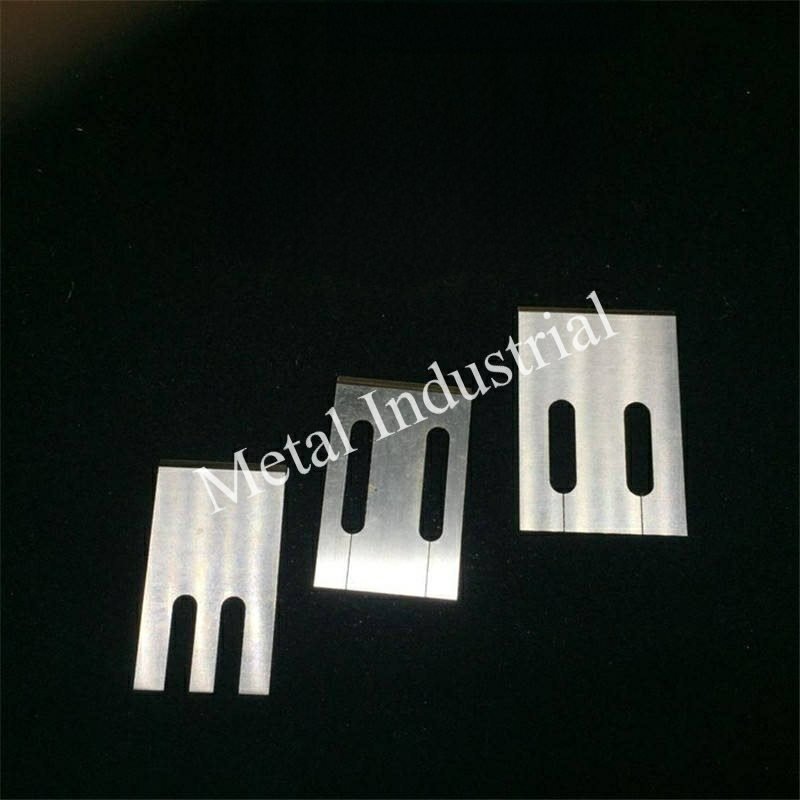
Многие используют грануляторы EREMA для вторичной переработки пластика. Для эффективной работы этого оборудования требуются правильно подобраны ножи. Нож для гранулятора EREMA должен соответствовать размеру и форме машины. Также необходимы правильная толщина и крепежные отверстия. Операторы часто выбирают ножи из быстрорежущей стали (HSS) или SKD11. Эти материалы прочны и долго сохраняют остроту. Нож для гранулятора EREMA обеспечивает чистый рез и снижает образование пыли, что способствует стабильной работе гранулятора.
Качественный нож для гранулятора EREMA обеспечивает более однородный размер гранул и сокращает время на обслуживание оборудования. Пользователи отмечают, что правильно подобранный нож служит дольше и предотвращает множество поломок. Нож для гранулятора EREMA отлично подходит для высокоскоростного производства, что крайне важно для крупных предприятий по рециклингу. При выборе нового ножа операторам следует проверять его твердость и чистоту режущей кромки. Многие поставщики предлагают ножи для грануляторов EREMA со специальными покрытиями, которые продлевают срок их службы.
Совет: Всегда сверяйтесь с руководством по эксплуатации оборудования при установке нового ножа для гранулятора EREMA. Это обеспечит безопасность работы гранулятора и позволит получить гранулы наилучшего качества.
В будущем в ножах для грануляторов EREMA могут использоваться порошковая металлургия и «умные» покрытия. Эти инновации помогают гранулятору перерабатывать прочные пластики и работать дольше.
Другие ведущие бренды
Другие бренды, такие как Gala, NGR и Cumberland, также производят грануляторы. Для каждого бренда требуется свой тип ножей. Например, в грануляторах Gala часто используются круглые ножи. Для грануляторов NGR могут потребоваться ножи специальной формы. Операторам необходимо подбирать материал и форму ножа в соответствии с моделью гранулятора и типом перерабатываемого пластика.
В таблице ниже приведены популярные бренды грануляторов и характеристики их ножей:
| Бренд | Тип лезвия | Варианты материалов | Основные характеристики |
|---|---|---|---|
| EREMA | Прямые, скошенные | HSS, SKD11, твердый сплав | Высокая точность, длительный срок службы |
| Гала | Круговой | Tool steel, carbide | Fast change, smooth finish |
| NGR | Custom shapes | HSS, D2, SKD11 | Abrasion resistance |
| Cumberland | Rotor, stator | Alloy steel, HSS | Простота обслуживания |
Using the right blade for each pelletizer helps the machine work well. It also makes better pellets. Operators should always check the blade’s fit and material before buying. The correct blade stops extra wear and saves time.
If you want help or need specific pelletizer blades, talk to Nanjing Metal’s sales engineers здесь.
Индивидуальные решения по изготовлению ножей для гранулирования
Преимущества настройки
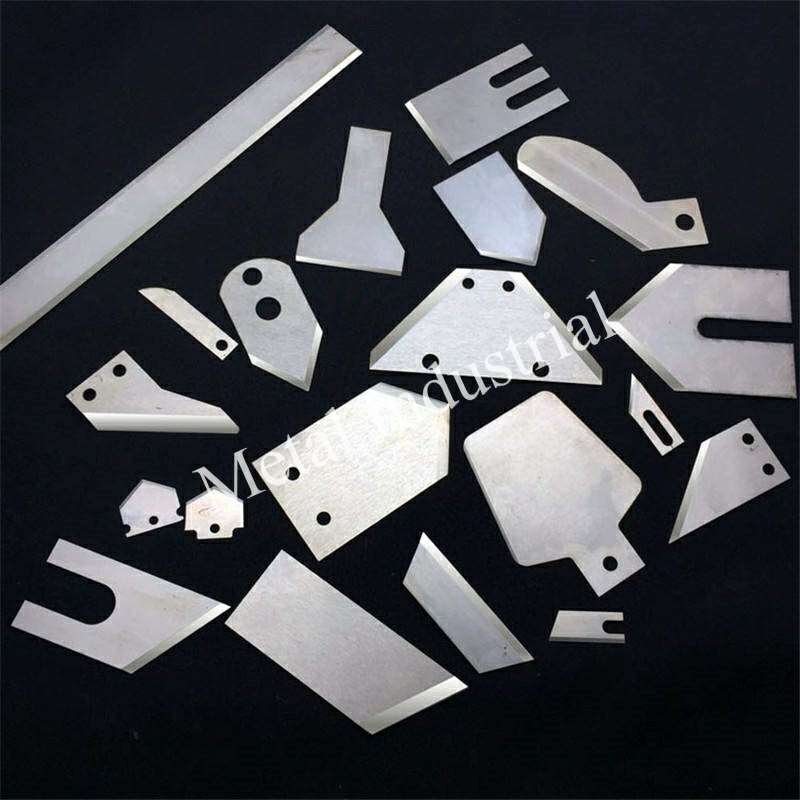
Custom pelletizing knives give companies a special advantage. They help make the pelletizing system work better. Every production line is different and has its own needs. Standard blades do not always give the best results. Customization lets operators pick the right blade shape, material, and surface finish for their job. This helps the system work better and makes the knives last longer.
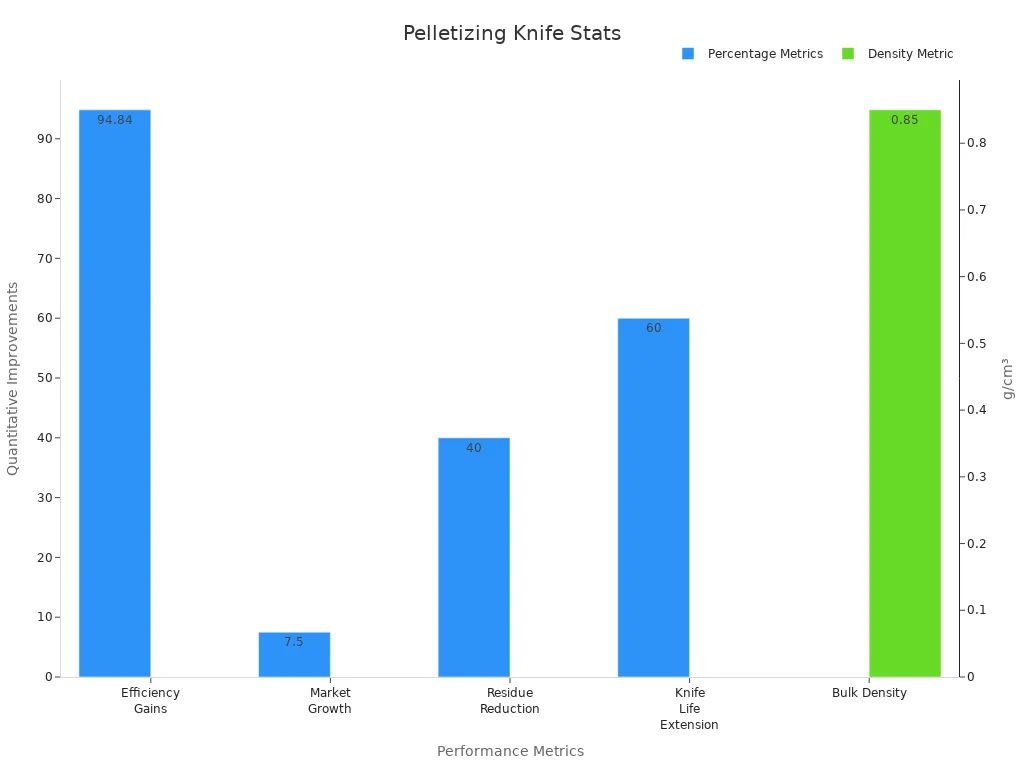
Many manufacturers see big changes after using custom pelletizing knives. Operators notice machines run faster, pellets look better, and maintenance costs go down. The table below shows some of the clear benefits:
| Performance Metric / Maintenance Practice | Описание | Quantitative Improvement / Benefit |
|---|---|---|
| Повышение эффективности | Machines work faster and make more pellets | Some setups reach up to 94.84% efficiency |
| Bulk Density | Shows how good the pellets are | Bulk density can be as high as 0.850 g/cm³ |
| Market Growth | More people are using advanced pelletizer knives | 4.5% yearly growth (2022-2030), CAGR 7.5% |
| Residue Reduction by Cleaning | Cleaning helps keep knives clean | Daily cleaning cuts residue by 40% |
| Knife Life Extension by Maintenance | Good care and sharpening help knives last | Knife life can be up to 60% longer |
| Экономия средств | Strong knives and less downtime save money | Lower repair costs and more work done |
| Качество гранул | Pellets are more even and waste is less | Pellets look the same and there is less waste |
Custom blades help operators get the best fit for their system. They also help make more pellets and keep them the same size. Many companies pick custom blades when they use new materials, run machines fast, or need high quality. Customization is also good for tough jobs, like cutting rough fillers or soft plastics.
Tip: Custom pelletizing knives can help stop downtime and make the plant work better. Operators who buy custom blades often get their money back quickly.
Maxtor Metal Custom Services
Nanjing Metal, also called Maxtor Metal, is a top pelletizing manufacturer. They have over 20 years of experience. The company makes custom industrial blades for many pelletizing systems. Their team has skilled engineers and technicians who know about plastic processing.
Maxtor Metal gives full OEM and ODM services. Customers can ask for blades using drawings, samples, or specific needs. The company offers many materials, like SK2, HSS, M2, SKD11, carbide-tipped, and powder metallurgy steels. Each blade gets special heat treatment, such as quenching, tempering, and sub-zero processing, to make it last longer.
Quality control is very important at Maxtor Metal. The company checks every blade in many steps to make sure it is good. The table below shows their quality checks and what makes their production better:
| Quality Control Metrics | Production Performance Data and Advantages |
|---|---|
| First article inspection | Skilled R&D team |
| Incoming material inspection with certification | Modern production machines |
| In-process quality inspection | ISO certification for steady quality and performance |
| Final quality inspection | Real-time updates on production |
| Total quality control in heat treatment (quenching, tempering, sub-zero treatment) | Overseas checks for clear and reliable production management |
| Sub-zero treatment to enhance blade longevity and martensite structure |
Customers get real-time updates, clear production management, and easy importing. Maxtor Metal allows small orders and flexible buying choices. The company is known as a trusted pelletizing manufacturer because it cares about quality and customers.
Operators should think about custom pelletizing knives if standard blades do not work. Custom blades are best for special pelletizing setups, hard materials, or when you want the best pellets. Maxtor Metal’s skills and modern machines make them a good partner for any pelletizing job.
Техническое обслуживание ножей для гранулирования
Routine Care
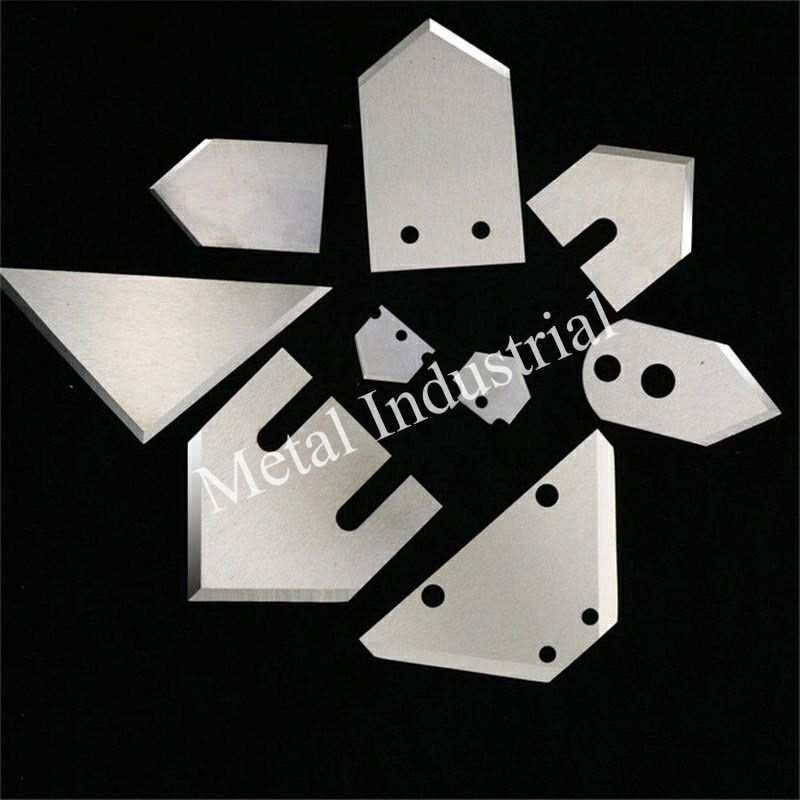
Routine care helps pelletizing knives work well. Operators should clean the blades after each run. Taking off plastic and dust stops buildup. This keeps the edge from getting dull. Workers need to look for chips, cracks, or uneven wear. They can use a soft brush or air to clean small spaces.
A simple checklist helps teams remember what to do:
- Wipe blades with a soft cloth.
- Look for rust or corrosion.
- Make sure bolts are tight.
- Add oil to moving parts if needed.
- Write down all maintenance in a logbook.
Кончик: Cleaning and checking the knives often makes them last longer and keeps machines running.
Заточка и замена
Sharpening keeps the cutting edge sharp. Operators should sharpen knives before they get too dull. A grinding machine helps keep the right angle and smooth edge. If you sharpen too much, the blade can get weak. Workers must follow the maker’s rules.
Sometimes sharpening does not help anymore. Then, the blade needs to be replaced. Signs a blade needs changing include:
| Симптом | Что это значит |
|---|---|
| Uneven pellet size | Blade edge is worn or chipped |
| Increased noise | Blade is misaligned or dull |
| More dust or fines | Cutting edge has degraded |
| Frequent jams | Blade has lost sharpness |
Operators should always use the right part for their machine. Keeping extra knives ready helps stop delays.
Типичные ошибки при гранулировании
Material Mismatch
Sometimes, operators pick the wrong blade for the plastic. This mistake makes pellets look bad and wears out blades fast. For example, a regular steel knife gets dull quickly with rough or glass-filled plastics. High-speed steel or carbide-tipped blades work better for tough plastics. Using the right blade for the plastic gives clean cuts and helps the blade last longer.
Кончик: Always check what kind of plastic you have before picking a pelletizing knife. Follow the manufacturer’s rules for the best results.
A quick table helps operators choose the right blade:
| Пластиковый тип | Рекомендуемый материал лезвия |
|---|---|
| Polyolefins (PE, PP) | D2, SKD11 |
| Engineering Plastics | HSS, Carbide-Tipped |
| Filled/Glass Plastics | Powder Metallurgy, HSS |
Пренебрежение техническим обслуживанием
If you do not take care of pelletizer knives, they will not last long. Dull or dirty blades make pellets uneven and can hurt the machine. Operators should clean, check, and sharpen blades on a regular schedule. Checking often helps find chips or cracks early. Skipping care can cause the machine to stop and make bad pellets.
- Clean blades after every run.
- Look for damage or dirt.
- Sharpen or change blades when needed.
Regular care keeps the pelletizing process working well and helps machines last longer.
Overlooking Machine Fit
Using a blade that does not fit the pelletizer causes problems. A bad fit can make the blade shake or cut unevenly. Each pelletizer brand, like EREMA or Gala, needs special blade shapes and mounting holes. Operators must check the blade size and if it fits before putting it in.
- Make sure the blade size and holes match the machine.
- Use the pelletizer’s manual for how to install the blade.
- Test the fit before starting to make pellets.
The right fit helps the machine run smoothly and makes good pellets.
Operators who avoid these mistakes get better results and have fewer problems.
Сравнение ножей для гранулирования
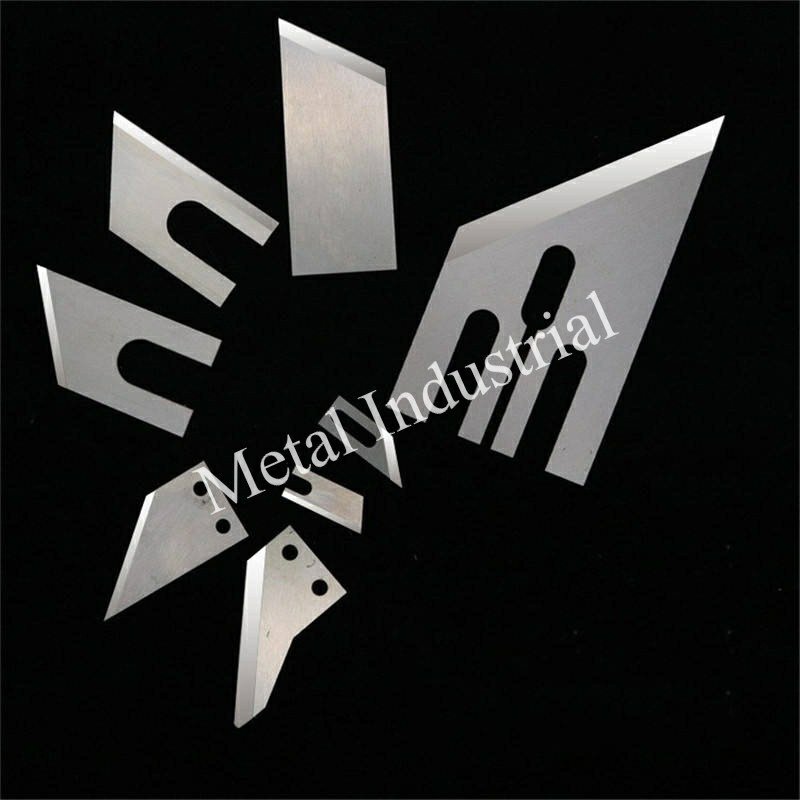
Quick Reference Table
Выбор правильного pelletizing knife can seem hard. Operators often look at many choices before picking one. The table below gives a quick look at common pelletizer blade types, what they are made of, and what they do best. This helps users find the right blade for their job and plastic.
| Тип лезвия | Best Material Options | Suitable Plastics | Основные преимущества | Типичное применение |
|---|---|---|---|---|
| Гранулизатор Strand | D2, SKD11, HSS | PE, PP, ABS, PS | Simple use, easy maintenance | Recycling, compounding |
| Water-Ring Pelletizer | HSS, Carbide-Tipped | PE, PP, TPE, EVA | Good pellet shape, fast cooling | Masterbatch, large output |
| Подводный гранулятор | SKD11, Powder Metallurgy | PA, PET, PBT, sticky resins | Uniform pellets, high output | Engineering plastics |
| Гранулизатор Die-Face | HSS, Carbide-Tipped | PVC, TPR, TPU | Handles sticky materials | Soft PVC, specialty blends |
Operators can use this table to see which blade works for them. Each blade type is best for certain plastics and has special benefits.
- Strand pelletizer knives are good for most recycling jobs.
- Water-ring blades are great when you need nice pellets and quick cooling.
- Underwater knives work well with tough or special plastics.
- Die-face blades are best for sticky or heat-sensitive plastics.
Кончик: Always read the machine manual and check your plastic before picking a blade. The right choice makes better pellets and keeps the machine running.
Picking the right pelletizing knives helps machines work better and saves money. Operators who use strong materials, keep blades sharp, and do regular care get many good results:
- Pellets stay the same size and look better.
- Machines stop less often and cost less to fix.
- Blades last longer with special cold treatments.
- Matching blade shape to the plastic makes work faster.
New ideas in the industry show that smart sensors and special coatings help blades last over 30% longer. If you need special help, you can Контакты Nanjing Metal’s sales engineers for advice.
Часто задаваемые вопросы
What is the main function of a pelletizing knife?
A pelletizing knife cuts plastic into small pellets. These pellets are all the same size and shape. Manufacturers use them to make new plastic things or recycle old ones. The knife helps make sure every pellet looks right.
How often should operators replace pelletizer blades?
Operators need to check blades often. How long blades last depends on what plastic you use and how much you make. It also depends on how good the blade is. Most people change blades when they get dull or noisy. If pellets look uneven, it is time to replace the blade.
Which materials work best for pelletizer knives?
High-speed steel, SKD11, and carbide-tipped alloys are strong. They last a long time and do not wear out fast. These materials can cut hard plastics and rough fillers. Powder metallurgy steel is even better for tough jobs.
Can custom pelletizing knives improve production results?
Custom blades fit special machines and plastics. They help make more pellets and stop delays. Pellets look better and are more even. Many companies pick custom blades for hard jobs or new plastics.
Where can readers get expert advice or order custom pelletizer blades?
Readers can talk to Nanjing Metal’s sales engineers for help. You can ask questions or order custom blades.
Смотрите также
Ножи для Гранулирования: Сравнение. Найдите Подходящий Вариант Легко
Что Такое Ножи Для Грануляторов и Как Они Работают в Промышленности?
Как выбрать правильный нож для гранулятора для вашей отрасли
Полное Руководство по Выбору Лучшего Ножа для Пеллетайзера для Вашей Машины

 English
  Spanish
  Italian
  French
  Portuguese
  Russian
  German
  Arabic
  Hindi
Hindi  Vietnamese
  Indonesian
  Japanese
  Korean
2 ответа
Someone necessarily help to make significantly
articles I might state. This is the very first time
I frequented your web page and thus far? I amazed with the research you made to make this
particular publish incredible. Great process!