

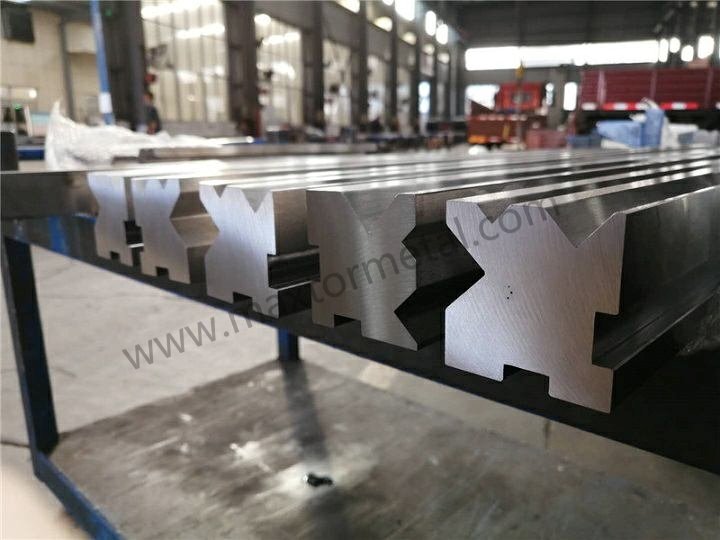
Bạn cần lựa chọn đúng Mác thép dụng cụ uốn sườn để đạt được kết quả tốt trong quá trình tạo hình kim loại. Mác thép bạn chọn sẽ thay đổi tuổi thọ của dụng cụ, độ chính xác của các góc chấn và chi phí mua dụng cụ mới. Một số mác thép có độ cứng rất cao và ít bị mài mòn. Các mác thép khác lại có độ dẻo dai hoặc độ ổn định cao hơn. Lựa chọn của bạn thực sự có thể thay đổi hiệu suất công việc hàng ngày.
Những điểm chính
- Việc lựa chọn đúng mác thép chế tạo khuôn chấn là rất quan trọng. Nó quyết định tuổi thọ của dụng cụ, độ chính xác và chi phí đầu tư. Các mác thép cứng hơn như T10 và Cr12MoV ít bị mài mòn, giúp giảm tần suất thay thế. Các mác thép dẻo dai hơn như 42CrMo hoạt động hiệu quả trong các ứng dụng tải trọng nặng, giúp ngăn ngừa nứt vỡ và biến dạng. Thép công cụ cacbon như T8, T10 và T12 phù hợp cho các công việc chấn nhẹ hoặc trung bình. Thép công cụ hợp kim, chẳng hạn như 42CrMo, có độ dẻo dai rất cao và chống mài mòn tốt trong các điều kiện làm việc khắc nghiệt. Thép cacbon cao crôm cao như Cr12MoV là lựa chọn tuyệt vời cho các công việc đòi hỏi cường độ cao nhờ khả năng chống mài mòn vượt trội. Hãy luôn cân nhắc loại và độ dày của kim loại trước khi chọn mác thép cho khuôn chấn của bạn. Quá trình nhiệt luyện giúp tối ưu hóa cơ tính của mác thép, giúp chúng bền bỉ hơn và hoạt động hiệu quả hơn.
Tổng quan về các mác thép chế tạo khuôn chấn
Phân loại mác thép
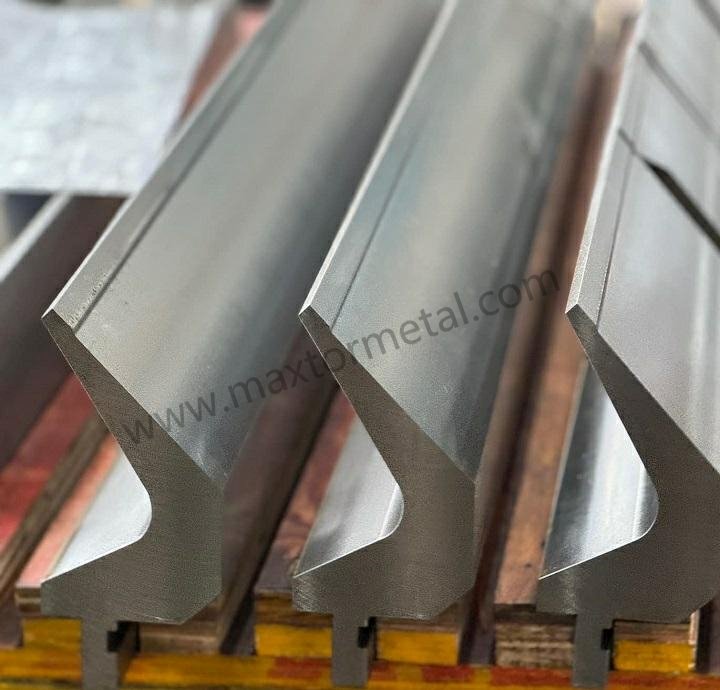
Khi lựa chọn mác thép chế tạo khuôn chấn, bạn có rất nhiều sự lựa chọn. Mỗi mác thép đều có những đặc tính riêng biệt để đáp ứng nhu cầu của bạn. Thép công cụ cacbon như T8, T10 và T12 có độ cứng rất cao và giữ cạnh sắc tốt. Thép công cụ hợp kim, chẳng hạn như 42CrMo và thép crôm-molyben, có độ bền và độ dẻo dai cao. Thép cacbon cao crôm cao như Cr12MoV và D2 có khả năng chống mài mòn vượt trội. Một số ứng dụng tiên tiến sử dụng dụng cụ bằng thép gió và hợp kim cứng (carbide), những vật liệu này hoạt động tốt ở tốc độ cao và duy trì độ bền ở nhiệt độ cao.
Dưới đây là bảng danh sách một số mác thép chế tạo khuôn chấn phổ biến và các đặc tính chính của chúng:
| Thép cấp | Thuộc tính chính | Các ứng dụng |
|---|---|---|
| Crôm Molyben | Độ bền rất cao, chống gỉ tốt | Sử dụng cho các ứng dụng chấn tải trọng nặng |
| T8 và T10 | Độ cứng rất cao, cạnh sắc bền bỉ | Sử dụng cho các công việc gia công chính xác |
| 42CrMo | Vừa dẻo dai vừa có độ cứng cao | Sử dụng cho các công việc chịu ứng suất cao |
| Cr12MoV | Chống mài mòn tốt và dẻo dai | Sử dụng cho dụng cụ chính xác |
Bạn có thể tham khảo bảng này để so sánh các mác thép chế tạo khuôn chấn và tìm ra loại phù hợp nhất cho nhu cầu của mình.
Tại sao mác thép lại quan trọng
Mác thép bạn chọn quyết định hiệu suất hoạt động của khuôn chấn. Nếu chọn đúng mác thép chế tạo khuôn chấn, dụng cụ của bạn sẽ bền hơn và hoạt động hiệu quả hơn. Các mác thép cứng hơn như T10 và Cr12MoV ít bị mài mòn, giúp giảm tần suất thay thế dụng cụ. Các mác thép dẻo dai hơn như 42CrMo có thể chịu được áp lực lớn và tần suất sử dụng cao, giúp hạn chế tình trạng nứt vỡ và biến dạng dụng cụ. Khi lựa chọn mác thép phù hợp với công việc, bạn sẽ tiết kiệm được chi phí và đạt được những đường chấn chất lượng hơn.
Hãy cân nhắc yêu cầu công việc của bạn. Nếu bạn chấn các tấm kim loại dày hoặc sử dụng máy chấn lực lớn, bạn cần các mác thép chế tạo khuôn chấn có độ bền và độ dẻo dai cao. Nếu bạn chấn các tấm mỏng hoặc yêu cầu đường chấn tinh xảo, bạn nên chọn các mác thép có độ cứng cao và giữ cạnh sắc tốt. Việc chọn đúng mác thép giúp tránh thời gian dừng máy ngoài ý muốn và đảm bảo công việc diễn ra trôi chảy.
Mẹo: Luôn kiểm tra mác thép trước khi mua khuôn chấn mới. Mác thép phù hợp sẽ giúp công việc của bạn dễ dàng hơn và mang lại kết quả tốt hơn.
Thép công cụ cacbon dùng cho khuôn chấn
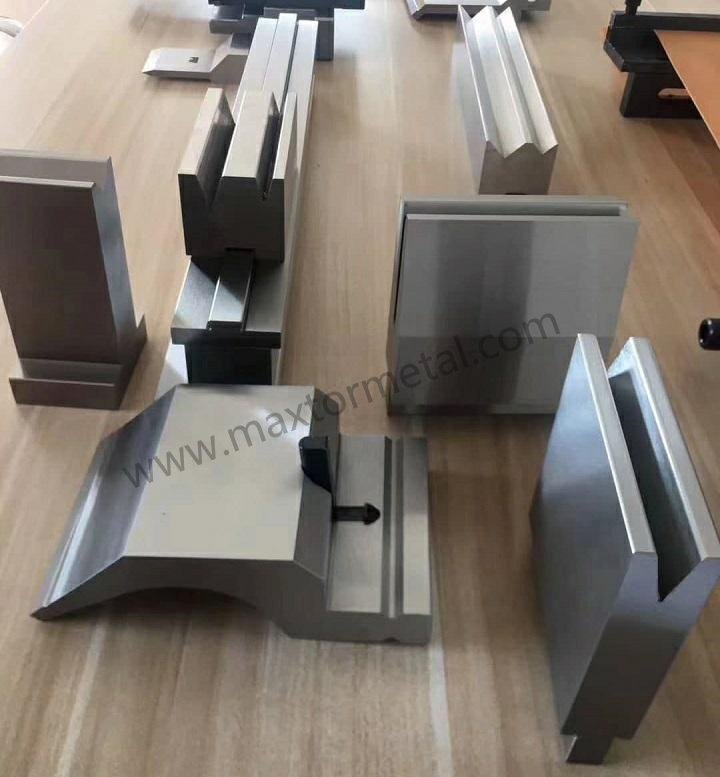
Thép công cụ cacbon đóng vai trò quan trọng trong chế tạo khuôn chấn. Bạn có thể bắt gặp loại thép này ở nhiều xưởng gia công nhờ độ cứng cao và khả năng chống mài mòn tốt. Chúng được sử dụng để chấn, định hình và tạo hình các tấm kim loại. Hãy cùng tìm hiểu các loại chính: T8, T10 và T12.
Đặc tính của T8, T10 và T12
Thép T8
Thép T8 mang lại sự cân bằng giữa độ cứng và độ dẻo dai. Thép T8 thường được sử dụng cho các khuôn chấn cần giữ nguyên hình dạng nhưng không phải chịu va đập mạnh. Thành phần hóa học bao gồm khoảng 0.75-0.85% cacbon, 0.17-0.37% silic và 0.17-0.37% mangan. Sau khi nhiệt luyện, thép T8 đạt độ cứng 58-63 HRC. Thép T8 được sử dụng cho các hoạt động chấn từ nhẹ đến trung bình. Các khuôn chấn này hoạt động hiệu quả với các hình dạng đơn giản và tấm kim loại mỏng.
Thép T10
Thép T10 nổi bật với hàm lượng cacbon cao hơn. Thành phần gồm khoảng 0.95-1.04% cacbon, 0.17-0.37% silic và 0.17-0.37% mangan. Sau khi nhiệt luyện, khuôn chấn T10 đạt độ cứng 60-65 HRC. Bạn nên chọn T10 khi cần khả năng chống mài mòn cao hơn và các cạnh sắc nét hơn. Các khuôn chấn này hoạt động tốt nhất cho các công việc chính xác và tấm kim loại mỏng. T10 rất phổ biến vì nó cân bằng giữa độ dẻo dai và khả năng chống mài mòn. Bạn có thể sử dụng khuôn chấn T10 cho các nguyên công chấn lặp đi lặp lại mà không làm mất đi độ chính xác.
- T10 thường được sử dụng để chế tạo chày cối máy chấn.
- T10 mang lại độ dẻo dai vừa phải và khả năng chống mài mòn cao.
- Sau khi nhiệt luyện, T10 có thể đạt độ cứng vượt quá 60 HRC.
- Khuôn chấn T10 mang lại hiệu quả kinh tế cao cho nhiều xưởng gia công.
Thép T12
Thép T12 có hàm lượng carbon cao nhất trong số các mác thép này. Thành phần chứa khoảng 1.15-1.24% carbon, 0.17-0.37% silicon, và 0.17-0.37% manganese. Sau khi xử lý nhiệt, khuôn chấn T12 đạt độ cứng 62-66 HRC. T12 được sử dụng khi cần độ cứng và khả năng chống mài mòn tối đa. Các khuôn này hoạt động tốt nhất cho quá trình dập tinh và tạo hình vật liệu mỏng. Khuôn chấn T12 không chịu tải trọng va đập mạnh tốt, nhưng chúng có tuổi thọ cao trong các ứng dụng ít va đập.
Dưới đây là bảng so sánh các đặc tính chính của các loại thép công cụ carbon này:
| Loại thép | Độ cứng (HRC) | Hao mòn điện trở | độ dẻo dai | Ứng dụng điển hình trong chế tạo khuôn |
|---|---|---|---|---|
| T8 | 58-63 | Vừa phải | Vừa phải | Tải trọng nhẹ/trung bình |
| T10 | 60-65 | Cao | Vừa phải | Gia công chính xác/tấm mỏng |
| T12 | 62-66 | Rất cao | Thấp | Dập tinh |
Ưu điểm và hạn chế
Việc sử dụng thép công cụ carbon cho khuôn máy chấn mang lại một số ưu điểm sau:
- Độ cứng cao giúp khuôn giữ được hình dạng và cạnh sắc.
- Good wear resistance means dies last longer.
- Cost-effective for many bending jobs.
- Easy to machine and heat treat.
You should know some limitations too:
- T8, T10, and T12 dies do not handle high impact loads as well as alloy steels.
- T10 dies have poor heat resistance, with a maximum working temperature of 250°C.
- T12 dies work best in low-impact jobs.
Tip: You should match the steel grade to your job. If you need dies for light or medium-duty bending, T8 works well. For precision and repeated bending, T10 gives you better wear resistance. If you need maximum hardness for fine blanking, T12 is the right choice.
You may also see high carbon and high chromium tool steel used for dies that need even more wear resistance. These steels offer extra hardness and longer life, especially in demanding jobs.
You can improve your results by picking the right carbon tool steel for your dies. You get better bends, longer tool life, and fewer problems during production.
Thép công cụ hợp kim trong chế tạo khuôn chấn
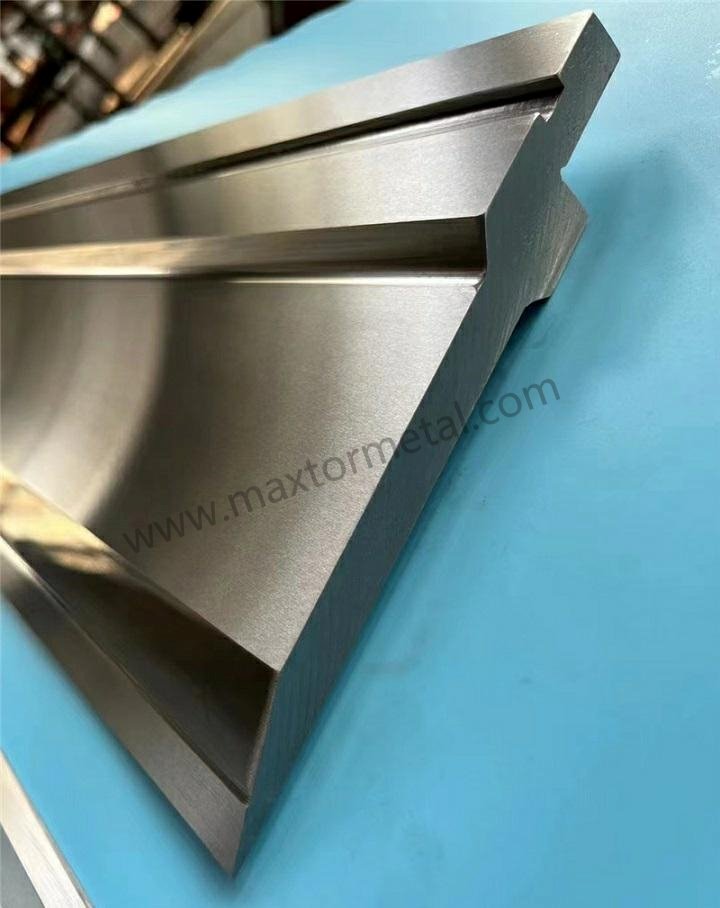
Alloy tool steels are a strong choice for press brake tooling. Many shops use these steels for tough and careful jobs. The most used alloy tool steel for press brake dies is 42CrMo, also called chromoly steel. This steel grade mixes strength, toughness, and wear resistance. These features help your tools last longer and work better.
42CrMo and Chromoly Features
Thành phần hóa học
You can see why 42CrMo is good by looking at what it is made of. The main parts in 42CrMo are carbon, chromium, and molybdenum. These parts help the steel stay hard and tough.
| Yếu tố | Percentage (%) |
|---|---|
| Carbon (C) | 0.38–0.45 |
| Crom (Cr) | 0.90–1.20 |
| Molybdan (Mo) | 0.15–0.30 |
This mix gives you great hardenability, more toughness, and very good wear resistance. The steel grade also has manganese and silicon. These add even more strength and keep the steel stable.
Tính chất cơ học
When you use 42CrMo in press brake tooling, you get strong and stiff tools. This steel grade can handle heavy loads and lots of use. You also get great wear resistance, so your dies last longer. The steel grade stands up to high heat and does not change shape easily. Your tools keep their shape, even in hard jobs.
| Tài sản | 42CrMo | Carbon Tool Steels |
|---|---|---|
| Rigidity and Strength | High rigidity and strength | Moderate rigidity and strength |
| Hao mòn điện trở | Khả năng chống mài mòn tuyệt vời | Khả năng chống mài mòn tốt |
| Khả năng chịu nhiệt | High temperature resistance | Limited temperature resistance |
| Deformation Resistance | High deformation resistance | Lower deformation resistance |
| độ dẻo dai | Độ bền vượt trội | Moderate toughness |
| Microstructure Stability | High microstructure stability | Variable microstructure stability |
You can see that 42CrMo is better than carbon tool steels in most ways. This makes it a top pick for hard press brake tooling jobs.
Heat Treatment Characteristics
Heat treatment is very important for how 42CrMo works. You can use high-frequency quenching or full heat treatment to make the steel stronger and harder to wear out. Good heat treatment, like tempering, gives your dies both strength and flexibility. The final hardness depends on how you heat, cool, and time the process. Dies that get full heat treatment cost more, but they last longer and work better.
Tip: Always check if your press brake tooling steel grades have been heat treated. Good heat treatment means your tools work better and last longer.
Typical Advantages
You get many good things when you use chromoly steels like 42CrMo for your press brake tooling:
- Very durable and does not rust easily
- Strong enough for heavy jobs
- Lasts a long time, even in tough places
- Easy to weld for special shapes and repairs
- Can take hits without breaking during stamping
- Molybdenum helps it work well in high heat
- Hard enough for cutting and forming tools
Chromoly steel gives you tools that last a long time and work well.
Các kịch bản ứng dụng
Heavy-Duty Applications
You use alloy tool steels like 42CrMo for bending thick plates and using strong presses. These steel grades can take many hits and lots of stress without breaking or changing shape. You get tools you can trust for hard jobs.
- 42CrMo is good for short jobs and sometimes use.
- You get good results without spending too much.
- High-strength alloy steels are good for most bending jobs.
Precision Tooling
If you need very exact bends and the same results every time, you pick 42CrMo. The steel grade’s stable shape and toughness help you make perfect bends. You see fewer mistakes and less stopping in your shop.
Note: Precision dies made from alloy tool steels keep their shape and accuracy, even after many cycles.
Ví dụ về ngành công nghiệp
You find alloy tool steels in many fields:
- Automotive: Bending car body panels and frames
- Shipbuilding: Shaping thick plates for hulls and decks
- Construction machinery: Making strong parts
- Large metal fabrication: Making special parts for buildings and machines
You see press brake tooling steel grades like 42CrMo where strength, toughness, and long life are very important.
Thép cacbon cao crôm cao
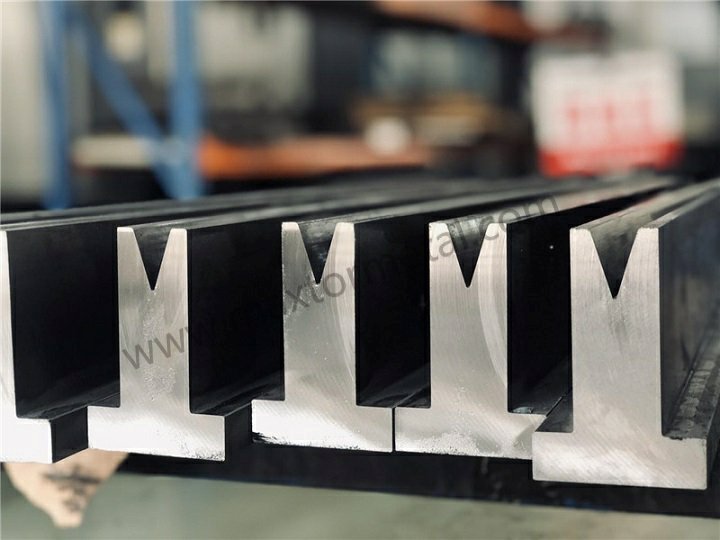
High-carbon high-chromium steels give you a strong option for press brake dies. These steels stand out because they offer excellent wear resistance and high hardness. You often see them in jobs where you need your press brake dies to last a long time and keep their shape. Let’s look at the main grades and what makes them special.
Cr12, Cr12MoV, D2, and Similar Grades
You will find several high-carbon high-chromium steels used in press brake dies. The most common grades are Cr12, Cr12MoV, and D2. Each grade has a unique mix of elements that changes how it works in your shop.
Dưới đây là bảng thể hiện những điểm khác biệt chính:
| Thép cấp | Hàm lượng carbon | Alloying Elements | độ dẻo dai | Hao mòn điện trở | Độ cứng (HRC) |
|---|---|---|---|---|---|
| Cr12 | Cao hơn | Không có | Poor | Cao | 60-63 |
| Cr12MoV | Thấp hơn | Mo, V | Tốt | Better than Cr12 | 57-59 (after tempering) |
| Cr12Mo1V1 | Higher than Cr12MoV | Higher Mo, V | Better than Cr12MoV | Tốt nhất | 60-65 (after treatment) |
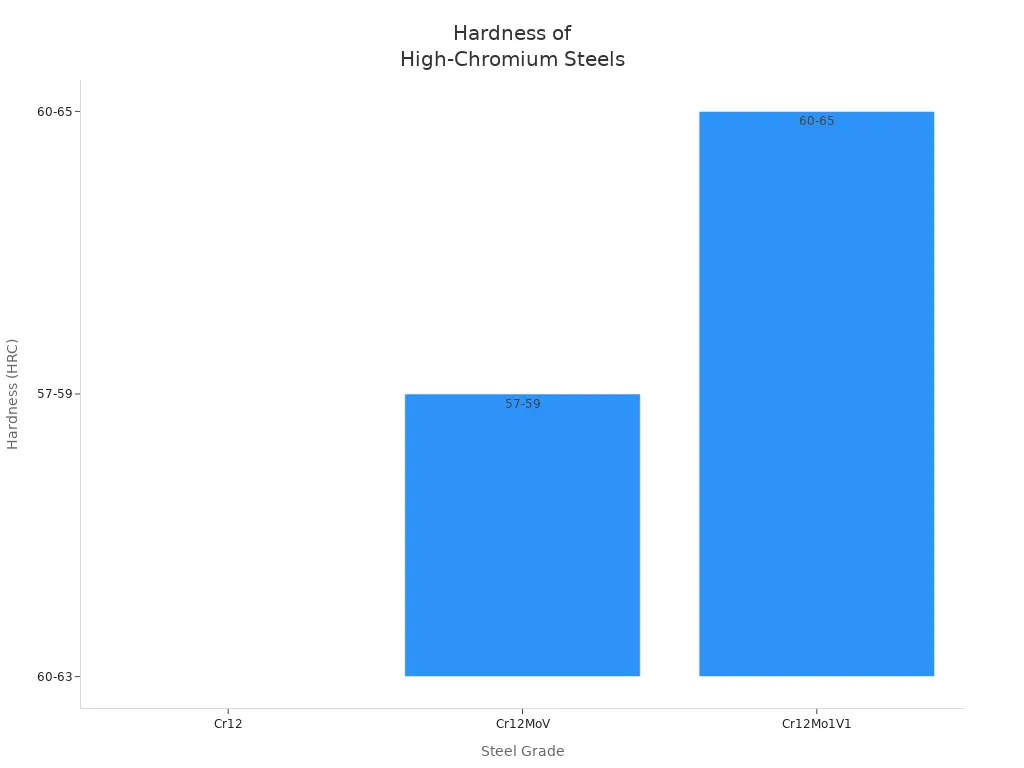
You can see that Cr12 has high carbon but no extra alloying elements. This gives you high hardness but low toughness. Cr12MoV adds molybdenum and vanadium. These elements improve toughness and wear resistance. Cr12Mo1V1 takes it further with even more molybdenum and vanadium. This grade gives you the best wear resistance and toughness for press brake dies.
Here is a chart that compares the hardness of these grades:
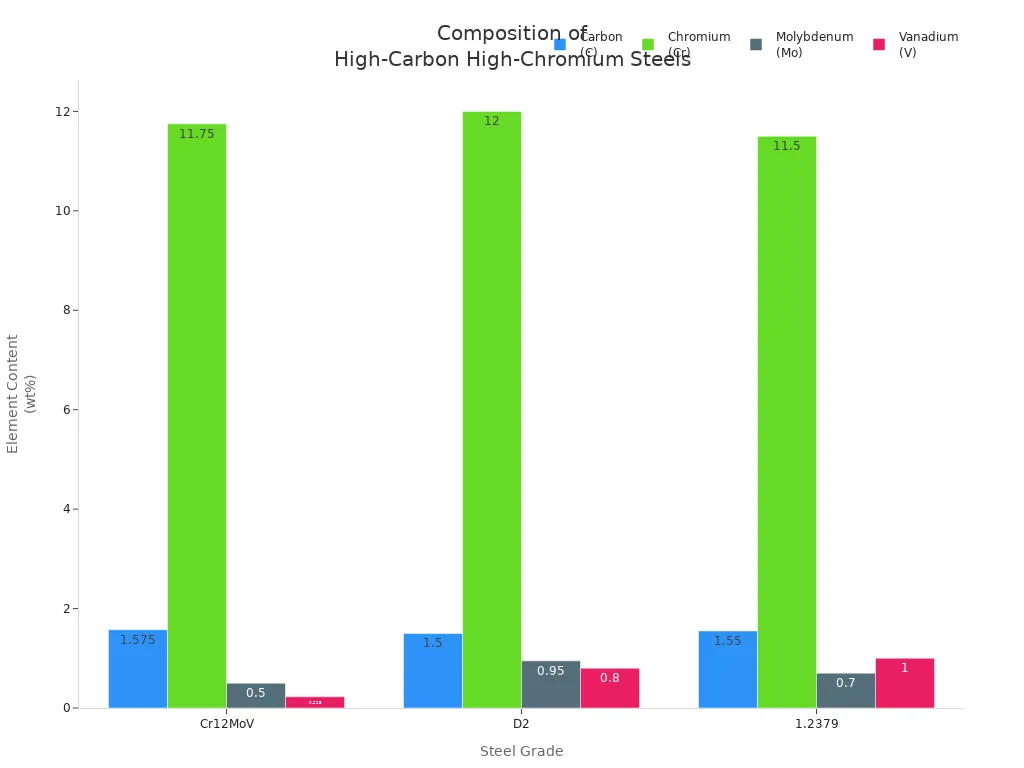
You also see D2 and 1.2379 used in press brake dies. These grades have a similar mix of carbon, chromium, molybdenum, and vanadium. The table below shows their composition:
| Cấp | C | Cr | Mo | V |
|---|---|---|---|---|
| Cr12MoV | 1.45-1.7 | 11-12.5 | 0.4-0.6 | 0.15-0.3 |
| D2 | 1.4-1.6 | 11-13 | 0.7-1.2 | 0.5-1.1 |
| 1.2379 | 1.5-1.6 | 11-12 | 0.6-0.8 | 0.9-1.1 |
You get more wear resistance as you add more chromium, molybdenum, and vanadium. These elements help your press brake dies last longer and resist cracking.
Here is a chart that shows the content of these elements:
- Cr12 gives you poor toughness and high brittleness. Carbides do not spread evenly, so you may see cracks.
- Cr12MoV improves toughness and wear resistance. You see fewer cracks and less deformation.
- Cr12Mo1V1 offers the best toughness, wear resistance, and oxidation resistance.
Wear Resistance and Hardness
You want your press brake dies to last as long as possible. High-carbon high-chromium steels help you reach this goal. These steels give you top-level wear resistance. You can use them for jobs where your dies face lots of friction and pressure.
The wear resistance of press brake die depends on the steel’s hardness and the way carbides form inside the metal. Cr12, Cr12MoV, and D2 all form hard carbides. These carbides protect your press brake dies from wearing out. You get less downtime and fewer replacements.
You will notice that Cr12MoV and D2 offer better wear resistance than plain Cr12. The added molybdenum and vanadium help the steel resist cracking and chipping. You can use these grades for high-volume jobs or when you bend abrasive materials.
Tip: If you want the best wear resistance, choose Cr12Mo1V1 or D2 for your press brake dies. These grades keep their edge and shape even after thousands of bends.
You also get high hardness with these steels. Most grades reach 57-65 HRC after heat treatment. This high hardness means your press brake dies cut and form metal with sharp, clean lines. You get precise bends and less tool wear.
Dụng cụ bằng thép gió và hợp kim cứng (carbide)

When you use press brake tools, you want strong materials. High-speed steel and cemented carbide are both great for hard jobs. These materials help your tools last longer and work better. Each one has special benefits that can help you in your shop.
Lợi ích của thép tốc độ cao
High-speed steel (HSS) is better than regular tool steels in many ways. You can use HSS for tools that must stay sharp and work fast. This material does not get soft when it gets hot. It keeps its shape even if you bend metal quickly.
Here is a table that shows how high-speed steel and regular tool steels are different:
| Lợi ích | Thép tốc độ cao (HSS) | Traditional Tool Steels |
|---|---|---|
| Retains cutting edge at very high speeds | Đúng | KHÔNG |
| Withstands heat generated during machining | Đúng | KHÔNG |
| Superior cutting performance | Đúng | KHÔNG |
| Long service life in demanding operations | Đúng | KHÔNG |
You can see that high-speed steel works well even when you use your machines a lot. You get smooth bends and do not have to stop often. The tooling does not wear out fast. HSS saves you money because you do not need new dies all the time.
Tip: Pick high-speed steel if you want your tools to work well in fast or hot jobs.
Cemented Carbide Strengths
Cemented carbide is one of the hardest materials for press brake dies. It is very tough and does not wear out quickly. This means your tools last a long time, even in hard jobs.
Here are some main strengths of cemented carbide:
- Cemented carbide is known for being very hard.
- It does not wear out fast, so it is good for jobs you do often.
- Cemented carbide tooling lasts a long time in press brake work.
Cemented carbide is best when you bend hard or rough materials many times. You do not have to worry about your dies wearing out soon. This material is good for jobs with little impact but lots of wear.
Here is a table that compares high-speed steel and cemented carbide for press brake dies:
| Vật liệu | Trị giá | độ cứng | Hao mòn điện trở | độ dẻo dai |
|---|---|---|---|---|
| Thép tốc độ cao | Thấp hơn | Vừa phải | Vừa phải | Tốt |
| Cacbua xi măng | Cao hơn | Thượng đẳng | Xuất sắc | Vừa phải |
You can see that cemented carbide costs more, but it is harder and lasts longer. High-speed steel is not as hard, but it is tough and costs less. You should choose the material that fits your job and your budget.
Note: Cemented carbide is best for jobs you do often and when you want your tools to last a long time.
When you pick strong materials like high-speed steel or cemented carbide, your tools work better. You do not have to change tools as much. Your shop runs better and you get more value from your press brake tools.
Lựa chọn mác thép chế tạo khuôn chấn

Các yếu tố lựa chọn chính
There are many things to think about when picking press brake tooling. The right steel grade helps you do a better job and saves money. First, think about what kind of metal you want to bend. Mild steel is easy to bend and works with most dies. If you use high-strength alloy or stainless steel, you need stronger tooling that can handle more force and last longer.
The thickness of the metal is very important. Thin sheets need tooling with sharp edges and high hardness. Thick plates need dies that are tough and do not bend easily. How many parts you make also matters. If you make lots of parts, pick tooling that lasts a long time and keeps its shape. You want your dies to stay the same size and shape after many bends.
You should also check your press brake machine. Manual machines work best with lighter metals. Hydraulic and CNC machines can bend thicker plates and make more shapes. Make sure your tooling matches what your machine can do.
Here are some simple tips to help you choose:
- Check what kind of metal and how thick it is before picking a steel grade.
- Think about how many bends you will make each day.
- Make sure your tooling fits your press brake’s power and design.
- Look for steel grades that keep their shape and are tough.
- Think about how much the tooling costs and how long it will last.
Tip: If you need special shapes or blades, you can look at Lưỡi Dao Tùy Chỉnh made just for your needs.
Matching Grade to Application
You can pick the right steel grade by looking at hardness, wear resistance, and how many bends you need. Each steel grade is best for certain jobs. Use this table to compare some common choices for press brake tooling:
| Vật liệu | Độ cứng (HRC) | Bending Cycles | Tốt nhất cho |
|---|---|---|---|
| Thép công cụ (D2) | 58-62 | 50,000-100,000 | General fabrication |
| cacbua | 85-92 | 500,000+ | Sản xuất khối lượng lớn |
| Thép cứng | 50-55 | 30,000-60,000 | Budget-conscious shops |
| Tool Steel (A2) | 56-60 | 40,000-80,000 | Precision bending |
| Powdered Metal | 60-64 | 150,000-300,000 | Specialty alloys |
Carbide tooling lasts the longest and is good for making lots of parts. D2 tool steel is a good choice for most jobs. Hardened steel is cheaper and works for shops that do not make as many parts. A2 tool steel is great for jobs that need very exact bends. Powdered metal is best for special metals and unique jobs.
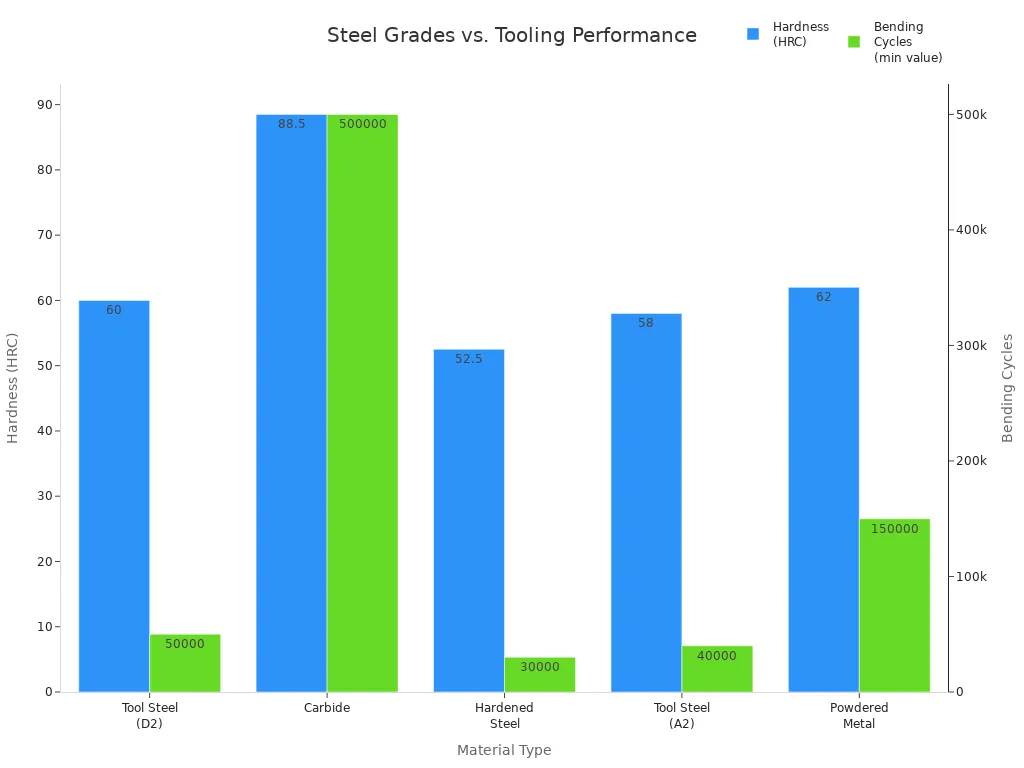
If you want your dies to keep their shape and last a long time, pick grades like 42CrMo or carbide. These materials do not wear out fast and stay the same after many bends. For sharp edges and clean lines, D2 and A2 tool steels are good picks. If you bend thick plates or strong alloys, use tooling that does not bend or break easily.
Nanjing Metal makes press brake tooling from 42CrMo alloy steel. This steel grade is tough and keeps its shape well. You can also ask for special tooling for unique jobs. If you need blades for special shapes or metals, check the trang lưỡi dao tùy chỉnh để có thêm nhiều lựa chọn.
Always match your steel grade to your job. Think about the metal type, thickness, and how many bends you need. Pick tooling that works with your machine and fits your shop’s needs. When you choose the right press brake tooling, you get better results and your tools last longer.
Note: It is important for your dies to keep their shape and be tough. Make sure your tooling grade fits your job.
You have learned how press brake tooling steel grades affect tool life, accuracy, and cost. Choose T8, T10, or T12 for light jobs. Pick 42CrMo or D2 for heavy-duty or high-volume work. Match the steel grade to your needs for better results.
- Check your metal type and thickness.
- Select tooling that fits your machine and production goals.
- Ask experts for advice if you need help.
Câu hỏi thường gặp
What are the most common press brake tooling steel grades?
You often see T8, T10, 42CrMo, Cr12MoV, D2, and high-speed steel used for press brake tooling. Each steel grade offers different hardness, toughness, and wear resistance.
How do I choose the right press brake tooling steel grade?
You should look at the type of metal, thickness, and how many bends you need. Harder steel grades work best for thin sheets. Tougher grades handle thick plates and heavy-duty jobs.
Why does steel grade affect press brake die life?
Steel grade changes how long your dies last. Harder grades resist wear and keep sharp edges. Tougher grades prevent cracks and bending. The right steel grade helps you avoid frequent replacements.
Can I use the same steel grade for all press brake jobs?
You should not use one steel grade for every job. Each press brake tooling steel grade fits different tasks. Pick a grade that matches your metal type and bending needs.
What is the difference between carbon tool steel and alloy tool steel?
Carbon tool steel gives you high hardness and sharp edges. Alloy tool steel offers more toughness and better wear resistance. Alloy grades like 42CrMo work well for heavy-duty bending.
How does heat treatment improve press brake tooling steel grades?
Heat treatment makes steel harder and tougher. You get better wear resistance and longer tool life. Always check if your press brake tooling steel grades have been heat treated.
Are carbide press brake dies better than steel dies?
Carbide dies last longer and resist wear better than steel dies. You should use carbide for high-volume jobs. Steel dies cost less and work well for general bending tasks.
What industries use different press brake tooling steel grades?
You see press brake tooling steel grades in automotive, shipbuilding, construction, and appliance manufacturing. Each industry picks steel grades based on job needs and metal types.
Xem thêm
Uốn trong Không Khí vs. Uốn Chạm Đáy: Lựa Chọn Dụng Cụ Uốn Sườn Phù Hợp cho Dự Án của Bạn
Dụng Cụ Uốn Sườn Kiểu Châu Âu so với Kiểu Mỹ: Loại Nào Phù Hợp cho Xưởng của Bạn?
Lựa Chọn Dụng Cụ Uốn Sườn Tốt Nhất cho Thép Không Gỉ
Làm chủ công cụ ép phanh: Cách xác định và sửa chữa vết mòn của khuôn đột và khuôn dập
5 mẹo thiết yếu để kéo dài tuổi thọ của dụng cụ ép phanh và tối đa hóa độ bền

 English
  Spanish
  Italian
  French
  Portuguese
  Russian
  German
  Arabic
  Hindi
Hindi  Vietnamese
  Indonesian
  Japanese
  Korean