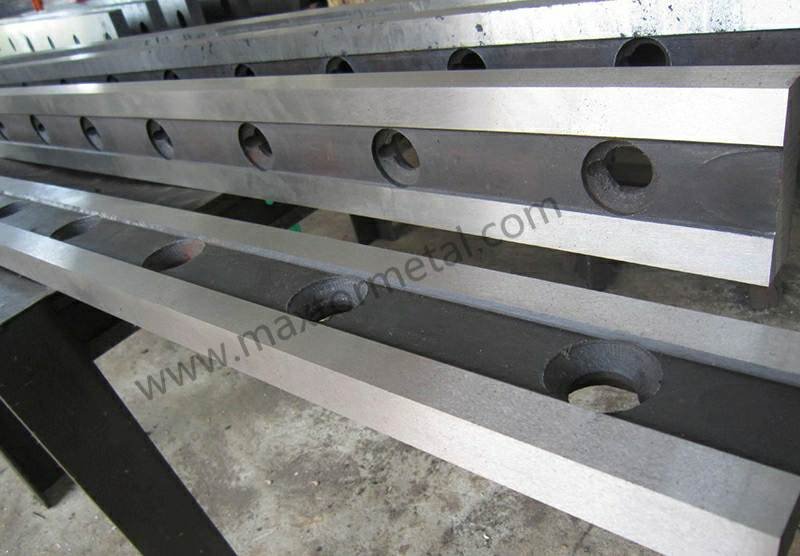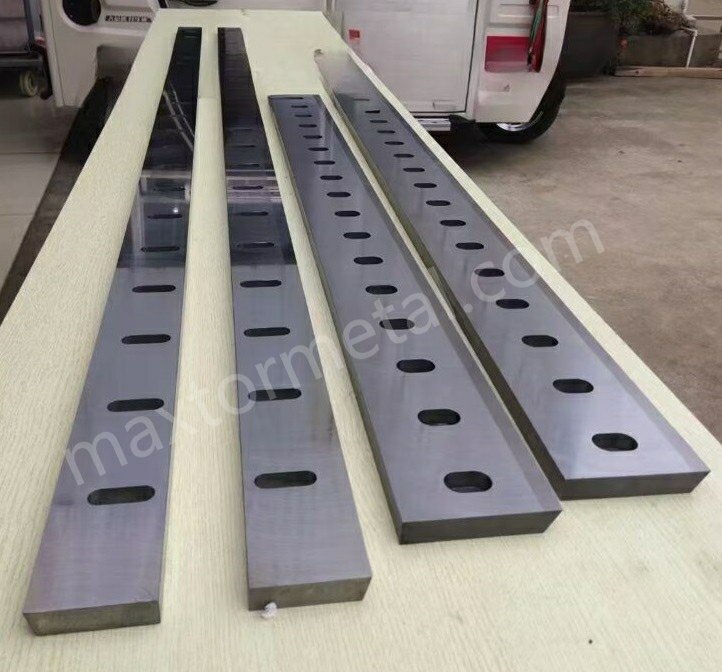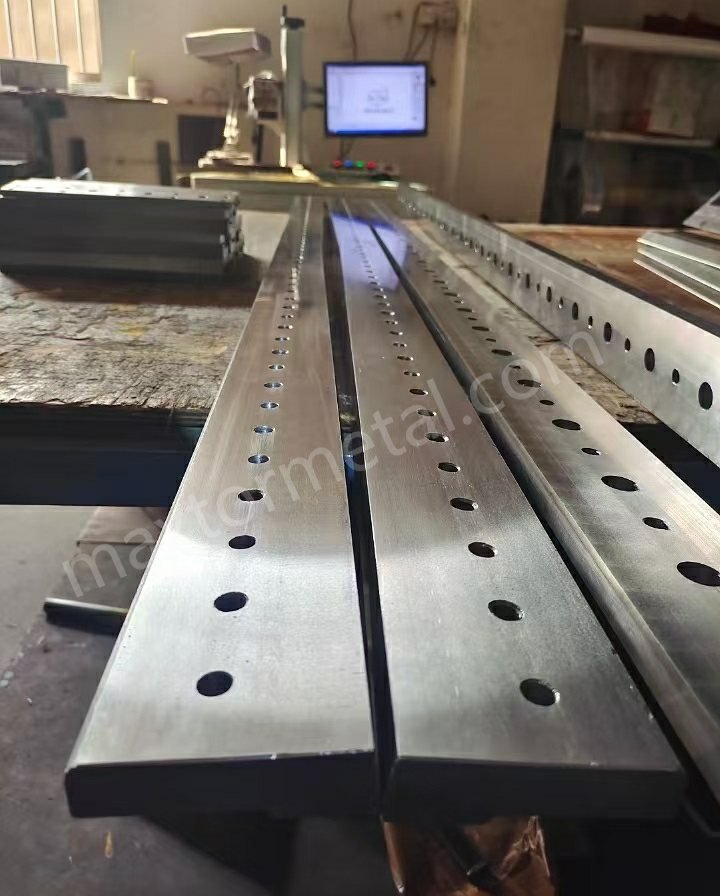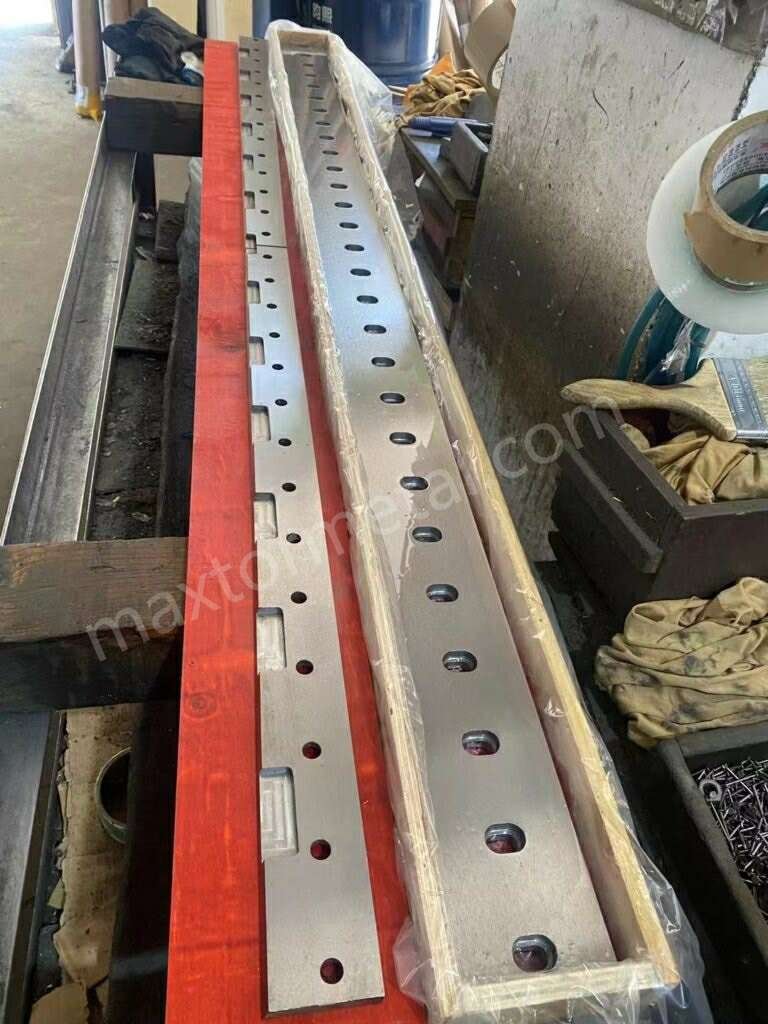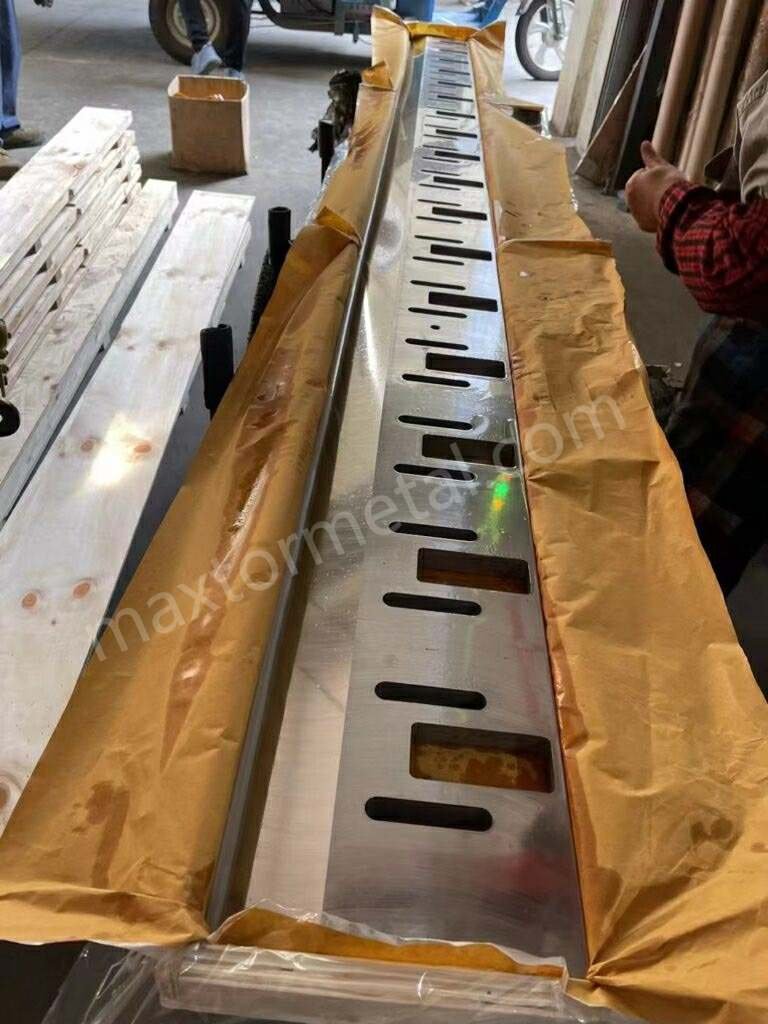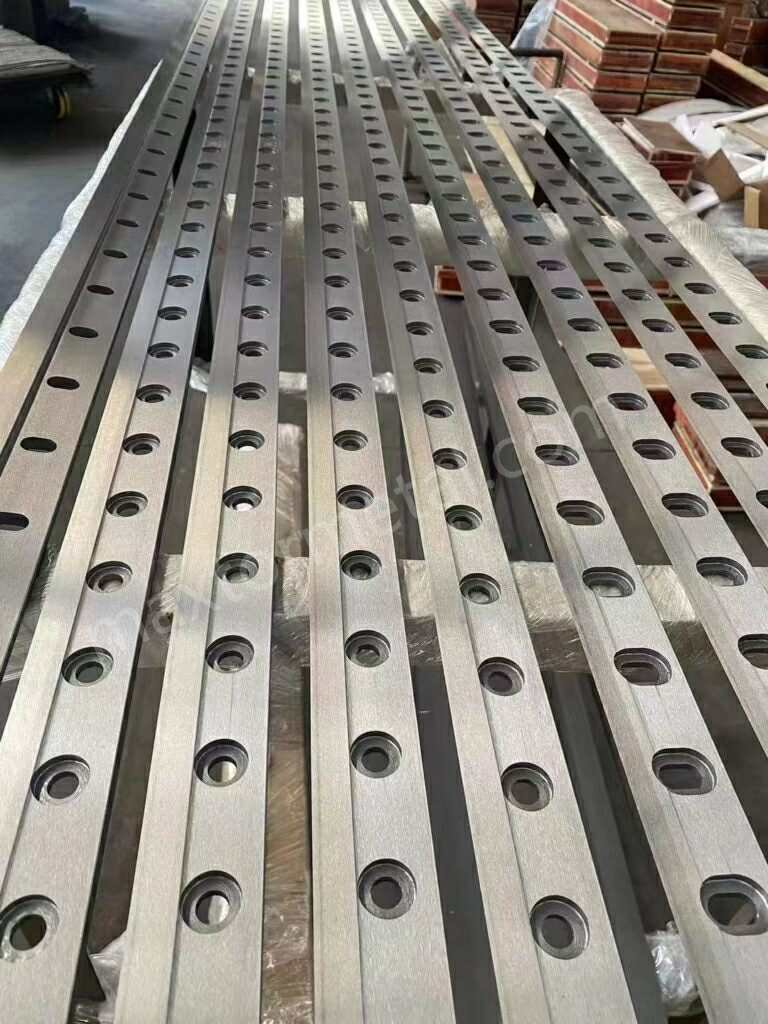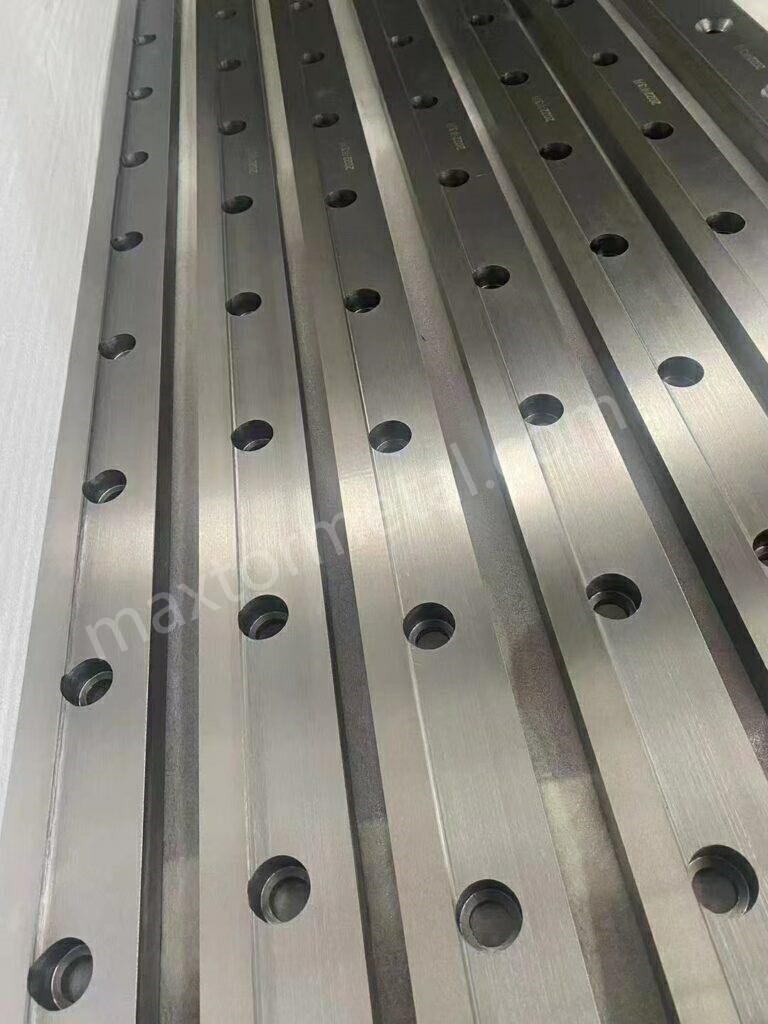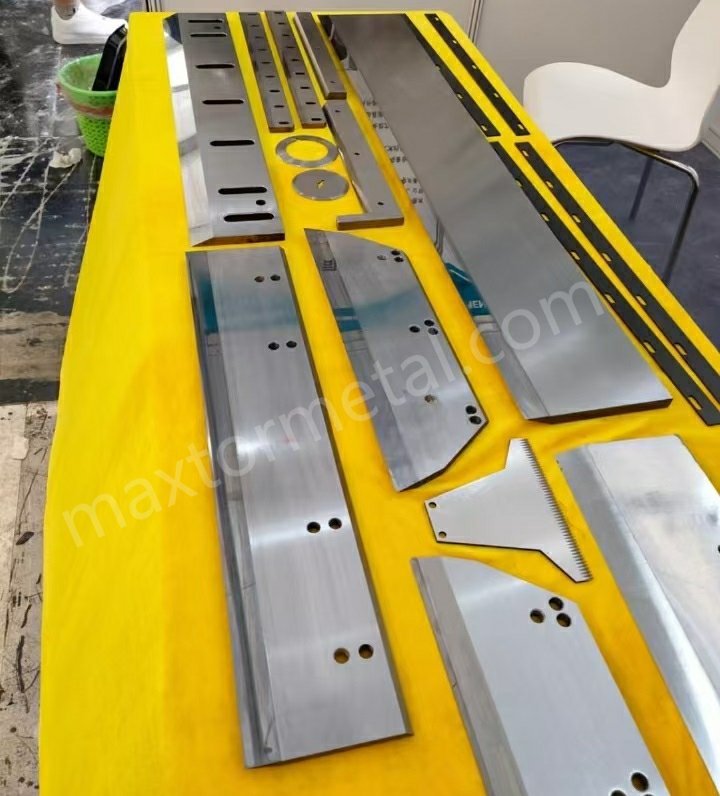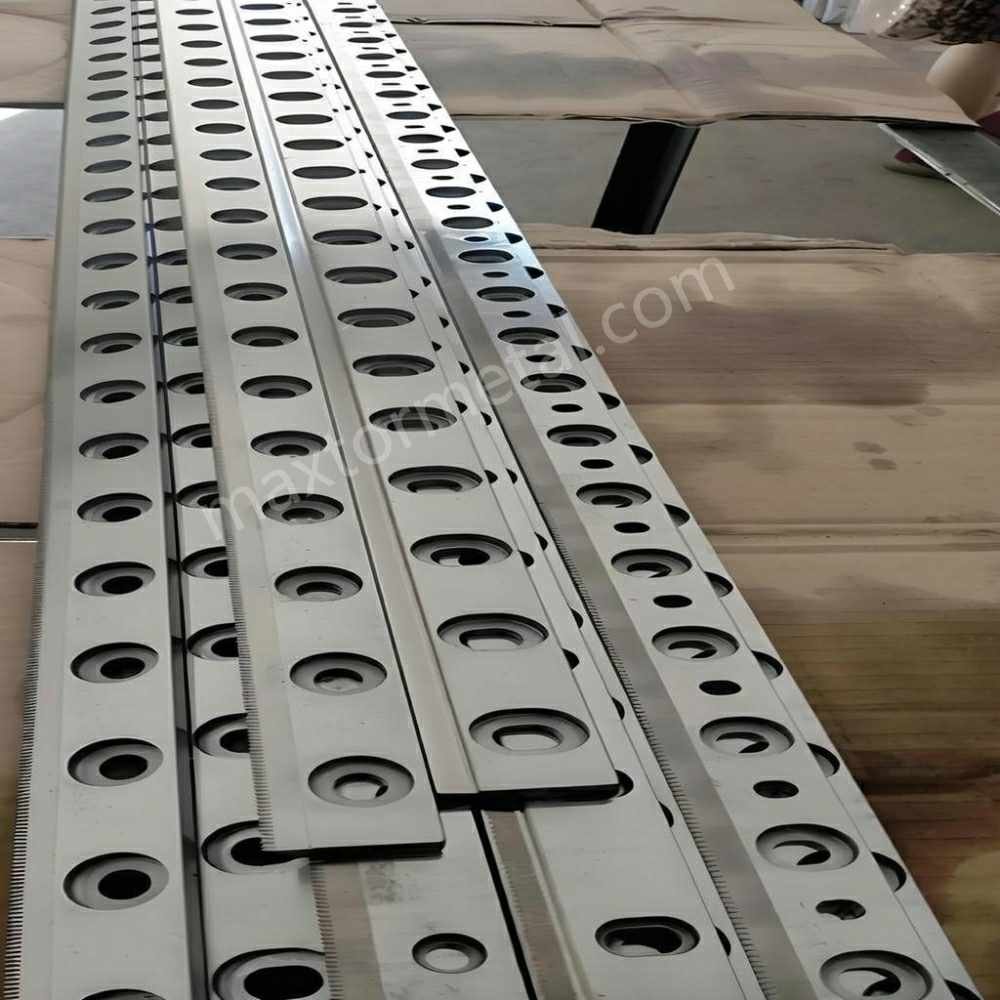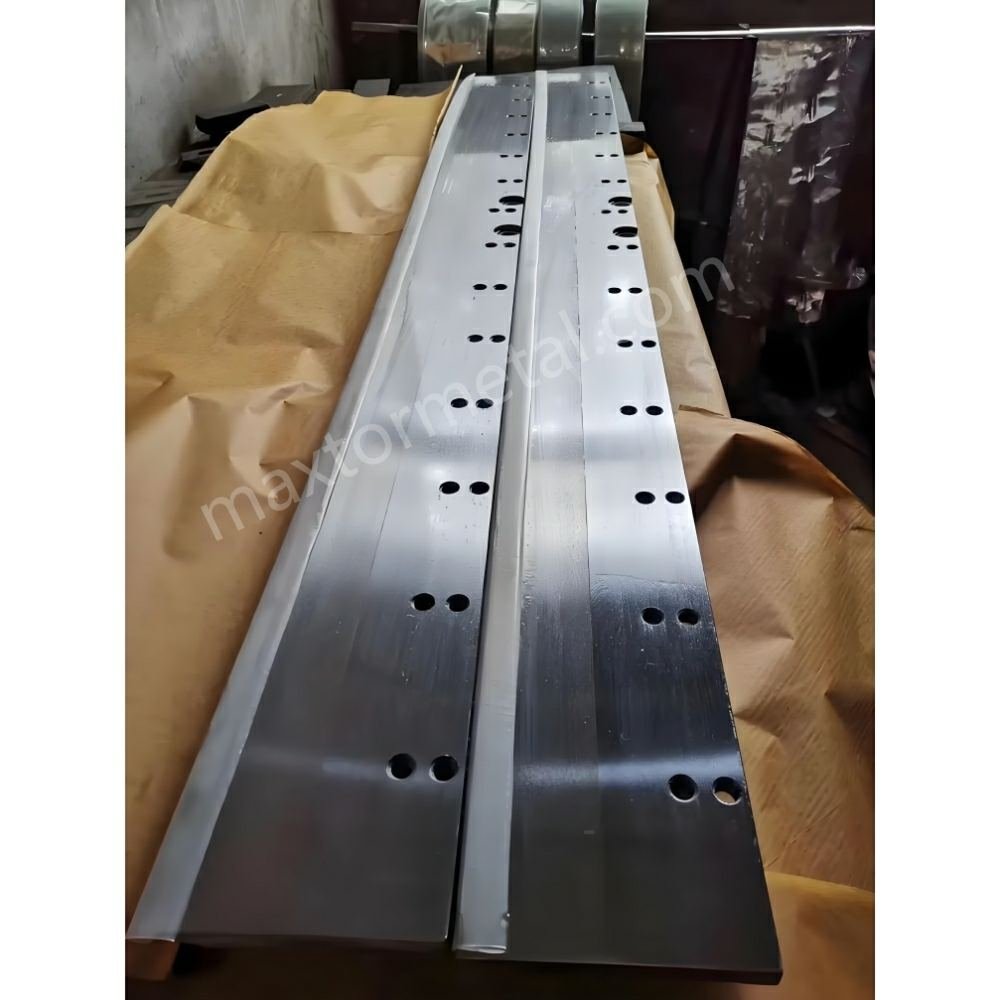
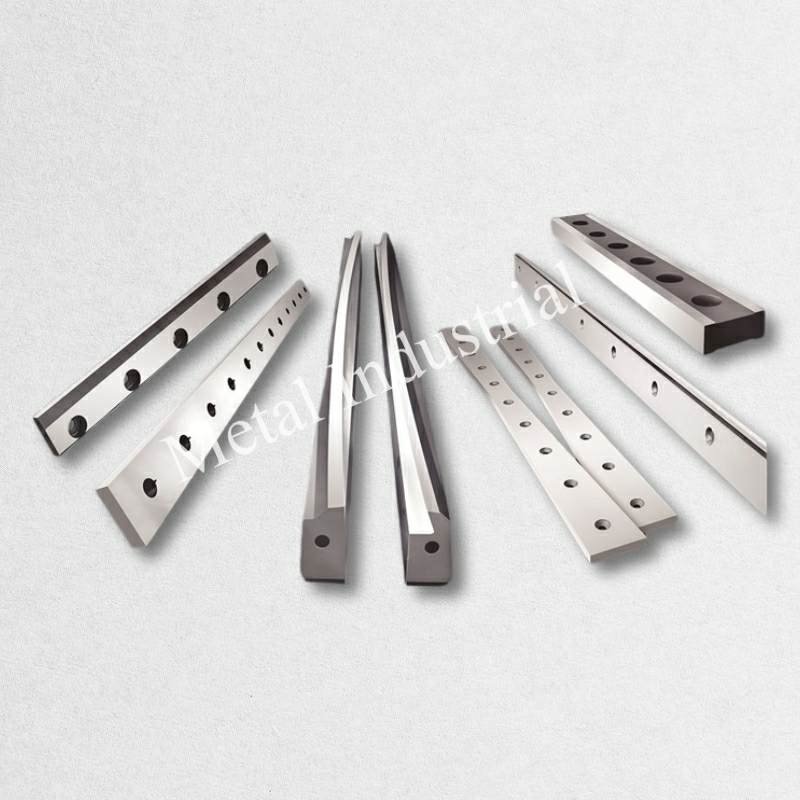
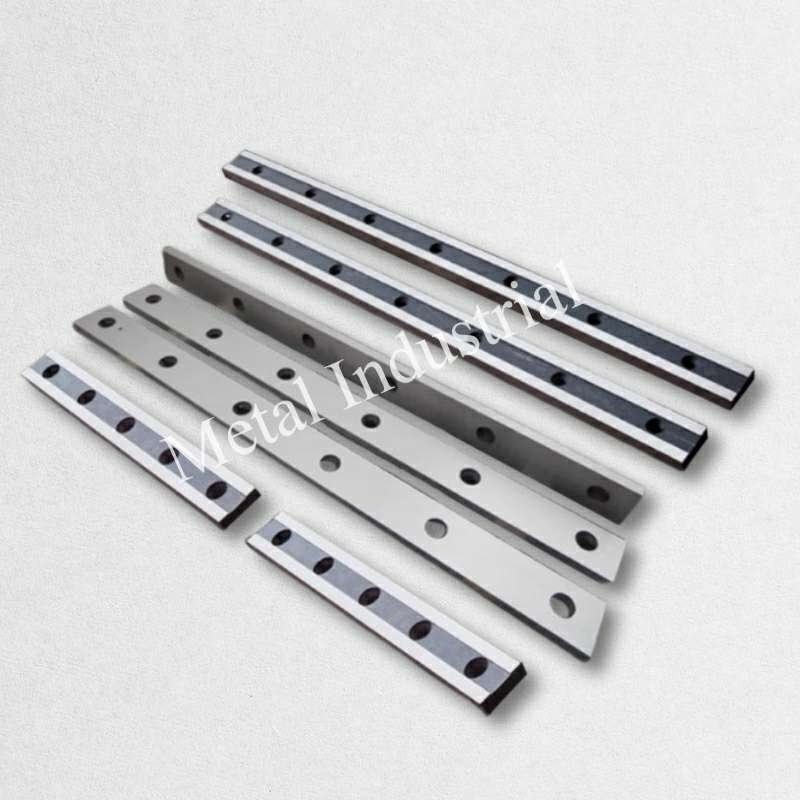
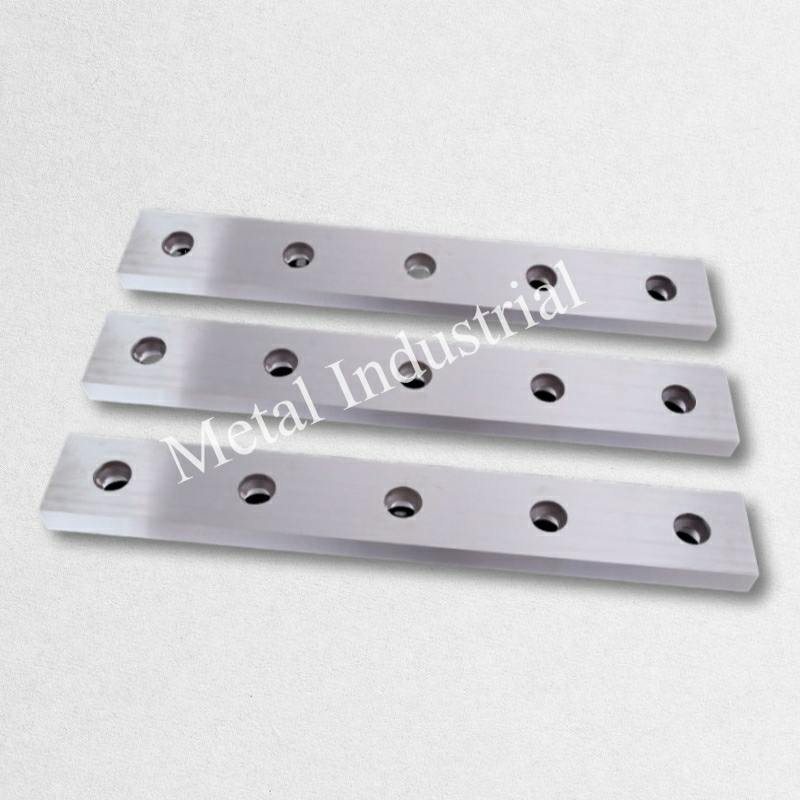
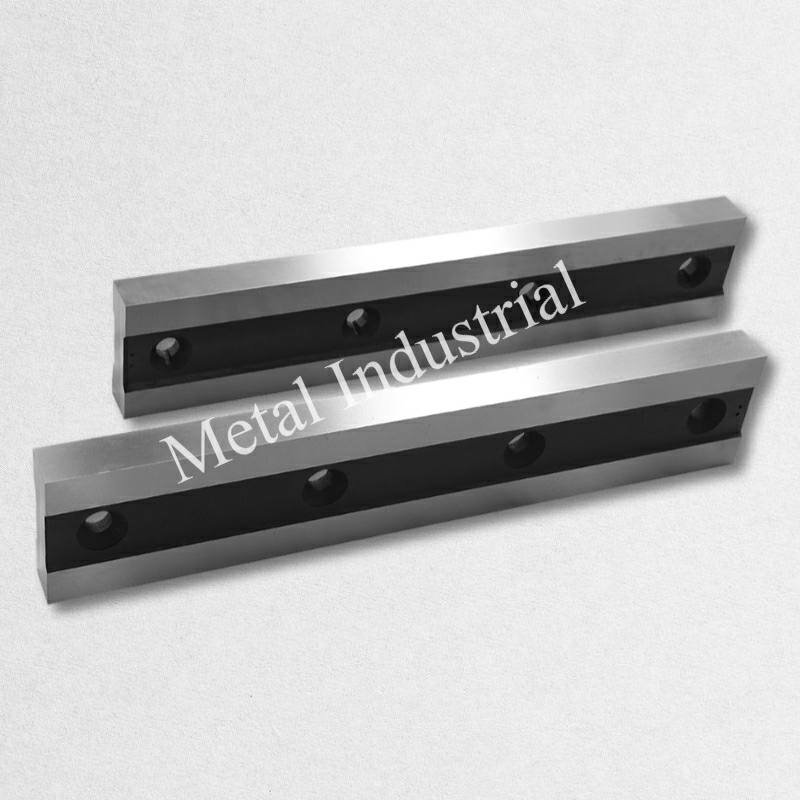
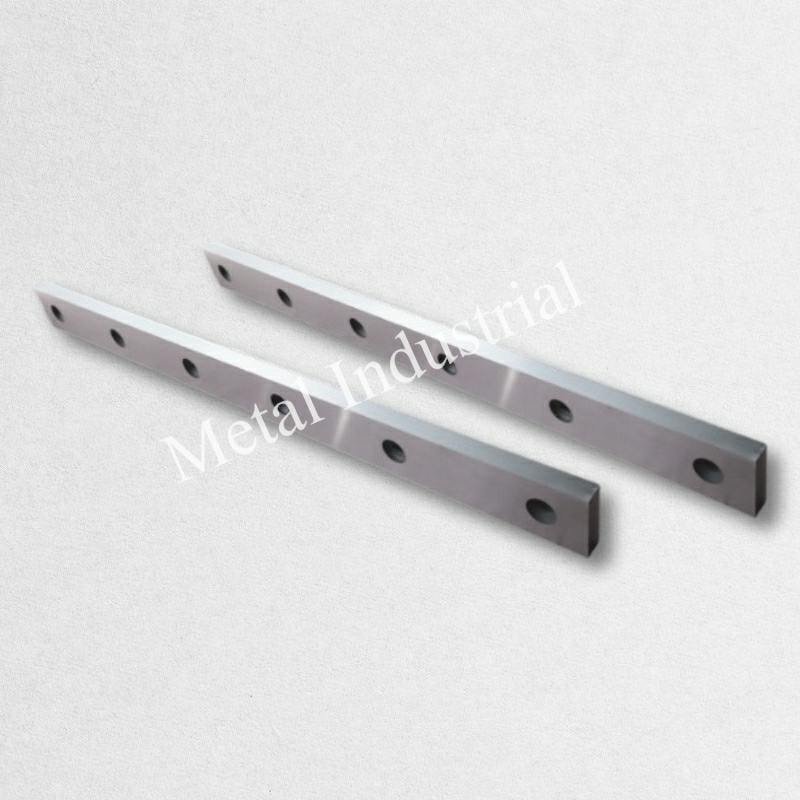
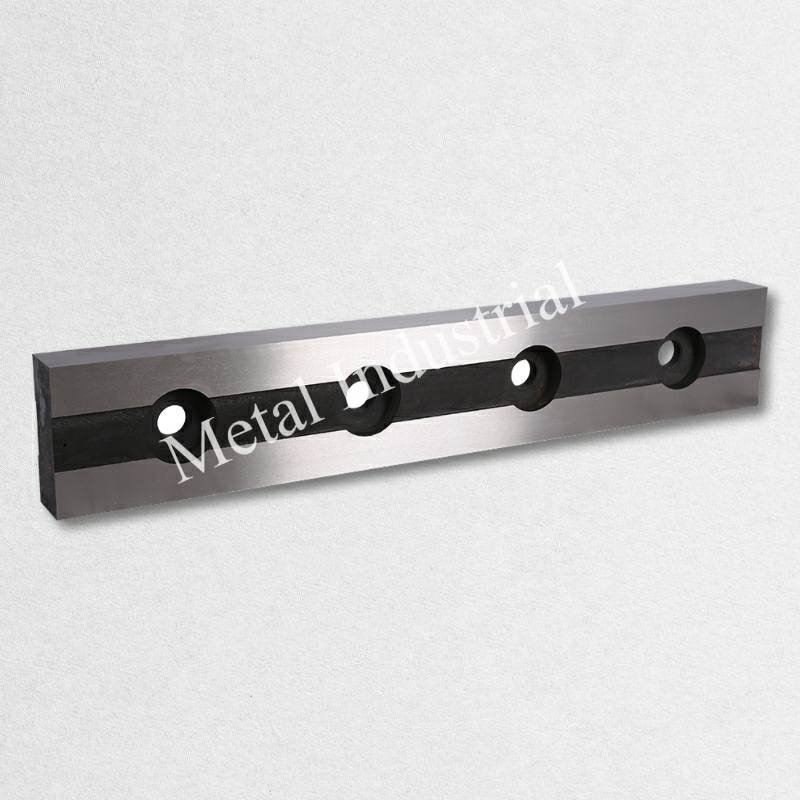
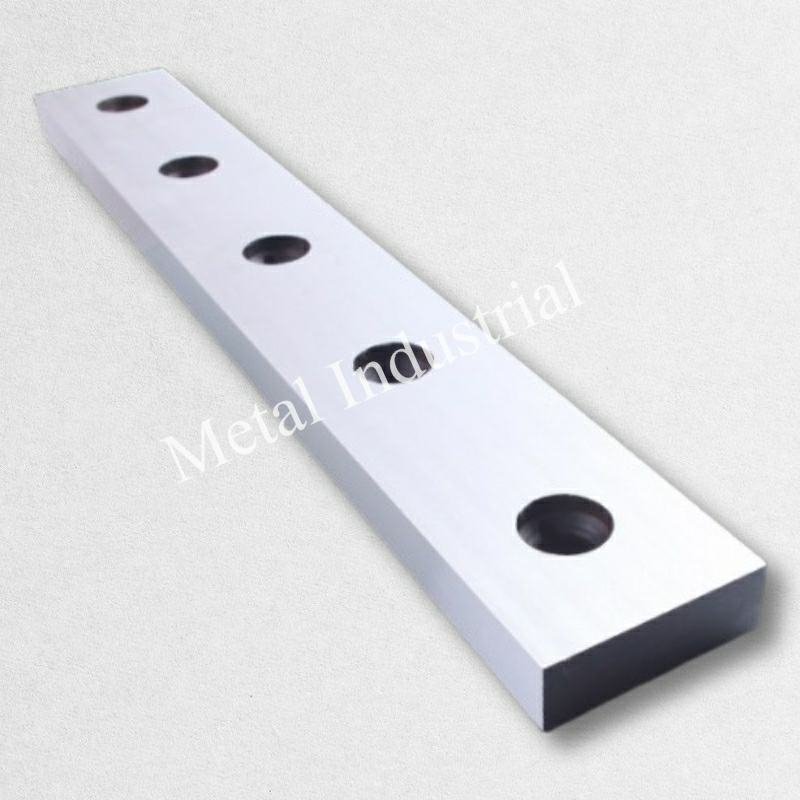
شفرات قص دقيقة | مواصفات سكاكين المقصلة الصناعية
+86 158 6180 3357

شفرات القص

معلومات إضافية

أسماء أخرى

Shear Machine Blades、Shear Knives, Shearing Blades, Cutting Blade, Industrial Guillotine Knives

بلد المنشأ

الصين

تطبيق

تشغيل المعادن, مصنع التصنيع, أعمال البناء

مادة

D2, H13, S7, SKD-11

رقم الموديل

MT-SB

خدمة OEM

متاح

شروط الدفع

خطاب الاعتماد، تي/تي، ويسترن يونيون

التعبئة

صندوق كرتون, صناديق خشبية

وقت التسليم

15-20 DAYS

شارك على:


شفرات مقصات صناعية عالية الأداء (مقصات المقصلة والمقصات الطائرة)

صُممت خصيصاً لعمليات القص الدقيق على البارد والساخن للألواح والصفائح المعدنية. تستخدم هذه الأدوات خلوصاً فيزيائياً محسناً لتوليد إجهاد قص يتجاوز مقاومة القص للمادة، مما يحقق فصلاً خالياً من الرايش (البروز) ومن الشظايا، وبدون ترك مناطق متأثرة بالحرارة (HAZ).

Engineering Parameter

Cold Shearing Specification

Heavy-Duty / Hot Shearing Specification

المواد المشتركة

D2 (1.2379), SKD11

H13 (1.2344), S7

الصلابة (HRC)

58 – 62

48 – 58 (Application dependent)

استقامة

< 0.02 mm/m

< 0.05 mm/m

Parallelism

< 0.015 mm

< 0.030 mm

Edge Finish (Ra)

< 0.8 µm (Fine Ground)

< 1.2 µm

Compatible Machines

Amada, Cincinnati, Bystronic, LVD, Durma

Custom Flying Shears, Scrap Shears


نظرة عامة هندسية على شفرات المقصات: ميكانيكا القص

Industrial shearing is a complex mechanical process that involves the plastic deformation and subsequent fracture of metal through the application of opposing shear forces. Unlike thermal cutting methods, shear blades provide “cold processing,” which preserves the metallurgical characteristics of the material edges.

2.1 The Shearing Mechanism

The process is initiated as the upper blade descends, creating a localized stress field. When the stress exceeds the material’s ultimate shear strength, fracture occurs. The quality of this fracture is governed by the “Blade Clearance” (Gap Management). In engineering terms, this clearance typically ranges from 5% to 10% of the material thickness, depending on the material’s hardness.

2.2 Wear Dynamics

Blade wear manifests in three primary stages:

  1. Initial Bedding-in: Rapid wear of microscopic grinding peaks.
  2. Steady State Wear: Gradual blunting of the cutting edge radius.
  3. Catastrophic Failure: Micro-chipping occurs when the edge radius exceeds critical limits (typically >0.2mm), leading to increased cutting force and thermal load.

التطبيقات الصناعية لشفرات المقصات: تحليل حسب القطاع

Shear blades are vital across diverse sectors, each presenting unique engineering constraints:

  • Automotive Manufacturing: Cutting High-Strength Low-Alloy (HSLA) steel. This requires blades with extreme toughness to resist the high tensile forces of modern automotive panels.

  • Shipbuilding Industry: Processing heavy plates. H13 or S7 materials are prioritized here for their impact resistance.

  • Steel Service Centers: High-volume cold-rolled steel (CRS) shearing. Precision and edge life consistency are the primary KPIs.

  • Construction & Structural Steel: Guillotine shearing of rebar and structural sections. Focuses on the “4-edge reversible” design to minimize downtime.

  • Aerospace & Non-Ferrous Processing: Shearing aluminum and copper. Requires high surface finish (Ra <0.8µm) to prevent “sticking” or material adhesion (galling).
  • إعادة تدوير الخردة Metal: Utilizing S7 blades for irregular, high-impact loads where resistance to catastrophic fracture is critical.

مشاكل الفشل الشائعة لشفرات المقصات والحلول الهندسية

  1. Problem: Micro-Chipping at the Edge.
    • Root Cause: Excessive hardness or insufficient blade clearance.
    • حل: Introduce Cryogenic Treatment to stabilize the martensitic structure and reduce internal stress.

  2. Problem: Excessive Burr Formation.
    • Root Cause: Blade blunting or excessive clearance (gap >10% of plate thickness).
    • حل: Implement a 4-edge reversible design and strictly monitor the edge radius; regrind when the radius reaches 0.2mm.

  3. Problem: Slanted/Incline Cut Edges.
    • Root Cause: Lack of blade rigidity or non-planar installation surfaces.
    • حل: Use a dial indicator to verify parallelism across the entire length (ends and middle) during installation.

  4. Problem: Thermal Cracking (Heat Checking).
    • Root Cause: High-speed continuous shearing generating friction heat.
    • حل: Apply TiN or TiAlN coatings to reduce the friction coefficient and manage heat dissipation.

  5. Problem: Premature Edge Blunting in Stainless Steel.
    • Root Cause: Work hardening of 304/316 grades.
    • حل: Select D2 or SKD11 materials with high carbon and chromium for maximum abrasion resistance.

  6. Problem: Catastrophic Blade Fracture.
    • Root Cause: Using high-hardness blades (HRC 60+) for heavy plates or scrap.
    • حل: Switch to S7 or H13 grades with hardness reduced to HRC 48-54 to prioritize toughness.

  7. Problem: “Ghost” Burrs on Non-Ferrous Metals.
    • Root Cause: Material adhesion to the blade surface.
    • حل: Bright chrome plating to increase surface lubricity and prevent “sticking”.

  8. Problem: Dimensional Distortion Post-Regrind.
    • Root Cause: Grinding burns causing localized softening.
    • حل: Mandatory fine grinding with adequate coolant; ensure no visible grinding burns. Additionally, thickness reduction from each regrind cycle must be documented and compensated with a precision shim stack to restore blade overlap — see the Regrinding Thickness Reduction Compensation Shim Guide for the calculation procedure.

  9. Problem: Blade Walking/Shifting.
    • Root Cause: Poor bolt-hole compatibility.
    • حل: Standardize hole positions during the CAD/CAM phase for 100% compatibility with OEM machines.

  10. Problem: Stress Fractures in Multi-Segment Blades.
    • Root Cause: Uneven load distribution between segment joints.
    • حل: Precision grinding of segments as a matched set to ensure uniform height and parallelism.


5.دليل هندسة المواد

  1. Material selection is based on the “Wear Resistance vs. Toughness” trade-off:

    • D2 (1.2379) / SKD11: The “General Purpose” standard. High carbon and high chromium provide excellent wear resistance for sheets <6mm.

    • H13 (1.2344): The “Heavy-Duty” choice. Exceptional hot-hardness and impact toughness for plates >12mm or hot shearing.  
    • S7: The “High-Impact” grade. Specifically designed for scrap recycling and heavy-duty demolition where fracture resistance is the absolute priority.


المعالجة الحرارية ومنطق الصلابة

The performance of a shear blade is determined in the vacuum furnace.

  • Vacuum Heat Treatment: Ensures uniform hardness depth and minimal dimensional distortion.

  • Hardness Customization:
    • Cold Shearing: HRC 58-62 for precision and verticality.

    • Medium/High Strength: HRC 54-58 for a balance of toughness.

    • Scrap/Heavy Impact: HRC 48-54 to prevent catastrophic fracture.
  • العلاج بالتبريد: Converts retained austenite to martensite, increasing wear resistance and dimensional stability by 20%-50%.

7.هندسة شكل الشفرة وحافة القطع

  • Blade Clearance Management: Essential for cut quality. Recommended gap is 5%-10% of material thickness.

  • Edge Design: Most blades utilize a 4-edge reversible design to maximize lifetime between regrinds.

  • خشونة السطح: Blade edges must be fine-ground to Ra <0.8µm to prevent initial micro-chipping.

8.عملية التصنيع وفحص الجودة

  1. Material Sourcing: High-purity alloy steels (D2, H13, S7).
  2. Machining: CNC milling of mounting holes and recesses for OEM compatibility.

  3. Vacuum Heat Treatment & Deep Cryogenics: Core hardness and structural stabilization.

  4. Fine Grinding: Precision finishing of cutting surfaces and installation planes. Thickness loss must be compensated with a calibrated shim stack — see the Regrinding Thickness Reduction Compensation Guide.

  5. تقتيش:
    • Straightness: Verification < 0.02mm/m.

    • Parallelism: Verification < 0.015mm.

    • Hardness Mapping: Ensuring consistency across the entire blade length.

دراسات حالة: تحسينات قابلة للقياس الكمي

  • Case 1: Automotive HSLA Shearing: By switching from standard D2 to Cryogenic-treated D2, a client reduced edge chipping incidents by 40% and extended blade life by 30%.

  • Case 2: Steel Service Center: Implementing strict “0.2mm radius” regrind schedules and parallelism calibration (0.015mm) resulted in a 50% reduction in rejection rates due to burrs.


قسم الأسئلة الشائعة (عمق صناعي)

  1. السؤال: متى يجب عليَّ إعادة شحذ شفرات المقصات الخاصة بي؟
    • الجواب: عندما يصل نصف قطر الحافة إلى 0,2 مم أو عندما يتجاوز ارتفاع الرايش (البروز) تفاوتات المشروع

  2. السؤال: لماذا نستخدم H13 لعمليات القص على الساخن بدلاً من D2؟
    • الجواب: يحافظ H13 على صلابته في درجات الحرارة العالية (الصلابة على الساخن)، بينما يلين D2.

  3. السؤال: ما هو خلوص الشفرة الأمثل للصلب الطري بسمك 10 مم؟
    • الجواب: من 0,5 مم إلى 1,0 مم (5%-10% من السماكة).

  4. السؤال: هل تعمل المعالجة المبردة (cryogenic treatment) حقاً؟
    • الجواب: نعم، فهي تزيد من مقاومة التآكل بنسبة تصل إلى 50% عن طريق تحويل الأوستينيت المتبقي.

  5. السؤال: كيف أمنع "الالتصاق" عند قص الألمنيوم؟
    • الجواب: استخدم شفرات مطلية بالكروم اللامع أو ذات تشطيب سطحي فائق (Ra <0.4 µm).

  6. السؤال: هل يمكنني استخدام الفولاذ S7 لقص الفولاذ المقاوم للصدأ رقيق السماكة؟
    • الجواب: لا، يفتقر S7 إلى مقاومة التآكل (الصلابة) اللازمة للفولاذ المقاوم للصدأ رقيق السماكة؛ ويفضل استخدام الفولاذ D2.

  7. السؤال: ما المقصود بـ "المعالجة على البارد" في عمليات القص؟
    • الجواب: هو فصل ميكانيكي لا يؤدي إلى تكوين منطقة متأثرة بالحرارة (HAZ)، مما يحافظ على خصائص المادة.

  8. السؤال: ما مدى أهمية استقامة الشفرة بطول 4 أمتار؟
    • الجواب: بالغة الأهمية. أي انحراف يزيد عن 0,02 مم/متر يؤدي إلى ضبط غير متساوٍ للخلوص (الفجوة) وإلى جودة قص سيئة.

  9. السؤال: لماذا تتكسر شفراتي عند الزوايا؟
    • الجواب: يشير هذا عادةً إلى وجود مستوى تركيب غير مستوٍ أو إفراط في ربط القطع (الأجزاء).

  10. السؤال: هل المعالجة الحرارية بالفراغ أفضل من حمامات الملح التقليدية؟
    • الجواب: نعم، فهي توفر تحكماً فائقاً في اتساق الصلابة وإزالة الكربون السطحي.

  11. السؤال: ما هي المواد التي تتطلب قوى قص أعلى؟
    • الجواب: الفولاذ المقاوم للصدأ وسبائك الصلب عالية المقاومة منخفضة السبائك (HSLA).

  12. السؤال: هل يمكن استخدام مجموعة شفرات واحدة لجميع السماكات؟
    • الجواب: لا. يجب ضبط خلوص الشفرات وفقاً للسماكة.

  13. السؤال: ما هي فائدة الشفرة القابلة للعكس ذات 4 حواف؟
    • الجواب: توفر أربع حواف قص قابلة للاستخدام، مما يقلل من تكلفة القص الواحدة ووقت التوقف عن العمل.

  14. السؤال: لماذا تترك المقصات الخاصة بي حافة "مسحوقة/مهروسة"؟
    • الجواب: هذا عرض ناتج عن وجود خلوص زائد بين الشفرات.

  15. السؤال: كيف تؤثر المتوازية (Parallelism) على عمر الشفرة؟
    • الجواب: يؤدي ضعف التوازي إلى مناطق ضغط عالٍ موضعية، مما يسبب تكسر (تشرذم) الشفرة بشكل مبكر.


" نرحب باستفساراتكم

إذا لم تجد شفرة القص التي تبحث عنها، يمكننا أيضًا تخصيصها، راجع قسم " شفرات مخصصة " لمعرفة كيف!
فتح الكتيبات


عرض شفرات القص:

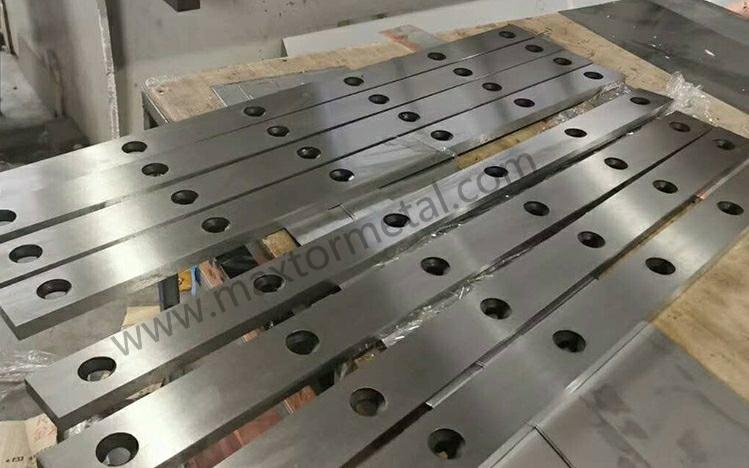
شفرات القص، شفرات آلة القص، شفرات القص البارد، شفرة القطع، شفرات المقصلة، سكاكين مقص المقصلة، شفرات القص المستقيمة، شفرات آلة القص، شفرات قص المعادنشفرات القص، شفرات آلة القص، شفرات القص البارد، شفرة القطع، شفرات المقصلة، سكاكين مقص المقصلة، شفرات القص المستقيمة، شفرات آلة القص، شفرات قص المعادنشفرات القص، شفرات آلة القص، شفرات القص البارد، شفرة القطع، شفرات المقصلة، سكاكين مقص المقصلة، شفرات القص المستقيمة، شفرات آلة القص، شفرات قص المعادنشفرات القص، شفرات آلة القص، شفرات القص البارد، شفرة القطع، شفرات المقصلة، سكاكين مقص المقصلة، شفرات القص المستقيمة، شفرات آلة القص، شفرات قص المعادن شفرات القص، شفرات آلة القص، شفرات القص البارد، شفرة القطع، شفرات المقصلة، سكاكين مقص المقصلة، شفرات القص المستقيمة، شفرات آلة القص، شفرات قص المعادن شفرات القص، شفرات آلة القص، شفرات القص البارد، شفرة القطع، شفرات المقصلة، سكاكين مقص المقصلة، شفرات القص المستقيمة، شفرات آلة القص، شفرات قص المعادن شفرات القص، شفرات آلة القص، شفرات القص البارد، شفرة القطع، شفرات المقصلة، سكاكين مقص المقصلة، شفرات القص المستقيمة، شفرات آلة القص، شفرات قص المعادن شفرات القص، شفرات آلة القص، شفرات القص البارد، شفرة القطع، شفرات المقصلة، سكاكين مقص المقصلة، شفرات القص المستقيمة، شفرات آلة القص، شفرات قص المعادن شفرات القص، شفرات آلة القص، شفرات القص البارد، شفرة القطع، شفرات المقصلة، سكاكين مقص المقصلة، شفرات القص المستقيمة، شفرات آلة القص، شفرات قص المعادن شفرات القص، شفرات آلة القص، شفرات القص البارد، شفرة القطع، شفرات المقصلة، سكاكين مقص المقصلة، شفرات القص المستقيمة، شفرات آلة القص، شفرات قص المعادن شفرات القص، شفرات آلة القص، شفرات القص البارد، شفرة القطع، شفرات المقصلة، سكاكين مقص المقصلة، شفرات القص المستقيمة، شفرات آلة القص، شفرات قص المعادن شفرات القص، شفرات آلة القص، شفرات القص البارد، شفرة القطع، شفرات المقصلة، سكاكين مقص المقصلة، شفرات القص المستقيمة، شفرات آلة القص، شفرات قص المعادن   شفرات المقصلة


فيديو:


مدونات ذات صلة:

  1.  الاختيار بين مقصات المقصلة ومقصات الشعاع المتأرجح: تحليل مقارن شامل ;

  2.  كيف تختار مقصًا: مقصات الشعاع المتأرجح أم مقصات المقصلة؟ وكيف تضبط فجوة شفرة القص؟

  3.  هل يمكن إعادة شحذ شفرات القص؟ وكيف؟

  4. احتراف شفرات القص المطلية: تقليل الاحتكاك، ومنع التآكل، وتعزيز سلامة الحواف

  5. الدليل الشامل لشفرات القص للفولاذ المقاوم للصدأ: المواد والهندسة للحصول على قطع عالي الجودة


استفسار عن منتج

اترك رسالة وسوف نتصل بك قريبا!