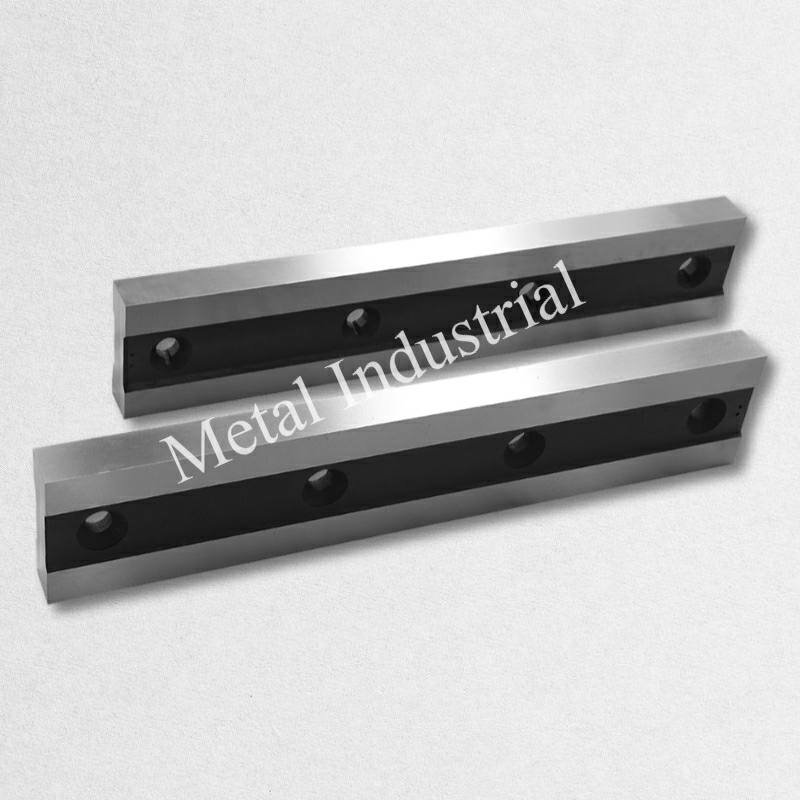
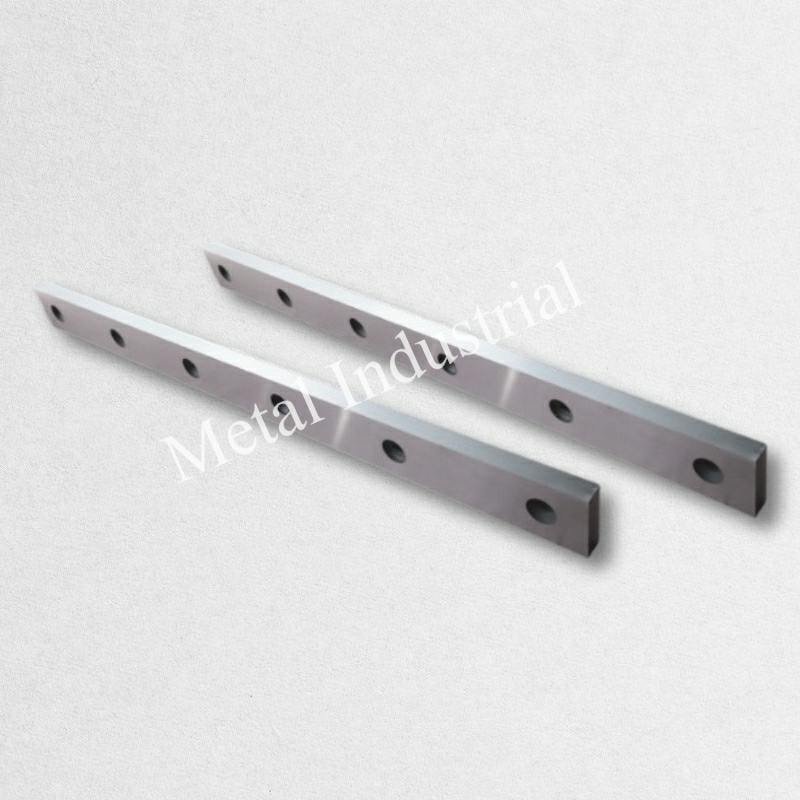
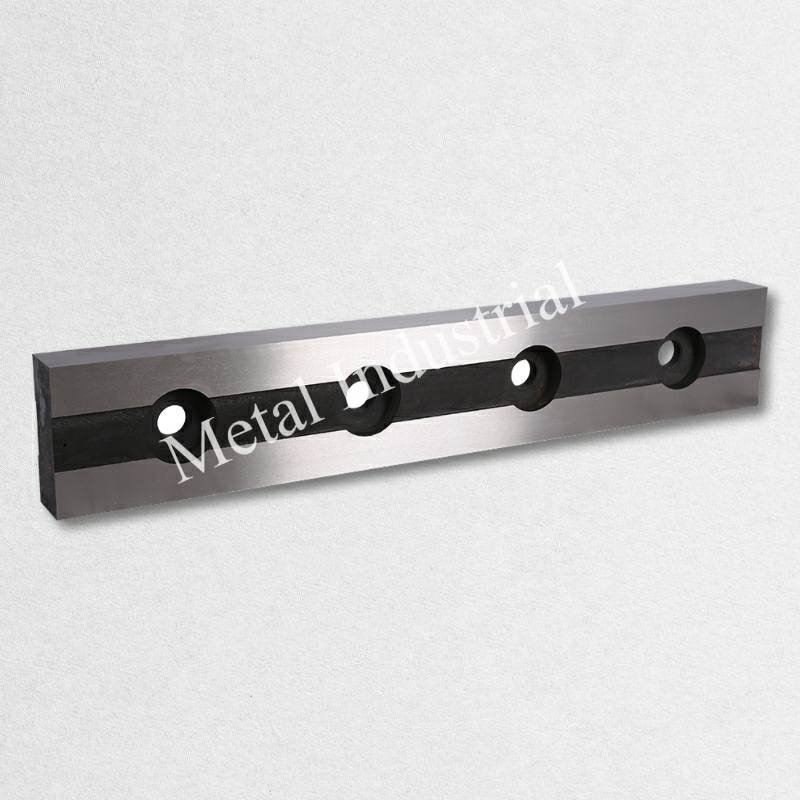
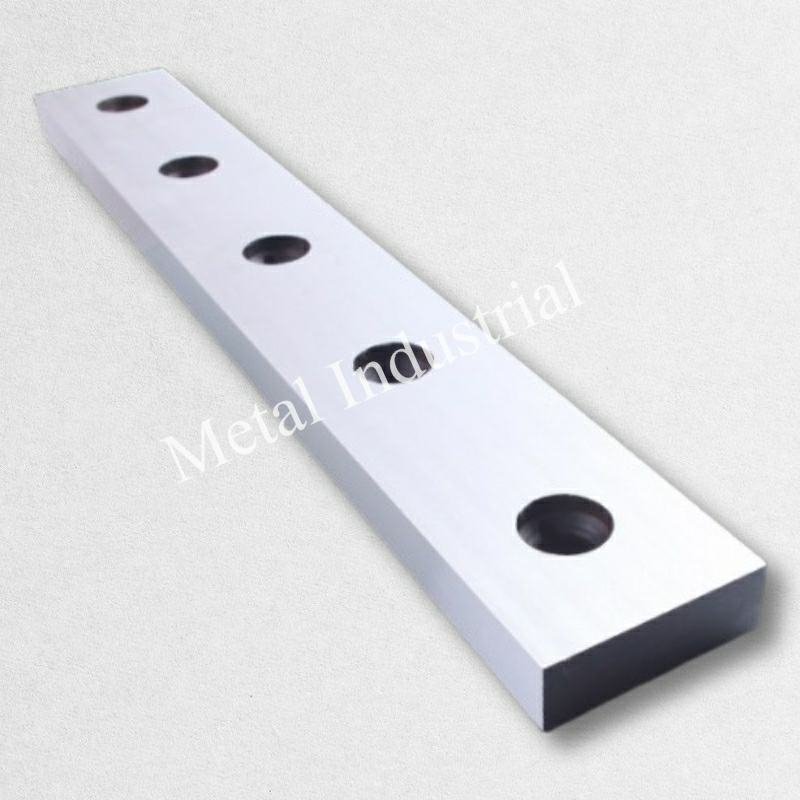
Dao Cắt Tôn Chính Xác | Thông Số Kỹ Thuật Dao Máy Chặt Công Nghiệp
+86 158 6180 3357

Lưỡi cắt

Thông tin bổ sung

Tên khác

Shear Machine Blades、Shear Knives, Shearing Blades, Cutting Blade, Industrial Guillotine Knives

Nơi Xuất Xứ

Trung Quốc

Ứng dụng

Gia Công Kim Loại, Nhà Máy Sản Xuất, Công Trình Xây Dựng

Vật liệu

D2, H13, S7, SKD-11

Số Hiệu Mẫu

MT-SB

Dịch vụ OEM

Khả dụng

Điều Khoản Thanh Toán

L/C, T/T, Western Union

Đóng gói

Hộp Carton, Thùng Gỗ

Thời Gian Giao Hàng

15-20 DAYS

Chia sẻ lên:


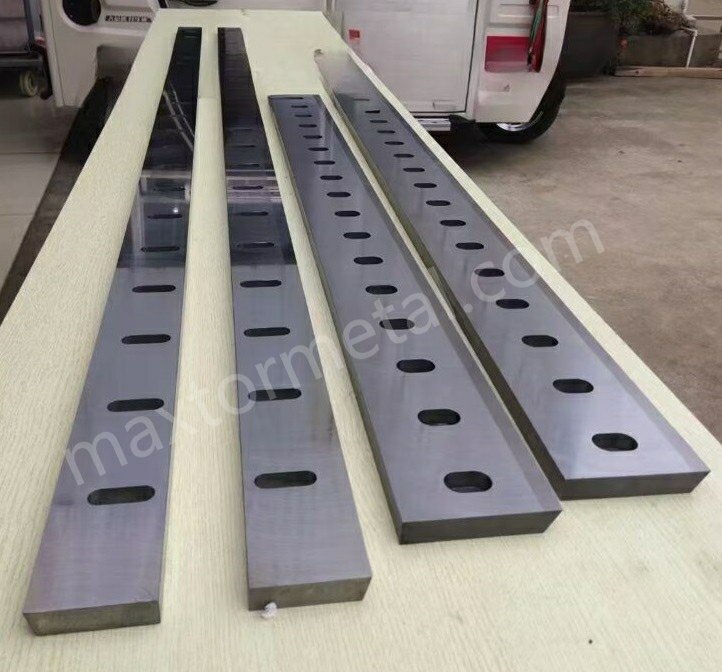
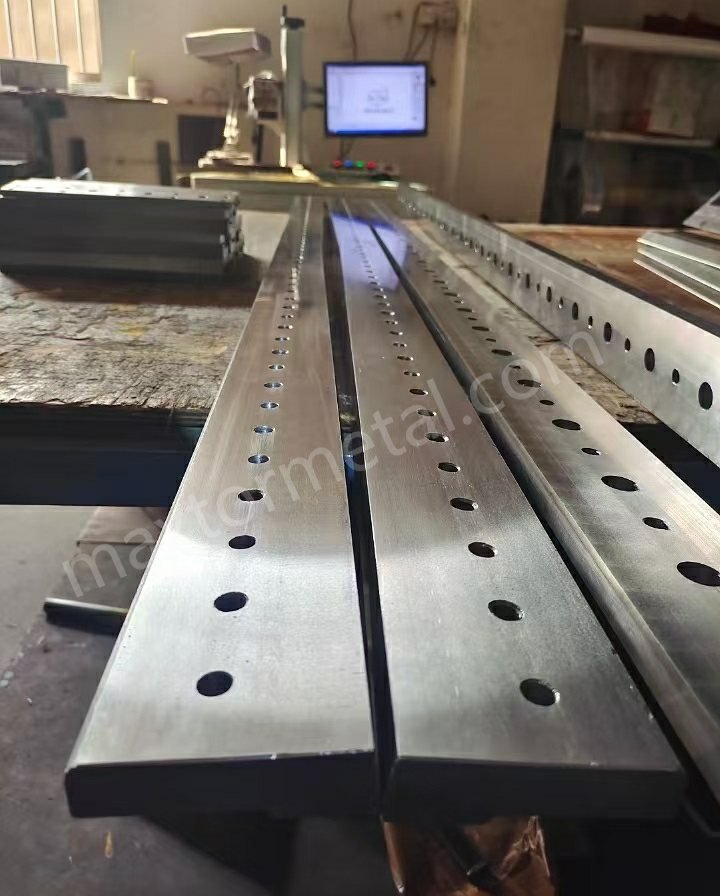
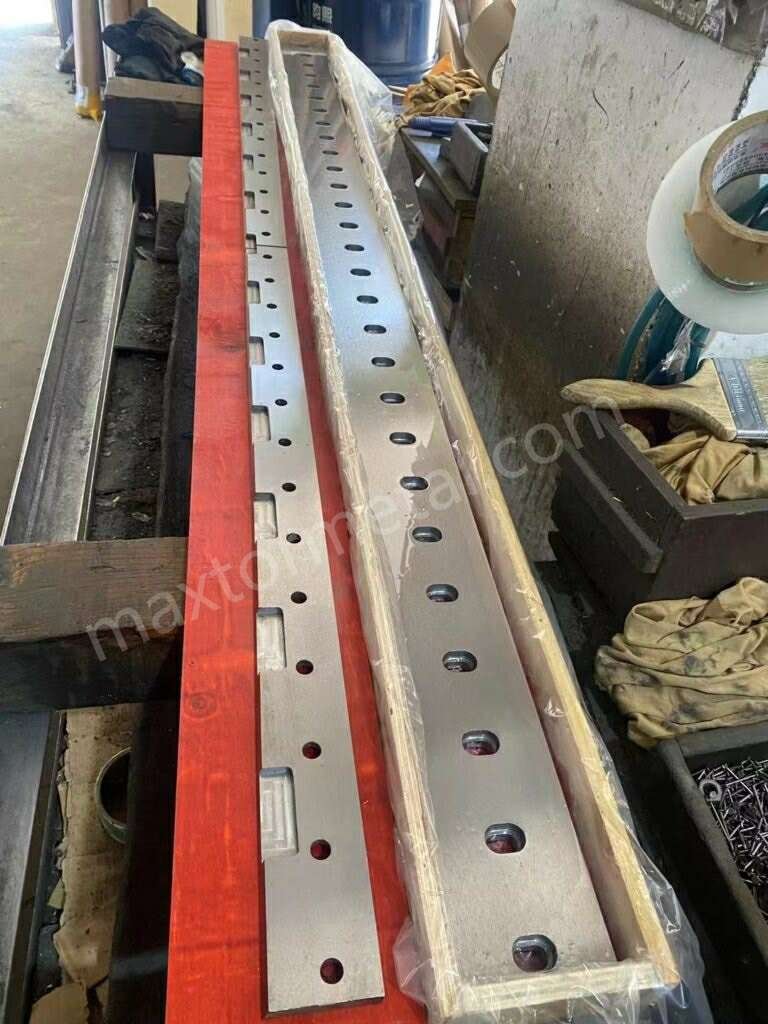
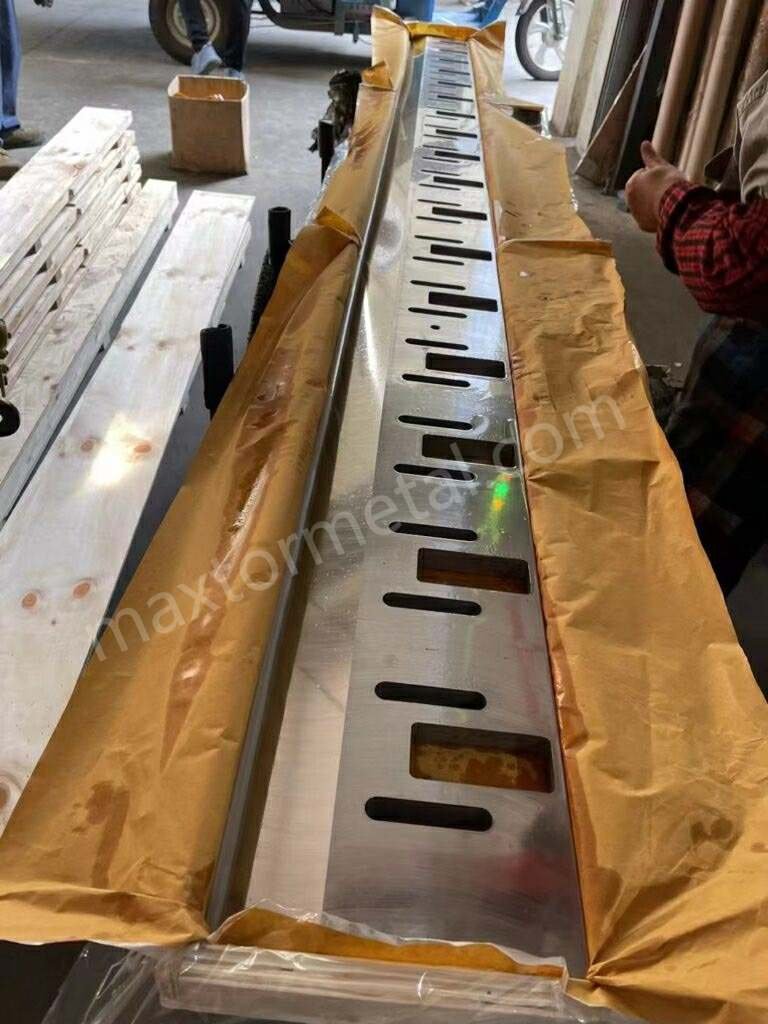
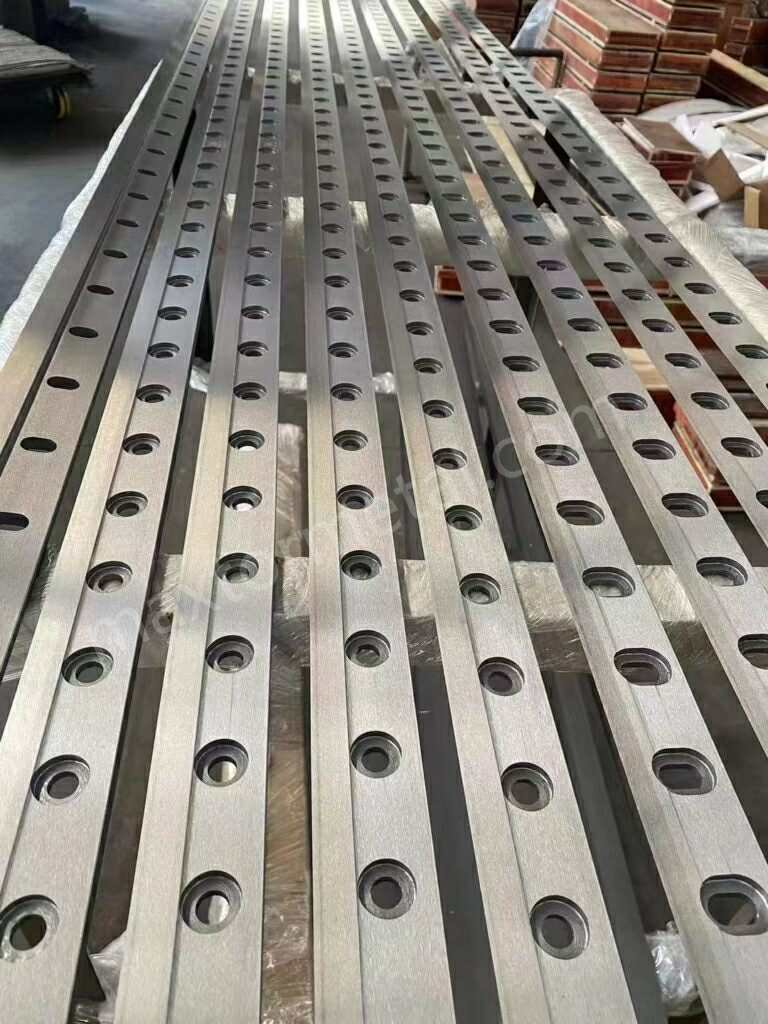
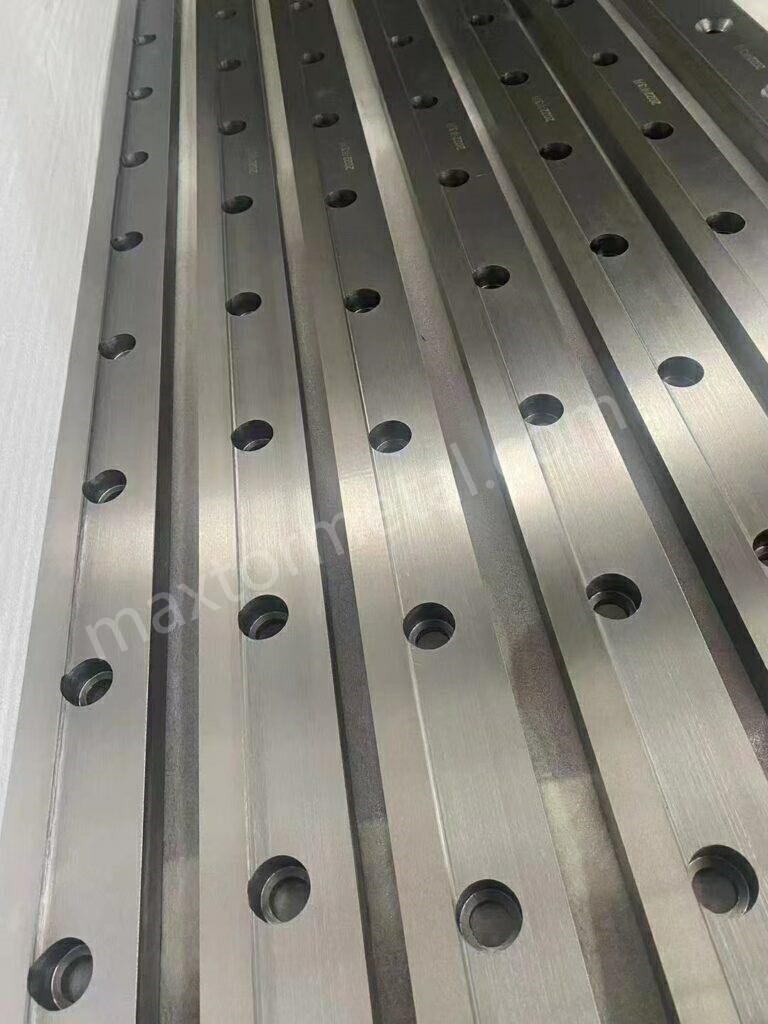
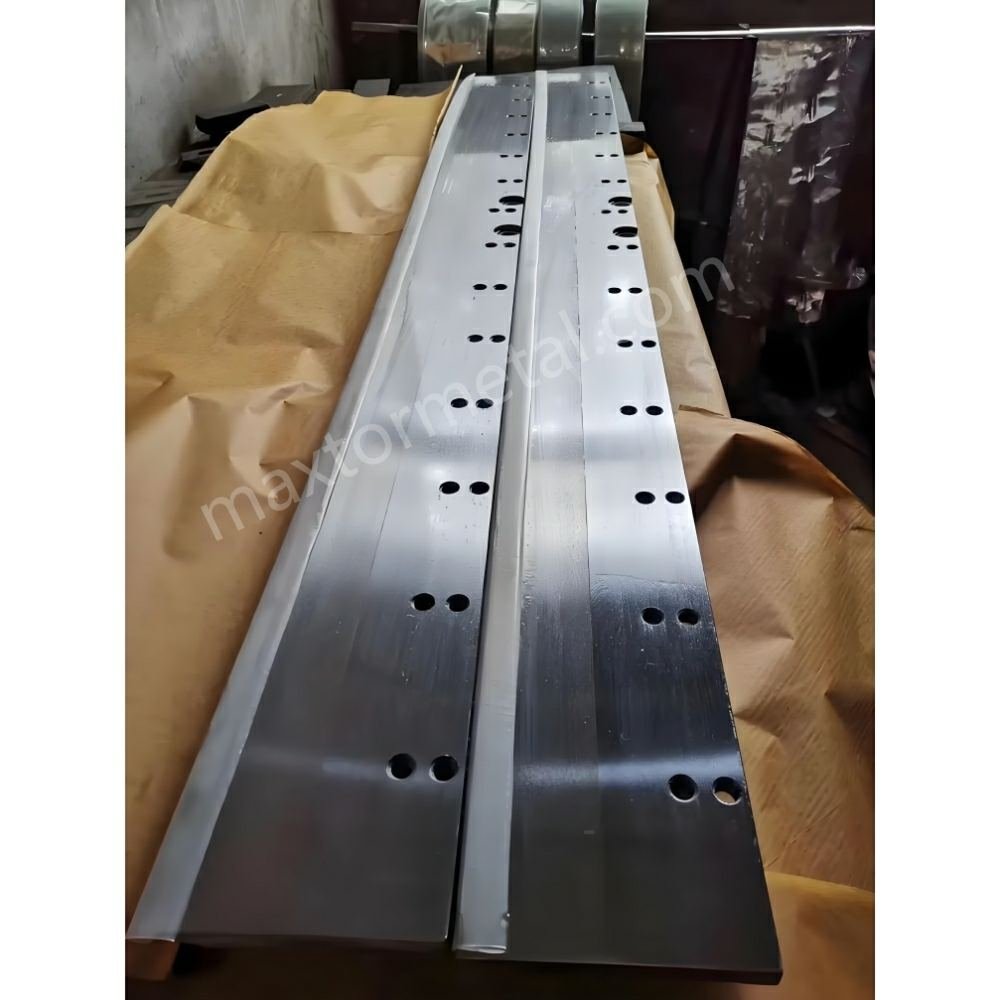
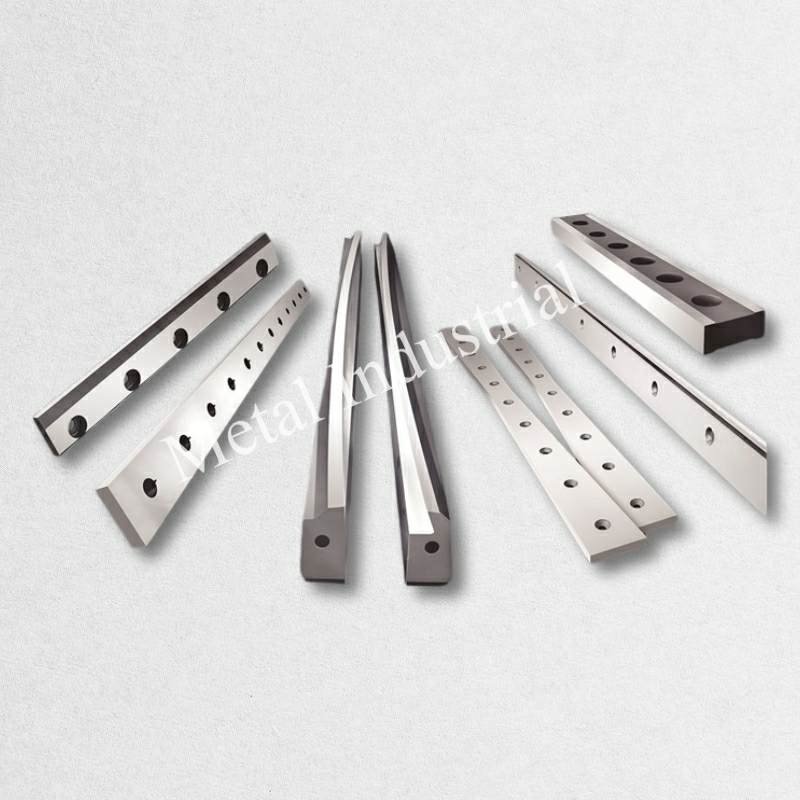
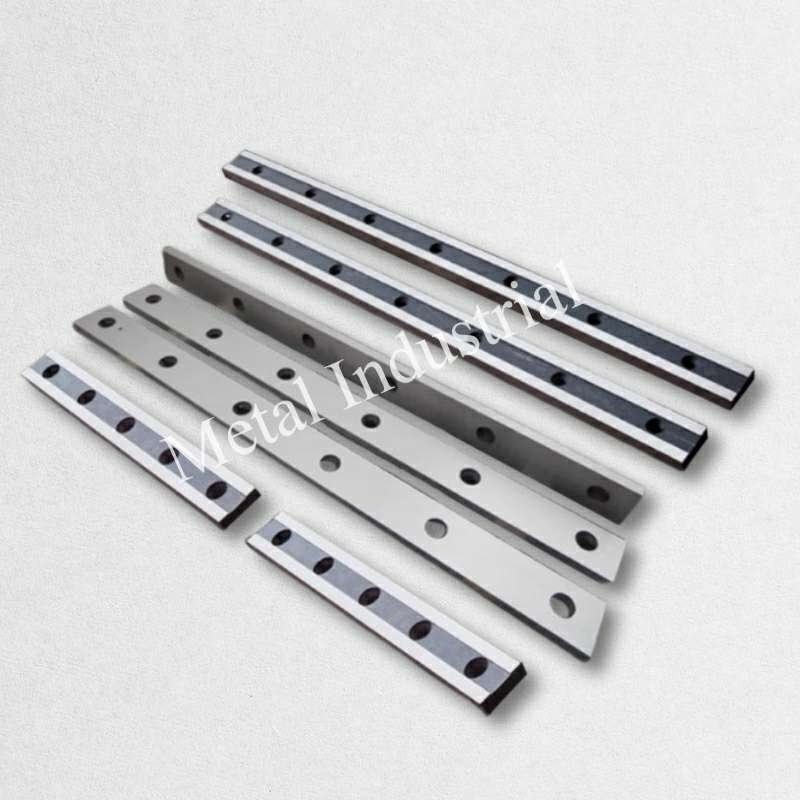
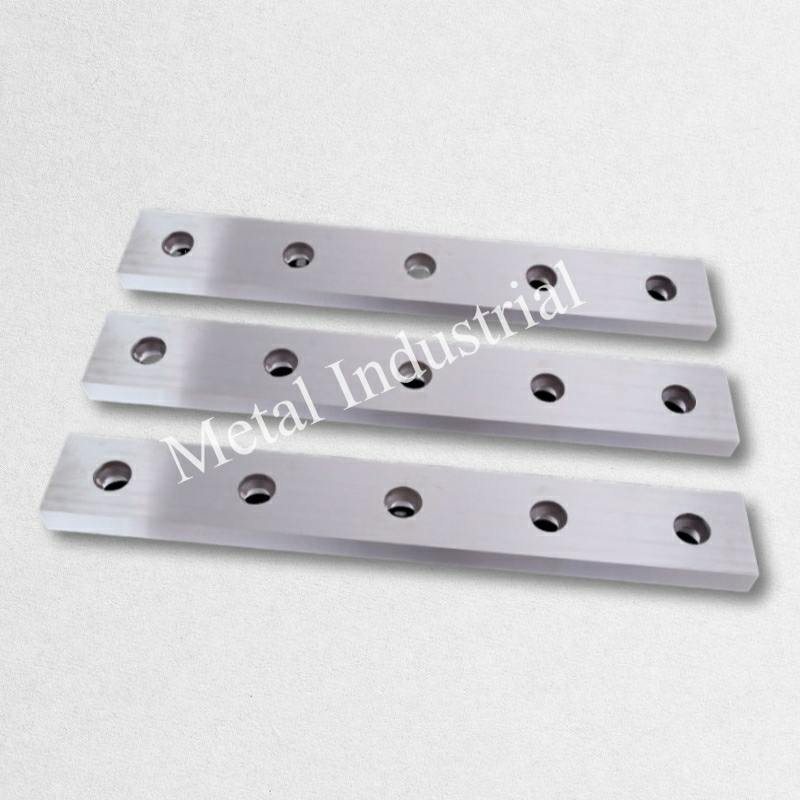
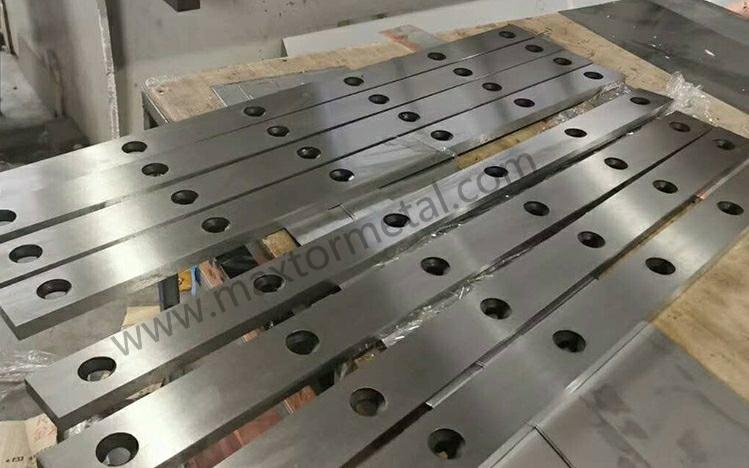
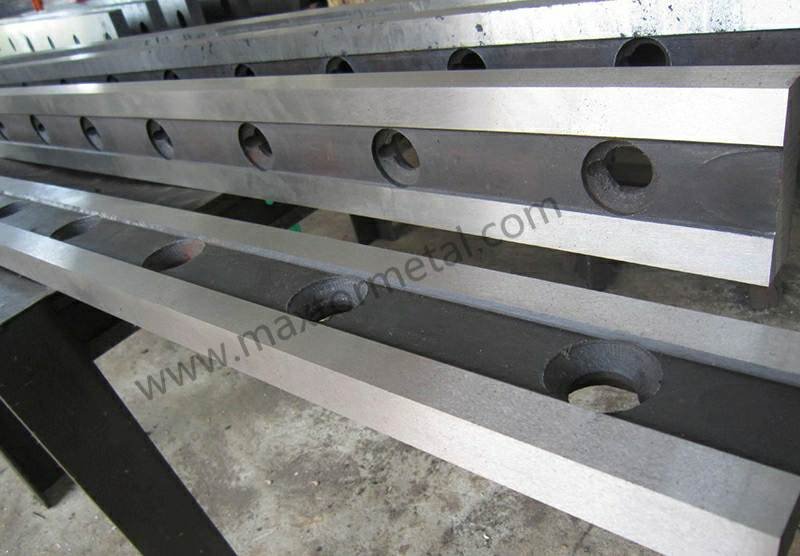
Dao cắt tấm công nghiệp hiệu suất cao (Dao cắt cắt bay & Dao cắt guilhotina)

Được thiết kế chuyên dụng cho quá trình cắt tấm và cắt xả băng chính xác ở cả trạng thái nguội và nóng cho các loại thép tấm, thép lá. Các công cụ này sử dụng khe hở cắt (clearance) được tối ưu hóa để tạo ra ứng suất cắt vượt quá giới hạn bền cắt của vật liệu, giúp chia tách vật liệu một modo hoàn hảo: không ba-via, không tạo vụn sứt mẻ và không để lại vùng ảnh hưởng nhiệt (HAZ).

Engineering Parameter

Cold Shearing Specification

Heavy-Duty / Hot Shearing Specification

Vật liệu thông thường

D2 (1.2379), SKD11

H13 (1.2344), S7

Độ cứng (HRC)

58 – 62

48 – 58 (Application dependent)

Straightness

< 0.02 mm/m

< 0.05 mm/m

Sự song song

< 0.015 mm

< 0.030 mm

Edge Finish (Ra)

< 0.8 µm (Fine Ground)

< 1.2 µm

Compatible Machines

Amada, Cincinnati, Bystronic, LVD, Durma

Custom Flying Shears, Scrap Shears


Tổng quan kỹ thuật về dao cắt công nghiệp: Cơ học của quá trình cắt (Shearing)

Industrial shearing is a complex mechanical process that involves the plastic deformation and subsequent fracture of metal through the application of opposing shear forces. Unlike thermal cutting methods, shear blades provide “cold processing,” which preserves the metallurgical characteristics of the material edges.

2.1 The Shearing Mechanism

The process is initiated as the upper blade descends, creating a localized stress field. When the stress exceeds the material’s ultimate shear strength, fracture occurs. The quality of this fracture is governed by the “Blade Clearance” (Gap Management). In engineering terms, this clearance typically ranges from 5% to 10% of the material thickness, depending on the material’s hardness.

2.2 Wear Dynamics

Blade wear manifests in three primary stages:

  1. Initial Bedding-in: Rapid wear of microscopic grinding peaks.
  2. Steady State Wear: Gradual blunting of the cutting edge radius.
  3. Catastrophic Failure: Micro-chipping occurs when the edge radius exceeds critical limits (typically >0.2mm), leading to increased cutting force and thermal load.

Ứng dụng công nghiệp của dao cắt tấm: Phân tích theo từng ngành hàng

Shear blades are vital across diverse sectors, each presenting unique engineering constraints:

  • Automotive Manufacturing: Cutting High-Strength Low-Alloy (HSLA) steel. This requires blades with extreme toughness to resist the high tensile forces of modern automotive panels.

  • Shipbuilding Industry: Processing heavy plates. H13 or S7 materials are prioritized here for their impact resistance.

  • Steel Service Centers: High-volume cold-rolled steel (CRS) shearing. Precision and edge life consistency are the primary KPIs.

  • Construction & Structural Steel: Guillotine shearing of rebar and structural sections. Focuses on the “4-edge reversible” design to minimize downtime.

  • Aerospace & Non-Ferrous Processing: Shearing aluminum and copper. Requires high surface finish (Ra <0.8µm) to prevent “sticking” or material adhesion (galling).
  • Tái chế phế liệu Metal: Utilizing S7 blades for irregular, high-impact loads where resistance to catastrophic fracture is critical.

Các sự cố hư hỏng thường gặp của dao cắt công nghiệp & Giải pháp kỹ thuật

  1. Problem: Micro-Chipping at the Edge.
    • Root Cause: Excessive hardness or insufficient blade clearance.
    • Giải pháp: Introduce Cryogenic Treatment to stabilize the martensitic structure and reduce internal stress.

  2. Problem: Excessive Burr Formation.
    • Root Cause: Blade blunting or excessive clearance (gap >10% of plate thickness).
    • Giải pháp: Implement a 4-edge reversible design and strictly monitor the edge radius; regrind when the radius reaches 0.2mm.

  3. Problem: Slanted/Incline Cut Edges.
    • Root Cause: Lack of blade rigidity or non-planar installation surfaces.
    • Giải pháp: Use a dial indicator to verify parallelism across the entire length (ends and middle) during installation.

  4. Problem: Thermal Cracking (Heat Checking).
    • Root Cause: High-speed continuous shearing generating friction heat.
    • Giải pháp: Apply TiN or TiAlN coatings to reduce the friction coefficient and manage heat dissipation.

  5. Problem: Premature Edge Blunting in Stainless Steel.
    • Root Cause: Work hardening of 304/316 grades.
    • Giải pháp: Select D2 or SKD11 materials with high carbon and chromium for maximum abrasion resistance.

  6. Problem: Catastrophic Blade Fracture.
    • Root Cause: Using high-hardness blades (HRC 60+) for heavy plates or scrap.
    • Giải pháp: Switch to S7 or H13 grades with hardness reduced to HRC 48-54 to prioritize toughness.

  7. Problem: “Ghost” Burrs on Non-Ferrous Metals.
    • Root Cause: Material adhesion to the blade surface.
    • Giải pháp: Bright chrome plating to increase surface lubricity and prevent “sticking”.

  8. Problem: Dimensional Distortion Post-Regrind.
    • Root Cause: Grinding burns causing localized softening.
    • Giải pháp: Mandatory fine grinding with adequate coolant; ensure no visible grinding burns. Additionally, thickness reduction from each regrind cycle must be documented and compensated with a precision shim stack to restore blade overlap — see the Regrinding Thickness Reduction Compensation Shim Guide for the calculation procedure.

  9. Problem: Blade Walking/Shifting.
    • Root Cause: Poor bolt-hole compatibility.
    • Giải pháp: Standardize hole positions during the CAD/CAM phase for 100% compatibility with OEM machines.

  10. Problem: Stress Fractures in Multi-Segment Blades.
    • Root Cause: Uneven load distribution between segment joints.
    • Giải pháp: Precision grinding of segments as a matched set to ensure uniform height and parallelism.


5.Hướng dẫn Kỹ thuật Vật liệu

  1. Material selection is based on the “Wear Resistance vs. Toughness” trade-off:

    • D2 (1.2379) / SKD11: The “General Purpose” standard. High carbon and high chromium provide excellent wear resistance for sheets <6mm.

    • H13 (1.2344): The “Heavy-Duty” choice. Exceptional hot-hardness and impact toughness for plates >12mm or hot shearing.  
    • S7: The “High-Impact” grade. Specifically designed for scrap recycling and heavy-duty demolition where fracture resistance is the absolute priority.


Xử lý nhiệt & Nguyên lý kiểm soát độ cứng

The performance of a shear blade is determined in the vacuum furnace.

  • Vacuum Heat Treatment: Ensures uniform hardness depth and minimal dimensional distortion.

  • Hardness Customization:
    • Cold Shearing: HRC 58-62 for precision and verticality.

    • Medium/High Strength: HRC 54-58 for a balance of toughness.

    • Scrap/Heavy Impact: HRC 48-54 to prevent catastrophic fracture.
  • Phương pháp điều trị đông lạnh: Converts retained austenite to martensite, increasing wear resistance and dimensional stability by 20%-50%.

7.Hình học Dao & Kỹ thuật Lưỡi cắt

  • Blade Clearance Management: Essential for cut quality. Recommended gap is 5%-10% of material thickness.

  • Edge Design: Most blades utilize a 4-edge reversible design to maximize lifetime between regrinds.

  • Độ nhám bề mặt: Blade edges must be fine-ground to Ra <0.8µm to prevent initial micro-chipping.

8.Quy trình Sản xuất & Kiểm tra Chất lượng

  1. Material Sourcing: High-purity alloy steels (D2, H13, S7).
  2. Machining: CNC milling of mounting holes and recesses for OEM compatibility.

  3. Vacuum Heat Treatment & Deep Cryogenics: Core hardness and structural stabilization.

  4. Fine Grinding: Precision finishing of cutting surfaces and installation planes. Thickness loss must be compensated with a calibrated shim stack — see the Regrinding Thickness Reduction Compensation Guide.

  5. Điều tra:
    • Straightness: Verification < 0.02mm/m.

    • Parallelism: Verification < 0.015mm.

    • Hardness Mapping: Ensuring consistency across the entire blade length.

Nghiên cứu tình huống (Case Studies): Những cải tiến có thể định lượng

  • Case 1: Automotive HSLA Shearing: By switching from standard D2 to Cryogenic-treated D2, a client reduced edge chipping incidents by 40% and extended blade life by 30%.

  • Case 2: Steel Service Center: Implementing strict “0.2mm radius” regrind schedules and parallelism calibration (0.015mm) resulted in a 50% reduction in rejection rates due to burrs.


Mục FAQ (Giải đáp chuyên sâu cho ngành công nghiệp)

  1. Q: When should I regrind my shear blades?
    • A: When the edge radius reaches 0.2mm or burr height exceeds project tolerances.

  2. Q: Why use H13 for hot shearing instead of D2?
    • A: H13 maintains its hardness at high temperatures (hot-hardness), whereas D2 softens.

  3. Q: What is the optimal blade gap for 10mm mild steel?
    • A: 0.5mm to 1.0mm (5%-10% of thickness).

  4. Q: Does cryogenic treatment actually work?
    • A: Yes, it increases wear resistance by up to 50% by transforming retained austenite.

  5. Q: How do I prevent “sticking” when shearing aluminum?
    • A: Use blades with a bright chrome coating or higher surface finish (Ra <0.4µm).

  6. Q: Can I use S7 for thin-gauge stainless steel?
    • A: No. S7 lacks the necessary abrasion resistance (hardness) for thin-gauge SS; D2 is preferred.

  7. Q: What is “cold processing” in shearing?
    • A: It is a mechanical separation that does not create a Heat Affected Zone (HAZ), preserving material properties.

  8. Q: How important is straightness for a 4-meter blade?
    • A: Critical. Deviation >0.02mm/m causes uneven gap settings and poor cut quality.

  9. Q: Why are my blades chipping on the corners?
    • A: This usually indicates an uneven installation plane or over-tightening of segments.

  10. Q: Is vacuum heat treatment better than traditional salt baths?
    • A: Yes, it offers superior control over hardness consistency and surface decarburization.

  11. Q: What materials require higher shearing forces?
    • A: Stainless steel and HSLA alloys.

  12. Q: Can one blade set be used for all thicknesses?
    • A: No. Blade clearance MUST be adjusted per thickness.

  13. Q: What is the benefit of a 4-edge reversible blade?
    • A: It provides four usable cutting edges, reducing the cost-per-cut and downtime.

  14. Q: Why does my shear leave a “crushed” edge?
    • A: This is a symptom of excessive blade clearance.

  15. Q: How does parallelism affect blade life?
    • A: Poor parallelism leads to localized high-pressure zones, causing premature chipping.


" Chào mừng bạn đến để hỏi!

Nếu bạn không tìm thấy lưỡi dao cắt mình đang tìm kiếm, chúng tôi cũng có thể tùy chỉnh nó, hãy xem mục “ Lưỡi Dao Tùy Chỉnh ” của chúng tôi để tìm hiểu cách thực hiện!
Mở Tài Liệu Quảng Cáo


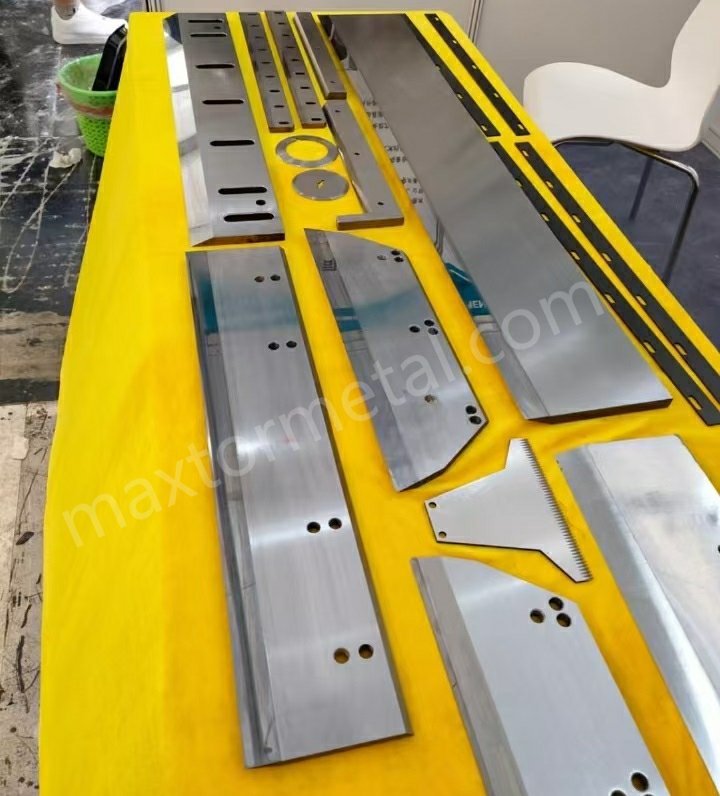
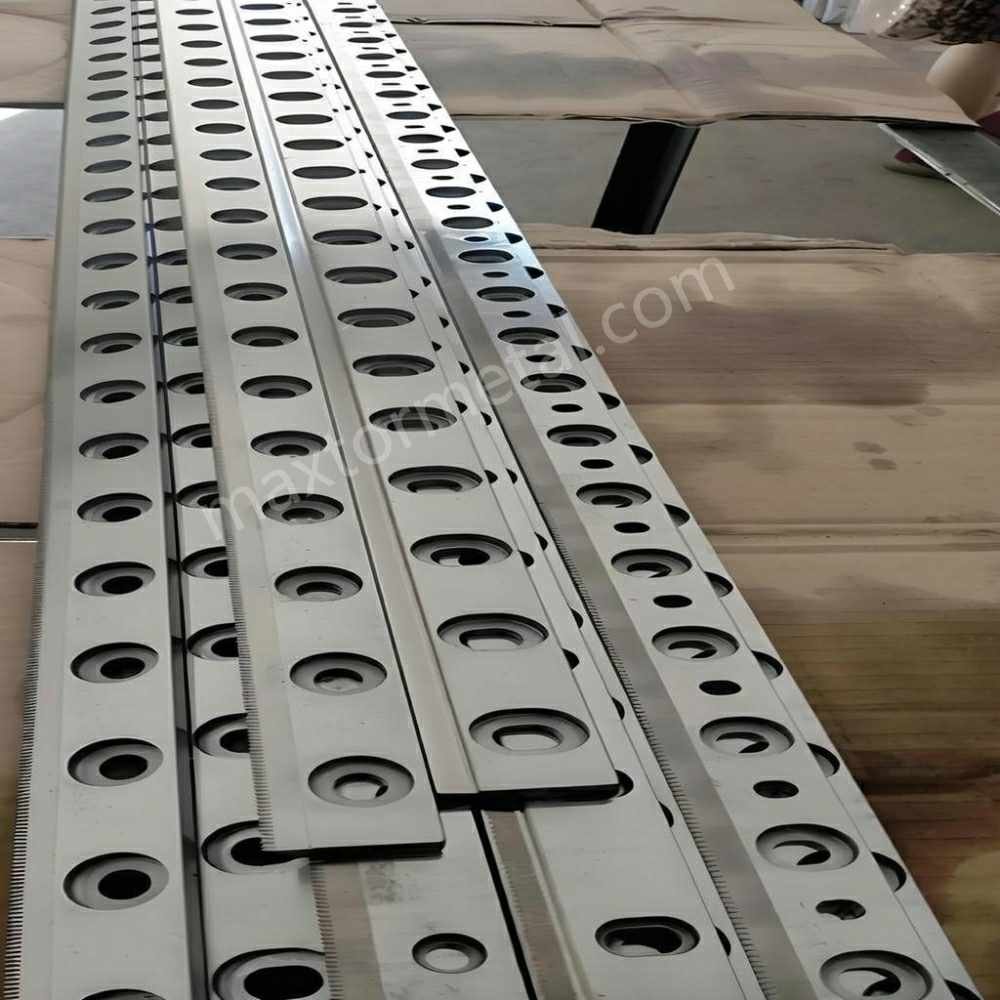
Trưng Bày Lưỡi Dao Cắt:

Lưỡi dao cắt, lưỡi máy cắt, lưỡi cắt nguội, lưỡi cắt, lưỡi dao guillotine, dao cắt guillotine, lưỡi cắt thẳng, lưỡi dao máy cắt, lưỡi cắt kim loạiLưỡi dao cắt, lưỡi máy cắt, lưỡi cắt nguội, lưỡi cắt, lưỡi dao guillotine, dao cắt guillotine, lưỡi cắt thẳng, lưỡi dao máy cắt, lưỡi cắt kim loạiLưỡi dao cắt, lưỡi máy cắt, lưỡi cắt nguội, lưỡi cắt, lưỡi dao guillotine, dao cắt guillotine, lưỡi cắt thẳng, lưỡi dao máy cắt, lưỡi cắt kim loạiLưỡi dao cắt, lưỡi máy cắt, lưỡi cắt nguội, lưỡi cắt, lưỡi dao guillotine, dao cắt guillotine, lưỡi cắt thẳng, lưỡi dao máy cắt, lưỡi cắt kim loại Lưỡi dao cắt, lưỡi máy cắt, lưỡi cắt nguội, lưỡi cắt, lưỡi dao guillotine, dao cắt guillotine, lưỡi cắt thẳng, lưỡi dao máy cắt, lưỡi cắt kim loại Lưỡi dao cắt, lưỡi máy cắt, lưỡi cắt nguội, lưỡi cắt, lưỡi dao guillotine, dao cắt guillotine, lưỡi cắt thẳng, lưỡi dao máy cắt, lưỡi cắt kim loại Lưỡi dao cắt, lưỡi máy cắt, lưỡi cắt nguội, lưỡi cắt, lưỡi dao guillotine, dao cắt guillotine, lưỡi cắt thẳng, lưỡi dao máy cắt, lưỡi cắt kim loại Lưỡi dao cắt, lưỡi máy cắt, lưỡi cắt nguội, lưỡi cắt, lưỡi dao guillotine, dao cắt guillotine, lưỡi cắt thẳng, lưỡi dao máy cắt, lưỡi cắt kim loại Lưỡi dao cắt, lưỡi máy cắt, lưỡi cắt nguội, lưỡi cắt, lưỡi dao guillotine, dao cắt guillotine, lưỡi cắt thẳng, lưỡi dao máy cắt, lưỡi cắt kim loại Lưỡi dao cắt, lưỡi máy cắt, lưỡi cắt nguội, lưỡi cắt, lưỡi dao guillotine, dao cắt guillotine, lưỡi cắt thẳng, lưỡi dao máy cắt, lưỡi cắt kim loại Lưỡi dao cắt, lưỡi máy cắt, lưỡi cắt nguội, lưỡi cắt, lưỡi dao guillotine, dao cắt guillotine, lưỡi cắt thẳng, lưỡi dao máy cắt, lưỡi cắt kim loại Lưỡi dao cắt, lưỡi máy cắt, lưỡi cắt nguội, lưỡi cắt, lưỡi dao guillotine, dao cắt guillotine, lưỡi cắt thẳng, lưỡi dao máy cắt, lưỡi cắt kim loại   Lưỡi dao máy cắt giật


Video:


Bài Viết Liên Quan:

  1.  Lựa Chọn Giữa Máy Cắt Guillotine và Máy Cắt Dầm Đung Đưa: Một Phân Tích So Sánh Toàn Diện ;

  2.  Làm thế nào để chọn máy cắt: Máy cắt dầm xoay hay Máy cắt Guillotine? Và làm thế nào để điều chỉnh khe hở lưỡi dao cắt?

  3.  Lưỡi dao cắt có thể mài lại được không? Và làm thế nào?

  4. Làm Chủ Lưỡi Dao Cắt Xén Có Lớp Phủ: Giảm Ma Sát, Ngăn Ngừa Trầy Xước và Tăng Cường Độ Bền Cạnh Dao

  5. Hướng Dẫn Chi Tiết Về Lưỡi Dao Cắt Xén cho Thép Không Gỉ: Vật Liệu và Hình Học cho Vết Cắt Chất Lượng Cao


Yêu cầu Sản phẩm

Để lại tin nhắn Chúng tôi sẽ gọi lại cho bạn sớm!