

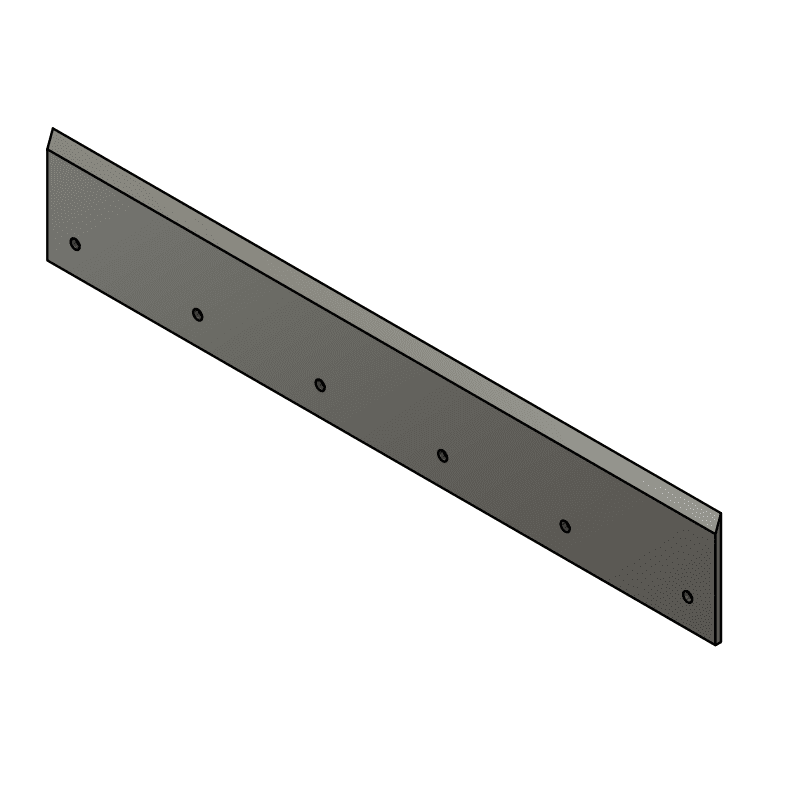
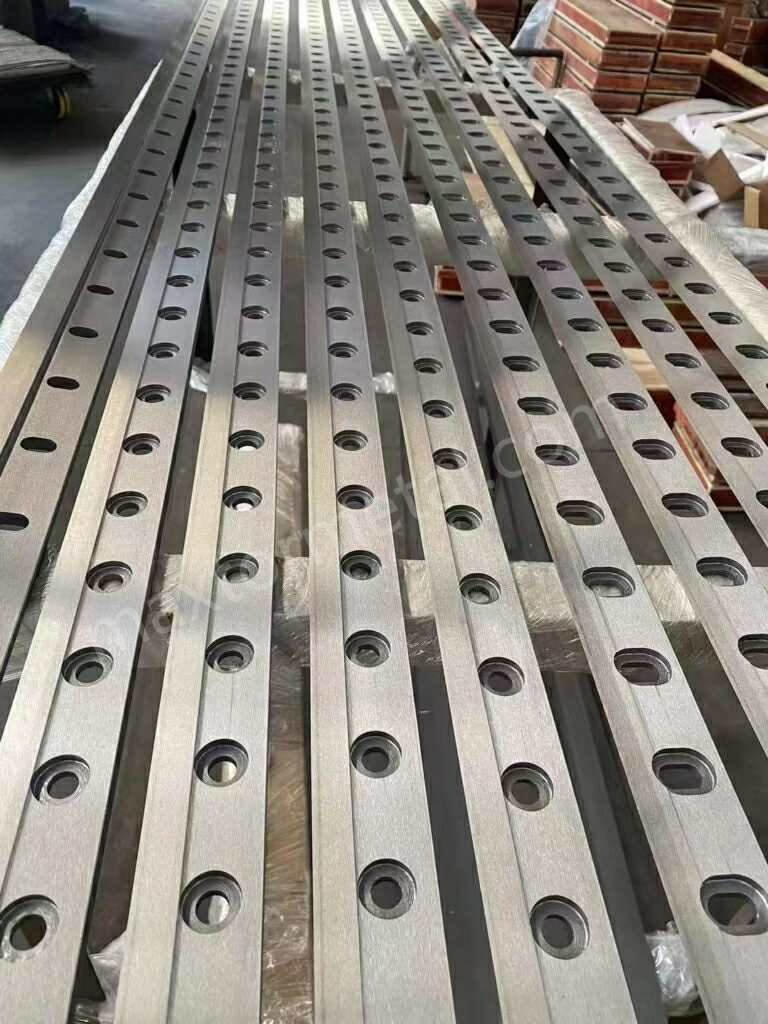
Cuchillas de cizalla de acero D2 are great for cutting cold metal. These blades stay sharp for a long time. They do not wear out quickly. You get the same good results every time. Many workers pick D2 steel because it is very hard. It keeps its shape well and does not rust easily. Metal Industrial works hard to make good and new products. This means you can trust their blades to work well. Learn why experts say Nanjing Metal Industrial is the best place for cutting tools.
- Blades last longer because they do not wear out fast
- Hard blades stay sharp even when hit
- Blades keep their shape for accurate cuts
- Blades do not rust in hard places
Puntos clave
- D2 steel shear blades last a long time because they resist wearing out. This means you do not have to replace them often. These blades stay sharp even when used a lot. This helps them cut well every time. D2 steel is hard and tough. This makes it great for cutting cold metal. The blades make clean and exact cuts. They do not rust or corrode easily. This makes them good for many factory jobs. Picking the right hardness (60-62 HRC) helps D2 blades last longer. It also helps them cut better. You should take care of the blades. Sharpen them and check the space between blades. This stops chipping and helps them last longer. D2 steel shear blades can cut many things. They work on aluminum and mild steel. Buying D2 steel blades can save money over time. They last longer and need less fixing.
Why D2 is the Standard for Cold Metal Shearing
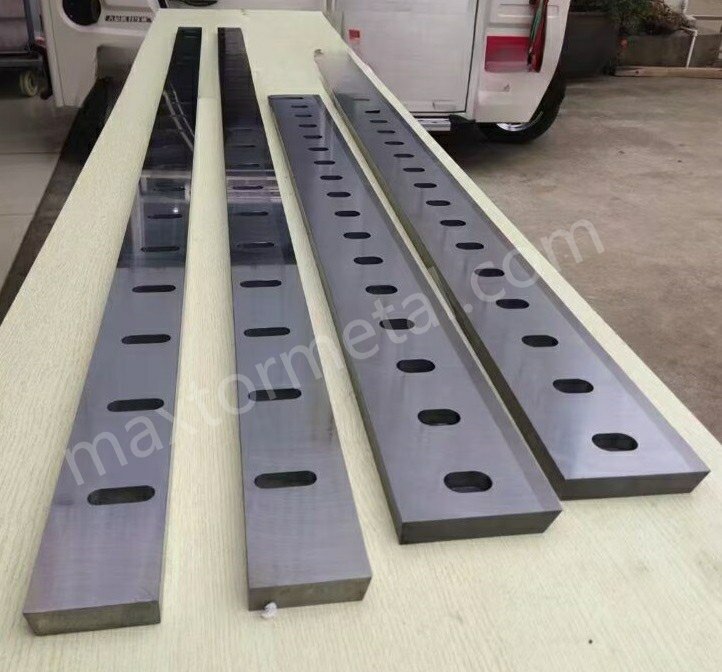
Defining “Cold Metal Cutting” and the Role of the Shear Blade
You use cold metal cutting when you want to shape or trim metal sheets without adding heat. This method keeps the metal strong and prevents warping. In this process, you place the metal between two blades. The upper blade moves down and presses the metal against the lower blade. The force causes the metal to break along a straight line. You get a clean and smooth cut. The shear blade is the tool that does the actual cutting. It slices through the metal by pressing and compressing it. This gives you precise results every time.
The D2 Advantage: Combining High Wear Resistance with Affordability
You want blades that last long and stay sharp. D2 steel gives you that benefit. It stands out because it offers high wear resistance, which means the blade does not wear down quickly. You can use it for many cuts before you need to replace or sharpen it. D2 steel also keeps its hardness even when the blade gets hot from friction. You save money because you do not need to buy new blades often. The cost of d2 steel is lower than some other tool steels, but you still get top performance.
Here is a table showing what makes d2 steel special:
| Elemento | Role in D2 steel |
|---|---|
| Carbono (C) | Makes the blade hard and helps form strong carbides. |
| Cromo (Cr) | Adds high wear resistance and stops rust. |
| Molibdeno | Improves toughness and keeps the blade strong. |
| Vanadio | Makes the blade tough and helps it stay sharp. |
| Manganese | Removes impurities and helps harden the steel. |
| Silicon | Strengthens the steel during making. |
| Phosphorus | Kept low to avoid brittleness. |
| Nickel | Adds a bit more toughness. |
| Sulfur | Kept low to keep the steel clean. |
You get a blade that combines high wear resistance, toughness, and cost savings. D2 steel blades keep their shape and edge, even after many uses.
Target Audience: Metal Fabricators, Stamping Houses, and Recycling Operations
You work in metal fabrication, stamping, or recycling. You need blades that can handle tough jobs and keep working for a long time. D2 steel is popular in these industries because it offers high wear resistance and stays sharp under stress. You see d2 steel used in metalworking shops, manufacturing plants, and recycling centers. Workers choose it for its ability to cut cleanly and last longer than other steels. You get reliable performance and less downtime. D2 steel blades help you finish jobs faster and with better results.
Tip: If you want blades that resist rust and keep their edge, d2 steel is a smart choice for your shop.
D2 Steel Properties: The Metallurgy Behind the Performance
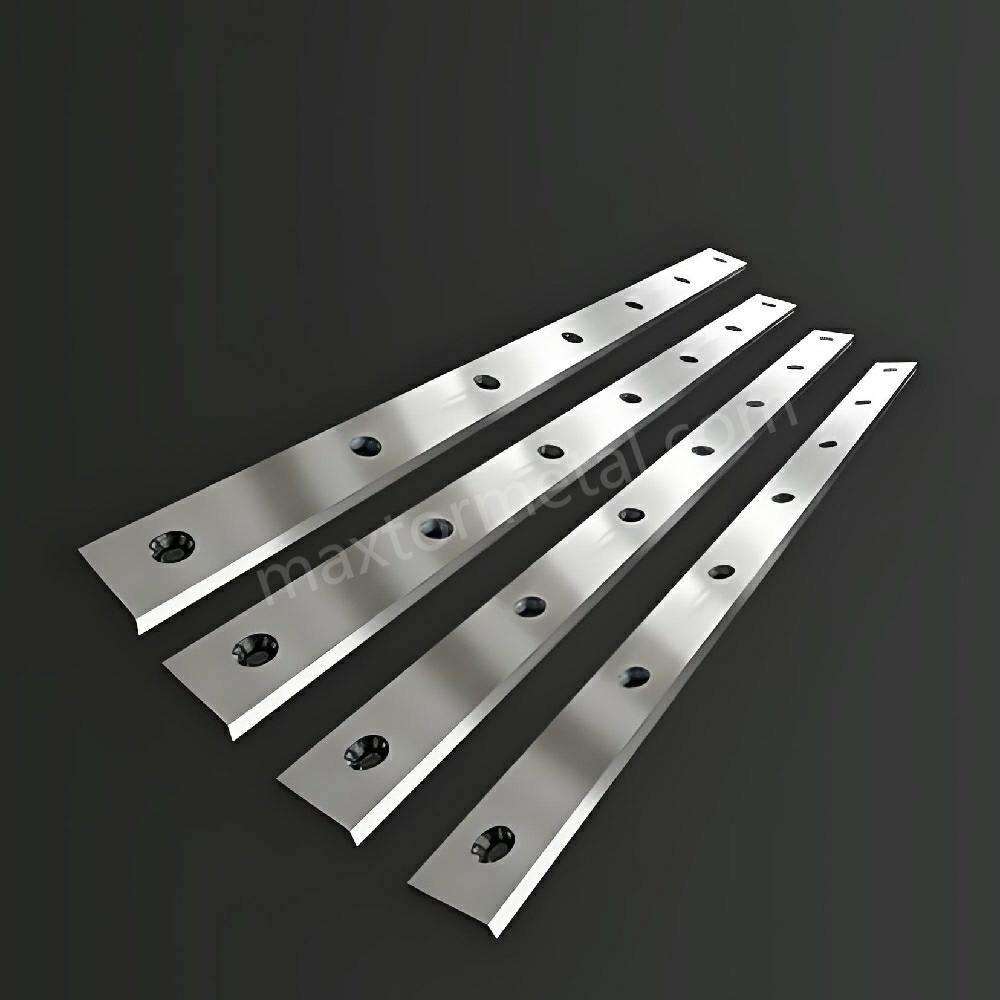
High Carbon, High Chromium: The Formula for Longevity
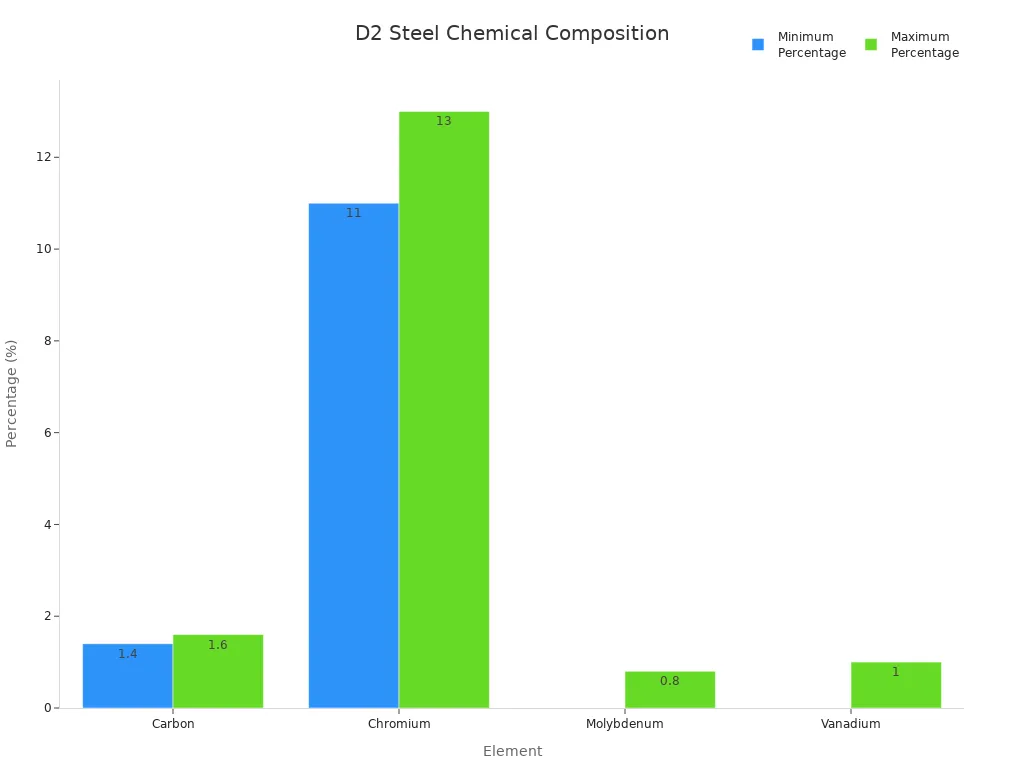
D2 steel is special because it has a lot of carbon and chromium. This mix helps the blade last longer and stay sharp. The chemical parts in D2 steel make it great for cold metal cutting. Here is what is inside D2 steel:
| Elemento | Percentage Range |
|---|---|
| Carbon | 1.4% – 1.6% |
| Cromo | 11% – 13% |
| Molibdeno | Up to 0.8% |
| Vanadio | Up to 1% |
This mix gives you many good things:
- High carbon makes the blade tough and hard to scratch.
- The steel is easy to work with when it is soft.
- After heat treatment, the blade gets very hard.
Role of Chromium in Wear Resistance and Corrosion Inhibition
Chromium is very important for D2 steel blades. It makes the blade last longer by forming hard carbides. These carbides protect the blade from wearing out fast. Chromium also helps stop rust, so the blade does not get damaged. This means you do not have to change blades often. You can spend more time cutting and less time fixing blades.
Carbide Formation and Edge Retention (The Abrasion Defense)
D2 steel forms strong carbides when you use it. These carbides are like tiny shields on the blade’s edge. They help the blade fight off scratches and keep it sharp. D2 steel blades stay sharp much longer than other blades. That is why many workers pick D2 steel for tough jobs.
Note: High carbon and chromium together make D2 steel last long and cut well.
Dimensional Stability During Heat Treatment (A Toolmaker’s Priority)
You want blades that do not change shape when heated. D2 steel keeps its shape very well during heat treatment. This means the blade will not bend or twist when it gets hot and cools down. The special structure inside D2 steel helps it stay the same. The fine martensite and small carbides keep the blade true. You get blades that fit right and cut with high accuracy.
| Tipo de acero | Dimensional Stability |
|---|---|
| D2 | Excelente |
| M2 | Bien |
D2 steel blades give you the same good quality after every heat treatment. This is important for toolmakers who need blades they can trust.
Understanding Hardness: Target HRC for D2 Shear Blades
Hardness is very important for cutting blades. You want a blade that is hard but not too brittle. D2 steel blades are usually between 60 and 62 HRC. This is the best range for keeping the blade sharp and tough.
- The best hardness for D2 shear blades is 60-62 HRC.
- Most blades are between 59-62 HRC, which is what most shops use.
If you pick a blade in this range, it will last longer and not chip easily. High hardness means the blade stays sharp for many cuts. If the blade is too hard, it can chip. If it is too soft, it wears out fast. You need the right hardness for the best results.
| Propiedad | Descripción |
|---|---|
| Contenido de carbono | About 1.55%, makes the blade very hard. |
| Contenido de cromo | About 12%, forms carbides to stop wear. |
| Dureza | 55-62 HRC after heat treatment, lets you pick blade strength. |
| Tenacidad | Good for cutting, but not for heavy impacts. |
| Compressive Yield Strength | 275-319 ksi, strong enough for most cutting jobs. |
| Tratamiento térmico | Tempering at 500-550°F gives the best mix of toughness and wear resistance. |
| Performance Limitation | Best for straight or slicing cuts, not for heavy side loads. |
Tip: Always look at the hardness rating before you buy D2 steel blades. The right hardness gives you the best blade life and quality.
Now you know why D2 steel blades are trusted. They have high carbon and chromium, great hardness, and reliable performance. These things make them the best for cold metal cutting.
Optimal Heat Treatment: Maximizing D2 Blade Toughness and Life
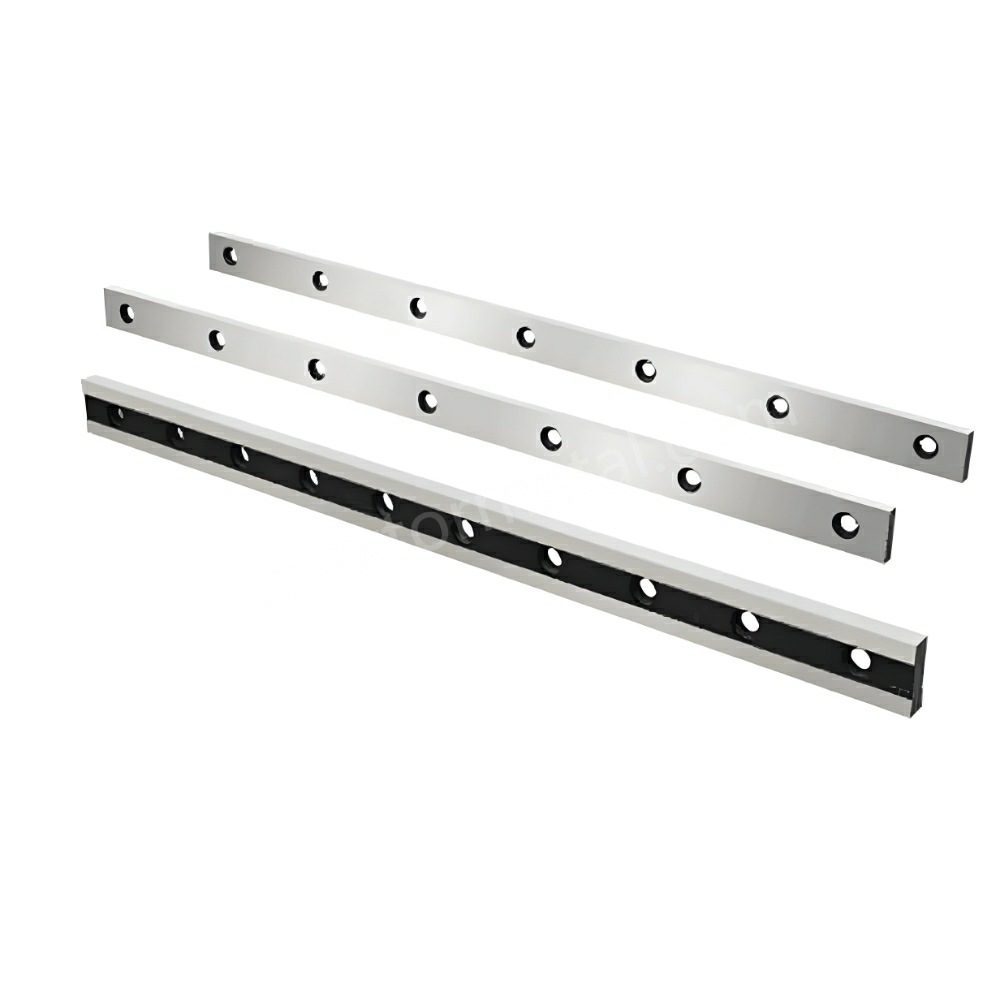
The Critical Hardening Process and Quenching Method
Quieres tu Cuchillas de cizalla de acero D2 to last long. The hardening and quenching steps make the blades strong. You must follow each step to get the best results.
- Preheat: Heat the blade slowly to 1200°F. For tricky shapes, heat again to 1450°F. This helps the steel heat evenly and stops cracks.
- Tratamiento térmico: Raise the temperature to 1800°–1850°F. Hold the blade at this heat until it is hot all the way through. This step makes the steel stronger.
- Enfriamiento: Cool the blade in still air or a vacuum. This keeps the blade clean and stops marks. Fast cooling makes the blade hard, but can cause cracks or bends if done wrong.
- Templado: When the blade cools to 150°F, temper it. This step lowers stress and sets the final hardness.
If you cool too fast, the blade can crack or bend. Always let the blade cool slowly for the best strength and shape.
Protecting Against Decarburization
Decarburization happens when carbon leaves the steel’s surface during heating. You want to stop this because it makes the blade weak. You can protect your Cuchillas de cizalla de acero D2 by using a vacuum furnace or wrapping them in foil. This keeps the carbon inside, so your blades stay strong and sharp.
Tempering Cycles: Balancing Hardness and Toughness
Tempering helps balance hardness and toughness in Cuchillas de cizalla de acero D2. You need to pick the right temperature for your job. The right tempering cycle gives your blades strength and toughness.
| Tempering Temperature (°F) | Resulting Hardness (HRC) |
|---|---|
| 300-350 | 62 – 64 |
| 500-550 | 58 – 60 |
| 950 (double temper) | Max toughness |
Lower tempering temperatures give higher hardness. This is good when you need a sharp edge and wear resistance. Higher tempering temperatures give more toughness. This helps the blade handle hits and tough jobs.
Note: Tempering also lowers stress from hardening. This makes your blades safer and more reliable.
Preventing Premature Cracking: The Risk of Incorrect Tempering (Common Forum Issue)
Wrong tempering can make blades crack early. Many people online talk about this problem. If you temper at the wrong temperature or skip a step, the blade gets too brittle. You want to avoid this by following the right tempering steps. Double tempering at 950°F gives the best toughness and lowers the chance of cracks. This is important for blades used in hard jobs where strength matters.
Cryogenic Treatment: Does it Truly Benefit D2 Shear Blades?
Cryogenic treatment takes blades to very cold temperatures, sometimes as low as -196°C. This process can make Cuchillas de cizalla de acero D2 work better in many jobs. Studies show cryogenic treatment can boost wear resistance by up to 69%. It also makes blades last longer, lowers cutting force, and improves the blade’s surface.
| Treatment Temperature (°C) | Treatment Duration (h) | Improvement in Wear Resistance (%) |
|---|---|---|
| -196 | 32 | 69 |
| -196 | 48 | 60-66 |
| -185 | 36 | 59.74 |
| -140 | 2 | 50.7 |
You get blades with better properties and steady strength. This means your blades last longer and work better in tough jobs. Cryogenic treatment also helps the blade keep its edge, so you sharpen less and cut more.
Tip: If you want the strongest and most wear-resistant Cuchillas de cizalla de acero D2, think about adding cryogenic treatment. This step can help a lot in hard jobs.
Now you know how the right heat treatment, tempering, and cryogenic steps give your Cuchillas de cizalla de acero D2 the strength and toughness needed for all kinds of jobs. By following these steps, you get blades that work their best and last longer every time.
Application Success: When and How to Use D2 Shear Blades
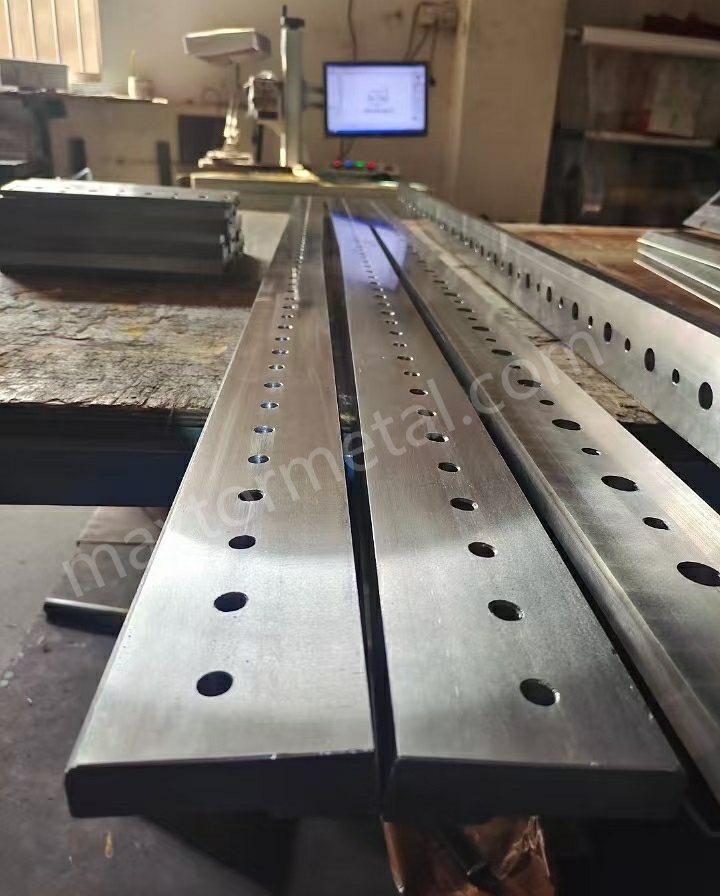
You want to get the best results from your cold work tool steel. D2 steel shear blades help you cut many types of metal with high accuracy. You can use these blades in many industries, from stamping to recycling. Let’s look at the best ways to use them and what materials they handle well.
Ideal Materials for D2 Cutting
D2 steel shear blades work well with many metals. You get clean cuts and long blade life. The table below shows how different materials perform when you use cold work tool steel.
| Tipo de material | Resultado del desempeño |
|---|---|
| Acero D2 | Good edge retention, better than VG10, 3V, A2, CruForge V, and Super Blue |
| S30V | 13% better edge retention than D2 |
| VG10 | Matches D2 in edge retention after heat treatment |
| 440 °C | Matches D2 in edge retention after heat treatment |
| ZDP-189 | Matches D2 in edge retention after heat treatment |
Carbon Steel and Mild Steel Shearing
You can cut carbon steel and mild steel with d2 steel shear blades. These metals are common in factories and workshops. The high carbon die steel in the blade gives you sharp cuts and long service life. You do not need to sharpen the blades often. This means you save time and money. You get smooth edges and less waste.
Aluminum and Non-Ferrous Alloys
You can use d2 steel shear blades for aluminum and other non-ferrous alloys. These metals are softer than steel. The cold work tool steel keeps its edge and does not wear down fast. You get clean cuts without burrs. This is important for industries that need high-quality finishes, like aerospace and automotive.
Limitations: High-Tensile Steels and Thick Stainless Steel
You should know the limits of d2 steel shear blades. They work best on mild and medium-hard metals. If you try to cut very hard or thick stainless steel, the blades may wear out faster. For these jobs, you may need a different type of cold work tool steel. Always check the material before you start cutting.
Tip: For special jobs or unique materials, you can order custom blades. Visit our custom blade page to find the right tool for your needs.
D2 and Blade Geometry: Selecting the Correct Rake Angle
The shape of your blade matters. The rake angle is the tilt of the blade’s edge. You must pick the right angle for your job. Cold work tool steel with the right geometry gives you better results.
Impact of Rake Angle on Edge Load and Shear Force
A small rake angle makes the blade stronger. You use this for hard metals. A large rake angle makes cutting easier but can wear the blade faster. You must balance edge holding and cutting force. If you cut soft metals, use a larger angle. For hard metals, use a smaller angle. This helps your d2 steel shear blades last longer and cut better.
| Rake Angle | Mejor para | Efecto en la hoja |
|---|---|---|
| Small | Hard metals | More strength, less wear |
| Large | Soft metals | Easier cut, more wear |
You get the most from your blades when you match the rake angle to the material.
The Role of D2 in Fly Shear and Crank Shear Operations
You see d2 steel shear blades in fly shear and crank shear machines. These machines cut metal sheets fast and often. Cold work tool steel stands up to repeated use. You get less downtime because the blades stay sharp. This means more production and less cost.
The table below shows where you use d2 steel shear blades and how you measure success:
| Escenarios de aplicación | Metrics Used to Measure Success |
|---|---|
| Industrial blades | Resistencia al desgaste |
| Cutting dies | Edge retention |
| Shears | Frequency of sharpening intervals |
| Slitting tools | |
| Metal stamping applications |
You want blades that last and cut well. D2 steel shear blades give you both. They are suitable for tooling applications and cutting instrument applications. You get optimal knife-making properties and durability. These are the recommended applications for your shop.
Note: You can use d2 steel shear blades for many cutting tools. They work well in both small shops and large factories.
Now you know how to use d2 steel shear blades for the best results. Pick the right material, blade geometry, and machine. You will see better performance and longer blade life.
D2 vs. The Competition: Should You Upgrade or Downgrade?
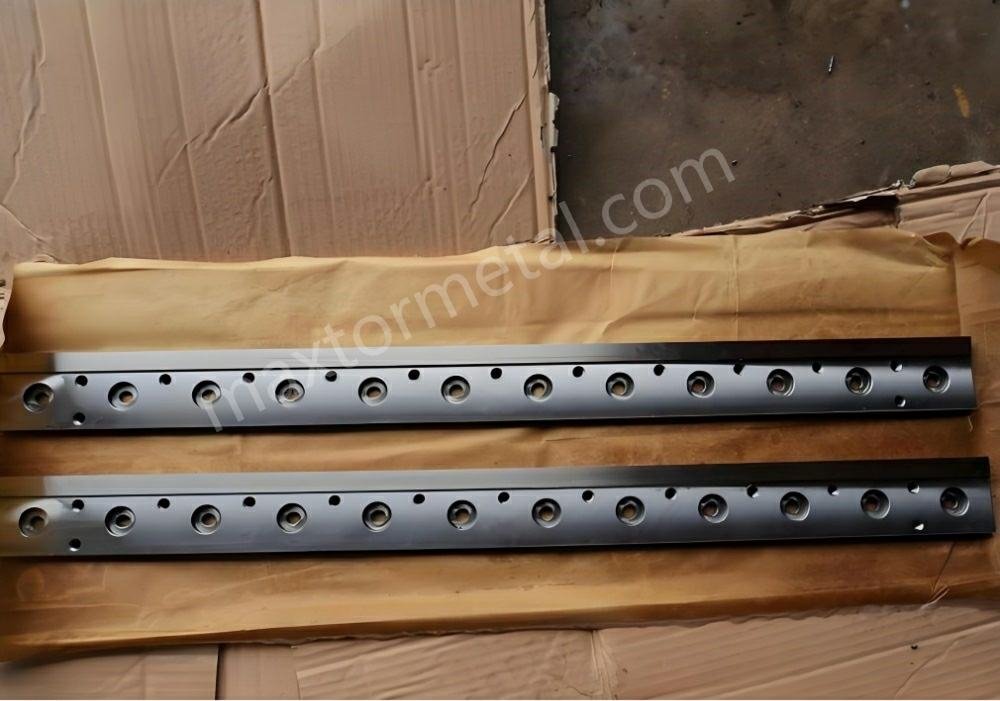
Picking the right shear blade material can change how well you cut. You want blades that fit your job and last a long time. D2 steel shear blades are known for staying sharp and not wearing out fast. Other steels have their own good points. Let’s see how D2 compares to S7, A8 modified, and low alloy steels.
D2 vs. S7 Steel: Wear Resistance vs. Impact Resistance
D2 steel shear blades are used when you need blades that do not wear out fast. S7 steel is better when you need blades that can take a lot of hits. The table below shows how each steel works:
| Tipo de acero | Resistencia al desgaste | Resistencia al impacto |
|---|---|---|
| D2 | Alto | Moderado |
| S7 | Moderado | Alto |
D2 steel shear blades stay sharp longer. You use them for straight cuts and jobs where you cut again and again. S7 steel blades are good at taking hits. You pick S7 for scrap yards or when you cut thick, hard metals. If your job has lots of heavy hits or surprise loads, S7 is safer.
When to Choose S7 (High Shock Loading/Scrap Yard Applications)
Pick S7 steel blades for these jobs:
- You cut scrap metal that is not all the same thickness.
- You work where blades get hit hard.
- You need blades that do not crack from sudden force.
D2 steel shear blades are best for clean, repeated cuts. S7 steel blades are better for tough jobs with lots of impact.
D2 vs. A8 Modified: The Debate for High-Volume or High-Tensile Cuts
Sometimes you need blades for lots of cutting or for cutting strong metals. D2 steel shear blades stay sharp and do not wear out fast. A8 modified steel is tougher and can cut harder metals.
| Tipo de acero | Ventajas | Desventajas |
|---|---|---|
| Acero D2 | – Stays sharp for big cutting jobs | – Harder to sharpen |
| – Wears out slowly, good for pro tools | – Not as good at fighting rust | |
| 8Cr13MoV Steel | – Cheap and does not rust easily | – Not as hard as D2 |
| – Easy to sharpen, good for daily use | – Does not stay sharp as long as D2 |
D2 steel shear blades last longer. You do not need to sharpen them as much. A8 modified steel costs more, but it is good for cutting strong steel and hard jobs. If you cut a lot, A8 might be worth the extra money. D2 steel shear blades work well for most cold metal cutting.
Cost-Benefit Analysis: The Higher Initial Investment of A8
A8 modified steel blades cost more at first. They are tougher and work better in hard jobs. D2 steel shear blades cost less and last a long time for normal jobs. If you cut strong steel or thick stuff, A8 might save you money because you change blades less. For most shops, D2 steel shear blades give you the best mix of price and how long they last.
D2 vs. Low Alloy Steels (e.g., 4140, 52100)
You might wonder if you should get D2 steel shear blades or use cheaper steels like 4140 or 52100. Low alloy steels cost less, but you have to sharpen and replace them more often.
TCO Analysis: Comparing Regrinding Frequency and Downtime
You want blades that keep working without stopping all the time. D2 steel shear blades stay sharp longer, so you do not need to sharpen them as much. Low alloy steels wear out faster. You lose time and money when you stop to fix or change blades.
Think about these things before you pick your blade:
- What kind of metal you cut
- How thick the metal is
- How fast you cut
- How well the blade fights wear
- What your job needs
D2 steel shear blades help you work longer without stopping. You get more cuts from each blade and less time fixing things.
Tip: If you want blades that last and need less fixing, D2 steel shear blades are a smart choice for your shop.
Now you know how D2 steel shear blades compare to other steels. You can pick the right blade for your job and get the best results for your work.
Maintenance and Troubleshooting D2 Shear Blade Failures
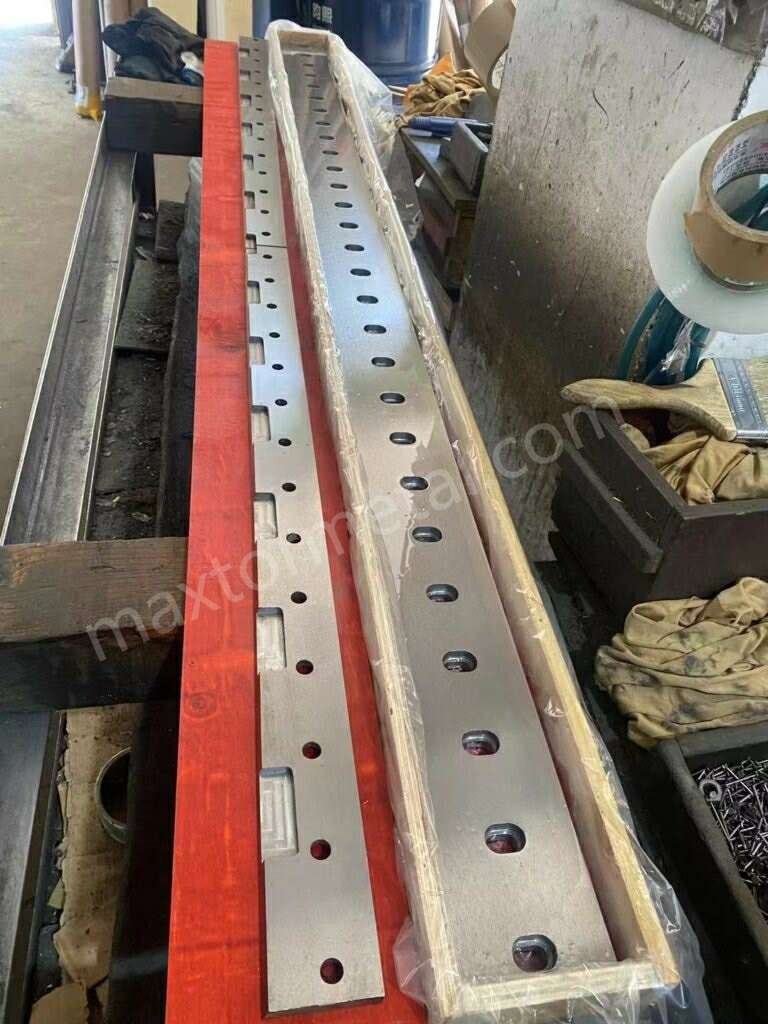
Taking care of your D2 steel shear blades helps them last longer. You get better cuts when your blades are in good shape. Most problems can be stopped with the right care and by checking for trouble early. Let’s see how you can stop chipping, keep blades sharp, and handle cracks.
Preventing Chipping and Edge Breakdown
D2 steel shear blades are strong, but they can still chip or break. This happens if you do not use them the right way. You want to stop these problems so your blades last longer.
Some things that cause chipping and edge breakdown are:
- Uso de una cuchilla inadecuada para la aplicación
- Corte de metal con una dureza superior a la capacidad de la cuchilla
- Aplicación de una fuerza de corte excesiva
- Ajuste incorrecto de la holgura entre cuchillas
- Falta de mantenimiento periódico
Puede prevenir estos problemas aplicando las siguientes medidas:
- Seleccionar siempre la cuchilla adecuada para cada aplicación
- Inspeccionar las cuchillas en busca de fisuras antes de su uso
- Ajustar la fuerza de corte y la holgura entre cuchillas según el material
- Aplicar lubricante en la cuchilla para reducir la fricción y el desgaste
- Verificar que los parámetros de la máquina sean los correctos
La importancia de una holgura precisa entre cuchillas (la desalineación es el enemigo)
La holgura entre cuchillas es el pequeño espacio libre entre la cuchilla superior e inferior. Un ajuste incorrecto de este espacio puede provocar el desportillado o la rotura de la cuchilla. Si las cuchillas no están alineadas, se generan cortes deficientes y vibraciones.
Consejo: Verifique siempre la holgura entre cuchillas antes de iniciar la operación. Incluso una desviación mínima puede ocasionar fallos graves.
A continuación se presenta una tabla para ayudarle a solucionar problemas habituales:
| Problema | Pasos para la solución de problemas |
|---|---|
| Lo aburrido | Afilar o sustituir la cuchilla; limpiar diariamente |
| Astillado | Utilizar la cuchilla adecuada; ajustar la fuerza; aplicar lubricante |
| Desalineación | Verificar el asiento de la cuchilla; apretar los pernos de manera uniforme |
| Vibración | Inspeccionar el desgaste; verificar la alineación de las cuchillas |
Pautas de rectificado para acero D2
Es necesario afilar las cuchillas de cizalla de acero D2 para mantener su rendimiento óptimo. Un afilado periódico previene cortes defectuosos y evita paradas en la producción.
Prácticas recomendadas para el afilado de cuchillas de cizalla de acero D2:
- Afilar las cuchillas periódicamente para mantener su capacidad de corte
- Ajustar correctamente la holgura entre cuchillas antes de cada trabajo
- Inspeccionar con frecuencia las cuchillas para detectar el desgaste de forma prematura
- No cortar metales cuya dureza exceda la capacidad de su maquinaria
- Limpiar las cuchillas tras su uso para evitar la acumulación de residuos
- Almacenar las cuchillas en un lugar fresco y seco para prevenir la corrosión
Preste atención a las siguientes señales que indican que la cuchilla requiere afilado:
- Presencia de rebabas más pronunciadas en el borde de corte
- Cambio o aumento significativo del ruido de corte
- Aparición de una línea brillante en el filo de la cuchilla
Los operarios experimentados identifican estas señales a tiempo. No espere a que la cuchilla esté excesivamente desgastada. Los talleres especializados de afilado pueden devolverle el filo original conservando su geometría. El uso de rectificadoras especiales garantiza la rectitud del filo y la precisión del ángulo.
Mantenimiento del bisel y del acabado superficial
Al afilar cuchillas de cizalla de acero D2, es fundamental mantener el ángulo exacto y un acabado superficial uniforme. Un rectificado excesivamente rápido o con una técnica inadecuada puede sobrecalentar la cuchilla. El exceso de calor reduce la dureza del filo, disminuyendo drásticamente su vida útil.
Nota: Utilice siempre las herramientas y métodos de rectificado adecuados. Esto garantiza que las cuchillas de cizalla de acero D2 conserven su dureza y filo durante más tiempo.
Detección y gestión de grietas por fatiga en cuchillas D2
Tras un uso intensivo, pueden aparecer grietas por fatiga en las cuchillas de cizalla de acero D2. Es crucial detectar estas fisuras a tiempo para evitar fallos mayores.
Identifique los siguientes indicios de grietas:
- Microfisuras o marcas superficiales en la cuchilla
- Variación en el comportamiento de corte de la cuchilla
- Ruidos anómalos durante el proceso de corte
Para reparar y gestionar las grietas, puede aplicar las siguientes medidas:
- Reparar las grietas mediante soldadura
- Seleccionar las herramientas y técnicas de reparación adecuadas
- Inspeccionar la cuchilla tras la reparación para verificar la eliminación total de la grieta
- Aplicar métodos como el mecanizado del pie de soldadura, granallado o martillado por agujas, impacto por alta frecuencia o tratamiento TIG (TIG dressing)
- Sanear la zona agrietada antes de soldar y aplicar procesos de mejora
Nota destacada: La inspección frecuente y el mantenimiento preventivo de las cuchillas prolongan su vida útil, maximizando el rendimiento y la calidad de corte.
Si sigue estos consejos, sus cuchillas de cizalla de acero D2 ofrecerán un mejor rendimiento. Ahorrará tiempo, reducirá costos y obtendrá cortes más limpios en todo momento.
Leveraging D2 for Profitability and Performance
Lista de comprobación de selección final para su próxima compra de cuchillas D2
Seleccionar las cuchillas de cizalla de acero D2 adecuadas ayuda a optimizar las operaciones de su taller. Requiere cuchillas que se adapten a sus aplicaciones y rentabilicen su inversión. Utilice esta lista de comprobación para adquirir la cuchilla correcta:
| Criterios | Consideraciones |
|---|---|
| Entorno operativo | ¿Utilizará la cuchilla a alta o baja velocidad? ¿Va a cortar materiales abrasivos o difíciles? |
| Resistencia al desgaste | El acero D2 es idóneo para aplicaciones que requieren una alta durabilidad de la cuchilla. |
| Costos de producción | El acero D2 tiene un costo inicial más elevado, pero genera ahorros a largo plazo. |
| Mantenimiento y entorno de trabajo | Evalúe la resistencia a la corrosión y la frecuencia de rectificado o sustitución de la cuchilla. |
| Tratamiento térmico y metalurgia | Asegúrese de que la cuchilla haya recibido el tratamiento térmico adecuado para acero D2. |
| Diseño y geometría de la herramienta | La geometría y los ángulos de corte de la cuchilla optimizan el rendimiento del cizallado. |
Consejo: Seleccione siempre una cuchilla compatible con su máquina y con el tipo de metal a cortar. La cuchilla adecuada garantiza cortes de mayor precisión y una vida útil prolongada.
Perspectivas: El futuro de los aceros para herramientas con alto contenido de cromo
Las cuchillas de cizalla de acero D2 facilitan un corte de metales preciso y controlado. Ofrecen cortes limpios y uniformes en una amplia variedad de metales. Estas cuchillas son idóneas para entornos de alta producción y compatibles con maquinaria industrial de gran capacidad.
A continuación, se detalla cómo las cuchillas de cizalla de acero D2 mejoran el rendimiento de su planta:
| Característica | Beneficio |
|---|---|
| Durabilidad | Mayor durabilidad de la cuchilla, reduciendo la frecuencia de reemplazo |
| Falta del tiempo | Menor necesidad de mantenimiento, manteniendo la continuidad operativa de sus máquinas |
| Productividad | Mayor velocidad de corte para incrementar la productividad de sus procesos |
Notará mejoras inmediatas en sus operaciones diarias: menor frecuencia de cambio de cuchillas, mayor tiempo de actividad ininterrumpida de sus equipos, cortes más limpios y reducción del desperdicio de material.
- Las cuchillas ofrecen una vida útil prolongada, reduciendo la necesidad de repuestos frecuentes.
- La reducción del tiempo de mantenimiento maximiza el tiempo de producción en planta.
- Cortes de mayor calidad que optimizan los tiempos de entrega.
Nota: Los aceros para herramientas con alto contenido de cromo, como el D2, evolucionan continuamente. Los avances en tratamientos térmicos y diseño geométrico incrementan su resistencia y fiabilidad.
Las cuchillas de cizalla de acero D2 representan la opción preferida para el corte de metales en frío. Con las continuas innovaciones tecnológicas, estas cuchillas seguirán mejorando su desempeño. Mantenerse al día con estos desarrollos le permitirá conservar su ventaja competitiva.
Las cuchillas de cizalla de acero D2 destacan como la solución ideal para el corte de metales en frío. Garantizan una elevada dureza y excelente resistencia al desgaste, prolongando su durabilidad en aplicaciones exigentes. Asimismo, optimizan los costos gracias a una retención de filo superior con una excelente relación costo-beneficio.
- Las cuchillas de acero D2 ofrecen un excelente rendimiento en entornos abrasivos y conservan el filo durante más tiempo que otros aceros convencionales.
- Presentan buena resistencia a la oxidación y la corrosión, asegurando fiabilidad en diversas aplicaciones.
- Puede confiar en estas cuchillas para cortar materiales de alta resistencia sin riesgo de rotura o mella.
Si desea optimizar sus herramientas de corte, conozca más sobre las cuchillas de cizalla de acero D2 y su mantenimiento adecuado. Para recibir asesoramiento técnico o encontrar la cuchilla idónea para sus necesidades, contacte con nuestro equipo. El acero D2 sigue siendo el referente indiscutible para el corte de metales en frío.
Preguntas frecuentes
¿Qué diferencia a las cuchillas de cizalla de acero D2 de las cuchillas de acero convencional?
Las cuchillas de cizalla de acero D2 destacan por su alto contenido de carbono y cromo, lo que proporciona mayor resistencia al desgaste y una retención de filo superior. Duran considerablemente más que las de acero convencional, reduciendo los tiempos de afilado y aumentando las horas de corte productivo.
¿Se pueden utilizar cuchillas de cizalla de acero D2 para cortar acero inoxidable?
Se pueden emplear cuchillas de cizalla de acero D2 para acero inoxidable delgado o de baja resistencia. Para aceros inoxidables gruesos o de alta dureza, se recomienda una cuchilla de mayor tenacidad. Verifique siempre las especificaciones del material antes de cortar.
¿Con qué frecuencia se deben afilar las cuchillas de cizalla de acero D2?
Se deben afilar las cuchillas de cizalla de acero D2 cuando se detecte pérdida de precisión en el corte o aparición de rebabas. Las inspecciones periódicas permiten mantener el filo óptimo. Su frecuencia de afilado es notablemente menor en comparación con las cuchillas de baja aleación.
¿Son resistentes a la oxidación las cuchillas de cizalla de acero D2?
Sí, las cuchillas de cizalla de acero D2 ofrecen mayor resistencia a la oxidación que la mayoría de los aceros para herramientas. Su alto contenido de cromo previene la corrosión. No obstante, se recomienda mantenerlas limpias y secas para garantizar los mejores resultados.
¿Cuál es la dureza óptima para las cuchillas de cizalla de acero D2?
La dureza ideal para las cuchillas de cizalla de acero D2 se sitúa entre 60 y 62 HRC. Este rango proporciona un filo resistente que conserva su agudeza y previene el despostillado o mella durante la operación.
¿Se pueden utilizar cuchillas de cizalla de acero D2 para aluminio?
Sí, las cuchillas de cizalla de acero D2 son idóneas para aluminio y otros metales no ferrosos. Proporcionan cortes limpios, reducen el desgaste, minimizan la formación de rebabas y garantizan una larga vida útil.
¿Cómo se evita el mello o despostillado en las cuchillas de cizalla de acero D2?
Se previene ajustando la holgura adecuada entre cuchillas y aplicando la fuerza de corte correcta. Seleccione siempre la cuchilla adecuada según el material. Un mantenimiento regular evita el deterioro prematuro del filo.
¿Son recomendables las cuchillas de cizalla de acero D2 para procesos de reciclaje?
Sí, las cuchillas de cizalla de acero D2 ofrecen un rendimiento excelente en aplicaciones de reciclaje. Proporcionan una amplia vida útil y reducen los tiempos de parada. Soportan el procesamiento de diversos tipos de chatarra y mantienen su filo tras un uso intensivo.
Ver también
Cómo seleccionar la cuchilla de guillotina adecuada para sus necesidades
Elegir entre Cizallas de Guillotina y Cizallas de Viga Oscilante: Un Análisis Comparativo Exhaustivo
Guía paso a paso para cambiar las cuchillas de una cizalla hidráulica

 English
 Spanish
 Italian
 French
 Portuguese
 Russian
 German
 Arabic
 Hindi
 Vietnamese
 Indonesian
 Japanese
 Korean