

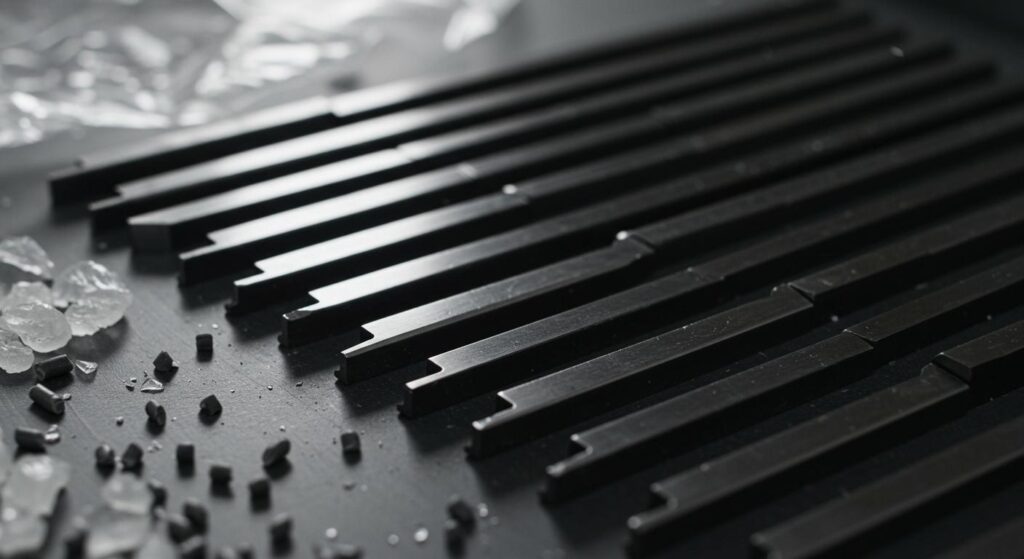
Vous devez être précis et rapide lorsque vous travaillez avec des plastiques. Lames de granulateur pour plastique permettent d'obtenir des pièces uniformes pour le recyclage et le moulage. Des lames de qualité, des conceptions intelligentes et un entretien régulier vous aident à optimiser vos performances. Le tableau ci-dessous montre comment l'entretien des lames et l'utilisation de nouvelles conceptions vous aident au quotidien.
| Que faites vous | Pourquoi c'est important |
|---|---|
| Garder les lames affûtées et propres | Taille de granulés uniforme |
| Utiliser des conceptions de lames modernes | Moins d'arrêts, meilleure vitesse de travail |
| Maintenir une taille de granulés constante | Facile à alimenter et à mélanger |
Principaux points à retenir
- Les lames de granulateur aident à découper les déchets plastiques en petits morceaux. Cela facilite le recyclage et le moulage.
- Les lames nécessitent un entretien régulier, tel que l'affûtage et le nettoyage. Cela leur permet de bien fonctionner et de produire des granulés uniformes.
- Choisir la meilleure conception de lame, comme les couteaux décalés ou à dents, permet une meilleure coupe. Cela permet également d'économiser de l'énergie.
- Les lames fabriquées en acier de haute qualité durent plus longtemps et coupent mieux. Cela signifie que les outils fonctionnent plus longtemps.
- L'ajustement du jeu entre les lames et de la vitesse d'alimentation optimise la granulation. Cela permet d'obtenir de meilleurs granulés et de réduire les déchets.
- Former les opérateurs aux règles de sécurité et à l'utilisation des lames réduit les accidents. Cela rend également le lieu de travail plus sûr.
- Le suivi des performances des lames grâce aux données permet de savoir quand les remplacer. Cela maintient une qualité constante.
- Choisir le granulateur adapté au matériau et à la tâche permet de travailler plus rapidement. Cela aide également à atteindre les objectifs de production.
Lames de granulateur pour plastique
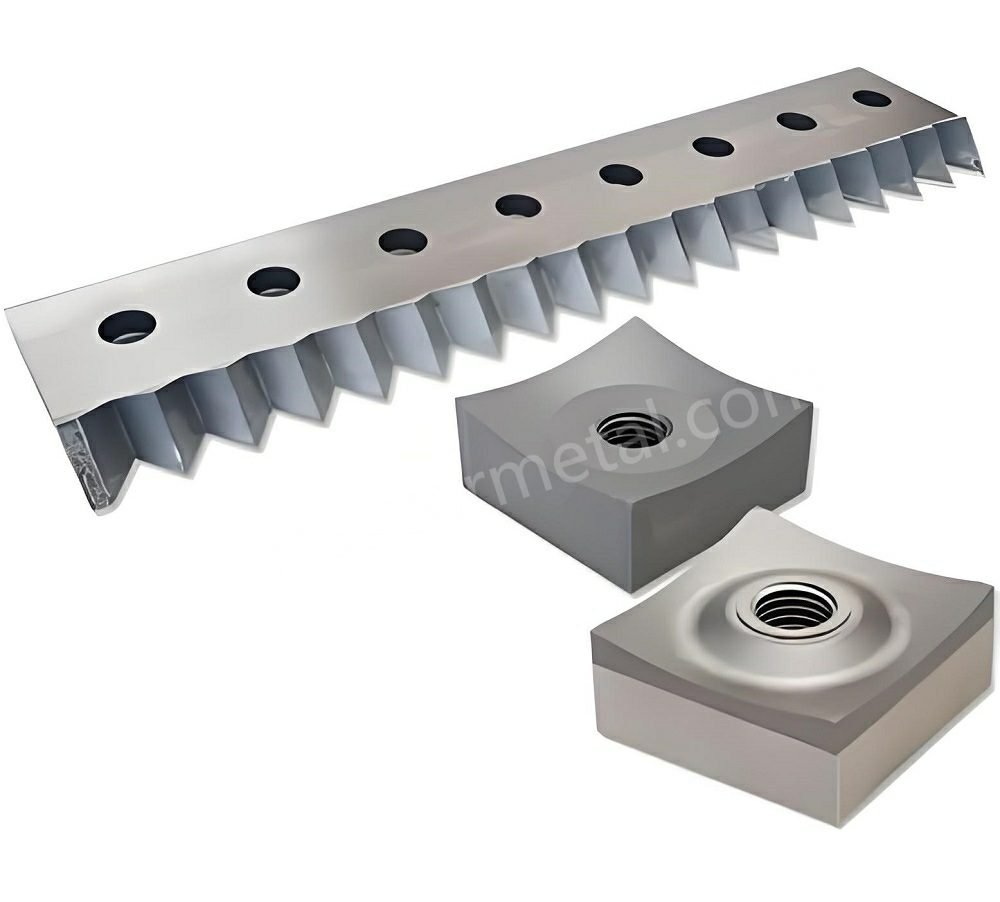
Lames de granulateur pour plastique sont essentiels pour le recyclage et le moulage par injection. Ces lames coupent les déchets plastiques en petits morceaux uniformes. Cette étape vous permet de préparer les matériaux pour de nouveaux produits. Elle assure également un travail rapide et fluide. Le choix de la conception et du matériau de lame appropriés est crucial pour obtenir de bons résultats.
Caractéristiques de conception de la lame
Il existe de nombreuses conceptions de lames au choix. Chacune présente ses propres avantages. La meilleure conception vous aide à couper le plastique facilement et proprement.
Couteaux décalés et à dents
Les couteaux décalés disposent de lames disposées selon une configuration spéciale. Chaque lame coupe à son tour. Cela signifie qu'aucune lame ne subit de contrainte excessive. Vous obtenez une coupe régulière, ce qui limite la chaleur et l'usure. Cette conception convient parfaitement aux plastiques épais ou robustes. Les couteaux à dents possèdent des bords dentelés. Ces bords saisissent et tranchent le plastique. Ils rendent les granulés plus uniformes et génèrent moins de poussière. Les deux conceptions sont utilisées pour le recyclage et la fabrication de matières premières pour le moulage par injection. Elles fonctionnent parfaitement avec le PET, le HDPE et les plastiques techniques.
Voici un tableau montrant comment les types de lames influencent la coupe :
| Type de lame | Description de la structure | Impact sur les performances de coupe |
|---|---|---|
| Lame à dents | Structure complexe, fonctionne avec des lames décalées pour le broyage grossier et fin. | Grande efficacité pour la granulation des carottes, mais faible capacité de granulation et coût initial élevé. |
| Lame décalée | Disposition décalée avec de grands angles de coupe, moins de couteaux pour une résistance réduite. | Convient pour la granulation de plaques, plus économique et plus facile à remplacer que les lames à pales. |
| Lame à pales | Technologie de coupe en V avec une conception de lame optimisée pour une granulation progressive. | Plus efficace pour les grands carters, manipulation plus aisée des matériaux et efficacité de coupe améliorée dans les chambres plus grandes. |
Les couteaux décalés et à dents vous aident à obtenir de meilleurs résultats. Ils consomment moins d'énergie. Les rotors décalés vous permettent de travailler plus rapidement et de couper avec plus de force. Ces caractéristiques permettent d'économiser de l'énergie et de maintenir le bon fonctionnement de vos machines.
Conceptions à rotor ouvert et à cisaillement
Les conceptions à rotor ouvert permettent à l'air de circuler dans la zone de coupe. Cela refroidit les lames et élimine la poussière ainsi que les petites particules. Vous obtenez des granulés plus propres et moins d'encrassement à l'intérieur de la machine. Les conceptions à cisaillement utilisent des lames inclinées pour trancher le plastique. Cela offre une coupe plus fluide et réduit les contraintes sur les lames. Les deux conceptions vous permettent de traiter de nombreux types de plastiques tout en réduisant les temps d'arrêt.
Matériaux et fabrication
Le matériau et le procédé de fabrication Lames de granulateur pour plastique influencent leur durée de vie et leur qualité de coupe. Vous devez choisir le bon acier et vous assurer que les lames sont fabriquées avec soin.
Acier de haute qualité
La plupart Lames de granulateur pour plastique utilisent des aciers de haute qualité. L'acier D2 est un choix courant. Il peut être trempé pour atteindre une dureté élevée, jusqu'à 59 HRC. Cet acier résiste à l'usure, mais s'il est trop dur, il peut devenir cassant. L'acier à outils allié est une autre option. Il contient des éléments d'alliage supplémentaires qui le rendent plus tenace et plus durable. L'acier Lescowear peut atteindre 60 à 62 HRC. Il est extrêmement dur et tenace, tout comme l'acier D2.
Here is a table that compares steel types:
| Type d'acier | Dureté (HRC) | Wear Resistance Characteristics |
|---|---|---|
| Acier D2 | Up to 59 | Good wear resistance but can become brittle if over-hardened. |
| Acier à outils allié | N / A | Improved hardness, toughness, and wear resistance due to alloying elements. |
| Lescowear Steel | 60 to 62 | High wear resistance with maintained impact toughness similar to D2 steel. |
Choosing the right steel gives you blades that last longer and work better. If you need something special, you can look at Lames Sur Mesure pour vos besoins.
Usinage de précision
Precision machining is important for making good Lames de granulateur pour plastique. Skilled workers use CNC machines and grinders to shape each blade. They control how hard the blade gets by changing the heat. This careful work removes bad spots and makes the blade strong and long-lasting. If the blade is too hard, it can break. Good makers balance toughness and wear resistance for the best blades.
Precision machining helps your blades stay sharp and cut well. Good materials and skilled workers also make sure you get strong blades every time.
Conseil: Always make sure your Lames de granulateur pour plastique come from a trusted company. Good manufacturing means fewer problems and better results in your recycling or molding work.
Granulateurs de plastique : Équipements et applications

Plastic granulators break big plastic pieces into small granules. You use these machines in recycling centers and factories. They help you reuse plastic and keep work smooth. When you use plastic granulators, you control the size of each piece. This helps you meet strict rules for new products.
Granulator vs. Shredder Blades
Application Differences
You may wonder how granulator blades and shredder blades are different. Granulator blades cut plastic into small, even granules. These granules meet tight rules, which is important for making new parts. Shredder blades break plastic into rough, uneven pieces. You use shredders for big, tough items that need fast processing. Granulators are best when you want exact size and shape.
Comparaison des performances
The table below shows how granulator blades and shredder blades are different:
| Fonctionnalité | Lames de granulateur | Lames de Broyeur |
|---|---|---|
| Particle Size | Produces small, uniform granules | Reduces materials to irregular-sized pieces |
| Débit | Operates at lower throughput rates | Processes larger volumes quickly |
| Adéquation des matériaux | Ideal for plastics, rubber, soft metals | Better for tougher, denser materials |
| Control Over Output Size | Offers precise control with screens | Focused on breaking materials, less uniformity |
You use granulator blades when you need exact sizes. Shredder blades help you handle big waste fast.
Types of Plastic Granulators
You can choose from different types of plastic granulators. Each type helps you reach your goals for size, speed, and rules.
Arbre unique
Single-shaft plastic granulators have one shaft with blades. You get high output, especially with hard plastics. These granulators are easy to fix because they are simple. You can keep tight rules with less work. Single-shaft granulators work well for most recycling jobs.
Multi-Shaft
Multi-shaft plastic granulators have two or more shafts. You use them for big or tough scrap. These granulators handle more material at once. They need more care because they have extra moving parts. Multi-shaft granulators help you meet rules for bigger or mixed plastic waste.
The table below shows how single-shaft and dual-shaft granulators are different:
| Type of Shredder | Efficacité du traitement | Exigences en matière d'entretien |
|---|---|---|
| Broyeur à un seul arbre | High productivity, especially with rigid plastics | Easier maintenance due to simpler design |
| Dual-Shaft Shredder | More efficient for bulky scrap | More complex, prone to damage, requires more maintenance due to two sets of knives |
When you pick plastic granulators, think about your material, the rules you need, and how much you want to process. You can find granulators for every job, from small units to big machines for large parts. Each type helps you control size, shape, and rules for your recycled plastic.
Conseil: Always check the rules your process needs before picking a granulator. The right machine helps you save time and get better results.
Lames de granulateur : Précision et maintenance
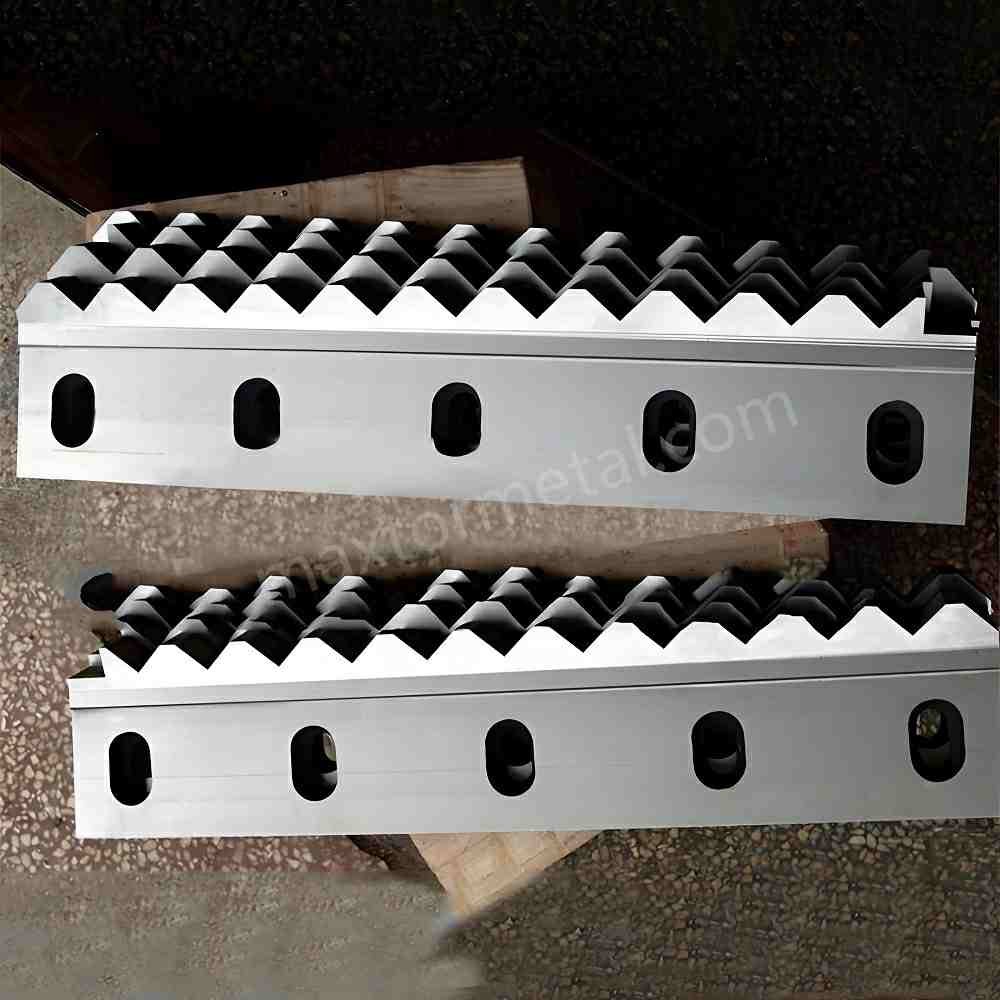
Taking care of your granulator blades helps you get good results. You need to keep blades sharp and lined up right. Regular checks help you keep high quality. These steps help you meet strict blade rules and make sure every cut is precise.
Sharpening and Alignment
Knife Sharpeners
You have to sharpen blades often to keep them working well. How often depends on your work. If you do heavy jobs, sharpen every 8 to 12 hours. For lighter work, sharpen once a week or every two weeks. Look for dull blades, rough cuts, or more energy use. These signs mean it is time to sharpen.
| Type d'utilisation | Fréquence recommandée |
|---|---|
| Heavy Jobs | Every 8–12 hours of use |
| Lighter Tasks | Once a week or every two weeks |
When sharpening, follow these steps:
- Clean blades before you start.
- Use coolants to stop blades from getting too hot.
- Keep the same edge angle as before.
- Only take off a little bit of metal.
Some mistakes can make blades wear out faster. Not cleaning leaves dirt that makes edges uneven. Not using coolants makes blades too hot and soft. If you do not sharpen the right way, the edge angle changes. This makes blades cut badly. These mistakes make blades dull faster and lower their quality.
Conseil: Sharpening blades the right way helps them last longer and keeps your work going.
Conseils d'installation
Blades work best when you install them the right way. Always check if blades are lined up and the gap is set right. Use the torque the maker says for bolts. Make sure all safety guards are on after you finish. These steps help you keep blade rules and keep your machine safe.
Meilleures pratiques de maintenance
Doing regular checks helps blades last longer and keeps granules the same size. You need a plan and a checklist to help you.
Inspection Schedules
Follow a weekly checklist:
- Check if blades are sharp or chipped. This keeps cuts even and stops machine overload.
- Look at blade gap and if they line up. The right gap stops too much wear and keeps granules even.
- Check bolts and fasteners to see if they are tight. Loose bolts can make blades move or break.
- Listen for strange sounds or shaking when the machine runs. Finding problems early can save money on repairs.
- Clean the chamber and take out any dirt. This keeps the machine working well and stops dirt from getting in.
Write down what you do and teach workers to spot blade problems. Train more than one person to care for blades. Make rules for how to handle blades and set limits for blade thickness and signs of wear.
Panneaux de remplacement
Change blades if you see cracks, chips, or lots of wear. If blades will not stay sharp after sharpening, get new ones. If you see more fines or uneven granules, even with the right settings, it is time to replace blades.
| Impact | Description |
|---|---|
| Consommation d'énergie plus élevée | Dull blades use 15–25% more energy each cycle, which costs more. |
| Ajout de contrainte à la machine | Worn blades make the machine work harder and can break other parts sooner. |
| Increased maintenance costs | Using bad blades can cause emergency repairs, which cost more than planned checks. |
Note: Changing blades on time saves money and keeps your machine safe.
Maintenance Differences for Various Plastics
Different plastics need different care. Glass-filled nylon makes blades dull fast, so sharpen more often. PET wears blades in its own way, so you need to check them differently. HDPE wears blades in a special way and needs its own care.
| Type de matériau | Maintenance Requirement |
|---|---|
| Glass-filled Nylon | Sharpen more often because blades dull quickly |
| ANIMAL DE COMPAGNIE | Needs different care because it wears blades differently |
| HDPE | Needs special care because it wears blades in its own way |
Rough plastics like glass-filled types wear blades out faster. Check blades more often and use harder blade types. Soft plastics like LDPE and PP can stick to blades, so clean them more to stop buildup. Plastics that do not like water, like PET, can rust blades. Use blades that do not rust and dry them well after cleaning. Plastics that get hot may need you to check the gap more because they expand.
Sharpening blades well and doing regular checks helps you get the best results and keeps your granulator blades working well, no matter what plastic you use.
Efficacité de la granulation du plastique

You can make your plastic granulation better by checking blade gap, feed rate, and machine settings. These things help you get more good granules and use less energy. If you set up your granulator the right way, you get even pieces and less waste.
Blade Gap and Feed Rate
Adjusting for Material Type
Always check the blade gap before you start. The gap should fit the widest knife in your machine. If knives are not the same size, you get uneven cuts and more blade wear. Sharp and well-fitted knives make granules the same size. This also helps stop dust and fines. Dull or loose blades make mixed sizes and more dust.
Feed rate is also important for your work. You need to match feed rate with rotor speed. Too much material can jam the machine. Too little wastes energy. The best feed rate gives you up to 90% efficiency. A steady feed rate keeps your work smooth and gives you more output.
Reducing Fines and Dust
You can lower dust and fines by keeping your granulator in good shape. Worn blades make uneven granules and more dust. Change blades on time and keep your machine clean. This helps you get better granules and less waste.
Some ways to cut dust and fines are:
- Use special dust collectors, like pulse bag systems.
- Do regular maintenance and change old blades.
- Clean your machine often.
- Use water sprays to keep dust down.
- Make your crushing process better.
Tip: Check your granulator often and wear safety gear to keep your area safe and clean.
Productivity and Output
Throughput Optimization
You can get more output by looking at different parts of your granulator. The cutting chamber, rotor type, knife setup, and screen size all matter. Feeding systems and automation help you reach your goals. The kind of plastic, the size you want, and your space also matter.
A good granulator with the right settings gives you high performance and steady output. Pick the right machine for your plastic and make sure all parts work together.
Efficacité énergétique
Blade design changes how much energy you use. Blades that cut well make even granules and better quality. Hard blades last longer and mean less downtime, so you can make 15–30% more. If you use blades made for your plastic, you lower the motor load and save power.
| Facteur | Impact on Energy Efficiency |
|---|---|
| Cutting precision | Same granule size, better quality |
| Résistance à l'usure | Less downtime, more production |
| Blade optimization | Lower motor load, less electricity |
New blade designs, like teeth, paddle, and staggered blades, help you cut tough or thin plastics with less energy. These blades spread the work and hold the plastic better, so you get better results.
Remember: The right blade settings and regular care help you get the best efficiency and output from your granulator.
Recommandations d'utilisation
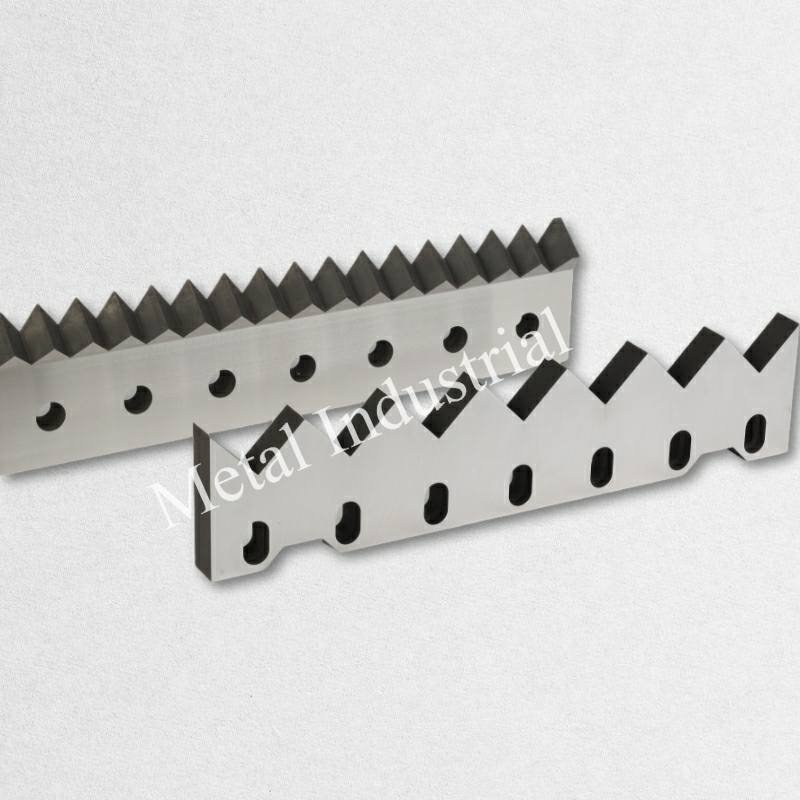
Training and Safety
Staff Education
You need workers who know what they are doing. Training helps everyone use granulator blades safely. It also helps stop accidents from happening. The table below lists some top training programs for plastic work:
| Training Program | Description | Required Courses |
|---|---|---|
| 36-hour OSH Train-the-Trainer | Gets staff ready to teach safety classes | Safety Management, Hazard Analysis, Ergonomics, Training Development |
| 36-hour Safety Committee Chair | Teaches leaders how to run safety meetings | Safety Management, Accident Investigation, Emergency Action Plans |
| 32-hour Safety Committee Member | Trains members to help with safety | Safety Management, Committee Operations, Hazard Control, Emergency Action Plans |
These programs show your team how to find dangers and handle emergencies. They also help keep the workplace safe. You should keep learning so everyone knows the latest rules.
Protocoles de sécurité
You must follow strict rules when using granulator blades. Here are some important safety steps:
- Always turn off and lock the machine before fixing it.
- Never put your hands in the hopper or cutting area when it is on.
- Wear safety glasses, gloves that protect from cuts, and ear protection.
- Put all guards back before you start the machine again.
- Keep the area around the granulator clean and clear.
Safety comes first! These steps help stop injuries and keep everyone safe.
Suivi des performances
Quality Tracking
You can use special systems to check your plastic granules. These systems help you see and fix problems fast. The table below shows some helpful features:
| Fonctionnalité | Description |
|---|---|
| User-friendly interface | Easy to use with many granulators |
| Pre-built dashboards | Shows important numbers for quick checks |
| Historical data access | Lets you look at old results and find patterns |
| Custom alerts | Tells you about problems right away |
| Predictive maintenance | Warns you before parts break, so you have less downtime |
| Continuous quality monitoring | Checks granule size with sieves and lasers for fast fixes |
These tools help you keep your work smooth and make sure everything runs well.
Data Analysis
You can use data to make better choices about your granulator blades. Smart computer programs help you know when to change blades and stop problems. Here are some ways data helps:
- Tells you when blades will wear out and need changing.
- Helps you set up your process for better results.
- Watches granule quality as you work.
- Supports new blade ideas for special jobs.
- Helps you plan and keep track of supplies.
Tip: Work with trusted companies like Nanjing Metal to make a good maintenance plan, pick the best blade materials, and get custom blades for your needs. This teamwork helps you fix problems like jams, too much heat, and bad granule quality.
If you focus on training, safety, and checking your work, you can make your granulator blades work better and keep your business running strong.
Using special granulator blades for plastic helps you save money. These blades also make your products better. The table below shows how different industries get help:
| Industrie | Description des avantages |
|---|---|
| uPVC Recycling | You change blades less, so you spend less money. |
| Injection Moulding | Even granules help you work faster and make better products. |
| Fabrication | Custom blades last longer and cost less, so your job is easier. |
If you take care of your machines, they stay safe and work well. You stop breakdowns, use less energy, and keep your workspace safer. If you want more information or need help picking granulator blades for plastic, contacter notre équipe.
FAQ
How do you choose the right granulator machine for your needs?
You look at the type of plastic, the size you want, and how much material you process. You also check the blade design and safety features to match your job.
What is a high-efficient granulating process?
You use sharp blades, set the right blade gap, and keep the machine clean. This process helps you get even granules, less waste, and better results.
How do you handle granulating hard plastics?
You pick blades made from tough steel and check them often. You also use staggered or teeth cutters to cut hard plastics with less wear.
Why is high-quality sharpening important?
You keep blades sharp to get smooth cuts and even granules. Good sharpening helps you save energy and keeps your machine working well.
How can you improve production efficiency?
You set the right feed rate, keep blades sharp, and check the machine often. These steps help you get more granules in less time.
What signs show you need to replace your blades?
You see cracks, chips, or dull edges. You notice more dust or uneven granules. You also hear strange sounds from the machine.
How do you track overall output from your granulator?
You use dashboards and sensors to watch granule size and count. You check reports to see how much material you process each day.
Can you use the same blades for all plastics?
You need different blades for soft, hard, or abrasive plastics. You pick the right blade material and design for each type to get the best results.
Tip: Always follow safety rules when working with granulator blades. Wear gloves and eye protection to stay safe.
Voir aussi
Maximiser Vos Revenus de Déchets de Bois avec des Couteaux de Broyeur de Bois Haute Performance
Comment Choisir les Lames de Broyeur de Plastique pour un Recyclage Efficace
Le Guide Ultime des Conceptions de Lames de Broyeur Monorotor

 English
  Spanish
  Italian
  French
  Portuguese
  Russian
  German
  Arabic
  Hindi
Hindi  Vietnamese
  Indonesian
  Japanese
  Korean