
長期供給に適したパンスライサー刃メーカーの選び方
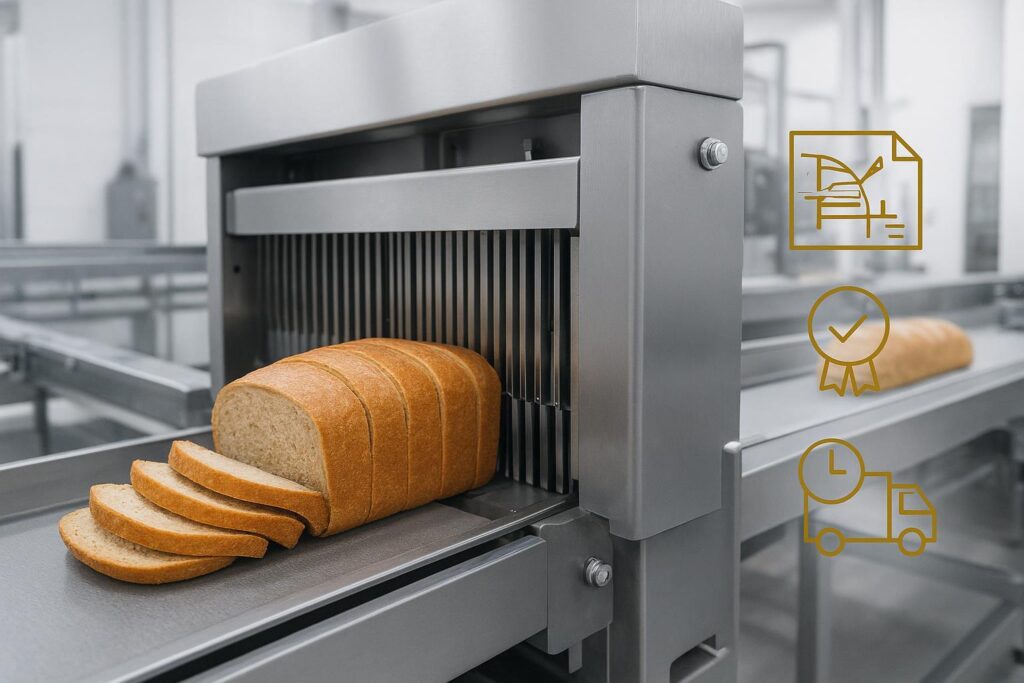
Choosing a bread slicer blade manufacturer is a long-term operations decision, not just a spare-parts purchase. If you qualify the supplier correctly—engineering capability, QA/compliance discipline, and supply reliability—you get cleaner slices, fewer crumbs and defects, longer run time between changeovers, and a lower total cost of ownership (TCO). This guide is written for industrial bread slicing blades used in high-throughput bakery lines and OEM build programs, where repeatability across lots matters more than a single good sample. What you will evaluate: engineering, QA/compliance, supply reliability Outcomes: better slice quality, lower TCO, fewer changeovers and defects How to use this guide: request data, run pilots, verify documents, then scale Selection framework […]
PTFEコーティングパンスライサー刃とハードコーティングの使い分け
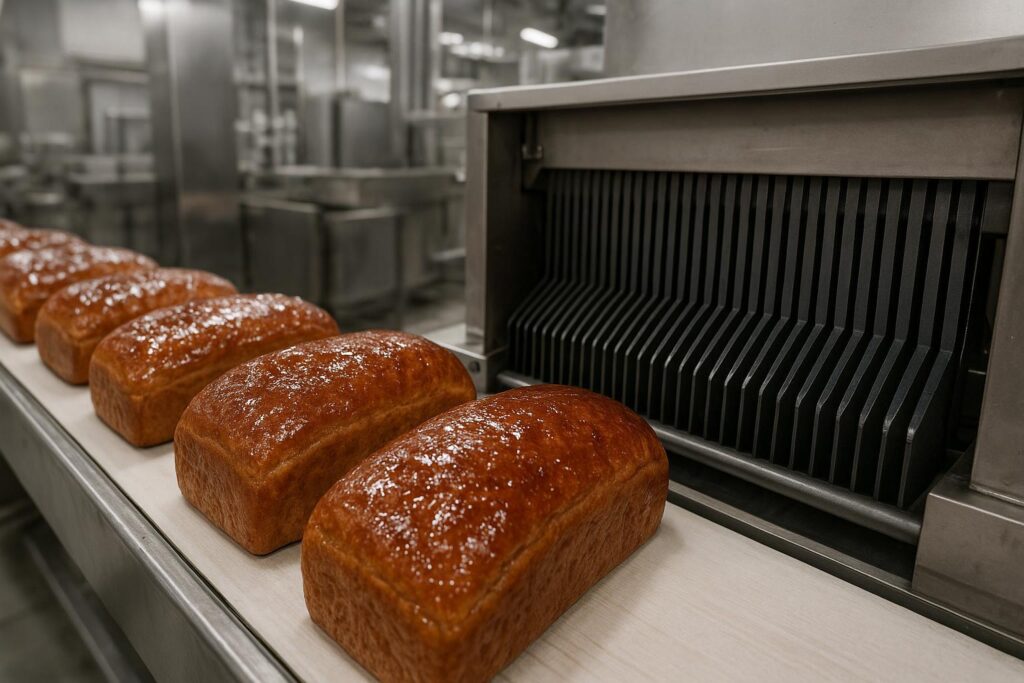
How PTFE helps on sticky breads PTFE (often called Teflon) is a non-stick, low-friction surface. In bread slicing, that matters when your biggest enemy isn’t “dullness” yet—it’s adhesion: sugars, glazes, warm crumb, and moisture building up on the blade path until the machine starts tearing, dragging, or jamming. In other words: if you’re evaluating non-stick coating for bread slicing, PTFE is usually the first coating family worth testing because it targets adhesion directly. Surface energy and friction PTFE’s value is straightforward: it reduces the tendency of sticky residues to wet and adhere to the blade surface, and it lowers sliding friction. For bakeries, that typically shows up as: There’s a practical boundary, though: […]
刃の形状とコーティングが工場でのパンくず廃棄を削減する方法
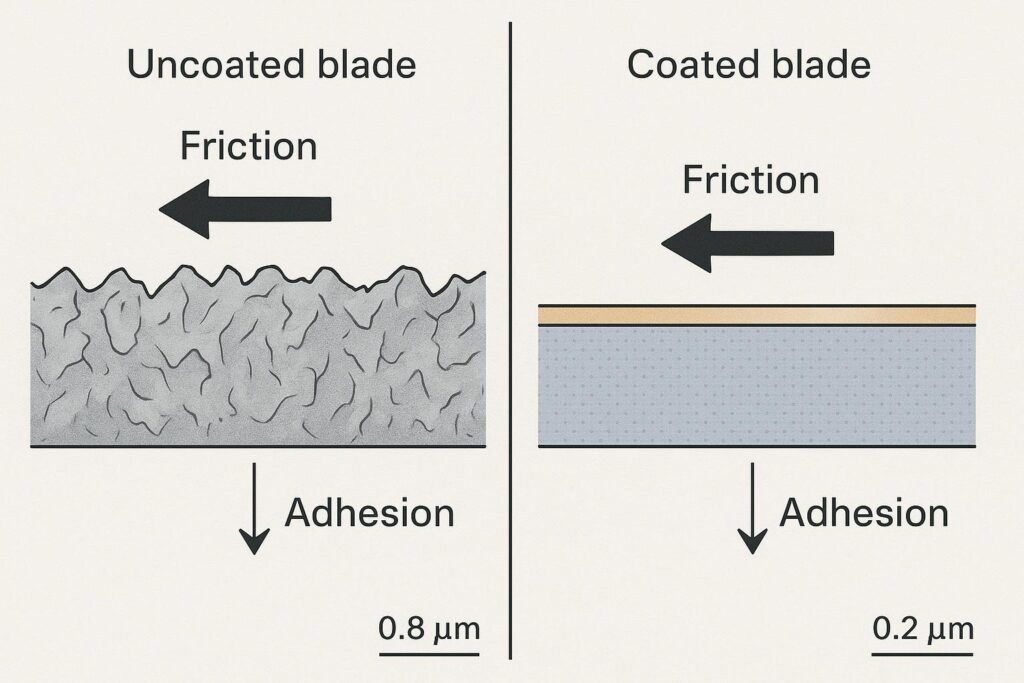
Bread crumb waste is easy to dismiss as “just housekeeping.” On an industrial slicing line, it’s a yield leak, an OEE problem, and a food-safety risk all at once. Disclosure: MAXTOR METAL supplies industrial cutting blades. The principles in this article are vendor-agnostic and focus on measurable process controls (crumb mass, thickness tolerance, downtime) so you can validate improvements on your own line—regardless of blade brand or slicer make. The good news is that crumb waste is rarely mysterious. Most of it is created at a few predictable points: the first contact at the crust/crumb boundary, any drag along the blade sidewall, and any instability in guidance or loaf control. Every […]
商業用ベーカリーにおける食品グレード切片刃に最適な鋼材
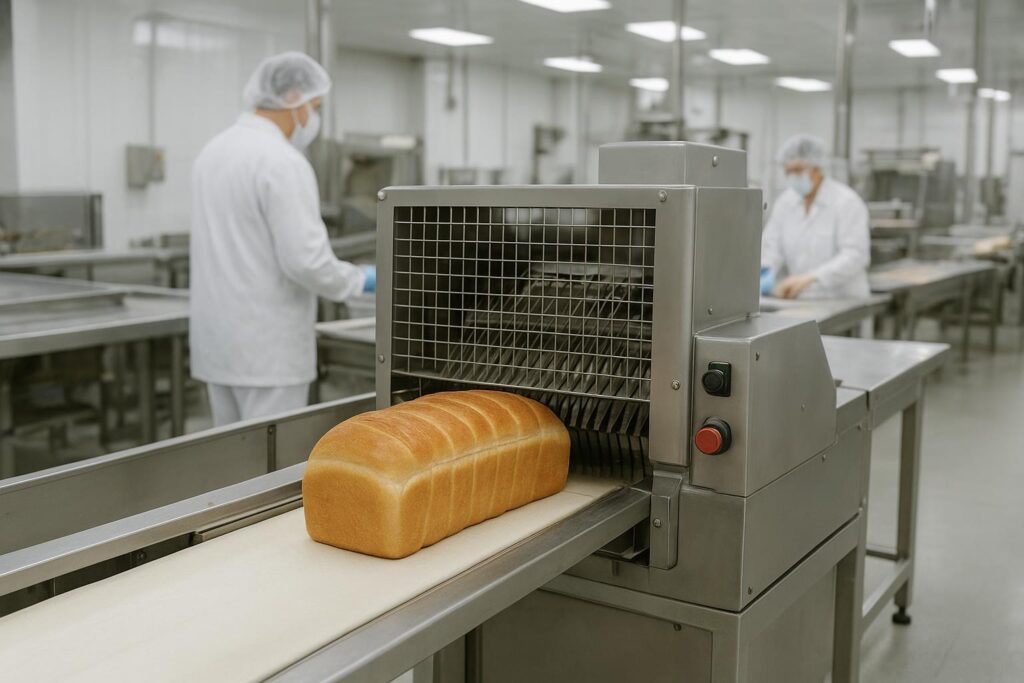
Choosing blade steel for food grade slicer blades isn’t a small consumables decision. If you’re comparing bread slicer blade steel options across suppliers, you need a spec that survives real sanitation and real run lengths. On high-throughput lines (600–1200 loaves/hour), blade material drives four outcomes that show up every shift: slice appearance, crumb generation, sanitation effort, and unplanned stops. A blade that holds its edge and resists corrosion helps control thickness drift, tearing, and crumb buildup. A blade that dulls early—or rusts under your washdown routine—turns into an OEE problem and a compliance headache. This guide is for bakery plants and bread slicer OEM teams specifying or qualifying slicer blades for continuous production. Scope […]
パンスライサー刃のメンテナンスで寿命を30%延ばしコストを削減

Published: 2026-04-29 · Last reviewed: 2026-04-29 Food-safety and compliance note: This guide provides general best practices. Always follow your facility’s SSOP/HACCP programs and the slicer OEM’s model-specific instructions (including disassembly, tension/torque ranges, approved lubricants, and sanitation chemicals). If there is any conflict, the OEM manual and your validated food-safety plan take precedence. Document any changes as part of your preventive controls and verification records. Key takeaways Blade condition is one of the few variables that touches quality, sanitation, and uptime at the same time. As edges dull or tracking drifts, you typically see the same failure pattern: The cost isn’t just the blade set. It’s labor, lost yield, extra sanitation time, and downtime—i.e., […]
Scallop vs. V-Tooth vs. ABT パンスライサー刃:どの刃形が最適か?

Edge geometry isn’t a cosmetic choice. In high-volume slicing, the edge shape determines how the blade enters the crust, how it shears the crumb, and how stable it stays at speed. That’s why the same slicer can look “mysteriously inconsistent” across SKUs—even when the blade material and thickness never change. Put simply: you’re tuning bread slicer blade geometry to control three factory KPIs—crumb loss, slice thickness consistency, and line stability. This article compares three common geometries—scallop, V-tooth, and ABT (alternating bevel tooth)—through the lens industrial bakeries and slicer OEMs actually care about: Geometry Basics Scallop: wave profile and pitch options A scallop edge uses a repeating wave profile. Think of it as alternating “contact points” […]
実績のあるOEM代替刃を使用したパンスライサーの刃の交換

Safety note & accountability: This guide provides general maintenance guidance for industrial bread slicers. Always follow your machine’s OEM service manual, your facility’s lockout/tagout (LOTO) program, and applicable local regulations. If any step conflicts with OEM documentation, OEM requirements take priority. Technical review: Reviewed for safety emphasis and procedural clarity by MAXTOR METAL’s technical team (LOTO and guarding requirements still depend on your site program and local rules). Need help confirming fit or blade geometry? Contact MAXTOR METAL: maxtormetal.com/contact. Safety, PPE, and prep Quick checklist before restart Lockout/tagout checklist Bread slicers are high-risk for laceration and amputation hazards during cleaning and maintenance. OSHA notes that a lockout/tagout program is required when guards are removed […]
パンスライサーでパンが裂ける理由と解決策
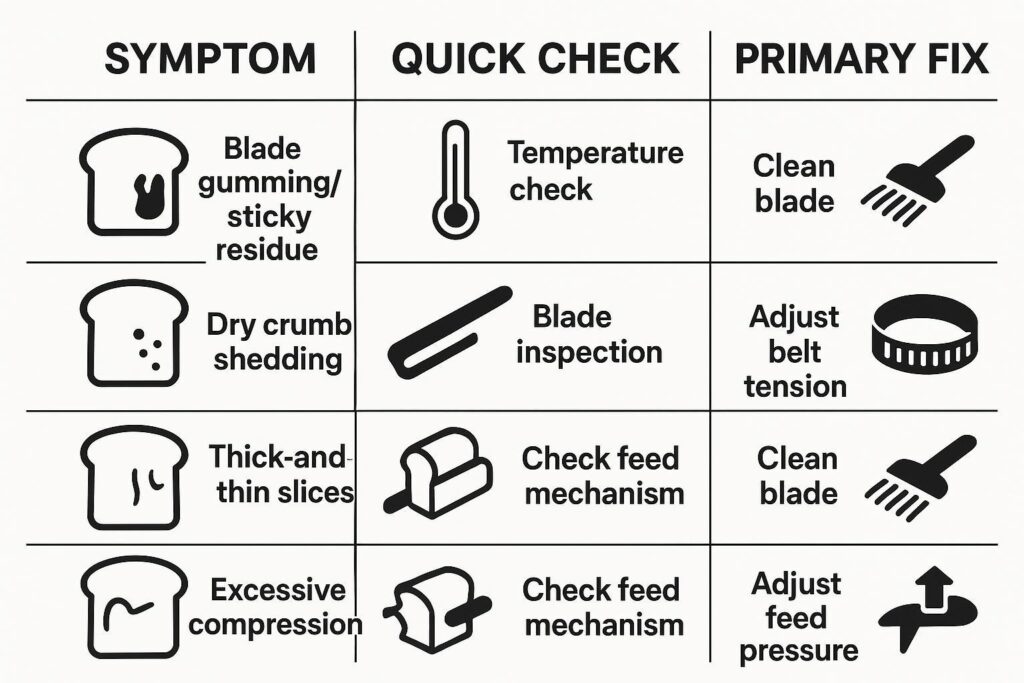
If bread slicer tearing bread is spiking waste, this guide gives fast, verifiable fixes. You’ll get temperature windows, mechanical checks, and line-control steps you can audit today. Targets 600–1200 loaves/hour lines with pan bread, crusty loaves, and buns. Safety & SOP note: Always follow your slicer OEM manual and your facility’s food safety program. Before inspecting, cleaning, or adjusting blades, guides, belts, or tension, use lockout/tagout and confirm all motion is stopped. Validate any process changes with your QA team, since slicing conditions can affect downstream packaging and product quality. Scope note: The temperature and machine setpoints below are starting references. Your optimal window will vary with formula, loaf mass, cooling method, […]

 English
  Spanish
  Italian
  French
  Portuguese
  Russian
  German
  Arabic
  Hindi
Hindi  Vietnamese
  Indonesian
  Japanese
  Korean