


Edge geometry isn’t a cosmetic choice. In high-volume slicing, the edge shape determines how the blade enters the crust, how it shears the crumb, and how stable it stays at speed. That’s why the same slicer can look “mysteriously inconsistent” across SKUs—even when the blade material and thickness never change.
Put simply: you’re tuning bread slicer blade geometry to control three factory KPIs—crumb loss, slice thickness consistency, and line stability.
This article compares three common geometries—scallop, V-tooth, 그리고 ABT (alternating bevel tooth)—through the lens industrial bakeries and slicer OEMs actually care about:
- What changes with scallop, V-tooth, and ABT geometries
- How blade edges impact crumb loss, thickness, and speed
- What you’ll take away: a selection matrix and test plan
Geometry Basics

Scallop: wave profile and pitch options
A scallop edge uses a repeating wave profile. Think of it as alternating “contact points” and relief pockets along the edge. In practice, that wave shape changes two things:
- Contact pressure distribution: fewer points contact the loaf at any instant, which can reduce smearing/compression on softer products.
- Debris management: the relief pockets can give crumbs and residue somewhere to go instead of packing against the blade sidewall.
Scallop edges are commonly discussed in terms of pitch (distance between repeating features). Application notes from blade suppliers often map pitch bands to product firmness—finer pitch for tougher crusts, coarser for softer loaves—because pitch affects how “aggressive” the cut feels at a given line speed. Simcut (Simmons) illustrates pitch-based positioning in “Simmons’ Bread Slicing Blades for Industrial Bakeries” (2025).
MAXTOR METAL summarizes the practical upside as smoother slicing with less rubbing and less crumb generation in factory settings in "Bread cutting blades: factory comparison for industrial use".
V-Tooth: TPI and bevel configurations
V-tooth blades use repeating V-shaped teeth. The two knobs that matter most are:
- TPI (teeth per inch): higher TPI generally means more teeth engaged at once, which tends to produce a finer cut (less tearing) but can be less tolerant of sticky, hot, or high-residue products.
- Bevel / grind style: bevel choices change whether the tooth behaves more like a “pick” (penetration-first) or more like a “slice” (shear-first).
In bakery-focused application notes, V-tooth often gets positioned as a “clean penetration” option for soft products at steady conditions.
ABT: alternating bevel shear action
ABT stands for alternating bevel tooth (you’ll also see this discussed as ABT edge bread slicing blades in supplier literature). Instead of every tooth presenting the same face, the bevel alternates left/right, creating more of a shearing action through the crust and crumb.
One concrete, bakery-specific description comes from Kasco’s ABT artisan blades, which describe the edge as a distinctive scallop/triple-V pattern intended for artisan products (see Kasco’s ABT artisan edge description). Regardless of the exact manufacturer’s pattern, the core mechanism is consistent: alternating bevels bias the cut toward shearing, not crushing, which is why ABT is often chosen when you’re fighting tearing on open crumb or fragile structures.
Performance at Speed

Before you compare edges, agree on what “best” means on your line: crumb loss control, slice thickness stability, and whether quality holds as you ramp throughput.
Crumb control and slice uniformity
Crumb loss is typically created by one of three failure modes:
- 찢는 (the edge “grabs” and rips)
- 압축 (the loaf deforms, then springs back ragged)
- Rubbing/drag (residue builds, friction rises, and the cut gets dirty)
A useful mental model is that slicing quality is a system property—pitch, edge, and tension interact. Baking Business makes the same point in "The three core properties of bread slicing blades” (2019)—not just “sharpness.”
How that plays out by geometry:
- Scallop often performs well when you need a forgiving cut that doesn’t punish minor loaf variability. The wave profile can reduce continuous rubbing and help keep the cut cleaner over a run.
- V-tooth can deliver very clean surfaces on stable, soft products—especially when tooth density matches the crumb and the loaf is fully cooled. Too aggressive a tooth pattern can increase tearing.
- ABT usually earns its keep when the crumb structure is fragile (open crumb, inclusions, very moist products) because the alternating bevel tends to shear fibers rather than pull them.
Throughput, vibration, and thickness drift
When you push speed, inconsistency is rarely “just the blade.” BakingBusiness’ troubleshooting coverage is blunt: uneven slice thickness often comes from setup and machine factors beyond the blade itself.
At 600–1200 loaves/hour, three drift drivers dominate:
- Tension imbalance: small variations across the blade set become visible as thickness drift and ragged slices.
- Guide alignment and wear: guide shift or wear increases lateral movement and friction.
- Vibration sources: belts, bearings, and even floor leveling can induce oscillation that looks like “random” slice variation.
Geometry choice can’t compensate for a slicer that’s vibrating or incorrectly guided, but it can change how sensitive you are to those issues:
- A geometry that cuts with less drag (often scallop/ABT) tends to be more tolerant when conditions aren’t perfect.
- A geometry that relies on crisp tooth engagement (often V-tooth) can look great—until residue or vibration changes tooth behavior.
Hot bread, hydration, and coatings impact
Hot and high-hydration products raise the probability of sticking, residue buildup, and jams. BakingBusiness notes moist products and process conditions can trigger jamming and inconsistent results at the blades.
In practice, you’re managing friction and residue, not just sharpness.
- If you slice hot: expect more adhesion. Coatings are commonly used in the industry to reduce sticking and drag (for an example of coating availability in bakery blades, see Abtek’s note on Teflon-coated bread slicer blades).
- If you slice high-hydration/open crumb: prioritize a geometry that shears cleanly with less tearing (ABT is often selected for this reason).
- If residue builds quickly: a geometry that minimizes rubbing plus a disciplined cleaning cadence beats “more aggressive teeth.”
프로 팁: If slice quality degrades across a shift, track it alongside cleaning intervals. A step-change after cleaning usually points to residue/drag—not “mysterious dulling.”
Bread Types and Speed Mapping

Soft sandwich and buns: scallop vs ABT
Soft sandwich loaves and buns usually fail by compression + tearing, not by “can’t cut the crust.” That means you’re optimizing for gentle entry, low drag, and stable thickness.
A practical rule set:
- 선택하다 scallop when your main KPI is consistent cosmetic quality with forgiving behavior across minor loaf variability.
- 선택하다 ABT when your main KPI is preventing tearing on delicate structures or when you’re seeing defects that look like “pulling” rather than “crushing.”
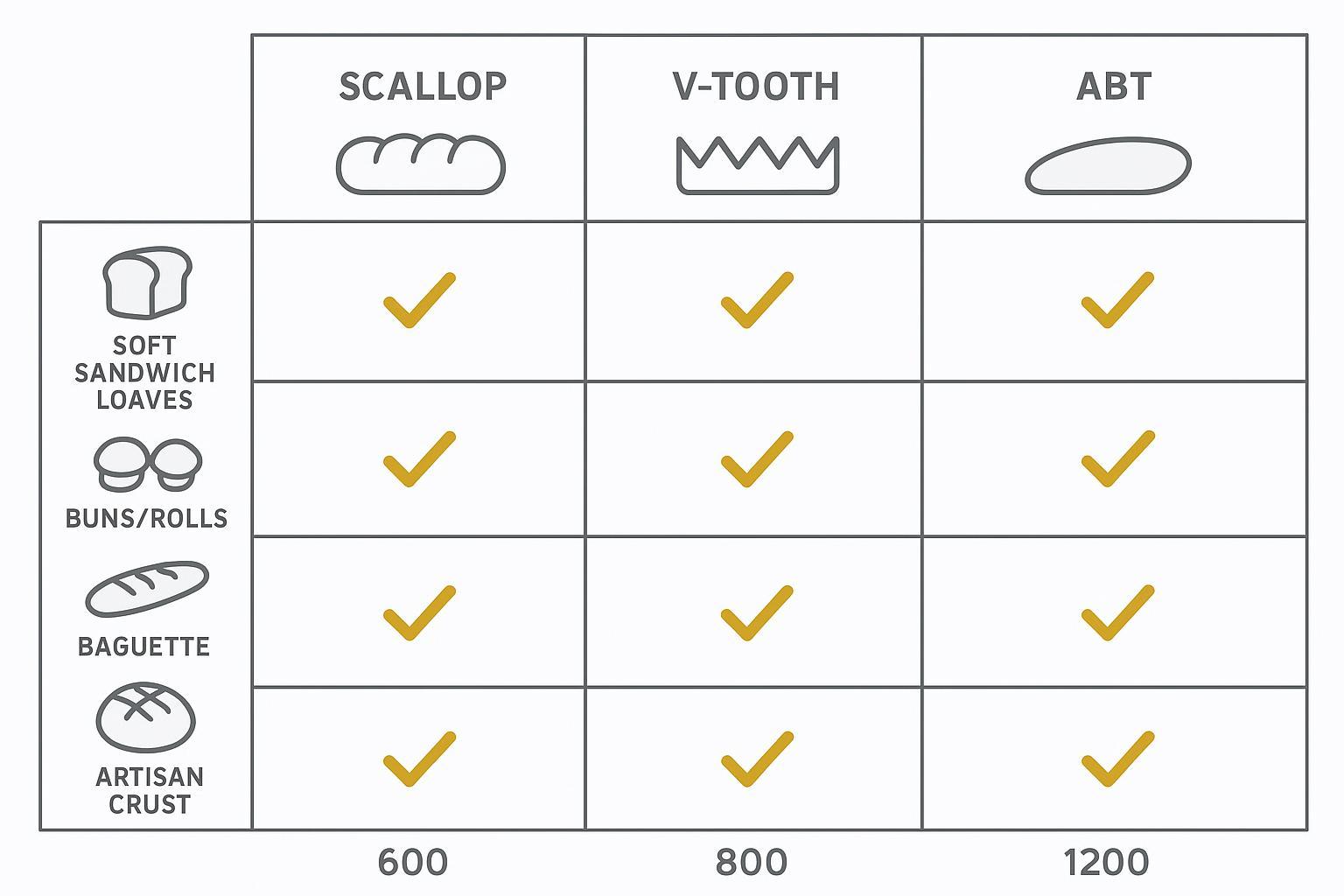
Baguette and artisan crusts: V-tooth vs ABT
크러스트(빵 껍질)가 딱딱한 제품은 문제의 양상이 다릅니다. 아래쪽의 빵속(크럼)을 부수지 않으면서 크러스트에 안정적으로 침투해야 합니다.
- V-tooth 치형 패턴이 크러스트 두께에 맞고 빵이 충분히 식었을 때 치형이 예측 가능하게 “물어주기” 때문에 우수한 성능을 발휘할 수 있습니다.
- ABT 크러스트 변동성이 높거나 내부 크럼의 기공이 크고 연약한 경우 등, 절단 동작이 찢어짐보다는 전단(shear) 방식으로 작용하기를 원할 때 유리한 경향이 있습니다.
바게트 슬라이스의 크러스트 아래쪽에 미세한 찢어짐이 보인다면 칼날이 빠져나오면서 섬유질을 잡아당기고 있다는 신호일 때가 많습니다. ABT의 교대 바벨(alternating bevel)은 전단 방식으로 빠져나오도록 특별히 설계되었습니다.
고수분/기공이 큰 크럼: ABT가 유리한 이유
수분 함량이 높고 기공이 큰 빵은 구조적 지지력이 약합니다. 칼날의 날끝은 크럼을 붕괴시키지 않고 분리해야 합니다.
ABT는 단일 방향의 “갈퀴질(rake)” 대신 좌우 전단 동작을 유도하는 교대 바벨 패턴 덕분에 종종 더 뛰어난 결과를 제공합니다.”
MAXTOR METAL는 Oliver/Berkel 슬라이서에 호환되는 밴드 또는 왕복식 날로 레트로핏할 수 있으며, 전체 슬라이서의 재설계 없이 가이드, 피치, 날 형상에 맞추어 도면, 샘플 또는 사진을 바탕으로 교체용 날을 제작합니다.
Implementation, TCO, and Testing

슬라이서, 가이드 및 장력 (Oliver/Berkel)
칼날 날형을 비교하고 있는데 슬라이스 두께 편차가 발생한다면 세팅부터 점검하십시오. BakingBusiness는 많은 슬라이싱 오류가 단지 칼날 때문이 아니라 기계적 요인과 제품 취급 방식에서 비롯된다고 강조합니다.
Oliver/Berkel급 슬라이서를 위한 실용적인 점검 항목:
- 기계의 수평과 기계적 안정성을 확인하십시오(진동은 두께 편차로 신속하게 나타납니다).
- 가이드 상태와 정렬을 점검하십시오. 마모된 가이드는 측면 유격과 마찰을 증가시킵니다.
- 전체 세트의 장력이 균일한지 확인하십시오. 장력 불균형은 불균일한 절단 동작을 유발합니다.
- 빵 투입이 중앙에 맞춰지고 일정한지 확인하십시오. 배압과 기울어짐은 찢어짐 현상을 악화시킵니다.
고속 작동 중 두께 편차 문제를 해결하려면 시스템의 기본 요소부터 시작하십시오. BakingBusiness에서는 불균일한 두께가 칼날만의 문제가 아닌 경우가 많다고 지적합니다.
연삭, 재질 및 위생 준수
산업용 제빵 공장에서 위생은 성능 변수입니다. 잔여물은 마찰을 증가시키고, 마찰은 찢어짐과 편차를 늘리며, 편차는 손실(폐기물)을 발생시킵니다.
운영 측면에서:
- 제품 특성에 맞는 세척 주기를 설정하십시오. 수분 함량이 높거나 뜨거운 상태에서 슬라이싱할 경우 일반적으로 더 자주 닦아주어야 합니다.
- 위생 관리 프로그램을 고려하여 재질/코팅을 선택하십시오. MAXTOR METAL의 개요 "식빵 슬라이서 날의 칼날 재질별 장단점" 은 스테인리스 스틸과 탄소강의 장단점을 비교 검토하기에 좋은 출발점입니다.
⚠️ 경고: 장력과 가이드를 재검증하지 않고 날 형상을 변경하면, 실제 문제는 세팅 민감도임에도 새 칼날의 성능이 더 낮다고 “결론지어” 버릴 수 있습니다.
라인 적용 A/B 테스트 및 ROI 산출
날 형상 결정은 측정되지 않을 때만 논란이 됩니다. 별도의 실험실 장비 없이 현장에서 바로 적용할 수 있는 테스트 계획을 소개합니다.
성공 지표 정의 (10개가 아닌 2~3개 선택):
- 크럼 손실률(슬라이싱 전/후 중량 대비 %)
- 슬라이스 두께 편차(예: 샘플링된 슬라이스의 표준편차)
- 불량률(찢어짐, 압착된 슬라이스, 자투리 슬라이스 불량)
- 비계획 정지(회/교대) 및 세척 다운타임(분/교대)
라인 A/B 테스트 실시:
- A = 현재 칼날 형상, B = 검토 대상 칼날 형상.
- 고정 조건: 빵 온도 범위, 컨베이어 속도, 가이드 설정, 목표 장력.
- 샘플링: 30분마다 10개의 슬라이스를 채취하여 두께 및 불량 기록.
ROI 전환 산출 (간단하게 유지):
- 크럼 감소로 인한 절감액 = (기존 크럼 % − 신규 크럼 %) × 전체 빵 중량 × 제품 단가.
- 다운타임 감소로 인한 절감액 = (기존 다운타임 − 신규 다운타임) × 인건비 + 생산 손실 가치.
- 비용 차액 = 칼날 비용 + 교체 비용 + 연삭/유지보수 비용 차액.
시간당 600~1200개의 빵을 처리할 때 새 칼날이 폐기물이나 정지 시간을 조금이라도 줄여준다는 점을 입증할 수 있다면, 대개 단가 논쟁보다 훨씬 유리해집니다.
데이터 기반 문제 해결 사례
작업 교대 시간 동안 라인에서 “원인을 알 수 없는” 두께 편차나 크럼 발생 증가가 보고될 때 잘못된 변수를 찾느라 시간을 허비하지 않는 가장 빠른 방법은 체계 단일 칼날 형상을 탓하기 전에 다음 사항을 점검하는 것입니다.
문제 (관찰 가능한 증상):
- 불균일한 두께(동일한 빵 내 또는 빵 간 두꺼움/얇음 혼재)
- 고속 생산 시 슬라이스 물결 현상
- 칼날 측면에 크럼 및 잔여물이 쌓이고 세척 직후 급격한 변화가 발생하는 현상
조치 사항 (순서대로 먼저 점검할 항목):
- 피치/날 유형이 해당 제품군에 적합한지 확인하십시오. Baking Business에 따르면 피치, 날 유형, 장력은 슬라이싱 성능을 결정하는 3가지 핵심 요소입니다. 예를 들어 일반적인 식빵은 약 1/2인치 피치에서 잘 잘리는 반면, 껍질이 딱딱하거나 밀도가 높은 빵은 고속에서 정밀성을 유지하기 위해 더 촘촘한 피치가 필요할 수 있습니다. 자세한 내용은 Baking Business의’ "The three core properties of bread slicing blades” (2019).
- 칼날을 교체하기 전에 장력과 가이드를 먼저 점검하십시오. Baking Business의 문제 해결 관련 기사에서는 동일한 빵에서 두껍거나 얇은 슬라이스 편차가 나타나는 원인이 ’원인 불명의 마모“보다는 장력 조절이나 가이드/래티스 문제인 경우가 많음을 강조합니다. 참조: "Pyler의 제언: 슬라이싱 문제 해결방법”(2019).
- OEM 절차(예: Berkel MB)에 따라 가이드 정렬 상태를 검증하십시오. Berkel MB 서비스 매뉴얼에는 게이지 플레이트와 칼날의 수평을 맞추고 접촉점을 확인하는 조정 방법이 기술되어 있습니다. 이는 측면 변위나 마찰이 칼날 문제처럼 오인되는 것을 방지하는 정렬 점검의 대표적인 예입니다. 다음 참조: Berkel Equipment의 Model MB 식빵 슬라이서 서비스 매뉴얼 (PDF).
결과 (근본 원인이 시스템 관련 문제였을 때 나타나는 현상):
- 날 형상(geometry)을 변경하지 않고도 두께 편차가 안정화됨
- 가동 기간 동안 잔여물 제어가 개선됨에 따라 빵가루(Crumb) 발생량이 더욱 일정해짐
- 장비에서 발생하는 노이즈를 제거하여 A/B 테스트의 신뢰성이 향상됨
해당 점검 항목들이 정상임이 확인되면, 그 후 스캘럽(Scallop), V-투스(V-tooth), ABT 간의 변경이 단순 셋업 민감도 테스트가 아닌 진정한 형상 성능 비교가 됩니다.
결론
- 스캘럽 vs V-투스 vs ABT 핵심 요약
- 다음 단계: 매트릭스 실행, 장력 설정, 데이터를 통한 검증
핵심 요약
- Scallop 부드러운 제품 및 약간의 빵 변형에도 안정적이고 저항이 적은 절단이 필요할 때 최적의 기본 옵션입니다.
- V-tooth TPI와 셋업이 제대로 일치할 경우 매우 깔끔한 슬라이스를 제공하지만, 잔여물, 진동 또는 빵 상태 변화에 상대적으로 민감합니다.
- ABT 교차 베벨 구조가 빵을 당기기보다 전단하는 작용을 하므로, 아티장, 크러스티, 특히 고수분/오픈 크럼 제품에서 최상의 성능을 발휘하는 경우가 많습니다.
Next steps
- 위의 매트릭스를 활용하여 각 SKU 및 속도 구간별 후보 형상을 선택하십시오.
- 새 칼날의 성능을 평가하기 전에 가이드와 장력을 다시 검증하십시오.
- 2교대 A/B 테스트를 진행한 후 빵가루 발생량, 두께, 다운타임 데이터를 바탕으로 결정하십시오.
빠른 호환성 점검을 원하시면 다음으로 시작하십시오: MAXTOR METAL 식빵 슬라이서 칼날 사용 중인 슬라이서 모델(Oliver/Berkel), 목표 슬라이스 두께, 빵 종류 및 라인 속도 범위를 공유해 주십시오.
Article notes and review
작성자: MAXTOR METAL 엔지니어링 팀
검토자: Tommy Tang, 수석 영업 엔지니어, Nanjing METAL Industrial (경력 12년; CSE, CME, Six Sigma Green Belt, PMP)
관계 사항: MAXTOR METAL는 Nanjing Metal Industry Company의 브랜드명입니다.
참고문헌
- 베이킹 비즈니스 (2019-09-23), "빵 슬라이싱 칼날의 3가지 핵심 특성".
- 베이킹 비즈니스 (2019-10-21), "빵 슬라이싱 오류 해결하기".
- 베이킹 비즈니스 (2019-01-28), "Pyler의 제언: 슬라이싱 문제 해결방법”.
- 베르켈 장비, Model MB 식빵 슬라이서 소유자/작업자 매뉴얼 (PDF).
- 베르켈 장비, Model MB 식빵 슬라이서 서비스 매뉴얼 (PDF).
- 심컷 (시몬스) (2025-07-24), "산업용 제빵을 위한 Simmons의 빵 슬라이싱 칼날".
- MAXTOR METAL, "빵 절단 칼날: 산업용 공장 비교 분석”.
- MAXTOR METAL, “빵 슬라이서 기계 칼날 재질의 장단점”.

 English
 Spanish
 Italian
 French
 Portuguese
 Russian
 German
 Arabic
 Hindi
 Vietnamese
 Indonesian
 Japanese
 Korean