

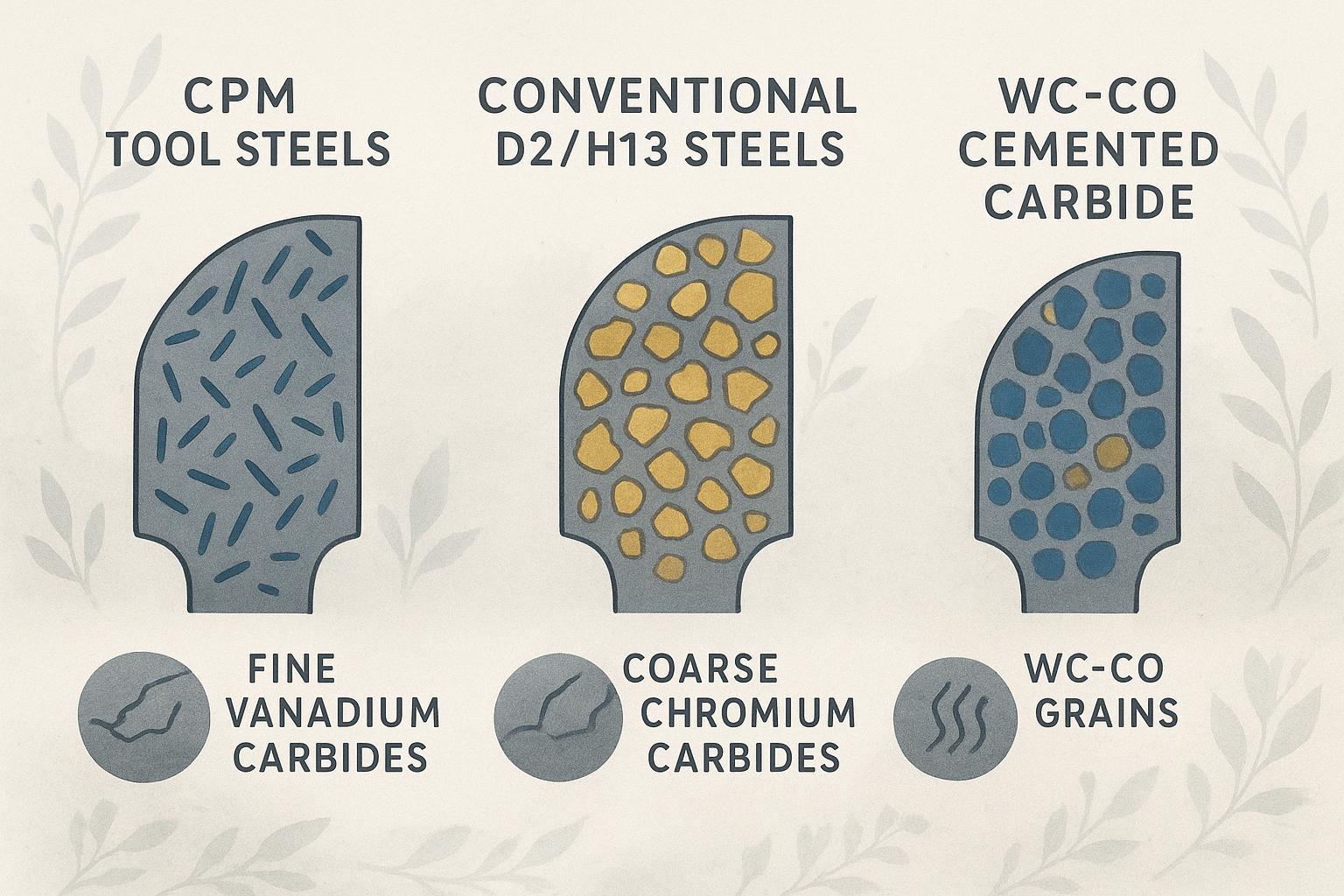
Quá trình tạo hạt nhựa tải cao làm tổn hại lưỡi cắt do phụ gia mài mòn, va đập gián đoạn và nhiệt độ. Không có giải pháp tối ưu cho mọi trường hợp. Nếu sứt mẻ lưỡi dao là dạng hư hỏng chính, thép công cụ CPM thường vượt trội hơn thép D2 truyền thống và hợp kim cứng có hàm lượng chất kết dính thấp. Nếu mài mòn cơ học thuần túy chiếm ưu thế dưới tải trọng ổn định, hợp kim cứng có thể mang lại tuổi thọ dài nhất và số lần mài lại nhiều nhất. Khi xuất hiện tích nhiệt và mềm do nhiệt, thép CPM M4 hoặc thép làm việc nóng kết hợp với lớp phủ chịu nhiệt sẽ tạo ra sự khác biệt rõ rệt.
Những điểm chính cần ghi nhớ
- Dạng hư hỏng chính cần khắc phục trong quá trình tạo hạt nhựa tải cao là sứt mẻ lưỡi dao/rạn nứt vi mô; hãy chọn vật liệu và quy trình nhiệt luyện giúp tăng độ bền dẻo ở độ cứng làm việc.
- Dao tạo hạt nhựa CPM cân bằng giữa khả năng chống mài mòn và độ bền dẻo nhờ các hạt carbide vanadi mịn, phân bố đều; CPM 9V thường dẫn đầu về khả năng chống sứt mẻ trong số các loại thép, trong khi CPM 10V đẩy khả năng chống mài mòn lên cao hơn.
- D2/SKD11 mang lại khả năng chống mài mòn tốt nhưng chứa các hạt carbide crom thô hơn, làm tăng nguy cơ sứt mẻ khi chịu va đập hoặc lệch trục.
- Hợp kim cứng (WC–Co K10–K20) đạt ưu thế tuyệt đối về khả năng chống mài mòn và độ ổn định kích thước dưới tải trọng ổn định, nhưng nguy cơ sứt mẻ tăng lên khi hàm lượng chất kết dính Co giảm.
- Đối với hiện tượng tích nhiệt và mềm do nhiệt, thép CPM M4 phủ TiAlN và thép làm việc nóng H13/SKD61 giữ độ cứng ở nhiệt độ cao tốt hơn các mác thép làm việc nguội.
- Các lớp phủ như TiCN (chống mài mòn) và TiAlN (chịu nhiệt) có thể kéo dài tuổi thọ công cụ; hãy kết hợp chúng phù hợp với vật liệu nền và dạng hư hỏng.
So sánh trực tiếp (mang tính tham khảo — vui lòng xem bảng thông số kỹ thuật để biết giá trị chính xác)
| Kịch bản ứng dụng phù hợp nhất | Nhóm vật liệu & mác thép tiêu biểu | Đặc điểm vi cấu trúc nổi bật | Khoảng độ cứng điển hình | Khả năng chống sứt mẻ lưỡi dao | Khả năng chống mài mòn | Độ cứng nóng / Khả năng chống ram | Khả năng chống biến dạng dẻo | Chu kỳ mài lại & độ ổn định | Độ tương thích của lớp phủ/xử lý bề mặt | Ghi chú về hiệu quả kinh tế trong vòng đời | Khả năng cung ứng / Thời gian giao hàng | Đánh giá nhanh (tạo hạt nhựa tải cao) |
|---|---|---|---|---|---|---|---|---|---|---|---|---|
| Môi trường mài mòn cao — tải trọng ổn định | Hợp kim cứng WC–Co (K10–K20) | Hạt WC trong chất kết dính Co; kích thước hạt và Co% điều chỉnh độ bền dẻo | HRA ~93–94.5 (tùy thuộc vào mác thép) | Trung bình đến thấp (cải thiện khi tăng hàm lượng Co) | Rất cao | Xuất sắc (hợp kim cứng duy trì độ cứng ở nhiệt độ cao) | Cao dưới tải trọng ổn định; giòn khi chịu va đập | Thường hỗ trợ nhiều lần mài lại; dung sai chặt chẽ | TiN/TiCN; tránh CVD nhiệt độ cao trong một số trường hợp | Chi phí đầu tư ban đầu cao; tuổi thọ dài khi va đập ở mức tối thiểu | Thời gian giao hàng trung bình | 8/10 |
| Va đập cao/nguy cơ sứt mẻ do lệch trục | Thép công cụ CPM (CPM 9V, CPM 10V) | Hạt carbide VC mịn; nền PM đồng nhất | ~HRC 55 đến 62–64 (10V ở mức cao) | Cao (9V > 10V) | Cao (10V vượt trội) | Khả năng chống ram tốt (PM) | Tốt; giảm gãy giòn so với D2 | Khả năng mài tốt; ổn định qua các lần mài lại | TiCN cho môi trường mài mòn; TiAlN nếu ở nhiệt độ cao | Mid cost; strong uptime where chipping dominates | Thời gian giao hàng trung bình | 9/10 |
| Elevated temperature / thermal softening | CPM M4 (HSS) and H13/SKD61 | Carbide profile supports hot hardness; H13 tuned for hot work | HRC ~58–62 (M4); H13 lower room‑temp wear | Medium‑high (M4) / High (H13 toughness) | Medium‑high (M4) / Medium (H13) | Very good (M4, H13) | High; edges resist rolling at temp | Good stability; H13 robust to thermal cycles | TiAlN (heat); nitriding for fatigue | Mid cost; reduced heat‑related downtime | Short to medium lead time | 7/10 |
| Budget/availability with coatings | D2/SKD11 (cold‑work) | Coarse M7C3 chromium carbides; banding risk in ingot steel | HRC ~60–62 | Low‑medium; chipping risk under impact | Cao | Vừa phải | Moderate; edge can chip rather than roll | Acceptable; watch for grinding microcracks | TiCN for abrasives; chrome for corrosion | Low cost; may need more frequent regrinds | Short lead time | 6/10 |
Footnote: Values are indicative and scenario‑weighted. For exact heat‑treat windows and property curves, consult manufacturer datasheets.
Dao tạo hạt nhựa CPM — tại sao carbide vanadi và vi cấu trúc PM lại quan trọng
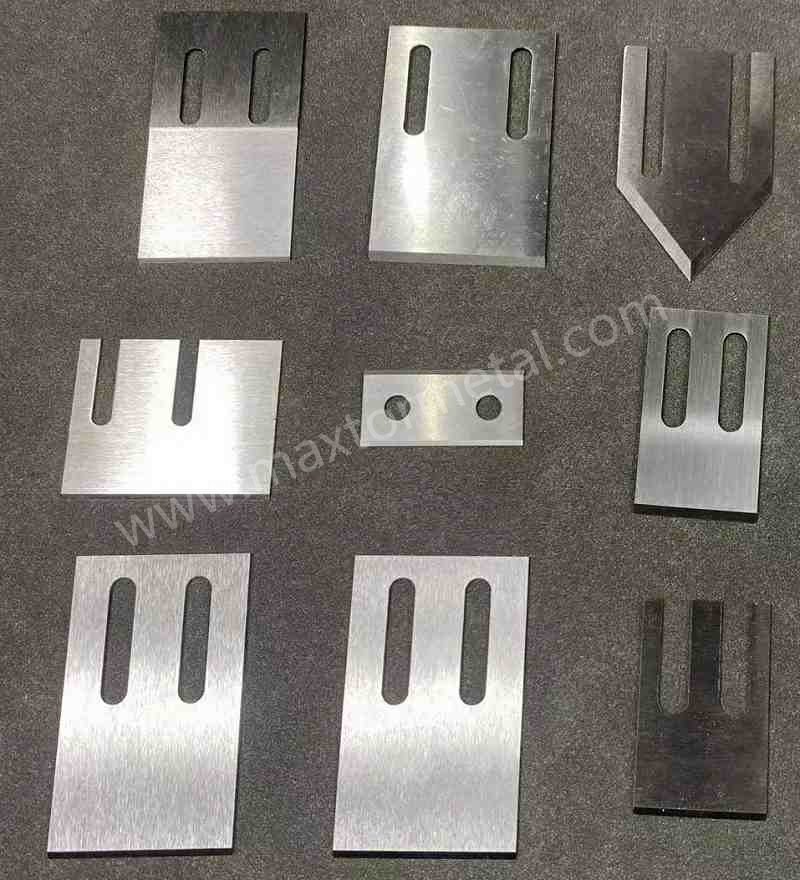
CPM grades are made via powder metallurgy, which produces a fine, uniform dispersion of carbides in a consistent matrix. That uniformity is the foundation of their toughness at a given hardness and the reason CPM pelletizer blades often resist edge chipping better than ingot steels with coarse carbides. In CPM 10V (AISI A11), high vanadium content forms hard VC carbides that deliver exceptional abrasive wear while maintaining better toughness than conventional D2. Crucible’s datasheet (via LookPolymers, 2024‑04‑17) highlights CPM 10V’s high wear resistance and typical working hardness up to around HRC 62–64 depending on heat treat; it also notes improved grindability and dimensional stability compared to conventional tool steels. See the Crucible overview in the CPM 10V datasheet mirror (2024).
By contrast, D2/SKD11’s chromium carbides (M7C3) tend to be larger and less uniformly distributed in conventional ingot‑cast products. Those coarse carbides act as stress raisers at the edge, increasing microcrack initiation and chipping risk under high load or misalignment. Uddeholm’s technical literature rates D2 lower in edge chipping resistance relative to tougher PM grades; start with their concise AISI D2 product page (2024).
Dao tạo hạt nhựa CPM 10V so với D2 — sự đánh đổi giữa sứt mẻ lưỡi dao và khả năng chống mài mòn
Here’s the deal: if your dominant failure is edge chipping from intermittent impacts, CPM’s finer carbides help the edge survive longer. CPM 9V generally trades a bit of wear for higher toughness versus CPM 10V, making it a strong pick where impact is real. CPM 10V, with its higher VC fraction, pushes abrasive wear resistance further and can be run at higher working hardness — often cited up to the low‑mid 60s HRC — for glass/mineral‑filled polymers.
D2 brings respectable wear at similar hardness, but those coarse M7C3 carbides make chipping more likely when contact is imperfect or loads spike. In steady contact with lower impact, coated D2 (e.g., TiCN for abrasives) can be cost‑effective, but watch for edge microcracking after regrinds.
Anonymized field case (example): In a three‑month, continuous strand trial on 30% glass‑filled PP (≈500 kg/h throughput), an anonymized compounder ran CPM 10V blanks hardened to ~62 HRC against conventional D2 at ~60 HRC. CPM blades reached first regrind at ~420 operating hours (three regrinds during the trial) with a reported scrap rate of ~0.4%; D2 reached first regrind at ~160 hours (two regrinds) with ~2.3% scrap from edge chipping. Trial conditions: steady abrasive load with occasional misfeeds.
For a practical overview of pelletizer knife selection, see this pelletizer blades guide.
Khi nào hợp kim cứng (WC–Co) vượt trội hơn thép — tải trọng ổn định và nhiều lần mài lại
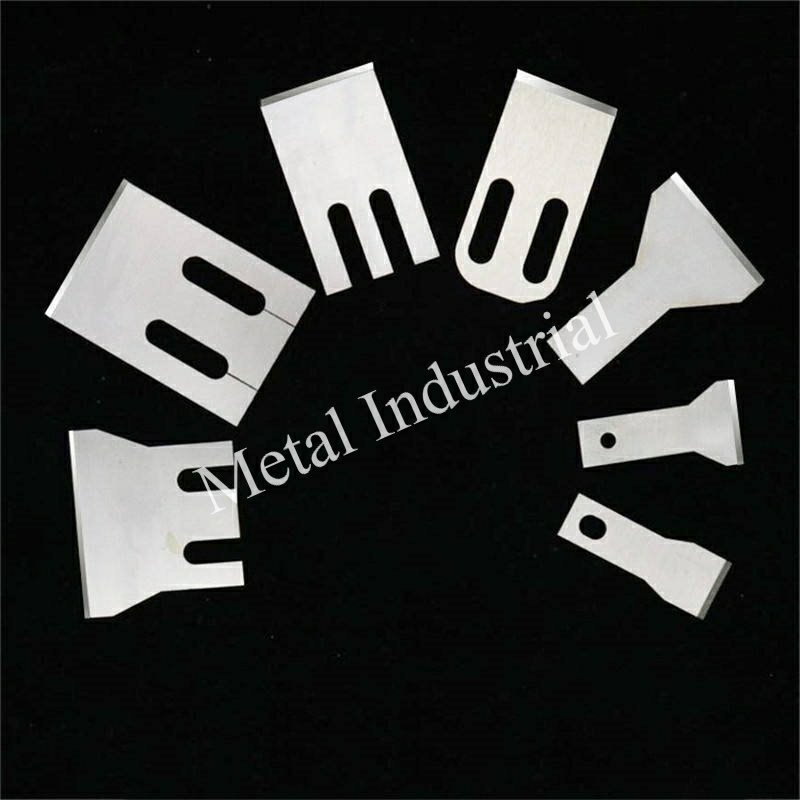
Cemented carbide (WC–Co, K10–K20) offers the highest abrasive wear resistance and holds dimensions through multiple regrinds. If your line runs steady contact on very abrasive, glass‑filled feedstocks with minimal impact, carbide typically lowers total cost over time despite higher upfront price. The catch: edge chipping risk rises as binder content drops and grains get finer. That’s why K20‑ish, higher‑Co grades are often chosen when some impact is unavoidable.
Vendor datasheets quantify hardness (HRA) and transverse rupture strength (TRS) across grades; select by abrasiveness, impact level, and regrind plan.
Khoảng nhiệt luyện và lớp phủ — giữ lưỡi dao sắc bén ở nhiệt độ cao
Heat matters. CPM M4 (a high‑speed steel) maintains strength at elevated temperatures better than cold‑work grades, making it valuable when thermal softening contributes to dulling. Hot‑work H13/SKD61 is engineered for temper resistance and hot toughness, though it won’t match CPM 10V’s room‑temperature abrasive wear. For H13 behavior and hot hardness context, Böhler’s W302 ISOBLOC page (2024) provides useful notes.
Pair substrates with coatings based on the failure mode:
- TiCN (often via CVD stacks) for abrasive, filled polymers; Ionbond reports microhardness around HV ~2800 and friction vs steel ~0.3 for its TiN‑TiCN‑TiN stack, as noted on Ionbond CVD 10 (2024).
- TiAlN for heat; aluminum‑rich nitride coatings form protective Al2O3‑like layers that help at higher temperatures.
- Chromium plating and nitriding can add corrosion and fatigue resistance for underwater or acidic environments; match process limits to your substrate and geometry.
Example heat‑treat windows (shop trial guidance):
- CPM 10V (A11): austenitize ≈2050°F (1120°C), hold 30–45 min; triple temper ≈1025°F (550°C) ×2h each; target HRC ~60–62. See Crucible CPM 10V datasheet (2024).
- CPM 9V: use similar austenitize range but temper slightly higher to favor toughness (aim mid‑50s HRC).
- CPM M4: follow HSS schedules (higher austenitize, lower multiple tempers) to retain hot hardness (upper‑50s HRC).
These are example windows—adjust per batch, geometry, and trialed cryo steps; verify with supplier datasheets and shop trials.
If you operate underwater pelletizing systems or corrosive die‑face lines, this underwater pelletizer blades guide offers practical context.
Sơ đồ cây quyết định dựa trên hiện tượng hư hỏng
- Edge chipping/microcracks dominate → CPM 9V (or CPM 10V at slightly lower hardness); use tough heat‑treat windows and consider TiCN if abrasives are high.
- Pure abrasive wear under steady contact → WC–Co carbide (K10–K20) tuned for Co%; plan for many regrinds and tight tolerances.
- Thermal softening contributes to dulling → CPM M4 + TiAlN; if very hot cycles, consider H13/SKD61 with nitriding.
- Corrosion pitting precedes chipping (underwater, acidic additives) → CPM or stainless‑lean PM variant with chromium plating; add nitriding for fatigue resistance.
- Budget/availability priority → D2/SKD11 with TiCN or chromium; accept shorter life and monitor chipping.
Hiệu quả kinh tế trong vòng đời — thông số đầu vào cho ví dụ thực tế
A simple total‑cost‑of‑ownership model can clarify trade‑offs:
- Blade cost (steel or carbide), expected runtime hours to first regrind, regrind cost, downtime per regrind, and scrap rate from chipping.
- Example: If carbide doubles runtime and supports two extra regrinds vs CPM 10V, but chipping causes a 2% scrap rate on intermittent impact, CPM may win overall despite shorter regrind intervals. Conversely, in steady load with negligible scrap, carbide’s longer life and fewer changeovers lower cost per kilogram.
To plan changeovers and maintenance, see this replacement/maintenance guide.
FAQ
Which blade material is best for glass‑filled pelletizing?
If contact is steady and impact is minimal, WC–Co carbide typically delivers the longest life and most regrinds. If intermittent impact or misalignment occurs, CPM 9V or CPM 10V at appropriate hardness provides better edge chipping resistance.
CPM 10V vs D2: which resists edge chipping better for pelletizer blades?
CPM 10V (AISI A11) benefits from a PM microstructure with fine VC carbides, improving toughness at a given hardness compared with conventional D2’s coarse M7C3 carbides. As a result, CPM grades typically resist chipping better in high‑load, abrasive duty. See Crucible’s CPM 10V datasheet mirror (2024).
When should I use cemented carbide instead of CPM for pelletizer knives?
Choose carbide when abrasive wear is the primary limiter and impact is low. Carbide’s hardness and dimensional stability support more regrinds and longer intervals. Increase Co% if slight impact is expected to reduce chipping risk.
How many regrinds can I expect from CPM vs WC–Co?
It’s application‑dependent. Carbide often supports more regrinds with tight tolerances in steady‑load duty. CPM steels grind well and hold geometry, but the exact count depends on blade geometry, process stability, and regrind practice.
Does TiCN coating extend pelletizer blade life for abrasive, filled polymers?
Yes, TiCN stacks are engineered for abrasive cutting and forming; vendors cite high microhardness and low friction that reduce wear. Actual life extension varies by substrate, coating process, and application; consult your coating supplier and run trials.
Tài liệu tham khảo và bảng thông số kỹ thuật
- CPM 10V (AISI A11) overview and heat‑treat notes: Crucible CPM 10V datasheet mirror (2024)
- Extended reading: Comprehensive pelletizer blades guide; Underwater pelletizer blades guide; Carbiding & coatings explainer
More OEM and standards references (updated 2026‑01)
- Crucible Industries: CPM 9V datasheet — heat‑treat ranges, hardness/toughness notes, and vanadium carbide content (datasheet PDF).
- Crucible Industries: CPM M4 datasheet — hot‑hardness behavior and temper resistance guidance for elevated‑temperature duty (datasheet PDF).
- ASTM International: ASTM G65‑16(2021) dry sand/rubber wheel abrasion test — widely cited comparative wear method for steels and WC–Co (designation and scope page).
- Oerlikon Balzers: BALINIT TiAlN coating overview — high‑temperature Al‑rich nitride coating family commonly applied to cutting/forming tools.
- Sandvik Coromant: ISO K10–K20 carbide application guidance — cemented carbide fundamentals and ISO K family usage context for grade selection.
Cần xem xét thêm yếu tố triển khai (trung tính)
Lưu ý: Nanjing METAL là sản phẩm của chúng tôi.
For teams ready to trial CPM pelletizer blades against D2 or to evaluate carbide in steady‑load abrasive duty, working with a supplier that can match heat‑treat windows, verify hardness/tempering, and coordinate coatings will speed up results. Nanjing METAL manufactures custom CPM 10V/9V/M4, D2/H13, and carbide blades and can support ODM/OEM drawings, heat‑treat specs, and one‑stop import. The company’s role here is practical: aligning material choice, heat treatment, and coating with your dominant failure mode and regrind plan. See this overview of pelletizer blades để biết thêm ngữ cảnh.

 English
 Spanish
 Italian
 French
 Portuguese
 Russian
 German
 Arabic
 Hindi
 Vietnamese
 Indonesian
 Japanese
 Korean