


تبدو سكاكين التقطيع الطولي الدائرية بندًا صغيرًا في قائمة التكاليف حتى تقوم بنمذجة ما تؤثر عليه: عمليات تغيير الأدوات، والنفايات (الخردة)، وإعادة العمل بسبب الرايش، وما إذا كان خط الإنتاج لديك قادرًا على الحفاظ على التجاوز المسموح به عبر اللفافة بأكملها.
This guide is written for process, equipment, production, and purchasing leaders at coil slitting operations who need a defensible way to compare options, especially when a higher-priced knife set claims longer life. It’s also the kind of ROI conversation many teams have with suppliers like Maxtor Metal when they move into tighter edge specs, higher-strength grades, or higher line speeds.
If your operation uses roller shear equipment alongside rotary slitting, material selection logic, clearance engineering, and the failure mode diagnostics that directly affect knife ROI are covered in Maxtor Metal’s دليل هندسة سكاكين الشق الدائرية وشفرات القص الأسطوانية.
- Purpose: a data-driven procurement guide to model total cost of ownership and rotary slitter knife ROI.
- Audience: process, equipment, production, and purchasing leaders at coil slitting operations.
- Outcomes: a practical ROI model, material/coating selection logic, and procurement/QA checklist.
إطار التكلفة الإجمالية للملكية (TCO) للعائد على استثمار سكاكين التقطيع الطولي الدائرية
Variables and assumptions
A knife ROI model only works if your variables match how your plant actually consumes knives. Keep the inputs simple at first and make the assumptions explicit.
Production and quality variables
- معدل الإنتاج: tons per hour, and planned tons per year per line.
- Edge requirement: target burr height (often tracked as a percentage of thickness in coil processing specs).
- Scrap and rework: scrap rate tied to edge condition (startup scrap, downstream deburr/edge conditioning, customer rejects).
Knife consumption variables
- Edge life: tons per grind (or hours per grind), by material grade and coil mix.
- عدد عمليات إعادة الطحن: number of safe regrinds before minimum diameter/thickness, or before edge geometry becomes unstable.
- Regrind cost: per knife, per set, or per lot.
- Knife failure mode: wear-out vs micro-chipping. (Chipping breaks models because life becomes non-linear.)
Setup and downtime variables
- وقت التغيير: minutes per knife swap, including setup verification.
- Downtime cost: use either contribution margin per hour or an agreed internal “lost production” cost per hour.
أهم النقاط الرئيسية: A higher-priced knife only needs to win on one of four levers—edge life, regrinds, downtime, or scrap—to beat a cheaper baseline.
Cost-per-ton formula
Use a cost-per-ton structure so every stakeholder can compare apples to apples.
Let:
- P = purchase cost per knife set (or per pair) deployed on one line (USD/set or your local currency)
- G = regrind cost per cycle (USD/cycle on the same basis as P)
- N = total usable grind cycles (count; initial edge + regrinds)
- ل = tons per cycle (tons/grind cycle)
- D = downtime minutes per changeover (min/changeover)
- C_d = downtime cost per hour (USD/hour)
- س = scrap/rework cost per ton attributable to knife wear or burr drift (USD/ton; delta vs baseline)
ثم:
Knife cost per ton
- Tooling + regrinds:Knife cost/ton = (P + (N-1) × G) / (N × L)
- Downtime per ton:Downtime cost/ton = (D/60) × C_d × (1/L)
- Scrap/rework delta per ton:Quality cost/ton = S
Total cost per ton
TCO/طن = تكلفة السكاكين/طن + تكلفة وقت التوقف/طن + تكلفة الجودة/طن
التفسير البسيط لعائد الاستثمار (ROI)
لتجنب تحول عائد الاستثمار إلى تقدير شخصي، قم بحساب الإنفاق الإضافي على الأدوات لكل طن ومقارنته بـ وفورات TCO لكل طن.
- الإنفاق الإضافي على الأدوات لكل طن:
Δالإنفاق على الأدوات/طن = (P_option + (N_option-1) × G_option) / (N_option × L_option) – (P_base + (N_base-1) × G_base) / (N_base × L_base)
- وفورات TCO لكل طن:
Δإجمالي تكلفة الملكية/طن = TCO/ton_base – TCO/ton_option
ثم:
نسبة عائد الاستثمار ROI = (ΔTCO/ton) / (ΔTool spend/ton)
إذا كنت تبحث عن مرجع قياسي يوضح كيفية تحديد المواصفات الفنية للمواد والصلادة والتحقق منها، ابدأ بـ ISO 4957:2018 لصلب الأدوات واختبار الصلادة وفق مقياس روكويل عبر ASTM E18.
مثال تطبيقي (الأرقام للتوضيح فقط)
افترض أن أحد الخطوط يستخدم طقم سكاكين بالخصائص التالية:
- P = $2,400/طقم
- G = $220/دورة
- N = 6 دورات
- ل = 800 طن/دورة
- D = 50 دقيقة/عملية تبديل
- C_d = $900/ساعة
- س = $0.35/طن
- تكلفة الأدوات + إعادة التجليخ لكل طن:
تكلفة السكاكين/طن = (2400 + (6-1) × 220) / (6 × 800) = 3500/4800 = 0.729 USD/ton
- تكلفة وقت التوقف لكل طن:
تكلفة وقت التوقف/طن = (50/60) × 900 × (1/800) = 0.938 USD/ton
- تكلفة الجودة لكل طن:
تكلفة الجودة/طن = S = 0.35 USD/ton
الإجمالي:
TCO/طن = 0.729 + 0.938 + 0.35 = 2.017 USD/ton
يمكنك الآن تكرار العملية الحسابية نفسها لطقم سكاكين بديل ومقارنة TCO/طن مباشرة، ثم حساب عائد الاستثمار (ROI) باستخدام وفورات TCO لكل طن مقسوماً على الإنفاق الإضافي على الأدوات لكل طن.
خطة جمع البيانات
يعتمد نموذج عائد الاستثمار الجيد بشكل أساسي على خطة قياس. إذا قمت بأمر واحد فقط، فتوقف عن الاعتماد على مقولة “نعتقد أنها تدوم لنحو X لفافة”.”
البيانات الواجب تسجيلها لكل طقم سكاكين
- مزيج اللفائف: درجة الخامة، نطاق السمك، حالة الطلاء، متوسط العرض وعدد الشرائح
- سرعة الخط ونمط الشد
- الأطنان المنتجة حتى أول انحراف للرايش، والأطنان المنتجة حتى الت
- عدد مرات إعادة التجليخ والمادة المزالة في كل تجليخة
- قراءات الإعداد: الخلوص/التداخل المستهدف، والتحقق من حزمة الفواصل، وفحوصات الانحراف (للحصول على نموذج تسجيل منظم يغطي فئة التوافق حسب ISO، وقراءات TIR، ونتائج الفحص الأزرق، انظر نموذج تدقيق توافق عمود الدوران وانحرافه
- نتائج الجودة: اتجاه ارتفاع الرايش، وانحراف العرض، وتموج الحافة، والمرفوضات
كيفية قياس الرايش وحالة الحافة
- بالنسبة لمفاهيم المراقبة المباشرة أثناء الإنتاج، تعرض شركة Micro-Epsilon أساليب نموذجية في قياس الرايش في خطوط التقطيع الطولي.
- بالنسبة لتحديد ارتفاع الرايش وإطار الفحص الوارد في عمليات القص: استخدم وثائق الإعداد الخاصة بالشركة المصنعة للآلة ومعايير قبول الرايش المحددة في خطة التحكم الداخلية أو مواصفات العميل.
- بالنسبة للهندسة العملية للإعداد وفحوصات الانحراف، استخدم أوراق إعداد الشركة المصنعة للآلة وروتين فحص قابل للتكرار: تحقق من انحراف عمود الدوران وتوازيه، وتأكد من سمك حزمة الفواصل، واضبط الخلوص/التداخل بطريقة محددة، وتحقق من ارتفاع الرايش على لفة تحقق قصيرة قبل البدء بالتشغيل الكامل.
اقتصاديات الأداء: PM-HSS ضد فولاذ العدة
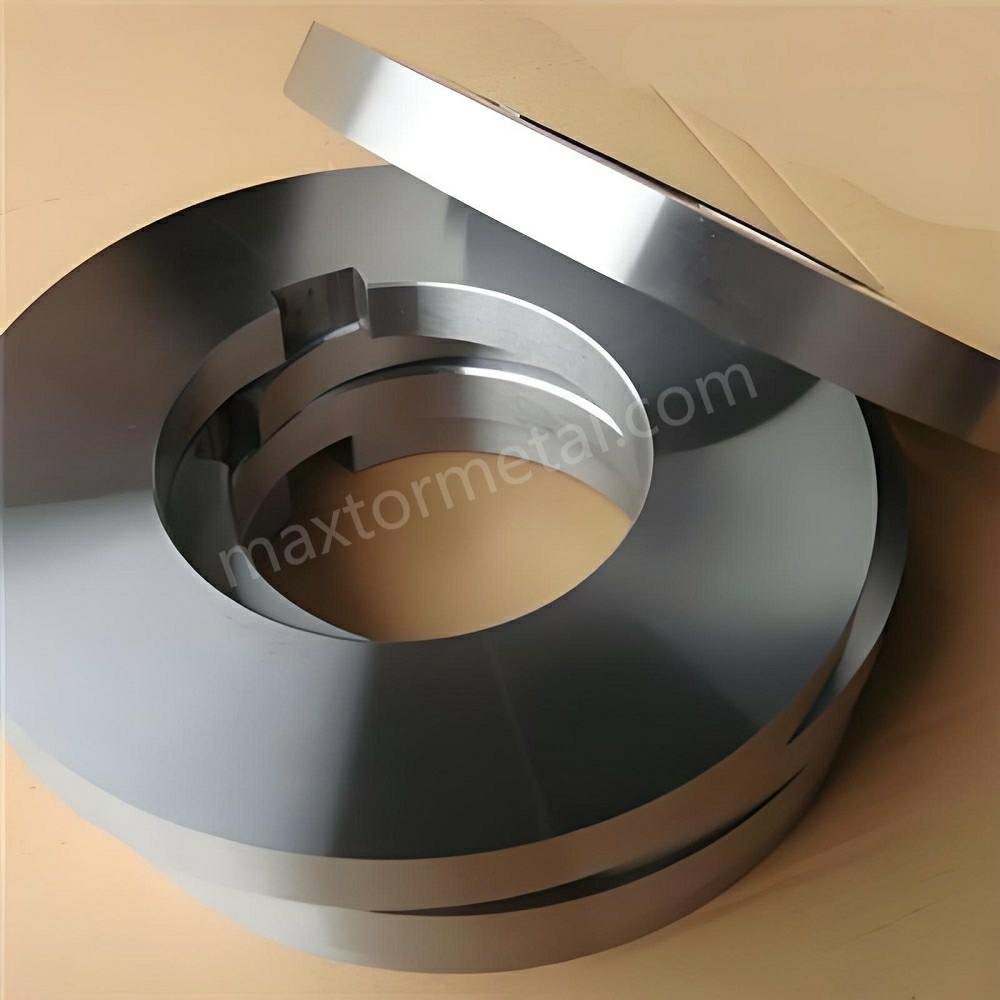
علم الميتالورجيا والخواص الميكانيكية
بالنسبة لعمليات الشراء، فإن النقطة الأساسية ليست “أي نوع من الصلب هو الأفضل”، بل أي نوع من الصلب يحتفظ بحدته القاطعة تحت آلية التآكل لديك دون التضحية بالصلابة بدرجة كبيرة.
صلب الأدوات المستخدم لسكاكين التقطيع الطولي الدائرية (أمثلة شائعة: نوع D2، نوع DC53، وأنواع صلب الأدوات للتشغيل على البارد الأخرى) يتم اختيارها عادةً لتحقيق التوازن بين مقاومة التآكل والصلابة. ويمكن أن تكون اقتصادية عندما تكون طريقة التلف عبارة عن تآكل تدريجي وعندما يكون نطاق الضبط لديك مستقرًا.
PM-HSS (صلب السرعات العالية المصنع بميتالورجيا المساحيق) يتم اختياره عندما تكون مقاومة التآكل والصلادة على الساخن أكثر أهمية — كسرعات أعلى، ودرجات صلب أكثر صلابة، ودرجات حرارة أعلى عند حد القطع، وبيئات قد يؤدي فيها التوزيع التقليدي للكربيد إلى تآكل غير منتظم. وتغطي مواصفات ISO صلب الأدوات المنتج بميتالورجيا المساحيق صراحةً في ISO 4957:2018.
الصلادة وحدها ليست كافية، ولكنها اختبار يمكنك التدقيق فيه. استخدم طرق Rockwell C وفقًا لـ ASTM E18 للتحقق من أن السكاكين الموردة تقع ضمن النطاق المطلوب ومتطابقة من دفعة إلى أخرى.
عمر حد القطع ودورات إعادة التجليخ
من منظور عائد الاستثمار (ROI)، يثبت PM-HSS جدواه الاقتصادية في حالتين:
- يزيد من عدد الأطنان المقطوعة لكل عملية تجليخ دون زيادة في انحراف الرايش (Burr).
- يزيد من عدد عمليات إعادة التجليخ المتوقعة قبل أن يصبح الشكل الهندسي أو الحجم هو العامل المحدد.
إن ما يكسر نماذج عائد الاستثمار هو التثلم الدقيق (micro-chipping) أو تآكل حد القطع غير المستقر. إذا تعرضت السكين “الأفضل” للتثلم مبكرًا، يصبح متوسط عمر حد القطع بلا معنى لأن عطلاً واحدًا قد يفرض توقف الخط، وإعادة التلقيم، وهدر المواد.
طريقة عملية لمقارنة الخيارات:
- Compare الأطنان لكل عملية تجليخ (الوسيط الحسابي، وليس مجرد المتوسط).
- Compare التباين (التباين الواسع مكلف لأنه يربك تخطيط الإنتاج).
- Compare الاتساق بين عمليات التجليخ المتتالية (هل ينخفض الأداء بشكل حاد بعد أول عملية إعادة تجليخ؟).
الطلاءات حسب خامة المعدن والسرعة
الطلاءات ليست ترقية شاملة لكل الحالات، بل هي أداة لإدارة الاحتكاك والتآكل. فالطلاء الذي يفيد في الصفائح الرقيقة الكاشطة قد يكون غير مناسب للتقطيع الطولي للسمكات الأكبر والتأثيرات الأعلى.
عندما يكون الالتصاق/التبشيم (galling) مصدر قلق (وهو أمر شائع في بعض درجات الإستانلس ستيل)، فمن المفيد تصنيفه بشكل صحيح: التبشيم هو شكل حاد من التآكل الالتصاقي الناتج عن التلامس بين معدن ومعدن والضغط وانهيار التزييت. وتلخص الجمعية البريطانية للفولاذ المقاوم للصدأ العوامل المساهمة العملية في "العوامل المؤثرة على التآكل والتبشيم” (BSSA).
منطق اختيار بسيط يمكنك استخدامه في مناقشات التوريد:
- عندما يتسبب الالتصاق والتبشيم في فقدان الجودة (وهو أمر شائع في بعض الأسطح المغطاة أو اللزجة)، أعطِ الأولوية للطلاءات منخفضة الاحتكاك واستراتيجية إنهاء السطح.
- عندما يسيطر التآكل الكاشط (الطلاءات الصلبة، الدرجات عالية المقاومة، الأسطح الملوثة)، أعطِ الأولوية لطلاءات PVD المقاومة للتآكل مع التحقق من سلامة حد القطع بعد الطلاء.
- عندما يسيطر خطر التثلم/التشظي (تغيرات الإعداد، الاهتزازات، السمكات الأكبر)، اعتبر الطلاء ثانوياً بالنسبة لصلابة الركيزة الأساسية وهندسة حد القطع.
إذا كنت تريد أساس مواصفات لمشتريات خامة HSS، فافصل بين “صلب الأدوات” و“صلب السرعات العالية”: ففي إطار مواصفات ASTM، يتم تحديد HSS بموجب ASTM A600 بدلاً من ASTM A681.
الخلوص (Clearance)، والرايش (Burr)، وتراكم التجاوزات
آليات تكون الرايش (Burr) ونطاق التحكم
الرايش هو العرض المباشر، بينما الأسباب الجذرية تقريبًا ما تكون مزيجًا من الخلوص (clearance)، والتداخل (overlap)، والصلابة، والاستقرار الميكانيكي.
يمكنك استخدام قاعدتين عمليتين لتنظيم استكشاف الأخطاء وإصلاحها:
- إذا كان الرايش منتظمًا ويزداد تدريجيًا, ، فأنت ترجح التعامل مع تآكل وانحراف في الخلوص.
- إذا كان الرايش دوريًا أو متقطعًا, ، فاشتبه في التذبذب (runout)، أو تلف الفواصل (spacers)، أو مشاكل محاذاة الماكينة قبل تغيير قيم الخلوص.
للحصول على مصفوفة الأسباب الجذرية الكاملة عبر محركات الرايش الستة — الخلوص، والتداخل، وهندسة السكين، المحاذاة، التزييت، والشد — مع نطاقات الضبط حسب فئة المادة وبروتوكول الفحص خطوة بخطوة، راجع دليل الحد من الرايش في عملية الشق.
للحصول على الإطار الصناعي المعتمد حول كيفية تأثير هندسة الإعداد على جودة التقطيع وعمر السكين، فإن الأساس القوي هو استخدام وثائق المُصنّع الأصلي لآلة التقطيع (OEM) وأوراق الإعداد الداخلية، ثم توحيد طريقة التحقق من الخلوص/التداخل، وتذبذب عمود الدوران (arbor runout)، وحالة الفواصل قبل تعديل إعدادات العملية.
للحصول على مرجع عملي ومستقل حول أهمية التحكم في المحاذاة والهندسة في الأنظمة الدوارة، تشرح Fluke التفاوتات المسموح بها لمحاذاة المحاور وسبب تأثيرها على الموثوقية— وينطبق نفس المنطق عندما تتسبب محاذاة العمود وتذبذبه في تباين الرايش والتغييرات غير المتوقعة للسكاكين. للحصول على شرح كامل لكيفية تفاعل توازي أوجه الفواصل، وانضغاط الحلقات المطاطية، وجساءة التجميع للحفاظ على الخلوص تحت الأحمال الديناميكية — بما في ذلك دراسة حالة تحتوي على بيانات مقاسة للرايش وعمر السكين — راجع حلقات المباعدة الدقيقة للشق والحلقات المطاطية: صلابة مجموعة السكاكين، التحكم في الخلوص وTIR.
أهداف الدقة للسكاكين والفواصل
Your knife steel choice can’t overcome a loose tolerance stack.
Targets that commonly matter in procurement and incoming inspection:
- Thickness tolerance and parallelism on knives and spacers (controls slit width repeatability)
- Bore fit and concentricity (controls runout under load)
- تشطيب السطح on knife faces (affects pickup and edge damage)
When a supplier quotes a premium steel but can’t provide stable thickness and runout inspection data, you’re not buying ROI. You’re buying uncertainty. For the specific bore fit classes, TIR acceptance tiers, and blue-check protocol that define “stable” in a spindle fit context, see the مخطط سكاكين التقطيع الدوارة OEM: تدقيق ملاءمة المغزل، وتفاوتات ISO، وبوابات TIR.
Setup verification and error-proofing
The fastest ROI wins often come from error-proofing, not metallurgy.
A practical setup verification routine:
- Clean and inspect spacers for nicks; verify stack thickness against target.
- Verify arbor runout and parallelism; document the “as found” state.
- Set clearance and overlap using a defined method, then run a short verification coil and measure burr.
- Lock the settings and record them as a setup sheet for the specific material family.
Teams that want a traceable, repeatable framework for this routine — covering ISO fit selection, dial-indicator sweep, and trial-slit confirmation — can use the spindle fit audit checklist as a starting template.
نموذج العائد على الاستثمار (ROI) وتحليل الحساسية
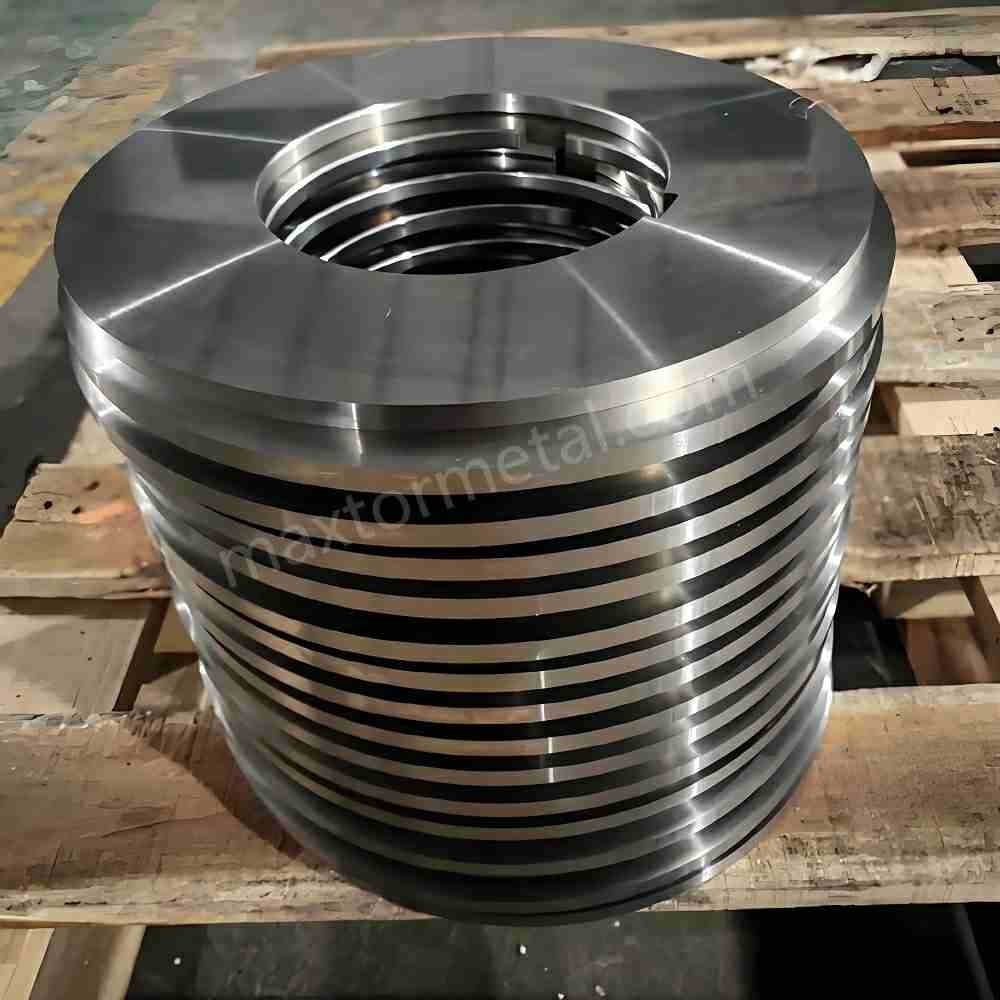
Baseline scenario and calculator layout
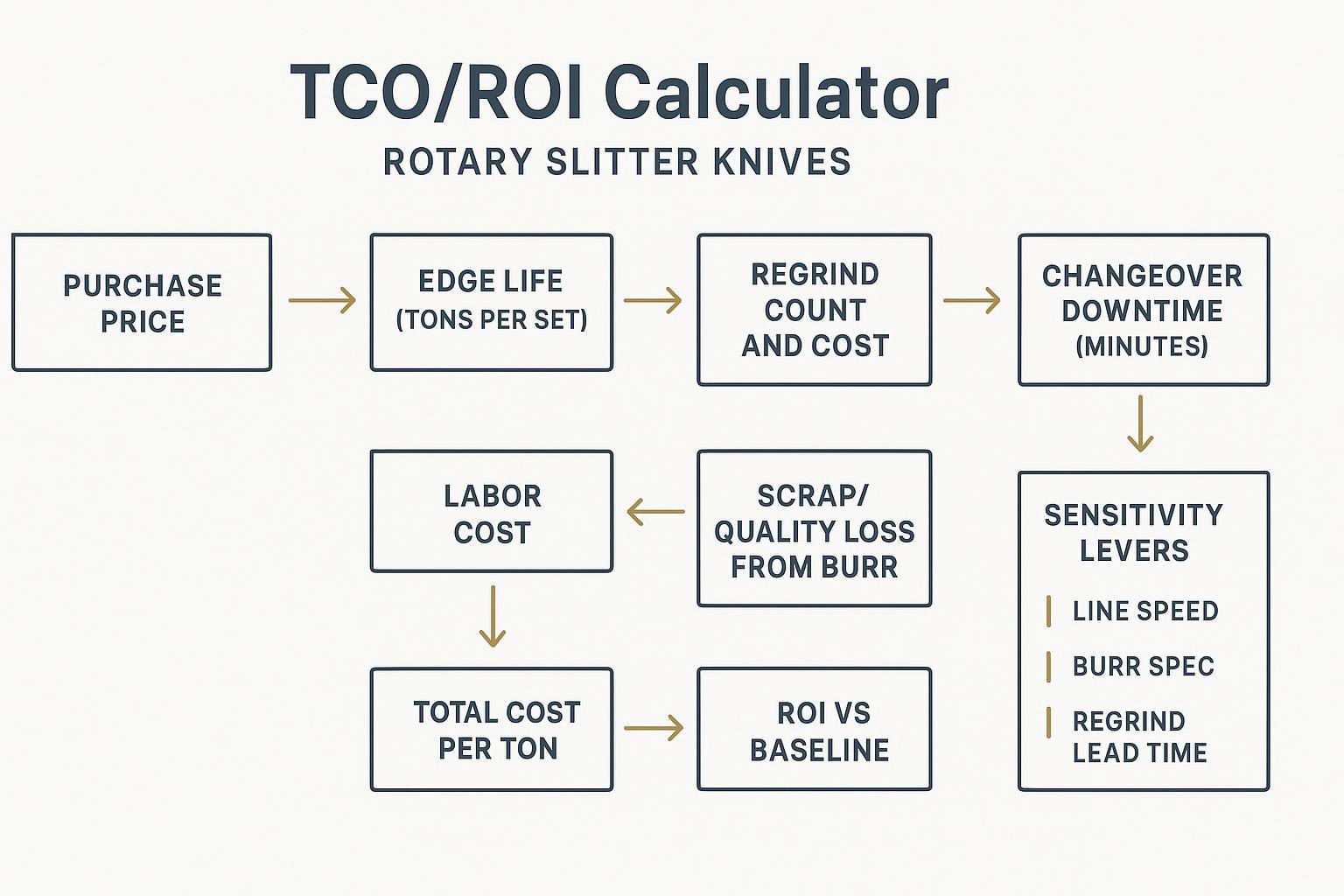
Start with your current “good enough” knife as the baseline and build the calculator in blocks so each department can audit their part.
Calculator blocks
- Tooling: purchase cost, regrind cost, max regrinds
- Performance: tons per grind by material family
- Changeovers: minutes per event, labor cost, opportunity cost
- Quality: scrap/rework delta from burr drift or width drift
If you want the calculator to survive a procurement review, show two things:
- Which inputs are measured vs assumed
- What happens when the assumptions are wrong
Sensitivity levers and break-even curves
In practice, break-even almost always hinges on one of these levers:
- Downtime cost per hour: if the line is capacity constrained, downtime dominates.
- Tons per grind: if your current knives are short-lived, small improvements pay back fast.
- Scrap and rework: if burr creates downstream work, quality dominates.
- Regrind logistics: long lead times force more spares and increase the risk of running dull tools.
Model each lever as a simple multiplier and build a one-page break-even view:
- x-axis: tons per grind improvement
- y-axis: TCO/ton difference
- curves: different downtime cost assumptions
Case-style examples across materials
Rather than fake numbers, use anonymized, range-based examples you can audit internally.
Measurement notes for interpreting case results
To keep comparisons reproducible, the cases below assume:
- Life is measured to a quality limit, not catastrophic failure (for example: burr limit as a % of thickness, or a downstream reject/SPC threshold).
- Sampling cadence is defined up front (startup check, then per coil or per tonnage interval).
- Variance is tracked (median + spread), because unpredictable early failures can erase the average-life advantage.
Case 1: AHSS/HSLA with tight burr requirements
Based on field service records aggregated across Maxtor Metal after-sales engagements (anonymized, range-normalized
Applicability: DP780–DP980 and HSLA 550–780 MPa, thickness 0.8–2.5 mm, manual changeover. Burr limit ~5–8%t. Changeout occurs when burr crosses the SPC control line (not when the knife catastrophically chips). Regrind restores a consistent edge geometry.
| عامل | Baseline (conventional tool steel) | PM tool steel (observed change) |
|---|---|---|
| L (tons/cycle) | 350–700 | +40% to +100% |
| N (total cycles) | 4–7 | +2 to +4 cycles |
| D (min/changeover) | 40–75 | — |
| C_d (USD/hour) | 700–2,000 | — |
| S (USD/ton) | 0.30–1.80 | −0.15 to −1.20 |
| G (USD/regrind) | 20–45 | — |
| P (tool price multiplier) | 1.0× | test via sensitivity analysis |
Measurement sequence (example)
- Burr check at end of each coil (5 points per edge)
- Record cut-edge temperature and knife OD
- Changeout if burr exceeds the control line for two consecutive coils
- After each regrind, log cumulative metal removed
Operator behavior note (why process window still matters)
When PM steel was first trialed, operators reused the previous tool-steel clearance without adjustment. The first cycle showed localized edge polishing and only ~20% life improvement. After increasing side clearance by ~1–2% of thickness and re-calibrating knife overlap, life returned to >70% improvement.
Typical payback: 2–6 months; high C_d lines can be <1 month.
Case 2: Stainless with pickup/galling as the dominant failure mode
Based on field service records aggregated across Maxtor Metal after-sales engagements (anonymized, range-normalized
Applicability: SUS304 / 316L, thickness 0.5–2.0 mm, “no coating defect allowed” surface requirement. Failures are primarily driven by pickup/galling rather than abrasive wear.
| عامل | Baseline (tool steel) | PM tool steel (observed change) |
|---|---|---|
| L (tons/cycle) | 220–480 | +30% to +80% |
| N (total cycles) | 4–8 | +1 to +3 cycles |
| D (min/changeover) | 35–65 | — |
| C_d (USD/hour) | 600–1,700 | — |
| S (USD/ton) | 0.15–1.00 | −0.08 to −0.60 |
| G (USD/regrind) | 22–50 | — |
| P (tool price multiplier) | 1.0× | test via sensitivity analysis |
Measurement sequence (example)
- Check for knife pickup each coil
- Record cut-edge Ra
- Inspect edge radius every 100–150 tons
- Stop production when scratches become continuous
Process limitation note
If lubrication conditions drift materially (e.g., emulsified coolant concentration drops), the PM advantage can shrink because galling is driven by friction conditions, not substrate alone.
If you want a technical anchor for how lubrication and surface condition change galling risk, TWI’s knowledge base covers the mechanics of galling and its surface contact drivers in a process-neutral format.
Operator behavior note
Early trials tried to “use all the PM life” by delaying changeouts. Once pickup started, surface scratches escalated quickly and the line had to stop anyway. Switching the changeout trigger to a quality limit (not a wear limit) reduced total TCO even if it meant leaving some theoretical knife life unused.
Typical payback: 4–9 months.
Case 3: Aluminum with high throughput and downtime-sensitive economics
Based on field service records aggregated across Maxtor Metal after-sales engagements (anonymized, range-normalized
Applicability: 1xxx / 3xxx / 5xxx series, thickness 0.3–1.5 mm, high-speed continuous production, automatic steering/alignment functioning normally.
| عامل | Baseline (tool steel) | PM tool steel (observed change) |
|---|---|---|
| L (tons/cycle) | 900–2,000 | +20% to +55% |
| N (total cycles) | 6–10 | +1 to +3 cycles |
| D (min/changeover) | 25–50 | 0 to −10 min/changeover |
| C_d (USD/hour) | 900–2,800 | — |
| S (USD/ton) | 0.02–0.20 | −0.01 to −0.12 |
| G (USD/regrind) | 18–40 | — |
| P (tool price multiplier) | 1.0× | test via sensitivity analysis |
Measurement sequence (example)
- Runout check each shift
- Burr height recorded each coil
- Knife OD measured every two coils
- Total downtime recorded at each changeover
Process limitation note
Aluminum wear is often light, so scrap reduction from PM can be limited. ROI is usually driven by fewer stops, more stable setups, fewer mid-run compensations, and fewer unplanned changeovers.
Operator behavior note
Some crews perform preventive changeouts on night shifts, so actual life utilization may only be ~85–90% of theoretical. With PM, lower life variance often reduces “early preventive swaps,” cutting downtime by ~5–10 minutes per event.
Typical payback: 8–18 months; strongest on high-speed, high-volume lines with higher C_d.
Tip: These ranges can be plugged directly into the TCO variables (L, N, D, C_d, S, plus P and G) to produce a defensible TCO/ton band for procurement review.
Sensitivity analysis shortcut: keep the measured ranges for L, N, D, C_d, S, and G fixed, then rerun the calculator with P = 1.8×, 2.3×, and 2.8× the baseline tool-steel price to see how robust the break-even point is under different premium assumptions.
المشتريات، وضمان الجودة (QA)، وبرامج الخدمة والدعم
Specifications and OEM compatibility
A procurement spec that drives ROI is clear on geometry and inspection, not just material name.
Include in RFQs:
- Knife OD/ID/thickness, tolerances, and parallelism requirements
- Bore fit class, concentricity/runout target, and how it will be measured
- Edge geometry: bevel angle, land, edge radius (and allowed change after regrind)
- Intended material families (steel, stainless, aluminum, coated) and thickness ranges
QA, traceability, and inspection
If your organization is audited (or your customers are), traceability is not optional. It’s how you keep knife performance from becoming a guessing game.
A practical QA package to request and retain (this is standard practice with suppliers such as Maxtor Metal, and it should be vendor-agnostic):
- Material certificate and heat/lot identification
- Heat treatment record and hardness map (multiple points; variability matters as much as the nominal)
- Dimensional inspection report for thickness, parallelism, bore, and runout
- Surface finish verification if your application is sensitive to pickup
- Regrind history log tied to the knife serial/lot
Hardness verification should reference the method (Rockwell C) per ASTM E18, and material specs can be tied back to ISO 4957:2018 where applicable.
QA documentation sample (what “good” looks like)
If you want incoming inspection to be auditable (and comparable across suppliers), a practical “minimum viable” record set for each knife lot is:
- إمكانية تتبع المواد: heat/lot ID + material certificate reference
- Heat treat record: target hardness range + actual readings by location (e.g., OD, mid-radius, near bore)
- الفحص البُعدي: thickness and parallelism, bore size/fit notes, and runout/concentricity results
- حالة السطح: face finish measurement or process note (when pickup risk is high)
- Regrind log: date, stock removed, post-grind thickness/runout check, and sign-off
You can turn the above into a one-page checklist so each receiving inspection is consistent:
- Lot/serial:
- Material spec:
- Hardness target / actual (min–max):
- Thickness (min–max):
- Parallelism:
- Bore:
- Runout/concentricity:
- Face finish:
- Regrind count / stock removed:
- Inspector + date:
Regrind, lead times, and inventory strategy
Regrind programs are where “cheap” knives often become expensive.
Build a simple inventory strategy:
- Define your minimum safe edge condition (burr threshold or tons limit) so operators don’t stretch tools unpredictably.
- Set a regrind trigger based on burr trend, not just calendar time.
- Keep enough spare sets to cover regrind lead time plus variability.
If you qualify a supplier regrind service (including Maxtor Metal's regrind workflow when it’s available for your knife type), treat it like any other critical process:
- document the allowed stock removal per grind
- verify edge geometry restoration method
- require after-grind inspection reports for thickness and runout
الخاتمة
One-page summary: where PM tool steel tends to pay back
| سيناريو | Typical payback (from anonymized field ranges) | Dominant ROI levers | What to measure first |
|---|---|---|---|
| AHSS / HSLA with tight burr limits | 2–6 months (sometimes <1 month on high C_d lines) | Quality cost (S) + downtime (D, C_d) | Burr-to-limit trend vs tonnage, downtime minutes per changeover, scrap/rework delta per ton |
| Stainless with pickup/galling risk | 4–9 months | Quality variance (S) + predictability | Pickup/scratch rate, edge radius checks per tonnage interval, lubrication stability vs defect rate |
| Aluminum high-speed, high-volume | 8–18 months | Downtime and throughput (D, C_d, L) | Changeover frequency, total downtime per event, unplanned changeouts vs planned, tons per cycle stability |
Tip: If you want a quick robustness check, keep L/N/D/C_d/S/G ranges fixed and rerun sensitivity with P = 1.8×, 2.3×, and 2.8× baseline.
The ROI question isn’t whether PM-HSS is “better” than tool steel. It’s whether it changes the cost-per-ton equation in your line.
- Key takeaways: PM-HSS advantages, coating fit by material, and setup/tolerance priorities.
- Next steps: populate the ROI template with plant data and run sensitivity checks.
- Start collecting: burr height vs tonnage, edge life, changeover time, scrap, regrind counts.
FAQs:
س: كيف يمكنني حساب التكلفة لكل طن لسكاكين التقطيع الطولي الدائرية؟
ج: استخدم نموذج التكلفة لكل طن الذي يجمع بين: (1) تكلفة الأدوات + إعادة التجليخ مقسومة على إجمالي الأطنان المنتجة خلال عمر السكين، و(2) تكلفة وقت التوقف لكل عملية تغيير مقسومة على الأطنان لكل فترة تغيير، و(3) فارق النفايات/إعادة العمل المرتبط بانحراف الرايش (burr drift). السر يكمن في تعريف "العمر" بالأطنان المنتجة حتى الوصول إلى حد جودة الحد القاطع، وليس الأطنان حتى الفشل الكارثي.
س: هل يستحق فولاذ PM-HSS الاستثمار فيه لسكاكين التقطيع الطولي؟
ج: يمكن أن يكون كذلك عندما يكون العامل المحدد لديك هو ثبات التآكل (الأطنان لكل تجليخ) وإعادة التجليخ المتوقعة، بدلاً من التشققات أو الشظايا الناتجة عن الصدمات. إذا كان خط الإنتاج يعاني من الاهتزاز، أو عدم المحاذاة، أو تقلبات واسعة في السمك، فقم بإصلاح نافذة الإعداد (setup window) أولاً؛ وإلا فلن تظهر ترقية المواد في البيانات.
س: ما الذي يسبب زيادة الرايش أثناء التقطيع الطولي حتى مع وجود سكاكين حادة؟
ج: يعود معظم نمو الرايش إلى انحراف الخلوص (clearance drift)، أو أخطاء التداخل (overlap)، أو تآكل مجموعة الفواصل، أو انحراف عمود الدوران (arbor runout). إذا كان الرايش يظهر بشكل دوري وليس منتظمًا، فافحص انحراف العمود وحالة التجميع قبل تغيير قيم الخلوص.
س: ما الذي يجب أن أطلبه في حزمة ضمان الجودة (QA) وقابلية التتبع لسكاكين التقطيع الطولي؟
A: Mindestens: Materialzertifikat mit Chargen-ID, Wärmebehandlungsprotokoll, Mehrpunkt-Härteprüfergebnisse (Rockwell C nach ASTM E18), Maßprüfung (Dicke/Parallelität/Bohrung/Rundlauf) und eine auf die Serien- oder Chargennummer bezogene Nachschleifhistorie. So können Sie die Standzeitleistung direkt mit kontrollierbaren Variablen verknüpfen.
س: كم مرة يمكن إعادة شحذ سكاكين التقطيع الطولي الدائرية؟
ج: يعتمد ذلك على الحد الأدنى المسموح به للقطر/السمك، ومتطلبات هندسة الحد القاطع، وكمية المواد التي يتم إزالتها في كل تجليخ. تتبع المواد التي تمت إزالتها في كل إعادة تجليخ وتوقف قبل أن تصبح الهندسة غير مستقرة أو يتراجع التحكم في الرايش.
س: كم مرة يمكن إعادة شحذ سكاكين التقطيع الطولي الدائرية؟
ج: تغير الطلاءات بشكل أساسي من الاحتكاك، والحرارة، ونمط التآكل. يمكنها تقليل التصاق المواد (pickup) وإبطاء التآكل الكاشط، لكنها لن تعالج التشققات الناتجة عن سوء الإعداد أو ضعف صلابة المعدات. قم بتقدير الطلاءات بناءً على عائلة المواد وسرعة خط الإنتاج، وتحقق من سلامة الحد القاطع بعد الطلاء.
س: ما هي أسرع طريقة لتحسين العائد على الاستثمار (ROI) لسكاكين التقطيع الطولي دون تغيير مادة السكين؟
ج: تقليل الانحراف: توحيد فحص الفواصل، والتحقق من انحراف العمود (runout)، وتثبيت طريقة خلوص/تداخل قابلة للتكرار لكل عائلة مواد. غالبًا ما يوفر إلغاء عملية تغيير واحدة غير مخططة عائدًا أكبر من مجرد ترقية بسيطة لنوع الصلب.
إن إطار عمل العائد على الاستثمار (ROI) وإجمالي تكلفة الملكية (TCO) هذا محايد تمامًا تجاه الموردين، ويمكن استخدامه لتقييم أي مورد سكاكين مؤهل باستخدام بيانات خط الإنتاج الفعلية وسجلات الفحص الخاصة بك.
مؤلف
جيري تشو — Technical Support Specialist, After-sales Service, Maxtor Metal
Jerry has 10 years of cross-industry application experience in cutting and slitting (paper converting, plastics recycling, metal coil slitting, and wood processing). His after-sales work at Maxtor Metal focuses on translating field troubleshooting data into cost-per-ton comparisons — helping process and procurement teams build defensible ROI cases when evaluating knife material, coating, and regrind program changes.
Certifications: PMP, CMRP

 English
 Spanish
 Italian
 French
 Portuguese
 Russian
 German
 Arabic
 Hindi
 Vietnamese
 Indonesian
 Japanese
 Korean