
TPU Underwater Pelletizing Knife Gumming: DLC vs PTFE Coating Selection and Operating Windows
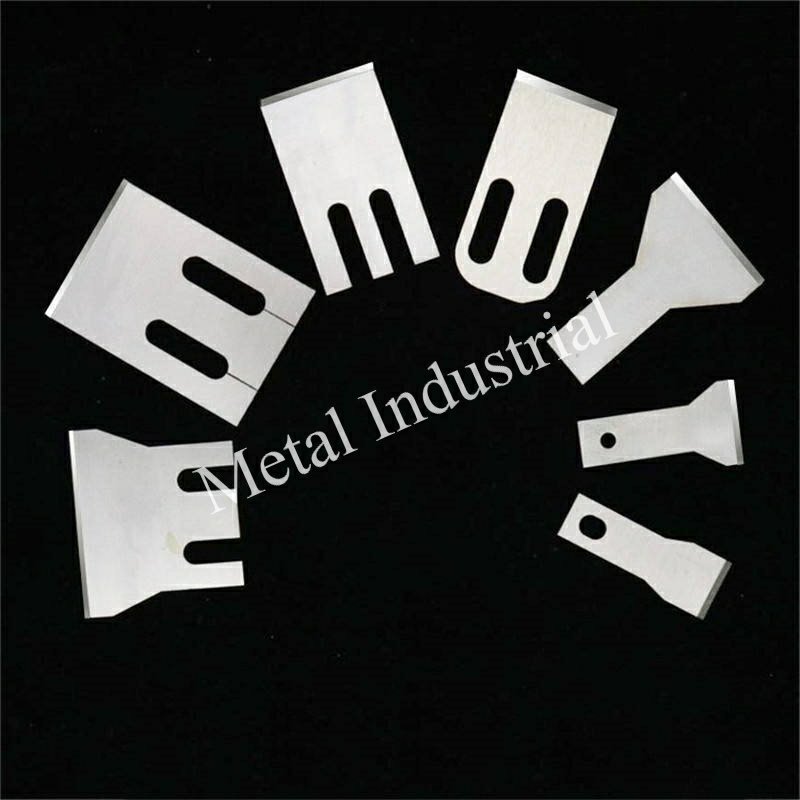
Quick answer: Knife gumming in TPU underwater pelletizing is a system problem, not just a coating problem. The fastest fix is to address the mechanism first (restore cutting-plane stability and quench consistency), then select coatings: DLC on cutting-edge faces for hardness and low friction, PTFE on low-wear non-edge faces for adhesion reduction. Running DLC without fixing […]
Tungsten Carbide Inlaid Shear Blades for AHSS Lines: ROI Model, Regrind Protocol, and Pilot Benchmarks
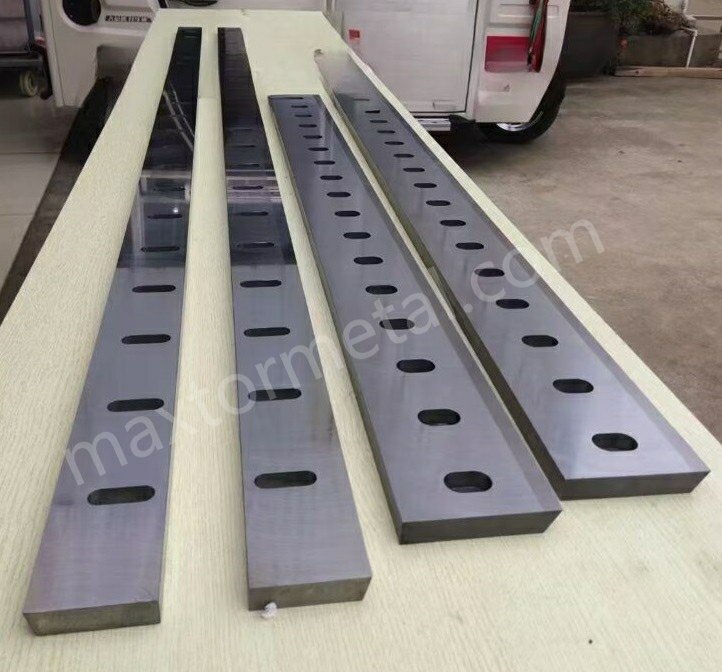
Quick Answer: Tungsten carbide inlaid shear blades typically deliver 2–3.5× the edge life of D2 blades on AHSS lines, with ROI driven primarily by fewer changeover events and reduced edge-instability scrap—not blade price alone. Clearance control and consistent regrind geometry restoration are the two variables that most determine whether that life multiplier holds in production. […]
Precision Slitting Spacers & Rubber Rings: Stack Stiffness, Clearance & TIR Control

What readers will gain: tolerances, setup, verification, and ROI logging: concrete specs to ask for, checks to run before you clamp, and what to track so “better tooling” turns into measurable uptime. High-speed coil slitting doesn’t usually fail because the knives are “bad.” It fails because the clearance you thought you had is not the clearance the […]
Lithium-Ion Battery Shredding Hazards: Low-Speed Shear Controls, Inert Atmosphere Design, and HF Treatment
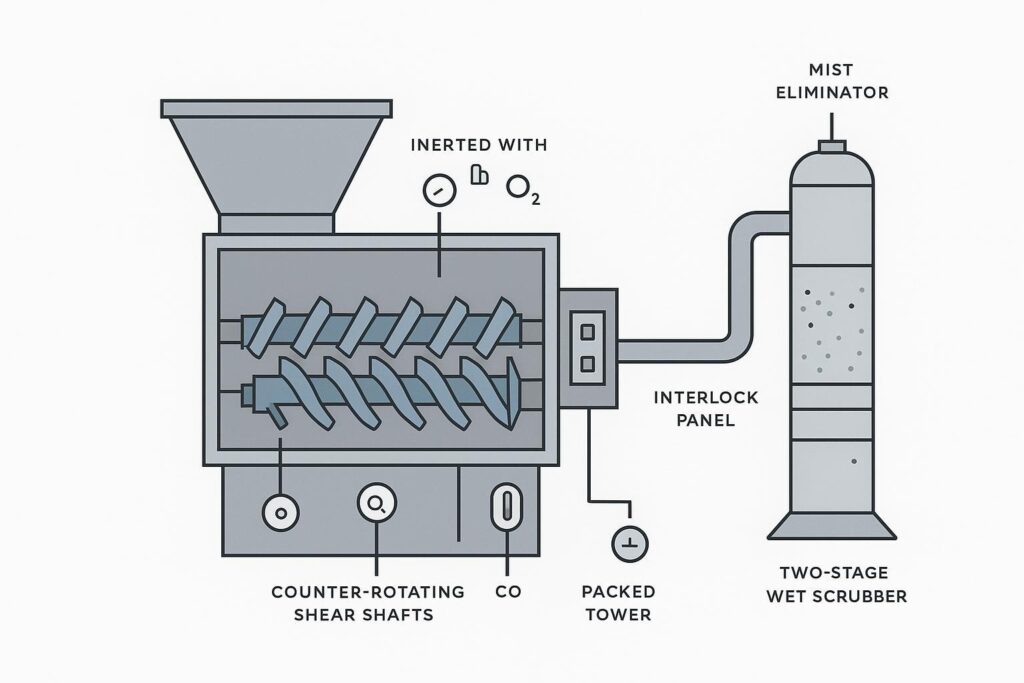
Lithium-ion battery (LIB) size reduction is one of those operations where the “mechanical” and “chemical” worlds collide in the worst way: high stored electrical energy, flammable electrolyte vapors, conductive dust, and corrosive off-gases. This guide focuses on a safety-by-design approach that many facilities are converging on: low-speed, counter-rotating shear in a controlled atmosphere (often inerted, sometimes submerged), […]
DLC vs PTFE Coatings for Slitting Blades: Wear-Limited vs Transfer-Limited Selection Guide
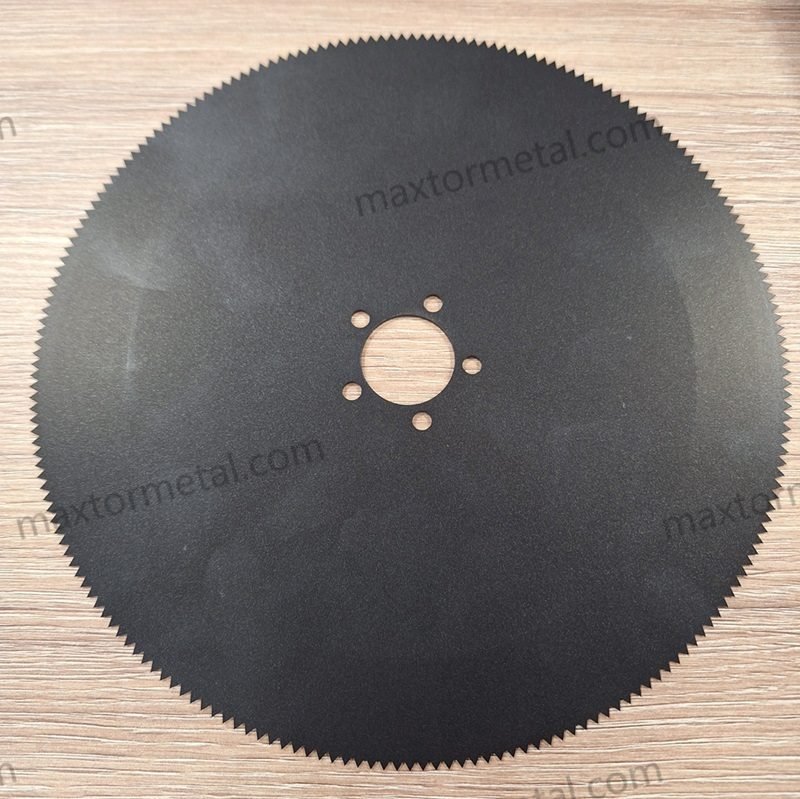
Slitting performance rarely fails for a single reason. It fails at the interfaces: blade-to-web friction, adhesive transfer, edge micro-chipping, and the heat that builds when any of those drift out of control. This guide is written for process engineers, maintenance teams, and technical buyers selecting or qualifying coated circular slitting knives for film, foil, paper, […]
OEE and Profit Gains from Reducing Coil Change Frequency: Availability Model, Worked Examples, and Pilot Data
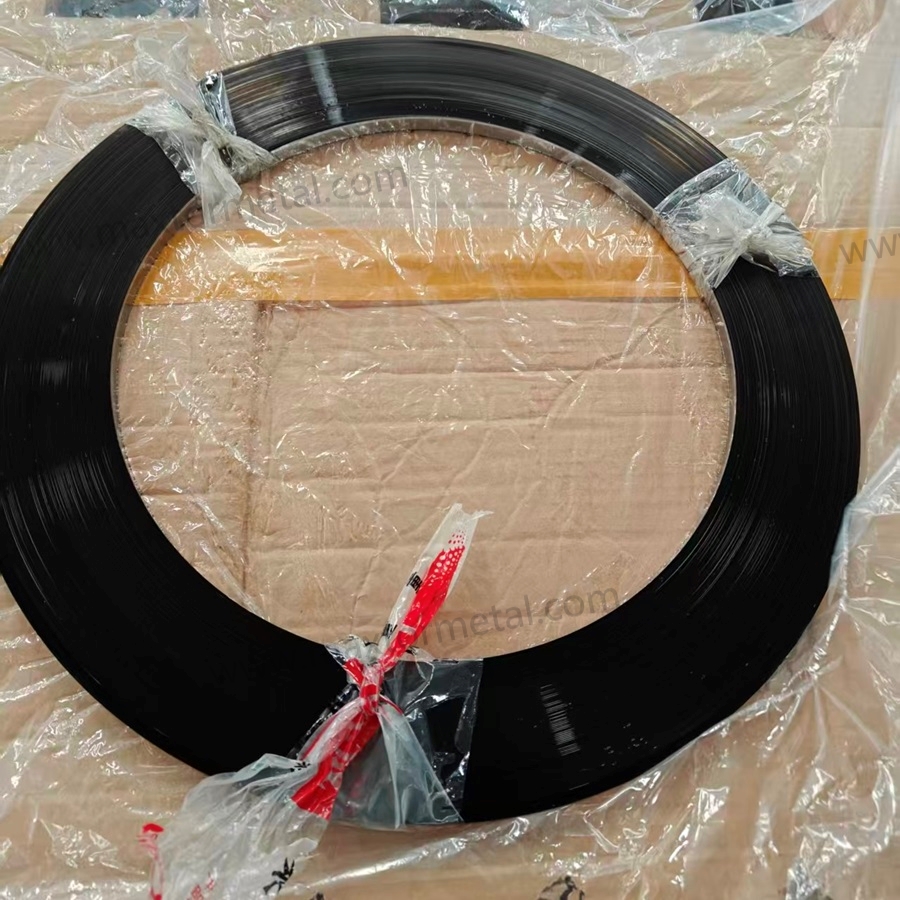
Quick Answer: Reducing coil change frequency improves OEE primarily by cutting planned downtime—a direct hit to Availability. Secondary gains appear in Performance (fewer ramp-up periods after restarts) and Quality (fewer splice-related defect windows). The effect is quantifiable with four inputs: strip consumption rate, coil length, changeover time per stop, and scrap generated per change. In a […]
Tungsten Carbide Insert Grade, Design, and Control for Underwater Pelletizer Uptime
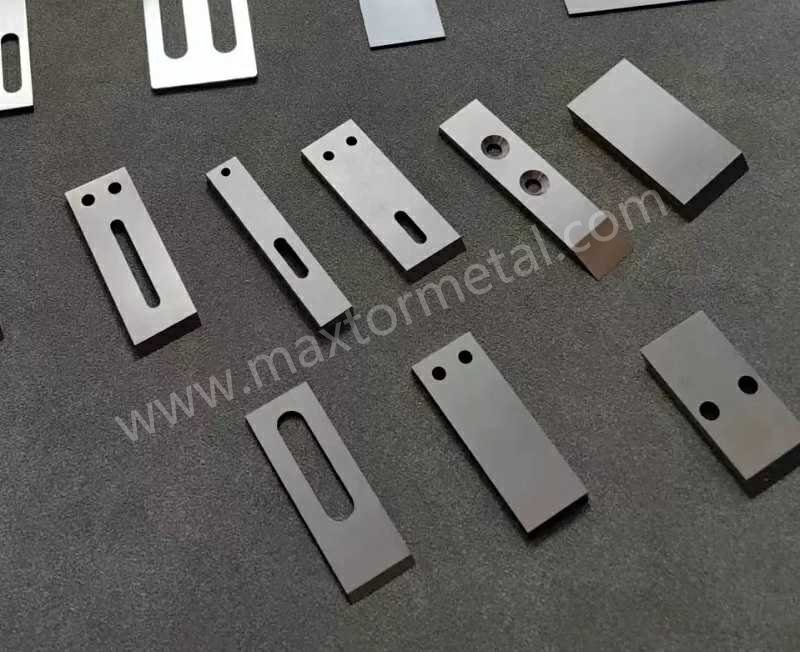
Quick answer: Stable die-face cutting on underwater pelletizer lines depends on four variables working together: carbide grade (HRA 88–92 for most WC–Co inserts), edge geometry (controlled radius, not just “sharp”), contact pressure management (engage → trim, not pressure-chase), and water-loop stability (40–60°C, filtered, degassed). Changing inserts without addressing die-face condition or cutter-head balance is the most […]
4-Edge Reversible Blade Rotation Schedule and Regrind Criteria: Measurement-Based SOP for Guillotine Shears
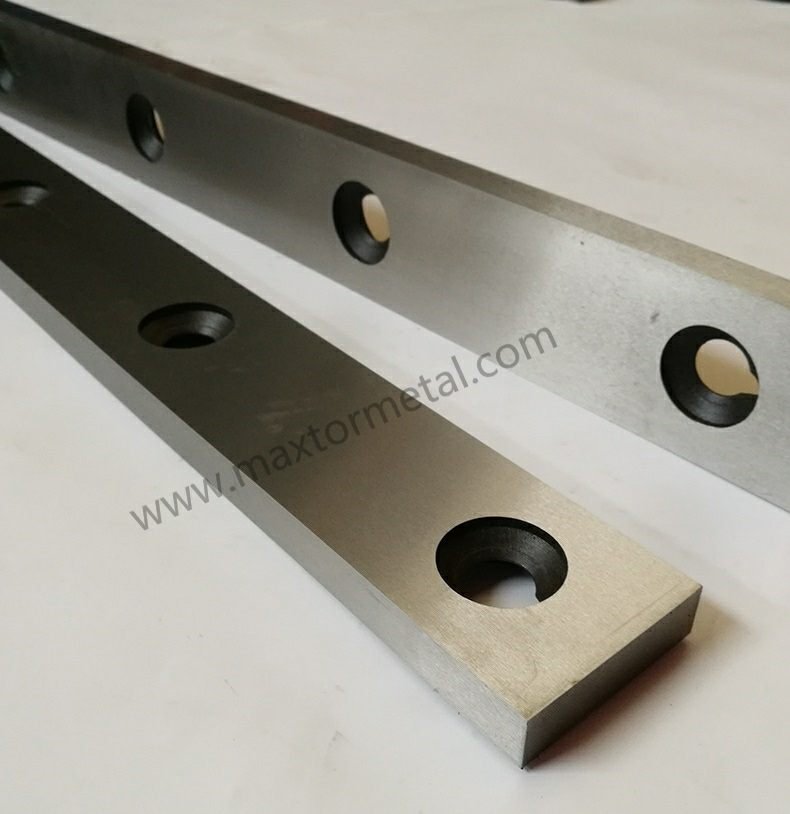
If you run a guillotine shear on mixed carbon steel, stainless, and high-strength grades, you already know the failure pattern: burrs creep up, operators “chase” the gap, and downtime turns reactive. This article defines a measurement-based protocol for 4-edge reversible blades—when to rotate, when to regrind, and what to log so the process is third-party […]
Rotary Slitter Knife ROI: PM-HSS vs Tool Steel TCO Model & Edge Life Analysis

Rotary slitter knives look like a small line item until you model what they touch: changeovers, scrap, burr rework, and whether your line can hold tolerance across an entire coil. This guide is written for process, equipment, production, and purchasing leaders at coil slitting operations who need a defensible way to compare options, especially when […]
Multi-shaft Blade Tolerance Stacking: GD&T Controls, Spacer Selective Fit, and Post-assembly TIR Verification
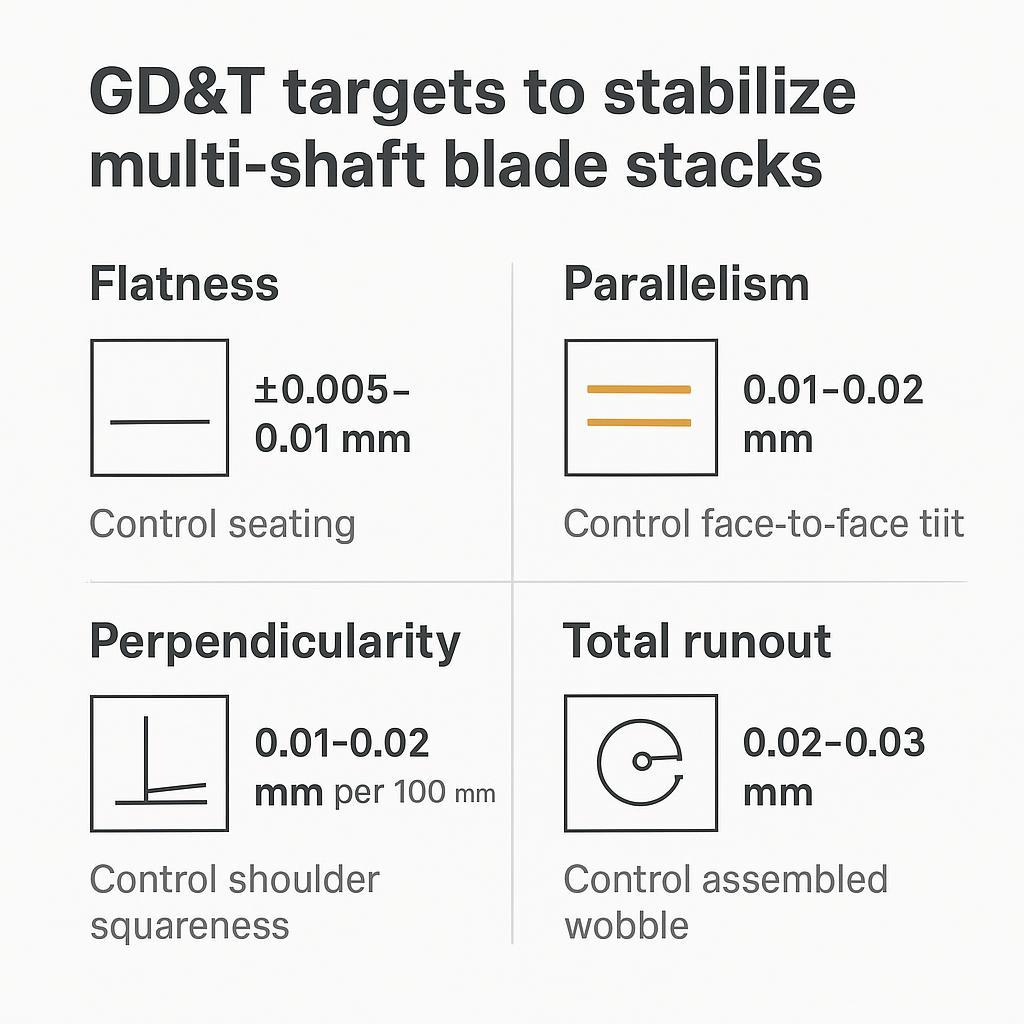
Key takeaways: In multi-shaft shredders, small errors in blade thickness, spacer thickness, face flatness, squareness, and bore/shaft geometry don’t stay small. They add up into shaft tilt and total indicated runout (TIR), which shows up as gap drift, uneven load, vibration, and shorter knife life. This guide gives practical GD&T targets, selective-fit spacer strategy, assembly/QA […]

 English
  Spanish
  Italian
  French
  Portuguese
  Russian
  German
  Arabic
  Hindi
Hindi  Vietnamese
  Indonesian
  Japanese
  Korean