

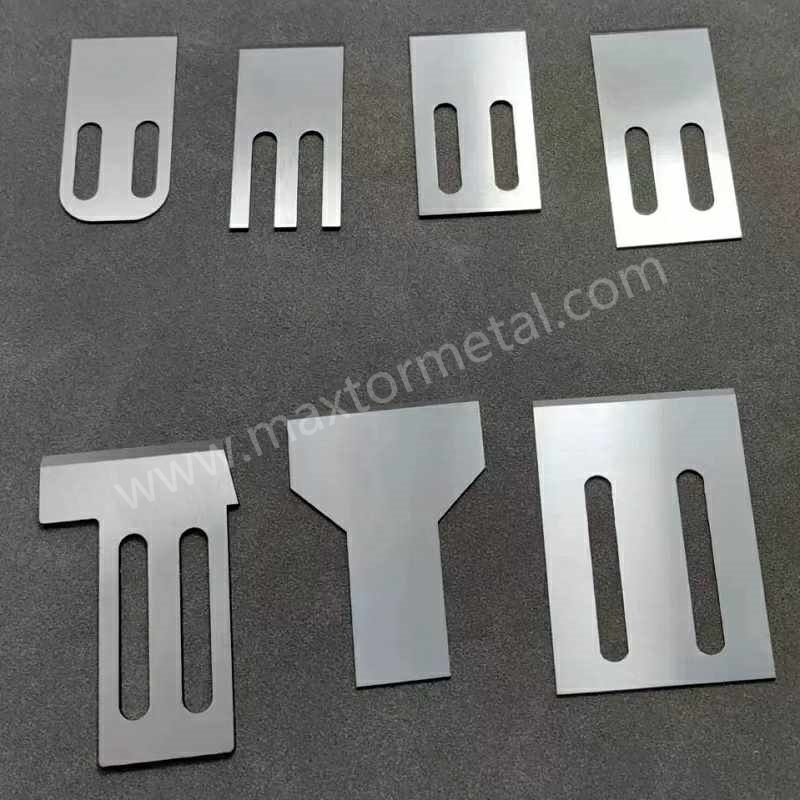
Eine gleichmäßige Granulatgröße ist nicht nur ein ästhetisches Ziel – sie bestimmt die nachgelagerte Stabilität, die Trocknungseffizienz, die Dosiergenauigkeit und die wahrgenommene Produktqualität. Der schnellste Hebel, den Sie an der Linie steuern können, ist die Messerschärfe. Sie liefert jedoch nur dann konsistente Ergebnisse, wenn sie auf das richtige Prozessfenster abgestimmt ist: Liniengeschwindigkeit, Messer-RPM, Kühlung und Lochplattenbedingungen. Dieser Leitfaden zeigt, wie Sie diese Verknüpfung bei drei gängigen Konfigurationen – Stranggranulierung (PP/PE), Unterwassergranulierung (PA/PBT/PC) und Heißabschlag/Wasserring (Masterbatch und High-Fill) – explizit herstellen und mit messbaren KPIs aufrechterhalten.
Wichtigste Erkenntnisse
- Behandeln Sie eine gleichmäßige Granulatgröße als gemessenen KPI: Legen Sie D50/D90-Ziele und einen definierten Feingutanteil fest, nehmen Sie Proben und erstellen Sie Trendanalysen.
- Die Messerschärfe bestimmt das nutzbare Prozessfenster; die Kantenintegrität und das korrekte Spiel halten D90-Ausreißer und Feingut unter Kontrolle.
- Überwachen Sie, bevor Fehler auftreten: Reagieren Sie auf einen anhaltenden Anstieg des Motorstroms/Drehmoments um +8–15% gegenüber dem Basiswert sowie auf eine Drift des Feingutanteils.
- Standardisieren Sie Schleiftoleranzen (typischerweise ≤±0.02 mm für Granuliermesser) und Nachschleifzyklen; dokumentieren Sie die Ergebnisse und analysieren Sie Trends.
KPI-Framework für gleichmäßige Granulatgröße
Beginnen Sie mit einem messwertbasierten Framework. Nutzen Sie ASTM D1921 as Ihre Referenzmethode für die Korngrößenverteilung, die vollständige siebungsbasierte Verteilungen und die Berechnung von D50 (Median) und D90 unterstützt. Dokumentieren Sie Ihr Spezifikationsfenster pro Produkt, definieren Sie einen Feingutschnitt, der Ihre Granulatgeometrie widerspiegelt, und legen Sie ein risikoadäquates Probenahmeintervall fest.
- Referenzprotokoll: Siehe Standardmethode in der ASTM-Publikation zur Bestimmung der Partikelgröße von Kunststoffen, die eine D50/D90-Bestimmung und Feingutbewertung über einen definierten Siebsatz ermöglicht. Einzelheiten entnehmen Sie bitte den Richtlinien der maßgeblichen ASTM-Methode, die im beschrieben ist. ASTM D1921-18-Standard.
- Unsicherheit und Akzeptanz: Wenn Sie siebungsbasierte D50/D90-Werte und Feingutanteile in Freigabekriterien umwandeln, wenden Sie Sicherheitsabstände und Entscheidungsregeln gemäß an. Eurachems Leitfaden von 2021 zu Messunsicherheit und Konformitätsentscheidungen; schätzen und protokollieren Sie die Unsicherheit aus Mehrfachsiebungen, damit Ihre Akzeptanzgrenzen die tatsächliche Leistungsfähigkeit der Methode widerspiegeln.
Kurzübersicht-Vorlage für Ziele und Maßnahmen
Die folgende Vorlage hilft bei der Abstimmung zwischen Technik, QS und Wartung. Ersetzen Sie die beschreibenden Platzhalter durch die in Versuchen validierten Werte Ihres Standorts; halten Sie diese über alle SKUs hinweg konsistent.
| Polymerfamilie | Nominale Granulatgröße | Spezifikationsfenster (In-Spec) | D50-Zielwert | D90-Maximum | Feingut-Definition und Grenzwert | Probenahmehäufigkeit | Maßnahme bei Spezifikationsabweichung |
|---|---|---|---|---|---|---|---|
| PP/PE (Strang) | Länge/Durchmesser pro SKU angeben | Toleranzfenster für Länge/Durchmesser definieren | Ergebnis aus dem Fähigkeitsnachweis angeben | Maximal zulässigen D90-Wert angeben | Siebgröße für “Feingut” und Grenzwert vor Ort definieren | z. B. alle X Tonnen oder alle Y Stunden | Messer-RPM vs. Liniengeschwindigkeit anpassen, Messerschneide und Planheit prüfen, bei Bedarf nachschleifen/austauschen |
| PA/PBT/PC (Unterwasser) | Granulatgeometrie angeben | Zulässiges Verteilungsfenster definieren | Labor-gemessenen D50-Wert angeben | D90-Grenzwert angeben | Feingutsieb/ppm-Obergrenze definieren | z. B. strenger während der Anfahrphase | Wassertemperatur/-durchfluss/-druck, Messer-zu-Lochplatte-Kontakt prüfen, bei Kantenverschleiß nachschleifen |
| Masterbatch/High-Fill (Heißabschlag) | Geometrie angeben | Fenster definieren | Zielwert angeben | Grenzwert angeben | Feingutsieb/-grenzwert definieren | e.g., per batch | Stabilize cutting temp, check dryer, sharpen or replace blades |
Hinweise
- Always record the method: sieve stack, mass, and shaking time (per ASTM D1921). Include the instrument ID and operator initials to support traceability.
- For fines, choose a sieve that reflects customer risk (e.g., dust-sensitive packaging lines) and lock a ppm or percent threshold.
Wie die Messerschärfe das Prozessfenster steuert
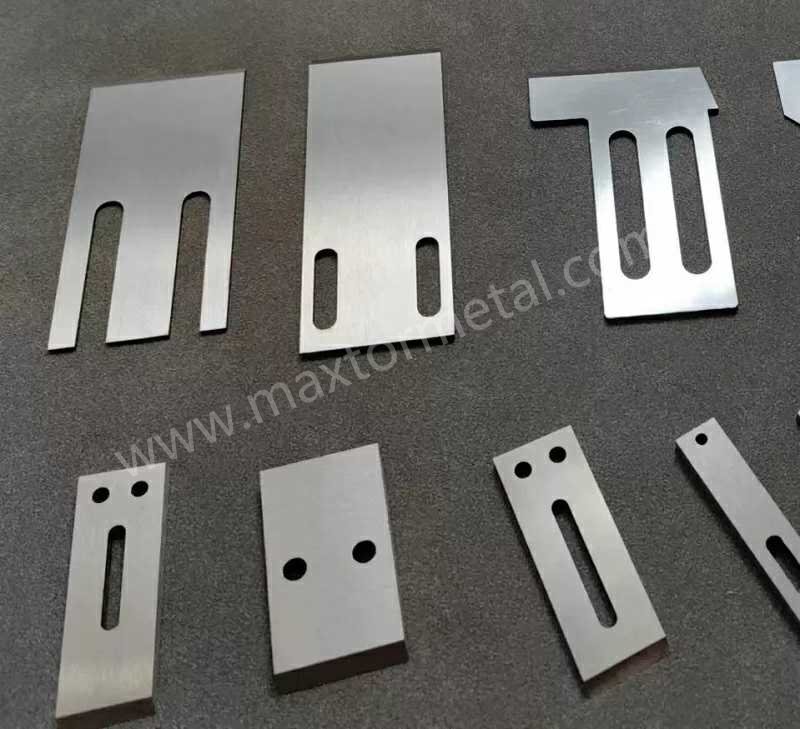
When the edge apex is crisp and the blade is flat, the cut is clean and repeatable. As the edge radius grows and micro-chipping appears, cutting requires more force, strands deform, underwater die-face contact degrades, and tails or comets form. Those tails either widen D90 or break in handling, inflating fines. The remedy is twofold: preserve the edge and hold the operating window where that edge performs best.
What to standardize
- Edge quality and finish: Require a burr-free apex verified under magnification. Specify a surface finish appropriate to your cutter style and polymer. For sharpening precision, reputable industrial grinders hold roughly ≤±0.02 mm on pelletizer edges; this level of control helps maintain uniform granule size. See industrial sharpening guidance on tolerances from a specialist like the discussion of granulator-edge precision in American Cutting Edge’s sharpening practices.
- Materials and heat treatment: Match tool steel to duty. For commodity strands (PP/PE), abrasion-resistant tool steels are common; for highly abrasive or high-throughput service, consider carbide-tipped or cemented carbide options. For underwater service, favor wear- and corrosion-resistant steels or coatings that maintain die-face integrity. Target hardness and coating choices should come from OEM guidance and plant validation.
- Mounting and immobilization: Flatness, runout, and secure clamping are as important as apex sharpness. Any wobble becomes a periodic defect in pellet size.
Scenario mechanics at a glance
- Strand pelletizing: Cooling determines strand stiffness at the cut; sharp blades reduce deformation so the cut length matches the computed pellet length. Clearance and flatness prevent angled cuts that extend the D90 tail.
- Underwater pelletizing: A sharp blade maintains smooth die-face contact. If the edge rounds, you’ll see “chaining” or tails, especially when water temperature or flow is off. Correct edge condition widens the usable range of cutter speed versus throughput.
- Hot-face/water-ring: Edge integrity plus thermal balance prevents smearing. Dull knives smear and create tails that later break into fines.
Szenariospezifische Feinabstimmung zur Einhaltung einer gleichmäßigen Granulatgröße
Strand pelletizing for PP/PE
- Cooling and dewatering: Ensure bath length and temperature give you consistent strand stiffness before the cut. Verify air-knife performance to keep strands stable at entry.
- Speed matching: Sync cutter RPM to line speed to hold nominal pellet length. Adjust in small steps while watching D50/D90 and the pellet face.
- Edge control: Maintain flatness and edge integrity; a small loss of sharpness shows up first as angled faces and D90 creep.
Underwater pelletizing for PA/PBT/PC
- Water system control: Process water temperature, flow, and pressure are the main stabilizers. Excessively hot water or too-high melt temperature promotes tails and fusing; tune both in tandem. For troubleshooting patterns and corrective actions, see the engineering notes in Plastics Technology’s guide to mitigating underwater pelletizing issues.
- Die-face contact and startup: Keep a smooth, well-seated blade-to-die interface and follow a disciplined startup sequence—water and lubrication first, low-rate ramp, then pelletizer engagement with speeds matched—to avoid early defects. A commissioning overview with sequencing logic is outlined in Leistritz’s startup guidance for extrusion lines.
Hot-face and water-ring for masterbatch/high-fill
- Thermal balance: Stabilize cutting temperature and avoid smearing at the cut. Use a melt pump to smooth pulsations, and ensure the dryer doesn’t fracture weak tails into fines.
- Knife condition: Highly filled and sticky recipes are unforgiving—sharpen on a tighter cadence and monitor fines closely during transitions.
For system-level context and component functions across underwater and hot-face platforms, see the manufacturer overview of modern pelletizing systems in MAAG’s product documentation.
For operators seeking more underwater-specific blade considerations and maintenance reminders, this internal explainer provides a practical overview: best underwater pelletizer blades guide.
Überwachung und Schwellenwerte für rechtzeitiges Handeln vor Qualitätsabweichungen
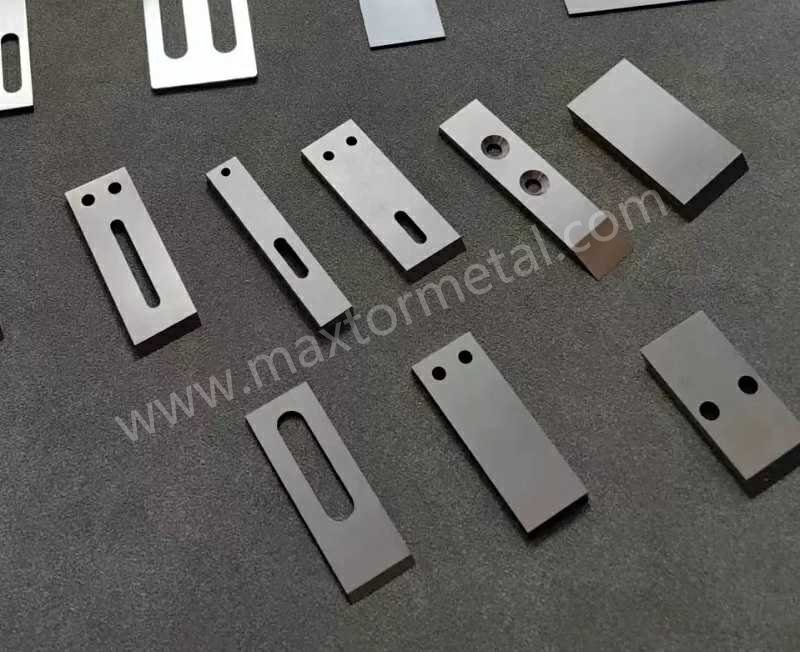
Instrument the process and act on leading indicators. Don’t wait for customer complaints or warehouse dust to tell you the edge is gone.
- Power and torque baselines: Record cutter and extruder motor current at your centerline settings. Investigate when you see a sustained +8–15% rise versus baseline. This is not a universal spec; validate and set your site trigger bands.
- Visual signals: Tails/comets, rough pellet faces, or a sudden increase in dryer dust call for a blade inspection and a check of water/cooling parameters.
- Vibration signatures: Spikes or new bands after a knife change can indicate imbalance or misalignment. Correct before the drift shows up in D90 or fines.
- QC cadence: Run sieve analysis on a fixed schedule and on any rate or recipe change. ASTM D1921 supports consistent D50/D90 and fines trending.
Evidence notes and external references
- Knife condition as a driver of pellet quality and fines/D90 behavior is detailed in Plastics Technology’s 2023 “The Path to Pellet Perfection”, which outlines how edge wear and cut mechanics translate to fines and distribution drift.
- A sustained rise in cutter motor current as an early indicator of dull blades—and its connection to tails, fines, and startup/water-parameter tuning—is discussed in Plastics Technology’s “Solving Common Problems in Underwater Pelletizing” (2014). Use this as external corroboration when defining your site’s +8–15% current/torque trigger bands.
- For operator procedures that underpin consistent startup and stable cutting conditions, MAAG/Gala’s OEM guidance provides practical checkpoints; see MAAG’s 2022 recommendations on cleaning and safe operation of Gala underwater pelletizers for sequenced prep/verification steps that help avoid early die-face defects and fines generation.
Wartungs-, Nachschleif- und Austausch-Workflow
Daily/weekly/monthly checklist
- Daily: Inspect pellets for tails and unusual surface finish; verify cooling or water conditions; clean and dry the knife area at shutdown.
- Weekly: Trend motor current/torque, check fasteners and runout, and review sieve data for early drift.
- Monthly or per cycles: Inspect edges under magnification; confirm sharpening precision (targeting ≤±0.02 mm typical for pelletizer knives) and document the regrind cycle count.
Regrind decision steps
- Trigger: Any of the following—fines exceed the site limit, D90 tail growth beyond control limits, or sustained +8–15% current rise.
- Inspect: Verify edge condition, flatness, mounting, and, for underwater, die-face contact.
- Decide: If blade geometry is still within safe clamping dimensions, regrind to your tolerance; otherwise replace. Reinstall as a balanced set and re-baseline current and QC.
- Document: Log date, cycle count, tolerance achieved, and the first post-maintenance QC results.
Practical example with disclosure
- Offenlegung: Nanjing METAL ist unser Produkt.
- Example: On a strand PP line targeting narrow D90, we standardized sharpening with a vendor capable of holding ≤±0.02 mm and verified edge apex quality under 50–100× magnification. We also logged regrind cycles by serial number and tied preventive replacement to a maximum cycle count driven by clamping geometry. The combination cut fines excursions during rate increases and kept D90 stable through three regrind cycles. For maintenance context and knife-care routines analogous to pelletizer knives, see this internal how-to on blade upkeep: maintain and sharpen plastic granulator blades. Troubleshooting steps for cutoff and similar knife systems that help operators structure interventions are summarized here: extrusion cutoff knife troubleshooting steps.
Offenlegung: Nanjing METAL ist unser Produkt.
Disclosure expansion: Particle-size figures cited here were measured in-house by the authoring team’s QC lab using dry‑sieve procedures per ASTM D1921 (Test Method B). Unless explicitly stated, these datasets have not been third‑party verified. Editorial and technical conclusions were prepared independently of commercial sales teams. Anonymous raw tables and sampling logs are available on request for qualified reviewers.
Worked examples
Example 1 — Strand PP, D90 tail control A PP strand pelletizing cell produced occasional long-tail D90 outliers during rate pushes. Baseline D50 and D90 were in spec at nominal rate, but on +15% throughput, D90 drifted wide and fines rose in subsequent conveying. We captured a new motor-current baseline, re-sharpened knives to verified tolerance, and synchronized cutter RPM to line speed using small 1–2% increments while watching pellet faces and sieve data. With crisp edges and better speed matching, D90 stayed within the window during the same rate push and fines stabilized, allowing the team to lock a higher centerline rate.
Example 2 — Underwater PA, fines reduction An underwater pelletizer running PA showed dust spikes after long runs. Operators observed mild chaining at the die face. We reconditioned blades, confirmed smooth die-face contact, reduced process water temperature within the OEM-acceptable range, and bumped water flow to boost quench. We also adjusted cutter speed to restore cut repeatability. The next shift’s sieve data showed the fines fraction back within the plant limit, and visual tails disappeared. A tighter inspection cadence after startups prevented recurrence.
Fazit und nächste Schritte
Uniform granule size lives or dies on a sharp, stable edge and a process window that respects it. Define clear D50/D90 and fines KPIs, instrument the line to catch drift early, and apply disciplined sharpening and regrind rules. Want a rationality check on your current knife specs or a second opinion on regrind tolerances? Our team can review a drawing and suggest a safe sharpening window.
For a broader overview of blade roles and care in pellet production, see this internal explainer: pelletizer blades industrial uses and maintenance.

 English
  Spanish
  Italian
  French
  Portuguese
  Russian
  German
  Arabic
  Hindi
Hindi  Vietnamese
  Indonesian
  Japanese
  Korean
4 Antworten
A really good blog and me back again.
Danke!
wish you all the best
Thanks, same to you.