

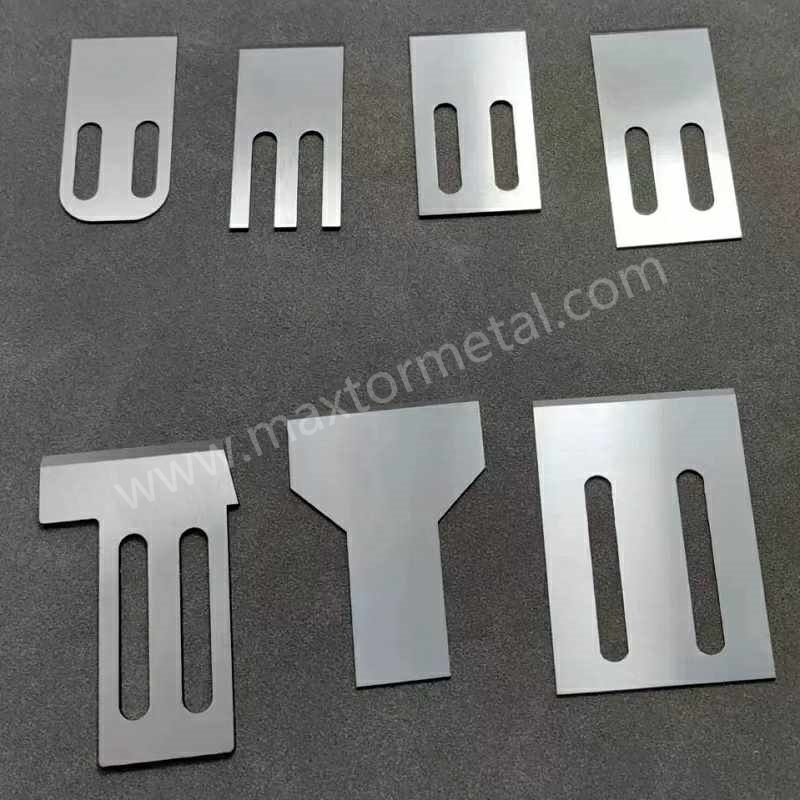
O tamanho uniforme dos grânulos não é apenas um objetivo estético — ele impulsiona a estabilidade do processo posterior, a eficiência de secagem, a precisão de dosagem e a qualidade percebida do produto. A alavanca mais rápida que você controla na linha é a afiação da lâmina, mas ela só entrega resultados consistentes quando está vinculada à janela de processo correta: velocidade da linha, RPM do cortador, resfriamento e condições da placa de matriz. Este guia mostra como tornar essa ligação explícita em três configurações comuns — espaguete (PP/PE), corte subaquático (PA/PBT/PC) e corte na cabeça/anel de água (masterbatch e alta carga) — e como mantê-la com KPIs mensuráveis.
Principais conclusões
- Trate o tamanho uniforme dos grânulos como um KPI medido: especifique as metas de D50/D90 e um corte de finos definido, depois faça a amostragem e analise as tendências.
- A afiação da lâmina governa a janela de processo utilizável; a integridade da aresta somada à folga correta mantém as caudas de D90 e os finos sob controle.
- Monitore antes que os defeitos apareçam: aja em caso de aumentos sustentados de +8–15% na corrente/torque do motor em relação à linha de base e no desvio de finos.
- Padronize as tolerâncias de afiação (típico de ≤±0.02 mm para facas de granulador) e os ciclos de reafiação; documente e analise as tendências dos resultados.
Estrutura de KPIs para tamanho uniforme de grânulos
Comece com uma estrutura focada primeiro na medição. Use a norma ASTM D1921 como seu método de referência para a distribuição do tamanho dos grânulos, que suporta distribuições completas baseadas em peneiras e o cálculo de D50 (mediana) e D90. Documente sua janela de especificação por produto, defina um corte de finos que reflita a geometria do seu grânulo e estabeleça uma frequência de amostragem que corresponda ao risco.
- Protocolo de referência: consulte o método padrão na publicação da ASTM para medição do tamanho de partículas de plástico, que permite a determinação de D50/D90 e a avaliação de finos por meio de uma pilha de peneiras definida. Para obter detalhes, consulte as orientações no método oficial da ASTM descrito no padrão ASTM D1921-18.
- Incerteza e aceitação: Ao transformar o D50/D90 baseado em peneiras e os finos em critérios de liberação, aplique bandas de proteção e regras de decisão de acordo com o guia de 2021 da Eurachem sobre incerteza e decisões de conformidade; estime e relate a incerteza a partir de peneiramentos replicados para que seus limites de aceitação reflitam a capacidade real do método.
Modelo de referência rápida para metas e ações
O modelo abaixo ajuda a alinhar a engenharia, o CQ e a manutenção. Substitua os marcadores descritivos pelos valores validados da sua fábrica obtidos em testes; mantenha a consistência entre os SKUs.
| Família de polímeros | Tamanho nominal do grânulo | Janela dentro da especificação | Meta de D50 | Máximo de D90 | Definição e limite de finos | Frequência de amostragem | Ação quando fora de especificação |
|---|---|---|---|---|---|---|---|
| PP/PE (espaguete) | Indicar comprimento/diâmetro por SKU | Definir janela de tolerância de comprimento/diâmetro | Indicar o resultado do teste de capacidade | Indicar o D90 máximo aceitável | Definir o tamanho da peneira para “finos” e o limite da fábrica | ex.: a cada X toneladas ou a cada Y horas | Ajustar o RPM do cortador vs. velocidade da linha, verificar a aresta e o nivelamento da lâmina, reafiar/substituir se necessário |
| PA/PBT/PC (subaquático) | Indicar a geometria do grânulo | Definir a janela de distribuição aceitável | Indicar o D50 medido em laboratório | Indicar o limite de D90 | Definir peneira de finos/limite de ppm | ex.: mais rigoroso durante os startups | Verificar temperatura/vazão/pressão da água, contato da lâmina com a matriz, reafiar em caso de desgaste da aresta |
| Masterbatch/alta carga (corte na cabeça) | Indicar a geometria | Definir a janela | Indicar a meta | Indicar o limite | Define fines sieve/limit | e.g., per batch | Stabilize cutting temp, check dryer, sharpen or replace blades |
Notas
- Always record the method: sieve stack, mass, and shaking time (per ASTM D1921). Include the instrument ID and operator initials to support traceability.
- For fines, choose a sieve that reflects customer risk (e.g., dust-sensitive packaging lines) and lock a ppm or percent threshold.
Como a afiação da lâmina controla a janela de processo
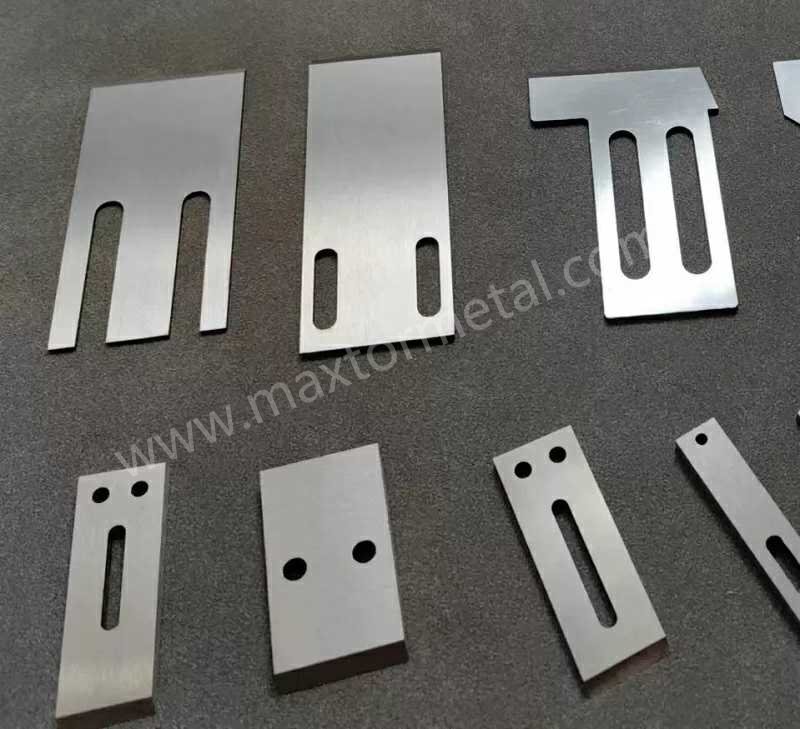
When the edge apex is crisp and the blade is flat, the cut is clean and repeatable. As the edge radius grows and micro-chipping appears, cutting requires more force, strands deform, underwater die-face contact degrades, and tails or comets form. Those tails either widen D90 or break in handling, inflating fines. The remedy is twofold: preserve the edge and hold the operating window where that edge performs best.
What to standardize
- Edge quality and finish: Require a burr-free apex verified under magnification. Specify a surface finish appropriate to your cutter style and polymer. For sharpening precision, reputable industrial grinders hold roughly ≤±0.02 mm on pelletizer edges; this level of control helps maintain uniform granule size. See industrial sharpening guidance on tolerances from a specialist like the discussion of granulator-edge precision in American Cutting Edge’s sharpening practices.
- Materials and heat treatment: Match tool steel to duty. For commodity strands (PP/PE), abrasion-resistant tool steels are common; for highly abrasive or high-throughput service, consider carbide-tipped or cemented carbide options. For underwater service, favor wear- and corrosion-resistant steels or coatings that maintain die-face integrity. Target hardness and coating choices should come from OEM guidance and plant validation.
- Mounting and immobilization: Flatness, runout, and secure clamping are as important as apex sharpness. Any wobble becomes a periodic defect in pellet size.
Scenario mechanics at a glance
- Strand pelletizing: Cooling determines strand stiffness at the cut; sharp blades reduce deformation so the cut length matches the computed pellet length. Clearance and flatness prevent angled cuts that extend the D90 tail.
- Underwater pelletizing: A sharp blade maintains smooth die-face contact. If the edge rounds, you’ll see “chaining” or tails, especially when water temperature or flow is off. Correct edge condition widens the usable range of cutter speed versus throughput.
- Hot-face/water-ring: Edge integrity plus thermal balance prevents smearing. Dull knives smear and create tails that later break into fines.
Ajuste específico por cenário para manter o tamanho uniforme de grânulos
Strand pelletizing for PP/PE
- Cooling and dewatering: Ensure bath length and temperature give you consistent strand stiffness before the cut. Verify air-knife performance to keep strands stable at entry.
- Speed matching: Sync cutter RPM to line speed to hold nominal pellet length. Adjust in small steps while watching D50/D90 and the pellet face.
- Edge control: Maintain flatness and edge integrity; a small loss of sharpness shows up first as angled faces and D90 creep.
Underwater pelletizing for PA/PBT/PC
- Water system control: Process water temperature, flow, and pressure are the main stabilizers. Excessively hot water or too-high melt temperature promotes tails and fusing; tune both in tandem. For troubleshooting patterns and corrective actions, see the engineering notes in Plastics Technology’s guide to mitigating underwater pelletizing issues.
- Die-face contact and startup: Keep a smooth, well-seated blade-to-die interface and follow a disciplined startup sequence—water and lubrication first, low-rate ramp, then pelletizer engagement with speeds matched—to avoid early defects. A commissioning overview with sequencing logic is outlined in Leistritz’s startup guidance for extrusion lines.
Hot-face and water-ring for masterbatch/high-fill
- Thermal balance: Stabilize cutting temperature and avoid smearing at the cut. Use a melt pump to smooth pulsations, and ensure the dryer doesn’t fracture weak tails into fines.
- Knife condition: Highly filled and sticky recipes are unforgiving—sharpen on a tighter cadence and monitor fines closely during transitions.
For system-level context and component functions across underwater and hot-face platforms, see the manufacturer overview of modern pelletizing systems in MAAG’s product documentation.
For operators seeking more underwater-specific blade considerations and maintenance reminders, this internal explainer provides a practical overview: best underwater pelletizer blades guide.
Monitoramento e limites para agir antes do desvio de qualidade
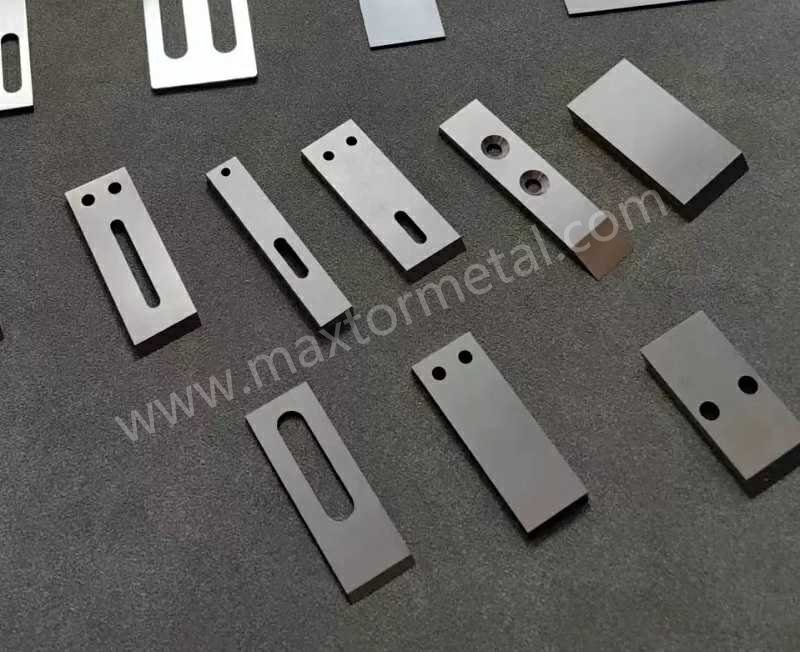
Instrument the process and act on leading indicators. Don’t wait for customer complaints or warehouse dust to tell you the edge is gone.
- Power and torque baselines: Record cutter and extruder motor current at your centerline settings. Investigate when you see a sustained +8–15% rise versus baseline. This is not a universal spec; validate and set your site trigger bands.
- Visual signals: Tails/comets, rough pellet faces, or a sudden increase in dryer dust call for a blade inspection and a check of water/cooling parameters.
- Vibration signatures: Spikes or new bands after a knife change can indicate imbalance or misalignment. Correct before the drift shows up in D90 or fines.
- QC cadence: Run sieve analysis on a fixed schedule and on any rate or recipe change. ASTM D1921 supports consistent D50/D90 and fines trending.
Evidence notes and external references
- Knife condition as a driver of pellet quality and fines/D90 behavior is detailed in Plastics Technology’s 2023 “The Path to Pellet Perfection”, which outlines how edge wear and cut mechanics translate to fines and distribution drift.
- A sustained rise in cutter motor current as an early indicator of dull blades—and its connection to tails, fines, and startup/water-parameter tuning—is discussed in Plastics Technology’s “Solving Common Problems in Underwater Pelletizing” (2014). Use this as external corroboration when defining your site’s +8–15% current/torque trigger bands.
- For operator procedures that underpin consistent startup and stable cutting conditions, MAAG/Gala’s OEM guidance provides practical checkpoints; see MAAG’s 2022 recommendations on cleaning and safe operation of Gala underwater pelletizers for sequenced prep/verification steps that help avoid early die-face defects and fines generation.
Fluxo de trabalho de manutenção, reafiação e substituição
Daily/weekly/monthly checklist
- Daily: Inspect pellets for tails and unusual surface finish; verify cooling or water conditions; clean and dry the knife area at shutdown.
- Weekly: Trend motor current/torque, check fasteners and runout, and review sieve data for early drift.
- Monthly or per cycles: Inspect edges under magnification; confirm sharpening precision (targeting ≤±0.02 mm typical for pelletizer knives) and document the regrind cycle count.
Passos de decisão para reafiação
- Gatilho: Qualquer um dos seguintes — finos excedem o limite do local, crescimento da cauda D90 além dos limites de controle ou aumento sustentado de corrente de +8–15%.
- Inspecionar: Verificar a condição do gume, planicidade, montagem e, para sistemas subaquáticos, o contato com a placa de matriz.
- Decidir: Se a geometria da lâmina ainda estiver dentro das dimensões seguras de fixação, reafie de acordo com a sua tolerância; caso contrário, substitua. Reinstale como um conjunto balanceado e restabeleça a linha de base da corrente e do CQ.
- Documentar: Registrar data, contagem de ciclos, tolerância alcançada e os primeiros resultados de CQ pós-manutenção.
Exemplo prático com divulgação
- Aviso: Nanjing METAL é um produto nosso.
- Exemplo: Em uma linha de espaguete de PP visando um D90 estreito, padronizamos a afiação com um fornecedor capaz de manter ≤±0,02 mm e verificamos a qualidade do ápice do gume sob ampliação de 50–100×. Também registramos os ciclos de reafiação por número de série e vinculamos a substituição preventiva a uma contagem máxima de ciclos determinada pela geometria de fixação. A combinação reduziu os desvios de finos durante os aumentos de vazão e manteve o D90 estável ao longo de três ciclos de reafiação. Para contexto de manutenção e rotinas de cuidados com facas análogas às lâminas de granulador, consulte este guia interno sobre manutenção de lâminas: manter e afiar lâminas de granulador de plástico. Os passos de solução de problemas para sistemas de facas de corte e similares que ajudam os operadores a estruturar as intervenções estão resumidos aqui: passos de solução de problemas para facas de corte de extrusão.
Aviso: Nanjing METAL é um produto nosso.
Expansão da divulgação: Os valores de tamanho de partícula citados aqui foram medidos internamente pelo laboratório de CQ da equipe de autoria usando procedimentos de peneiramento a seco de acordo com a ASTM D1921 (Método de Teste B). A menos que explicitamente declarado, esses conjuntos de dados não foram verificados por terceiros. As conclusões editoriais e técnicas foram preparadas independentemente das equipes de vendas comerciais. Tabelas brutas anônimas e registros de amostragem estão disponíveis mediante solicitação para revisores qualificados.
Exemplos práticos
Exemplo 1 — Espaguete de PP, controle de cauda D90 Uma célula de granulação de espaguete de PP produzia desvios ocasionais de cauda longa de D90 durante aumentos de vazão. O D50 e o D90 de linha de base estavam dentro da especificação na vazão nominal, mas com +15% de rendimento, o D90 dispersou e os finos aumentaram no transporte subsequente. Capturamos uma nova linha de base de corrente do motor, reafiamos as facas para a tolerância verificada e sincronizamos o RPM do cortador com a velocidade da linha usando pequenos incrementos de 1–2% enquanto monitorávamos as faces dos pellets e os dados de peneiramento. Com gumes afiados e melhor correspondência de velocidade, o D90 permaneceu dentro da janela durante o mesmo aumento de vazão e os finos se estabilizaram, permitindo que a equipe fixasse uma taxa de linha central mais alta.
Exemplo 2 — PA subaquático, redução de finos Um granulador subaquático processando PA apresentou picos de pó após longas corridas. Os operadores observaram um leve encadeamento na placa de matriz. Recondicionamos as lâminas, confirmamos o contato suave com a placa de matriz, reduzimos a temperatura da água de processo dentro da faixa aceitável pelo OEM e aumentamos o fluxo de água para melhorar o resfriamento. Também ajustamos a velocidade do cortador para restaurar a repetibilidade do corte. Os dados de peneiramento do próximo turno mostraram a fração de finos de volta ao limite da fábrica, e as caudas visuais desapareceram. Uma cadência de inspeção mais rigorosa após as partidas evitou a recorrência.
Conclusão e próximos passos
O tamanho uniforme dos grânulos depende crucialmente de um gume afiado e estável e de uma janela de processo que o respeite. Defina KPIs claros de D50/D90 e finos, instrumente a linha para detectar desvios precocemente e aplique regras disciplinadas de afiação e reafiação. Quer uma verificação de racionalidade nas suas especificações atuais de facas ou uma segunda opinião sobre as tolerâncias de reafiação? Nossa equipe pode revisar um desenho e sugerir uma janela de afiação segura.
Para uma visão geral mais ampla sobre as funções e cuidados com as lâminas na produção de pellets, consulte este explicativo interno: usos industriais e manutenção de lâminas de granulador.

 English
  Spanish
  Italian
  French
  Portuguese
  Russian
  German
  Arabic
  Hindi
Hindi  Vietnamese
  Indonesian
  Japanese
  Korean
4 respostas
Um blog realmente bom e estou de volta.
Obrigado!
desejo a você tudo de bom
Obrigado, igualmente.