

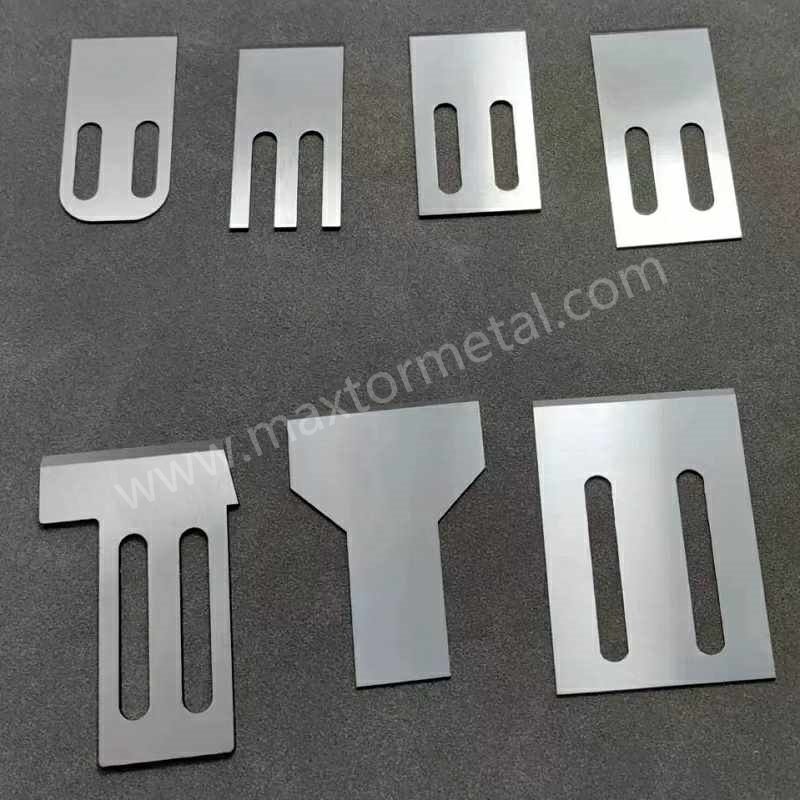
Uniform granule size is not just an aesthetic goal—it drives downstream stability, drying efficiency, metering accuracy, and perceived product quality. The fastest lever you control on the line is blade sharpness, but it only delivers consistent results when it’s linked to the right process window: line speed, cutter RPM, cooling, and die-face conditions. This guide shows how to make that linkage explicit across three common setups—strand (PP/PE), underwater (PA/PBT/PC), and hot-face/water-ring (masterbatch and high-fill)—and how to maintain it with measurable KPIs.
Conclusiones clave
- Treat uniform granule size as a measured KPI: specify D50/D90 targets and a defined fines cut, then sample and trend.
- Blade sharpness governs the usable process window; edge integrity plus correct clearance keeps D90 tails and fines in control.
- Monitor before defects appear: act on sustained +8–15% rises in motor current/torque versus baseline and on fines drift.
- Standardize sharpening tolerances (≤±0.02 mm typical for pelletizer knives) and regrind cycles; document and trend outcomes.
KPI framework for uniform granule size
Start with a measurement-first framework. Use ASTM D1921 as your reference method for pellet size distribution, which supports full sieve-based distributions and calculation of D50 (median) and D90. Document your spec window by product, define a fines cut that reflects your pellet geometry, and set a sampling cadence that matches risk.
- Reference protocol: see the standard method in the ASTM publication for plastics particle size measurement, which enables D50/D90 determination and fines evaluation via a defined sieve stack. For details, consult the guidance in the authoritative ASTM method described in the ASTM D1921-18 standard.
- Uncertainty and acceptance: When turning sieve-based D50/D90 and fines into release criteria, apply guard bands and decision rules per Eurachem’s 2021 guide on uncertainty and compliance decisions; estimate and report uncertainty from replicate sieving so your acceptance limits reflect real method capability.
Quick-reference template for targets and actions
The template below helps align engineering, QC, and maintenance. Replace the descriptive placeholders with your site’s validated values from trials; keep it consistent across SKUs.
| Polymer family | Nominal pellet size | In-spec window | D50 target | D90 maximum | Fines definition and limit | Sampling frequency | Action when out of spec |
|---|---|---|---|---|---|---|---|
| PP/PE (strand) | State length/diameter per SKU | Define length/diameter tolerance window | State result from capability run | State maximum acceptable D90 | Define sieve size for “fines” and site limit | e.g., every X tons or every Y hours | Adjust cutter RPM vs. line speed, verify blade edge and flatness, regrind/replace if needed |
| PA/PBT/PC (underwater) | State pellet geometry | Define acceptable distribution window | State lab-measured D50 | State D90 limit | Define fines sieve/ppm cap | e.g., tighter during startups | Check water temp/flow/pressure, blade-to-die contact, regrind on edge wear |
| Masterbatch/high-fill (hot-face) | State geometry | Define window | State target | State limit | Define fines sieve/limit | e.g., per batch | Stabilize cutting temp, check dryer, sharpen or replace blades |
Notas
- Always record the method: sieve stack, mass, and shaking time (per ASTM D1921). Include the instrument ID and operator initials to support traceability.
- For fines, choose a sieve that reflects customer risk (e.g., dust-sensitive packaging lines) and lock a ppm or percent threshold.
How blade sharpness controls the process window
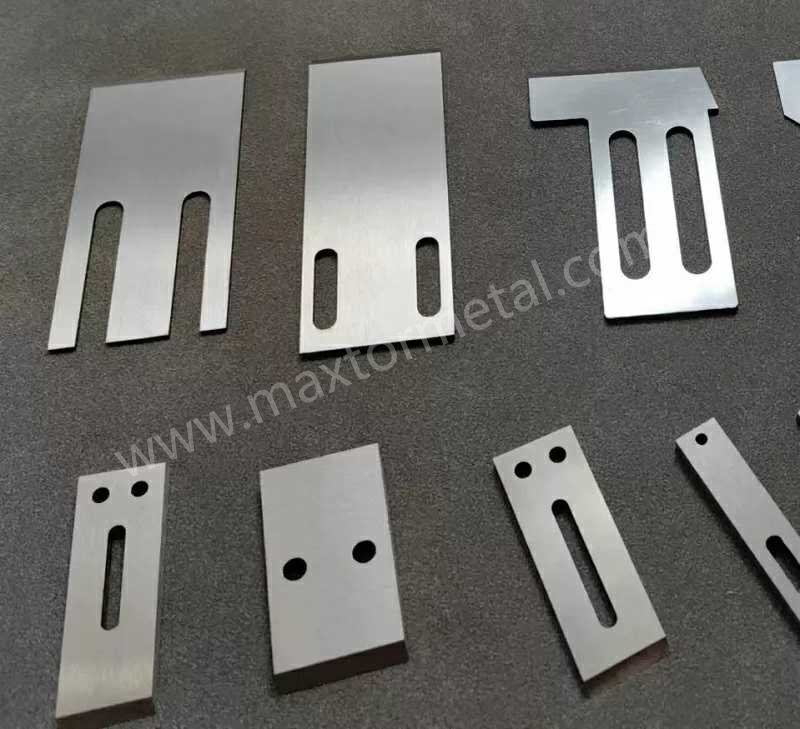
When the edge apex is crisp and the blade is flat, the cut is clean and repeatable. As the edge radius grows and micro-chipping appears, cutting requires more force, strands deform, underwater die-face contact degrades, and tails or comets form. Those tails either widen D90 or break in handling, inflating fines. The remedy is twofold: preserve the edge and hold the operating window where that edge performs best.
What to standardize
- Edge quality and finish: Require a burr-free apex verified under magnification. Specify a surface finish appropriate to your cutter style and polymer. For sharpening precision, reputable industrial grinders hold roughly ≤±0.02 mm on pelletizer edges; this level of control helps maintain uniform granule size. See industrial sharpening guidance on tolerances from a specialist like the discussion of granulator-edge precision in American Cutting Edge’s sharpening practices.
- Materials and heat treatment: Match tool steel to duty. For commodity strands (PP/PE), abrasion-resistant tool steels are common; for highly abrasive or high-throughput service, consider carbide-tipped or cemented carbide options. For underwater service, favor wear- and corrosion-resistant steels or coatings that maintain die-face integrity. Target hardness and coating choices should come from OEM guidance and plant validation.
- Mounting and immobilization: Flatness, runout, and secure clamping are as important as apex sharpness. Any wobble becomes a periodic defect in pellet size.
Scenario mechanics at a glance
- Strand pelletizing: Cooling determines strand stiffness at the cut; sharp blades reduce deformation so the cut length matches the computed pellet length. Clearance and flatness prevent angled cuts that extend the D90 tail.
- Underwater pelletizing: A sharp blade maintains smooth die-face contact. If the edge rounds, you’ll see “chaining” or tails, especially when water temperature or flow is off. Correct edge condition widens the usable range of cutter speed versus throughput.
- Hot-face/water-ring: Edge integrity plus thermal balance prevents smearing. Dull knives smear and create tails that later break into fines.
Scenario-specific tuning to hold uniform granule size
Strand pelletizing for PP/PE
- Cooling and dewatering: Ensure bath length and temperature give you consistent strand stiffness before the cut. Verify air-knife performance to keep strands stable at entry.
- Speed matching: Sync cutter RPM to line speed to hold nominal pellet length. Adjust in small steps while watching D50/D90 and the pellet face.
- Edge control: Maintain flatness and edge integrity; a small loss of sharpness shows up first as angled faces and D90 creep.
Underwater pelletizing for PA/PBT/PC
- Water system control: Process water temperature, flow, and pressure are the main stabilizers. Excessively hot water or too-high melt temperature promotes tails and fusing; tune both in tandem. For troubleshooting patterns and corrective actions, see the engineering notes in Plastics Technology’s guide to mitigating underwater pelletizing issues.
- Die-face contact and startup: Keep a smooth, well-seated blade-to-die interface and follow a disciplined startup sequence—water and lubrication first, low-rate ramp, then pelletizer engagement with speeds matched—to avoid early defects. A commissioning overview with sequencing logic is outlined in Leistritz’s startup guidance for extrusion lines.
Hot-face and water-ring for masterbatch/high-fill
- Thermal balance: Stabilize cutting temperature and avoid smearing at the cut. Use a melt pump to smooth pulsations, and ensure the dryer doesn’t fracture weak tails into fines.
- Knife condition: Highly filled and sticky recipes are unforgiving—sharpen on a tighter cadence and monitor fines closely during transitions.
For system-level context and component functions across underwater and hot-face platforms, see the manufacturer overview of modern pelletizing systems in MAAG’s product documentation.
For operators seeking more underwater-specific blade considerations and maintenance reminders, this internal explainer provides a practical overview: best underwater pelletizer blades guide.
Monitoring and thresholds to act before quality drifts
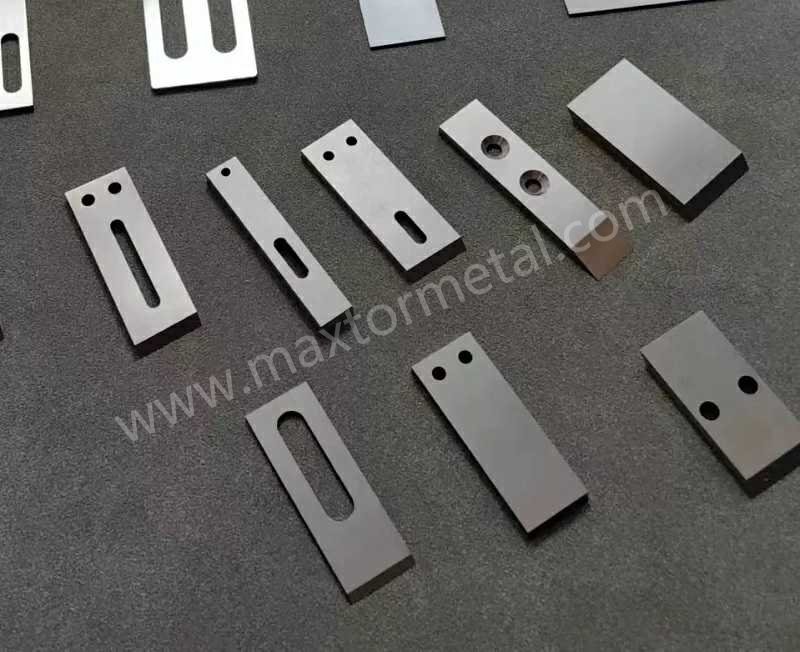
Instrument the process and act on leading indicators. Don’t wait for customer complaints or warehouse dust to tell you the edge is gone.
- Power and torque baselines: Record cutter and extruder motor current at your centerline settings. Investigate when you see a sustained +8–15% rise versus baseline. This is not a universal spec; validate and set your site trigger bands.
- Visual signals: Tails/comets, rough pellet faces, or a sudden increase in dryer dust call for a blade inspection and a check of water/cooling parameters.
- Vibration signatures: Spikes or new bands after a knife change can indicate imbalance or misalignment. Correct before the drift shows up in D90 or fines.
- QC cadence: Run sieve analysis on a fixed schedule and on any rate or recipe change. ASTM D1921 supports consistent D50/D90 and fines trending.
Evidence notes and external references
- Knife condition as a driver of pellet quality and fines/D90 behavior is detailed in Plastics Technology’s 2023 “The Path to Pellet Perfection”, which outlines how edge wear and cut mechanics translate to fines and distribution drift.
- A sustained rise in cutter motor current as an early indicator of dull blades—and its connection to tails, fines, and startup/water-parameter tuning—is discussed in Plastics Technology’s “Solving Common Problems in Underwater Pelletizing” (2014). Use this as external corroboration when defining your site’s +8–15% current/torque trigger bands.
- For operator procedures that underpin consistent startup and stable cutting conditions, MAAG/Gala’s OEM guidance provides practical checkpoints; see MAAG’s 2022 recommendations on cleaning and safe operation of Gala underwater pelletizers for sequenced prep/verification steps that help avoid early die-face defects and fines generation.
Maintenance, regrind, and replacement workflow
Daily/weekly/monthly checklist
- Daily: Inspect pellets for tails and unusual surface finish; verify cooling or water conditions; clean and dry the knife area at shutdown.
- Weekly: Trend motor current/torque, check fasteners and runout, and review sieve data for early drift.
- Monthly or per cycles: Inspect edges under magnification; confirm sharpening precision (targeting ≤±0.02 mm typical for pelletizer knives) and document the regrind cycle count.
Regrind decision steps
- Activador: Cualquiera de los siguientes: los finos superan el límite de la planta, el crecimiento de la cola de D90 supera los límites de control o se produce un aumento sostenido de la corriente del +8–15%.
- Inspección: Verifique el estado del filo, la planitud, el montaje y, para peletizadoras bajo agua, el contacto con la cara de la hilera.
- Decisión: Si la geometría de la cuchilla aún está dentro de las dimensiones seguras de sujeción, vuelva a rectificar según su tolerancia; de lo contrario, reemplácela. Reinstale como un juego balanceado y vuelva a establecer la línea base de la corriente y del control de calidad.
- Documentación: Registre la fecha, el recuento de ciclos, la tolerancia alcanzada y los primeros resultados de control de calidad tras el mantenimiento.
Ejemplo práctico con divulgación
- Aviso: Nanjing METAL es nuestro producto.
- Ejemplo: En una línea de peletización de PP por tiras (strand) orientada a mantener un D90 estrecho, estandarizamos el afilado con un proveedor capaz de mantener ≤±0.02 mm y verificamos la calidad del ápice del filo bajo un aumento de 50–100×. También registramos los ciclos de rectificado por número de serie y vinculamos el reemplazo preventivo a un número máximo de ciclos determinado por la geometría de sujeción. Esta combinación redujo los picos de finos durante los aumentos de producción y mantuvo estable el D90 a lo largo de tres ciclos de rectificado. Para conocer el contexto de mantenimiento y las rutinas de cuidado de cuchillas análogas a las de las cuchillas para peletizadoras, consulte este tutorial interno sobre el mantenimiento de cuchillas: mantenimiento y afilado de cuchillas para granuladores de plástico. Los pasos para la resolución de problemas en sistemas de cuchillas de corte transversal y similares que ayudan a los operadores a estructurar sus intervenciones se resumen aquí: pasos de resolución de problemas para cuchillas de corte de extrusión.
Aviso: Nanjing METAL es nuestro producto.
Ampliación de la declaración: Las cifras de tamaño de partícula citadas aquí fueron medidas internamente por el laboratorio de control de calidad del equipo autor utilizando procedimientos de tamizado en seco según ASTM D1921 (Método de prueba B). A menos que se indique explícitamente, estos conjuntos de datos no han sido verificados por terceros. Las conclusiones editoriales y técnicas se prepararon de forma independiente de los equipos de ventas comerciales. Las tablas de datos sin procesar anónimas y los registros de muestreo están disponibles previa solicitud para revisores cualificados.
Worked examples
Ejemplo 1 — PP en tiras (strand), control de cola D90: Una celda de peletización de tiras de PP producía valores atípicos ocasionales de cola larga de D90 durante los aumentos de ritmo de producción. Las líneas base de D50 y D90 estaban según la especificación a ritmo nominal, pero con un rendimiento del +15%, el D90 se dispersó y los finos aumentaron en el transporte posterior. Registramos una nueva línea base de corriente del motor, reafilamos las cuchillas a una tolerancia verificada y sincronizamos las RPM del cortador con la velocidad de la línea mediante pequeños incrementos del 1–2% mientras observábamos las caras de los gránulos y los datos de tamizado. Con filos bien definidos y una mejor coincidencia de velocidad, el D90 permaneció dentro de la ventana de tolerancia durante el mismo aumento de ritmo y los finos se estabilizaron, lo que permitió al equipo fijar un ritmo operativo continuo más alto.
Ejemplo 2 — PA bajo agua, reducción de finos: Una peletizadora bajo agua que procesaba PA mostraba picos de polvo tras operaciones prolongadas. Los operadores observaron una leve aglomeración en cadena en la cara de la hilera. Reacondicionamos las cuchillas, confirmamos un contacto suave con la cara de la hilera, redujimos la temperatura del agua de proceso dentro del rango aceptable del fabricante (OEM) e incrementamos el caudal de agua para mejorar el enfriamiento rápido. También ajustamos la velocidad del cortador para recuperar la repetibilidad del corte. Los datos de tamizado del siguiente turno mostraron que la fracción de finos volvió a estar dentro del límite de la planta y las colas visibles desaparecieron. Una frecuencia de inspección más estricta después de los arranques evitó la recurrencia.
Conclusion and next steps
El tamaño uniforme del gránulo depende por completo de un filo afilado y estable, así como de una ventana de proceso que lo respete. Defina KPI claros de D50/D90 y de finos, instrumente la línea para detectar desviaciones a tiempo y aplique reglas rigurosas de afilado y rectificado. ¿Desea una evaluación técnica de sus especificaciones actuales de cuchillas o una segunda opinión sobre las tolerancias de rectificado? Nuestro equipo puede revisar su plano y sugerir una ventana de afilado segura.
Para obtener una visión más amplia sobre la función y el cuidado de las cuchillas en la producción de gránulos, consulte este artículo explicativo interno: usos industriales y mantenimiento de cuchillas para peletizadoras.

 English
 Spanish
 Italian
 French
 Portuguese
 Russian
 German
 Arabic
 Hindi
 Vietnamese
 Indonesian
 Japanese
 Korean
4 comentarios
A really good blog and me back again.
¡Gracias!
Les deseamos todo lo mejor
Gracias, igualmente.