


Sie können die Shredder-Messer in wenigen einfachen Schritten austauschen. Schalten Sie zuerst die Maschine aus. Verwenden Sie als Nächstes die richtigen Werkzeuge. Befolgen Sie stets die Anweisungen des Herstellers. Sicherheit ist von größter Bedeutung. Wenn Sie hochwertige Messer verwenden, arbeitet Ihr Shredder effizienter. Zudem halten die Messer länger. Hier sind einige wesentliche Vorteile:
- Hochwertige Messer verbessern die Leistung Ihres Shredders.
- Sie haben eine längere Lebensdauer und müssen seltener nachgeschärft werden.
- Sie sparen Zeit und Geld bei der Wartung und Reparatur Ihres Shredders.
Dies Shredder-Klingenwechsel-Anleitung trägt zu Ihrer Sicherheit bei und sorgt für einen reibungslosen Betrieb Ihres Shredders.
Die wichtigsten Erkenntnisse
- Schalten Sie den Shredder vor Beginn der Arbeiten immer aus und trennen Sie ihn vom Stromnetz.
- Verwenden Sie Qualitätsmesser, um die Leistung und Lebensdauer Ihres Shredders zu erhöhen.
- Überprüfen Sie die Messer regelmäßig auf Stumpfheit, Risse oder andere Schäden, um Blockaden zu vermeiden.
- Befolgen Sie beim Messerwechsel die Anweisungen des Herstellers, um die Sicherheit und eine ordnungsgemäße Funktion zu gewährleisten.
- Tragen Sie beim Messerwechsel stets Schutzausrüstung wie Schutzhandschuhe und eine Schutzbrille.
- Reinigen und ölen Sie Ihren Shredder regelmäßig, um eine optimale Funktion zu gewährleisten und Überhitzung zu vermeiden.
- Überladen Sie den Shredder nicht, um die Messer zu schonen und Papierstaus zu vermeiden.
- Erstellen Sie einen Wartungsplan, um Ihren Shredder in gutem Zustand zu halten und Probleme frühzeitig zu erkennen.
Wann sollten die Klingen ausgetauscht werden?
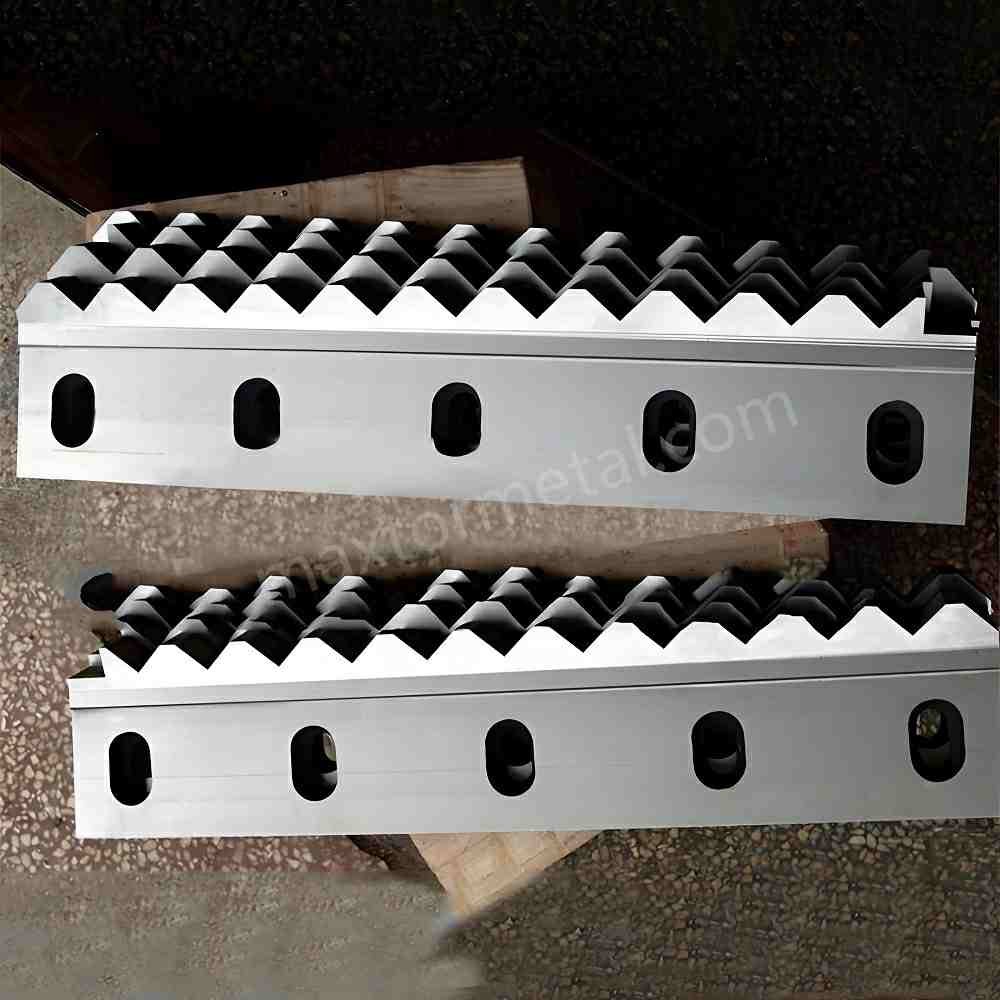
Zu wissen, wann Sie Ihre Shredder-Messer austauschen müssen, sichert den reibungslosen Betrieb Ihrer Maschine. Wenn Sie zu lange warten, riskieren Sie Blockaden, eine schlechte Zerkleinerungsleistung oder sogar Schäden am Shredder. Hier sind die wichtigsten Anzeichen, auf die Sie achten sollten.
Zeichen der Abnutzung
Dumpfheit
Möglicherweise stellen Sie fest, dass der Shredder Mühe hat, Materialien zu zerkleinern. Stumpfe Messer zwingen Sie dazu, dasselbe Material mehrmals durchlaufen zu lassen. Dies ist ein Zeichen dafür, dass die Schneidkanten ihre Schärfe verloren haben. Unregelmäßige oder grobe Schnitte sind ein weiterer Hinweis. Ausgefranste Schnittkanten zeigen, dass die Messer nicht mehr sauber schneiden.
Tipp: Überprüfen Sie die Schneidleistung regelmäßig. Wenn mehr Kraftaufwand erforderlich ist oder das Schnittbild unregelmäßig wird, sollten Sie die Messer inspizieren.
Risse
Nach intensivem Gebrauch oder dem Zerkleinern von zähen Materialien können Risse entstehen. Diese Risse schwächen das Messer und können zu größeren Schäden führen. Auch Ausbrüche oder Dellen zählen als Beschädigung. Sollten Sie solche Mängel feststellen, tauschen Sie das Messer umgehend aus.
Nachlassende Effizienz
Ihr Shredder benötigt möglicherweise länger für einen Arbeitsgang. Sie bemerken eventuell, dass die Maschine schwerer arbeitet, mehr Strom verbraucht oder überhitzt. Bei diesen Anzeichen sind die Messer höchstwahrscheinlich verschlissen.
Häufige Anzeichen dafür, dass Sie neue Messer benötigen:
- Nachlassende Schneidleistung.
- Unregelmäßige oder grobe Schnitte.
- Sichtbare Schäden wie Ausbrüche oder Risse.
- Probleme mit Überhitzung.
- Ungewöhnliche Geräusche oder übermäßige Vibrationen.
Leistungsprobleme
Blockaden
Häufige Blockaden deuten darauf hin, dass Ihre Messer nicht mehr richtig arbeiten. Stumpfe Messer reißen und quetschen das Material, anstatt es zu schneiden. Dies belastet den Motor und kann zu Ausfällen führen. Überprüfen Sie bei häufigen Staus Ihre Messer.
Geräuschentwicklung
Achten Sie auf neue oder lautere Geräusche. Ein hoher Geräuschpegel oder starke Vibrationen können auf eine Fehlausrichtung oder starken Verschleiß hinweisen. Wenn sich das Betriebsgeräusch Ihres Shredders verändert, sollten Sie die Messer überprüfen.
- Stumpfe Messer erhöhen den Energieverbrauch.
- Die Qualität des Endprodukts sinkt und hinterlässt unsauber zerkleinertes Material.
- Die Maschine benötigt möglicherweise mehr Leistung für den Betrieb.
Visuelle Inspektion
Beschädigungen
Untersuchen Sie Ihre Messer genau. Kerben, Ausbrüche und Risse sind leicht zu erkennen. Verschlissene Schneidkanten führen zu einer schlechten Schnittleistung. Auch Spannungsrisse in der Nähe von Halterungen oder Aufnahmen können auf Probleme hinweisen.
Rost
Rost schwächt das Messer und beeinträchtigt den Zerkleinerungsprozess. Wenn Sie Rost feststellen, ersetzen Sie das Messer. Saubere Messer halten länger und arbeiten effizienter.
Notiz: Hersteller empfehlen regelmäßige Inspektionen. Erstellen Sie einen Plan, um Ihre Messer auf Verschleiß zu prüfen. Dies hilft Ihnen, Blockaden zu vermeiden und Ihren Shredder in bestem Zustand zu halten.
Wenn Sie diese Tipps aus dem Leitfaden zum Austausch von Shredder-Messern befolgen, werden Sie Probleme frühzeitig erkennen. Ihr Shredder arbeitet effizienter und Sie vermeiden kostspielige Reparaturen.
Leitfaden zum Austausch von Shredder-Messern: Vorbereitung
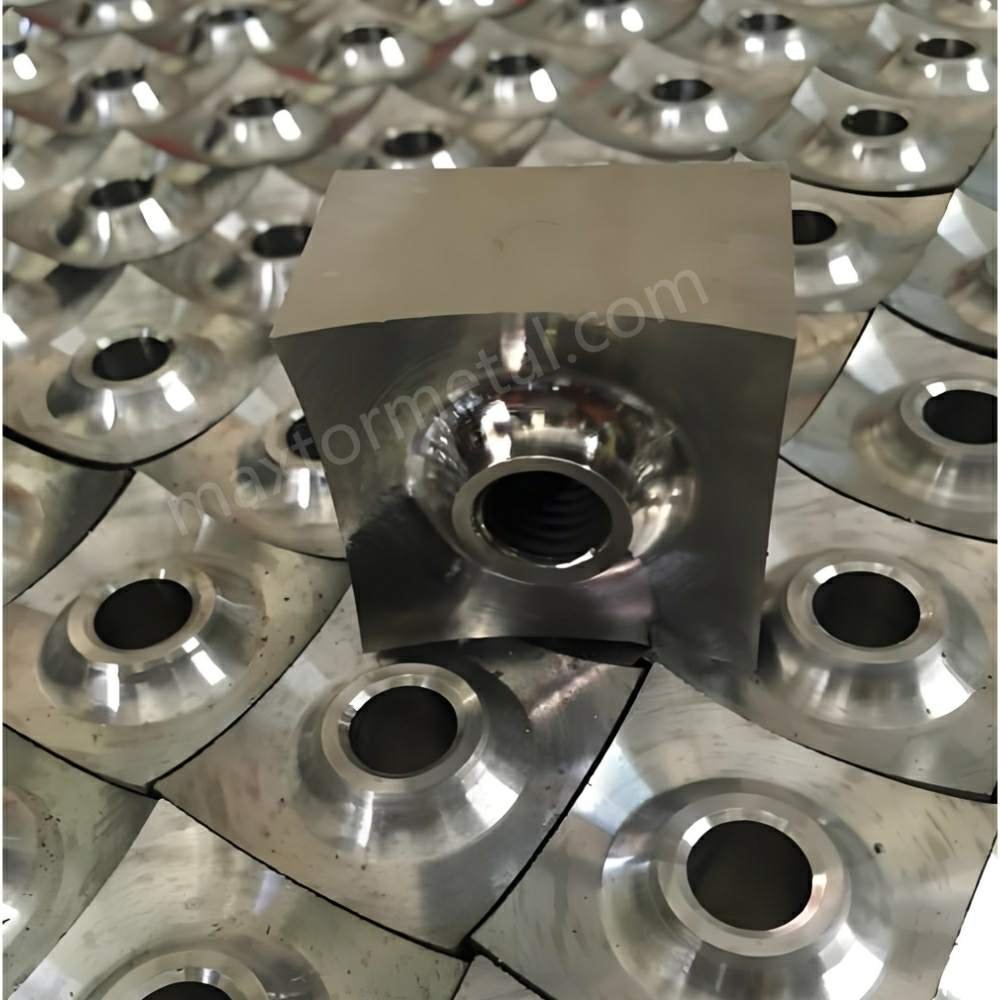
Die Vorbereitung auf den Messerwechsel ist äußerst wichtig. Sie müssen sicher und präzise arbeiten. Dies stellt sicher, dass Ihr Shredder nach dem Wechsel einwandfrei funktioniert. Hier sind die Schritte, die Sie vor dem Start befolgen sollten.
Werkzeuge und Materialien
Sie müssen die richtigen Werkzeuge und Materialien bereithalten. Diese ermöglichen einen reibungslosen Messerwechsel. Folgendes wird benötigt:
Schraubendreher
Wählen Sie Schraubendreher, die genau zu den Schrauben Ihres Shredders passen. Die meisten Shredder verwenden Kreuzschlitz- oder Schlitzschrauben. Das falsche Werkzeug kann die Schrauben oder das Gehäuse des Shredders beschädigen. Halten Sie einen passenden Satz Schraubendreher bereit.
Schutzausrüstung
Tragen Sie zu Ihrem Schutz Sicherheitshandschuhe und eine Schutzbrille. Handschuhe schützen Ihre Hände vor scharfen Kanten. Die Schutzbrille bewahrt Ihre Augen vor Staub und kleinen Partikeln. Bei hoher Lärmbelastung sollten Sie zudem einen Gehörschutz tragen.
Ersatzmesser
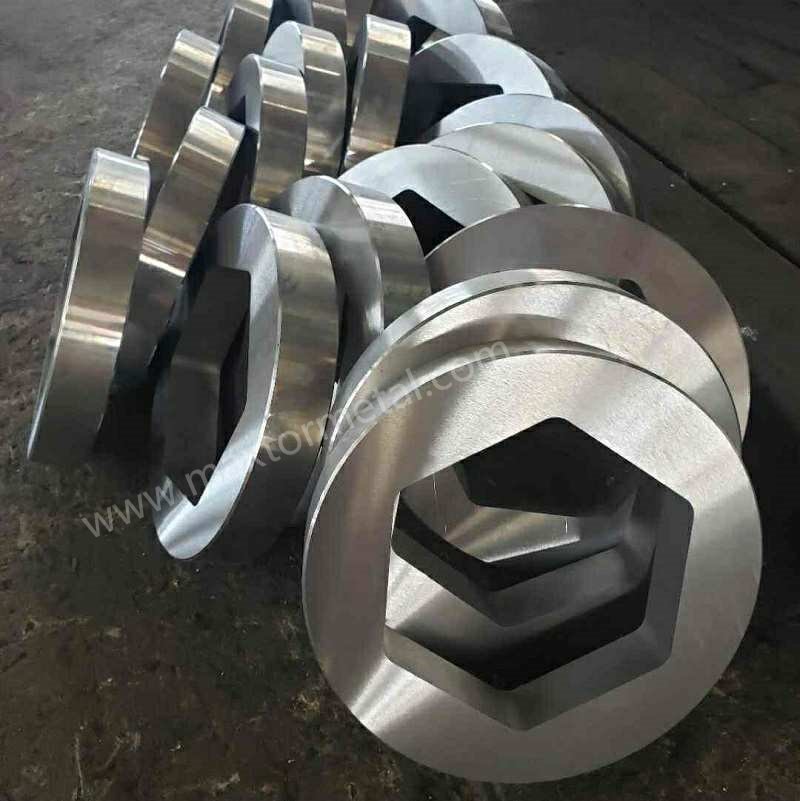
Wählen Sie hochwertige Ersatzmesser für Ihren Shredder. Messer von Nanjing Metal Industrial sind robust und bieten eine hervorragende Schnittleistung. Stellen Sie sicher, dass die Messer exakt zu Ihrem Shredder-Modell passen. Wenn Sie eine Sondergröße oder -form benötigen, prüfen Sie die Seite mit benutzerdefinierten Klingen. Store new blades in a dry place with air flow to stop rust. If your blades are expensive, think about professional sharpening or heat treatment to make them last longer.
Tipp: Check your blades often to find wear early. Store and care for your blades to keep them working well.
Sicherheitsmaßnahmen
Safety is the most important part of any shredder blade replacement guide. You want to stop accidents and keep your area safe.
Ausschalten
Unplug the shredder before you do anything. This keeps the machine from turning on by mistake. Taking out the power cord is the safest way. If your shredder has an emergency stop button, use it if something goes wrong.
Secure Area
Make sure you have enough space to work. Keep kids and pets away from your work area. Take off loose clothes and jewelry that could get caught. Put your tools and parts in order. Learn about safety features like auto shutoff and emergency stops.
- Never use your hands to clear jams. Use tools for this job.
- Do not put too much in the shredder to stop jams and motor problems.
- Tell others if you have trouble.
Review Instructions
Read the instructions for your shredder before you start. Each shredder is different, so you need the right steps.
Handbuch
Read your shredder’s user manual. The manual shows how to put in blades, use the shredder safely, and fix common problems. Follow the rules for what and how much you can shred. This helps you avoid breaking the shredder or getting hurt.
Online Resources
If you do not have the manual, look for guides or videos online. Many companies post helpful tips on their websites. You can also ask your blade supplier if the blades fit. Different shredders need different blade sizes, shapes, and materials. The wrong blade can break your shredder. Always check before you buy or put in new blades.
Notiz: Change your shredder settings for the blade material. This helps your shredder work better and makes blades last longer.
Being ready is very important in any shredder blade replacement guide. When you have the right tools, follow safety steps, and read instructions, you can change blades safely. Good blades and careful planning help your shredder last longer.
Leitfaden zum Austausch von Shredder-Messern: Schritt für Schritt
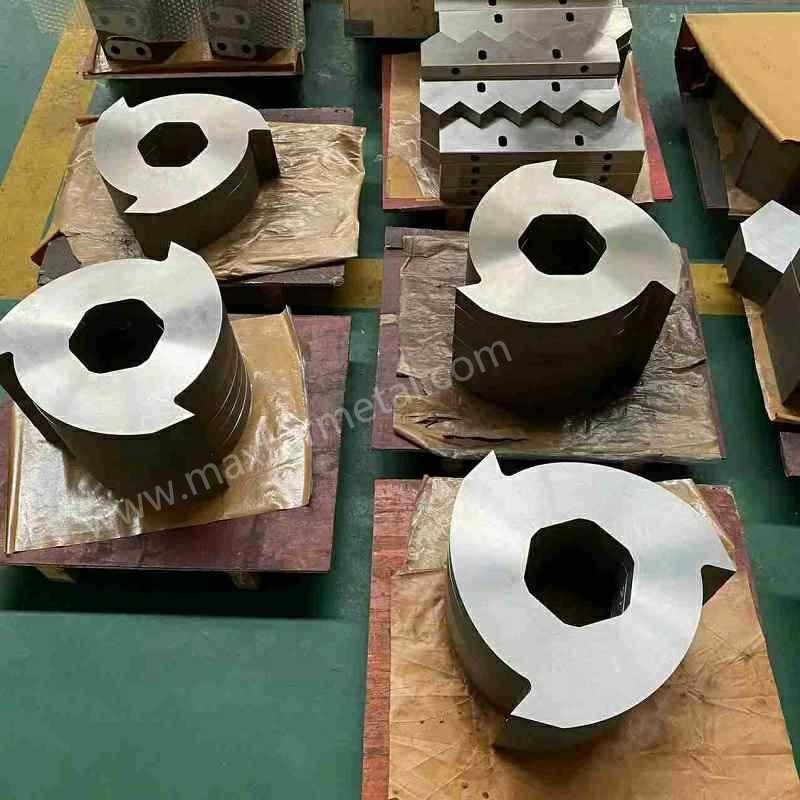
Changing shredder blades might sound tricky, but you can do it if you follow each step. This part of the shredder blade replacement guide walks you through the process, whether you have a single-shaft or multi-shaft shredder.
Remove Old Blades
Access Compartment
First, make sure your shredder is unplugged and all moving parts have stopped. Safety comes first. Put on cut-resistant gloves before you start. If you have a single-shaft shredder, open the main access panel. For multi-shaft shredders, check your manual for special instructions. You might need to remove scraper combs or casing plates. Use the right tools, like an 8mm Allen key, to unscrew bolts and nuts. Keep all screws and small parts in a safe spot so you don’t lose them.
Loosen Screws
Once you reach the blades, start loosening the screws or bolts that hold them in place. Work slowly and carefully. If you have a double or four-shaft shredder, you’ll need to remove nuts from both shafts. Slide the front plate toward you to expose the blades. Always use the correct screwdriver or Allen key to avoid stripping the screws.
Extract Blades
Now, you can take out the old blades and spacers one by one. Hold each blade firmly and pull it out gently. Watch out for sharp edges. If any blade feels stuck, don’t force it. Check for hidden screws or clips. Keep the workspace clean and organized. This makes it easier to install new blades later.
Tipp: Wear gloves at all times. Blades can be sharp, even if they’re dull from use.
Install New Blades
Klingen ausrichten
Before you put in new blades, make sure they match your shredder model. Precision blades from Nanjing Metal Industrie work well for many shredders. If you need a special size or shape, you can find custom options on the Seite mit benutzerdefinierten Klingen. Check your manual for the correct blade orientation. For multi-shaft shredders, follow the diagram closely. Proper alignment helps prevent jams and keeps your shredder running smoothly.
Tighten Screws
Secure each blade with the right bolts or nuts. Tighten them evenly so the blades don’t wobble. Don’t over-tighten, or you might damage the threads. Here’s a quick table to help you with torque values:
| Komponente | Größe | Torque Value (Nm) |
|---|---|---|
| Shredder Blade Nut | M8 | 30-35 |
| Chipper Blade Bolt/Nut | M8 | 30-35 |
Check each screw as you go. If you’re unsure, use a torque wrench to get the right tightness.
Check Fit
After installing all blades, double-check that each one sits firmly in place. There should be no movement. Adjust the clearance between blades if needed. Reinstall any covers or safety guards you removed earlier. Take a moment to inspect for loose parts or anything out of place.
Notiz: A good fit means your shredder will cut cleanly and last longer.
Test Operation
Power On
Plug your shredder back in and make sure all safety guards are in place. Turn on the machine. Start with a low speed if your shredder allows it.
Test Shredding
Run a small batch of material through the shredder. Watch and listen closely. Here’s a table to guide your test:
| Schritt | Aktion |
|---|---|
| 1 | Run the shredder at low speed for 5–10 minutes. |
| 2 | Listen for unusual vibrations. |
| 3 | Check for uneven noise levels. |
| 4 | Look for irregular cutting performance. |
| 5 | Adjust blade alignment if needed. |
If you hear strange noises or see uneven cuts, stop the machine and check the blades again.
Inspect Results
Look at the shredded output. The pieces should be even and clean. If you notice rough edges or jams, you might need to adjust the blades. Make sure everything works smoothly before you start shredding larger batches.
Tipp: Always follow your manufacturer’s safety rules during testing. If you spot any problems, turn off the shredder and fix them before using it again.
This shredder blade replacement guide helps you change blades safely and efficiently. Using precision blades and following each step keeps your shredder in top shape.
Wartungstipps
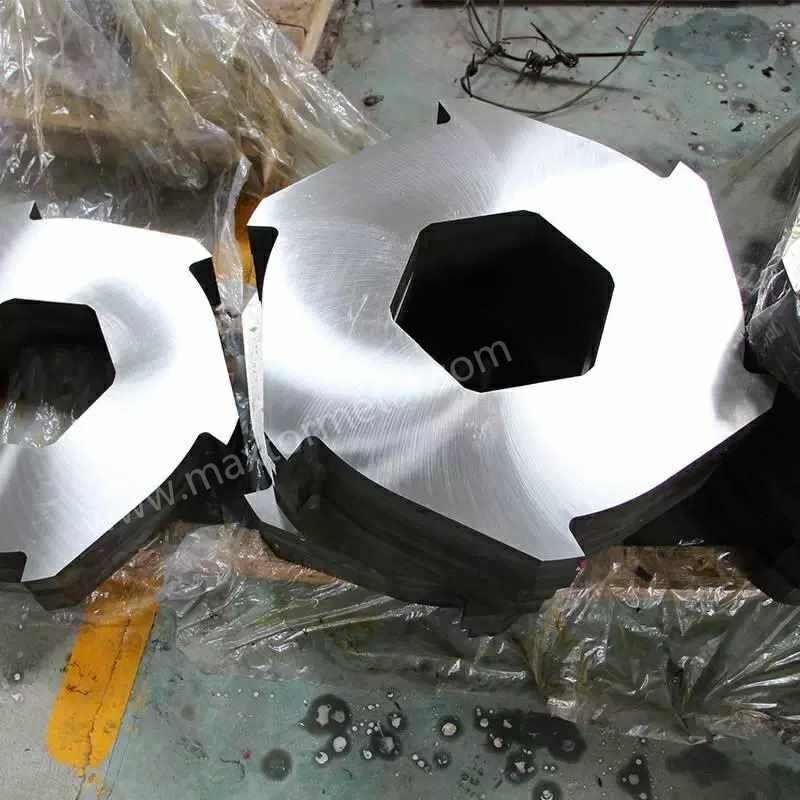
Taking care of your shredder is more than changing blades. Regular care helps your shredder work well. It also keeps your workspace safe. Here are easy ways to look after your shredder blades and stop problems.
Clean and Lubricate
Reinigungsmethoden
You want your shredder to work smoothly. Cleaning the blades removes dust and sticky bits. This helps the shredder run better.
- Clean your shredder after every use. This is important if you shred sticky things like labels.
- Use a soft brush or compressed air to clean the blades and chamber.
- Wipe the outside and inside with a dry cloth. Do not use water or strong chemicals.
Tipp: Cleaning often stops jams and keeps your shredder working well.
Schmierung
Oiling your shredder blades is very important. Lubrication makes blades move easily. It keeps blades sharp and stops overheating. The right oil helps a lot. Light straight mineral oil (SAE 10) works for most shredders. You can use light oil or wax for sticky jobs. Do not use aerosol sprays because they are unsafe.
How often should you oil your shredder? It depends on how much you use it and what kind you have. Look at this table for help:
| Aktenvernichter-Typ | Frequency of Oiling |
|---|---|
| Cross-Cut Shredder | Every 1/2 hour of shredding time |
| Light Use | Every 1-2 months |
| Daily Use | Every 4-6 weeks |
| Micro-Cut Shredder | Every 15-20 minutes of operation |
| Verwendung bei hohem Durchsatz | After every bin is full |
If you use your shredder a lot, do these steps:
- Oil after every bin is full.
- For micro-cut shredders, oil every 15-20 minutes.
- For cross-cut shredders, oil every time you empty the bin.
Notiz: Always follow your manufacturer’s rules for best results.
Prevent Damage
Überlastung vermeiden
Do not push your shredder too hard. Overloading wears out the blades quickly. Running the machine too fast causes stress. This makes blades dull and can cause jams. Only shred as much as your shredder can handle. If you put in too much, you can break the blades and shorten their life.
Remove Foreign Objects
Things like staples or paper clips can hurt your blades. Always check your papers before shredding. Take out anything that does not belong. Even small things can chip or crack the blades.
Here are easy ways to stop blade damage:
- Empty the bin often so it does not clog.
- Use a soft brush or compressed air to clean the blades.
- Put shredder oil on the blades to keep them sharp.
- Let the shredder cool down after heavy use.
- Never shred more than the rated amount.
- Teach everyone how to use the shredder the right way.
Aufbieten, ausrufen, zurufen: Clean your shredder often to remove stuck paper and dust. This helps the blades work their best.
Extend Blade Life
Use Quality Blades
Picking good blades helps your shredder last longer. High-quality blades made from strong metals stay sharp and resist damage. Custom blades last over 40 days. Standard blades may last only 10 days. You save time and money on replacements and repairs.
| Vergleich | Standardklinge | Benutzerdefinierte Klinge |
|---|---|---|
| Klingenlebensdauer | 10 Tage | Über 40 Tage |
| Monatliche Ausfallzeit | 16 Stunden | 5 Stunden |
| Jährliche Ersatzkosten | $25,000 | $9,500 |
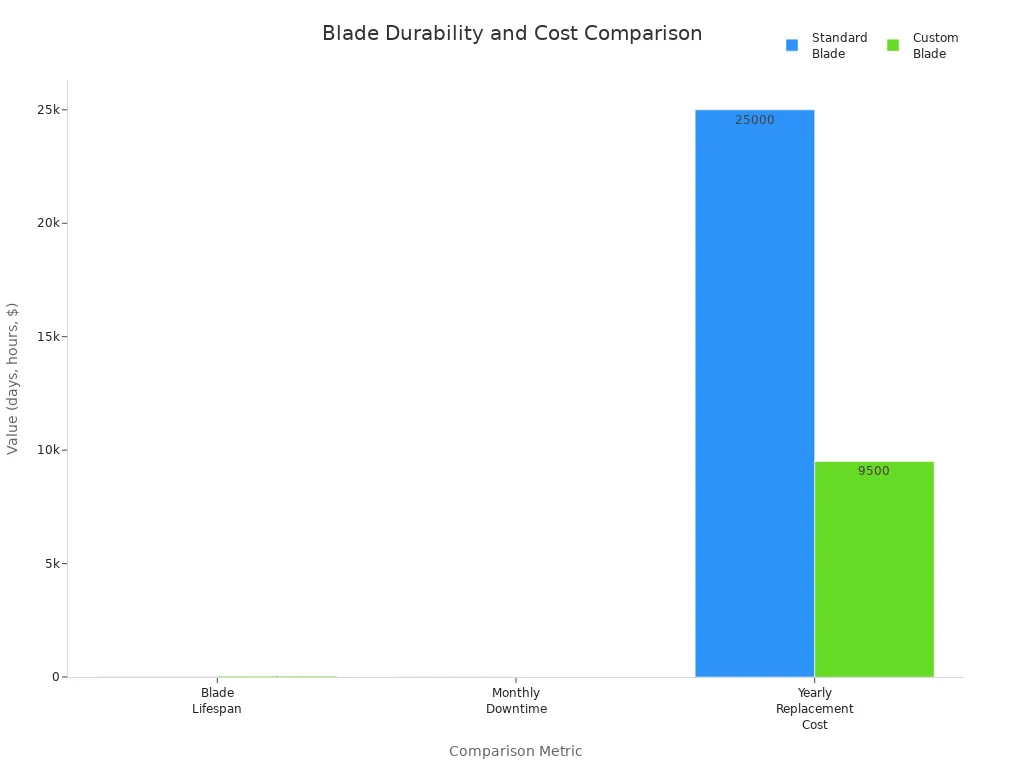
Custom blades use strong metals and special heat treatments. This means they stay sharp and handle tough jobs without breaking.
Schedule Maintenance
A good maintenance plan keeps your shredder working well. It also helps blades last longer. Here is a simple schedule you can use:
- Täglich: Clear debris from the chamber, check oil, listen for odd sounds, and check safety features.
- Wöchentlich: Look for cracks or loose blades, check belt tension, clean vents, and check the conveyor.
- Monatlich: Oil all moving parts, tighten bolts, check hydraulic systems, and test safety locks.
- Professioneller Service: If you use your shredder a lot, get professional help every 6 months. If you use it less, once a year is enough.
Keep a log of your maintenance. Use only parts and supplies the manufacturer recommends. Fix small problems before they get worse.
Tipp: Regular checks and quick fixes help you avoid expensive repairs. They also make your shredder blade replacement guide easy and worry-free.
Häufige Fehler & Fehlerbehebung
Changing shredder blades can seem easy, but you might run into problems if you skip steps or rush. Let’s look at common mistakes people make and how you can fix issues fast.
Zu vermeidende Fehler
Skipping Safety
Safety matters every time you work with shredder blades. If you forget safety steps, you put yourself at risk. You might get cuts or other injuries. Not wearing gloves or goggles can lead to accidents. You also risk hurting others in your workspace.
- You could get hurt by sharp blades.
- Accidents happen when you don’t unplug the shredder.
- Skipping safety checks can cause machine damage.
Tipp: Always unplug your shredder and wear protective gear before you start. Safety first keeps you and your shredder safe.
Wrong Tools
Using the wrong tools makes the job harder. You might damage screws or the shredder case. If you use tools that don’t fit, you can strip bolts or break parts. This leads to wasted time and extra costs.
- Accidents happen when tools slip.
- Damaged screws make reassembly tough.
- The wrong tools slow you down and cause frustration.
| Tool Problem | Was kann passieren |
|---|---|
| Wrong screwdriver | Stripped screws |
| Cheap pliers | Bent or broken parts |
| No torque wrench | Loose or overtightened bolts |
Notiz: Pick tools that match your shredder’s hardware. Double-check before you start.
Fehlausrichtung
Blade alignment is key for smooth shredding. If you install blades the wrong way, you get jams and poor cuts. Misaligned blades can damage the motor or other parts. You might hear strange noises or see uneven output.
- Jams happen when blades don’t line up.
- Poor cuts mean you need to redo work.
- Misalignment can shorten blade life.
Aufbieten, ausrufen, zurufen: Follow your shredder’s manual for blade placement. Take your time to check each blade before tightening screws.
Fehlerbehebung
You might face problems after replacing blades. Here’s how you can solve the most common issues.
Schlechtes Schneiden
If your shredder cuts poorly after blade replacement, try these steps:
- Turn off and unplug your shredder.
- Clean the blades with a soft cloth. Remove dust and paper bits.
- Use compressed air to blow away stuck debris.
- Check the type of paper you’re shredding. Standard paper works best. Avoid glossy or thick cardboard.
- Feed smaller batches of paper. Don’t overload the shredder.
| Problem | Lösung |
|---|---|
| Dull cuts | Clean blades, check alignment |
| Paper jams | Reduce paper amount |
| Uneven output | Use standard paper |
Tipp: If you still see rough cuts, check blade alignment and make sure all screws are tight.
Persistent Jams
Jams can happen even after you install new blades. Here’s what you can do:
- Unplug the shredder before you clear jams.
- Use the reverse function to release stuck paper.
- Gently pull out paper with tweezers or pliers.
- Lubricate blades with shredder oil to help prevent jams.
- Avoid shredding too many sheets at once.
- Remove staples and paper clips before shredding.
- Empty the bin often and oil the blades regularly.
You should also check the power supply. Replace blown fuses if needed. Look for error messages on your shredder’s display.
Notiz: Keep your shredder clean and store it in a cool, dry place. Regular cleaning and inspection help stop jams before they start.
Access Issues
Sometimes you can’t reach the blades or parts inside your shredder. This can slow down your blade replacement process.
- Check your manual for the right way to open panels.
- Organize screws and small parts so you don’t lose them.
- If you can’t access a part, don’t force it. Look for hidden clips or screws.
- Schedule regular inspections to spot loose or stuck parts early.
Aufbieten, ausrufen, zurufen: If you still can’t access the blades, ask for help from a professional or contact your shredder’s support team.
Solving problems quickly keeps your shredder working well. If you follow this shredder blade replacement guide, you’ll avoid mistakes and fix issues fast. Your shredder will stay safe, efficient, and ready for work.
You now understand the main steps to change shredder blades safely. Watch for blades that look dull or broken. Notice if your shredder jams a lot or works differently. Clean your shredder often and sharpen the blades when needed. Use good blades to help your shredder last longer.
| Aufgabe | Wie oft | Warum es wichtig ist |
|---|---|---|
| Inspect blades | Wöchentlich | Find damage before it gets worse |
| Saubere Klingen | Nach der Verwendung | Verhindern, dass Klingen stumpf werden |
| Sharpen blades | Monatlich | Make sure cuts stay smooth |
| Replace blades | Nach Bedarf | Keep your shredder working |
Need help or want a special solution? Contact our sales engineer Hier. Do you have questions or tips? Please share them below!
Häufig gestellte Fragen
Wie oft sollte ich die Schredderklingen austauschen?
You should check your blades every month. Replace them when you see dull edges, cracks, or poor shredding. If you use your shredder a lot, you might need new blades more often.
Can I sharpen shredder blades instead of replacing them?
Yes, you can sharpen some blades. Use a file or sharpening tool. If the blade has deep cracks or chips, replace it. Always follow your shredder’s manual for sharpening tips.
What tools do I need for shredder blade replacement?
You need screwdrivers, safety gloves, and new blades. Some shredders need an Allen key or pliers. Check your manual for the exact tools. Keep everything organized for easy reassembly.
How do I know if my new blades fit my shredder?
Check your shredder’s model number. Match it with the blade’s size and shape. Look at the manual or ask your supplier. Using the wrong blade can damage your shredder.
Is it safe to replace blades myself?
Yes, you can do it safely. Unplug the shredder first. Wear gloves and goggles. Follow each step in the shredder blade replacement guide. If you feel unsure, ask a professional for help.
Why does my shredder jam after blade replacement?
Jams happen if blades are misaligned or screws are loose. Double-check the blade placement. Make sure all bolts are tight. Test with a small batch before regular use.
What should I do if I lose a screw during replacement?
Don’t panic. Check the floor and workspace. Use a magnet to find metal screws. If you can’t find it, get a replacement screw that matches the size. Never run your shredder with missing parts.
Can I use any oil for shredder blade maintenance?
No, use light mineral oil or shredder-specific oil. Avoid sprays or heavy oils. The right oil keeps blades sharp and prevents jams. Always follow your manufacturer’s recommendations.
Siehe auch
So Wählen Sie Kunststoff-Shredder-Klingen für Effizientes Recycling
Der Ultimative Leitfaden für Einwellen-Shredder-Klingendesigns
Ein Leitfaden zu industriellen Schredderklingen und ihren Anwendungen

 English
  Spanish
  Italian
  French
  Portuguese
  Russian
  German
  Arabic
  Hindi
Hindi  Vietnamese
  Indonesian
  Japanese
  Korean