


Published: 2026-04-29 · Last reviewed: 2026-04-29
Food-safety and compliance note: This guide provides general best practices. Always follow your facility’s SSOP/HACCP programs and the slicer OEM’s model-specific instructions (including disassembly, tension/torque ranges, approved lubricants, and sanitation chemicals). If there is any conflict, the OEM manual and your validated food-safety plan take precedence. Document any changes as part of your preventive controls and verification records.
Principais conclusões
- Treat sanitation and blade care as one system: crumbs + moisture + misalignment drive wear and hygiene risk.
- Define “30% longer life” in a way your line can audit (hours/loaves per blade set, by SKU) and tie it to slice variance and crumb %.
- Use a risk-based hygiene cadence (4‑hour checks during continuous operation) and validate it against OEM instructions and your FSMA records.
- Why bread slicer blade maintenance drives slice consistency, crumb reduction, uptime, and TCO
Blade condition is one of the few variables that touches quality, sanitation, and uptime at the same time. As edges dull or tracking drifts, you typically see the same failure pattern:
- variação da espessura da fatia increases (rework, rejects, or customer complaints).
- Geração de migalhas rises (lost yield, more cleanup time, more airborne dust).
- Product tearing / compression becomes more frequent (especially on warm or high-moisture loaves).
- Unplanned stoppages grow (breaks, jams, constant “tweak and run”).
The cost isn’t just the blade set. It’s labor, lost yield, extra sanitation time, and downtime—i.e., total cost of ownership (TCO).
- What “extend life by 30%” means and how you will measure it per line and SKU
“Extend life by 30%” (extend blade life 30%) has to mean something measurable on your equipment, with your products. For a bakery plant or slicer OEM, a defensible definition is:
- Blade life (primary): total slicing hours (or total loaves) from install to removal.
- End-of-life trigger (objective): any of the following consistently crosses your limits:
- slice thickness variance exceeds your spec
- crumb % rises above your control limit
- tearing/compression rate exceeds your defect threshold
- the slicer requires repeated adjustments inside one shift to hold spec
To make it comparable per line and per SKU:
- Track blade life as hours + loaves (hours alone can hide speed changes).
- Segment by SKU family (e.g., sandwich loaves vs crusty bread) because wear mechanisms differ.
- Normalize quality signals: record thickness checks at the same sampling rate and crumb measurement method each run.
A practical baseline method is a 4-week “current state” period, then a 4–8 week “new standard” period, with the same SKUs, same operators, and the same inspection points.
- How this guide aligns with FSMA sanitation controls and OEM validation
FSMA-aligned sanitation isn’t just “clean it more.” It’s documented control: defined procedures, monitoring, verification, corrective actions, and records. Your slicer sits at a critical intersection because it’s a food-contact system with many crumb traps.
Use the regulatory framing as a design constraint:
- Build sanitation and maintenance steps into written SSOPs and keep records consistent with Requisitos de sanitização e CGMP da 21 CFR Part 117.
- Valide o padrão de manutenção em relação a Instruções do OEM por modelo (torque, especificações de tensão, pontos de lubrificação permitidos, regras de desmontagem).
Feito corretamente, seu programa de manutenção torna-se mais fácil de auditar porque vincula as ações de higiene a resultados mensuráveis (migalhas %, variação, tempo de inatividade) em vez de depender de “sempre fazemos desta forma”.”
Model-specific validation checklist
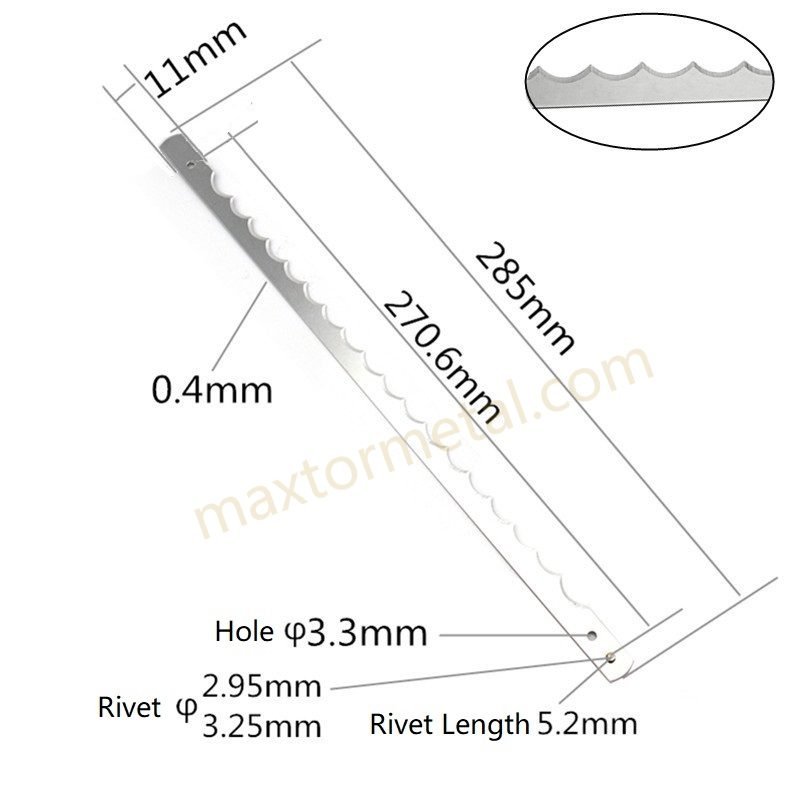
Use este checklist para traduzir as orientações deste artigo em específicas por modelo trabalho padronizado e registros auditáveis.
- Pontos de verificação do manual do OEM (por modelo): confirme as etapas de desmontagem, a ordem de instalação das lâminas, o método de tensão/alinhamento, os pontos de ajuste permitidos e a sequência de remontagem.
- Parâmetros mecânicos (não adivinhe): registre as faixas definidas pelo OEM de tensão/torque e as ferramentas utilizadas (chave de torque, medidor de tensão, etc.). Mantenha esses valores em seu POP interno, não em um cartaz genérico.
- Controle de lubrificação em contato com alimentos: documente quais pontos são permitidos, qual lubrificante é aprovado para contato incidental com alimentos onde necessário e como o excesso é evitado.
- Compatibilidade química: verifique se os detergentes/sanitizantes e os tempos de contato são compatíveis com os materiais do fatiador (metal, plásticos, vedações) e não aceleram a corrosão.
- Teste de liberação pós-manutenção: defina uma rotina curta de teste de fatiamento (verificação de espessura + observação de migalhas + verificação visual de marcas de atrito) e critérios de aprovação/reprovação.
- Alinhamento de registros FSMA/SSOP: garanta que os itens acima correspondam aos seus SSOPs escritos, monitoramento, ações corretivas, verificação e expectativas de manutenção de registros sob seu programa de controles preventivos.
Sanitation and hygiene cadence (slicer sanitation cadence)
A sanitização não está separada da vida útil da lâmina. A umidade, a química e o acúmulo de migalhas alteram as condições de atrito e corrosão — e essas condições alteram a taxa de desgaste.
Escolhas de Clean-in-place vs. limpeza a seco
A maioria dos fatiadores de pão não são verdadeiramente máquinas CIP da mesma forma que um sistema de tubulação fechada, então pense em termos de limpeza úmida vs. limpeza a seco, e escolha com base no risco e nos materiais.
- Limpeza a seco (preferencial para verificações frequentes): remoção de migalhas por vácuo/escova e limpeza direcionada em proteções e áreas acessíveis de contato com alimentos. Use para reduzir o acúmulo abrasivo de migalhas sem adicionar umidade.
- Limpeza úmida (para fim de turno / limpeza profunda): necessária quando resíduos, risco de alérgenos ou risco microbiano exigem detergentes/sanitizantes — mas introduz uma carga de corrosão e relubrificação.
A regra de decisão é simples: limpeza a seco como seu controle de alta frequência, limpeza úmida como seu reset validado.
Verificações a cada quatro horas e limpeza profunda no fim do turno
Para operação contínua, uma referência conservadora é um intervalo de sanitização de 4 horas. A orientação do FDA para fatiadores é explícita: limpe e sanitize os fatiadores de acordo com as instruções do fabricante pelo menos a cada quatro horas durante o uso contínuo para reduzir o risco de contaminação (FDA: Mantenha os fatiadores de frios comerciais seguros).
Esta referência é melhor tratada como um mínimo de uso contínuo para a operação de fatiadores do tipo varejo; adapte a cadência exata ao seu modelo de fatiador, risco do produto e registros de validação. O U.S. Centers for Disease Control and Prevention observa que limpar e inspecionar os fatiadores de alimentos em uso a cada 4 horas — ao mesmo tempo em que se verifica a presença de danos e detritos — pode reduzir a contaminação dos alimentos fatiados nos fatiadores (CDC: Delis de varejo — limpeza e inspeção de fatiadores de alimentos em uso a cada 4 horas).
Traduza isso em um programa de linha de panificação:
- A cada 4 horas (verificação rápida de controle):
- remova as migalhas da zona das lâminas, guias e proteções
- inspecione se há acúmulo pegajoso que aumente o arrasto
- verifique se as proteções e fixadores estão assentados (peças soltas criam atrito e desgaste irregular)
- documente a verificação (hora, operador, aprovação/reprovação, ação corretiva)
- Fim de turno (limpeza profunda e reset):
- desmonte conforme as instruções do OEM
- limpar + sanitizar todas as superfícies de contato com alimentos
- enxaguar/secar minuciosamente para evitar corrosão
- remontar e verificar os pontos de controle de alinhamento/tensão
Dica profissional: Sua “verificação de 4 horas” não precisa de desmontagem completa. Ela precisa de remoção repetível de migalhas + verificação para que você não deixe as condições de desgaste se acumularem por um turno inteiro.
Troca de alergênicos e verificação
Nota de evidência: como é a limpeza de 4 horas na prática
As evidências de delis de varejo são úteis porque os fatiadores nesses locais são um sistema de contato com alimentos de alto risco e bem estudado para contaminação cruzada. O CDC relata que cerca de metade das delis não limpava totalmente seus fatiadores a cada 4 horas, a maioria das delis tinha fatiadores danificados que são mais difíceis de limpar, e apenas cerca de 1 em cada 4 relatou inspecionar os fatiadores em busca de danos a cada 4 horas (CDC: Delis de Varejo — práticas de limpeza e inspeção de fatiadores).
Para uma panificação industrial, encare isso como um alerta prático: se a cadência e as verificações de danos não estiverem integradas ao trabalho padronizado e verificadas, a conformidade no mundo real tende a se desviar — especialmente durante os picos de produção.
Se você processa SKUs que contêm alergênicos (por exemplo, leite, ovos, nozes, gergelim), seu setup de troca não é apenas uma tarefa de limpeza — é uma tarefa de verificação.
Controles mínimos a documentar:
- gatilho de troca (lista de SKUs e perfil de alergênicos)
- etapas de desmontagem e lista de ferramentas
- produtos químicos de limpeza/tempo de contato conforme SSOP
- método de verificação (visual + ATP e/ou swabs de alergênicos, onde apropriado)
- critérios de liberação e aprovação formal
O objetivo é evitar o contato cruzado e, ao mesmo tempo, evitar o cenário de uma “máquina úmida, semi-seca” que acelera a corrosão e o arrasto.
Mechanical care: tension, alignment, and wear in bread slicer blade maintenance

A higienização reduz os fatores de desgaste (abrasão por migalhas e corrosão). O cuidado mecânico reduz a carga na aresta, o calor e os erros de alinhamento — os maiores multiplicadores da vida útil da lâmina.
Fatiadores alternativos vs. fatiadores de fita: o que verificar
Comece associando as verificações ao tipo de fatiador.
- Fatiadores alternativos (quadros multilâminas):
- procure por desgaste irregular nas fileiras de lâminas (geralmente indica desvio de alinhamento ou tensão inconsistente)
- verifique os pontos de montagem das lâminas e a integridade dos grampos
- confirme a suavidade do curso (o travamento aumenta a carga na aresta)
- Fatiadores de fita (loop contínuo):
- confirme a estabilidade do alinhamento (uma fita que oscila desgastará as guias e as arestas mais rapidamente)
- verifique as superfícies de contato das guias quanto a sulcos e descoloração por calor
- verifique se a tensão da fita está dentro da especificação do OEM (o excesso de tensão estressa a fita; a falta de tensão aumenta o desvio)
Correias, guias, fixadores: estabilize a espessura da fatia
Se o desvio de espessura aparecer gradualmente ao longo de um turno, não culpe as lâminas primeiro. O desvio geralmente é um problema do sistema:
- Correias: vitrificação, estiramento ou contaminação podem causar variação de velocidade e inconsistência de alimentação.
- Guias: guias desgastadas introduzem folga lateral, o que altera a geometria do corte e aumenta o rasgamento.
- Fixadores: proteções, grampos ou suportes de guia soltos criam micromovimentos que se tornam macrovariações.
Um padrão prático é verificar o torque dos fixadores críticos ao mesmo tempo em que realiza o reset de fim de turno e, em seguida, fazer uma verificação pontual após qualquer obstrução ou evento com a lâmina.
Lubrificantes: uso de NSF H1 e controle de contaminação
Se existirem pontos de lubrificação próximos às zonas do produto, trate a seleção e a aplicação do lubrificante como um controle de segurança de alimentos — não como uma conveniência.
- Use lubrificantes registrados para contato incidental com alimentos onde necessário, de acordo com a visão geral da NSF sobre registros de lubrificantes de grau alimentício H1 (lubrificante NSF H1).
- Apply minimally and only at OEM-defined points. “More grease” often becomes “more contamination + more crumb paste.”
- Separate tools: dedicate lube tools and keep them away from sanitation chemicals to avoid cross-contamination.
- Inspect seals and leakage paths at every deep clean; fix leaks instead of masking them with wipe-downs.
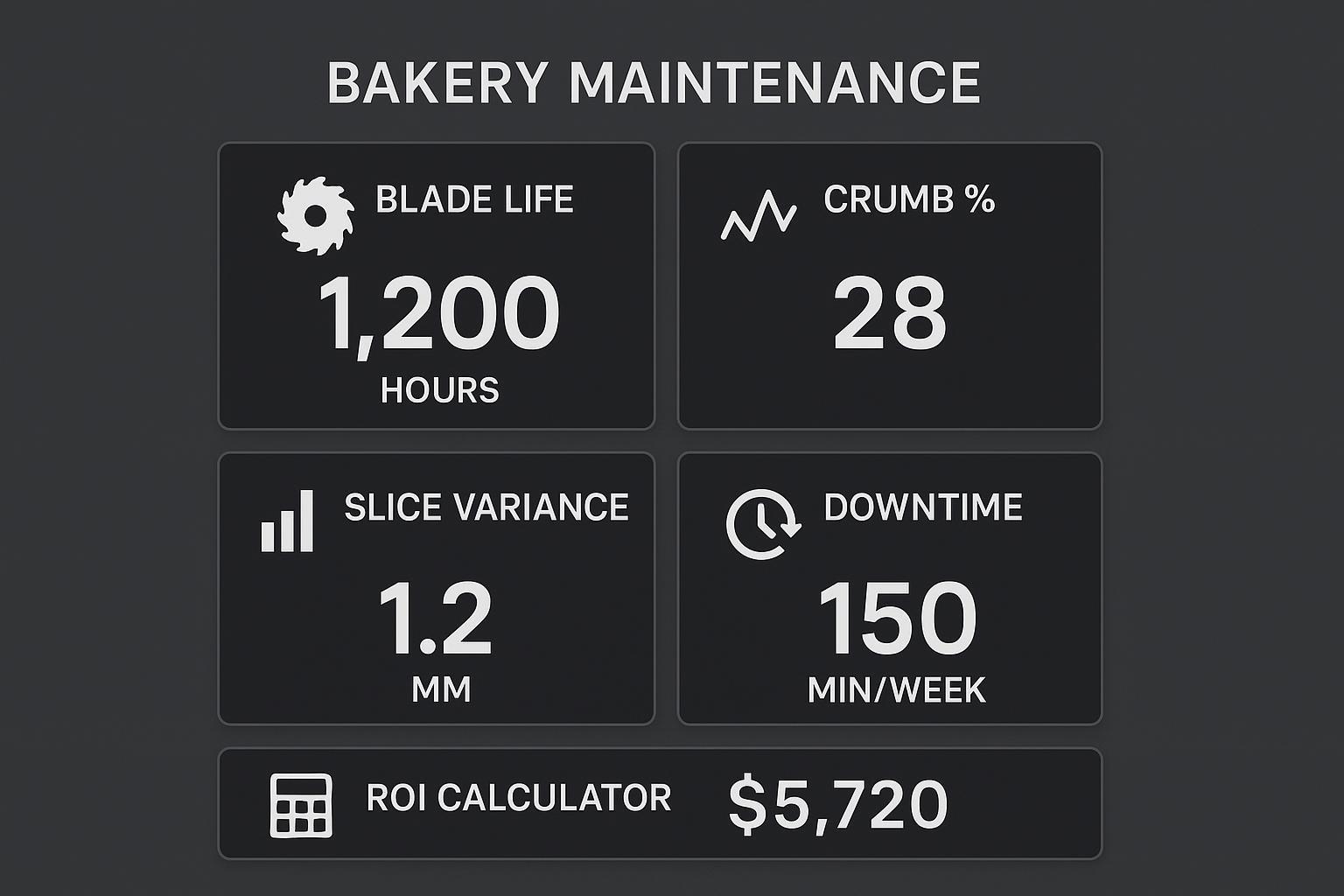
Operating discipline for longer life
The fastest way to burn blade life is to let operating conditions drift until the machine is “fighting the product.” Standardize the inputs that drive sticking, tearing, and constant re-adjustment.
Cooling setpoints before slicing to reduce sticking
Warm bread and high-moisture crumbs tend to smear and stick. That creates drag, which increases edge load and makes sanitation harder.
Operacionalmente:
- define a cooling setpoint window (time and/or product core temperature) before slicing
- treat “slicing too warm” as a defect cause, not an operator preference
- watch for seasonal effects (ambient humidity changes sticking behavior)
This one discipline reduces tearing complaints and the “clean it again mid-run” cycle that shortens blade life.
Inspection cues: crumbs, tearing, thickness drift
Use simple, observable cues as early warnings:
- Crumbs increasing at the discharge: often indicates dulling or increased friction; check crumb traps and guide contact.
- Tearing on the same side: often indicates alignment/tracking issue, not just dullness.
- Thickness drift over time: suspect feed/belts/guides/fasteners and tension stability.
The key is to link cues to actions. If the cue appears twice in a shift, you shouldn’t “keep running”—you should trigger your defined check.
Changeover SOP to reset, document, and release
Changeovers are where programs fail: blades get cleaned, but alignment and release checks get skipped.
A release-ready SOP includes:
- reset steps (crumb removal → deep clean if required → dry → re-lube points)
- mechanical verification (tension, tracking/alignment, guard seating)
- trial slice + thickness check
- documentation (who, when, what was adjusted)
Example (fit/compatibility): some teams use MAXTOR METAL bread slicer blades when they need OEM/ODM support to match blades from drawings/photos and confirm fit with existing guide and tension hardware.
Disclosure: The link above points to MAXTOR METAL’s own product page. The example is provided for illustration of a fit/compatibility workflow only. Always validate blade specification, materials, and installation parameters against your slicer OEM manual and your facility’s food-safety requirements before purchasing or installing any replacement blades.
KPIs, records, and ROI math

If you want a 30% gain that survives management review and audits, you need KPIs tied to the failure modes above—and records that show control.
Track blade life, crumbs, variance, downtime
A minimal KPI set that works for both plants and OEM validation:
- Blade life: hours and loaves per blade set (by line and SKU)
- Crumb %: crumbs collected per defined sample (consistent method)
- Slice variance: thickness mean and range (or standard deviation) per sampling plan
- Tempo de inatividade: minutes/week attributable to blade changes, jams, and slice-quality adjustments
- Corrective actions: count and type (tension adjust, guide change, deep clean, blade swap)
Tie each KPI to a trigger threshold and a response action.
Reusable log templates
Below are two templates you can copy into a paper log, spreadsheet, or CMMS.
| Campo | Entry |
|---|---|
| Date / time | |
| Line / slicer ID | |
| SKU / product family | |
| Check type | 4-hour quick check |
| Crumb buildup observed | None / Light / Moderate / Heavy |
| Sticky buildup or moisture present | Yes / No |
| Damage/debris check | Pass / Fail (notes) |
| Corrective action taken | Vacuum / Brush / Wipe / Deep clean trigger / Maintenance call |
| Verification result | Pass / Fail |
| Operador | |
| Supervisor sign-off (optional) |
| Campo | Entry |
|---|---|
| Date / time | |
| Line / slicer ID | |
| Razão | Planned blade change / Quality drift / Break/jam / PM |
| Blade set ID (lot or internal code) | |
| OEM installation steps followed | Yes / No |
| Tension/tracking verified per OEM | Pass / Fail (notes) |
| Guards/fasteners seated | Pass / Fail |
| Trial slice thickness check | Pass / Fail (notes) |
| Crumb/tearing observation | Normal / Elevated (notes) |
| Release decision | Approved / Hold |
| Operator / maintenance tech | |
| QA or supervisor sign-off |
Simple cost-per-1,000-loaves calculator
Use a simple model to quantify savings without pretending it’s perfect:
- Blade cost per 1,000 loaves = (blade set cost ÷ blade life in loaves) × 1,000
- Downtime cost per 1,000 loaves = (downtime minutes per blade life × cost/minute ÷ blade life in loaves) × 1,000
- Yield loss cost per 1,000 loaves = (crumb % × loaf value) × 1,000 (use your plant’s yield accounting)
Your “30% improvement” is real when you see the blade-cost term drop, and at least one of: downtime or crumb % drops with it.
Documentation for audits and continuous improvement
For audit readiness and continuous improvement, keep three record layers:
- Sanitation records: time-stamped checks, chemicals used, verification results, corrective actions.
- Mechanical verification: tension/alignment checks, fastener torque checks, parts replaced.
- Performance outcomes: variance, crumbs, downtime trends tied to each blade set.
A simple practice that pays off: review these KPIs weekly with sanitation + maintenance + production in the same room. When one team owns only one metric, problems ping-pong.
Conclusão
Author / publisher note
This article is published by MAXTOR METAL, a manufacturer and supplier of custom, precision-ground industrial blades with Mais de 15 anos of experience supporting industrial cutting applications. For model-specific maintenance parameters (tension, torque, lubrication points, disassembly rules), always defer to your slicer OEM documentation.
- Standardize sanitation and mechanical checks; validate with OEM specs per model
Build one standard work package per slicer model: sanitation cadence + mechanical verification + release checks. Then validate it against OEM documentation so adjustments don’t become tribal knowledge.
- Target ≥30% blade life gain; confirm with KPIs and cost-per-1,000-loaves
Define the end-of-life trigger, track blade life per SKU, and use cost-per-1,000-loaves to translate maintenance discipline into budget outcomes.
Referências
- 21 CFR Part 117 — Sanitation and CGMP requirements (eCFR): https://www.ecfr.gov/current/title-21/chapter-I/subchapter-B/part-117
- U.S. FDA — Keep Commercial Deli Slicers Safe (4-hour cleaning benchmark during continuous use): https://www.fda.gov/food/retail-food-industryregulatory-assistance-training/keep-commercial-deli-slicers-safe
- NSF — Food-grade lubricant registrations (H1 overview): https://www.nsf.org/knowledge-library/food-grade-lubricants-registrations

 English
  Spanish
  Italian
  French
  Portuguese
  Russian
  German
  Arabic
  Hindi
Hindi  Vietnamese
  Indonesian
  Japanese
  Korean