
Couteau rotatif pour rotors de précision Scheer : une alternative plus économique que l'OEM
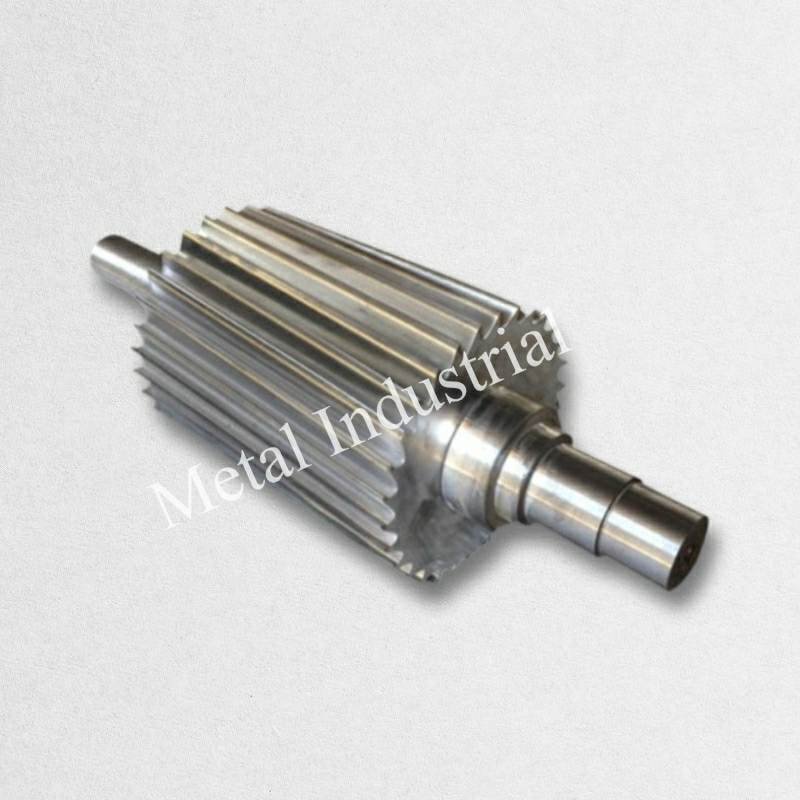
If you run Scheer strand pelletizers in the S3500/SGS families, you’re measured on pellet quality, runtime, and cost per ton. This guide shows exactly how to select, install, and validate high-precision replacement rotors and knives—so you can protect pellet geometry, cut fines, and reduce OEM spend without risking compatibility. What you’ll get here: a practical […]
Équilibrage dynamique des coupeurs rotatifs pour stopper les vibrations

High-speed vibration robs you of uptime and quality. On rotary cutters, even a few tenths of a gram out of place can turn into jarring forces at operating RPM, showing up as chatter marks, tails and fines, premature knife wear, bearing heat, and rising scrap. Static balance helps with heavy spots in one plane, but […]
Les fraises rotatives à mise en carbure de tungstène augmentent le temps de productivité pour le GFRP
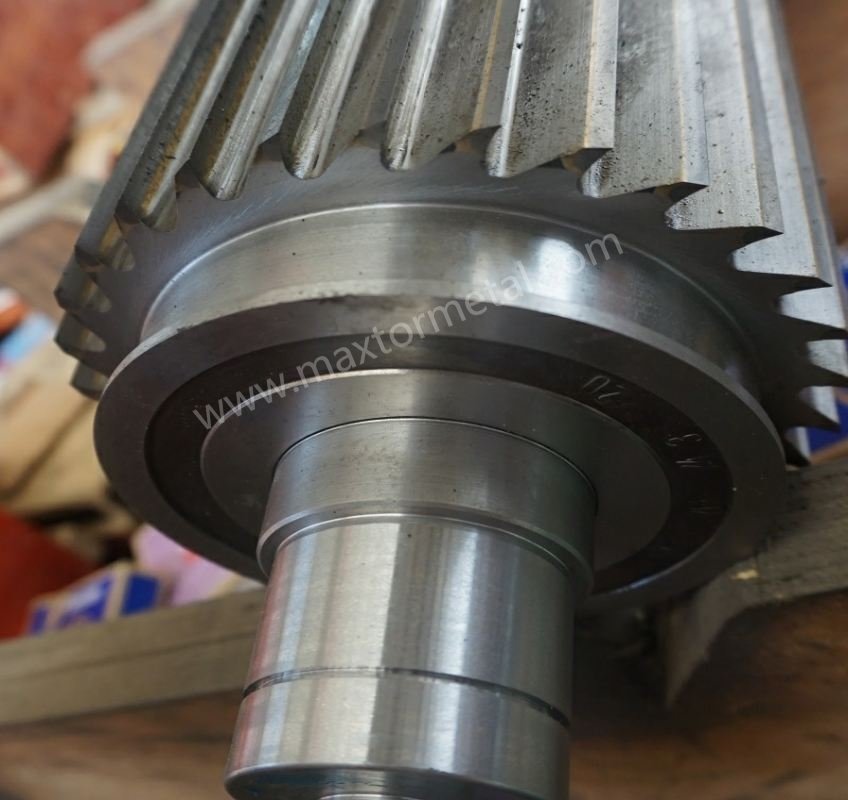
By Tommy Tang (Senior Sales Engineer, Nanjing METAL Industrial). 12 years in slitting & industrial cutting applications. Certifications: CSE, CME, Six Sigma Green Belt, PMP. Introduction Glass fiber–reinforced polymers (GFRP) are unforgiving on cutting edges. Hard, silica-based fibers abrade the knife, rounding the edge and seeding micro‑chips that show up as tails and later break […]
Guide du coupeur rotatif hélicoïdal pour une coupe à haute vitesse plus silencieuse
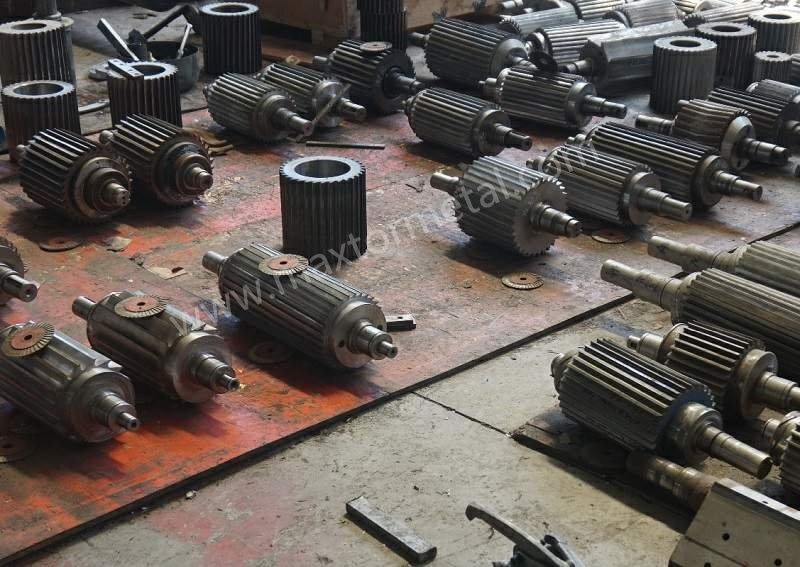
In strand pelletizing, polymer strands are guided into a rotary cutter that shears them against a fixed bed knife to create consistent pellets. A helical rotary cutter uses spiral knives rather than straight edges, so the cut occurs progressively along a helix instead of across the full width at once. At high RPM, this progressive […]
Couteaux de granulateur rotatif type OEM — Couteaux rotatifs adaptés pour Gala, MAAG et Scheer
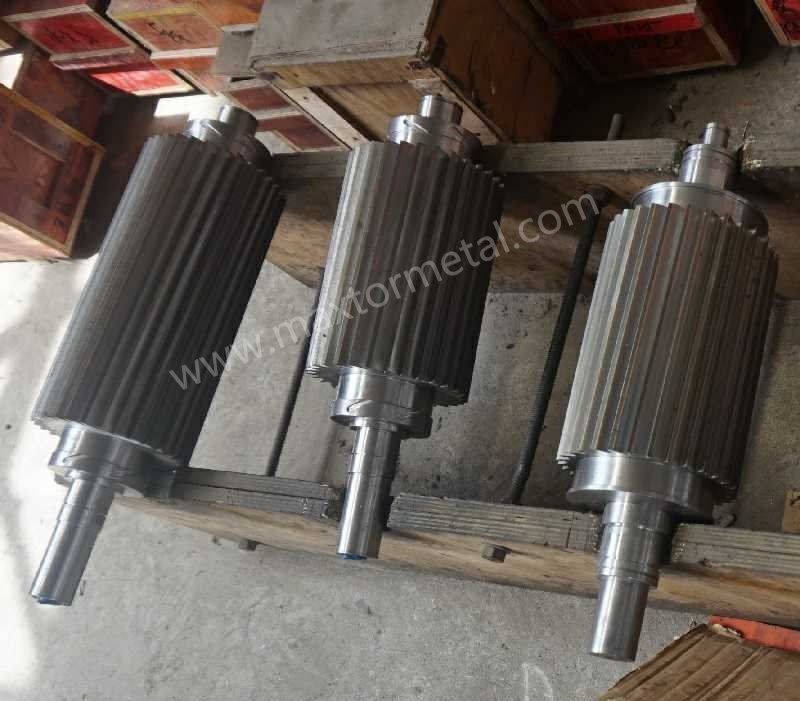
If you’re responsible for equipment, process, or purchasing on a strand pelletizer (MAAG Automatik/Scheer) or you maintain underwater systems (Gala/MAAG) as a secondary line, this guide is for you. OEM‑equivalent fit is what protects uptime and pellet quality: the moment OD/ID, thickness, bolt circle, or bore/pin fits drift, you get tails, rising fines, and more […]
Couteaux de granulateur de plastique à rotor pour GF‑PA66 : de la conception à la performance
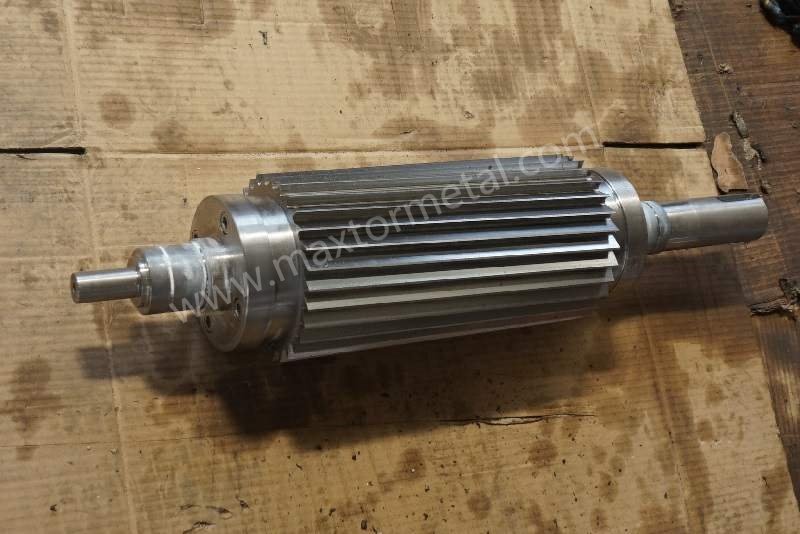
GF‑PA66 loads a cutting edge the way sand loads a pump: glass fibers abrade, heat accelerates softening at the land, and any loss of geometry shows up immediately as fines, tails, or unstable pellet length. That is why rotor plastic pelletizer blades working on glass‑filled nylon demand higher wear resistance, tougher micro‑edges, and tighter control […]
Des couteaux de granulateur à rotor qui durent plus longtemps grâce au carbure rapporté
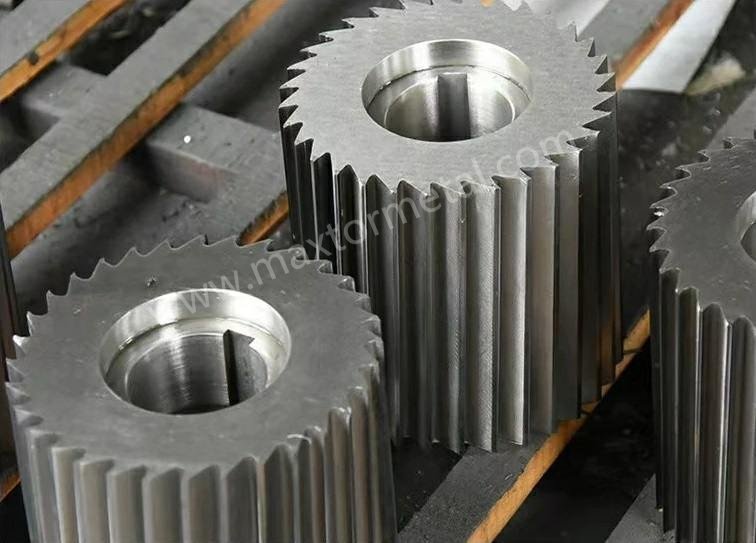
If you run underwater pelletizing on PP or PE, you feel blade life in your uptime, pellet geometry, and cost per ton. When blades hold a clean edge longer, you swap less, stabilize pellet length and roundness, and trim changeover hours. Failures usually start in a few familiar places: steady abrasion from fillers and pigments, […]
Les lames de granulateur rotatif à coupe hélicoïdale améliorent la qualité des granulés
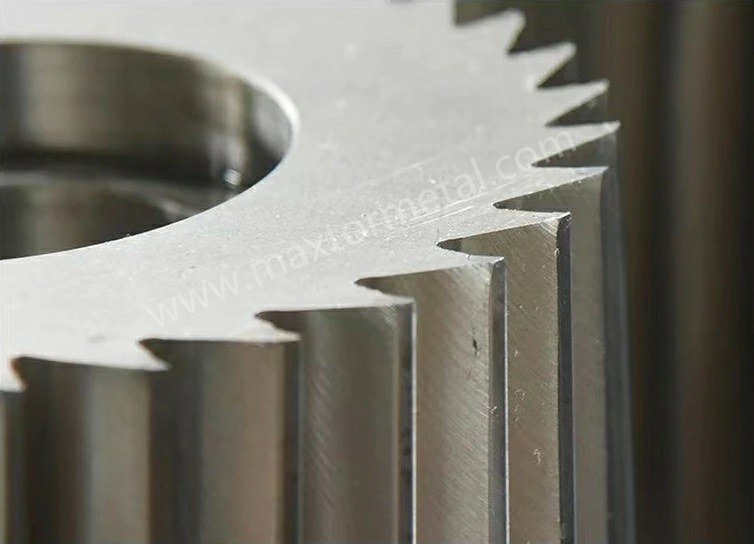
Helical or “rolling” scissor action in pelletizer knives changes how a cut is made. Instead of a perpendicular impact, the blade engages progressively along a helix, distributing load and slicing strands more cleanly. Plants that tune for this mechanism typically aim for tighter length-to-diameter (L/D) distributions, fewer fines and tails, longer knife life, and steadier […]
Pourquoi les OEM mondiaux font confiance aux usines de couteaux de granulateur en Chine
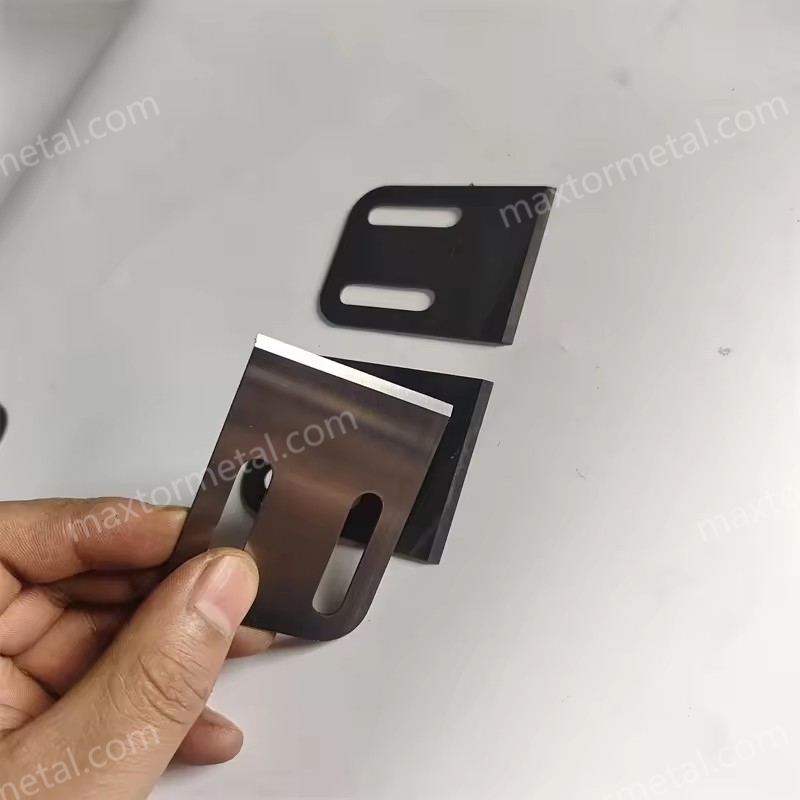
Global OEM engineering, procurement, and supply chain teams turn to China pelletizer blade factory suppliers when they need repeatable quality, auditable processes, and dependable delivery without runaway total cost of ownership (TCO). This guide is for R&D and process engineers validating knife performance at the die face, sourcing managers writing RFQs, and supplier quality leaders […]
Éviter les granulés agglomérés grâce à l'optimisation des angles de coupe
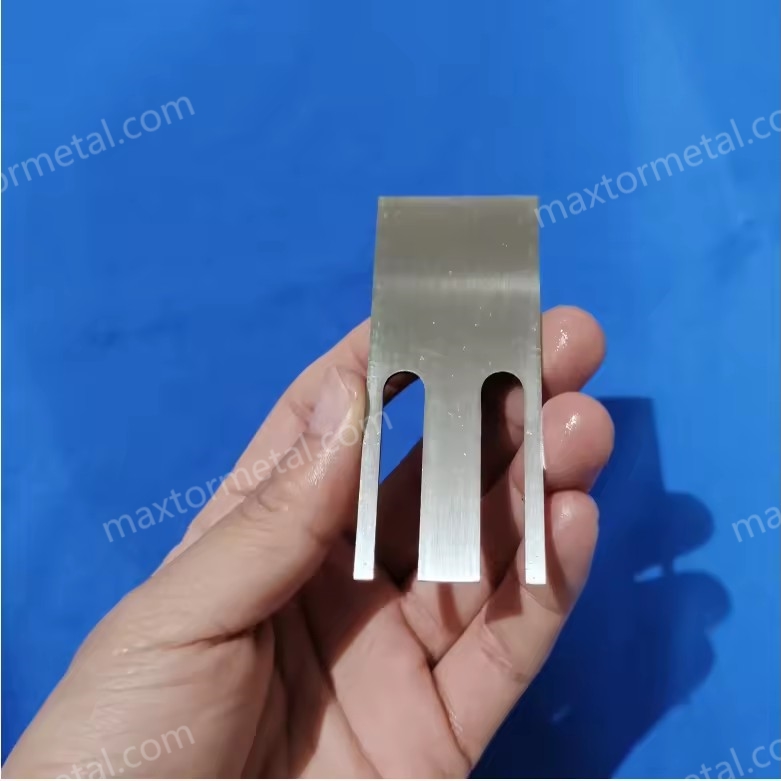
Introduction Clustered pellets—twins, triplets, and fused agglomerates—waste throughput, jam dryers and classifiers, and jeopardize customer quality claims. In underwater and die-face pelletizing, most clustering traces back to pellets leaving the die too hot or tacky, insufficient or unstable quench, or imperfect severance at the die face. Blade geometry sits at the heart of clean severance: […]

 English
  Spanish
  Italian
  French
  Portuguese
  Russian
  German
  Arabic
  Hindi
Hindi  Vietnamese
  Indonesian
  Japanese
  Korean