
M390 대 CPM S90V 분말야금 페렛타이저 나이프: 고유리섬유 마모 환경에서의 강종 선정
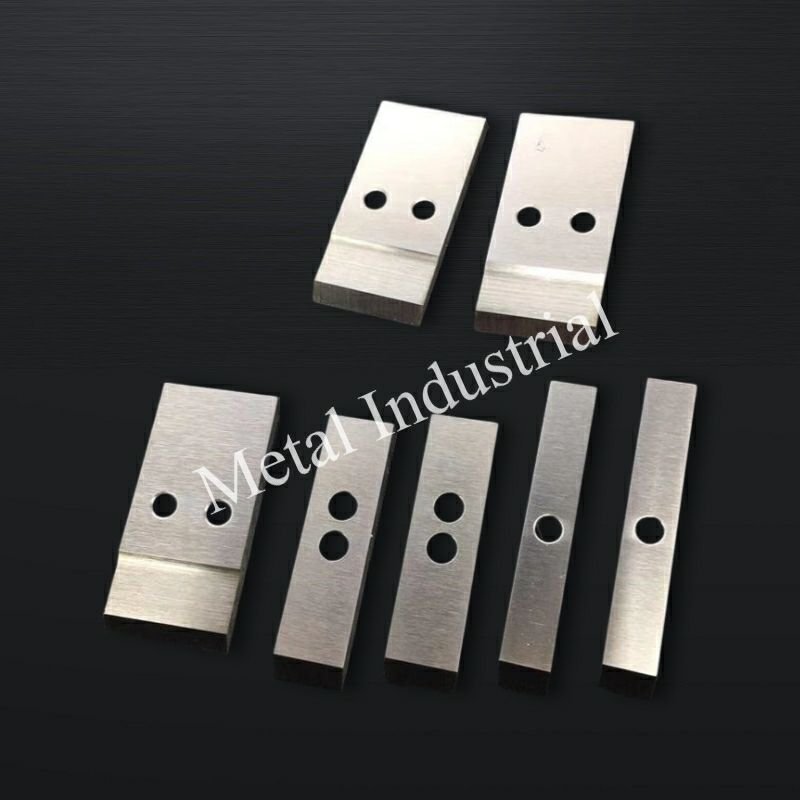
Quick answer: For pelletizing blades under high glass-fiber wear, powder metallurgy stainless steels outperform conventional tool steels because their fine, uniform carbide distribution resists micro-ploughing without the toughness trade-offs of high-alloy ingot steels. Between M390 and CPM S90V: choose CPM S90V when abrasion load is the dominant failure mode (>30% GF, neutral water); choose M390 when […]
전단 칼날용 D2 vs SKD11 공구강: 탄화물 미세조직, 파손 모드 분석 및 강종 선정 프레임워크
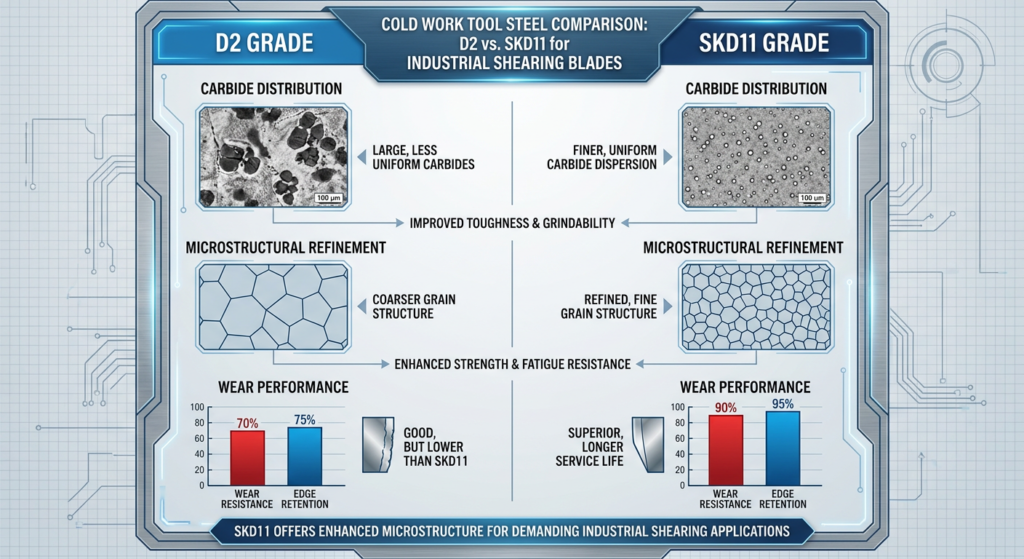
Quick Answer: D2 and SKD11 are compositionally near-identical high-carbon, high-chromium cold-work tool steels, but D2’s higher vanadium content (0.50–1.10%) delivers stronger abrasive wear resistance for clean, high-volume sub-6mm cutting, while SKD11’s finer carbide structure provides better impact toughness for stainless steel, variable feed, or chipping-prone operations. The decision turns on your dominant failure mode—wear or chipping—not […]
슬리팅 버(Burr) 저감: 근본 원인 매트릭스, 세팅 범위 및 검사 프로토콜
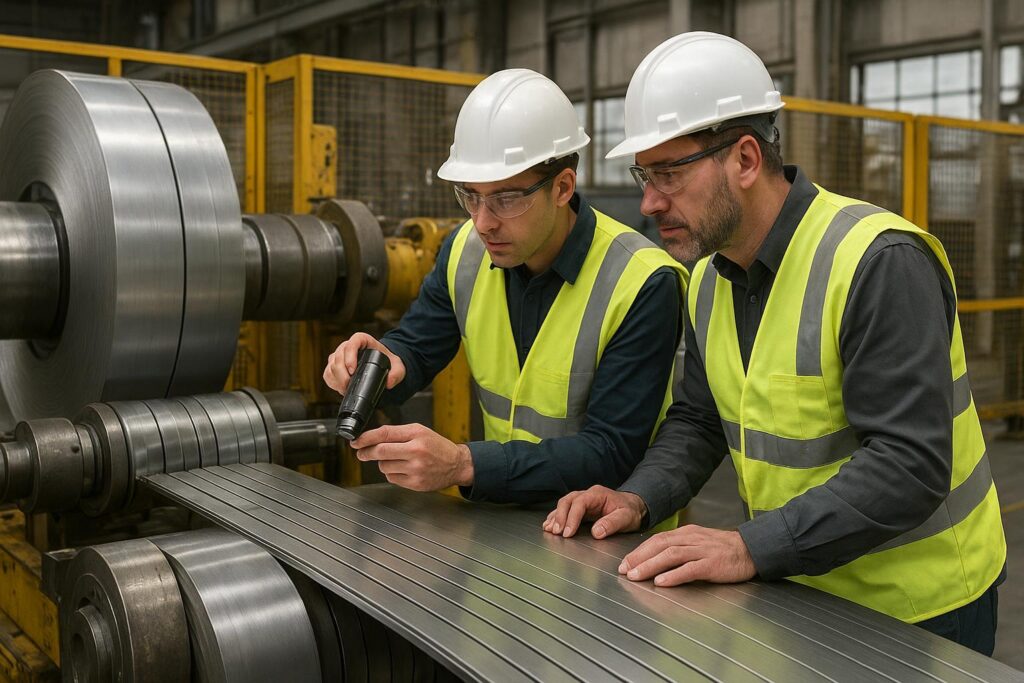
Slitting burr reduction is one of those “small edge” problems that becomes a big cost problem fast: burr drives customer complaints, creates downstream forming issues, and quietly shortens knife life. This handbook is compiled by Jerry Chu, Technical Support Specialist at Maxtor Metal, drawing on 10+ years of field troubleshooting experience across coil slitting lines processing carbon […]
RDF/SRF 파쇄 처리 효율 향상을 위한 길게 찢어진 불량품 근봉 제거: 나이프 형상, 스크린 개구율(OAR) 및 전단 간격 제어
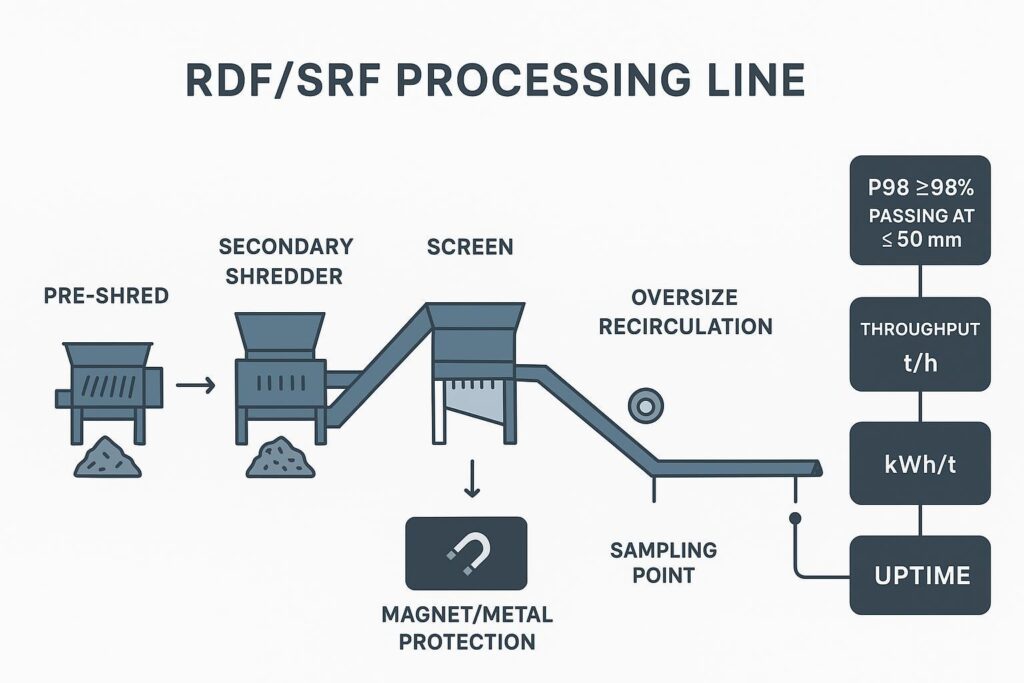
Long-strip “rejects” are a hidden tax in RDF/SRF production. They don’t just fail a sieve-based spec—they drive recirculation load, increase wrap risk, and quietly push kWh/t up while pulling throughput down. This article lays out the engineering moves to engineer out long strips and consistently hit ≤50 mm at ≥98% passing (P98) on screen-limited sizing […]
필름 슬리팅의 뱀형 절단 현상 방지: 나이프, 장력, 정렬 및 공압 시스템 체크리스트
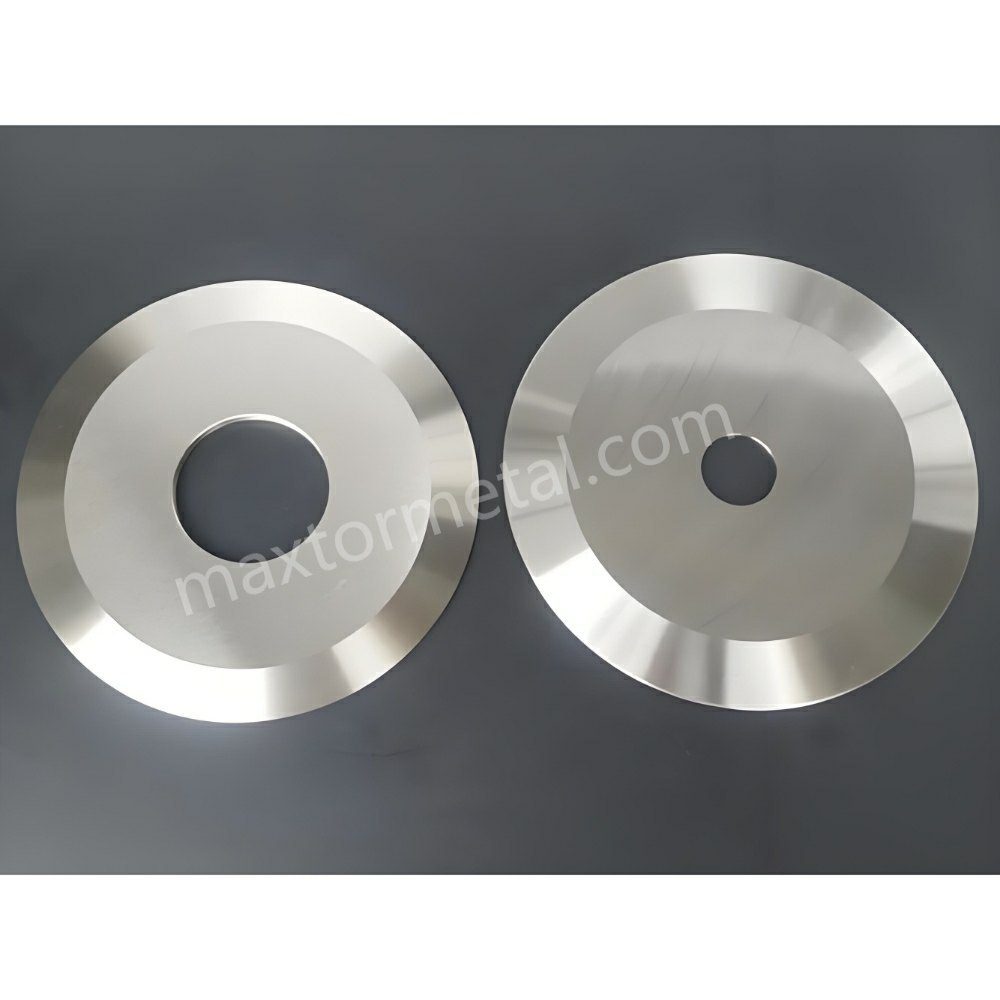
Snake cuts (also called slit-line wander or drift) are what you see when a slit edge won’t hold a straight, repeatable path: lanes “walk,” oscillate, or gradually shift so the wound roll layers are no longer centered. Treat it like a stability problem across the slit-and-wind system—not a single-parameter defect. This checklist reflects the way […]
스트립 나이프용 공구강 MTC(밀시트) 올바르게 읽기: 화학 성분, 경도 및 추적성을 위한 실무 QA 체크리스트
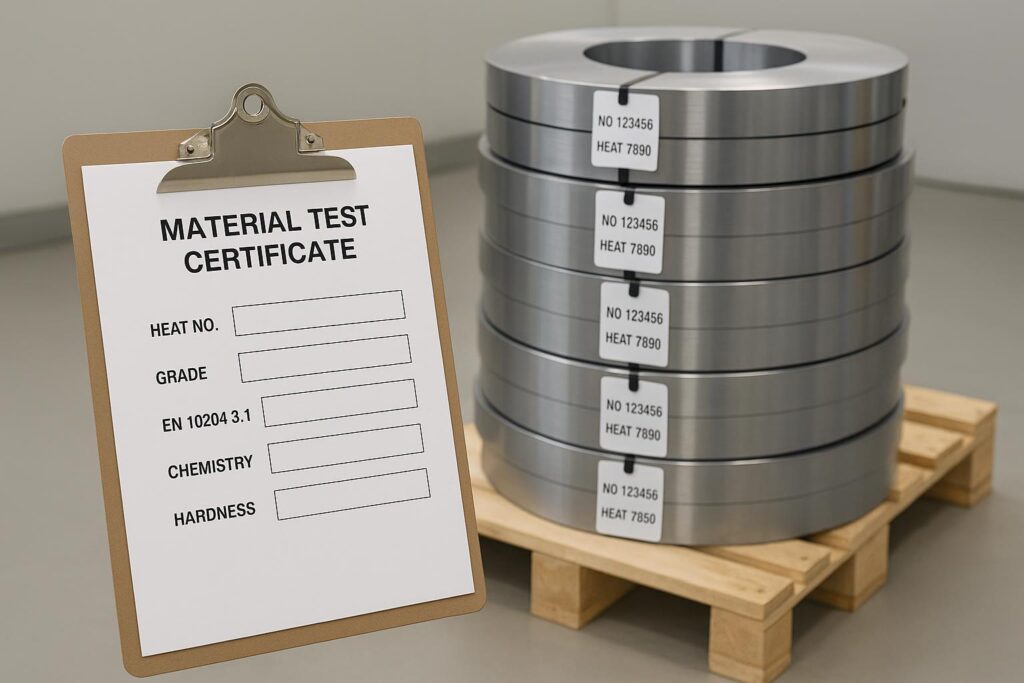
Quick Answer: To read a tool steel MTC for strip blades, start at the header — confirm EN 10204 3.1 certificate type, supplier identity, steel grade, and heat number. Then cross-check the chemistry table against your PO/spec (using ASTM A681 or ISO 4957 as the reference standard). Verify hardness uniformity with a 9-point map (head/mid/tail […]
TPU 수중 페렛타이징 나이프의 수지 껌밍 현상: DLC 대 PTFE 코팅 선정 및 최적 가동 조건(Operating Windows)
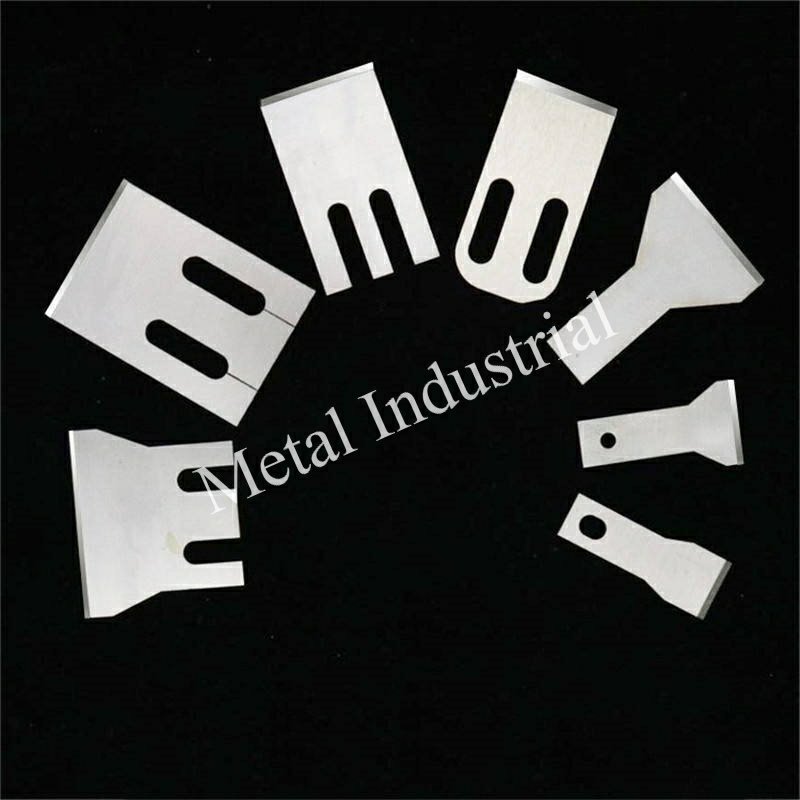
Quick answer: Knife gumming in TPU underwater pelletizing is a system problem, not just a coating problem. The fastest fix is to address the mechanism first (restore cutting-plane stability and quench consistency), then select coatings: DLC on cutting-edge faces for hardness and low friction, PTFE on low-wear non-edge faces for adhesion reduction. Running DLC without fixing […]
AHSS 라인용 초경(텅스텐 카바이드) 인레이 전단 나이프: ROI 모델, 재연마 프로토콜 및 필드 테스트 벤チ마크.
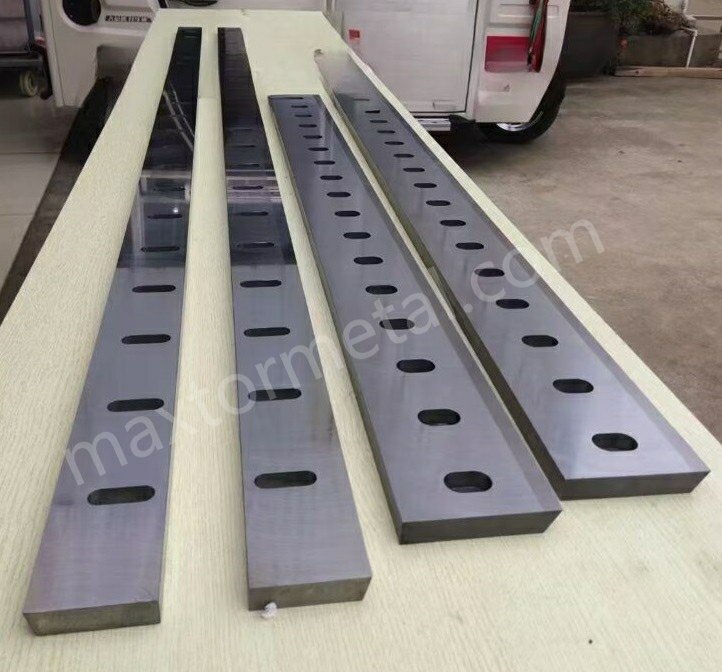
Quick Answer: Tungsten carbide inlaid shear blades typically deliver 2–3.5× the edge life of D2 blades on AHSS lines, with ROI driven primarily by fewer changeover events and reduced edge-instability scrap—not blade price alone. Clearance control and consistent regrind geometry restoration are the two variables that most determine whether that life multiplier holds in production. […]
정밀 슬리터 스페이서 및 고무링: 나이프 샤프트 조립 강성, 클리어런스 및 TIR 정밀 제어

What readers will gain: tolerances, setup, verification, and ROI logging: concrete specs to ask for, checks to run before you clamp, and what to track so “better tooling” turns into measurable uptime. High-speed coil slitting doesn’t usually fail because the knives are “bad.” It fails because the clearance you thought you had is not the clearance the […]
리튬 이온 배터리 파쇄 위험성: 저속 전단 제어 기술, 불활성 분위기 설계 및 HF 가스 처리 대책
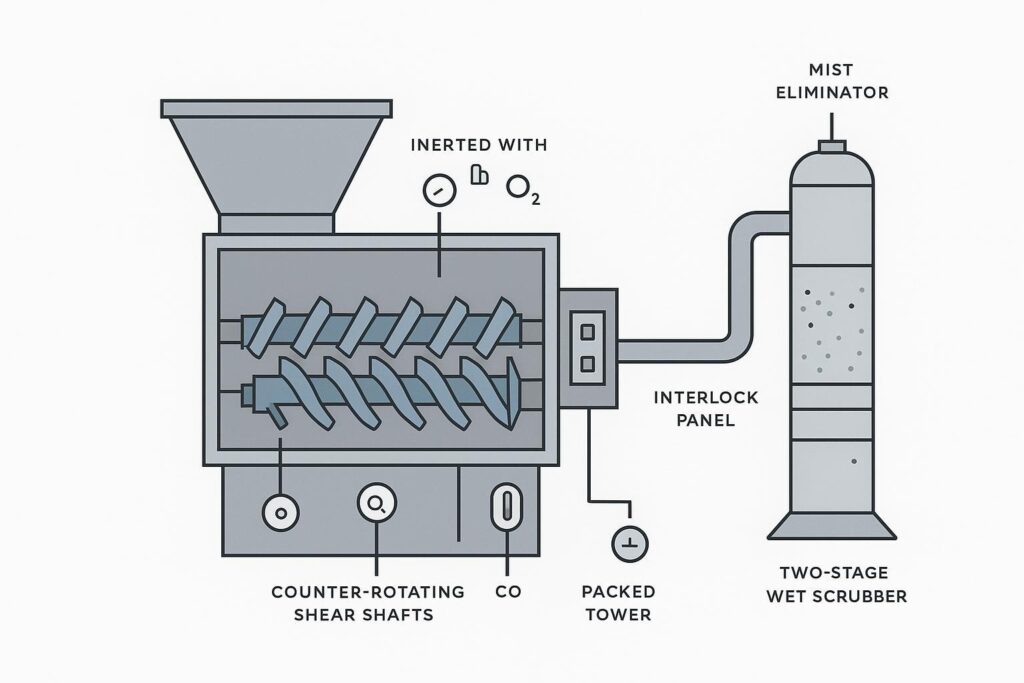
Lithium-ion battery (LIB) size reduction is one of those operations where the “mechanical” and “chemical” worlds collide in the worst way: high stored electrical energy, flammable electrolyte vapors, conductive dust, and corrosive off-gases. This guide focuses on a safety-by-design approach that many facilities are converging on: low-speed, counter-rotating shear in a controlled atmosphere (often inerted, sometimes submerged), […]

 English
  Spanish
  Italian
  French
  Portuguese
  Russian
  German
  Arabic
  Hindi
Hindi  Vietnamese
  Indonesian
  Japanese
  Korean