
M390 vs CPM S90V 粉末冶金ペレタイザーナイフ:高ガラス繊維摩耗下における鋼種選定
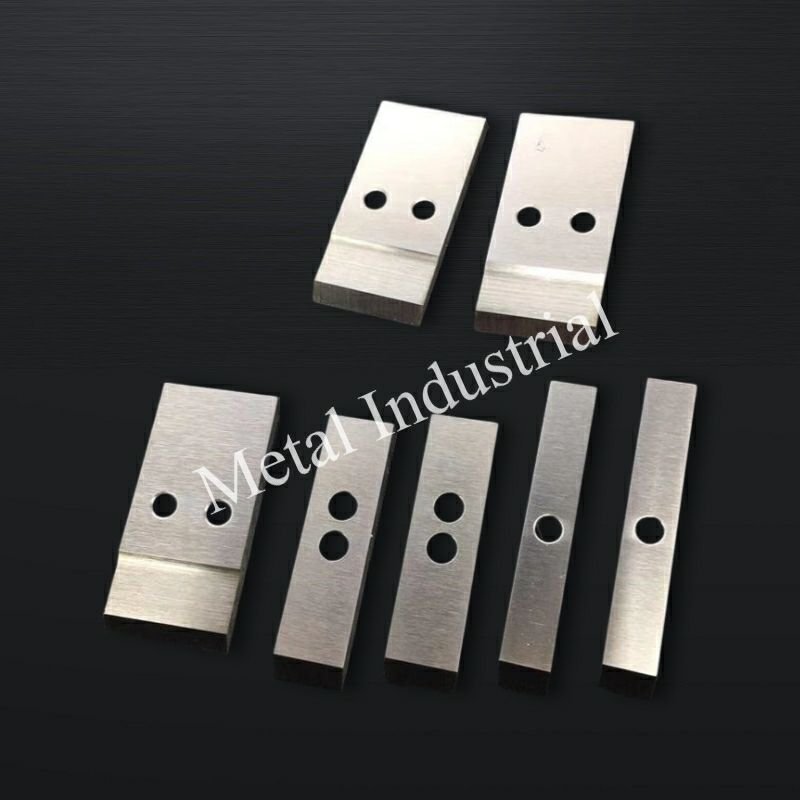
Quick answer: For pelletizing blades under high glass-fiber wear, powder metallurgy stainless steels outperform conventional tool steels because their fine, uniform carbide distribution resists micro-ploughing without the toughness trade-offs of high-alloy ingot steels. Between M390 and CPM S90V: choose CPM S90V when abrasion load is the dominant failure mode (>30% GF, neutral water); choose M390 when corrosion resistance, thin blade geometry, or multi-resin flexibility is the priority. Both require cryogenic post-quench treatment and PM-specific grinding protocols to reach their rated HRC and edge geometry. Powder metallurgy (PM) stainless steel, in the context of pelletizer blade manufacturing, refers to steels produced by atomizing molten alloy into fine powder, then consolidating under heat […]
シャーブレード用 D2 vs SKD11 工具鋼:炭化物組織、破損モード解析、および鋼種選定フレームワーク
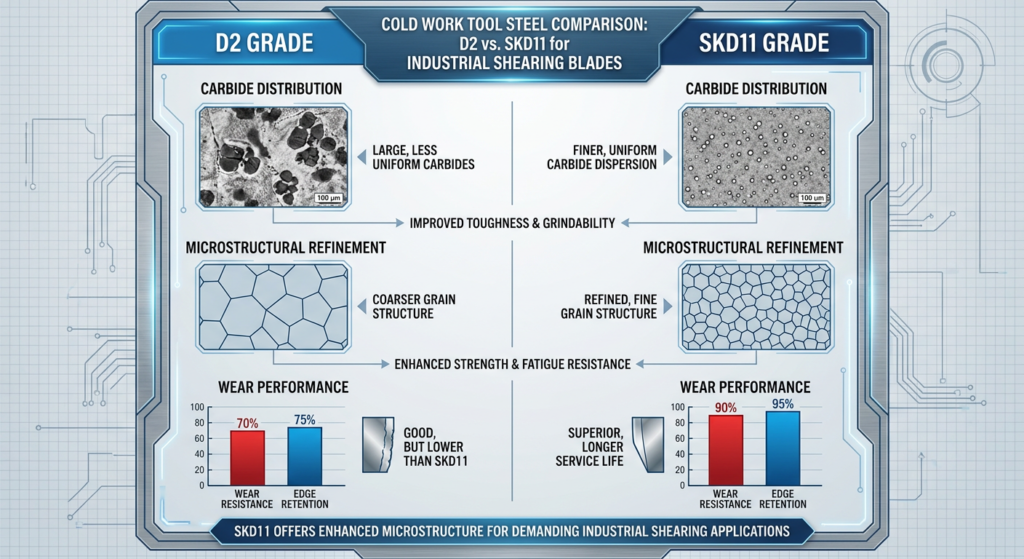
Quick Answer: D2 and SKD11 are compositionally near-identical high-carbon, high-chromium cold-work tool steels, but D2’s higher vanadium content (0.50–1.10%) delivers stronger abrasive wear resistance for clean, high-volume sub-6mm cutting, while SKD11’s finer carbide structure provides better impact toughness for stainless steel, variable feed, or chipping-prone operations. The decision turns on your dominant failure mode—wear or chipping—not the grade label alone. ESR refining quality from your supplier matters as much as the designation. Engineering Note: D2 vs SKD11 tool steel selection for shearing blades is a carbide microstructure decision, not a brand substitution. Both grades occupy the same ledeburitic cold-work steel family (high-C, high-Cr), and their nominal composition windows overlap substantially across ASTM […]
スリッターのカエリ(バリ)低減:根本原因マトリックス・設定条件・検査プロトコル

Slitting burr reduction is one of those “small edge” problems that becomes a big cost problem fast: burr drives customer complaints, creates downstream forming issues, and quietly shortens knife life. This handbook is compiled by Jerry Chu, Technical Support Specialist at Maxtor Metal, drawing on 10+ years of field troubleshooting experience across coil slitting lines processing carbon steel, AHSS, stainless, and aluminum. It is peer-reviewed by Maxtor Metal’s application engineering team and written in a practical, verification-first spirit where the winning approach is disciplined setup windows, fast root-cause isolation, and consistent measurement. If your line uses roller shearing blades (or equivalent slitter knife systems), the principles below still apply: treat the cut […]
RDF/SRF破砕処理効率向上に向けた長尺物の発生根絶:カッター刃物形状、スクリーン開口率(OAR)、剪断ギャップコントロール
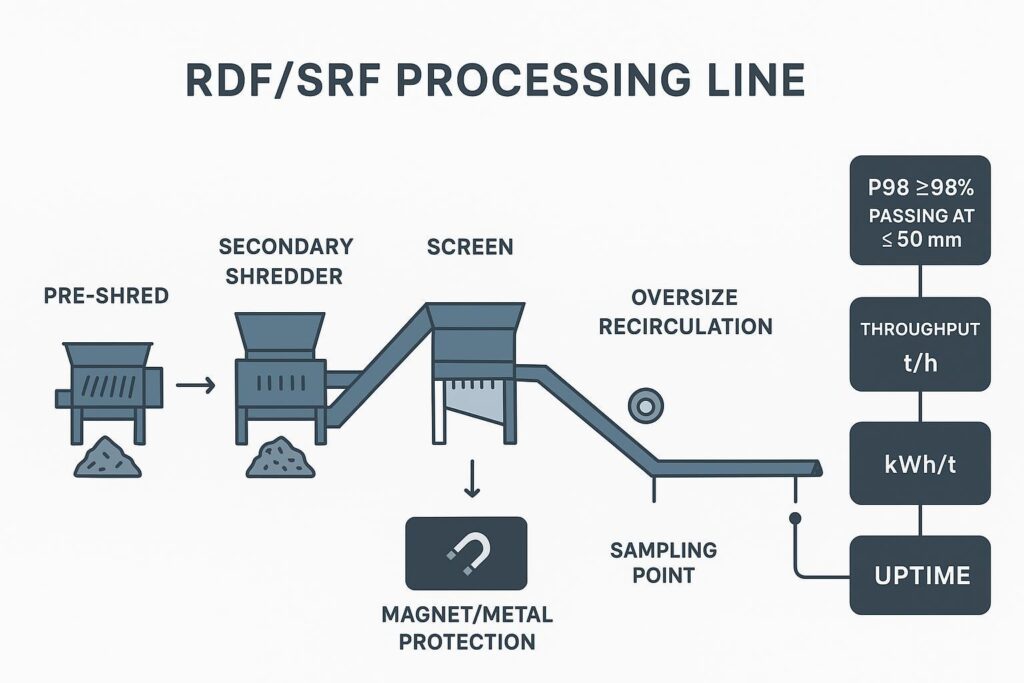
Long-strip “rejects” are a hidden tax in RDF/SRF production. They don’t just fail a sieve-based spec—they drive recirculation load, increase wrap risk, and quietly push kWh/t up while pulling throughput down. This article lays out the engineering moves to engineer out long strips and consistently hit ≤50 mm at ≥98% passing (P98) on screen-limited sizing lines. Quick Answer: Key takeaway: Treat long strips as a system problem (geometry + screen capacity + gap control + feed stability). Fixing only one lever rarely holds P98 in real mixed-waste variability. Root causes Flexible films and textiles Flexible polymers and fibrous fractions (films, big-bag scraps, textiles, straps) tend to elongate, fold, and “draw through” the cutting zone. […]
フィルムスリット加工の蛇行切断を防止:刃物・張力・アライメント・エア圧のシステムチェックリスト
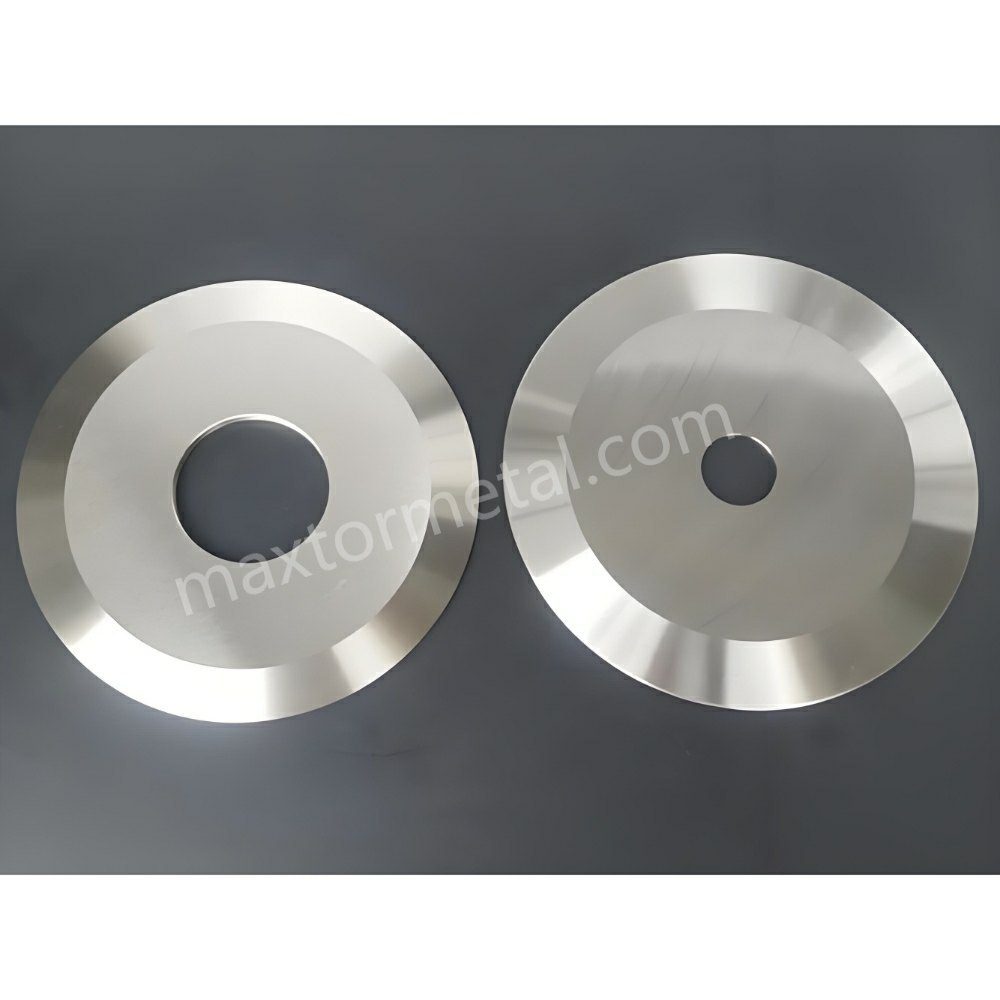
スネークカット(スリットラインの蛇行またはドリフトとも呼ばれます)は、スリットエッジが直線的かつ再現性のある経路を維持できなくなったときに発生する現象です。レーンが「蛇行」したり、振動したり、徐々にシフトしたりすることで、巻き取られたロールの層が中心からずれてしまいます。これは単一のパラメータの欠陥ではなく、スリット・巻き取りシステム全体の安定性の問題として捉える必要があります。このチェックリストは、多くのメンテナンスチームやプロセスチームが現場でこの問題をデバッグする方法を反映しています。これは、セットアップ時には問題がないように見えるカットが、高速運転時に不安定になる原因をトラブルシューティングする際に、Maxtor Metalのフィールドエンジニアリングチームが使用する診断手順に基づいています。重要なポイント:スネークカットが速度、ロールの巻き径、またはレーン位置によって変化する場合は、まず横方向の[…]がどこで発生しているかを特定することから始めてください。
帯鋼・スリッター刃用工具鋼ミルシート(MTC)の精読法:成分組成・硬度・トレーサビリティのための実践的QA(品質保証)チェックリスト
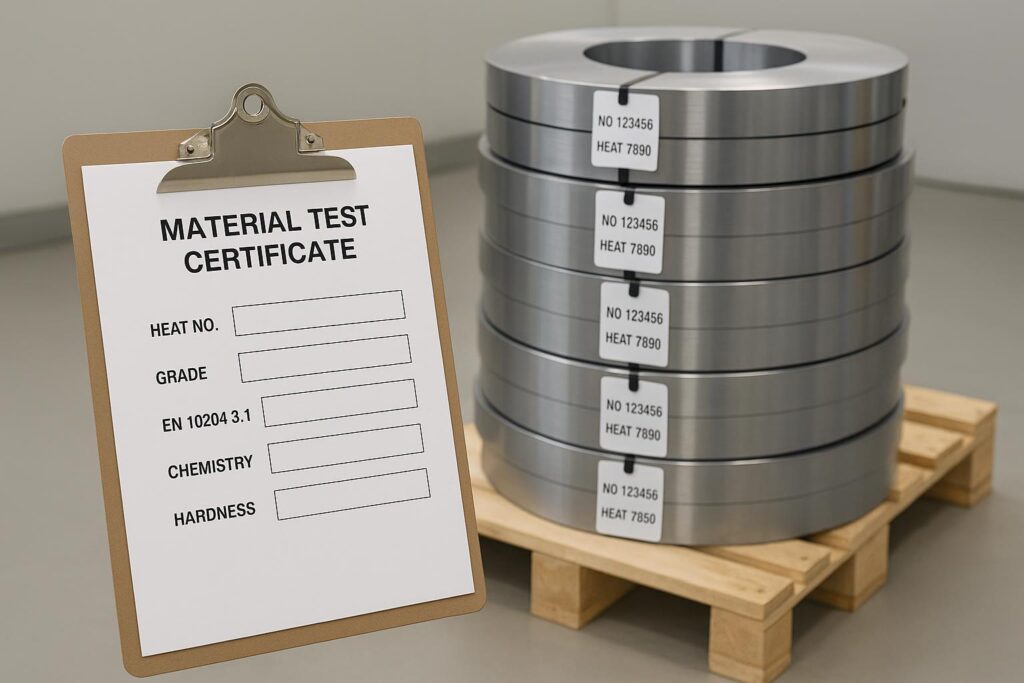
Quick Answer: To read a tool steel MTC for strip blades, start at the header — confirm EN 10204 3.1 certificate type, supplier identity, steel grade, and heat number. Then cross-check the chemistry table against your PO/spec (using ASTM A681 or ISO 4957 as the reference standard). Verify hardness uniformity with a 9-point map (head/mid/tail × edge/center/edge per ASTM E18), and add a decarburization check (ASTM E1077) when edge performance is critical. The heat number must link the MTC, the coil tag, and your internal lot records to form a complete traceability chain. In strip-blade manufacturing, a tool steel MTC is only useful if it helps you make a fast, […]
TPU水中ペレタイジングナイフの樹脂ガミング現象:DLC vs PTFEコーティングの選定と最適運転条件(Operating Window)
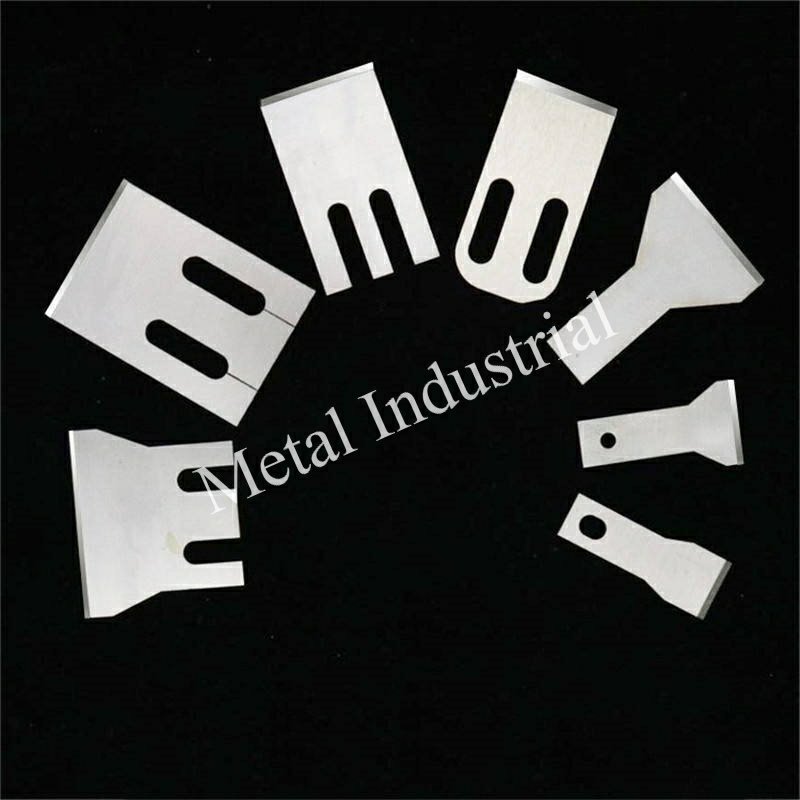
Quick answer: Knife gumming in TPU underwater pelletizing is a system problem, not just a coating problem. The fastest fix is to address the mechanism first (restore cutting-plane stability and quench consistency), then select coatings: DLC on cutting-edge faces for hardness and low friction, PTFE on low-wear non-edge faces for adhesion reduction. Running DLC without fixing alignment or thermal drift rarely holds — validated operating windows and KPI logging are what make gains stick. Knife gumming in TPU underwater (die-face) pelletizing usually shows up the same way: pellet surfaces start to smear, tails (often called angel hair on the shop floor) increase, and fines climb until the dryer screens or water filters tell […]
AHSS切断ライン用超硬(タングステンカーバイド)ろう付けシャーブレード:ROIモデル、再研磨プロトコル、および実証ベンチマーク。
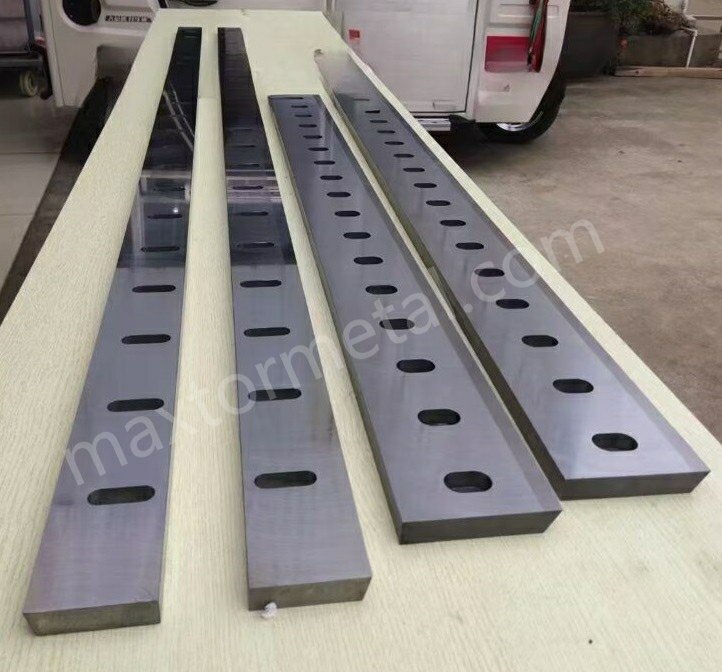
クイック回答:AHSSラインにおいて、超硬インレイシャーブレードは通常、D2ブレードの2〜3.5×の刃先寿命を実現します。そのROIは、ブレード単体の価格だけでなく、主に段取り替え回数の削減と刃先の不安定さに起因するスクラップの減少によってもたらされます。生産現場においてこの寿命倍率を維持できるかどうかは、主に「クリアランス管理」と「一貫した再研磨形状の復元」という2つの変数にかかっています。超高スループットのAHSS/UHSSラインが停止する原因は、通常、シャーが「切断できない」からではありません。刃こぼれ、バリの変動、負荷時のクリアランス変動、あるいは不均一な再研磨形状といった小さな不安定要素が、気づかないうちにダウンタイム、スクラップ、およびOEE(総合設備効率)の低下へとつながるためです。本ガイドは、AHSS対応のカット・トゥ・レングス[…]を運用(またはアップグレードを検討)している生産・メンテナンス責任者、プロセスエンジニア、および技術購買担当者を対象としています。
高精度スリッター用スペーサー&ゴムリング:組込み剛性、刃先クリアランス、およびTIR(総合振れ精度)の完全制御

What readers will gain: tolerances, setup, verification, and ROI logging: concrete specs to ask for, checks to run before you clamp, and what to track so “better tooling” turns into measurable uptime. High-speed coil slitting doesn’t usually fail because the knives are “bad.” It fails because the clearance you thought you had is not the clearance the stack holds once it’s clamped, accelerated, heated, and pushed sideways by strip loads. That’s why constant axial side-clearance and stack stiffness are so tightly tied to burr height, edge wave, and early chipping. If your stack “breathes” under load—microns of spacer non-parallelism, a ring that takes a set, a nicked seating face—your clearance becomes a moving target. […]
リチウムイオン電池の破砕リスク:低速せん断制御、不活性雰囲気設計、およびHF(フッ化水素)ガス処理除去対策
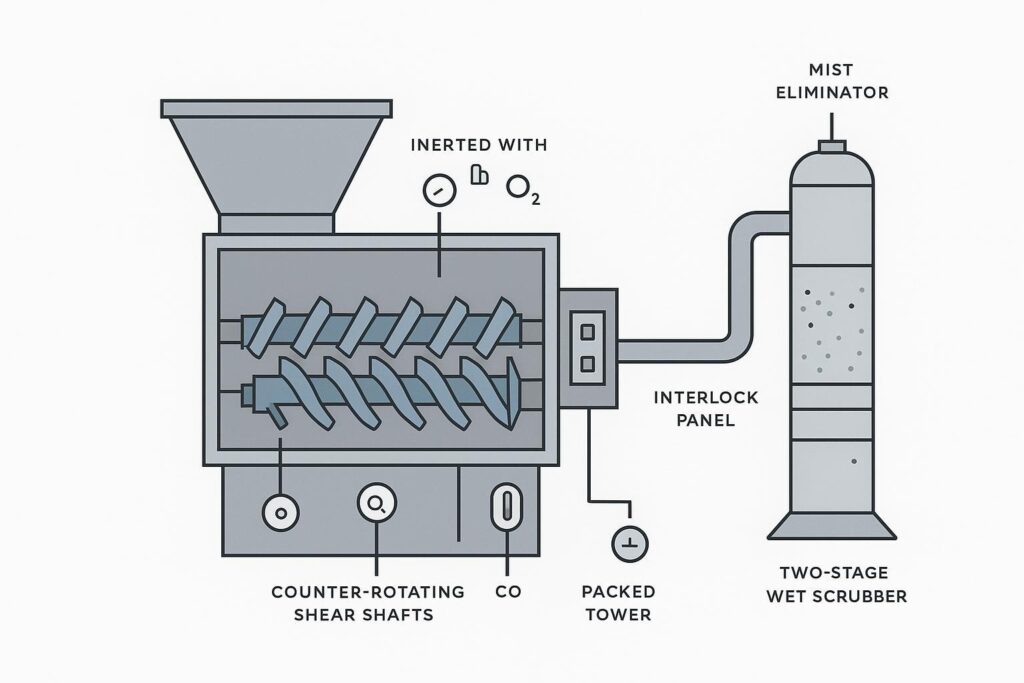
Lithium-ion battery (LIB) size reduction is one of those operations where the “mechanical” and “chemical” worlds collide in the worst way: high stored electrical energy, flammable electrolyte vapors, conductive dust, and corrosive off-gases. This guide focuses on a safety-by-design approach that many facilities are converging on: low-speed, counter-rotating shear in a controlled atmosphere (often inerted, sometimes submerged), backed by interlocks, monitoring, and HF treatment. It’s written in the same documentation-first voice Maxtor Metal uses when discussing shredder knife quality and verification practices, because the details that keep a line running are usually the same details that keep it safe. Early in commissioning, teams often find that the same “boring” variables that drive […]

 English
  Spanish
  Italian
  French
  Portuguese
  Russian
  German
  Arabic
  Hindi
Hindi  Vietnamese
  Indonesian
  Japanese
  Korean