

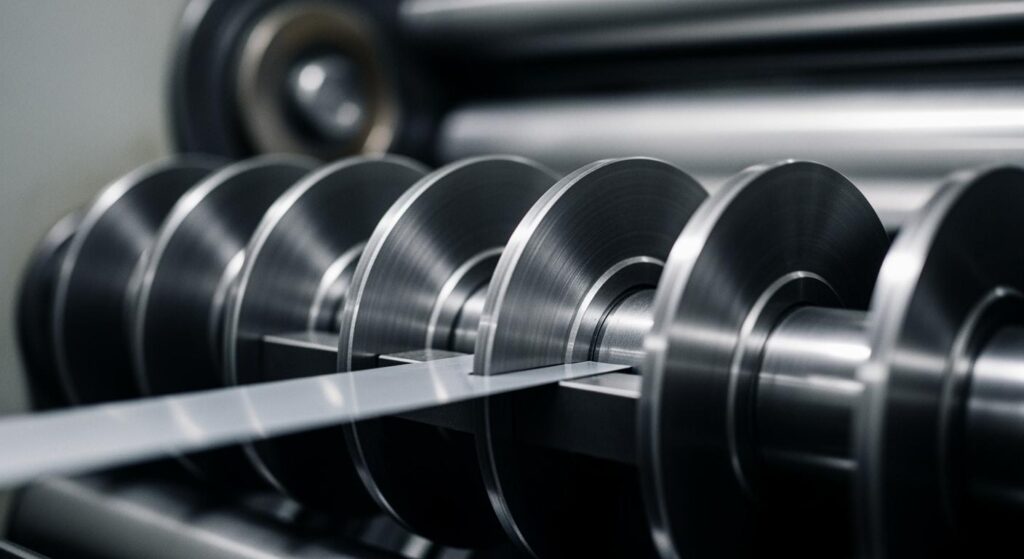
Quando si sceglie una Lama per taglierina rotativa per metallo, si ottengono maggiore precisione e resistenza per il proprio lavoro. Nanjing Metal Industrial dispone di opzioni di lame circolari per slitter per metalli che mantengono il filo tagliente e tagliano in modo ottimale. È necessaria una lama circolare per slitter per metalli che si adatti al tipo di metallo, alla velocità di lavoro e alle dimensioni richieste. I centri di servizio acciaio utilizzano lame circolari per slitter per metalli per risparmiare tempo e ottenere tagli più netti. Riceverete lame circolari per slitter per metalli realizzate per applicazioni speciali e collaudate per garantire risultati costanti.
- Scegliete la migliore lama circolare per slitter per metalli per ottimizzare la velocità di lavoro.
- Affrontate le lavorazioni di metalli più gravose con lame progettate per prestazioni elevate.
Punti chiave
- Scegliete la giusta lama circolare per slitter per tagliare più velocemente e meglio.
- Scegliete lame adatte al tipo e allo spessore del metallo per ottenere risultati ottimali.
- Le lame più dure sono ideali per i metalli ad alta resistenza, mentre le lame più tenere sono indicate per lavorazioni più semplici.
- Le lame che mantengono il filo richiedono meno sostituzioni e garantiscono tagli migliori nel tempo.
- Le lame con una finitura superficiale liscia scorrono più facilmente e tagliano meglio.
- Pulite e lubrificate spesso le lame per prolungarne la durata.
- Utilizzate lame in acciaio superrapido o carburo per lavorazioni rapide e a ciclo continuo.
- Seguite le istruzioni del produttore per installare e manutenere le lame in modo corretto.
Lama circolare per slitter per metalli: caratteristiche principali
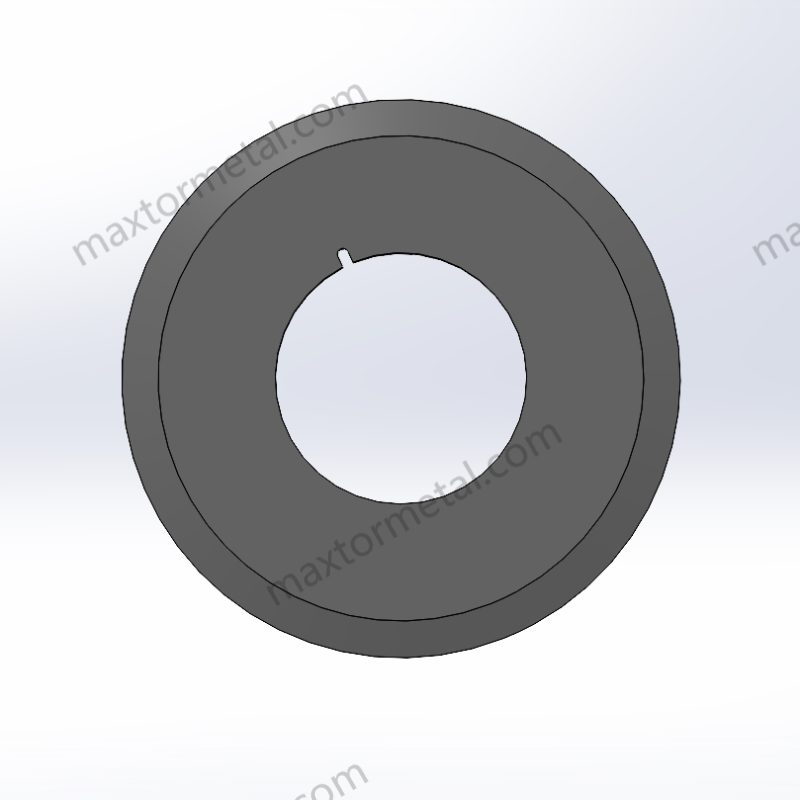
Quando si sceglie una lama circolare per slitter per metalli, è opportuno verificare alcuni aspetti fondamentali. Questi fattori consentono di ottenere tagli netti, prolungare la durata della lama ed evitare rallentamenti nella produzione. Vediamo quali sono i più importanti.
Materiale e durezza
Il materiale e la durezza della lama determinano la qualità del taglio e la durata operativa. È necessaria una lama che corrisponda al metallo da tagliare e alla velocità di lavorazione. Scegliendo il materiale corretto, è possibile risparmiare sui costi di manutenzione e mantenere i macchinari in perfetta efficienza.
Mancia: Le lame più dure sono preferibili per i metalli resistenti. Le lame più tenere sono adatte per lavorazioni semplici.
Di seguito è riportata una tabella che mostra i materiali più comuni per le lame e la loro durezza tipica:
| Tipo di materiale | Grado di durezza (Scala Rockwell) |
|---|---|
| Acciaio dolce | RC45 |
| Acciaio duro | RC60 |
| Acciaio ad alta velocità | RC62-67 |
| Carburo di tungsteno | RC75-80 |
Acciaio al carbonio
Le lame in acciaio ad alto carbonio sono dure e mantengono il filo per lavorazioni semplici. Queste lame sono ideali per acciaio dolce, alluminio e altri metalli teneri. Rappresentano un'ottima scelta per ottimizzare i costi. Se gestite una piccola attività o desiderate contenere la spesa, l'acciaio ad alto carbonio è un'opzione intelligente. Tuttavia, potrebbe essere necessario sostituire queste lame più frequentemente se si tagliano metalli più duri.
Acciaio per utensili
Le lame in acciaio per utensili sono allo stesso tempo tenaci e dure. Non si scheggiano né si piegano facilmente, anche in caso di uso intensivo. Queste lame sono adatte sia per tagli a bassa che ad alta velocità. Durano più a lungo delle lame in acciaio ad alto carbonio e sono eccellenti se si necessita di lame robuste e flessibili.
Acciaio ad alta velocità
Le lame in acciaio superrapido sono estremamente dure e resistono ottimamente al calore. Possono essere utilizzate per lavorazioni ad alta velocità e per il taglio di metalli duri. Queste lame mantengono l'affilatura a lungo, riducendo la frequenza di riaffilatura. Molti grandi stabilimenti utilizzano l'acciaio superrapido per le sue elevate prestazioni e la sua lunga durata.
Carburo di tungsteno
Le lame in carburo di tungsteno sono estremamente dure e resistono all'usura. Esse durano fino a tre volte di più rispetto alle lame in acciaio ad alto carbonio nelle applicazioni più gravose. Se dovete tagliare acciaio inossidabile, titanio o altri metalli duri, il carburo di tungsteno è la scelta migliore. Queste lame sono ideali per grandi volumi di produzione ad alta velocità. Hanno un costo iniziale superiore, ma consentono di risparmiare nel tempo grazie alla minore frequenza di sostituzione.
- Lame in carburo di tungsteno: durezza di circa 1.500 Vickers
- Lame in acciaio ad alto carbonio: durezza 700–900 Vickers
Mantenimento del bordo
La tenuta del filo indica per quanto tempo la lama rimane affilata. Una buona tenuta del filo si traduce in una maggiore durata della lama e in una minore necessità di manutenzione. Quando la lama mantiene l'affilatura, si ottengono tagli migliori e si riducono i costi operativi.
Aziende come Nanjing Metal Industrial utilizzano metodi speciali per garantire che le lame mantengano il filo. Impiegano forgiatura, sinterizzazione delle leghe, taglio di precisione e rivestimenti speciali. Ad esempio, rivestimenti come titanio o cromo impediscono alle lame di incollarsi e arrugginire, prolungandone la durata.
Nota: Se la lama mantiene il filo, si ottengono tagli migliori e non è necessario sostituirla frequentemente.
Precisione e tolleranza
La precisione e le tolleranze ristrette consentono di ottenere tagli netti ed esatti. Se la lama rispetta tolleranze rigorose, si riducono gli scarti di metallo e le bave di taglio. Nelle lavorazioni automatiche ad alta velocità, anche un minimo errore può causare sprechi di materiale o danni ai macchinari.
Ecco una tabella che mostra tolleranze normali per lame circolari per slitter:
| Tipo di lama | Tolleranza di spessore (mm) | Tolleranza di lunghezza (mm) | Tolleranza del bordo (mm) |
|---|---|---|---|
| Standard Industrial | ±0,05 | ±0,10 | ±0,02 |
| Taglio di precisione | ±0,02 | ±0,05 | ±0,01 |
| Medico/Aerospaziale | ±0,01 | ±0,03 | ±0,005 |
Nanjing Metal Industrial impiega processi di taglio accurati e controlli rigorosi per garantire che ogni lama soddisfi questi standard. Ciò consente di ottenere i migliori risultati nel taglio dei metalli.
Finitura superficiale
La finitura superficiale della lama favorisce uno scorrimento fluido durante il taglio del metallo. Una finitura liscia riduce l'attrito e il calore, impedendo al metallo di aderire o graffiarsi. Una finitura di qualità prolunga inoltre la durata della lama e garantisce tagli migliori. Alcune lame ricevono rivestimenti speciali per prevenire la ruggine e migliorare le prestazioni.
È possibile richiedere finiture superficiali speciali in base alle proprie esigenze specifiche. Questo aiuta a ottenere i migliori risultati per la propria applicazione.
Ricorda che scegliere le giuste caratteristiche per la tua lama slitter rotativa per metallo ti aiuta a ottenere risultati migliori, una maggiore durata della lama e tagli più netti ogni volta.
Finitura superficiale
Quando scegli una lama slitter rotativa per metallo, dovresti considerare la finitura superficiale. La finitura sul tagliente e sul corpo della lama è fondamentale per il taglio. Se la lama è liscia, scorre più facilmente sul metallo. Un minor attrito di scorrimento significa meno calore durante il taglio. Meno calore aiuta la lama a durare più a lungo e mantiene i tagli puliti. Se utilizzi una lama con una finitura fine, come da Ra0.2 a Ra0.4, otterrai tagli più fluidi e una migliore qualità del metallo.
Una buona finitura superficiale impedisce inoltre al metallo di aderire alla lama. Aiuta a mantenere la linea di produzione in movimento senza problemi. Non si formano bave o bordi ruvidi sul metallo. Molte aziende applicano trattamenti superficiali speciali alle lame. Questi trattamenti proteggono le lame dalla ruggine e dall'usura. Non avrai bisogno di manutenzionare le lame così spesso.
Ecco una tabella che mostra i rivestimenti superficiali più comuni e i loro vantaggi per le lame slitter rotative per metallo:
| Tipo di rivestimento | Benefici |
|---|---|
| Deposizione fisica da vapore | Makes blades stronger against wear and rust; stops blades from getting scratched or sticky. Common materials: Boron Carbide, titanium carbide, titanium nitride. |
| Chemical Vapor Deposition | Helps blades last longer and work better; gives a tough coating. Common material: Titanium carbide. |
| Nitruro di titanio (TiN) | Helps blades durano fino a 40% in più when cutting fast. |
| Carbonio simile al diamante (DLC) | Makes blades harder and keeps them cool when cutting. |
These coatings help your rotary slitter blade for metal work better:
- Coatings lower friction and make blades tougher.
- Titanium-coated blades last 35% longer in fast jobs than blades without coating.
- Diamond-Like Carbon coatings make blades harder and protect them from heat.
Tip: If you want your rotary slitter blade for metal to last longer and cut better, ask for a blade with a special surface finish or coating. This easy choice helps your work and saves money.
A good surface finish is not just for looks. It helps your blade work better, last longer, and give you great cuts every time.
Le migliori lame per rifilatura: tipologie e applicazioni
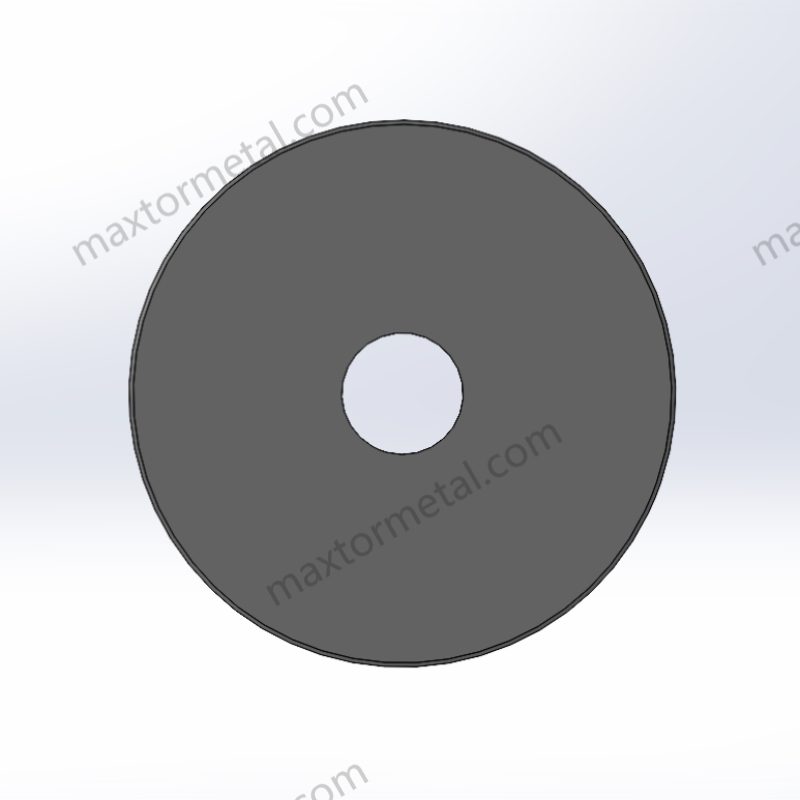
D2 Tool Steel Blades
Caratteristiche principali
D2 tool steel blades have a lot of chromium in them. This makes them strong and helps them last a long time. These blades stay sharp for many uses. You can use them in both hand and machine slitting. Many people pick D2 tool steel blades for circular and shear slitting.
Vantaggi e limitazioni
There are many good things about D2 tool steel blades:
- Non si usurano rapidamente, quindi è necessario sostituirle meno spesso.
- They keep their edge, so your cuts look neat.
- You can use them on many materials.
But D2 tool steel blades are not the best for very hard metals. You should pick the right blade for your job to get the best results.
D2 tool steel blades give you good value and work well for most jobs.
Suitable Metals and Production Speeds
You can use D2 tool steel blades in many places:
- Confezione
- Plastics work
- Stampa
- Cutting films for circuit boards
- Trimming labels without hurting the paper
- Cutting paper rolls and films
D2 tool steel blades work best at medium or high speeds. They cut many metals, but not the hardest ones.
Lame con punta in carburo
Caratteristiche principali
Carbide-tipped blades have a steel body and a carbide edge. This makes them strong and very hard. You use these blades to cut tough metals or when machines run fast. Carbide-tipped blades are common in metal plants.
Vantaggi e limitazioni
Here is a table that shows the main good and bad points of carbide-tipped blades:
| Vantaggi | Limitazioni |
|---|---|
| Very hard and do not wear out fast | Può rompersi se colpito duramente |
| Last a long time and stay sharp in tough jobs | Cost more than other blades |
These blades last a long time and stay sharp. But you must be careful because they can break if dropped or hit.
Suitable Metals and Production Speeds
You should use carbide-tipped blades for:
- Cutting hard things like steel, copper, and metal mixes
- Jobs where you need the blade to last a long time
Carbide-tipped blades work best at high speeds. They are great for cutting stainless steel and other hard metals. You can use them for tough jobs in both circular and shear slitting.
Lame in acciaio ad alta velocità
Caratteristiche principali
High-speed steel blades are tough and can handle heat. You can use them in fast, nonstop work. These blades stay sharp even after long use. High-speed steel is a top pick for circular, shear, and razor slitting.
Vantaggi e limitazioni
High-speed steel blades have many good points:
- They are tough and last longer.
- They stay sharp, so you change them less.
- They work well in hot, fast jobs.
Here is a table that compares high-speed steel blades and carbide blades:
| Caratteristica | Lame HSS | Lame al carburo |
|---|---|---|
| Durata | Tough and do not wear out fast | Harder and last longer |
| Nitidezza | Stays sharp for a long time | Stays sharp even longer |
| Resistenza al calore | Works well in heat | Handles high heat too |
| Applicazioni ideali | Medium to high-speed jobs | Fast and heavy-duty jobs |
High-speed steel blades may not last as long as carbide-tipped blades in the hardest jobs, but they are a good deal for the price.
Suitable Metals and Production Speeds
You can use high-speed steel blades for:
- Medium to fast cutting of steel, aluminum, and other metals
- Jobs where you want the blade to last and stay sharp
- Work where you want less time spent changing blades
High-speed steel blades are good for nonstop work. You can use them in many types of slitting blades for lots of metal jobs.
Tip: Pick the right blade for your metal and speed. This helps you get neat cuts, longer blade life, and better results.
Micro-Grain Tungsten Carbide Blades
Caratteristiche principali
Micro-grain tungsten carbide blades are great for tough jobs. These blades have tiny tungsten carbide bits inside. This makes them much harder and stronger than most blades. They stay sharp for a long time. They do not chip or break easily, even with hard or rough materials. Many factories use these blades for fast and busy work.
Here is a table that shows what makes micro-grain tungsten carbide blades special and where you use them most:
| Unique Properties | High-Volume Production Scenarios |
|---|---|
| Durability: Lasts longer than high-speed steel | Continuous production: Ideal for factories running all day |
| Efficiency: Reduces downtime and maintenance | Cutting hard or abrasive materials: Handles tough jobs well |
| Cost-effectiveness: Lower long-term costs | Applications requiring minimal downtime: Keeps machines running without interruptions |
| Special finishes and edge treatments | Industrie: Metalworking, Lavorazione del legno, Lavorazione della carta, Plastica |
Vantaggi e limitazioni
Micro-grain tungsten carbide blades have many good points. They last longer than high-speed steel or tool steel blades. You do not need to change them as often, so machines keep working. The cuts are cleaner and have fewer rough spots. This helps you save money and make better products.
- Micro-grain tungsten carbide blades do not wear out fast.
- They stay sharp, even when used for a long time.
- You can use them for both circular slitter blades and shear slitting blades.
But you must be careful with these blades. They are very hard, but they can break if dropped. They cost more at first, but you save money later because you do not replace them as much.
Tip: If you want less downtime and better cuts, micro-grain tungsten carbide blades are a smart choice for your slitting line.
Suitable Metals and Production Speeds
Micro-grain tungsten carbide blades work on many metals. They cut stainless steel, titanium, copper, and other hard metals. They also work well on rough materials like laminates or coated metals. You can use them for both circular slitter blades and shear slitting blades.
- Use these blades for fast, nonstop work.
- They are best for factories that run all day and need little stopping.
- You get great results in metalworking, plastics, and paper processing.
Circular Slitter Blades for Metal
Circular slitter blades help you cut metal coils or sheets quickly and neatly. These blades spin and slice through metal with accuracy. There are different types for different jobs. The three main types are solid disc blades, inserted blade knives, and shear cut knives.
Lame a disco pieno
Solid disc blades are made from one piece of strong steel or carbide. You use them for straight and long cuts. These blades fit many machines and work for thin or thick metals. They last a long time and work well.
- Solid disc blades give smooth edges and less roughness.
- You can use them for both circular slitter blades and shear slitting blades.
- They are simple to put in and take care of.
Inserted Blade Knives
Inserted blade knives have a holder and a part you can change. You only swap the edge when it gets dull, not the whole blade. This saves time and money. You use these knives when you need to change blades often or need special edge shapes.
- Inserted blade knives work well for razor slitting blades and crush cut blades.
- You can switch edges for different materials, so they are flexible.
- These knives are used in packaging, plastics, and metal slitting.
Shear Cut Knives
Shear cut knives use two blades that move close together, like scissors. They make very clean cuts with little roughness. These knives are best for jobs that need high accuracy. You use them for thin metals, coated sheets, and soft materials.
- Shear cut knives fit many circular slitter blades setups.
- You get less dust and smoother edges.
- These knives are used in electronics, cars, and appliance making.
Note: Picking the right circular slitter blades helps you get better cuts and waste less metal. You also keep your machines working longer with less fixing.
You can use circular slitter blades for many jobs. They work in metal service centers, coil cutting, and even in razor slitting blades for films and foils. You get the best results when you match the blade type to your material and speed.
I marchi leader di lame circolari per slitter
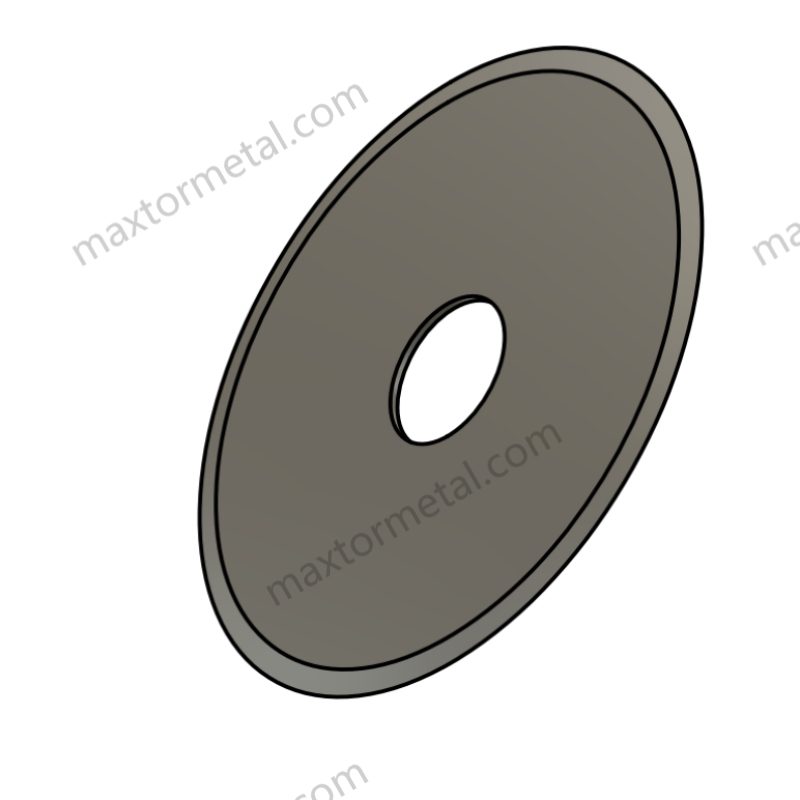
When you want the best rotary slitter blades, you should pick a brand that gives you good quality and help. Many companies make these blades, but some are better because they have lots of choices, can make special blades, and check their products carefully.
Nanjing Metal Industriale
Nanjing Metal Industrial has many rotary slitter blades for different jobs. They help people in metalworking, packaging, and plastics. You can find blades for many machines and materials, so you get what you need.
Here is a table that shows why Nanjing Metal Industrial is a great pick:
| Caratteristica | Descrizione |
|---|---|
| Gamma di prodotti | Has many kinds of slitter blades for lots of uses. |
| Opzioni di personalizzazione | Makes blades just for you. You can ask for special shapes or sizes. |
| Garanzia di qualità | Checks every blade many times before sending it to you. |
You can ask for blades with special shapes, edges, or coatings. The company looks at each blade closely, so you get good results and fewer problems. If you need help, their team will help you from your first order to after you buy.
Tip: If you want blades made just for you, pick a brand that lets you choose what you need and checks their blades well.
Other Global Brands
There are other brands that are leaders in rotary slitter blades. These companies work hard to make new and strong blades. You can find their blades in factories all over the world.
- Bahco
- Klein Tools Inc.
- Mitsubishi Materials Corporation
- Tungaloy Corporation
- Walter AG
- Guhring Inc.
- Seco Tools
- ISCAR Ltd.
- Kennametal Inc.
- DMT GmbH & Co. KG
- Micro 100 Tool Corporation
These brands use new materials and smart machines. They use robots to make blades that last longer and cut better. Many brands help you quickly if you have problems, so your work does not stop.
Konetool is another brand that makes tungsten carbide slitter knives. You can use their blades for jobs that need sharp and strong blades in packaging, metalworking, and plastics. Their blades help you make clean cuts and stop your machines from slowing down.
Note: The rotary slitter blade market is always changing. Companies now use better materials and smarter machines to help you work faster and save money.
When you pick a top brand, you get more than just a blade. You get help, new ideas, and you know your work will go well.
Scegliere la giusta lama circolare per slitter per metalli

Assessing Metal Type and Thickness
Identifying Metal Types
You need to know what metal you want to cut. Every metal is different in how hard or tough it is. Some metals are soft and easy to cut. Others are hard and need stronger blades. Mild steel is soft and works with basic blades. Stainless steel is harder and needs tough blades. Aluminum is soft but can stick to blades. Copper is soft but can make blades dull fast. Titanium is very hard and needs special blades. If you match the blade to the metal, you get cleaner cuts and your blade lasts longer.
- Mild steel is soft and easy to cut.
- Stainless steel is hard and needs strong blades.
- Aluminum is soft but can stick to blades.
- Copper is soft but can dull blades fast.
- Titanium is very hard and needs special blades.
Tip: Always check your metal type before picking a rotary slitter blade. This helps you avoid rough edges or burrs.
Measuring Material Thickness
You should measure how thick your metal sheets or coils are. Use a caliper or micrometer to get the right number. Thick metals need strong, thick blades. Thin metals work best with sharp, fine blades. If you use the wrong blade, your cuts might look bad or your machine could get damaged.
- Thin metals (under 1 mm) need sharp, fine blades.
- Medium metals (1–3 mm) use standard blades.
- Thick metals (over 3 mm) need heavy-duty blades.
Note: Measure in more than one spot. Metal thickness can change across the sheet or coil.
Matching Blade Material to Metal Properties
If you pick the right blade material for your metal, you cut better and your blade lasts longer. Carbide or high-speed steel blades with heat-resistant coatings are good for hard metals. The right blade gives you better cuts and lasts longer.
| Metrico | Valore |
|---|---|
| Durata della lama | Extended from 2 weeks to 6 weeks |
| Slicing precision | Variance < 0.5 mm |
| Blade type | Thick, rigid blades with steep bevel angles (30–40°) |
| Materiale | Carbide or HSS with heat-resistant coatings |
| Progetto | Spine-reinforced to prevent flexing |
You can also match the blade shape to your metal and machine. This helps you cut faster and waste less metal. A sharp, well-made blade helps you finish jobs quickly and keeps your line moving.
- Pick blade shapes that fit your metal and machine.
- Use good blades for clean cuts and less waste.
- Keep blades sharp for faster work and better results.
UN sharp and well-designed blade is important for fast cutting. Blades made for your metal give you quicker cuts, less wear, and better quality.
Considering Coated or Treated Metals
Some metals have coatings or treatments, like galvanized steel or painted aluminum. These coatings can make cutting harder. You need blades that do not stick and can handle wear. Special coatings like titanium nitride or diamond-like carbon help stop buildup and make blades last longer.
- Coated metals may need blades with special edge treatments.
- Treated metals can dull blades faster, so use harder blades.
- Always check if your metal has a coating before picking a blade.
Tip: If you cut coated or treated metals, ask for blades with anti-stick or wear-resistant coatings. This keeps your cuts clean and your blades lasting longer.
Matching Blade to Production Speed
Determining Required Cutting Speed
You should know how fast your slitting line goes. Cutting speed and how much you cut matter when picking a blade. Fast lines need blades that can handle more heat and stress. If you use a blade not made for high speeds, it can wear out fast or cut badly.
Selecting Blade Grade for High-Speed Operations
For fast jobs, you need blades with the right grade and design. The table below shows what to think about:
| Fattore | Descrizione |
|---|---|
| Type of material being cut | The specific material affects blade selection |
| Desired width of the slit | Width impacts the blade design and performance |
| Speed and accuracy of cutting | Higher speeds require precise blade specifications |
Pick high-speed steel or carbide blades for fast work. These blades handle heat and stay sharp longer. You also need blades with tight tolerances and smooth finishes.
Balancing Edge Retention and Heat Resistance
When machines run fast, blades get hot. You need blades that stay sharp and do not get damaged by heat. High-speed steel and carbide blades with special coatings work best. These blades last longer and give better cuts, even when running fast.
- Look for blades with heat-resistant coatings.
- Pick materials that keep their edge under stress.
- Change blades before they get too dull to avoid bad cuts.
Adjusting for Continuous vs. Intermittent Production
If your line runs all day, you need blades that last a long time. For short jobs, you can use regular blades. Continuous work puts more stress on blades, so use the toughest materials and best coatings. For short runs, you can use blades that do not need as much wear resistance.
- Continuous production: Use carbide or high-speed steel blades with coatings.
- Intermittent production: Standard tool steel or high-carbon steel may work.
Note: Always match your blade to your production style for the best results.
Equipment Compatibility
Checking Blade Dimensions and Mounting
You must check the size and shape of your blades. Make sure the blade fits your slitting machine. Measure the diameter, thickness, and mounting hole. If the blade does not fit, you can damage your machine or get poor cuts.
- Measure blade diameter and thickness.
- Check the mounting hole size and shape.
- Compare with your machine’s requirements.
Ensuring Fit with Slitting Machine Specifications
Your blade must match your machine’s specs. Each machine has limits for blade size, speed, and mounting. Using the wrong blade can cause problems like burrs or slitting powder chips. Always check your machine manual before you buy new blades.
- Review your machine’s blade size and speed limits.
- Make sure the blade material matches your machine’s power.
- Ask your supplier if you are not sure.
Verifying Tolerance and Alignment Requirements
Tight tolerances and good alignment help you get clean, safe cuts. The table below shows why these factors matter:
| Aspetto | Importanza |
|---|---|
| Precisione | Ensures exceptional strip width and straightness, meeting industry tolerances. |
| Allineamento della lama | Minimizes distortion and burring, resulting in high-quality cuts. |
| Operational Safety | Proper alignment and tolerance adherence are crucial for safe operations. |
If your blades are not lined up right, you get uneven cuts and more burrs. This can also make your machine noisy or unsafe. Use high-precision knife assemblies and good alignment systems for the best results.
- Use high-precision knife assemblies.
- Controllare spesso l'allineamento delle lame.
- Keep edge control consistent.
Consulting Manufacturer Guidelines
Always read the guides from your blade and machine makers. These guides tell you the best way to put in and use your blades. They also help you avoid mistakes that can hurt your equipment or make your cuts worse.
- Follow all instructions for blade installation and care.
- Ask your supplier for help if you have questions.
- Keep your manuals handy for quick checks.
Tip: Following manufacturer guidelines helps you get the most from your rotary slitter blades and keeps your operation safe.
Risoluzione dei problemi comuni
Rotary slitter blades for metal can have problems when you use them. If you learn to spot and fix these problems, your work will go better. Here are some common problems and ways to fix them.
Addressing Premature Blade Wear
Sometimes, rotary slitter blades for metal wear out too soon. You might see your blade gets dull fast or has damage. The main reasons are edge dulling, chipping, and rust.
Common causes of premature wear:
- Edge dulling happens after using the blade many times.
- Chipping or cracking comes from rough use or dropping the blade.
- Rust forms if the blade gets wet or touches chemicals.
To fix these problems, you can:
- Use careful grinding to keep the blade sharp.
- Be gentle when putting in or taking out blades to stop chips or cracks.
- Check blades often to find early signs of wear.
- Put anti-rust coatings on blades to stop rust and chemical harm.
Mancia: If you take care of your rotary slitter blade for metal and check it often, it will last longer.
Solving Inconsistent Cut Quality
If you see rough or uneven cuts, your rotary slitter blade for metal may not work right. Bad cuts waste metal and slow your work.
Steps to improve cut quality:
- Make sure the blade is sharp. Dull blades do not cut well.
- Check if the blade is lined up right in the machine.
- Look at the knife holder to see if it is worn or broken.
- Pick the right blade material for your metal and its thickness.
A sharp and straight blade gives you better cuts and less waste. If you keep your tools in good shape, your work will look better.
Reducing Burrs and Edge Deformation
Burrs and bent edges can happen if the rotary slitter blade for metal is not set up right or is old. Burrs are tiny bits of metal left after cutting. They can cause trouble later.
How to reduce burrs and deformation:
- Pick blades with the right hardness and edge shape for your metal.
- Set the blade gap to match your metal’s thickness.
- Use stronger blade materials like tungsten carbide for hard jobs.
- Add special coatings like PVD or CVD to make blades smoother and cut better.
Nota: If you pick and set up your blade the right way, you get smoother edges and do not need to fix them as much.
Optimizing Blade Life and Performance
You can help your rotary slitter blade for metal last longer by following some easy steps. These tips save money and help your work go faster.
Best practices for longer blade life:
- Take care of knife holders and machine parts often.
- Choose blades with special coatings to stop wear.
- Use strong materials like tungsten carbide or zirconia ceramic for hard jobs.
- Keep blades dry and clean so they do not rust.
| Practice | Beneficio |
|---|---|
| Manutenzione ordinaria | Blades last longer, fewer problems |
| Use of advanced coatings | Blades wear less, cuts are smoother |
| Material upgrades | Work is faster, machines stop less |
If you keep your rotary slitter blade for metal in good shape, you will stop less, cut better, and spend less money over time.
Manutenzione e durata delle lame per slitter
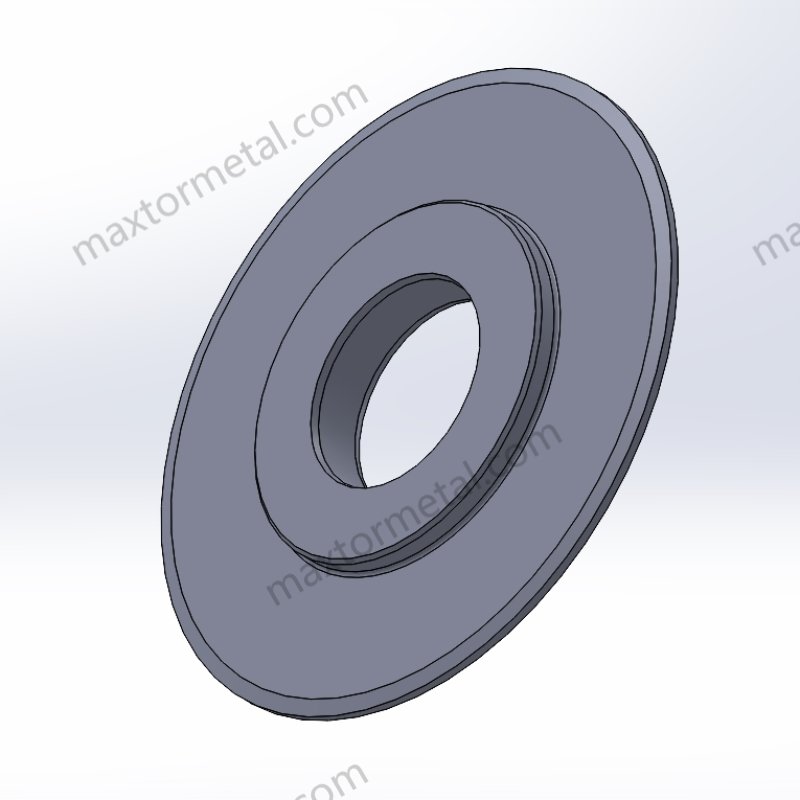
Taking care of your slitter blades helps them work better and last longer. Good care also keeps your machines working well and saves you money. Here are some easy ways to look after your rotary slitter blades.
Pulizia e manipolazione
Always be careful when you touch slitter blades. If you drop or hit them, the sharp edge can get ruined. Follow these steps to keep your blades safe and clean:
- Inspect Blades Regularly
Look at your blades often for chips, rough spots, or uneven wear. Write down what you find each time. This helps you see problems early and know when to fix or change a blade. - Clean After Each Use
Use soft tools and special cleaners to wipe off metal dust and dirt. Clean your blades after every job. This stops buildup and helps blades stay sharp longer. - Lubricate Properly
Pick the right oil or liquid for your job. Water-based oils are good for jobs that get hot. Oil-based ones are best for tough metal cutting. Lubrication helps blades move easier and last up to 25% longer. - Conservare le lame in modo sicuro
Keep blades in a dry place that does not get too hot or cold. Use covers to stop scratches and rust. - Train Operators
Make sure everyone knows how to handle blades the right way. Do not touch the sharp edge. Line up blades carefully when putting them in. Well-trained workers help blades last longer.
Tip: If you clean and handle your blades with care, they will last longer and work better.
Affilatura e ricondizionamento
You do not have to buy a new blade every time it gets dull. You can sharpen or fix old blades to make them work like new. Use a grinding machine or ask a pro to sharpen your blades. Sharpen blades if you see rough cuts or if cutting gets hard.
- Sharpened blades work almost like new ones.
- Sharp blades help you cut faster and neater.
- If you sharpen blades often, you do not need to buy as many new ones.
Keeping blades sharp helps you work faster and get better cuts. You save money and your machines work better.
Monitoraggio delle prestazioni
You can use smart systems to watch how your blades are doing. These systems tell you when a blade is getting worn out. Companies using these systems can work 30% faster because they know when to change blades before problems happen.
Machine Condition Monitoring (MCM) uses smart tools to check for blade wear. It can even show where a problem is starting. This helps you fix things early and avoid stopping your machines.
Note: If you check your blades often and use smart tools, your blades will last longer and your machines will run better.
You can pick from many rotary slitter blades. Some types are D2 tool steel, carbide-tipped, and micro-grain tungsten carbide. Top brands like Nanjing Metal Industrial have blades for all kinds of jobs. If you match your blade to your metal and how fast you work, you get better cuts. Checking and cleaning blades often helps you find dull edges early. This keeps your blades working well and stops waste.
- Good blades cut many metals and help you work faster.
- Cleaning and storing blades safely keeps them in good shape.
| Fare un passo | Descrizione |
|---|---|
| 1 | Talk to experts about what you need. |
| 2 | Get a blade designed for your job. |
| 3 | Try out the blade before using it a lot. |
| 4 | Make sure the blade is strong and works well. |
| 5 | Use the blade in your factory or shop. |
If you want a blade made just for you, Contatti a sales engineer.
Domande frequenti
What is a rotary slitter blade for metal?
A rotary slitter blade for metal is a round cutting tool. You use it in slitting machines to cut wide metal coils into narrower strips. These blades help you get clean, straight cuts with less waste.
How do you choose the right rotary slitter blade for metal?
You should match the blade material to your metal type and thickness. Check your machine’s speed and size requirements. Ask your supplier for help if you are unsure. The right blade gives you better cuts and longer life.
How often should you replace a rotary slitter blade for metal?
You should replace the blade when you see dull edges, rough cuts, or more burrs. Heavy use or hard metals may need more frequent changes. Regular checks help you know when to switch blades.
Can you sharpen a rotary slitter blade for metal?
Yes, you can sharpen most rotary slitter blades for metal. Use a grinding machine or ask a professional. Sharpening helps you save money and keeps your cuts clean.
What metals can you cut with a rotary slitter blade for metal?
You can cut many metals, such as mild steel, stainless steel, aluminum, copper, and titanium. Pick the right blade material for each metal to get the best results.
Why does blade surface finish matter?
A smooth surface finish lowers friction and heat. This helps your rotary slitter blade for metal last longer and cut better. Special coatings can also stop rust and sticking.
How do you store rotary slitter blades for metal?
Store blades in a dry, cool place. Use blade covers or cases to prevent scratches and rust. Keep them away from moisture and chemicals for longer life.
What should you do if your rotary slitter blade for metal wears out too quickly?
Check if you use the right blade material and coating. Make sure your machine settings are correct. Clean and lubricate blades after each use. Ask your supplier for advice if problems continue.
Vedi anche
Come scegliere le lame per taglierine circolari giuste per prestazioni durature
La guida definitiva per scegliere la lama taglierina in gomma
Come massimizzare l'affilatura della lama della taglierina per prestazioni di taglio superiori

 English
  Spanish
  Italian
  French
  Portuguese
  Russian
  German
  Arabic
  Hindi
Hindi  Vietnamese
  Indonesian
  Japanese
  Korean