


Avete mai provato a tagliare la gomma ottenendo bordi irregolari o scarti di materiale? Non siete i soli! Scegliere la giusta lama per il taglio della gomma è fondamentale per ottenere un taglio netto. Prima di iniziare, considerate il tipo e lo spessore della gomma. Inoltre, valutate le vostre specifiche esigenze di taglio. Anche piccole variazioni nella gomma possono influire sul metodo di taglio e sui risultati. Ad esempio, date un'occhiata a questa tabella:
| Forza normale applicata | Struttura del nerofumo | Comportamento della mescola | Effetto sul taglio e sull'usura da scheggiatura |
|---|---|---|---|
| Forza ridotta | Struttura elevata | Mescola più rigida, minore flessione | Minimizza l'usura irrigidendo la mescola |
| Forza elevata | Struttura ridotta | Mescola più morbida, consente la cristallizzazione indotta da deformazione | Minimizza l'usura consentendo la cristallizzazione |
Selezionare la giusta combinazione di lama e gomma può migliorare la qualità del lavoro e ridurre gli errori.
Punti chiave
- Innanzitutto, prima di scegliere una lama, informatevi sul tipo di gomma, sulla sua durezza, flessibilità e spessore. Questo vi aiuterà a ottenere tagli netti e uniformi.
- Scegliete il tipo di lama corretto. Può essere lineare, dentata, circolare o personalizzata. Sceglietela in base alla gomma e al metodo di taglio richiesto per ottenere risultati migliori.
- Trovate un buon equilibrio tra precisione e velocità. Scegliete lame e impostazioni in linea con gli obiettivi del progetto e con il volume di lavoro.
- Valutate le caratteristiche importanti della lama, come il numero di denti, l'angolo di spoglia (hook angle), la larghezza del taglio (kerf) e le dimensioni. Queste vi aiuteranno a tagliare meglio e a prolungare la durata della lama.
- Utilizzate sempre lame affilate. Seguite le procedure di sicurezza, come l'uso di dispositivi di protezione individuale. Questo vi consentirà di tagliare la gomma in sicurezza, evitando infortuni.

Conoscere il materiale in gomma
Tipi di gomma
Prima di scegliere una lama, è necessario conoscere il tipo di gomma da trattare. La gomma si presenta in molte forme. Potreste lavorare con la gomma naturale, che risulta morbida ed elastica. Alcuni progetti richiedono gomma sintetica, come il neoprene o l'EPDM. Questi tipi resistono al calore, all'olio o agli agenti atmosferici meglio della gomma naturale. La gomma siliconica è un'altra opzione, che mantiene la flessibilità anche a temperature estreme. Ogni tipologia reagisce in modo diverso al taglio. Se si utilizza la lama errata, si rischia di ottenere bordi frastagliati o di sprecare materiale.
Mancia: Verificate l'etichetta o chiedete al vostro fornitore il tipo di gomma. Questo vi aiuterà a scegliere l'utensile da taglio più adatto.
Durezza e flessibilità
Durezza e flessibilità della gomma sono fattori cruciali durante il taglio. La durezza indica la consistenza della gomma, mentre la flessibilità indica quanto si piega. Le ricerche dimostrano che una gomma più morbida consente di realizzare incisioni e forme più profonde, ma può lacerarsi più facilmente. Una gomma più dura offre tagli più netti e superficiali, mantenendo meglio la forma. Anche il modo in cui la gomma si allunga (la sua elasticità) influisce sul funzionamento della lama. Due tipi di gomma con la stessa durezza possono comportarsi diversamente se uno è più flessibile dell'altro. Per ottenere un equilibrio, alcuni prodotti utilizzano un design a doppio strato: un interno morbido e un esterno rigido. Questa combinazione consente di ottenere sia resistenza che flessibilità nei tagli.
Spessore
Lo spessore della gomma cambia tutto. I fogli sottili si tagliano facilmente con una lama affilata. La gomma spessa o rinforzata richiede un utensile più robusto e affilato. Se provate a usare una lama piccola su una gomma spessa, rischiate di ottenere bordi irregolari o persino di danneggiare la lama. Misurate sempre la gomma prima di iniziare. Per materiali molto spessi o tenaci, potrebbe essere necessaria una lama speciale o una soluzione personalizzata.
Ricordate: conoscere il tipo, la durezza, la flessibilità e lo spessore della gomma vi aiuterà a ottenere tagli fluidi e netti ogni volta.
Tipi di lame per il taglio della gomma
Scegliere la giusta lama per il taglio della gomma può facilitare notevolmente il vostro progetto. Esistono diversi tipi di lame, ciascuno con i propri punti di forza. Vediamo le opzioni principali e come funzionano per i diversi materiali in gomma e lavorazioni.
Lame dritte
Materiali comuni
- Acciaio ad alto contenuto di carbonio: questo materiale offre un tagliente estremamente affilato e una lunga durata. È ideale per tagli netti e lineari.
- Acciaio inossidabile: se dovete tagliare la gomma in ambienti umidi o difficili, l'acciaio inossidabile resiste alla ruggine e mantiene l'affilatura.
- Carburo di tungsteno: questo materiale è estremamente duro e mantiene il filo anche durante il taglio di gomma tenace o spessa.
Applicazioni tipiche
Le lame lineari si utilizzano per ottenere un taglio netto e dritto su fogli di gomma morbida o di media durezza. Queste lame sono adatte sia per utensili manuali che per macchinari. Se dovete tagliare gomma per guarnizioni, pavimentazioni o sigilli, una lama lineare è un'ottima scelta.
I ricercatori hanno testato le lame lineari misurando l'impatto dell'affilatura e della geometria della lama sul taglio. Hanno scoperto che una punta più affilata e il corretto angolo di cuneo aiutano a ottenere un taglio più pulito. I test hanno inoltre dimostrato che il modo in cui la gomma si allunga e aderisce alla lama influisce sulla forza necessaria. Pertanto, se desiderate tagli affidabili e uniformi, prestate attenzione alla forma e all'affilatura della lama.
Mancia: Verificate sempre l'affilatura della lama prima di iniziare. Una lama smussata può lacerare la gomma e lasciare bordi irregolari.
Lame seghettate
Materiali comuni
- Acciaio ad alto contenuto di carbonio: le lame dentate realizzate in questo materiale presentano denti robusti e affilati. Tagliano facilmente la gomma tenace o fibrosa.
- Acciaio inossidabile: questo materiale aiuta a prevenire la ruggine, il che è utile se si lavora in ambienti umidi o industriali.
- Carburo di tungsteno: le lame dentellate con denti in carburo di tungsteno mantengono l'affilatura più a lungo, anche quando si taglia gomma abrasiva o rinforzata.
Applicazioni tipiche
Le lame dentellate eccellono quando è necessario tagliare gomma spessa, strutturata o rinforzata. I denti fanno presa sul materiale e aiutano a ridurre lo slittamento. È possibile utilizzare queste lame per tagliare nastri trasportatori, tappeti di gomma o pneumatici. Le differenze tra le lame lineari e quelle dentellate si riducono al modo in cui gestiscono i materiali difficili. Le lame dentellate penetrano nella gomma, facilitando il taglio di strati o fibre.
Se si nota che la gomma scivola o si accumula, si consiglia di provare una lama dentellata per un migliore controllo.
Lame circolari
Materiali comuni
- Acciaio ad alto carbonio: questo materiale bilancia costi e prestazioni, rendendolo una scelta popolare per il taglio generico.
- Acciaio inossidabile: da utilizzare se è necessario tagliare la gomma in ambienti umidi o idonei al settore alimentare.
- Tungsten carbide: Circular blades with this material handle high-speed, nonstop cutting and resist wear.
Applicazioni tipiche
You will often see circular blades in machines that cut large rolls or sheets of rubber. These blades work best for continuous or high-volume jobs. Factories use them to make products like rubber flooring, seals, or strips.
Technical studies show that circular blades work well for nonstop cutting. When you pair them with a flexible rubber backing roll, the blade can cut fibers cleanly and last through thousands of cuts. The backing roll supports the rubber and absorbs some of the cutting force. This setup keeps the blade sharp and helps you get smooth, even cuts every time.
Nota: If you need to cut a lot of rubber quickly, a circular blade in a machine will save you time and effort.
Specialty and Custom Blades
Materiali comuni
- High-carbon steel, stainless steel, tungsten carbide, and other special alloys: Custom blades use the best material for your job. You can choose what fits your needs.
Benefits and Necessity of Custom Blades
Sometimes, your project needs more than a standard rubber cutting blade. Maybe you work with a special type of rubber, or you need to cut a unique shape or thickness. Custom blades let you pick the right size, shape, and material. This helps you cut faster, safer, and with more accuracy. Industries like automotive, aerospace, or food processing often need custom blades to meet strict rules or handle tough jobs.
Custom blades can solve problems that standard blades cannot. If you keep running into trouble, a custom solution might be the answer.
Nanjing Metal as a Custom Blade Provider
If you need a custom rubber cutting blade, you want a manufacturer you can trust. Nanjing Metal stands out as a leading rubber cutting blade manufacturer with over 20 years of experience. Their team designs and makes blades for all kinds of industries. They use advanced tools and strict quality checks to make sure every blade meets your needs. Many customers around the world trust Nanjing Metal for their custom Blade projects.
Want to learn more or get a quote? Just contact a Nanjing Metal sales engineer. They can help you find the perfect blade for your project.
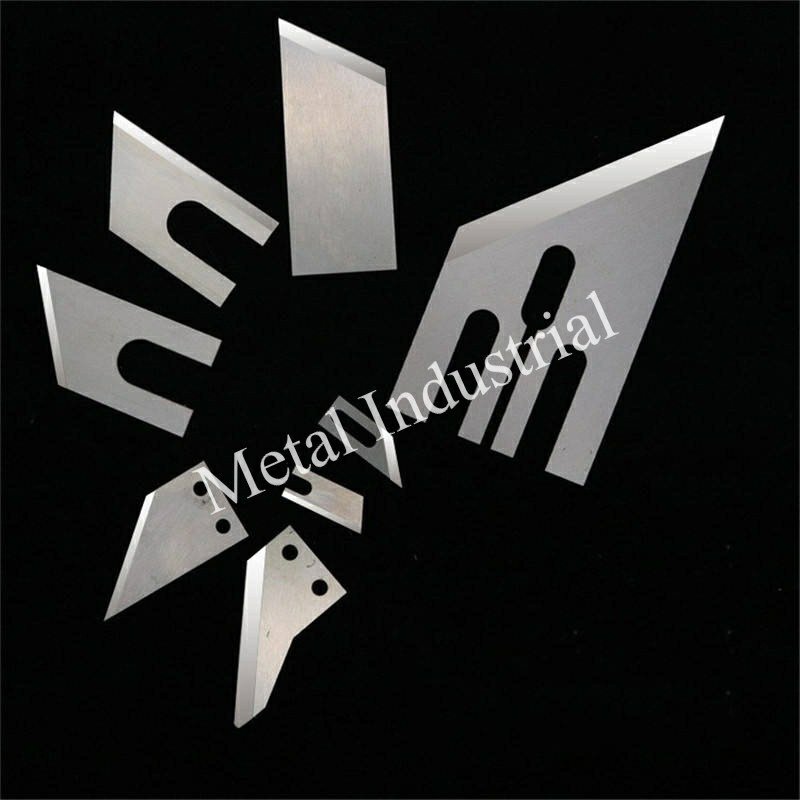
Scegliere la lama perfetta
Precision vs. Speed
When you start choosing the perfect blade, you need to think about what matters most for your project: precision or speed. If you want smooth, clean edges, you should focus on precision. If you need to finish a lot of work quickly, speed becomes more important.
When to Prioritize Precision
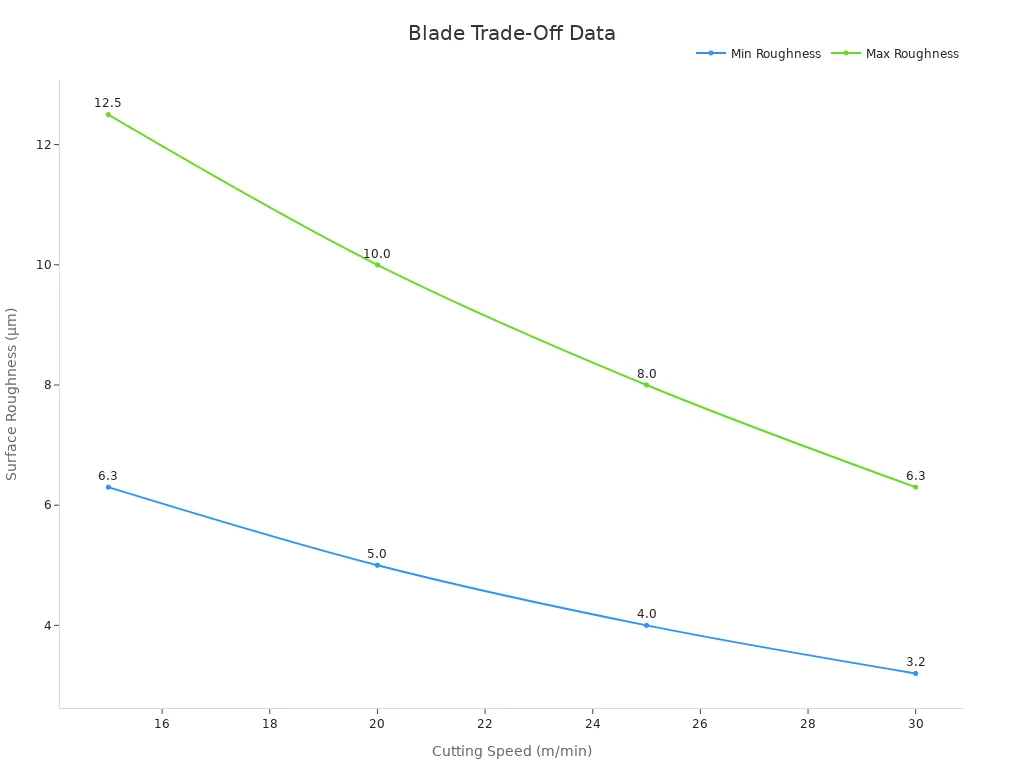
You should choose precision when your project needs tight tolerances or a perfect finish. For example, if you cut rubber gaskets for engines, a rough edge can cause leaks. Take a look at this table to see how different cutting speeds affect surface quality:
| Grado di acciaio | Surface Roughness (μm) | Velocità di taglio (m/min) | Saw Type | Feed (mm/tooth) |
|---|---|---|---|---|
| Low Carbon Steel | 3.2 – 6.3 | 30 | Band saw | 0.2 |
| Medium Carbon Steel | 4.0 – 8.0 | 25 | Circular saw | 0.15 |
| Acciaio legato | 5.0 – 10.0 | 20 | Band saw | 0.1 |
| Acciaio per utensili | 6.3 – 12.5 | 15 | Circular saw | 0.08 |
Higher speed can mean rougher cuts, especially with harder materials.
When to Prioritize Speed
Speed matters when you have a lot of material to cut and less need for perfect edges. For example, if you cut rubber mats for playgrounds, you might want to finish quickly. Just remember, faster cutting can wear out your blade faster and lower the quality of your cuts.
Balancing Both for Your Project
You can balance speed and precision by testing different blades and settings. Sometimes, using a hybrid blade or adjusting your machine helps you get both good speed and decent quality.
Manual vs. Machine Cutting
Blade Selection for Manual Cutting
Manual cutting works best for small jobs or when you need to make custom shapes. You should pick a blade that feels comfortable and stays sharp. Straight or serrated blades are common choices.
Blade Selection for Machine Cutting
Machines can cut faster and more accurately. They use circular or specialty blades for high-volume work. A sealing gasket company found that switching to machine cutting cut their production time in half and gave them smoother edges.
| Gasket Type | Spessore | Machine Speed (mm/s) | Manual Speed (mm/s) | Labor (people) |
|---|---|---|---|---|
| Rubber Gasket | 3 mm | 200 | 50 | 3 |
| Rubber Gasket | 10 mm | 50 | ≤10 | 4 |
Safety and Efficiency Considerations
Machine cutting is safer and more efficient for big jobs. Manual cutting needs more skill and can be tiring. Always wear safety gear and keep your blades sharp.
Volume of Work
Low-Volume Projects
If you only cut rubber once in a while, your blade will last longer. You will not need to sharpen or replace it often.
High-Volume or Industrial Projects
Cutting rubber every day wears out blades faster. In factories, blades may need replacing every few months. The table below shows how work volume affects blade life:
| Contesto di utilizzo | Expected Lifespan | Esigenze di manutenzione |
|---|---|---|
| Home Kitchen | 12 to 24 months | Less frequent maintenance |
| Industrial Use | da 6 a 18 mesi | Frequent sharpening and replacement |
Cost and Maintenance Implications
More cutting means higher costs for new blades and more time spent on maintenance. You can save money by storing blades properly and using the right blade for your job.
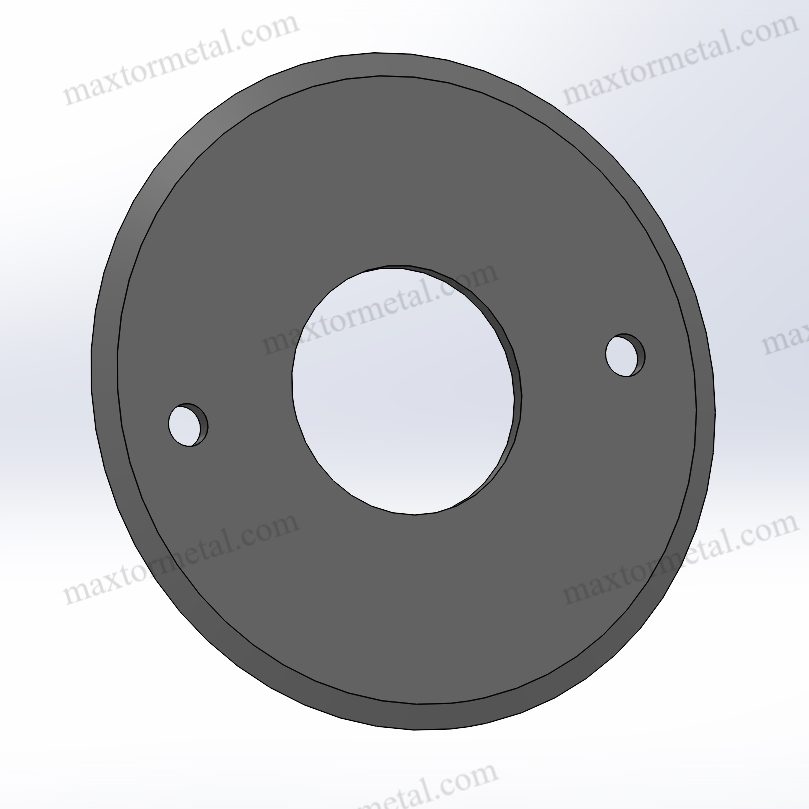
Caratteristiche chiave della lama
When you pick a rubber cutting blade, you want to look at more than just the shape. Each feature changes how your blade performs and how clean your cuts turn out. Let’s break down the most important features you should know.
Configurazione della dentatura
Tooth configuration means the way the teeth are arranged on your blade. The tooth count, spacing, and shape all matter. A higher tooth count gives you smoother cuts, but it can slow you down. Fewer teeth cut faster, but you might see rougher edges. The tooth geometry, or the shape of each tooth, also affects how the blade slices through rubber. If you work with thick or tough rubber, you might want a blade with fewer, larger teeth. For thin or soft rubber, a higher tooth count helps you get a cleaner edge.
Material Removal Rate (MRR) shows how fast you can cut. It depends on feed rate, tooth count, and how deep you cut. If you want to balance speed and quality, try different tooth counts to see what works best for your project.
Hook Angle
The hook angle is the tilt of the blade’s teeth. A positive hook angle pulls the rubber into the blade, making cutting easier and faster. A negative hook angle pushes the material away, which can help you get more control and a smoother finish. Some wood blades with a negative hook angle actually work well for certain rubber types, especially if you want to avoid tearing or slipping. Always check the hook angle before you start, because it changes how the blade grabs the rubber.
Kerf Width
Kerf width is the thickness of the cut your blade makes. A narrow kerf means less material wasted and more precise cuts. A wider kerf can handle thicker or tougher rubber but may leave a bigger gap. Studies show that smaller kerf widths lead to less heat damage and smoother edges, especially when cutting soft or flexible rubber. If you need tight tolerances, always measure the kerf width before you begin.
Blade Size and Diameter
Blade size and diameter decide how deep and wide you can cut. Bigger blades cut deeper, but they need more power. Smaller blades work well for thin sheets or detailed work. Always match your blade size to your rubber’s thickness and your cutting tool.
Durata e manutenzione
A durable blade saves you time and money. Look for blades made from strong materials like high-carbon steel or tungsten carbide. Sharpness matters, too. Tests like the BESS Score and CATRA metrics measure how sharp a blade is and how long it stays sharp. You can use high-tech tools like SEM or AFM to check for tiny defects or dull spots. Keep your blade clean and sharpen it often. Regular maintenance helps your blade last longer and keeps your cuts smooth.
Tip: If you notice your blade getting dull or your cuts looking rough, it’s time for some maintenance. A well-cared-for blade makes every project easier.
Come tagliare la gomma in sicurezza
Best Tool to Cut Rubber
You want clean, easy cuts when you work with rubber. Picking the best tool to cut rubber makes a huge difference. Many users say anvil pruners, like the Craftsman Edge, and the Ronan Multi-Cut tool give the best results. These tools help you avoid rough edges and wasted material. People who switched from scrapers or scissors to these tools noticed they stopped ruining cuts. The Ronan Multi-Cut tool stands out as the best tool to cut rubber for most jobs, even though it costs more. It gives you smooth, straight cuts every time.
If you need to cut thick or tough rubber, you might want to try waterjet cutting. This method works well for big projects and gives you high precision. Here’s a quick look at how different cutting methods compare:
| Caratteristica | Waterjet Cutting | Die Cutting | Taglio laser | Knife Cutting |
|---|---|---|---|---|
| Precisione | ±0.005 in | ±0.010 in | ±0.003 in | ±0.020 in |
| Max Thickness | Up to 12 in | Up to 2 in | Up to 1 in | Up to 4 in |
| Velocità | Medium-Fast | Very Fast | Veloce | Lento |
| Costo | Alto | Medio | Alto | Basso |
You can see that waterjet and laser cutting give you the best accuracy, but hand tools like the Ronan Multi-Cut are perfect for smaller jobs.
Consigli di sicurezza
When you learn how to cut rubber, safety should always come first. Many accidents happen because people skip safety steps or use the wrong tools. Always wear cut-resistant gloves, safety glasses, and sturdy boots. If you use power tools, check that everything works before you start. Keep your work area clean and free of clutter.
Tip: The Logger Safety Initiative recommends using sharp, well-maintained tools and wearing proper protective gear. They also suggest having a first aid kit nearby and working with others when possible.
UN study in rubber sawmills found that most injuries happen to hands and feet. You can avoid these by using the right tools and following safe cutting techniques.
Errori comuni
You might wonder how to cut rubber without making mistakes. Many people run into trouble because they rush or skip steps. Here are some common mistakes:
- Using dull blades or the wrong tool for the job.
- Not measuring or marking the rubber before cutting.
- Skipping safety gear like gloves or goggles.
- Ignoring tool maintenance, which leads to accidents.
- Applying uneven pressure, causing jagged or uneven cuts.
- Overheating the rubber or using too much force.
- Not checking for defects in the rubber before starting.
Incident analysis shows that fixing these mistakes can reduce defects by over 80%. If you want to cut rubber properly, take your time, use the best tool to cut rubber, and always follow safety steps.
Choosing the right rubber cutting blade starts with knowing your material and project goals. You should look at blade materials, shapes, and coatings to match your needs.
- Different blades work best for different types of rubber and cutting jobs.
- Coatings like Titanium Nitride help blades last longer.
- Custom blades give you the best results for tricky projects.
If you want to master how to cut rubber, always check your blade and stay safe. For unique jobs, custom blades from a trusted manufacturer like Nanjing Metal can make how to cut rubber easier and more precise. Don’t forget to keep your tools sharp and Contatti their sales engineer if you need expert help.
Domande frequenti
What is the best blade for cutting thick rubber?
You should use a heavy-duty blade, like a tungsten carbide or serrated blade. These blades stay sharp and handle tough, thick rubber without tearing.
Can I use a wood blade to cut rubber?
Some wood blades with a negative hook angle work for certain rubber types. Always check the blade’s sharpness and test on a scrap piece first.
How do I keep my cutting blade sharp?
Clean your blade after each use. Store it in a dry place. Sharpen it regularly with the right tool. A sharp blade gives you smoother cuts and lasts longer.
Do I need a custom blade for my project?
If you work with unique rubber materials or need special shapes, a custom blade helps you get better results. Custom options fit your exact needs and improve efficiency.
Where can I get expert help with custom blades?
You can contact a Nanjing Metal sales engineer for advice. They have years of experience as a leading industrial blade manufacturer and can help you find the perfect solution for your project.
Vedi anche
La guida definitiva per scegliere la lama taglierina in gomma
Ultime tendenze e sviluppi nel settore delle lame e dei coltelli per pneumatici in gomma
Cosa sono le lame rotonde e come vengono utilizzate nelle industrie
Come scegliere le lame per taglierine circolari giuste per prestazioni durature

 English
  Spanish
  Italian
  French
  Portuguese
  Russian
  German
  Arabic
  Hindi
Hindi  Vietnamese
  Indonesian
  Japanese
  Korean