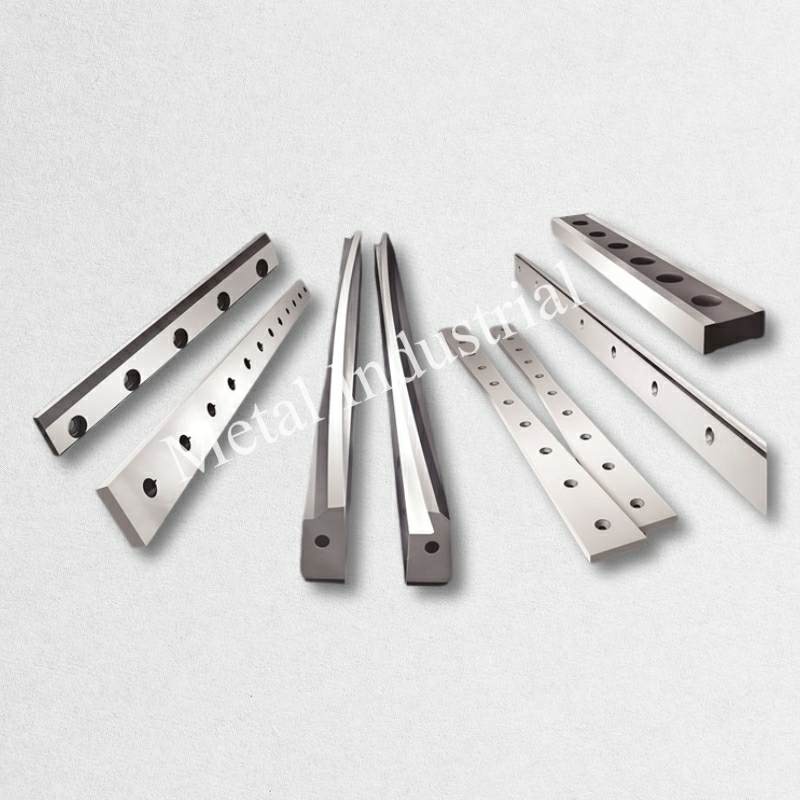
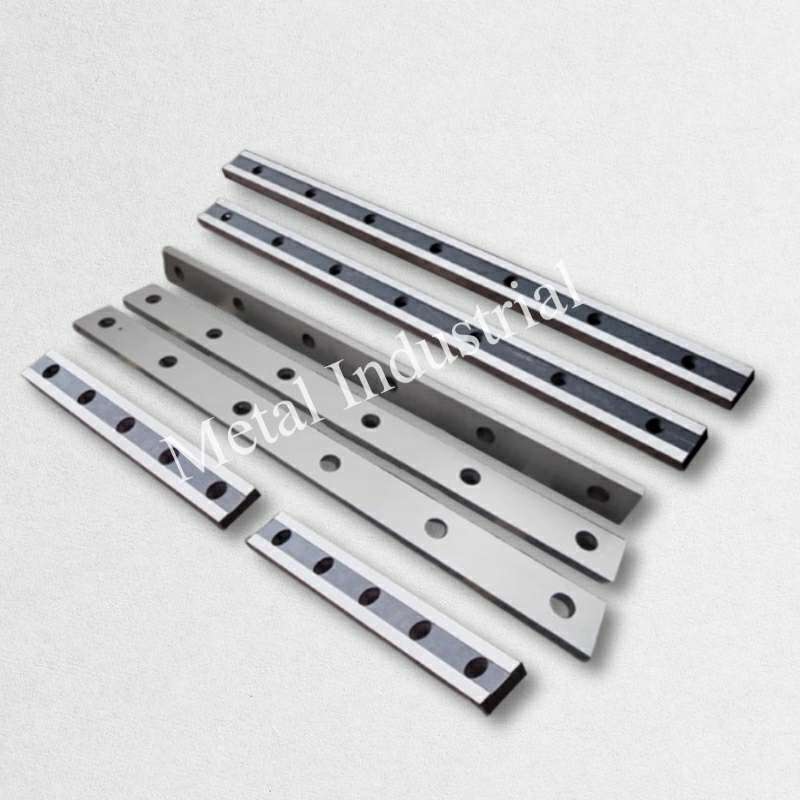
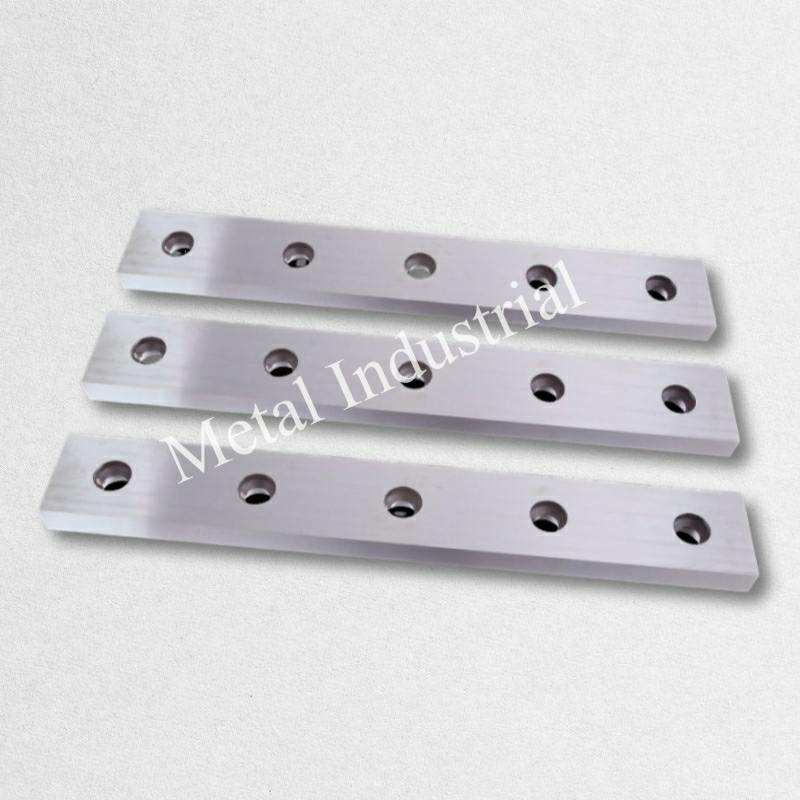
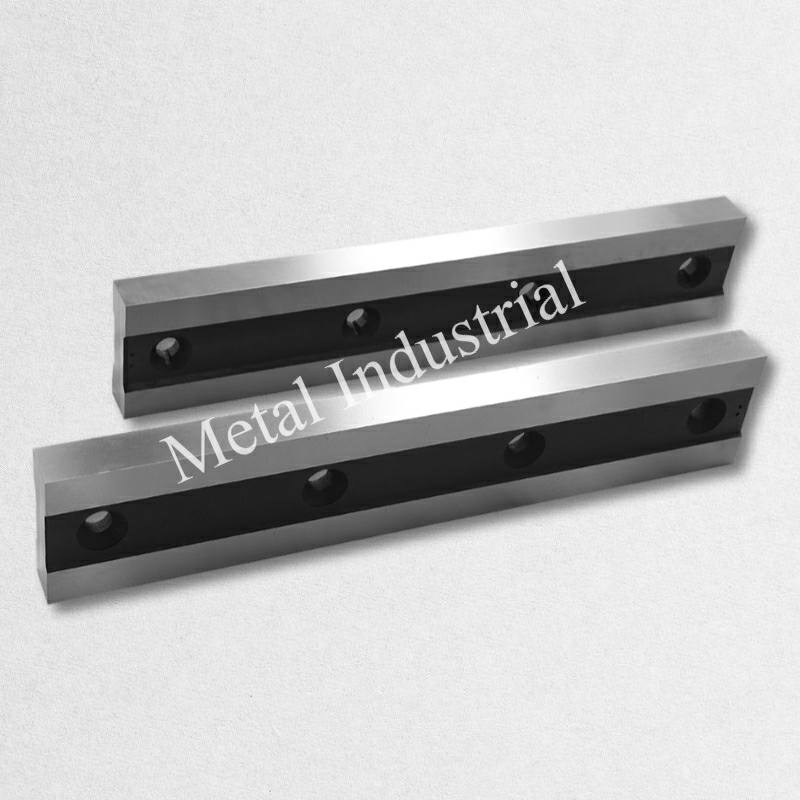
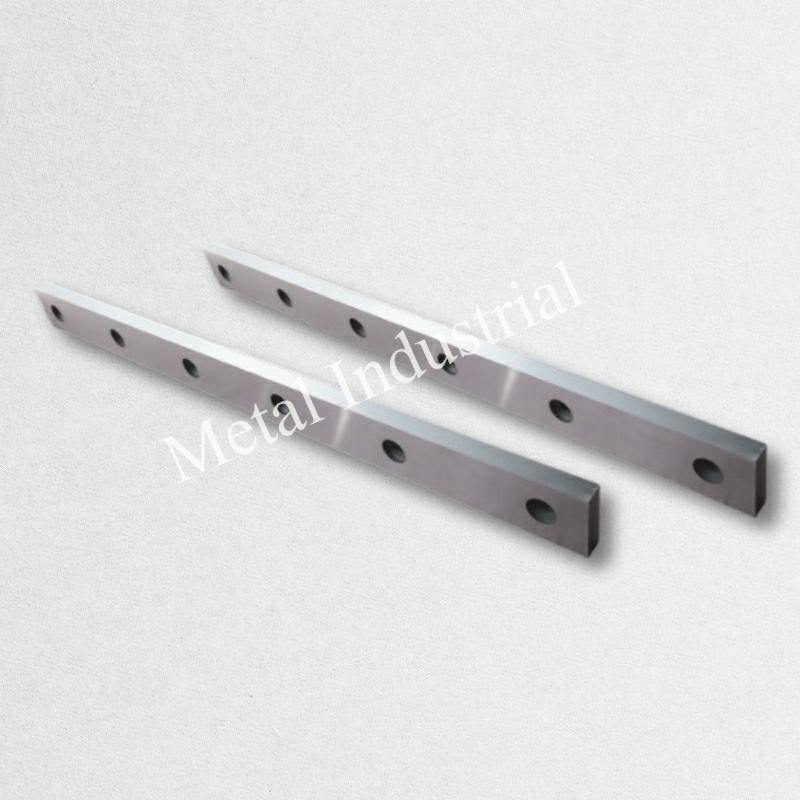
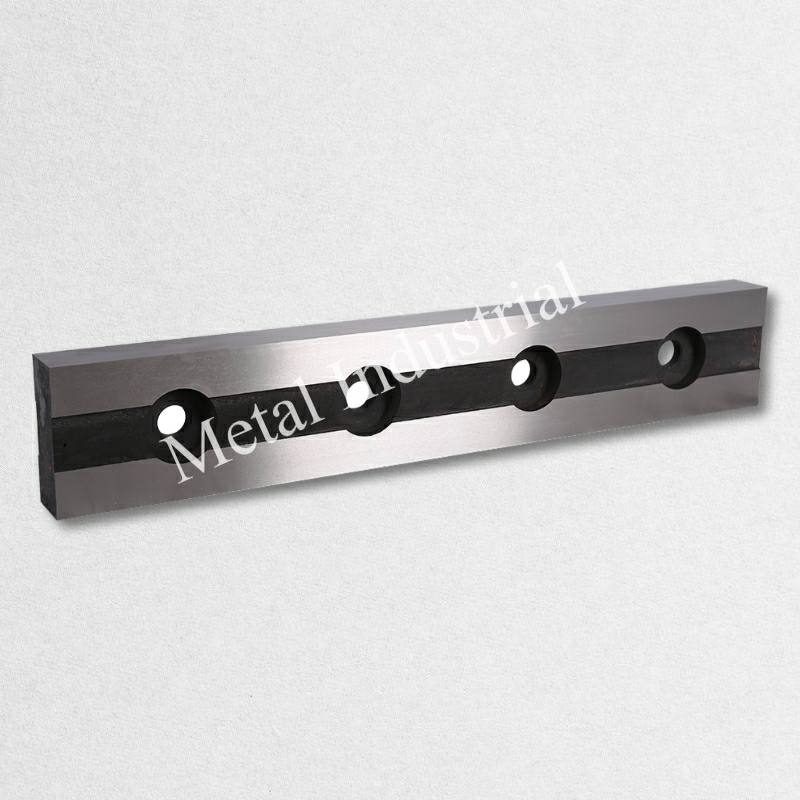
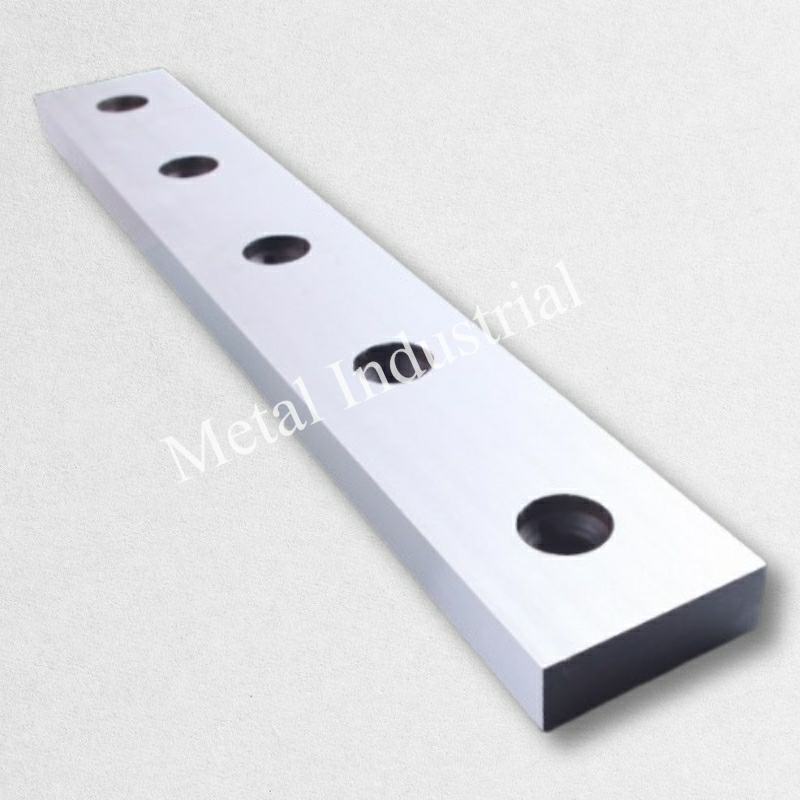
高精度シャー刃 | 産業用ギロチンナイフの仕様
+86 158 6180 3357

シャーブレード

追加情報

その他の名称

Shear Machine Blades、Shear Knives, Shearing Blades, Cutting Blade, Industrial Guillotine Knives

原産地

中国

用途

金属加工, 製造工場, 建設工事

材料

D2, H13, S7, SKD-11

モデル番号

MT-SB

OEMサービス

利用可能

支払い条件

L/C、T/T、ウェスタンユニオン

包装

段ボール箱, 木製ケース

納期

15~20日

シェア先:


高性能工業用シャーブレード/シェアナイフ(ギロチンシアー&フライングシアー刃)

金属シートおよび厚板の冷間・熱間精密シャーリング(せん断加工)用に設計された工具です。最適化された刃物隙間(クリアランス)を利用して、被削材のせん断強度を超えるせん断応力を発生させることで、熱影響部(HAZ)を生じさせることなく、バリフリーかつチプレスな(切り屑の出ない)断面分離を実現します。

エンジニアリングパラメータ

Cold Shearing Specification

Heavy-Duty / Hot Shearing Specification

一般的な材料

D2 (1.2379), SKD11

H13 (1.2344), S7

硬度(HRC)

58 – 62

48 – 58 (Application dependent)

真っ直ぐさ

< 0.02 mm/m

< 0.05 mm/m

並列構造

< 0.015 mm

< 0.030 mm

Edge Finish (Ra)

< 0.8 µm (Fine Ground)

< 1.2 µm

Compatible Machines

Amada, Cincinnati, Bystronic, LVD, Durma

Custom Flying Shears, Scrap Shears


シャーブレードの工学的概要:せん断(シアリング)のメカニズム

Industrial shearing is a complex mechanical process that involves the plastic deformation and subsequent fracture of metal through the application of opposing shear forces. Unlike thermal cutting methods, shear blades provide “cold processing,” which preserves the metallurgical characteristics of the material edges.

2.1 The Shearing Mechanism

The process is initiated as the upper blade descends, creating a localized stress field. When the stress exceeds the material’s ultimate shear strength, fracture occurs. The quality of this fracture is governed by the “Blade Clearance” (Gap Management). In engineering terms, this clearance typically ranges from 5% to 10% of the material thickness, depending on the material’s hardness.

2.2 Wear Dynamics

Blade wear manifests in three primary stages:

  1. Initial Bedding-in: Rapid wear of microscopic grinding peaks.
  2. Steady State Wear: Gradual blunting of the cutting edge radius.
  3. Catastrophic Failure: Micro-chipping occurs when the edge radius exceeds critical limits (typically >0.2mm), leading to increased cutting force and thermal load.

シャーブレードの産業応用:セクター別の工况分析

Shear blades are vital across diverse sectors, each presenting unique engineering constraints:

  • Automotive Manufacturing: Cutting High-Strength Low-Alloy (HSLA) steel. This requires blades with extreme toughness to resist the high tensile forces of modern automotive panels.

  • Shipbuilding Industry: Processing heavy plates. H13 or S7 materials are prioritized here for their impact resistance.

  • Steel Service Centers: High-volume cold-rolled steel (CRS) shearing. Precision and edge life consistency are the primary KPIs.

  • Construction & Structural Steel: Guillotine shearing of rebar and structural sections. Focuses on the “4-edge reversible” design to minimize downtime.

  • Aerospace & Non-Ferrous Processing: Shearing aluminum and copper. Requires high surface finish (Ra <0.8µm) to prevent “sticking” or material adhesion (galling).
  • スクラップMetalリサイクル: Utilizing S7 blades for irregular, high-impact loads where resistance to catastrophic fracture is critical.

シャーブレードの一般的な破損トラブルと工学的対策

  1. Problem: Micro-Chipping at the Edge.
    • 根本的な原因: Excessive hardness or insufficient blade clearance.
    • 解決策 Introduce Cryogenic Treatment to stabilize the martensitic structure and reduce internal stress.

  2. Problem: Excessive Burr Formation.
    • 根本的な原因: Blade blunting or excessive clearance (gap >10% of plate thickness).
    • 解決策 Implement a 4-edge reversible design and strictly monitor the edge radius; regrind when the radius reaches 0.2mm.

  3. Problem: Slanted/Incline Cut Edges.
    • 根本的な原因: Lack of blade rigidity or non-planar installation surfaces.
    • 解決策 Use a dial indicator to verify parallelism across the entire length (ends and middle) during installation.

  4. Problem: Thermal Cracking (Heat Checking).
    • 根本的な原因: High-speed continuous shearing generating friction heat.
    • 解決策 Apply TiN or TiAlN coatings to reduce the friction coefficient and manage heat dissipation.

  5. Problem: Premature Edge Blunting in Stainless Steel.
    • 根本的な原因: Work hardening of 304/316 grades.
    • 解決策 Select D2 or SKD11 materials with high carbon and chromium for maximum abrasion resistance.

  6. Problem: Catastrophic Blade Fracture.
    • 根本的な原因: Using high-hardness blades (HRC 60+) for heavy plates or scrap.
    • 解決策 Switch to S7 or H13 grades with hardness reduced to HRC 48-54 to prioritize toughness.

  7. Problem: “Ghost” Burrs on Non-Ferrous Metals.
    • 根本的な原因: Material adhesion to the blade surface.
    • 解決策 Bright chrome plating to increase surface lubricity and prevent “sticking”.

  8. Problem: Dimensional Distortion Post-Regrind.
    • 根本的な原因: Grinding burns causing localized softening.
    • 解決策 Mandatory fine grinding with adequate coolant; ensure no visible grinding burns. Additionally, thickness reduction from each regrind cycle must be documented and compensated with a precision shim stack to restore blade overlap — see the Regrinding Thickness Reduction Compensation Shim Guide for the calculation procedure.

  9. Problem: Blade Walking/Shifting.
    • 根本的な原因: Poor bolt-hole compatibility.
    • 解決策 Standardize hole positions during the CAD/CAM phase for 100% compatibility with OEM machines.

  10. Problem: Stress Fractures in Multi-Segment Blades.
    • 根本的な原因: Uneven load distribution between segment joints.
    • 解決策 Precision grinding of segments as a matched set to ensure uniform height and parallelism.


5.材質・材料エンジニアリングガイド

  1. Material selection is based on the “Wear Resistance vs. Toughness” trade-off:

    • D2 (1.2379) / SKD11: The “General Purpose” standard. High carbon and high chromium provide excellent wear resistance for sheets <6mm.

    • H13 (1.2344): The “Heavy-Duty” choice. Exceptional hot-hardness and impact toughness for plates >12mm or hot shearing.  
    • S7: The “High-Impact” grade. Specifically designed for scrap recycling and heavy-duty demolition where fracture resistance is the absolute priority.


熱処理および硬度(HRC)の選定ロジック

The performance of a shear blade is determined in the vacuum furnace.

  • Vacuum Heat Treatment: Ensures uniform hardness depth and minimal dimensional distortion.

  • Hardness Customization:
    • Cold Shearing: HRC 58-62 for precision and verticality.

    • Medium/High Strength: HRC 54-58 for a balance of toughness.

    • Scrap/Heavy Impact: HRC 48-54 to prevent catastrophic fracture.
  • 極低温処理: Converts retained austenite to martensite, increasing wear resistance and dimensional stability by 20%-50%.

7. 刃物形状および刃先エンジニアリング

  • Blade Clearance Management: Essential for cut quality. Recommended gap is 5%-10% of material thickness.

  • Edge Design: Most blades utilize a 4-edge reversible design to maximize lifetime between regrinds.

  • Surface Roughness: Blade edges must be fine-ground to Ra <0.8µm to prevent initial micro-chipping.

8. 製造プロセスと品質検査体制

  1. Material Sourcing: High-purity alloy steels (D2, H13, S7).
  2. Machining: CNC milling of mounting holes and recesses for OEM compatibility.

  3. Vacuum Heat Treatment & Deep Cryogenics: Core hardness and structural stabilization.

  4. Fine Grinding: Precision finishing of cutting surfaces and installation planes. Thickness loss must be compensated with a calibrated shim stack — see the Regrinding Thickness Reduction Compensation Guide.

  5. 検査:
    • Straightness: Verification < 0.02mm/m.

    • Parallelism: Verification < 0.015mm.

    • Hardness Mapping: Ensuring consistency across the entire blade length.

ケーススタディ:数値化された改善実績

  • Case 1: Automotive HSLA Shearing: By switching from standard D2 to Cryogenic-treated D2, a client reduced edge chipping incidents by 40% and extended blade life by 30%.

  • Case 2: Steel Service Center: Implementing strict “0.2mm radius” regrind schedules and parallelism calibration (0.015mm) resulted in a 50% reduction in rejection rates due to burrs.


FAQコーナー(産業用深層解説)

  1. Q: When should I regrind my shear blades?
    • A: When the edge radius reaches 0.2mm or burr height exceeds project tolerances.

  2. Q: Why use H13 for hot shearing instead of D2?
    • A: H13 maintains its hardness at high temperatures (hot-hardness), whereas D2 softens.

  3. Q: What is the optimal blade gap for 10mm mild steel?
    • A: 0.5mm to 1.0mm (5%-10% of thickness).

  4. Q: Does cryogenic treatment actually work?
    • A: Yes, it increases wear resistance by up to 50% by transforming retained austenite.

  5. Q: How do I prevent “sticking” when shearing aluminum?
    • A: Use blades with a bright chrome coating or higher surface finish (Ra <0.4µm).

  6. Q: Can I use S7 for thin-gauge stainless steel?
    • A: No. S7 lacks the necessary abrasion resistance (hardness) for thin-gauge SS; D2 is preferred.

  7. Q: What is “cold processing” in shearing?
    • A: It is a mechanical separation that does not create a Heat Affected Zone (HAZ), preserving material properties.

  8. Q: How important is straightness for a 4-meter blade?
    • A: Critical. Deviation >0.02mm/m causes uneven gap settings and poor cut quality.

  9. Q: Why are my blades chipping on the corners?
    • A: This usually indicates an uneven installation plane or over-tightening of segments.

  10. Q: Is vacuum heat treatment better than traditional salt baths?
    • A: Yes, it offers superior control over hardness consistency and surface decarburization.

  11. Q: What materials require higher shearing forces?
    • A: Stainless steel and HSLA alloys.

  12. Q: Can one blade set be used for all thicknesses?
    • A: No. Blade clearance MUST be adjusted per thickness.

  13. Q: What is the benefit of a 4-edge reversible blade?
    • A: It provides four usable cutting edges, reducing the cost-per-cut and downtime.

  14. Q: Why does my shear leave a “crushed” edge?
    • A: This is a symptom of excessive blade clearance.

  15. Q: How does parallelism affect blade life?
    • A: Poor parallelism leads to localized high-pressure zones, causing premature chipping.


" お問い合わせをお待ちしております!

お探しのシャーブレードが見つからない場合は、カスタマイズも可能です。「 カスタムブレード 」でその方法をご確認ください!

パンフレットを開く


シャーブレード展示:

シャーリングブレード、シャーリングマシンブレード、冷間切断シャーブレード、カッティングブレード、ギロチンブレード、ギロチンシャーナイフ、ストレートシャーブレード、シャーリングマシンブレード、金属シャーブレードシャーリングブレード、シャーリングマシンブレード、冷間切断シャーブレード、カッティングブレード、ギロチンブレード、ギロチンシャーナイフ、ストレートシャーブレード、シャーリングマシンブレード、金属シャーブレードシャーリングブレード、シャーリングマシンブレード、冷間切断シャーブレード、カッティングブレード、ギロチンブレード、ギロチンシャーナイフ、ストレートシャーブレード、シャーリングマシンブレード、金属シャーブレードシャーリングブレード、シャーリングマシンブレード、冷間切断シャーブレード、カッティングブレード、ギロチンブレード、ギロチンシャーナイフ、ストレートシャーブレード、シャーリングマシンブレード、金属シャーブレード シャーリングブレード、シャーリングマシンブレード、冷間切断シャーブレード、カッティングブレード、ギロチンブレード、ギロチンシャーナイフ、ストレートシャーブレード、シャーリングマシンブレード、金属シャーブレード シャーリングブレード、シャーリングマシンブレード、冷間切断シャーブレード、カッティングブレード、ギロチンブレード、ギロチンシャーナイフ、ストレートシャーブレード、シャーリングマシンブレード、金属シャーブレード シャーリングブレード、シャーリングマシンブレード、冷間切断シャーブレード、カッティングブレード、ギロチンブレード、ギロチンシャーナイフ、ストレートシャーブレード、シャーリングマシンブレード、金属シャーブレード シャーリングブレード、シャーリングマシンブレード、冷間切断シャーブレード、カッティングブレード、ギロチンブレード、ギロチンシャーナイフ、ストレートシャーブレード、シャーリングマシンブレード、金属シャーブレード シャーリングブレード、シャーリングマシンブレード、冷間切断シャーブレード、カッティングブレード、ギロチンブレード、ギロチンシャーナイフ、ストレートシャーブレード、シャーリングマシンブレード、金属シャーブレード シャーリングブレード、シャーリングマシンブレード、冷間切断シャーブレード、カッティングブレード、ギロチンブレード、ギロチンシャーナイフ、ストレートシャーブレード、シャーリングマシンブレード、金属シャーブレード シャーリングブレード、シャーリングマシンブレード、冷間切断シャーブレード、カッティングブレード、ギロチンブレード、ギロチンシャーナイフ、ストレートシャーブレード、シャーリングマシンブレード、金属シャーブレード シャーリングブレード、シャーリングマシンブレード、冷間切断シャーブレード、カッティングブレード、ギロチンブレード、ギロチンシャーナイフ、ストレートシャーブレード、シャーリングマシンブレード、金属シャーブレード   ギロチンブレード


動画:


関連ブログ:

  1.  ギロチンシャーとスイングビームシャーの選択:包括的な比較分析 ;

  2.  シャーの選び方:スイングビームシャーとギロチンシャーのどちらを選ぶべきか?そして、シャーリングブレードのギャップ調整方法とは?

  3.  シャーブレードは再研磨可能ですか?その方法は?

  4. コーティングシャー刃の極意:摩擦の低減、カジリの防止、および刃先精度の向上

  5. ステンレス鋼用シャー刃の決定版ガイド:高品質な切断のための材料と形状


製品に関するお問い合わせ

メッセージを残してください。すぐに折り返しご連絡いたします。