
スリッター円盤刃用DLC vs PTFEコーティング:摩耗寿命 vs 融着(糊付着)対策選定ガイド
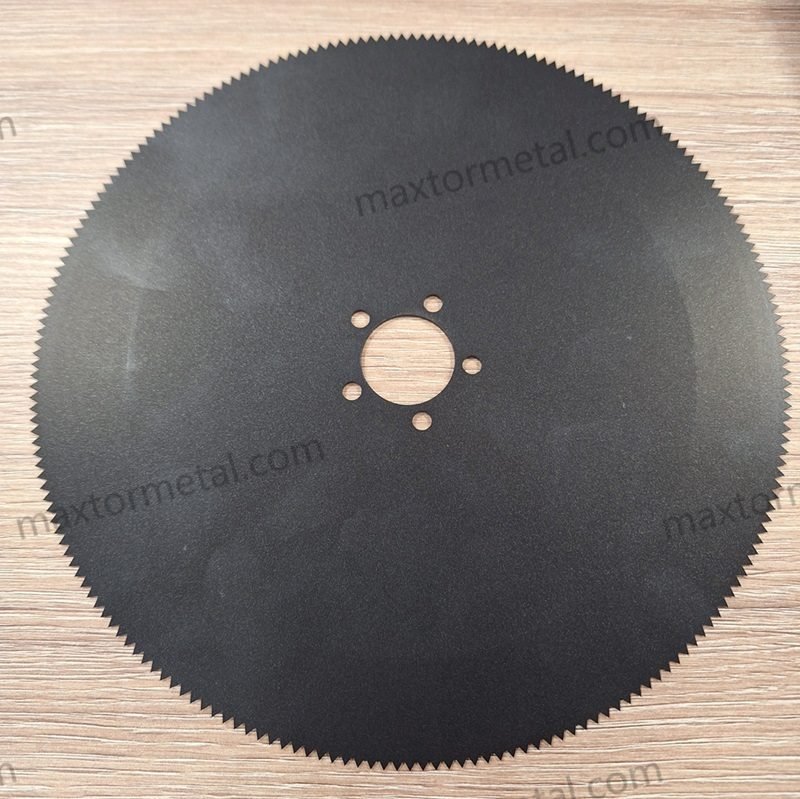
スリット性能の低下が単一の原因で起こることは滅多にありません。それは、刃とウェブの摩擦、粘着剤の移行、刃先の微小なチッピング(欠け)、そしてこれらが制御不能になったときに蓄積する熱など、各界面で発生します。本ガイドは、フィルム、箔、紙、ラミネート、不織布用のコーティングされた丸刃スリッターナイフを選定または評価するプロセスエンジニア、メンテナンスチーム、および技術購買担当者向けに執筆されています。新規サプライヤーの評価を行っている方や、バリの発生や予期せぬ刃物交換を防止したいと考えている方に最適な内容となっています。実際の生産負荷に耐えうる、スリット用の低摩擦コーティングに焦点を当てた、実践的なスリッター刃コーティング選定ガイドとしてご活用ください。一般的なナイフ形状のクイックリファレンスが必要な場合は[…]
コイル交換頻度の低減によるOEEおよび利益の向上:稼働率モデル、計算実例、および実証データ
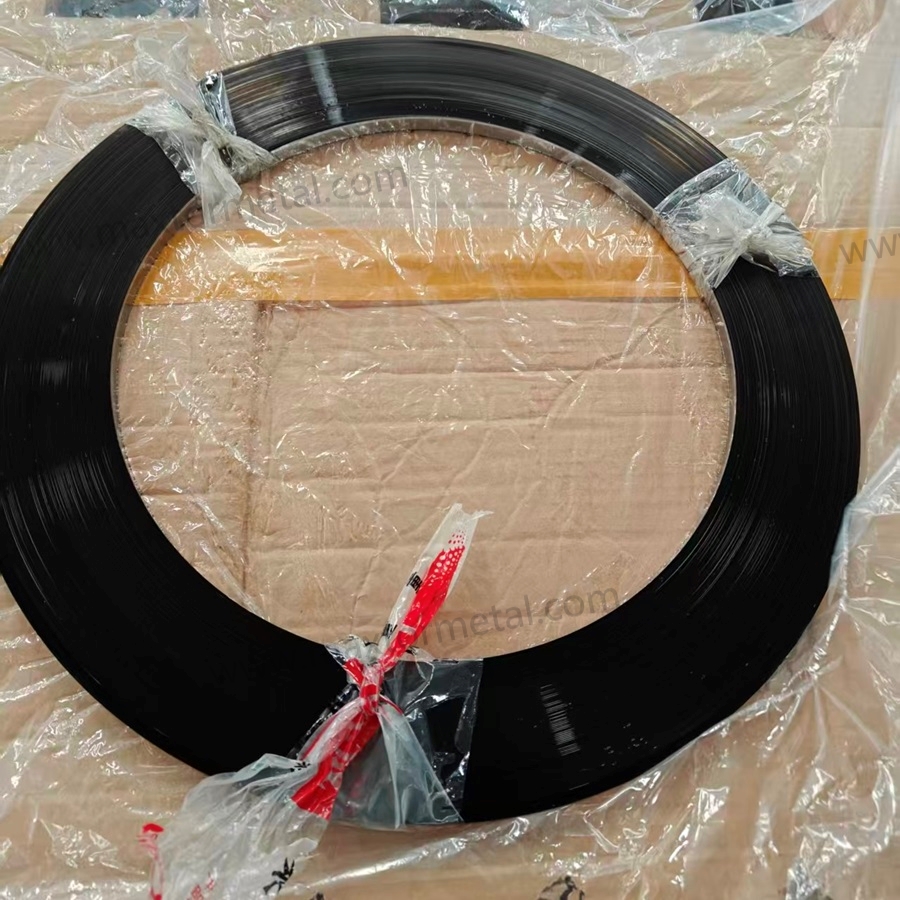
Quick Answer: Reducing coil change frequency improves OEE primarily by cutting planned downtime—a direct hit to Availability. Secondary gains appear in Performance (fewer ramp-up periods after restarts) and Quality (fewer splice-related defect windows). The effect is quantifiable with four inputs: strip consumption rate, coil length, changeover time per stop, and scrap generated per change. In a worked example with 2,000 m/shift consumption, moving from 100 m to 500 m coils recovers over 3 hours of Availability and approximately $3,700 in throughput opportunity value per shift. Coil-fed cutting and slitting lines usually don’t lose OEE because someone “forgot to run fast.” They lose OEE because the line is forced to stop—often repeatedly—for […]
水中ペレタイザーの稼働率を最大化する超硬造粒刃の材質グレード、意匠設計、および管理
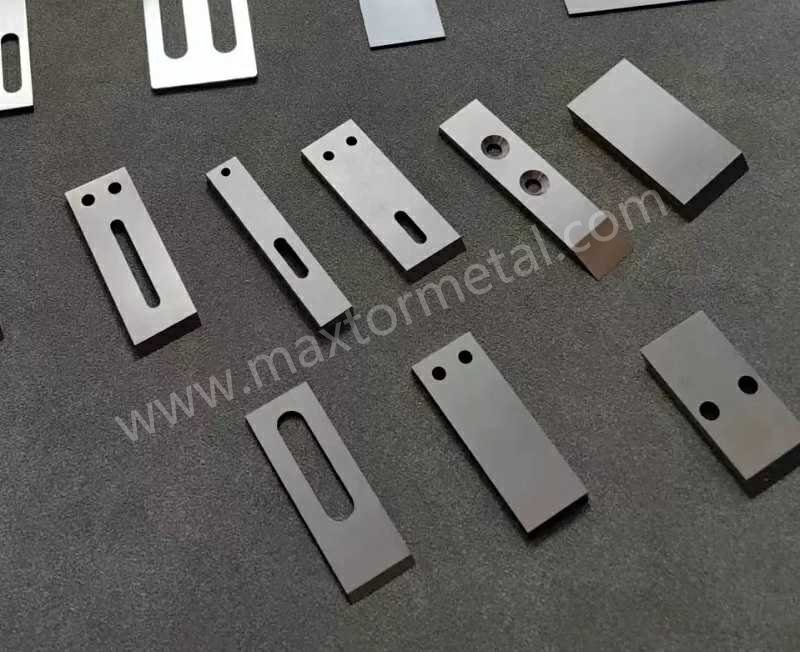
Quick answer: Stable die-face cutting on underwater pelletizer lines depends on four variables working together: carbide grade (HRA 88–92 for most WC–Co inserts), edge geometry (controlled radius, not just “sharp”), contact pressure management (engage → trim, not pressure-chase), and water-loop stability (40–60°C, filtered, degassed). Changing inserts without addressing die-face condition or cutter-head balance is the most common reason carbide upgrades underdeliver. A tungsten carbide insert, in die-face pelletizing, is a sintered WC–Co cutting element brazed into a steel carrier block, designed to maintain a stable cutting edge against a rotating die face at speeds from 1,000 to 4,000 RPM in continuous polymer processing. LDPE and PP mega-scale lines don’t lose uptime […]
4面刃の反转スケジュールと再研磨基準:シャーリングマシン用データ測定に基づく標準作業手順書(SOP)
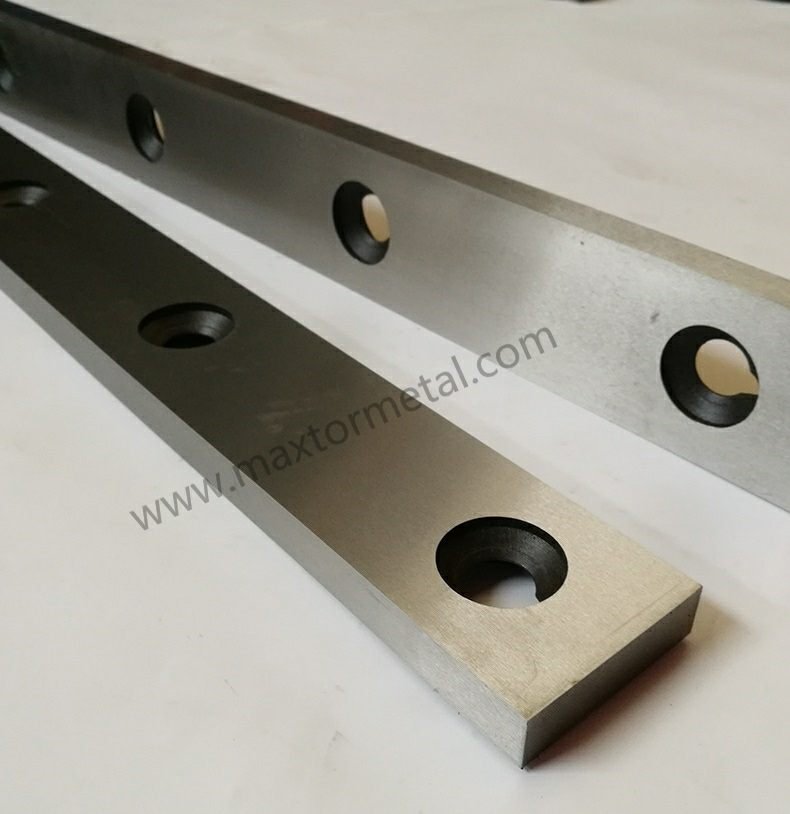
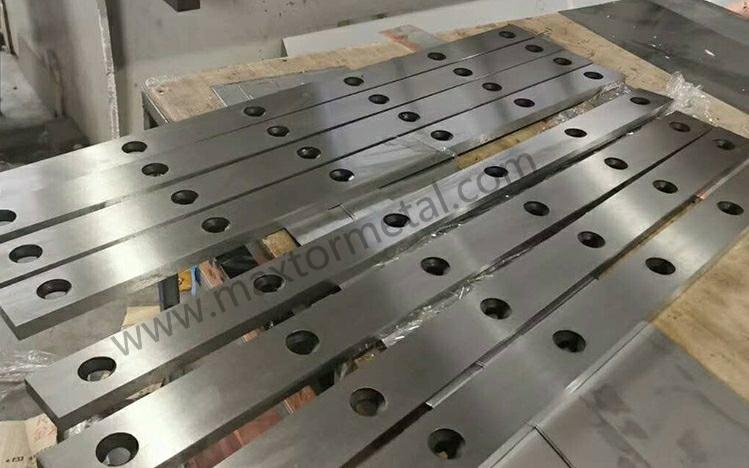
炭素鋼、ステンレス、高張力材が混在するワークをギロチンシャーで切断している場合、その不具合パターンはすでにご存じでしょう。バリが徐々に増え、オペレーターがクリアランス調整に追われ、ダウンタイムが事後対応に終始するようになります。本記事では、4面使用可能なリバーシブルブレードを対象に、測定に基づくプロトコル(反転のタイミング、再研磨のタイミング、第三者監査に対応するための記録項目)を定義します。参考情報として(製品ピッチではなく)、このブレードカテゴリーはMaxtor Metalシャーブレード製品ページに掲載されています。技術メモ:Maxtor Metalでは、異材質混在用途向けに供給されるギロチンシャーブレードについて、工場測定による直線度および厚さデータを文書化しており、クリアランスの基準値を公称仕様ではなく実際のブレード形状に基づいて設定できるようにしています。[…]
ロータリースリッターナイフのROI:粉末ハイス(PM-HSS)vs 工具鋼のTCOモデル&刃先寿命分析

Rotary slitter knives look like a small line item until you model what they touch: changeovers, scrap, burr rework, and whether your line can hold tolerance across an entire coil. This guide is written for process, equipment, production, and purchasing leaders at coil slitting operations who need a defensible way to compare options, especially when a higher-priced knife set claims longer life. It’s also the kind of ROI conversation many teams have with suppliers like Maxtor Metal when they move into tighter edge specs, higher-strength grades, or higher line speeds. If your operation uses roller shear equipment alongside rotary slitting, material selection logic, clearance engineering, and the failure mode diagnostics that directly […]
多軸シュレッダー刃の累積公差:GD&T管理、スペーサーの選択嵌合(セレクティブフィット)、および組立後のTIR検証。
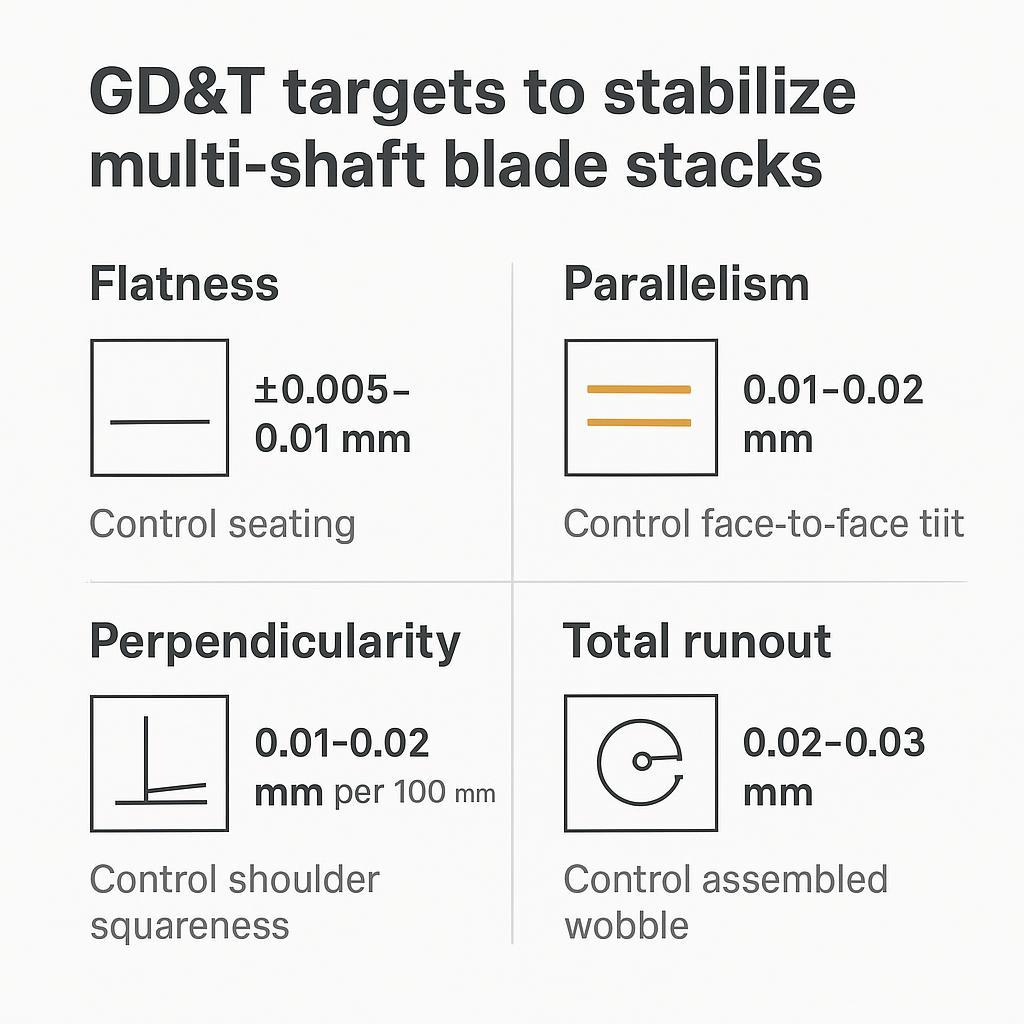
Key takeaways: In multi-shaft shredders, small errors in blade thickness, spacer thickness, face flatness, squareness, and bore/shaft geometry don’t stay small. They add up into shaft tilt and total indicated runout (TIR), which shows up as gap drift, uneven load, vibration, and shorter knife life. This guide gives practical GD&T targets, selective-fit spacer strategy, assembly/QA checks, and a simple tolerance-chain approach you can put on a drawing and enforce at inspection. If you’re engineering or maintaining multi-shaft shredder knives, most “mystery” problems (particle size drift, current spikes, sudden wear) are traceable to stack geometry—not just material. In practice, the drawing, the spacer plan, and the inspection records matter as much […]
隙間ゼロ(ゼロクリアランス)シアスリッティング用スプリング式ホルダー設定:オーバーラップ、キャント角、予圧管理
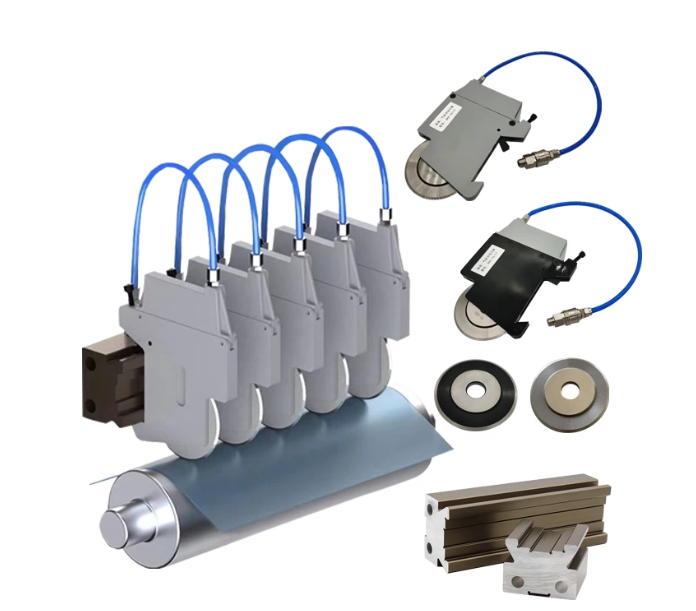
薄膜フィルムや不織布を高速で通板する場合、シェアスリットは単なる「ナイフのセットアップ」にとどまらず、安定性の問題として現れ始めます。わずかな振れ(ランアウト)、不均一な接触、あるいはナイフホルダーのエアプリロード圧力の変動が、エッジの欠陥やダウンタイムに直結します。本ガイドは、Maxtor Metalがフィルムおよび不織布のスリットラインでお客様をサポートする際に採用している、現場での実践的なアプローチに基づいて執筆されています。測定データから基準値を定義し、測定器で検証し、設定を文書化することで、特定の個人に依存することなく、オペレーターやシフト間で結果を再現できるようにします。スリットに使用される丸刃の形状やブレードファミリーの背景知識については、Maxtor Metalの丸刃およびブレード(参考としてここにリンクされています)を参照してください[…]
HRC 56–58における440C Urschelダイサー用交換刃の検証:熱処理条件、RA管理、および品質保証(QA)プロトコル
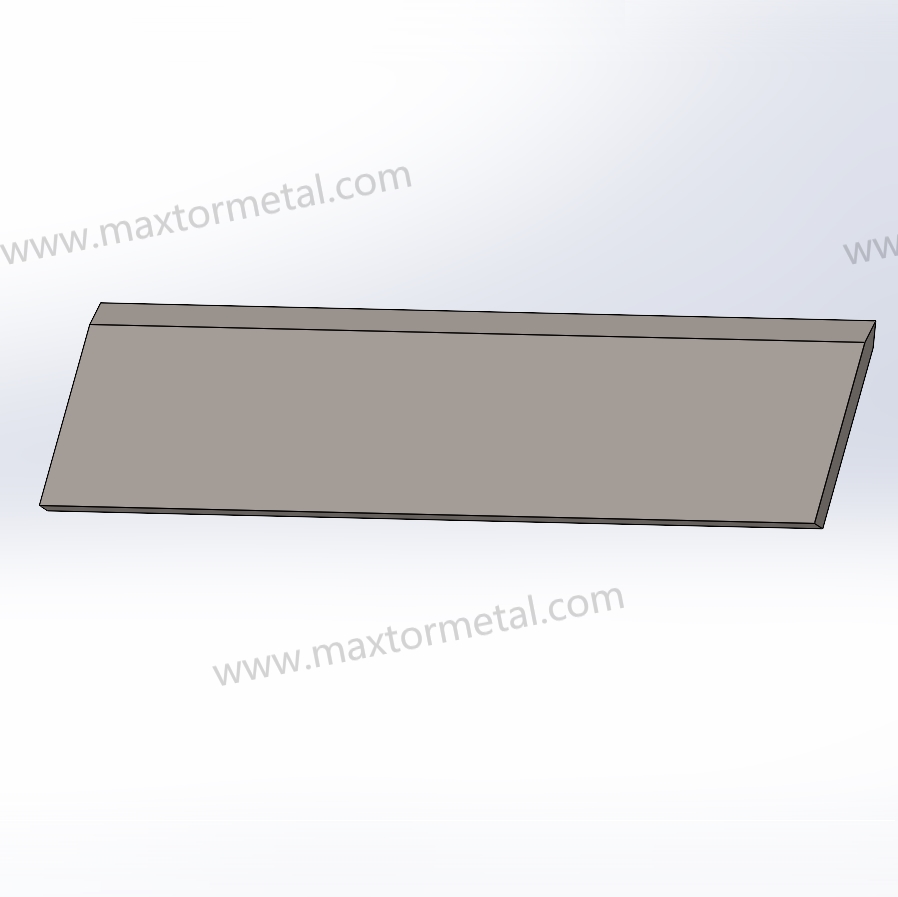
Urschel-style dicer heads operate under demanding cyclic loading: blade bands contact product at high frequency, with impact severity varying significantly between soft fresh produce and hard frozen product (IQF frozen vegetables and root crops can present surface hardness comparable to hardened wood). Cut-size capability and blade life are directly coupled—a band that chips on the first frozen cycle introduces dimensional scatter on every subsequent cut. That’s why material qualification for this application is not just a hardness specification: it’s a validated process window that holds up across the full product mix the line runs. If you’re qualifying replacement dicer bands for an Urschel-style head, 440C is often the “works when […]
大規模石油化学生産向けナイフブロックの技術的品質評価(エンジニアリング・クオリフィケーション)
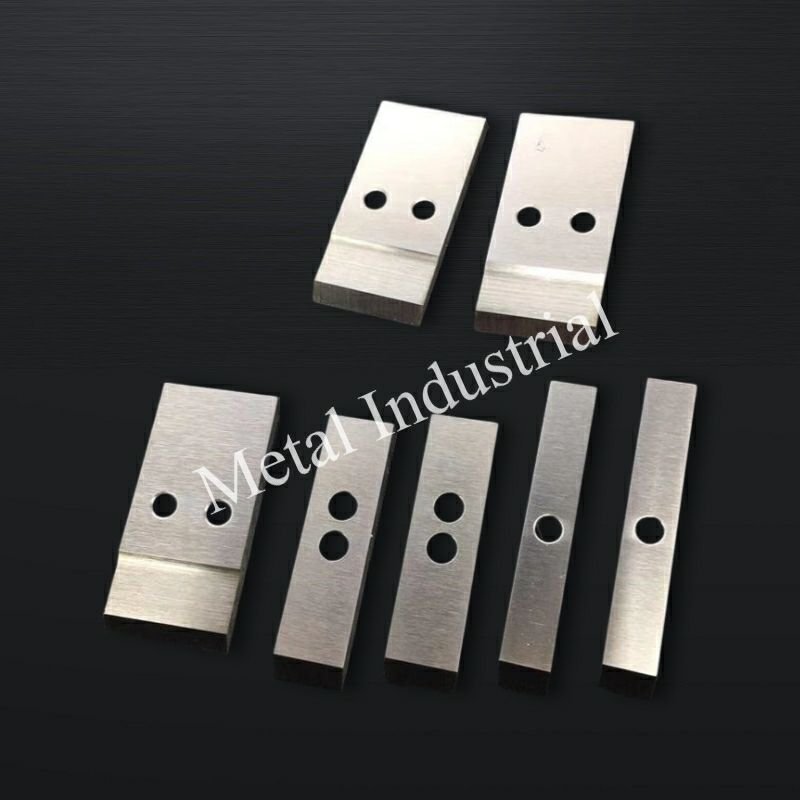
Quick answer: A water-ring pelletizer knife block is qualified for high-volume production by verifying four things: runout/TIR at functional datums (typically ≤0.03–0.04 mm), balance grade per ISO 21940 (G6.3 baseline, tightening to G2.5 at higher speeds), vibration acceptance per ISO 20816 (often ≤2.8 mm/s RMS), and full material traceability via EN 10204 3.1/3.2 certificates linked to serial number. High-volume polymer plants don’t lose sleep over the idea of a knife block “wearing out.” They lose sleep over the unplanned stop that follows: vibration excursions, die-face damage, pellet quality drift, and a QA trail that doesn’t stand up to an audit. This is why engineering qualification of a knife block is not […]
再研削による厚み減少の補正:シム計算とオーバーラップ検証(シャーブレード用)
執筆:Nancy Wu、シニア製造エンジニア(生産技術)、Maxtor Metal — SME–CMfgE、PMP、シックスシグマ・ブラックベルト、ASM International認定 適用範囲に関する注意:本ガイドは、測定に基づくセットアップ作業をサポートするための技術リファレンスです。最終的な設定および安全手順については、常にOEMサービスマニュアルおよび貴社工場のSOPに従ってください。再研磨によって刃先の状態は回復しますが、同時にナイフの外径(OD)や側面から肉厚が削られます。スリッターヘッドにおいて、この変化は単なる見た目の問題ではありません。有効センター高さを変化させ、気づかないうちにオーバーラップの目標値から外れてしまう原因になります。その結果、バリの発生、刃先性状の変化、セットアップごとの再現性の低下といった、よくあるトラブルが引き起こされます。本ガイドは、生産、メンテナンス、およびプロセスエンジニアリングのチームを対象に書かれています[…]

 English
  Spanish
  Italian
  French
  Portuguese
  Russian
  German
  Arabic
  Hindi
Hindi  Vietnamese
  Indonesian
  Japanese
  Korean