

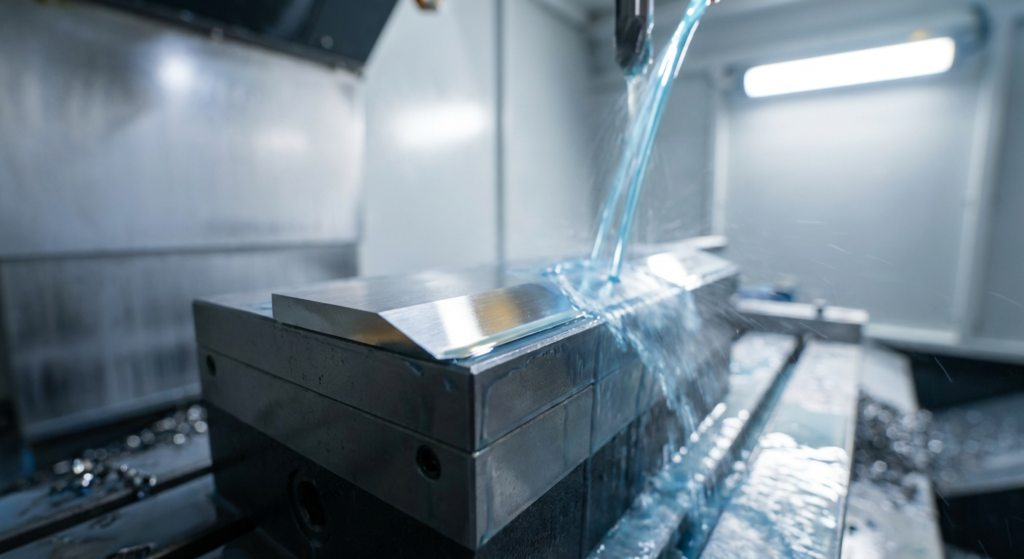
クイックサマリー: 産業用ストリップナイフ(帯状刃)の再研磨は、チッピング(刃先欠け)深さが0.5 mm未満、残留板厚が呼び寸法の60〜70%以上、かつ推測再研磨コストが新品交換刃の50%未満である場合に高い経済性を発揮します。表面下の微細疲労亀裂層(マイクロクラック)を除去するための最小安全研削代は0.010〜0.015インチ(0.254〜0.381 mm)です。ラジアルクラック(放射状割れ)、熱影響による硬度低下(HRC 52未満の焼き戻し戻り・研削灼き)、または板厚が60〜70%の閾値を下回るナイフは破棄(スクラップ)する必要があります。体系的な再研磨管理プログラムを導入することで、1枚のナイフにつき通常3〜5回の高精度再研磨サイクルが可能となり、使い捨て交換方式と比較して年間刃物消耗品 operational cost(運用コスト)を45〜60%削減できます。
連続コイル加工および高速スリッター加工(Längsteilanlagen)において、スリッターナイフ(円形刃)などの刃物消耗品費は、最も変動の激しい操業コスト(OPEX)の一つです。工場の製造責任者や保全管理者は、刃物工具予算を厳格に管理しながら、ラインの生産量(スループット)を最大化するという絶え間ない圧力に直面しています。しかし、条鋼・スチールストリップのスリッターラインでエッジのバリ(Burr)、カムバー(Camber/曲がり)、あるいはスリッターラインの微振動が発生した場合、現場の初動対応は往々にして場当たり的になりがちです。すなわち、アーバー(刀軸)から刃物を外して切れ味の落ちたナイフを破棄(スクラップ)し、新品の刃物セットへ即座に交換してしまうことです。
この「使い捨て」の思考停止は、工場の収益性を静かに削り取っています。大型金属加工切断センター(Steel Service Center)や加工ラインにおける Maxtor Metal の社内フィールドデータによると、刃物消耗品費と非計画的な刀具交換停止(Downtime)は、ライン総操業コストの最大15%を占めることがあります。さらに深刻なことに、当社の再研磨・再生工場の観察データによれば、破棄(スクラップ)された産業用ストリップナイフの最大40%は、金属学的寿命(金属組織の健全性)がまだ十分に残されている状態で廃棄されています。逆に、重度なチッピング、極度な板厚不足、または熱ストレスを受けた刃物を無理に再研磨しようとすると、致命的な刃先破損(刃飛び)、ストリップの詰まり(ジャム)、そして数千ドル相当のコイル材の即座な破棄を引き起こす危険性があります。
多くの製造工場では、再研磨か破棄(スクラップ)かの判断を、客観的なデータではなく、作業者の直感や主観的な外観検査、あるいは根拠のない定期的研磨スケジュールに依存しています。検証可能な検査閾値(Inspection thresholds)なしでの操業は、「健全な刀具鋼の早期破棄」と「微細損傷を受けた刃物の過剰研磨」という、二重の高コストリスクを引き起こします。科学的かつ測定可能なナイフ・ライフサイクル管理フレームワークを構築することで、刃物寿命の延伸、厳格なスリット寸法公差(Slitting tolerances)の維持、および当社の顧客実績ベースで年間刃物消耗品費の45%〜60%削減が可能となります(※実際の削減率は、刃物形状、加工被削材、およびライン稼働条件により変動します)。
採用している刀具(ツーリング)の仕様に関わらず、従来の場当たり的な新品交換からデータ駆動型の再研磨管理戦略へ移行することは、初期の設備·工具投資を保護し、数百万リニアメートル(Lfm)に及ぶ切断加工全体で一貫した高精度な刃先品質(Edge quality)を確実に維持します。
技術ノート: If your regrind program also involves qualifying or re-specifying incoming blade strip supply — including coil form factor, dimensional tolerance, and material traceability — see Maxtor Metal’s reference page on 面取り加工された工業用ブレード用鋼帯(リール入り) for supply specifications aligned with precision grinding requirements.
ストリップナイフ(帯状刃)を使い捨てとして扱うと、計画的な再研磨プログラムより成本が4倍かかる理由
Why Running Blades to Destruction Costs More
A fundamental financial misconception in metal slitting is evaluating knife economy based solely on initial purchase price. Purchasing a lower-cost blade or running an existing knife until the cutting edge completely collapses appears to save upfront capital. In operational reality, purchase price represents less than 25% of the total cost of ownership (TCO) per meter or ton of steel cut. A simplified TCO breakdown illustrates why: blade acquisition (15–25%) + toolroom labor for regrind and setup (20–30%) + unplanned downtime from premature edge failure (25–35%) + downstream wear on arbor, spacers, and bearings (15–20%) + strip scrap from poor edge quality (5–10%). The exact split varies by line type and material, but in every case acquisition cost is a minority of total blade economics.
When a slitting blade passes its optimal sharpening window, it enters a state of rapid passivation. Running a passivated edge forces the blade to push and tear through the steel strip rather than shearing it cleanly. This mechanical overloading accelerates wear exponentially:
- Subsurface Metallurgical Fatigue: As the cutting edge dulls, shear stresses migrate deeper into the blade substrate. Instead of a localized surface wear land, micro-fractures penetrate 0.25 mm to 0.40 mm beneath the bevel surface. When this blade is finally removed, the toolroom grinder must remove three to four times more stock material to reach sound, un-fractured steel.
- Cascading Downstream Costs: A dull blade increases cutting resistance, driving up motor amperage and inducing axial deflection. This causes severe edge burrs exceeding the standard 5% strip thickness limit, coil camber, and premature wear on arbor spacers, stripper rings, and bearings.
- Multiplied Unplanned Downtime: Waiting for edge destruction forces emergency line shutdowns. Unplanned tool changeovers require complete arbor teardowns, line re-clearing, and recalibration—costing anywhere from $1,500 to $5,000 per hour in lost production capacity.
重要なポイント: Evaluating industrial blades by purchase price alone ignores the true economic metric: total cost per meter cut. Running blades past their sharpening threshold causes deep subsurface micro-fractures, forcing heavy grinding removal and multiplying downtime, scrap, and toolroom labor.
The Economics of a Structured Regrind Program
A managed regrind program treats industrial strip blades as repairable capital assets rather than single-use consumables. By removing minimal stock at scheduled intervals before catastrophic edge breakdown occurs, a high-quality alloy or tool steel blade can undergo three to five precision regrinds over its operating lifetime.
Consider a practical financial comparison for a standard 250 mm × 10 mm high-alloy tool steel slitting blade (a mid-size circular slitter typical of wide-coil service centers; blade cost is illustrative in USD and will vary by supplier, geometry, and material grade):
- Strategy A (Disposable / New Only): Running 5 consecutive new blades to failure without regrinding. At an average cost of $800 per blade (illustrative for this geometry), the total tooling investment is $4,000 across 5 production campaigns.
- Strategy B (Managed Regrind Lifecycle): Purchasing 1 new blade ($800) and executing 4 precision regrinds at an average toolroom or vendor cost of $90 per regrind ($360 total regrind cost). The cumulative investment is $1,160 across the same 5 production campaigns.ItemDetailStrategy A (5 New Blades)800 × 5 = $4,000Strategy B (1 New + 4 Regrinds)800 + (4 × 90) = $1,160Total Cost Reduction$2,840 (58.0% Savings)
Anonymized Illustrative Case: Controlling Exposure in Flexible-Film Converting
To show how this plays out on a real shop floor, consider an anonymized illustrative case drawn from industry practice in continuous slitting of PE/PP flexible film with AISI 440C straight strip slitter blades (1.0–1.5 mm thick, 25–40 mm wide). The observations below are drawn from Maxtor Metal’s field audit records across multiple converting lines. Facility-identifying details have been anonymized; metric ranges reflect actual recorded variation across the observed production period.
Early attempts were reactive: operators ran each blade until cut quality visibly deteriorated—visible burrs, film dust, and slit-width instability—before sending it out for regrinding. That first regrind needed roughly 0.20–0.30 mm of stock removal. While the blade came back sharp, the aggressive allowance consumed material that would have supported future regrinds, and several blades approached their minimum thickness after only two or three cycles.
Turning point—introducing a controlled regrind window. The plant moved the regrind trigger earlier and added a simple measurement sequence before every blade changeout: record slit quality, inspect edge wear under a measuring microscope, measure blade thickness, check for chipping, confirm the blade is still within its economical regrind window, and calculate the expected grinding allowance for the material actually removed. After grinding, thickness and edge geometry are re-verified before a trial first coil.
Baseline vs. controlled regrinding:
| メトリック | Baseline (reactive) | Controlled regrinding |
|---|---|---|
| New blade life | 120–150 h | 130–170 h |
| Economical regrind cycles | 2~3 | 4–6 |
| Average total usable blade life | 350–450 h | 650–850 h |
| Blade replacement frequency | Relatively frequent | Reduced ~35–45% |
| Blade-related cost per production hour | ベースライン | Reduced ~25–40% |
Illustrative note: the 0.10–0.20 mm per-cycle allowance shown here is an illustrative process window, not an OEM specification. The correct allowance depends on blade thickness, cutting-edge geometry, actual wear depth, and the final minimum permissible dimension for each blade.
For the economics: assuming a new blade costs roughly US$80–120 (illustrative for a 25–40 mm wide straight strip knife, significantly smaller than the 250 mm circular slitter used in the Strategy A/B comparison above) and…one regrind is a small fraction of that (illustratively US$12–42 per regrind), lifting economical regrind cycles from 2–3 to 4–6 lowers lifecycle blade cost per production hour by roughly 25–40%—a more defensible figure than a headline “70–80% saving.” The key insight is not that regrinding is always cheaper than buying new knives, but rather: the economic question is not whether a strip blade can be reground, but whether it can be reground economically—driven by the chain of wear condition → grinding allowance → remaining thickness → future regrinds → total blade life → cost per production hour.
To maintain financial discipline, plants should establish an explicit replacement threshold: when the estimated cost of an aggressive regrind (needed to remove deep chipping or severe warpage) exceeds approximately 50% of the cost of a new replacement blade, the blade should be retired and scrapped.
Always regrind and install as matched pairs
Top and bottom knives experience identical shear force cycles during slitting. Installing a freshly ground top knife against a worn, partially passivated bottom knife shifts the shear plane, causing uneven lateral thrust, accelerated local wear, and rapid burr formation. Always regrind and install top and bottom knives in matched sets.
To detect asymmetric wear between a top/bottom pair before disassembly, take Rockwell readings from both knives at the same three locations (edge/center/edge at mid-length) and compare. A hardness spread greater than ±1.5 HRC between paired knives indicates differential wear and confirms the need for matched regrinding — not single-knife sharpening.
判断基準:再研磨可能なナイフと破棄(スクラップ)分ける測定可能な閾値
Measuring Edge Condition and Regrind Depth
The primary rule of precision toolroom grinding is that a blade is not clean simply because it appears bright and shiny. Visual sharpness can be deceiving.
When slitting hard alloys, high-tensile materials, or grain-oriented electrical steels, high contact stresses generate a subsurface work-hardened and micro-fractured zone beneath the cutting bevel. If a machinist performs a light polish remove of only 0.002 in (0.05 mm) to touch up the edge, the remaining surface still contains microscopic stress cracks. Upon re-installation in the slitting line, these residual fissures propagate instantly, causing premature chipping within the first few hours of operation.
To ensure edge integrity, toolroom technicians must maintain a minimum regrind depth of 0.010 to 0.015 inches (0.254 to 0.381 mm). This guarantees complete removal of the fatigue-damaged subsurface layer.
| [ Cutting Edge Bevel ] | Detail |
|---|---|
| 0.000″–0.003″ | Passivated Outer Wear Land (Visible Dullness) |
| 0.003″–0.008″ | Subsurface Micro-Fractured Zone (Fatigue Layer) |
| 0.010″–0.015″ | Sound Base Metal (Target Regrind Depth) |
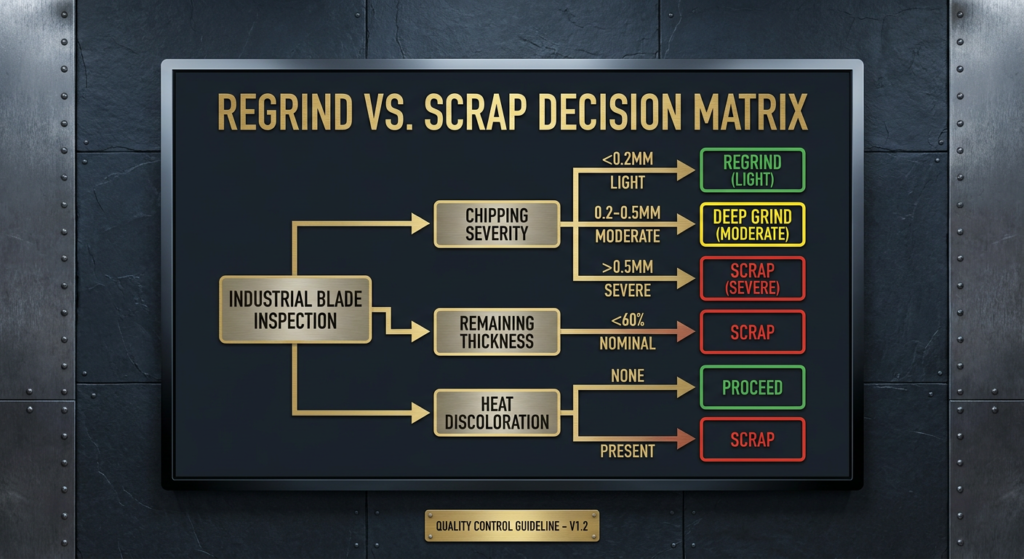
Chipping severity along the blade edge should be categorized into three distinct operational classes:
- Light Chipping (< 0.2 mm depth): Normal operational wear. Corrected with standard stock removal (0.25 mm to 0.35 mm). Blade retains full structural rating (8–12 total regrinds possible over lifecycle).
- Moderate Chipping (0.2 mm to 0.5 mm depth): Caused by transient coil inclusions or slight clearance misalignment. Requires deeper stock removal. Inspect for radial cracking under 20x optical magnification before grinding.
- Severe Chipping (> 0.5 mm depth): Indicates severe mechanical shock, improper arbor setup, or bottoming out. Scraps or requires major stock removal that may push the blade past its dimensional safety limit.
Technicians must also inspect for heat damage. Grinding without adequate coolant or with an excessively hard wheel causes localized thermal spikes exceeding 650°C. This burns the steel, leaving straw-colored or blue oxidation discoloration and tempering down the localized hardness from HRC 60 down to HRC 45–50. Any thermally damaged zone must be completely ground away; if the burn penetrates deeply, the blade must be scrapped immediately.
プロのヒント: Always perform an eddy-current or dye-penetrant inspection on blades exhibiting moderate-to-severe chipping prior to mounting on the grinding chuck. Grinding over deep radial micro-cracks wastes machine time and creates a severe safety hazard during high-speed operation.
Establishing Dimensional Limits Before Sharpening
Industrial strip blades depend on rigid cross-sectional dimensions to resist severe lateral shear forces during coil slitting. As a blade undergoes repeated regrinding, its outer diameter (for circular slitters) or body thickness (for straight shear and strip knives) decreases.
To prevent catastrophic structural failure, plant standards must enforce strict dimensional cut-offs:
- Minimum Remaining Thickness / Diameter Limit: Stop regrinding and scrap the blade when its remaining thickness or working diameter falls below 60% to 70% of its original nominal design dimension. Thinning beyond this threshold drastically reduces the blade’s section modulus, permitting flexure under load.
- Thin Blade Scrap Rule: Thin blades (nominal thickness under 4.0 mm) that exhibit moderate-to-severe chipping (>0.2 mm) or localized bowing must be replaced rather than reground. The grinding forces required to remove deep chips from thin sections induce permanent residual stress and bowing.
- Flatness and Parallelism Control: Precision slitting tooling requires extreme geometric accuracy. Following regrinding, the blade faces must maintain a flatness and parallelism tolerance within 0.02 mm (0.0008 in) across the entire surface. Non-parallel blade faces create dynamic axial runout on the slitting arbor, causing fluctuating side clearance, strip burrs, and accelerated spacer wear.Inspection ParameterRegrind Action ThresholdMandatory Scrap ThresholdEdge Chipping Depth≤ 0.5 mm (Deep stock removal required)> 0.5 mm with visible radial cracksRemaining Thickness / OD70% to 100% of original nominal spec< 60% to 70% of original nominal specThermal DiscolorationLight straw (Ground off within +0.1 mm depth)Dark blue / deep temper loss (HRC 0.05 mm (Permanent heat warp/bowing)
For blade strip steel applications where the source material is 440C — common in food-processing and wet-service slitting — the heat-treatment window and retained austenite control directly affect how the blade responds to regrinding. See HRC 56~58での440Cダイサー交換用ブレードの検証 for the upstream process controls that determine regrindability.
Recognizing Recurring Damage as a Scrap Signal
Not all blade wear is uniform. When inspecting blades returned from the slitting floor, maintenance leads must distinguish between normal operational wear and systemic mechanical failures.
If a blade exhibits recurring chipping at the exact same angular or longitudinal location across consecutive production runs, regrinding is no longer a viable solution. Recurring localized chipping signals an internal metallurgical defect—such as primary carbide clustering, micro-porosity, or a deep subsurface forging seam—or a permanently bent slitting arbor. Continuous grinding merely uncovers deeper sections of the same internal flaw.
Similarly, track cumulative material removal. When total stock removed over the blade’s service life reaches 15% to 20% of the original nominal thickness, internal core stresses from heat treatment may begin to interact with the ground bevel, altering edge retention. At this point, retiring the blade protects slitting consistency and prevents sudden in-line breakage.
On grid-blade designs, in-line breakage often initiates at slot bottoms where stress concentration factors amplify these residual stresses—for the fillet radius specifications, EDM recast layer controls, and double-temper protocols that prevent this failure mode, see Stopping Grid Blade Snapping at Slot Bottoms.
Maxtor Field Decision Protocol: A Five-Step Shop-Floor Checklist
Across the high-volume metal service centers and converting lines we audit at Maxtor Metal, we consistently find that roughly 15% of total line operating costs trace back to knife consumables and unplanned changeover downtime, and that up to 40% of scrapped strip blades still carry significant usable metallurgical life. Converting these observations into a repeatable decision, our engineers apply the following field-checked workflow every time a knife comes off the arbor:
- Classify the edge — Record burr height, chipping depth, and any visible heat discoloration before the blade is cleaned.
- Measure the dimension — Verify remaining thickness or working diameter against the original nominal spec; flag any blade below 70% of nominal for review.
- Estimate grinding allowance — Determine the minimum stock removal needed to clear the fatigue-damaged subsurface (0.10–0.20 mm typical), then confirm the blade still sits inside its economical regrind window.
- Run the economic rule — If the estimated cost of an aggressive regrind exceeds roughly 50% of a new replacement blade, retire it rather than regrind.
- Log and trend — Record the result in the fleet log; a drop below 90–95% of baseline tonnage output after regrind flags a process problem, not a blade problem.
If your fleet log reveals that changeover frequency — not blade life — is the primary driver of line downtime, the OEE model in コイル交換頻度の削減によるOEEと利益の向上 provides a quantified framework for evaluating the supply-side variables that affect changeover scheduling.
This checklist is deliberately kept short so a line supervisor can run it in minutes, but it converts the 45–60% consumable-cost reduction we observe in customer programs from an aspiration into a measurable, repeatable outcome.
ナイフ・刃物のライフサイクル管理スケジュール構築
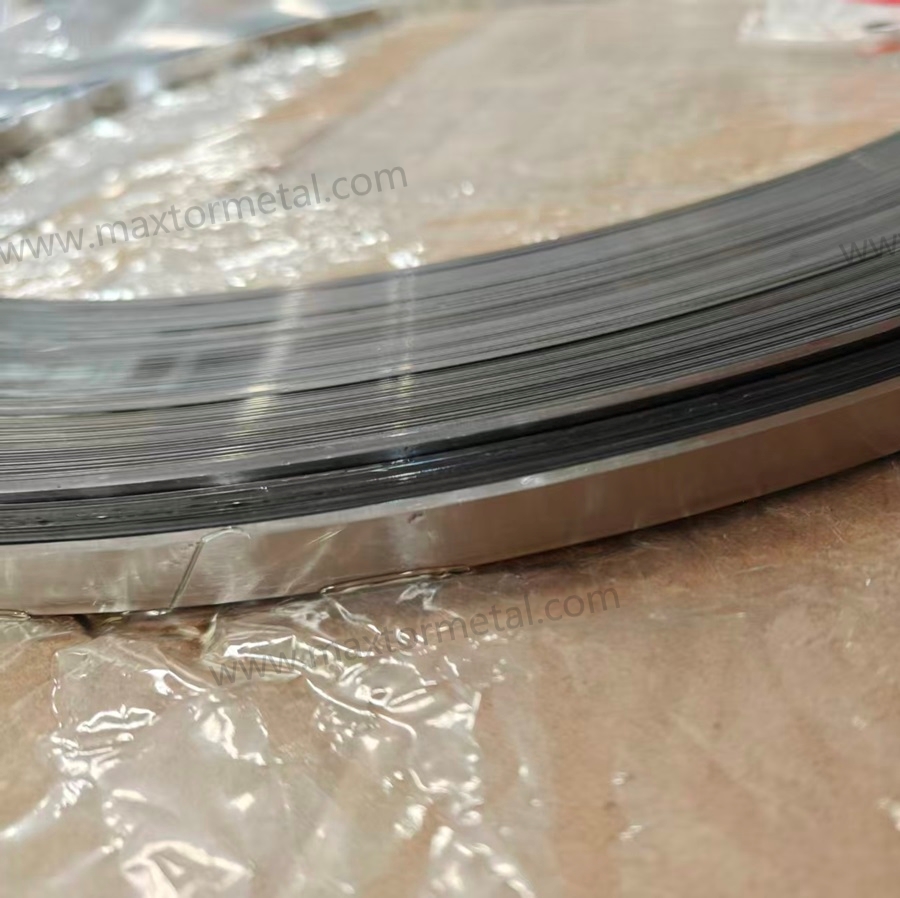
Tracking Wear and Regrind Count Across the Fleet
Transitioning from reactive maintenance to disciplined lifecycle management requires individual tool tracking. Every industrial strip blade should be permanently laser-etched with a unique serial ID, material grade stamp, and original nominal dimensions.
A centralized tool management log should record the following data points for every knife in the plant fleet:
- Identity Data: Unique Serial ID, Material Grade (e.g., D2, HSS, Carbide), Initial Nominal Thickness/OD, Installation Date.
- Operational History: Line ID, Material Grades Slit (e.g., Cold Rolled, Stainless 304, AHSS), Total Tonnage / Linear Meters Cut per Campaign.
- メンテナンス履歴: Regrind Date, Toolroom/Vendor Name, Stock Removal Amount (mm), Post-Grind Hardness (HRC), Cumulative Regrind Count, Removal Reason (Normal Dullness, Chipping, Burr Failure).
Tracking tonnage cut after each consecutive regrind reveals valuable wear progression curves. Under normal conditions, a properly reground blade should deliver 90% to 95% of the tonnage of a brand-new blade. A sudden drop in tonnage output after a regrind (e.g., delivering only 50% of baseline cut distance) signals improper grinding parameters, heat burn, or uncleared subsurface micro-fractures.
Scheduling Proactive Regrinds Instead of Reactive Fixes
Proactive regrinding is the cornerstone of tooling cost control. Sharpening blades on a fixed tonnage or meter threshold—前に edge passivation causes visible burrs on the steel strip—preserves the structural body of the knife and maximizes total lifetime yield.
Establish a tiered inspection and maintenance cadence across the shop floor:
- Shift-Level Visual & Tactile Checks: Line operators inspect strip edges for burrs using optical micrometers and perform quick visual inspections of accessible blade edges for micro-chipping during coil changes.
- Weekly Arbor Alignment Verification: Maintenance teams verify arbor parallelism, bearing end-play, and lock-nut torque settings to prevent axial runout.
- Rigid Clearance Control: Verify horizontal knife clearance during every tooling setup. Horizontal clearance must be set precisely between 1% and 3% of material thickness for light-gauge steel, expanding to 5%–10% for heavier gauges. Incorrect side clearance accounts for over 60% of premature blade chipping incidents.
Material Thickness (t) – → Horizontal Clearance (C)
0.5 mm – 1.5 mm – → 1% to 3% of t (0.015 mm – 0.045 mm)
1.5 mm – 3.0 mm – → 3% to 6% of t (0.045 mm – 0.180 mm)
3.0 mm – 6.0 mm – → 6% to 10% of t (0.180 mm – 0.600 mm)
Choosing the Right Blade Material and Grind Partner
Selecting the correct blade substrate directly influences regrind frequency and total operational life. Matching the metallurgical properties of the blade to the processed substrate ensures high shock resistance and minimal edge degradation:
- AISI D2 / SKD11 (High-Carbon, High-Chromium Tool Steel): The industry standard for conventional steel slitting. Offers excellent wear resistance and hardness (HRC 58–60) at a cost-effective price point. Suitable for mild steel, aluminum, and copper.
- High-Speed Steels (HSS / M2 / M42): Contains higher vanadium and cobalt alloy contents, forming ultra-hard primary vanadium monocarbides (VC). Provides 2.0 to 2.5 times longer edge life than standard D2 when slitting abrasive materials, stainless steels, and Advanced High-Strength Steels (AHSS).
- Tungsten Carbide / Inlaid Carbide: Engineered for extreme high-volume production and thin-gauge foil slitting. Delivers up to 10 to 20 times the edge life of tool steel, though requiring specialized diamond-wheel grinding systems and rigid, vibration-free arbors.
Before specifying blade material for a regrind program, incoming chemistry and hardness verification on the source strip is the foundation. For a step-by-step framework on reading tool steel MTCs — including D2, M2, and O1 acceptance bands, PMI limitations, and heat number traceability — see Reading Tool Steel MTC for Strip Blades: A Practical QA Checklist.
| 材質グレード | 耐摩耗性 | Toughness/Impact | Relative Edge Life |
|---|---|---|---|
| AISI D2 / SKD11 | 中~高 | 中くらい | 1.0x (Baseline) |
| HSS (M2 / M42) | 高い | 高い | 2.0x – 2.5x |
| タングステンカーバイド | 過激 | 低中 | 10.0x – 20.0x |
Precision grinding requires strict process control. Sharpening industrial strip blades must be performed on high-rigidity CNC surface or rotary grinders utilizing flood coolant systems. Uncontrolled dry grinding or improper wheel selection destroys the metallurgical structure of the hardened steel.
Quality reconditioning requires that reground blades adhere to original OEM engineering drawings, strict surface finish specifications (Ra ≤ 0.2 µm), and verified parallelism standards. Maxtor Metal‘s reconditioning program provides batch-level documentation — post-grind hardness verification, stock removal logs, and EN 10204 3.1 material traceability — so your QA team receives auditable performance data with each reconditioning cycle, not just a sharpened blade.
FAQ
Q: 産業用ストリップナイフ(帯状刃)は最大何回まで再研磨が可能ですか?
A: 刃物の板厚および摩耗・損傷の程度によりますが、高品質な合金工具鋼製ナイフ(板厚 ≥ 8 mm)の場合、通常3〜5回の高精度再研磨が可能です(※軽微な表面摩耗程度であれば最大8〜12回まで可能)。ただし、残留板厚または外径が初期呼び寸法の60%〜70%未満に達した時点で、再研磨を中止し破棄(スクラップ)する必要があります。
Q: 再研磨時の推奨最小研削代(研削深さ)はどのくらいですか?
A: 最小研削除去量は0.010〜0.015インチ(0.254〜0.381 mm)です。この研削代未満の研磨では、加工硬化を起こした表面下の微細裂痕(マイクロクラック)を取り除くことができず、再取り付け後の切断時に即座に刃欠け(チッピング)を引き起こします。
Q: ナイフを再研磨せず破棄(スクラップ)すべき判断基準は何ですか?
A: 視認できるラジアルクラック(放射状割れ)を伴うチッピング深さが0.5 mmを超える場合、残留板厚が初期呼び寸法の60%〜70%未満に達した場合、研削灼き(熱影響)により硬度がHRC 52未満へ永久低下した場合、または推測再研磨コストが新品交換刃の50%を超える場合は、ナイフを破棄(スクラップ)してください。
Q: 再研磨したナイフが新品の刃物よりも早く切れ味を落とす(鈍化する)のはなぜですか?
A: 早期鈍化の主な原因は、研磨時の熱加工損傷(研削灼き)により鋼材が退火(焼き戻し)されて硬度が低下すること、または研削代不足により表面下の疲労硬化残存層が除去しきれずに残ってしまうことです。適切な大量フラッド冷却(Coolant)およびダイヤモンド/CBN研削砥石を使用することで、この問題を完全に解消できます。
Q: 再研磨直後のナイフを装着した際、スリット毛羽立ち・バリ(Burr)が発生する原因は何ですか?
A: 再研磨刃におけるバリ発生の主な原因は、刀軸(アーバー)上の横方向クリアランス(Horizontal clearance)の設定不良、刃物端面の非平行(板厚公差偏差 > 0.02 mm)による面振れ(Axial runout)、または上刃・下刃をマッチドペア(対ペア)として全数同時交換していないことです。
Q: 産業用ストリップナイフ(帯状刃)の工具鋼品質を規定する主要規格は何ですか?
A: 主要な国際規格には、ASTM A681(合金工具鋼標準規格)、JIS G4404(合金工具鋼)、DIN EN ISO 4957(工具鋼)、および精密寸法公差検証のためのISO 9001品質マネジメントシステムが含まれます。
Q: 刃物材質は再研磨頻度(寿命サイクル)にどのように影響しますか?
A: 高速度工具鋼(HSS M2/M42)製ナイフは、標準的なAISI D2(SKD11相当)材と比較して再研磨間の刃先保持力(Edge retention)が約2.0〜2.5倍向上します。一方、超硬合金(タングステンカーバイド)製ナイフは、高刚性で最適なライン稼働条件において、研磨スパンを10〜20倍に大幅延長します。
結論
Transitioning your plant from an intuitive, “use-and-scrap” mindset to a structured blade lifecycle management program unlocks significant operational and financial benefits.
The economic question is not whether an industrial strip blade can be reground — it’s whether it can be reground economically. That determination rests on four measurable variables: chipping depth, remaining thickness, estimated grinding allowance, and regrind cost relative to new blade price. When all four are tracked systematically, the 45–60% consumable cost reduction observed in Maxtor Metal’s customer programs becomes a repeatable outcome, not a headline claim.
By replacing guesswork with measurable inspection thresholds, facilities consistently achieve:
- 45% to 60% reduction in total annual knife consumable expenditure (based on Maxtor Metal’s customer experience; realistic results vary by line, blade and material).
- Extended blade longevity by eliminating premature scrapping and avoiding destructive over-running.
- Minimized slitting line downtime through predictable, proactive sharpening schedules and matched-pair knife changes.
- Consistent coil edge quality backed by strict 0.02 mm parallelism controls and 0.010–0.015 in subsurface fatigue clearance.
Implementing rigid regrind depth controls, monitoring thickness limits, and logging fleet performance transforms industrial blades from unmanaged expenses into reliable, long-term production assets.
For facilities formalizing a regrind program, the documentation package matters as much as the grinding parameters. Maxtor Metal provides customers with blade-level traceability records — including post-grind hardness logs, stock removal history, and parallelism verification data — formatted to support internal QA audits and supplier review programs. Customers building or auditing a lifecycle management schedule can request the fleet inspection template from the Maxtor Metal engineering team.
参考文献および関連記事
Note: Peer-reviewed references below span multiple industries. Grinding and regrinding principles — fatigue layer mechanics, wheel selection, thermal damage thresholds — are transferable across cutting tool applications regardless of workpiece material.
Peer-reviewed research
- Zieliński, B., Kapłonek, W., & Nadolny, K. (2018). “Regeneration of industrial cutting blades made from X39Cr13 steel used in skinning process of Pleuronectidae-family flatfishes.” Journal of Mechanical and Energy Engineering, 2(4), 277–284. Read the article
- “Effect of Pro-Ecological Cooling and Lubrication Methods on the Sharpening Process of Planar Blades Used in Food Processing.” (2022). 材料, 15(21), 7842. DOI: 10.3390/ma15217842
- “Influence of regeneration process parameters on geometry and defects of clearance surface of planer knives used in wood planing process.” (2021). Archives of Civil and Mechanical Engineering. DOI: 10.1007/s43452-021-00332-1
- Conradie, P.J.T., Oosthuizen, G.A., & Dimitrov, D. (2017). “On the effect of regrinding cutting tools for high performance milling of titanium alloys.” The International Journal of Advanced Manufacturing Technology, 90(5–8), 2283–2292. Read the article
- “Resource Efficient Regrinding of Cemented Carbide Milling Tools.” (2018). Procedia CIRP, 69, 882–887. Read the article
- “Analysis of large edge breakage of WC–Co cemented carbide tool blades emerging in precision grinding process.” (2022). Journal of Materials Research and Technology. Read the article
International standards
- ISO 4957 — Tool steels. Official standard page
- JIS G 4404 — Alloy tool steels (aligned to ISO 4957). Official standard preview
- ASTM A681 — Standard Specification for Tool Steels Alloy. Official ASTM store
- OSHA 1910.215 — Abrasive Wheel Machinery (grinding machine safety requirements). Official OSHA regulation
- 9001 認証 — Quality management systems. Official standard page
著者について
ナンシー・ウー is a Senior Manufacturing Engineer at Maxtor Metal (Production Engineering), with 12 years of hands-on experience in precision industrial blade manufacturing and reconditioning. She specializes in the processing and coating characteristics of common industrial blade grades including SKD11, D2, M2, H13, powder metallurgy steels, and tungsten carbide, and is skilled in high-precision CNC grinding programming. She holds the SME Certified Manufacturing Engineer (CMfgE), PMP, Six Sigma Black Belt, and ASM International certifications.

 English
  Spanish
  Italian
  French
  Portuguese
  Russian
  German
  Arabic
  Hindi
Hindi  Vietnamese
  Indonesian
  Japanese
  Korean