

クイック回答: For pelletizing blades under high glass-fiber wear, powder metallurgy stainless steels outperform conventional tool steels because their fine, uniform carbide distribution resists micro-ploughing without the toughness trade-offs of high-alloy ingot steels. Between M390 and CPM S90V: choose CPM S90V when abrasion load is the dominant failure mode (>30% GF, neutral water); choose M390 when corrosion resistance, thin blade geometry, or multi-resin flexibility is the priority. Both require cryogenic post-quench treatment and PM-specific grinding protocols to reach their rated HRC and edge geometry.
Powder metallurgy (PM) stainless steel, in the context of pelletizer blade manufacturing, refers to steels produced by atomizing molten alloy into fine powder, then consolidating under heat and pressure — a process that produces a uniform, fine-grained carbide microstructure that ingot-cast steels cannot replicate at the same alloy composition.
The growing adoption of glass-fiber-reinforced compounds in automotive, electrical, and structural engineering parts has transformed underwater and water-ring pelletizing from a standard cutting step into a severe tribological test. Incorporating short or long glass fibers (ranging from 15% to over 50% loading) dramatically improves tensile strength and heat deflection in thermoplastic compounds like polyamide (PA6, PA66), polypropylene (PP), and polybutylene terephthalate (PBT). However, these same microscopic glass filaments act as highly abrasive mineral cutters against rotating die-face knives. Under continuous wet cutting conditions, maintaining blade edge retention and corrosion control becomes a critical success factor for modern extrusion and compounding plants.
Process and equipment managers face a mounting operational trade-off on the production floor. Conventional blade steels—such as AISI D2, 440C, and M2 high-speed steel—rapidly lose their keen cutting edge under glass-fiber abrasion. As the knife edge blunts, the mechanical cutting mechanism shifts from clean shear to chaotic impact tearing. This loss of sharpness drives up powder and fines generation, increases angel hair stringing, causes irregular doublet or chain pellets, and forces frequent changeover downtime for knife replacement and regrinding. In high-throughput compounding lines, premature blade wear directly degrades overall equipment effectiveness (OEE) and inflates the total cost per ton of finished resin.
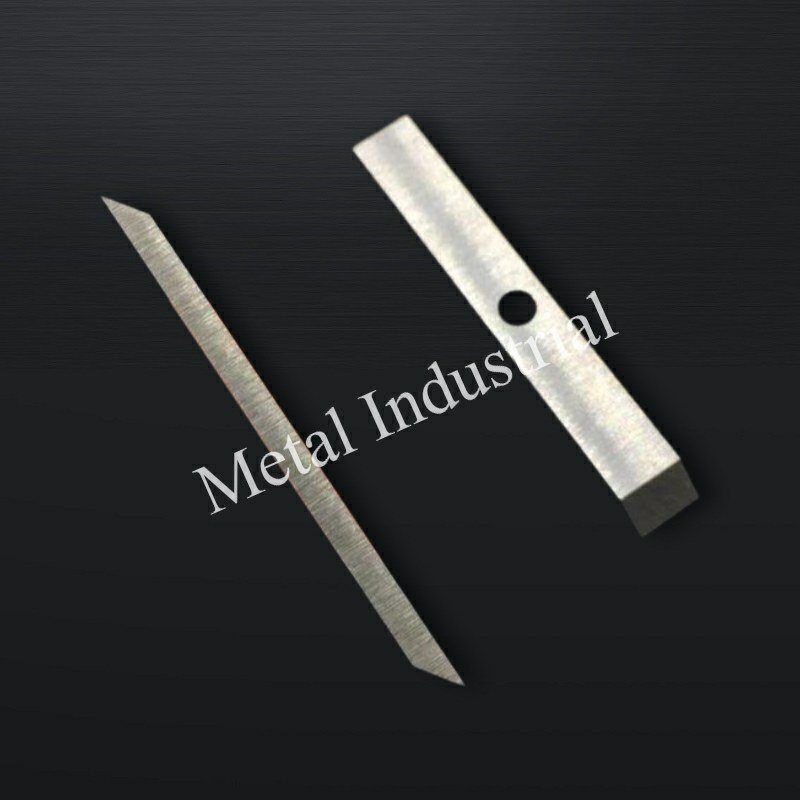
Powder metallurgy (PM) stainless steels such as Böhler M390 Microclean and Crucible CPM S90V offer a scientific answer to this dilemma. Manufactured through advanced powder gas atomization and hot isostatic pressing, these premium PM grades balance the extreme abrasive wear resistance required for high glass-fiber loads with the high corrosion resistance demanded by wet cutting environments. Maxtor Metal’s precision grinding and QC process for PM stainless pelletizer blades is built around translating alloy chemistry into stable knife-to-die contact and repeatable pellet dimensions — flatness, runout, and edge geometry verified to drawing tolerances before release.
This engineering-level guide provides a direct technical comparison of Böhler M390 and Crucible CPM S90V, analyzing their metallurgy, failure modes, heat-treatment requirements, and grindability to establish clear selection logic tied to actual compounding service conditions.
粉末冶金技術(PM鋼)が刃物の性能常識を覆す理由
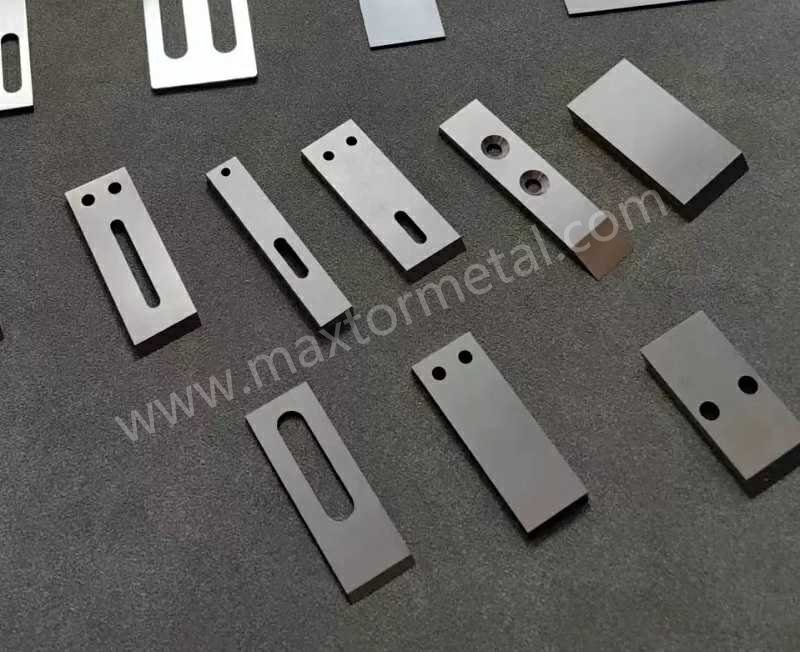
Conventional ingot-cast tool steels develop coarse, segregated carbide networks during ingot solidification. In traditional alloys like D2 or 440C, primary chromium carbides precipitate into large, uneven clusters separated by carbide-depleted matrix zones. When machined into thin-section pelletizing blades (often 1.0 mm to 2.5 mm thick), these coarse carbide clusters create localized stress concentrations and brittle micro-planes. Under high-speed knife-to-die impact against glass-filled melt strands, conventional cast microstructures frequently experience micro-chipping and rapid edge rounding, destroying cutting geometry long before the bulk material wears down.
For die-face systems where corrosion and abrasion loads are compounded by high-speed contact dynamics, the material selection logic for PM stainless knives parallels the carbide grade selection framework covered in Maxtor Metal’s guide on WC–Co insert grade selection, braze integrity, and die-face contact control — different material families, same failure-mode-first decision tree.
Conventional Cast Steel Microstructure:
Coarse Chromium Carbides – → Brittle Micro-Planes – → Micro-Chipping & Edge Blunting
Powder Metallurgy (PM) Microstructure:
Fine Gas-Atomized Powder – → HIP Consolidation – → Uniform Hard Carbide Dispersion
Powder metallurgy manufacturing fundamentally re-engineers this metallurgical behavior. The PM process begins by atomizing molten alloy streams into microscopic, highly uniform spherical droplets using high-pressure inert gas. Rapid cooling solidifies each droplet before alloy segregation can occur. The resulting metal powder is consolidated under intense heat and pressure in hot isostatic pressing (HIP) vessels, followed by hot working.
The resulting PM stainless steel features an ultra-fine, homogeneous distribution of hard primary carbides embedded in a refined martensitic matrix. For glass-fiber pelletizing, this uniform PM microstructure delivers key metallurgical advantages:
- Delayed Micro-Chipping: The absence of coarse carbide segregation eliminates brittle cleavage planes, allowing thin blade edges to resist chipping under mechanical die contact.
- Uniform Abrasive Resistance: Fine hard carbides (1 to 3 microns in diameter) are densely packed throughout the matrix, preventing microscopic glass fibers from ploughing out soft matrix metal.
- Superior Blade-to-Blade Consistency: Batch-to-bulk metallurgical uniformity ensures predictable wear rates, eliminating early blade failures across multi-blade cutter hub assemblies.
Metallurgical Composition at a Glance
While both Böhler M390 and Crucible CPM S90V belong to the high-performance PM stainless steel family, their chemical formulations are optimized for distinctly different metallurgical priorities.
- Böhler M390 Microclean carries roughly 1.90% carbon, 20.00% chromium, 4.00% vanadium, 1.00% molybdenum, and 0.60% tungsten. The high chromium content ensures that after primary chromium carbides form, sufficient chromium remains dissolved in the metallic matrix (typically 14.5% to 15.5% soluble Cr) to form a robust, self-healing chromium oxide passivation layer. This gives M390 top-tier corrosion resistance alongside excellent wear protection.
- Crucible CPM S90V (formerly CPM 420V) packs approximately 2.30% carbon, 14.00% chromium, 9.00% vanadium, and 1.00% molybdenum. By nearly doubling the vanadium concentration compared to M390, S90V precipitates a high volume fraction (roughly 14 vol%) of extremely hard vanadium monocarbides (MC carbides). These vanadium carbides reach a hardness of ~2,800 HV (Vickers), outperforming chromium carbides (~1,800 HV) in resisting mineral abrasion.
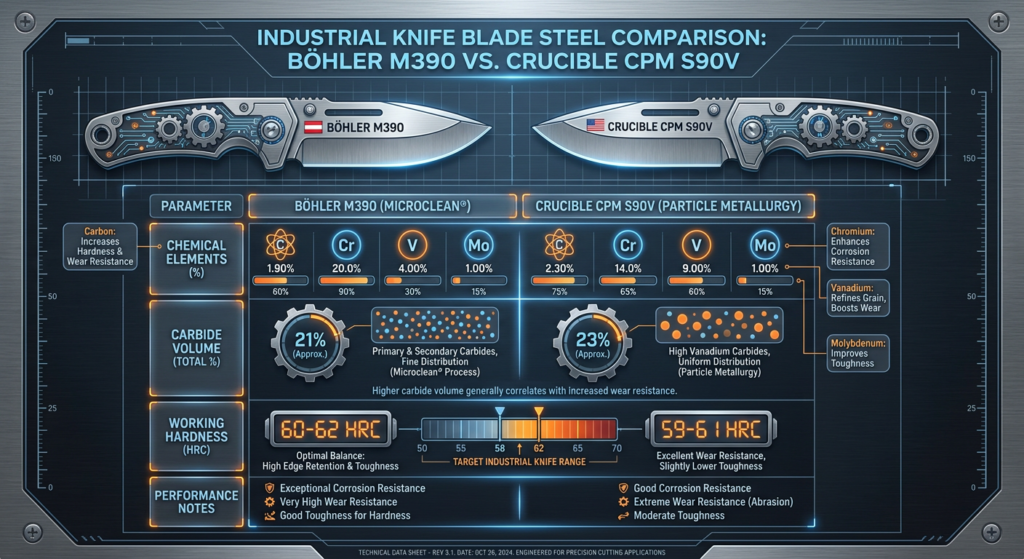
The chemical composition and phase structure comparison below highlights how each grade allocates its hardening elements:
| Metallurgical Parameter | Böhler M390 Microclean | Crucible CPM S90V | Metallurgical Impact on Blade Service |
|---|---|---|---|
| 炭素(C) | 1.90% | 2.30% | Supplies matrix hardness and drives primary carbide precipitation. |
| クロム(Cr) | 20.00% | 14.00% | M390 provides higher passivating matrix Cr for wet/acidic corrosion resistance. |
| バナジウム(V) | 4.00% | 9.00% | S90V generates dense MC vanadium carbides (~2,800 HV) for extreme abrasion life. |
| モリブデン(Mo) | 1.00% | 1.00% | Enhances hardenability and resists pitting in chloride-bearing process water. |
| Silicon / Manganese (Si/Mn) | 0.70% / 0.30% | 0.40% / 0.40% | Deoxidizers and matrix solid-solution strengtheners. |
| Carbide Type & Volume | ~17% Total (Cr-rich M7C3/M23C6 + V-rich MC) | ~19% Total (Dominant V-rich MC monocarbides) | S90V yields higher abrasive scratch resistance; M390 yields higher matrix corrosion defense. |
| Matrix Soluble Cr | ~14.5% – 15.5% | ~10.5% – 11.5% | Soluble chromium above 12% guarantees passive film recovery in wet pelletizing. |
| Working Hardness Range | 58~62 HRC | 58~62 HRC | Balanced hardness prevents plastic edge rolling while preserving impact toughness. |
要するに: powder metallurgy refines carbide size and distribution to a scale that ingot casting cannot achieve — and in glass-fiber service, that microstructural difference is what separates a blade that lasts a shift from one that lasts a week.
ガラス繊維(GF)切断用途における摩耗および腐食損傷モード
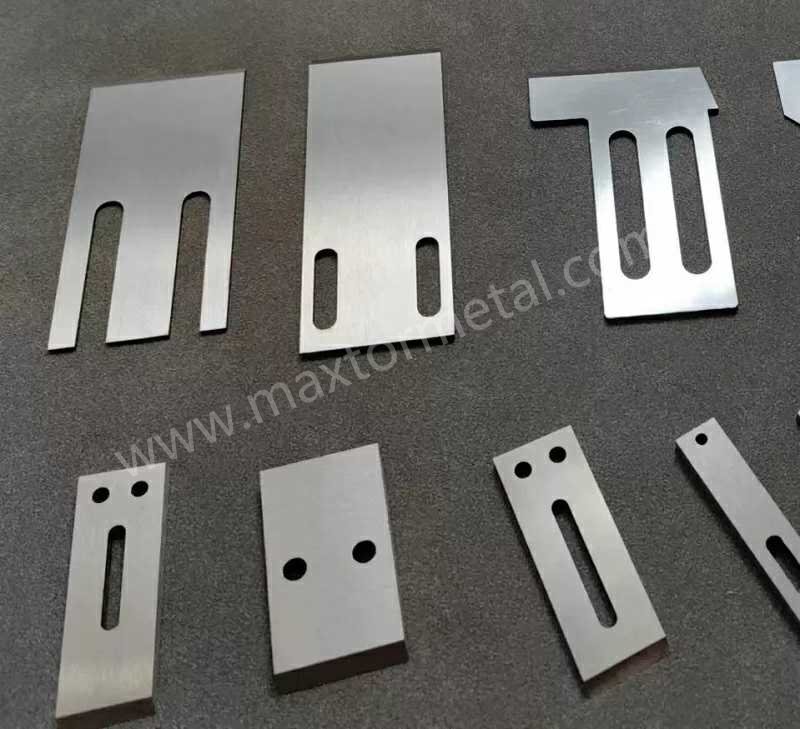
To select between M390 and CPM S90V, plant engineers must analyze how cutting knife edges deteriorate during high-speed pelletizing of glass-filled polymers. In underwater and water-ring die-face pelletizers, blade failure is rarely a single isolated mechanism; rather, it results from synergistic mechanical and chemical degradation pathways.
Glass-Fiber Compounding Strand
Mechanical Wear Mechanism Chemical Wear Mechanism
- Micro-ploughing by GF + – Acidic water attack
- Micro-chipping at edge – Pitting in micro-cracks Synergistic Edge Loss & Blunting Pellet Defect Spike (Fines, Strings, Doublets)
1. Mechanical Abrasive Micro-Ploughing and Edge Rounding
Glass fibers possess a Mohs hardness of approximately 6.5 (equivalent to ~55–60 HRC or >800 HV). As polymer melt strands exit the die plate orifices at temperatures between 200°C and 330°C, rigid glass filaments project from the molten polymer core. Rotating at 1,000 to 4,500 RPM, the pelletizing blade edge strikes these projecting fibers thousands of times per minute. The microscopic fibers act as tiny gouging tools, driving micro-ploughing and localized abrasive scratching across the primary bevel and cutting land. Over time, this mechanical action rounds the keen edge radius from an optimal 25 microns, blunting the blade.
2. Corrosion-Assisted Wear in Water Loops
Underwater pelletizing systems circulate tempered water (typically 40°C to 90°C) to cool pellets and transport them to centrifugal dryers. However, process water loops frequently accumulate dissolved mineral salts, acidic additives, flame retardants, or residual monomer byproducts. In water-ring and underwater cutting housings, sustained moisture exposure combined with elevated temperature creates a corrosion-assisted wear environment. Standard non-stainless tool steels suffer rapid micro-pitting along the cutting line. Abrasive glass fibers then shear away the weakened, corroded micro-layers, accelerating edge deterioration far faster than dry mechanical wear alone.
3. Direct Impact on Pellet Quality Metrics
When blade edges lose sharpness due to combined wear and corrosion, the clean shearing action against the die face fails. This manifests in distinct pellet defect types:
- Fines and Dust Generation: Blunt knives crush and shatter polymer strands instead of cutting them cleanly, generating micro-particles that clog classifier screens and create dust hazards.
- Angel Hair and Tail Strings: Incomplete cutting allows ductile polymer filaments to stretch before tearing, creating fine stringers that entangle downstream equipment.
- Doublets, Triplets, and Chain Pellets: Uneven knife wear or lost knife-to-die contact pressure permits melt streams from adjacent die holes to fuse together before separation.
要するに: glass-fiber wear is never just abrasion — the combination of micro-ploughing, corrosion film breakdown, and water-loop chemistry means that steel selection and process control have to address all three mechanisms simultaneously.
M390鋼 vs CPM S90V鋼:耐摩耗性と耐食性の徹底性能比
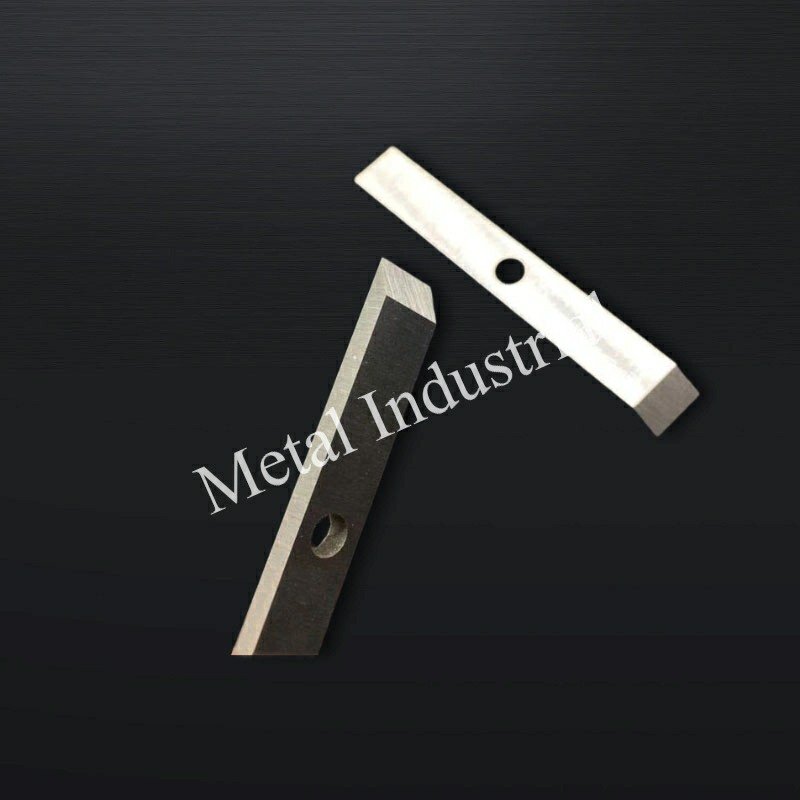
Both Böhler M390 and Crucible CPM S90V are engineered to overcome the limitations of conventional tool steels, but their distinct metallurgical profiles make each alloy superior in specific operational environments.
Performance Comparison Vectors:
Abrasive Wear Resistance (CATRA): [ CPM S90V ] >>>> [ M390 ] >> [ D2 / 440C ]
Corrosion Resistance (Passivation):[ M390 ] >>>> [ CPM S90V ] >> [ M2 / D2 ]
Edge Grindability & Thin Geometry: [ M390 ] >> [ CPM S90V ]
Edge Retention and Abrasive Wear Resistance
In standardized CATRA (Cutlery and Allied Trades Research Association) edge retention testing and dry sand/rubber wheel abrasion resistance evaluations according to ASTM G65 standards—which measure volume loss under aggressive mineral abrasion—CPM S90V consistently outperforms virtually all other stainless PM grades on the market. S90V’s ~9% vanadium content generates a 14 vol% concentration of hard MC monocarbides (~2,800 HV). These vanadium carbides are significantly harder than glass fibers (~800 HV) and chromium carbides (~1,800 HV). In high-throughput lines cutting resins filled with 30% to 50% glass fiber, CPM S90V resists abrasive gouging, holding a sharp cutting edge up to 1.5x to 2x longer than M390.
Corrosion Resistance and Toughness
While CPM S90V leads in pure abrasion resistance, Böhler M390 excels in aggressive chemical environments. With 20% total chromium, M390 retains approximately 14.5% to 15.5% soluble chromium in its matrix after heat treatment, comfortably exceeding the ~12% matrix chromium threshold widely cited in stainless steel corrosion literature as the minimum for reliable passive film recovery (see ASM Handbook Vol.13A, Aqueous Corrosion of Stainless Steels).
By contrast, CPM S90V retains ~10.5% to 11.5% soluble chromium, as much of its chromium is tied up in carbides or consumed during high-temperature tempering. In closed-loop water systems with high conductivity, acidic additives, or halogenated flame retardants, M390 maintains a pristine, un-pitted matrix that prevents corrosion-assisted micro-flaking. Furthermore, M390 offers slightly higher impact toughness and ductility in thin blade sections, reducing the risk of catastrophic snapping.
Heat Treatment and Cryogenic Processing
Both alloys achieve peak performance within a working hardness window of 58 to 62 HRC, but their optimal heat-treatment cycles and operational parameters differ:
- M390 Heat Treatment & Processing Window:
- Austenitizing: 1,150°C to 1,170°C (hold time: 20–30 min under vacuum protection).
- 焼入れ: Rapid high-pressure N2 gas quenching (>5 bar) down to below 50°C.
- Cryogenic Freeze: Deep freeze at -70°C to -196°C for a minimum of 2 hours immediately after quenching (within 1 hour) to eliminate retained austenite and promote fine secondary carbide precipitation.
- 焼き入れ: Double temper at 200°C to 250°C for 2 hours per cycle (for maximum passivating corrosion resistance) or 490°C to 520°C (for secondary hardening).
- CPM S90V Heat Treatment & Processing Window:
- Austenitizing: 1,135°C to 1,160°C (hold time: 15–20 min under vacuum).
- Cryogenic Freeze: Liquid nitrogen cryogenic treatment (-196°C for 3 to 4 hours) is mandatory to transform recalcitrant retained austenite into martensite.
- 焼き入れ: Double tempering at 200°C to 204°C for 2 hours per cycle to maximize corrosion resistance and toughness while maintaining 59–61 HRC.
- Grinding & Edge-Engage Strategy:
- Wheel Selection: Use CBN (cubic boron nitride) wheels with resin or vitreous bonds (120–180 mesh for roughing, 400+ mesh for finish grinding).
- Feed Rates: Maintain shallow depth of cut (ap ≤ 0.005 mm/pass) with heavy synthetic flood coolant (>8% concentration) to prevent thermal surface micro-cracking.
- Operating Window: Set initial knife-to-die contact pressure under hydraulic tensioning to achieve an edge break-in engagement of 0.02 mm–0.05 mm, preventing edge chatter during start-up.
Maxtor Metal specifies heat treatment parameters for M390 and CPM S90V knife blanks based on section thickness and target HRC range — cryogenic treatment is included as a standard step for CPM S90V to ensure full secondary hardening before edge grinding.
Grindability and Edge Geometry in Thin Blades
In pelletizing knives thinner than 2.0 mm, manufacturing precision is paramount. Because CPM S90V is packed with dense, ultra-hard vanadium monocarbides, it is notoriously difficult to grind. Super-abrasive cubic boron nitride (CBN) or diamond grinding wheels are required, and aggressive grinding can easily induce thermal micro-cracks along thin blade edges. Böhler M390, containing a lower volume fraction of vanadium carbides, exhibits noticeably superior grindability. It allows knife manufacturers to achieve keener initial edge radii, smoother primary bevel surface finishes (Ra < 0.2 µm), and tighter thickness tolerances without thermal degradation.
In Maxtor Metal’s grinding process for PM stainless pelletizer blades, wheel selection and coolant flow are matched to blade geometry and alloy grade to prevent thermal damage at the cutting edge — the most common source of micro-chipping after installation.
要するに: CPM S90V wins on abrasive wear resistance because of its vanadium carbide density; M390 wins on corrosion resistance and grindability because of its higher matrix chromium — the choice is driven by which failure mode governs your line.
For lines processing tacky polymers such as TPU or EVA — where adhesion to the blade face compounds the corrosion and wear picture — the interaction between coating selection (DLC vs PTFE) and substrate steel choice is covered in our guide on stopping knife gumming and coating selection for TPU underwater pelletizing.
使用環境・剪断条件に応じた最適な鋼種の選定方法
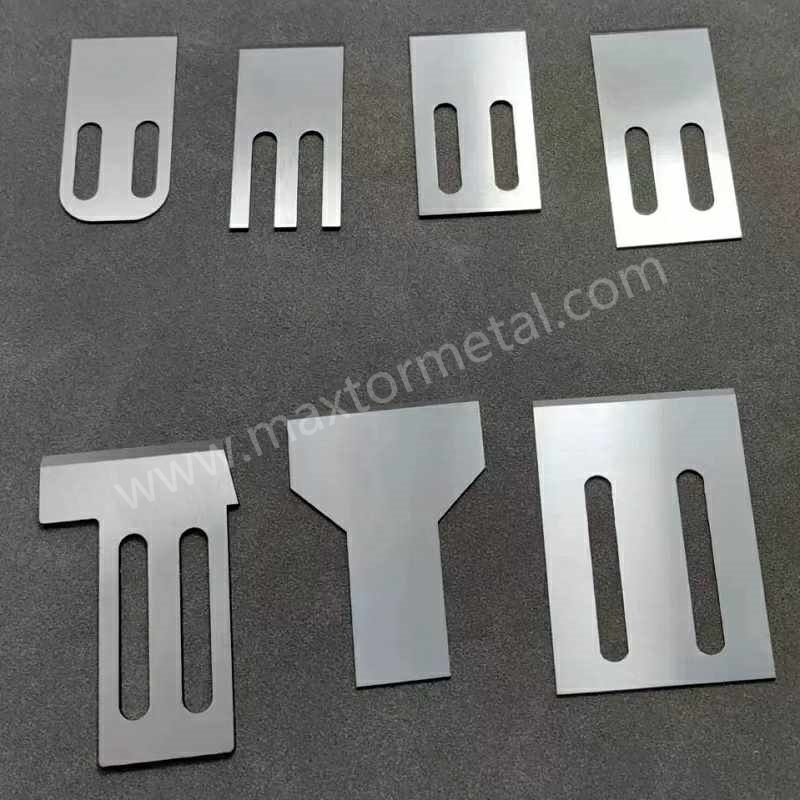
The selection criteria Maxtor Metal uses when specifying PM stainless grades for glass-fiber compounding lines comes down to three variables: glass-fiber loading (determines abrasion severity), water-loop chemistry (determines corrosion risk), and blade section geometry (determines grindability constraints).
Choosing between M390 and CPM S90V requires evaluating four core process variables: glass-fiber filler percentage, water chemistry aggressiveness, blade section geometry, and plant downtime tolerance.
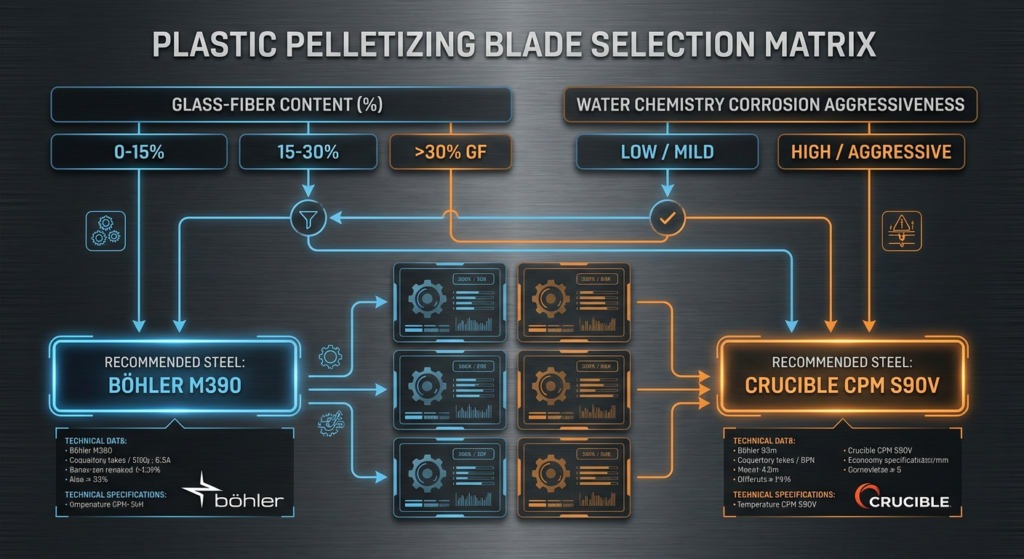
Use the following operational selection framework to match steel chemistry to your compounding line:
Step 1: Check Glass-Fiber (GF) Loading
GF Loading > 30% → Go to Step 2 (Check Water Chemistry)
GF Loading ≤ 30% → Select Böhler M390 (Optimal balance of toughness & grindability)
Step 2: Check Water Chemistry & Additive Aggressiveness
Low/Neutral Corrosion (Clean water, standard PA/PP-GF) → Select CPM S90V (Maximum edge life)
High Corrosion (Dirty loop, acid/flame retardant) → Select Böhler M390 (Corrosion-assisted wear defense)
Step 3: Check Blade Geometry & Section Thickness
Blade Thickness < 1.5 mm → Favor M390 (Higher toughness & precision grindability)
Blade Thickness ≥ 2.0 mm → CPM S90V or M390 (Based on Steps 1 & 2)
Choosing CPM S90V When Abrasion Is the Priority
選択 Crucible CPM S90V when your production parameters match the following profile:
- High Glass Fiber Loading: Compounds containing >30% short or long glass fiber (e.g., PA66-GF35, PP-GF40, PBT-GF50).
- Neutral Process Water: Underwater cutting loops with controlled pH (6.5–7.5), low chloride levels, and continuous water filtration.
- Thicker Blade Cross-Sections: Pelletizing knives with a thickness of 2.0 mm or greater, providing structural rigidity to support S90V’s high carbide volume.
- Downtime-Sensitive High-Throughput Lines: Continuous compounding lines where reducing knife changeover frequency is the primary driver for lowering cost per ton.
Choosing M390 When Corrosion or Thin Geometry Leads
選択 Böhler M390 Microclean when your operating environment exhibits these characteristics:
- Moderate Glass Fiber / High Mineral Loading: Compounds with 15% to 30% glass fiber, or heavy mineral/pigment fillers (TiO2, CaCO3, organoclays).
- Aggressive Process Water Loops: Recirculated water systems with elevated TDS, acidic pH (<6.0), or reactive chemical additives.
- Thin-Section Blade Geometries: Flexible or thin-section pelletizing knives (<1.5 mm thickness) that demand high impact toughness and precise edge grinding.
- Frequent Recipe Changes / Masterbatch Runs: Multi-purpose compounding lines switching frequently between color masterbatches, engineered resins, and corrosive formulations.
要するに: glass-fiber loading above 30% and neutral water chemistry point to CPM S90V; aggressive water chemistry, thin blade geometry, or frequent resin changes point to M390 — and both assumptions should be validated against your first regrind cycle.
高精度加工技術:刀具(ナイフ)アップグレードの成果を最大化する方法
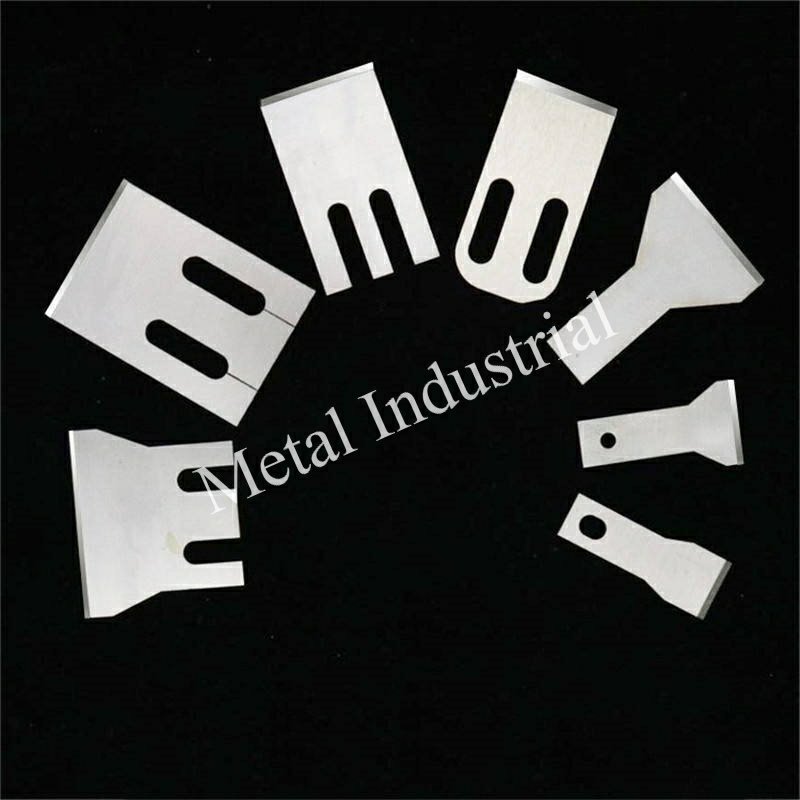
Upgrading from conventional tool steel to premium powder metallurgy grades like M390 or CPM S90V represents a significant investment in raw material quality. However, metallurgy alone accounts for only half of the performance equation. Achieving the full operational value of PM steels requires precise knife manufacturing, optimized edge geometry, and meticulous cutter-hub alignment.
Even the most wear-resistant CPM S90V or corrosion-resistant M390 knife will fail prematurely if manufactured with improper heat treatment, surface micro-cracks, or dimensional variations. Key factory-grade manufacturing criteria include:
- Controlled Cryogenic Heat Treatment: Vacuum heat treatment with deep liquid nitrogen quenching ensures complete conversion of retained austenite, unlocking uniform 58–62 HRC hardness without brittle spots.
- Stress-Free Precision Grinding: Multi-axis CNC grinding using specialized super-abrasive wheels maintains ultra-smooth bevel finishes (Ra < 0.2 µm), preventing grinding burn or micro-fractures that act as stress raisers during operation.
- Uniform Thickness and Flatness Tolerances: Blade-to-blade thickness variation across a cutter hub must remain within ±0.005 mm. Tight tolerances ensure uniform flex and equal contact pressure against the die face, preventing localized die wear and strand skipping.
Partnering with an experienced knife manufacturer ensures these critical metallurgical and geometric requirements are met. Maxtor Metal’s pelletizer knife program for glass-fiber compounding lines covers PM stainless grades (including M390 and CPM S90V equivalents), tight geometric tolerances, and regrind qualification criteria — documented in the release dossier for each blade set.
For the component-level qualification framework that governs how these tolerances are verified before and after installation — runout/TIR acceptance, balance grade per ISO 21940, and QA dossier structure — see our guide on knife block qualification for water-ring pelletizers.
Real-World Field Performance Data
注記: This example is constructed from typical field patterns observed in PM stainless blade upgrade programs for glass-fiber compounding; it is not a single customer’s raw inspection record. Results will vary based on glass-fiber loading, fiber length distribution, water-loop chemistry, and heat treatment consistency of the incoming blade blanks.
In a high-throughput compounding facility producing PA66 filled with 35% short glass fiber, field tracking across four multi-week production campaigns evaluated the upgrade from conventional D2 steel blades to custom precision-ground CPM S90V pelletizing blades. Operational parameters were strictly held constant across all test runs: process cooling water was maintained at 60°C ± 2°C with controlled pH (6.8–7.2), cutter hub rotation was locked at 2,200 RPM, and die-face contact was managed via hydraulic auto-tensioning at a constant 0.03 mm initial blade-to-die engagement against a newly ground nickel-matrix carbide die plate.
Statistical tracking across 12 consecutive blade sets demonstrated that CPM S90V extended average active cutting service life from 24 operating hours (D2 baseline) to 96+ hours before regrinding was required—a 4x increase in edge life that reduced unscheduled changeover downtime by 75% and lowered fines generation below 0.3% of total throughput.
However, real-world data also revealed batch-to-batch variation: in one production campaign with elevated recycled water conductivity (TDS > 1,200 ppm) and minor temperature spikes, micro-pitting along carbide boundaries caused early edge dulling at 72 hours. Additionally, while initial wear resistance improved fourfold, total allowable regrind cycles per blade averaged 4 to 5 passes compared to 6+ passes for D2, due to the increased dressing depth required to remove micro-fractures on the ultra-hard S90V edge during CBN wheel grinding.
By pairing advanced PM alloys with exact OEM specifications, processors can secure consistent knife-to-die contact, maximize regrind yields, and eliminate premature pellet quality defects in glass-fiber service. Utilizing high-performance custom plastic pelletizer knives and blades engineered for your specific cutter head geometry provides the ultimate bridge between raw material capability and long-term production profitability.
要するに: PM alloy chemistry only delivers its rated performance when heat treatment, cryogenic processing, and edge grinding are executed to grade-specific protocols — the alloy upgrade and the process discipline have to arrive together.
よくある質問(FAQ)
Q: ガラス繊維(GF)含有量はペレタイザー用ナイフ(ペレタイザー刃)の摩耗速度にどう影響しますか?
A: ガラス繊維は硬質な鉱物系アブレシブ(研磨材)として作用し、基地(マトリックス)である鋼を掻きむしるように摩耗させます。GF含有率を15%から40%に高めると、D2や440Cなどの従来型工具鋼では刃先の摩耗速度が300%〜500%加速します。CPM S90VやM390といった粉末冶金鋼(PM鋼)へグレードアップすることで、高硬度なバナジウム炭化物およびクロム炭化物の高密度分散により、この急激な摩耗(アブレシブ摩耗)を大幅に抑制できます。
Q: 30%ガラス繊維強化PA66(ナイロン66)の水下ペレタイズ(水中カット)において、CPM S90VとM390のどちらの鋼種が適していますか?
A: 水中ペレタイザーの水質が十分ろ過されており中性(pH 6.5〜7.5)である場合、バナジウム炭化物濃度が高いCPM S90Vの方が30%GFに対する刃先耐摩耗寿命に優れています。一方、水循環系に溶解添加剤、難燃剤(Flame retardants)、あるいは酸性污染物質が含まれる場合は、腐食に起因する刃先のアブレシブ・ピッティング(点蝕)を防ぐため、耐食性に優れたM390の採用を推奨します。
Q: D2や440Cといった従来の工具鋼が、ガラス繊維入り樹脂(GF強化プラスチック)の切断・加工で早期に摩耗・破損する理由は何ですか?
A: 従来の造物(インゴット鋳造)鋼には、比較的硬度の低いマトリックス(基地)組織に大きな一次炭化物の偏析クラスタが分散しています。ガラス繊維が柔らかいマトリックスを掻きむしるように摩耗(アブレシブ摩耗)させ、脆い炭化物クラスタを破砕することで、微小欠け(マイクロチッピング)や急激な刃先の丸みが引き起こされます。粉末冶金鋼(PM鋼)はこれら粗大炭化物クラスタを排除し、微細かつ均一な炭化物組織を形成するため、マイクロチッピングを大幅に抑制します。
Q: 粉末不銹鋼(PMステンレス鋼)製ペレタイザーナイフの最適な熱処理硬度(HRC)はどれくらいですか?
A: M390およびCPM S90V製ペレタイザー刃の最適な使用硬度は58〜62 HRCです。58 HRC未満ではアブレシブ摩耗によるマイクロ塑性変形(Micro-ploughing)や刃先の塑性変形(Edge rolling)が生じやすくなり、63 HRCを超えると耐衝撃靭性が低下し、カッターハブの起動時(Start-up)に刃先欠け(Chipping)が発生するリスクが高まります。
Q: 水リング(ウォーターリング)式ペレタイザーにおいて、腐食摩耗(Corrosion-assisted wear)はどのようにナイフの刃先鈍化(切れ味低下)を加速させますか?
A: ウォーターリングおよび水中ペレタイザーでは、プロセス水に熱とポリマーからの脱ガス(Off-gassing)が合わさることで、弱腐食性の液相環境が形成されます。これによりナイフの刃先に沿って微細なピッティング(点食)が発生し、金属マトリックス(基地組織)の強度が低下します。その結果、研磨性の高いガラス繊維が腐食した金属層を容易に掻きむしり、乾式メカニカル摩耗単体の場合よりもはるかに速い速度で刃先を鈍化させます。
Q: M390製ペレタイザーナイフ(ペレタイザー刃)は、従来の工具鋼(D2等)と同じくらい容易に再研磨できますか?
A: M390は、標準的なCBN(立方晶窒化ホウ素)砥石または高品位セラミック砥石を使用して再研磨可能ですが、研磨熱の蓄積(焼き戻し・熱損傷)を防ぐため、切り込み深さを浅くし、十分な研削液(クーラント)を供給する必要があります。従来のD2鋼と比較すると研削性は低くなりますが、バナジウム炭化物の体積分率が低いため、CPM S90Vと比較した場合は大幅に再研磨が容易です。
Q: ナイフとダイス(ダイフェイス)の平行度・芯出し調整(Knife-to-die alignment)は、高バナジウムPM鋼(粉末鋼)の刃先欠け(マイクロチッピング)をどのように防ぎますか?
A: CPM S90Vに代表される高バナジウム粉末冶金鋼(PM鋼)は、極めて高い耐摩耗性を誇る反面、一般的な工具鋼に比べ靭性(延性)が低い特性があります。カッターハブの面取り・芯出しが偏っていると、個別ナイフがダイス面に対し偏心衝撃荷重(エキセントリック・インパクト)を受け、刃先の微小欠け(マイクロチッピング)を引き起こします。ナイフとダイスの精密な平行度出しにより接触面圧が均一化され、硬質炭化物が衝撃損傷を受けることなく樹脂ストランドを鋭くせん断できます。
Q: 粉末不銹鋼(PMステンレス鋼)製ペレタイザーナイフ(ペレタイザー刃)へアップグレードした場合の投資対効果(ROI)はどれくらいですか?
A: M390やCPM S90Vなどの高機能粉末冶金鋼(PM鋼)は、初期の刃物購入コストこそ従来型D2工具鋼の2〜3倍となりますが、TCO(総所有コスト)は大幅に削減されます。高比例ガラス繊維入り樹脂のコンパウンディング(混練造粒)において、刃先寿命の大幅延伸(連続稼働時間が最大300%〜400%向上)により、刀具交換に伴うチョコ停・ライン停止時間(Downtime)を削減。さらに、ヒゲ(Angel hair)や微粉(Fines)による不良不良発生を抑え、頻繁な再研磨コストを大幅圧縮することで、わずか数シフトの操業で刃物代のROI(投資改修)を完全達成可能です。
結論
Glass-fiber abrasion and wet-process corrosion no longer have to dictate short blade changeover cycles, elevated powder rates, and unstable pellet quality in your plant. Traditional ingot-cast steels simply lack the microstructural refinement required to survive high glass-fiber loadings in wet pelletizing housings.
Powder metallurgy stainless steels provide a proven, scientific path to extended blade life:
- Crucible CPM S90V answers extreme abrasive service with unmatched edge retention, making it the ideal choice for heavy glass-fiber loadings (>30% GF) in neutral water loops.
- Böhler M390 Microclean delivers the ultimate balance of corrosion defense, toughness, and precision grindability, excelling in aggressive water chemistries, thin-section blade geometries, and multi-resin masterbatch production.
Matching the correct powder metallurgy grade to your specific glass-fiber loading, water chemistry, and blade geometry is the most reliable strategy to lower cost per ton, minimize fines, and maximize line uptime.
This is the matching framework Maxtor Metal applies when specifying PM grades for glass-fiber pelletizing lines — abrasion first, corrosion second, geometry third, with heat treatment and regrind protocol tied to whichever grade is selected.
著者プロフィール
ナンシー・ウー
Senior Manufacturing Engineer | Production Engineering (PE)
Company: Maxtor Metal
経験: 12+ years of experience specializing in the machining and coating characteristics of common industrial blade materials, including SKD11, D2, M2, H13, powder metallurgy steels, and cemented carbide. Proficient in high-precision CNC grinding programming.
認定資格: SME – CMfgE, PMP, Six Sigma Black Belt, ASM International Certifications

 English
  Spanish
  Italian
  French
  Portuguese
  Russian
  German
  Arabic
  Hindi
Hindi  Vietnamese
  Indonesian
  Japanese
  Korean