

Основные выводы
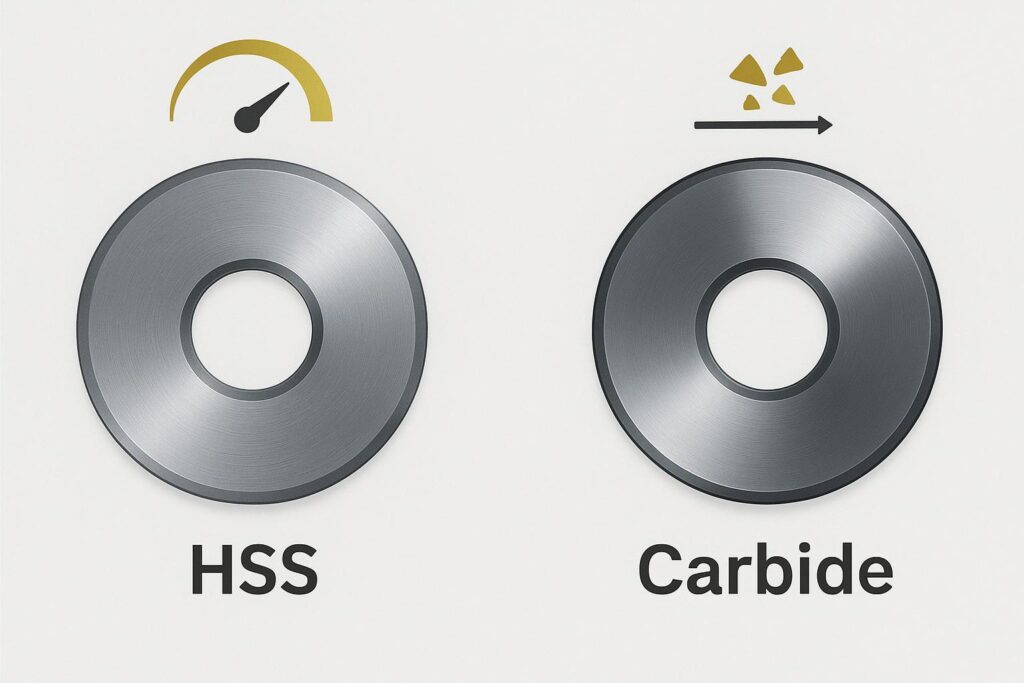
- Выбор между HSS и твердым сплавом — это не вопрос “лучше или хуже”. Это выбор между износостойкостью и ударной вязкостью, зависящий от скорости линии, абразивности и стабильности..
- Если вы наблюдаете затупление/скругление кромки, то ограничением обычно является износ (абразивное полотно, наполнители, высокий рабочий цикл). Если вы наблюдаете микровыкрашивание, то ограничением обычно являются ударные нагрузки (биение, вибрация, чрезмерный нахлест/боковое усилие).
- Накопление допусков (плоскостность, радиальное биение/TIR, нахлест) и регулярность переточки часто имеют такое же значение для стойкости кромки на высоких скоростях, как и выбор материала основы.
Почему выбор между HSS и твердым сплавом влияет на стойкость кромки, OEE и TCO
Стойкость кромки определяет частоту остановок для замены ножей, стабильность качества реза и объем брака, образующегося до того, как будет замечено отклонение линии реза.
На линиях продольной резки это выражается в трех бизнес-показателях:
- Edge life: минуты или метры между восстановлением кромки (переточкой или заменой).
- ОЭЭ: переналадка, время настройки и задержки из-за контроля качества отражаются на коэффициенте готовности и выходе годной продукции.
- ТКО: цена покупки обычно является наименьшим фактором влияния, если учесть простои, затраты на переточку и брак.
Ключевые параметры, которые необходимо зафиксировать перед выбором
Чтобы принять верное и воспроизводимое решение, начните с фиксации этих пяти параметров для каждого заказа:
- Скорость линии и рабочий цикл (прерывистый или непрерывный режим)
- Абразивность материала (наполнители, вторичное сырье, волокнистые структуры)
- Стабильность нагрузки (колебания натяжения, нестабильность зажима, биение полотна)
- Чувствительность к вибрации / биению (состояние держателя, вала, накопление погрешностей)
- План переточки (кто выполняет шлифовку, как проверяется биение/плоскостность после заточки)
Что содержит это руководство
- А карту соответствия материала и скорости для HSS и твердого сплава
- The типы повреждений для контроля, чтобы не спутать ошибки настройки с “плохой сталью”
- The контрольные точки допусков и переточки для сохранения стабильной производительности после заточки
Если вашим следующим шагом является заказ или замена ножей, страница компании MAXTOR METAL circular knives and blades служит практическим ориентиром для подготовки данных (чертежи, наружный/внутренний диаметр, толщина, примечания по применению).
Соответствие материала и скорости
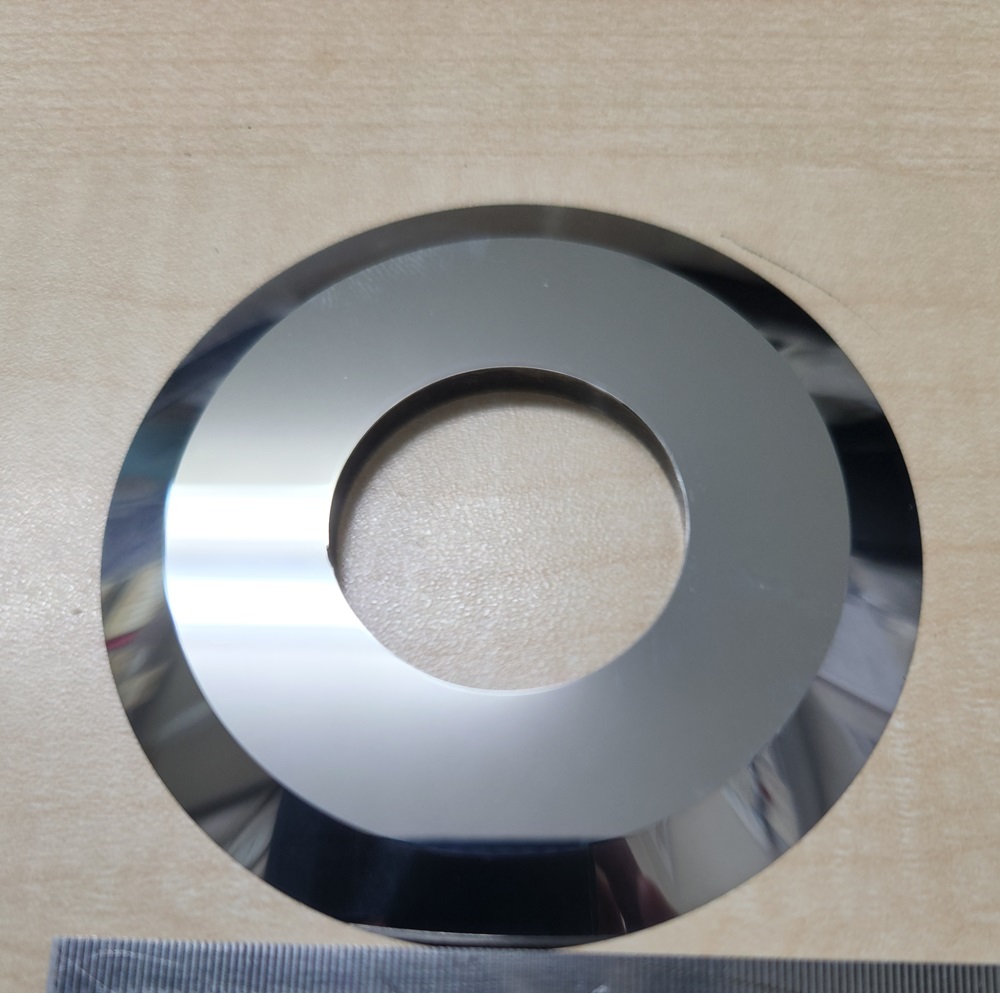
Совет профессионала: Если вы не можете обеспечить стабильный нахлест, боковое усилие и биение, начните с HSS, чтобы снизить риск выкрашивания. Переходите на твердый сплав только после того, как линия будет механически стабильна, а результаты переточки станут воспроизводимыми.
На практике этот раздел представляет собой ваш шаблон выбора материала дисковых ножей : определите, какой тип повреждения преобладает, а затем выберите материал основы, наиболее подходящий для данной скорости и абразивности.
Скорость линии и рабочий цикл
Представьте скорость и рабочий цикл как “бюджет тепла и износа”, который вы расходуете.
- Низкая скорость + прерывистый режим работы обычно требуют использования HSS поскольку вязкость и устойчивость к колебаниям нагрузки важнее, чем чистая износостойкость.
- Более высокая скорость + непрерывный режим работы обычно требуют использования твердый сплав так как абразивный износ и округление режущей кромки становятся лимитирующим фактором.
Полезное практическое правило на производстве — определить, что именно в первую очередь разрушает режущую кромку:
- Если кромка изнашивается постепенно (растут заусенцы, линия реза начинает пушиться), ресурс ограничен износом.
- Если кромка выходит из строя внезапно (микросколы, выщербины, полосы), ресурс ограничен ударными нагрузками.
Ключевой вывод: Твердый сплав окупается при стабильном процессе с преобладанием абразивного износа. HSS окупается при нестабильном процессе с преобладанием ударных нагрузок.
Для более детального ознакомления с материалами см. внутренний отчет MAXTOR METAL HSS сравнение резки: быстрорежущая сталь против твердого сплава.
Абразивность материала и наполнители
“Абразивность” в сфере конвертинга — это не только твердость. Это то, обо что режущая кромка трется часами.
Примеры, когда целесообразно использовать твердый сплав:
- Рулонные материалы с минеральными наполнителями или абразивными пигментами
- Вторичное сырье с повышенным риском загрязнения
- Волокнистые нетканые материалы, которые действуют как тонкая абразивная щетка
Примеры, когда HSS часто остается конкурентоспособной:
- Более чистые пленки с низким содержанием наполнителя
- Короткие тиражи, где затраты на замену ножей приемлемы
- Работы на этапе настройки линии (натяжение, держатель или биение еще не полностью стабилизированы)
Если стойкость кромки резко падает после смены материала (при той же скорости и геометрии), в первую очередь рассматривайте это как признак высокой абразивности, а не как проблему с поставщиком.
Виды отказов, за которыми нужно следить (затупление против микросколов)
Два этих вида отказов требуют совершенно разных действий.
Затупление / округление кромки (преобладание износа)
Типичные симптомы:
- Постепенно увеличивается заусенец, затем ухудшается качество кромки реза
- Цвета побежалости или заполированная площадка износа на кромке
- Постепенное увеличение количества пыли без единичного “инцидента”
Что проверить в первую очередь:
- Действительно ли рулонный материал более абразивен, чем предполагалось?
- Превышает ли рабочий цикл параметры, заложенные в график переточки?
- Наблюдается ли налипание клея или налипание материала из-за нагрева?
Микросколы (преобладание ударных нагрузок)
Типичные симптомы:
- Хаотичные полосы, выщербины или следы вибрации (дробления)
- Под увеличением кромка выглядит “выкрошенной”
- Нестабильная работа: хорошее качество в течение короткого времени, затем резкое ухудшение
Что проверить в первую очередь:
- Биение/TIR на валу и ноже
- Избыточное перекрытие или боковое усилие
- Источники вибрации (держатели, подшипники, жесткость пакета)
Руководство Dienes по устранению распространенных проблем дисковой резки сдвигом, связанных с перекрытием, боковым усилием и биением, является отличным справочником для сопоставления симптомов с причинами настройки перед сменой материала.
Допуски, геометрия, переточка
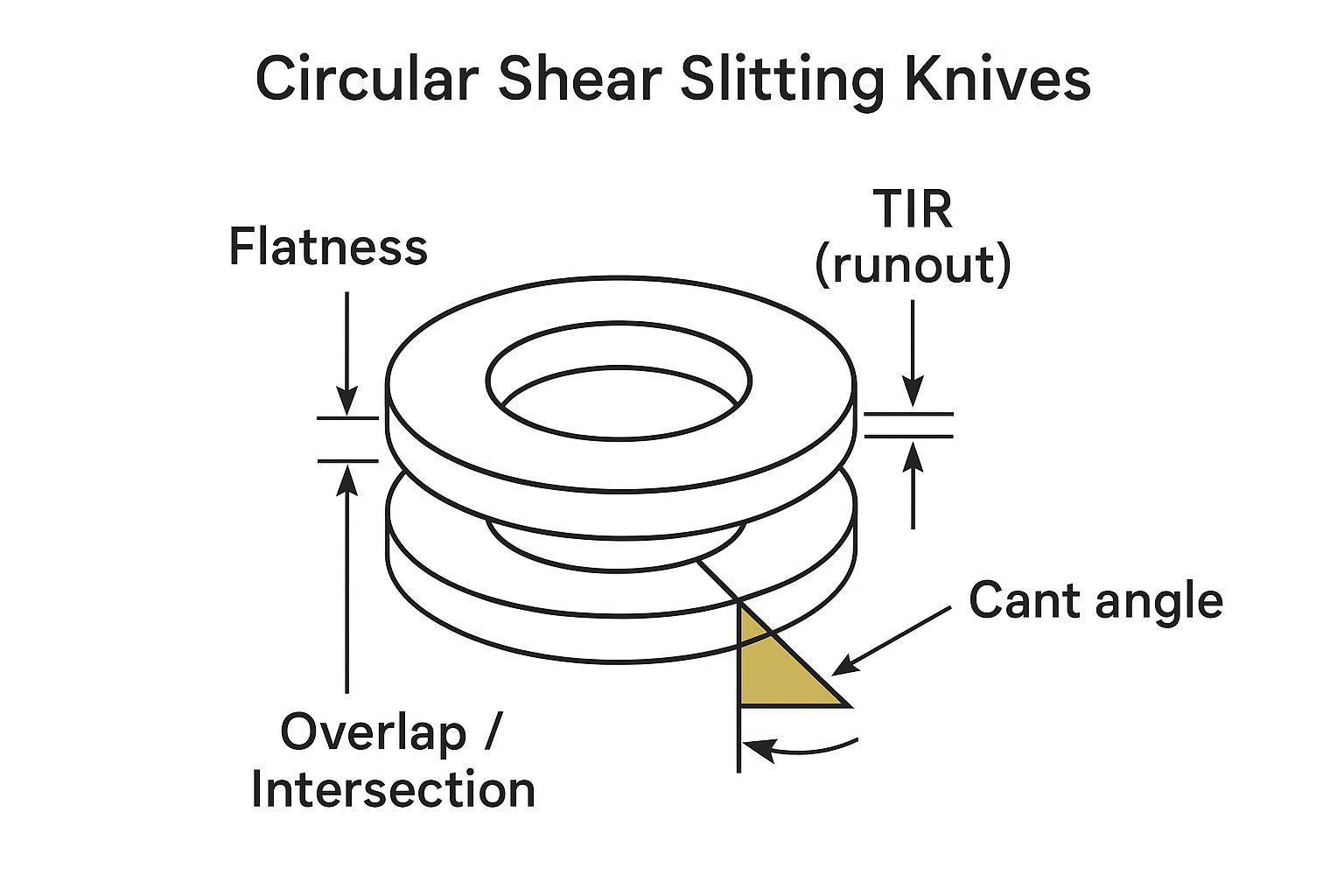
Важные допуски (плоскостность, TIR, перекрытие)
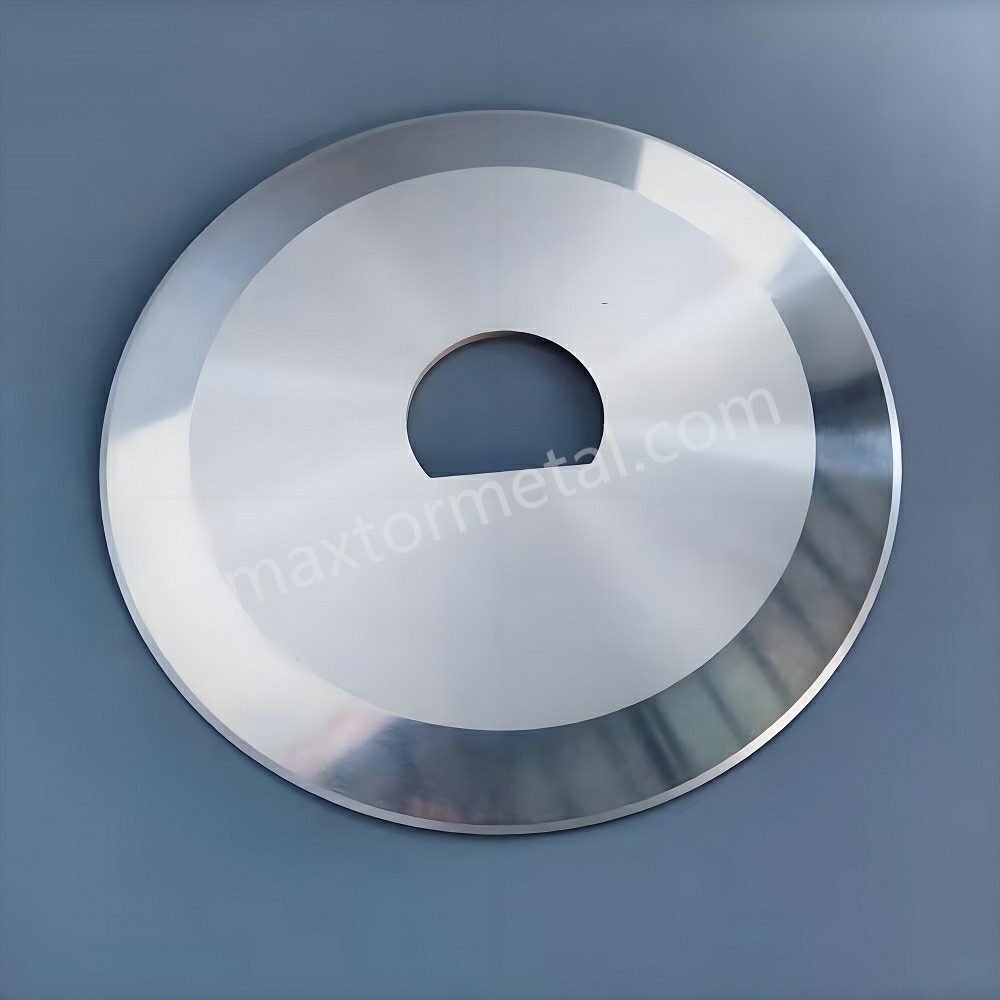
Даже высококачественный нож может преждевременно выйти из строя, если он установлен неровно. Если вы устраняете проблемы с заусенцами или сколами, примите это за базовую основу для допусков ножей для резки сдвигом, TIR и перекрытия.
Три допуска/параметра обычно определяют стабильность на высокой скорости (и именно они определяют, будут ли дисковые ножи из твердого сплава и быстрорежущей стали (HSS) работать предсказуемо):
- Плоскость: Контролирует стабильность контакта торца ножа и равномерность распределения нагрузки.
- TIR (Total Indicated Runout) / runout: Controls vibration and shock loading at the edge.
- Overlap / intersection: Controls whether you are shearing cleanly or rubbing/plowing.
Sollex publishes practical overlap ranges for tangential shear slitting—see their guidance on recommended overlap ranges for film, fabrics, and nonwovens (film/foil often ~0.50–0.75 mm; nonwovens higher). Treat this as a starting range only: actual optimum depends on knife diameter, web thickness, holder stiffness, and measured runout.
⚠️ Предупреждение: If you try to “fix” edge quality by increasing overlap or side pressure, you can shorten knife life fast and raise chipping risk—especially on carbide.
Safety & validation note: Always follow your machine OEM’s setup limits and local safety procedures (guards, lockout/tagout). When changing overlap/side load, validate with a small trial run and confirm bearing load and edge quality before ramping speed.
Edge geometry by substrate
Geometry is where you tailor the edge to the dominant failure mode.
- If you’re wear-limited (dulling): you typically want a geometry that supports edge stability under abrasion.
- If you’re shock-limited (micro-chipping): you typically want a geometry that reduces edge fragility and lowers peak stress.
Practical notes to align the team:
- Don’t change material and geometry at the same time unless you’re running controlled trials.
- Record what “good” looks like (edge under magnification, slit edge appearance, dust level) so you can compare apples to apples.
For setup fundamentals that interact with geometry (cant angle, overlap approach, knife profiles), MAXTOR METAL’s shear slitting setup guide is a useful internal reference.
Regrind cycles and methods
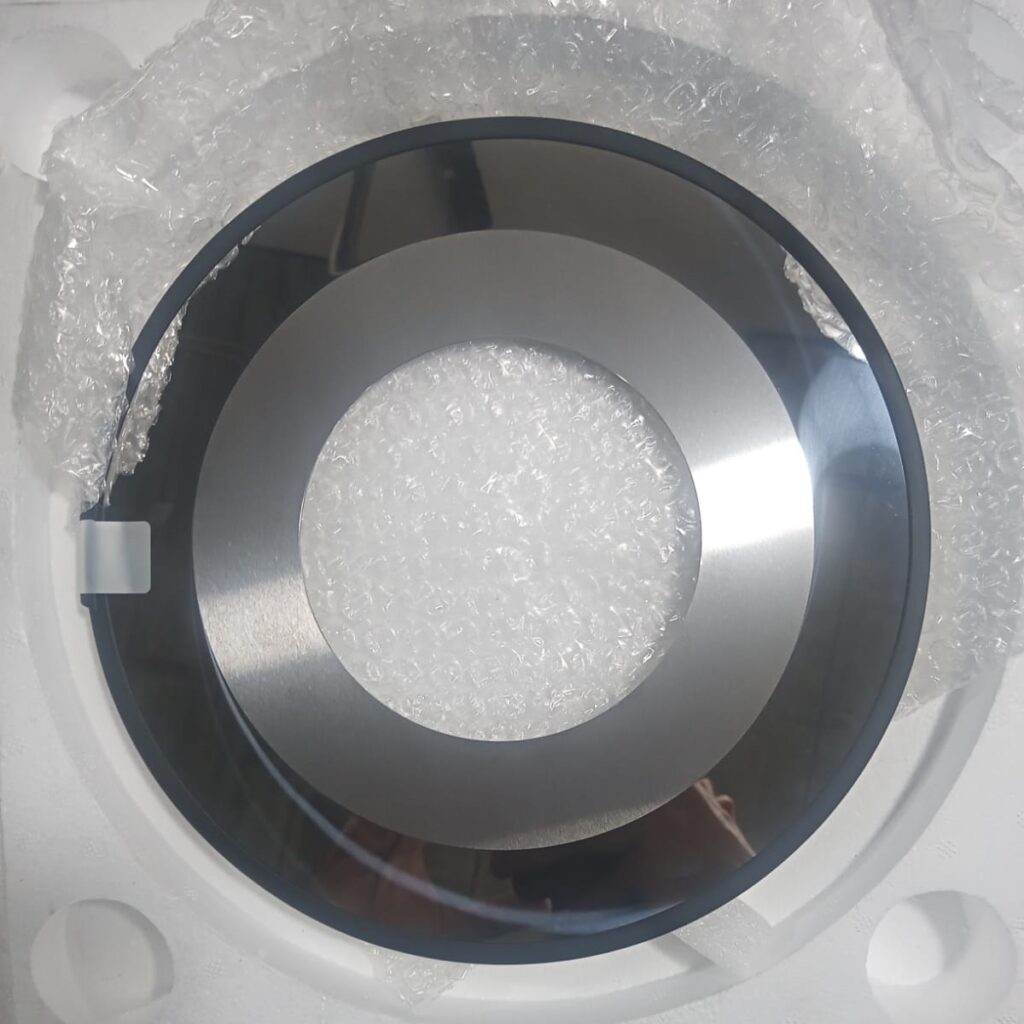
Regrinding is where many “carbide vs HSS” debates get distorted—and it’s also where circular knife regrind cycles can either protect edge life or quietly destroy it.
A few practical rules:
- Decide whether you want to optimize for maximum number of regrinds или most stable performance per regrind. These aren’t always the same.
- Treat sharpening as a controlled process: consistent wheel selection, cooling, and edge finish.
- After regrind, verify what matters to performance: runout/TIR, плоскость, и edge condition under magnification.
If you’re using spacers and stack-ups that influence runout, review how components interact. MAXTOR METAL’s guide on slitting knives and spacers provides a clear reminder that the “knife system” is not only the knife.
Руководство по OEE и TCO
Cost drivers beyond purchase price
To compare HSS vs carbide honestly, separate cost into four buckets:
- Downtime costs: changeover time, setup verification, and re-threading losses
- Quality losses: scrap, rework, and customer claims due to edge quality drift
- Regrind logistics: grinding cost, transport, queue time, spare inventory
- Risk costs: web breaks, sudden edge failure, and operator time troubleshooting
If carbide reduces changes but increases chipping events (because runout/overlap isn’t controlled), your TCO can get worse, not better.
ROI thresholds by speed and abrasiveness
Instead of chasing a universal “carbide lasts X times longer” number, use ROI signals you can measure in your plant:
- Edge-life multiplier needed to break even:
- If a knife change costs you more than the price difference in lost time and scrap, carbide is easier to justify.
- Stability premium:
- If the line is speed-limited by edge quality drift, the right substrate/geometry is often worth more than the knife cost.
- Abrasive-job flag:
- If a filler/recycled/fibrous job forces frequent edge refresh, carbide usually becomes the default—provided vibration/runout is controlled.
Coatings and cryo that shift the balance
Treat coatings and cryogenic treatment as “second levers” that can move the decision when you’re close to the boundary.
- Если вы наблюдаете sticking, heat, or buildup, a low-friction coating option (often positioned as DLC-type coatings in industry tool discussions) can be worth a controlled trial.
- Если вы наблюдаете abrasive wear but can’t change substrate for cost or brittleness reasons, a wear-focused PVD coating family is often a practical next step.
- Для HSS, cryogenic treatment is commonly used to improve wear behavior in tool steels; position it as an option to test on wear-limited jobs.
MAXTOR METAL case note (what to ask for when you want repeatability):
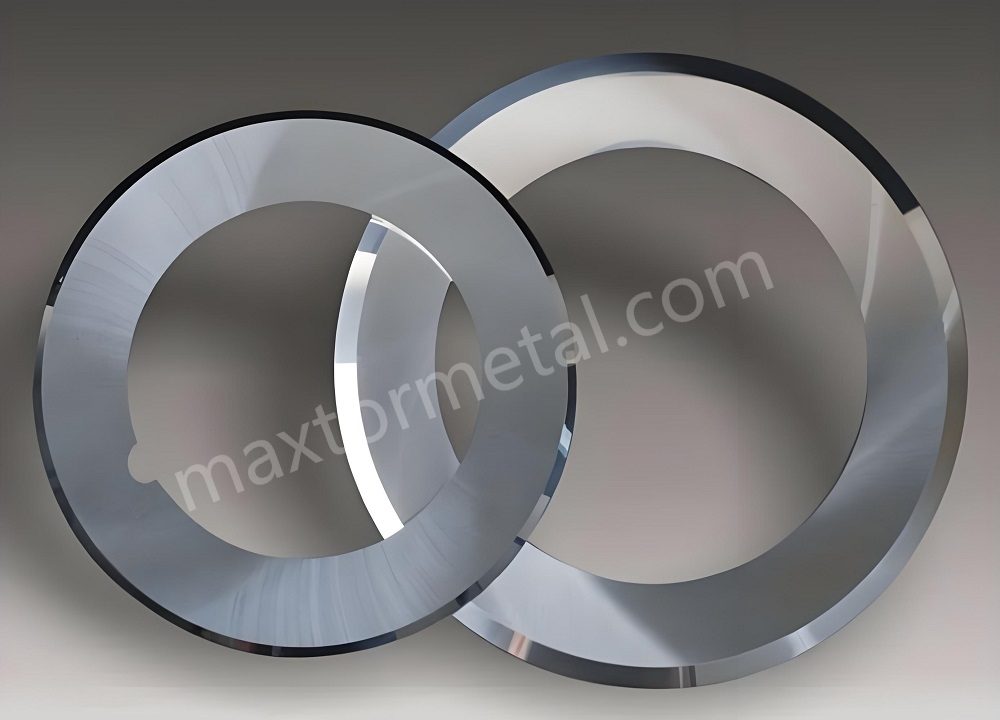
MAXTOR METAL supplies both PM HSS и fine-grain carbide circular knives with documented tolerances (flatness/runout targets aligned to your application), plus PVD/DLC coating options when wear or sticking is the dominant limit. For plant and procurement confidence, they support QA traceability (inspection records and batch tracking) and a one-stop import process for US/EU customers.
If you want a fast, apples-to-apples comparison, prepare three inputs for your supplier: your line speed range, web/material description (including fillers/recycled content), and your observed failure mode (dulling vs micro-chipping).
Краткий практический пример (анонимизированный)
Job: Calcium carbonate–filled PE film (shear slitting) at 250–450 m/min
| Параметр | Before (HSS) | After (Carbide + setup control) |
|---|---|---|
| Knife material | Standard HSS circular knives | Carbide circular knives |
| Dominant failure mode | Wear-dominated (abrasive wear, edge rounding) | Wear-dominated, controlled |
| Симптомы | Rapid dulling, rising dust, unstable slit edge after several rolls | Improved edge stability, fewer unplanned stops |
| Radial TIR (runout) | ~0.03 mm | < 0,015 мм |
| Overlap / intersection | ~1.0 mm | ~0.6–0.7 mm |
| Regrind approach | Reactive replacement | Scheduled, inspection-based grinding |
| Результат | Базовый уровень | ~3–5× knife life; unplanned knife-change stoppages reduced significantly |
Measurement note: TIR values above refer to radial runout measured on the knife/arbor setup with a dial indicator; overlap values are tangential shear slitting intersection settings and should be tuned for your geometry and web.
Заключение
- Choose HSS for resilience at lower speeds, variable loads, and tighter budgets
- Choose Carbide for continuous, abrasive, high-speed runs seeking maximum edge life
- Confirm with tolerance specs, regrind plan, and tracked OEE/TCO metrics
FAQs:
1) HSS vs carbide slitter knives: which lasts longer for plastic film?
Carbide usually lasts longer when the film job is wear-dominated (high speed, continuous duty, abrasive contamination). HSS can still be the better choice for short runs or unstable conditions where shock and vibration drive micro-chipping.
2) What causes carbide slitter knives to chip?
Micro-chipping is typically driven by shock loading: excessive runout/TIR, vibration, too much overlap, or too much side load. Dienes’ notes on распространенные проблемы при резке ножницами link these setup variables directly to chipping symptoms.
3) What overlap/intersection should I use for shear slitting film?
A common starting range is about 0.50–0.75 mm for film/foil in tangential shear slitting. Sollex summarizes these recommended ranges in their shear slitting guide, and you should tune from there based on thickness, tension stability, and knife geometry.
4) Is HSS better than carbide for vibration or interrupted contact?
Often, yes. HSS is generally more forgiving when the system has vibration, runout, or variable loading because toughness reduces edge breakout. If you want carbide in these conditions, you typically need tighter tolerance control and geometry tuned to reduce edge fragility.
5) How do I decide if carbide is worth the extra cost?
Treat it like an OEE decision: estimate what one changeover costs in lost time and scrap, then compare that to the price difference. Carbide makes sense when longer runs and abrasive webs make changeovers the dominant cost driver.
6) Should I regrind carbide circular knives the same way as HSS?
The principle is the same (restore geometry and edge finish), but the process control and inspection discipline often need to be tighter. After any regrind, verify runout/TIR and flatness—if runout increases, carbide can start chipping even if the edge looks sharp.
7) Do coatings help slitter knife life on sticky films or abrasive webs?
They can. Low-friction coatings are often trialed when sticking and heat are limiting edge life, while wear-focused coatings are often trialed for abrasive webs. The key is to run controlled trials and track edge life and quality drift, rather than relying on generic multipliers.
8) What specs should I send a circular knife supplier to get the right recommendation?
Send: OD/ID/thickness and drawing, slitting method (shear/crush), line speed range, web description (including fillers/recycled content), target edge quality, and current failure mode (dulling vs chipping). If you have them, include your runout/TIR measurement approach and your current overlap/side load settings.
Справочник стандартов (для чертежей и проверки)
If you need a standards-backed language for drawings and inspection reports, these ISO documents are widely used:
- Geometrical tolerancing (flatness, run-out) — ISO 1101:2017, Geometrical product specifications (GPS) — Geometrical tolerancing. See the run-out definitions in Clause 16 (including circular run-out and total run-out) and the general rules for specification/interpretation throughout the standard: ISO 1101:2017 on ISO.
- Datum systems used for run-out inspection setups — ISO 5459:2011, Datums and datum systems for geometrical tolerances, for defining datum references when you specify/measure run-out relative to an arbor axis: ISO 5459:2011 on ISO.
- Dial indicator / dial test indicator characteristics — ISO 9493:2010, Dial gauges — Design and metrological characteristics, as a reference for the metrological characteristics of lever-type dial indicators often used in TIR checks: ISO 9493:2010 on ISO.
- Prevention of unexpected start-up during setup/maintenance — ISO 14118:2017, Prevention of unexpected start-up (commonly referenced when implementing safe setup and energy isolation controls): ISO 14118:2017 on ISO.
- Safety distances for guarding — ISO 13857:2019, Safety distances to prevent hazard zones being reached by upper and lower limbs. See the main requirements and tables in Clauses 4–6: ISO 13857:2019 on ISO.
О методе (MAXTOR METAL)
This guide is based on MAXTOR METAL’s shop-floor troubleshooting patterns and QA checkpoints built over 15+ years of custom, precision-ground industrial blade manufacturing. For repeatability, we recommend documenting (and, where possible, providing) inspection records for:
- Flatness inspection for knife faces (to prevent intermittent contact and load spikes)
- Hardness / material certificate traceability to confirm substrate consistency
- Regrind process control and post-grind checks (edge condition + runout verification)
- QA traceability (batch tracking and inspection reports)
Update note: If you want us to review your setup and recommend substrate/geometry, please share your measured TIR/flatness method, overlap/side load settings, and a small set of slit-edge photos under magnification.

 English
  Spanish
  Italian
  French
  Portuguese
  Russian
  German
  Arabic
  Hindi
Hindi  Vietnamese
  Indonesian
  Japanese
  Korean