

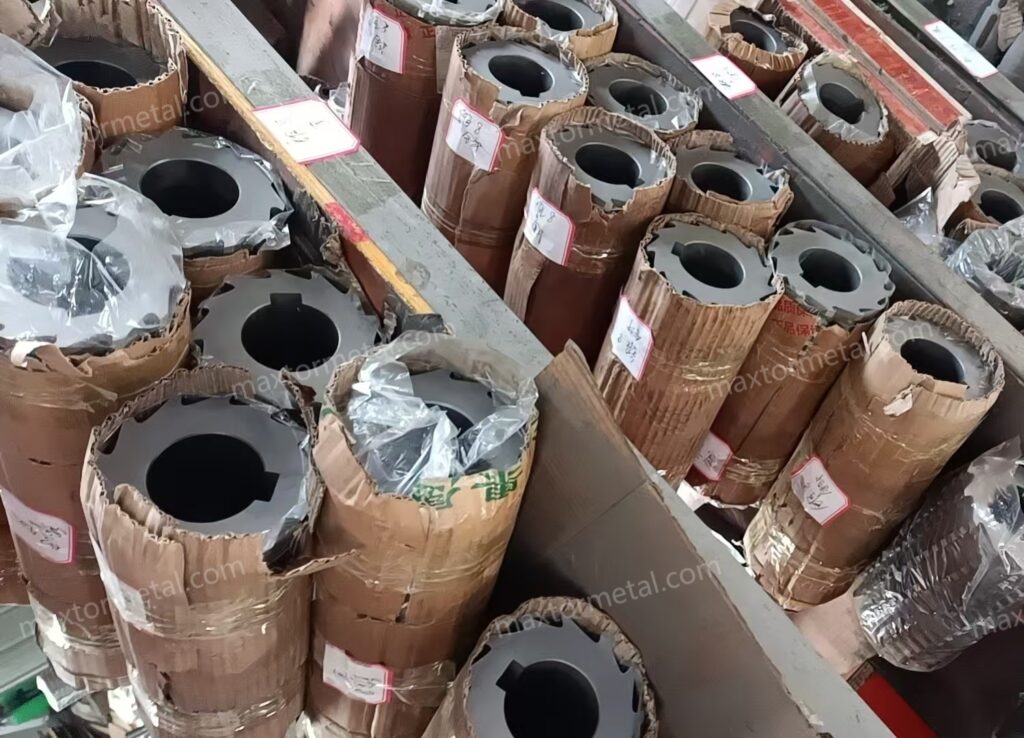
High‑filler masterbatch (glass fiber, CaCO3, talc, TiO2) is unforgiving on rotary cutters. Hard particulates plough the edge, accelerate rounding and micro‑chipping, and magnify any error in clearance, run‑out, or parallelism. The result is rising fines, tails, and unstable pellet geometry that drags down throughput and downstream yield.
This guide focuses on extending life, reducing fines/tails, and stabilising pellet shape through the entire chain: materials, coatings, edge geometry and finish, set‑up tolerances, metrology, maintenance windows, and a simple ROI model. We use SI units throughout and present practical ranges that should be validated against your specific pelletiser OEM manual.
Основные выводы
- Target uptime first: a disciplined tolerance stack (clearance, run‑out, parallelism) typically lifts mean time between regrinds/changes (MTBR) by ≥40% while holding fines ≤0.5% once stabilised.
- For abrasive duty, PM tool steels at HRC ~60–64 or carbide inserts with a controlled hone outperform D2/M2 in wear while protecting against micro‑chipping.
- Prefer thin, tough PVD coatings (TiAlN/TiN) or DLC where low friction is needed; pair coatings with an edge hone of 5–25 µm and a face finish Ra <0.2 µm.
- Start clearance at 0.05–0.15 mm for high‑filler lines; hold rotor run‑out to ≤0.01–0.02 mm and knife‑to‑bed parallelism to ≤0.02–0.05 mm; verify with 0.002 mm‑class indicators.
- Lock in documentation: traceable materials/heat‑treat/hardness/tolerance reports and a regrind log are non‑negotiable for predictable cost‑per‑tonne.
Failure modes in high-filler duty
Abrasive wear mechanisms
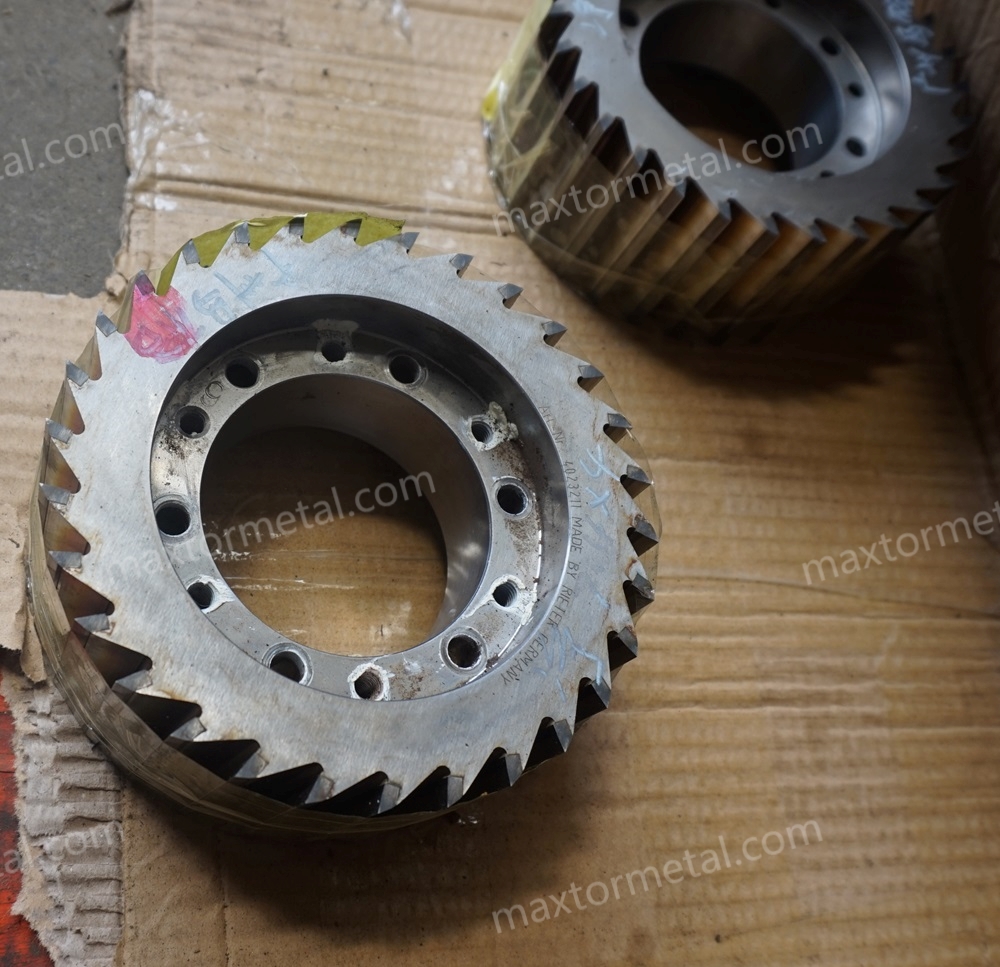
Abrasive fillers embed and slide at the tool–polymer interface, eroding the primary edge and widening the land. As the edge radius grows, shear transitions toward crushing, which elevates cutting forces and fines. PM steels with dense vanadium carbides resist this rounding far better than D2; Crucible’s CPM‑class data document markedly higher abrasion resistance versus D2 in ASTM testing, with typical hardness windows of 60–65 HRC for these PM grades (see Crucible CPM 10V technical data).
Micro-chipping and impact factors
Misalignment, run‑out spikes, or hard particulate clusters cause intermittent impacts that initiate micro‑fractures along the edge. Excessively sharp, un‑honed edges are most vulnerable. A deliberate micro‑hone (5–25 µm) supports the cutting wedge and suppresses micro‑chipping at minimal penalty to sharpness; this range aligns with cutting‑tool best practice explained by Sandvik Coromant’s edge‑preparation guidance.
Thermal and corrosion effects
Insufficient strand drying and recirculating fines promote smearing and thermal spikes that soften edges and foul the land. OEM literature for strand pelletisers repeatedly ties residual moisture and abrasive duty to premature wear and dust generation; for example, MAAG’s strand pelletiser brochures highlight drying/handling as key to cut quality (see MAAG PRIMO series brochure, 2024, qualitative guidance).
Materials and hardness choices
D2/M2 tool steels
Conventional D2 (high‑carbon, high‑chromium) remains common for general polymers but struggles in high‑filler abrasion. Hardenability to ~58–62 HRC is typical. M2 offers hot‑hardness benefits but still lags PM steels for abrasive wear life.
PM steels for abrasive loads
Powder‑metallurgy grades like CPM 10V increase vanadium carbide volume, delivering markedly higher wear resistance at HRC ~60–64 while retaining usable toughness. For abrasive masterbatch, CPM 10V is a pragmatic starting point (Crucible CPM 10V).
Carbide and bed-knife pairing
Tungsten carbide (WC–Co) inserts shine under extreme abrasion. K20–K30‑equivalent grades typically test around HRA 90–92 with 6–10% Co, well suited to cutting filled polymers; see vendor overviews such as Hyperion’s Tiger•carbide grades (2023). Pair very hard rotors (PM/carbine) with bed knives in a slightly lower HRC band (≈58–62) to avoid brittle damage transfer. Label this as industry practice to be validated per OEM.
Coatings and edge support — boosting rotary cutter durability in high‑filler masterbatch
TiN/TiAlN trade-offs
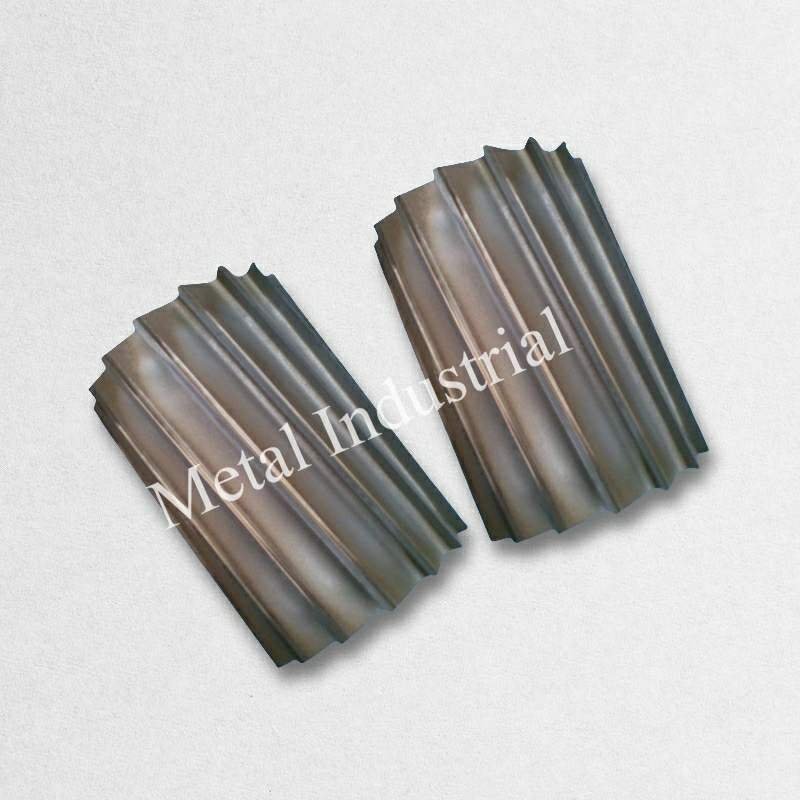
Thin, tough PVD layers extend life without overly dulling the edge. TiN (≈1–5 µm; ~2300 HV; moderate COF) is versatile; TiAlN (≈2–6 µm; typically harder with stronger hot‑hardness) often outlasts TiN in heat‑prone runs. For representative, publicly posted coating specs, see Ionbond TiN (PVD) и Ionbond TiAlN (PVD) (typical thickness ranges and application notes vary by deposition route and tool geometry).
DLC for low friction
Diamond‑like carbon (a‑C:H) reduces friction dramatically (COF ~0.05–0.2 at ≈1–3 µm) and can lower fines where polymers tend to smear or stick. In PP/PE + CaCO₃ lines, DLC is most useful when pickup/smearing is a repeatable issue and cut temperatures are controlled; when heat is elevated (poor drying, heavy recirculating fines, or aggressive contact), nitrides like TiAlN are often the safer default. See Ionbond DLC (PACVD) и Oerlikon Balzers BALINIT C (DLC).
Подготовка кромок и обработка поверхности
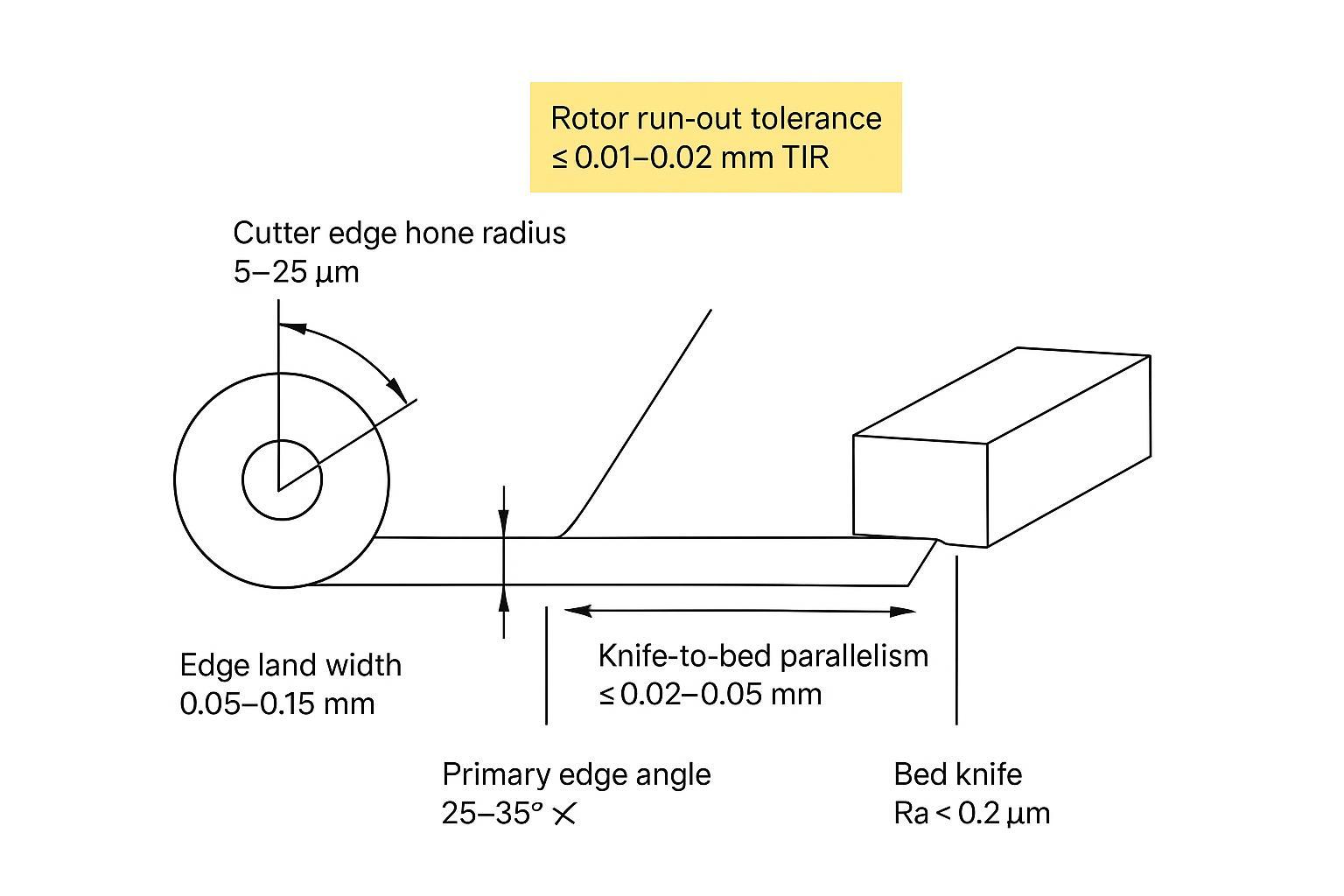
Polymer cutting rewards a keen but supported edge. Start with a micro‑hone radius of 5–25 µm, a land width of 0.05–0.15 mm, and finish the cutting face to Ra <0.2 µm. For PP/PE with CaCO₃, a slightly larger hone within this range can reduce micro‑chipping when run‑out or filler agglomerates create intermittent impacts, while an overly large hone may raise cutting force and fines—so adjust in small steps and confirm with fines and pellet‑geometry data. These values stem from cutting‑tool practice and polymer‑cutting field experience; verify against your process targets.
Set-up and tolerances
Getting the tolerance stack right is the single best lever for rotary cutter durability in high‑filler masterbatch. Below are practice‑based starting windows that should be validated per OEM model and chamber size. These are also practical phrases to standardize on your SOPs if you want to target “run‑out tolerances pelletizer” alignment across sites.
Quick troubleshooting map (symptom → likely cause → what to check)
| Symptom on PP/PE + CaCO₃ lines | Вероятная причина | Что проверить в первую очередь |
|---|---|---|
| Постепенное увеличение количества пыли (мелкой фракции) в течение нескольких дней | Скругление кромки + смещение зазора | Настройка зазора, равномерность следа контакта, метод отбора проб пыли (мелкой фракции) |
| Внезапный скачок количества пыли после регулировки/замены | Стружка/заусенцы под посадочными местами; деформация зажима | Чистота посадочного места, повторяемость момента затяжки зажимов, радиальное/торцевое биение (TIR) |
| Периодическое появление “хвостов” на гранулах (циклический дефект) | Биение или эксцентричный монтаж | Биение по посадочному диаметру, повреждение ступицы/посадочного места, настройка индикатора |
| Неравномерная длина гранул по всей ширине прядей (стренг) | Погрешность параллельности между роторным и стационарным ножом | Параллельность по концам и в средней части под действием момента затяжки |
| Налипание/наволакивание полимера на режущую кромку/фаску | Влага/плохая сушка; скачки температуры | Эффективность сушки стренг, рециркуляция пыли, охлаждение и чистота |
| Микровыкрашивание режущей кромки | Ударные нагрузки из-за перекоса или попадания агломератов | Размер радиуса притупления (микрофаски), скачки биения, слишком малый зазор для фактической точности оборудования |
Зазоры и метод настройки контакта
Начинайте с зазора между роторным и стационарным ножом в диапазоне 0,05–0,15 мм для абразивных компаундов. Для PP/PE with CaCO₃ (что характерно для высоконаполненных суперконцентратов) нижняя граница этого диапазона часто помогает сохранить чистый срез по мере износа (скругления) кромки — но только в том случае, если биение и параллельность строго контролируются, а посадочные места ножей идеально чистые. Более узкие зазоры обеспечивают чистый срез при износе кромок, но требуют высокой точности вращения ротора и плоскостности стационарного ножа. Избегайте жесткого “трения” как нормального рабочего состояния; при настройке добивайтесь легкого, равномерного касания, дающего четкий и ровный след контакта по всей длине, после чего установите целевой зазор.
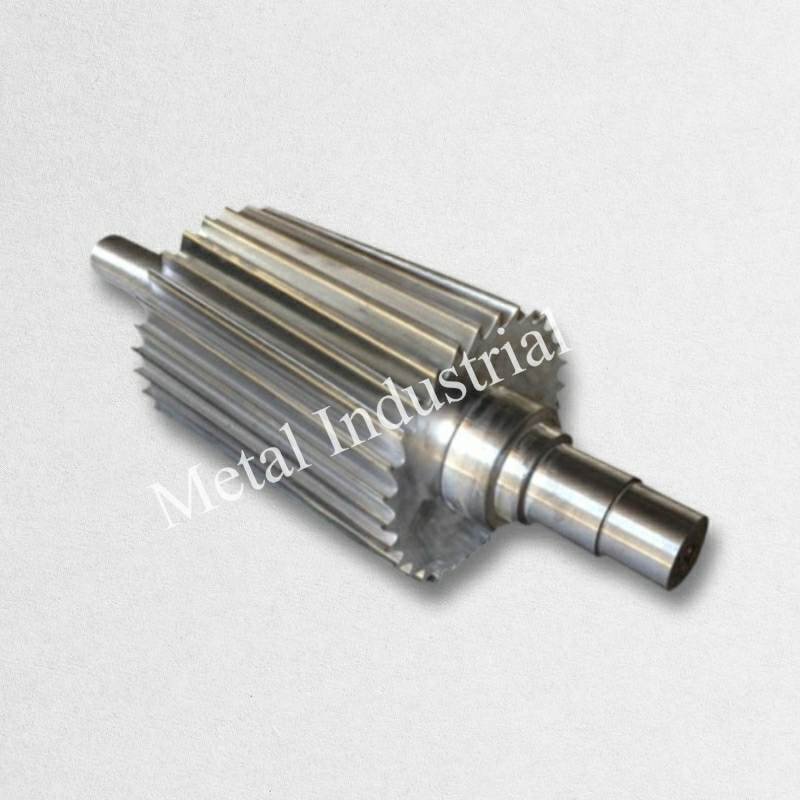
Нейтральный пример на основе технических характеристик (MAXTOR METAL): При составлении ТЗ на роторные и стационарные ножи для линий с высоконаполненными материалами инженеры часто запрашивают роторы из порошковой инструментальной стали (PM) и опциональные твердосплавные вставки, поставляемые с полным комплектом документации по размерам и термообработке. К примеру, роторные и стационарные ножи MAXTOR METAL из PM/твердого сплава могут быть заказаны со следующими проверяемыми параметрами для стренг-гранулятора:
- Роторный нож из PM: марка класса CPM (например, аналог CPM 10V), твердость HRC 60–63; радиус микрофаски 0,005–0,02 мм; шероховатость передней поверхности Ra <0,2 мкм.
- Стационарный нож: инструментальная сталь с твердостью HRC 58–62 (или вставка из WC–Co в зависимости от задачи), отчет о плоскостности/параллельности ≤0,02–0,05 мм.
- Целевые параметры настройки (согласовываются с OEM): зазор 0,05–0,15 мм; биение ротора (TIR) ≤0,01–0,02 мм; параллельность роторного ножа относительно стационарного ≤0,02–0,05 мм.
- Пакет документации: сертификат на материал, отчет о термообработке, карта измерений твердости, отчет о геометрических допусках и код прослеживаемости партии, соответствующий серийному номеру на каждом лезвии.
Данный пример приведен только в качестве справочных характеристик; всегда сверяйтесь с руководством по эксплуатации оборудования и целевыми показателями качества предприятия. Для более подробного ознакомления с оснасткой для стренговой грануляции и методами ее контроля см. руководство MAXTOR METAL по ножам для грануляторов суперконцентратов.
Геометрия, биение, параллельность
- Биение ротора: выдерживайте суммарное биение (TIR) ≤0,01–0,02 мм по посадочному диаметру. Устраняйте любые суммарные погрешности, вызванные заусенцами на ступице, стружкой на посадочных местах или деформированными прижимами.
- Параллельность ножей: ≤0,02–0,05 мм по всей рабочей длине; проверяйте на обоих концах и в средней части под действием момента затяжки прижимов.
- Углы заточки: для полимерных стренг обычно используется угол первичной заточки 25–35°; более тупые углы повышают стойкость к микровыкрашиванию, но могут увеличить усилие резания.
Рекомендуемое измерительное оборудование (примеры характеристик)
| Измерительный прибор | Цель | Разрешение / погрешность (СИ) |
|---|---|---|
| Индикатор часового/рычажно-зубчатого типа (например, Starrett 711 или Mahr MarTest) | Проверка биения / параллельности | Цена деления 0,002 мм |
| Профилометр / датчик шероховатости поверхности | Проверка Ra передней поверхности / фаски | Разрешение ≤0,05 мкм |
| Динамометрический ключ (±3%) | Повторяемое усилие зажима на посадочных местах ножей | ±3% от заданного момента |
Если вам нужны примеры спецификаций индикаторов, репрезентативная информация представлена на странице индикатора Starrett 711MFSZ.
Охлаждение и чистота
Сухие, чистые стренги снижают налипание полимера и предотвращают скачки температуры в зоне реза. Поддерживайте эффективную работу системы водоудаления/воздушных ножей и сохраняйте посадочные места ножей в идеальной чистоте. Брошюры производителей оборудования подчеркивают, что правильная сушка и транспортировка стренг являются ключевыми факторами снижения количества пыли и увеличения ресурса инструмента в стренг-грануляторах; см. подробные рекомендации в MAAG’s M‑ASG literature.
Maintenance, life, and ROI
Окна из переработанного сырья
Define objective triggers to avoid running blunt or chipped edges that inflate fines and accelerate wear elsewhere:
- Wear‑land/edge recession reaching ~0.2–0.5 mm.
- Sustained fines above 0.5% by weight over a defined production lot.
- Alignment drift outside run‑out/parallelism targets.
Log each grind’s material removal to manage remaining life, and always preserve geometry (edge angle, land width, hone radius, Ra target) on regrind.
Traceability and documentation
Require a pack that ties every blade to its manufacturing record: material certificate, heat‑treat report, hardness scan, coating batch (if any), dimensional tolerance report, and batch/serial trace code.
Cost-per-tonne model
Here’s a conservative, reproducible way to quantify gains while you pursue higher rotary cutter durability in high‑filler masterbatch.
Inputs (example):
- Baseline blades: D2 at HRC 60; cost: €220 each; life: 3,000 kg between regrinds; 3 regrinds; changeover downtime cost: €600 per event; fines: 1.0%.
- Upgrade: PM steel at HRC 61 with TiAlN; cost: €360; expected life multiplier 1.5–2.5× (use a conservative band and validate with your own A/B data; PM grades like CPM‑class steels show materially higher abrasion resistance than D2 in supplier wear charts); 4 regrinds; downtime unchanged per event; fines: 0.5%.
Worked result (per 30,000 kg campaign):
- Baseline blade spend + regrinds: assume 10 cycles → ≈€2,200 blades + €X regrinds; downtime 10×€600 = €6,000; yield loss from fines = 1.0% of material value (insert your €/kg).
- PM upgrade: ≈4.5 cycles → ≈€1,620 blades + €X regrinds; downtime 4.5×€600 = €2,700; yield loss halves at 0.5%.
Even before valuing the fines reduction, the MTBR lift (roughly ≥40% in most stabilised lines) cuts downtime materially; include sensitivity bands for life multiplier (±20%) and fines (±0.2 pp) to set realistic expectations. Replace € with your local cost basis; the structure carries over.
A/B trial and log checklist (minimum viable)
- Run at least 2–3 full change/regrind intervals per blade option (baseline vs. upgrade) on the same line, with identical geometry and set‑up method.
- Record per interval: material (polymer + filler type/loading), throughput, strand count, cooling/drying notes, knife‑to‑bed clearance setting, measured run‑out (TIR), knife‑to‑bed parallelism, edge hone (µm), cutting‑face Ra (if available), fines % (by weight) with sampling method, pellet geometry notes, downtime minutes per change, and cumulative regrind stock removal.
- Evaluate: MTBR (hours or tonnes), fines % trend, and cost‑per‑tonne using the same downtime and material-value basis.
Заключение
- Procurement parameters to specify and verify: steel or carbide grade; final hardness band; edge geometry (angle, hone radius, land width); cutting‑face Ra; coating type and thickness; knife‑to‑bed clearance target; rotor run‑out and knife parallelism limits; delivered inspection pack (material, heat‑treat, hardness scan, dimensional report, batch/serial).
- Practical steps to stabilise cut quality and uptime: hold clearance at 0.05–0.15 mm, run‑out ≤0.01–0.02 mm, and parallelism ≤0.02–0.05 mm; use 5–25 µm hone and Ra <0.2 µm; dry strands thoroughly; keep seats immaculate; verify with 0.002 mm‑class indicators and a torque routine.
- Trial plan to validate life and cost‑per‑tonne gains: run paired A/B lots over multiple regrind cycles using your current blade vs a PM or carbide upgrade with identical geometry; log MTBR, fines %, pellet shape tolerance, and downtime; aim for ≥40% MTBR improvement while holding fines ≤0.5%.
Автор
Tommy Tang is a Senior Sales Engineer at Nanjing METAL Industrial with 12 years of experience supporting polymer pelletizing and industrial blade applications. Certifications: CSE, CME, Six Sigma Green Belt, PMP.
Data notes & disclosures
- Numeric ranges in this guide (e.g., clearance, run‑out, parallelism, hone radius, and surface finish targets) are presented as practical starting windows based on vendor datasheets and common field practice. Always validate and prioritize the tolerances and adjustment procedure in your specific pelletizer OEM manual.
- The MAXTOR METAL section is included as a neutral, specification-led example to illustrate what a traceable procurement/inspection package can look like; it is not a performance guarantee.
- Any life multipliers and ROI outcomes depend strongly on polymer family, filler type/loading, chamber size, strand count, line speed, cooling/drying effectiveness, and set‑up repeatability. Confirm by running a controlled A/B trial over multiple change or regrind cycles.
Список использованной литературы (избранный)
- Crucible Industries — CPM 10V datasheet (PM tool steel hardness window and wear-resistance context)
- Crucible Industries — D2 datasheet (baseline tool steel hardness window)
- Sandvik Coromant — Edge preparation guidance (hone size trade-offs)
- Ionbond — TiN (PVD) overview и TiAlN (PVD) overview (typical thickness/application notes)
- Ionbond — DLC (PACVD) overview (low-friction coating notes)
- Oerlikon Balzers — BALINIT C (DLC) (DLC coating family overview)
- MAAG — PRIMO series brochure и M‑ASG literature (qualitative drying/handling guidance)
- Starrett — 711MFSZ test indicator (0.002 mm‑class indicator example for run‑out/parallelism checks)

 English
 Spanish
 Italian
 French
 Portuguese
 Russian
 German
 Arabic
 Hindi
 Vietnamese
 Indonesian
 Japanese
 Korean