
Entretien des lames de trancheuse à pain : prolongez la durée de vie de 30 %

Published: 2026-04-29 · Last reviewed: 2026-04-29 Food-safety and compliance note: This guide provides general best practices. Always follow your facility’s SSOP/HACCP programs and the slicer OEM’s model-specific instructions (including disassembly, tension/torque ranges, approved lubricants, and sanitation chemicals). If there is any conflict, the OEM manual and your validated food-safety plan take precedence. Document any changes as […]
Lames Scallop vs V-Tooth vs ABT : quel tranchant est idéal pour le pain ?

Edge geometry isn’t a cosmetic choice. In high-volume slicing, the edge shape determines how the blade enters the crust, how it shears the crumb, and how stable it stays at speed. That’s why the same slicer can look “mysteriously inconsistent” across SKUs—even when the blade material and thickness never change. Put simply: you’re tuning bread slicer blade […]
Remplacement de lame de trancheuse à pain par des lames alternatives OEM éprouvées

Safety note & accountability: This guide provides general maintenance guidance for industrial bread slicers. Always follow your machine’s OEM service manual, your facility’s lockout/tagout (LOTO) program, and applicable local regulations. If any step conflicts with OEM documentation, OEM requirements take priority. Technical review: Reviewed for safety emphasis and procedural clarity by MAXTOR METAL’s technical team (LOTO and […]
Pourquoi votre trancheuse à pain déchire le pain et comment y remédier
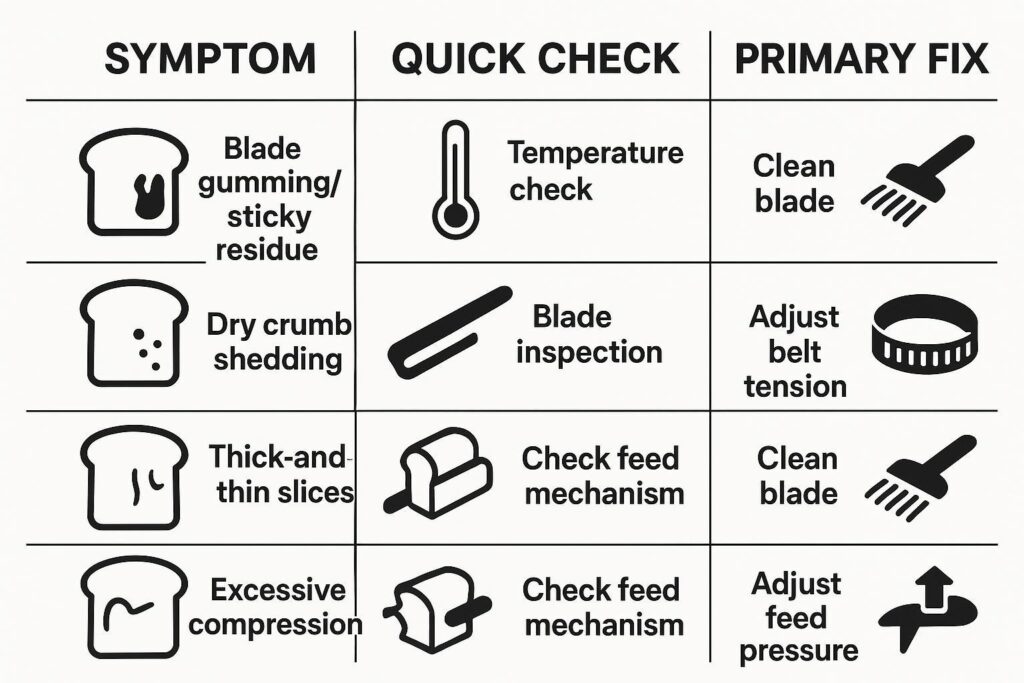
If bread slicer tearing bread is spiking waste, this guide gives fast, verifiable fixes. You’ll get temperature windows, mechanical checks, and line-control steps you can audit today. Targets 600–1200 loaves/hour lines with pan bread, crusty loaves, and buns. Safety & SOP note: Always follow your slicer OEM manual and your facility’s food safety program. Before inspecting, […]
Choisir le bon système de couteau chauffant industriel pour la vitesse et la qualité
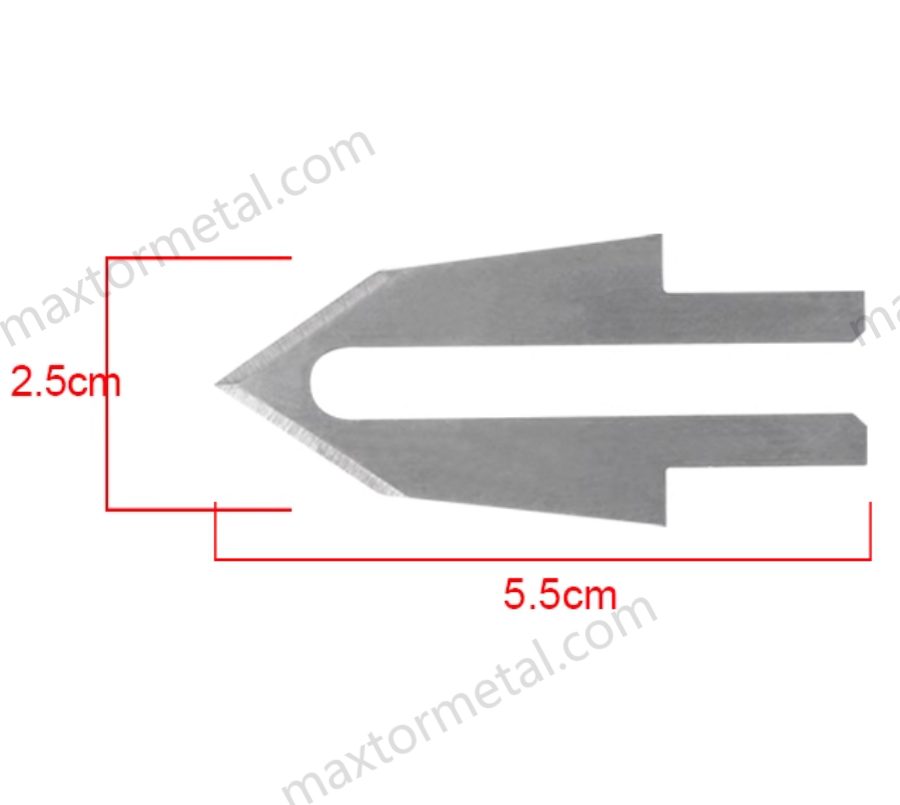
Industrial hot knife cutting looks simple until you scale it. At production volume, the power class you pick determines whether you get a square, sealed edge at line speed—or a constant cycle of slowdown, bead buildup, smoke complaints, and changeovers. This guide focuses on two common brackets—100W hot knife systems and 400W hot knife systems—and shows how to […]
Outils de dégrapage thermique pour plastique de précision : sans carbonisation
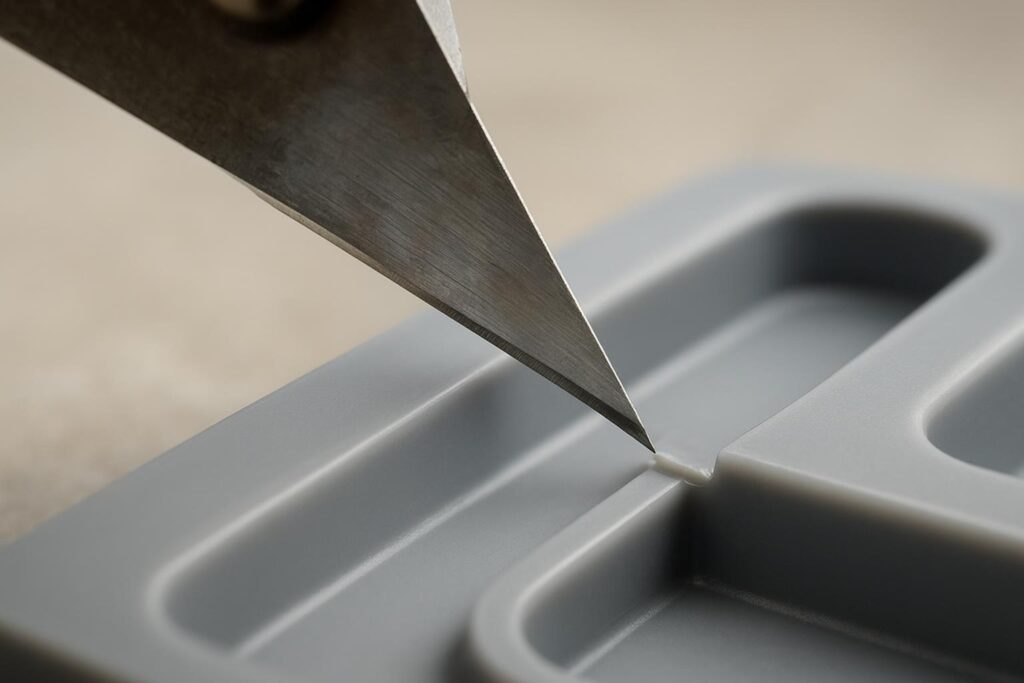
If you’re seeing black marks at the gate, inconsistent vestige height, or cosmetic haze after trimming, degating isn’t a “finishing detail” — it’s a yield, quality, and takt-time problem. Thermocutter (hot-knife) plastic degating tools can solve it, but only when temperature, dwell, and technique are tuned to the polymer and the gate geometry. This guide […]
Comparaison des matériaux de couteau chauffant pour sangles et mousses : NiCr vs Inox
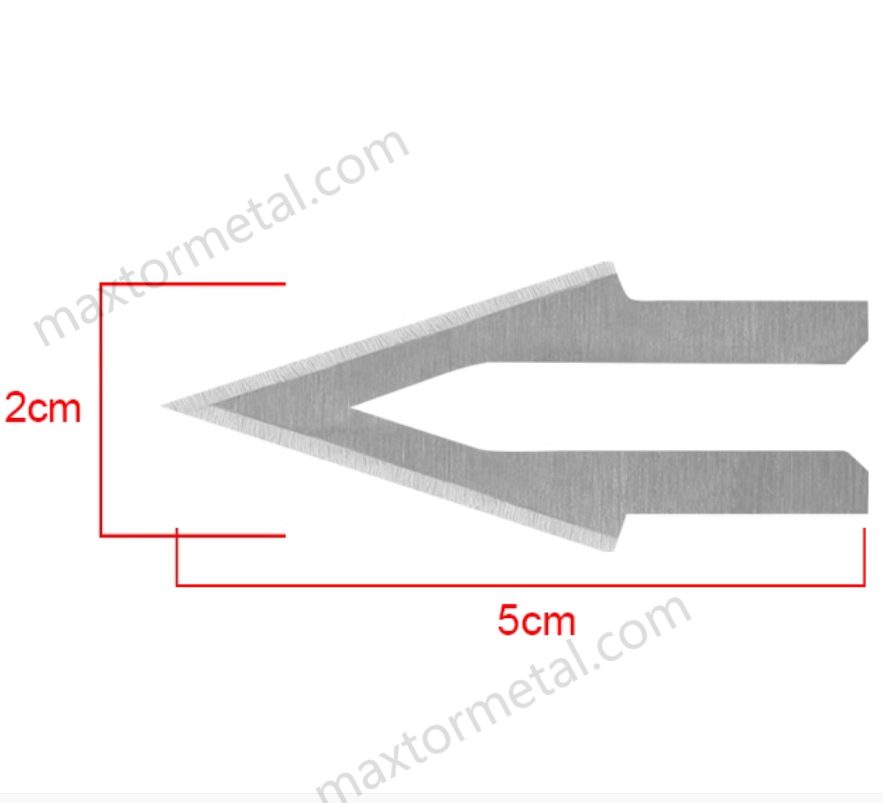
Introduction If you run thermal cutting for webbing, labels, edge-banding, or foam, material choice quietly sets your ceiling on warm-up time, temperature drift, and how often you stop the line to clean or change parts. This is a practical comparison aimed at decisions you can defend: faster time-to-ready, more stable cuts through the shift, and […]
Comment nettoyer les lames de couteau chauffant sans endommager le tranchant
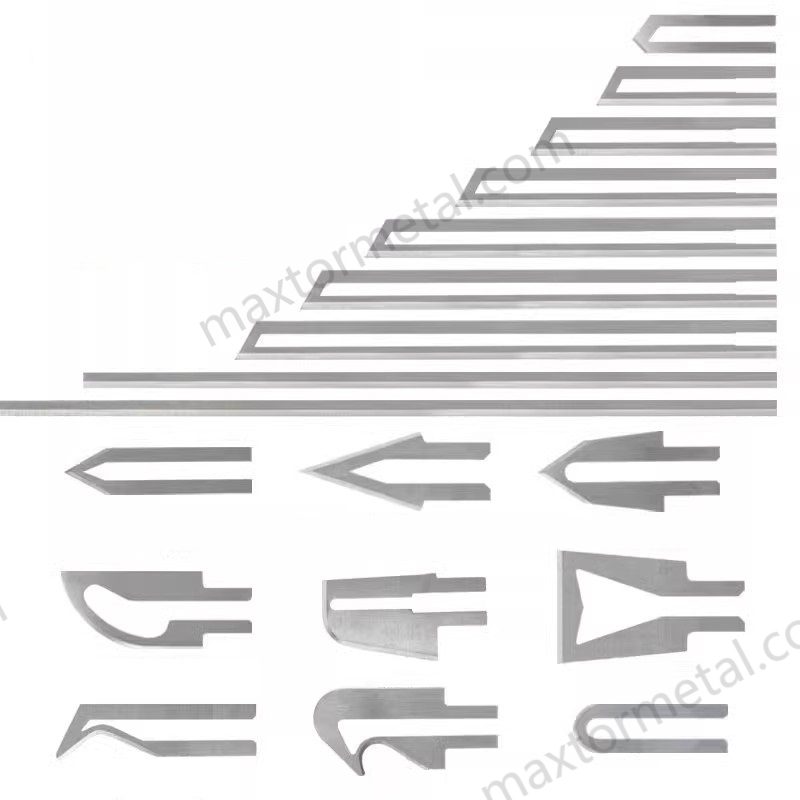
Hot knife blades work in the messy intersection of heat, polymers, and production pressure. When residue builds up, you don’t just get a dirty blade—you get unstable cut quality, more scrap, longer changeovers, and higher total cost of ownership (TCO) through unplanned downtime and premature regrinds. In practice, “clean hot knife blades” means removing carbonized […]
Guide de sélection des lames Thermocutter : Réduire l’effilochage et les brûlures
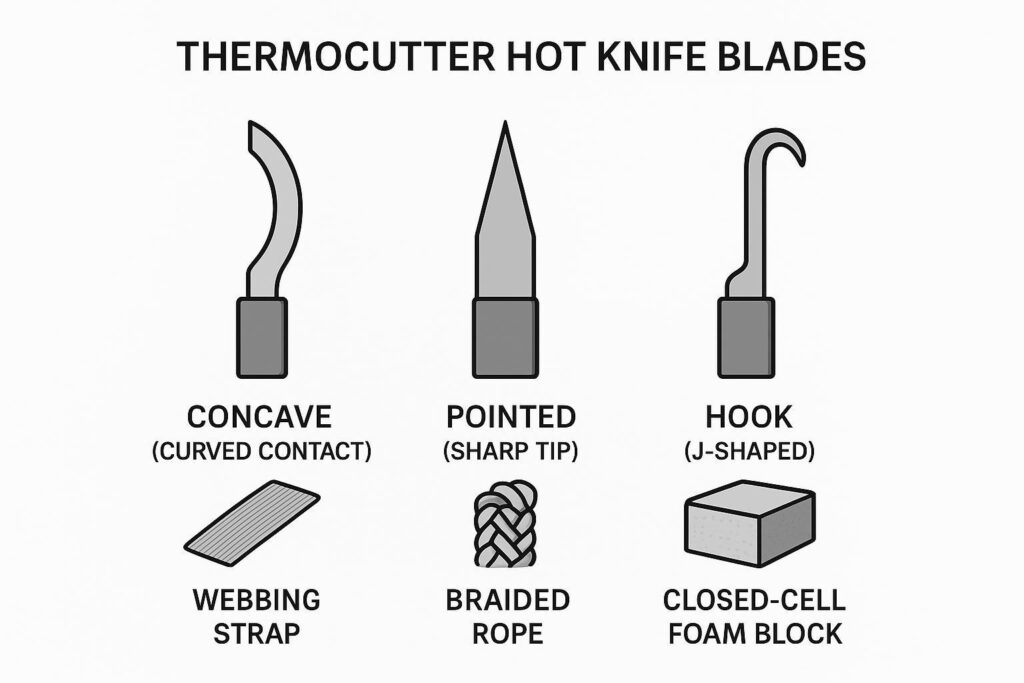
Choosing the right thermocutter (hot knife) blade shape is one of the fastest ways to reduce three problems that drive rework and complaints: frayed edges, browned/blackened cut lines, and over-melt that distorts dimensions. In this guide you’ll learn: Safety note (read first): This guide provides general process guidance for cutting thermoplastics with heated blades. Always validate […]
Comment choisir des lames de rechange pour thermocouteau parfaitement adaptées
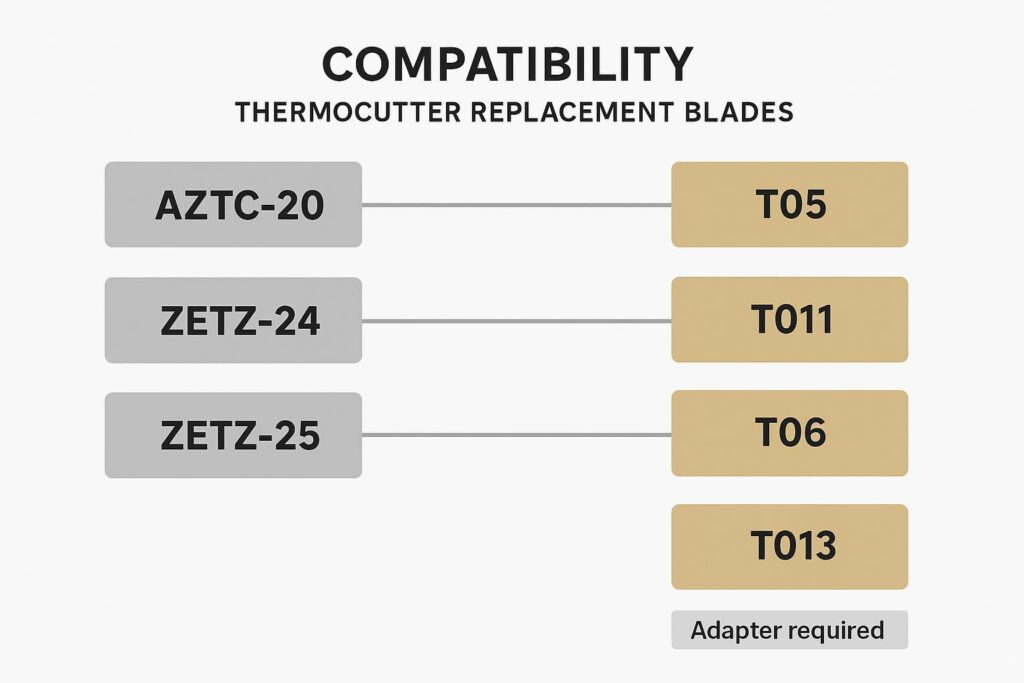
Replacement thermocutter blades look like simple consumables, but they’re often the difference between a clean, repeatable cut and a line that bleeds time in micro-stops, scrap, and rework. When the blade doesn’t fit correctly—or fits but doesn’t match your material and power profile—you’ll see it fast: blackened edges, uneven seals, dragging on multilayer stacks, and […]

 English
  Spanish
  Italian
  French
  Portuguese
  Russian
  German
  Arabic
  Hindi
Hindi  Vietnamese
  Indonesian
  Japanese
  Korean