
Dépannage des variations de largeur : Contrôler la tolérance d'épaisseur cumulative en refendage multilames
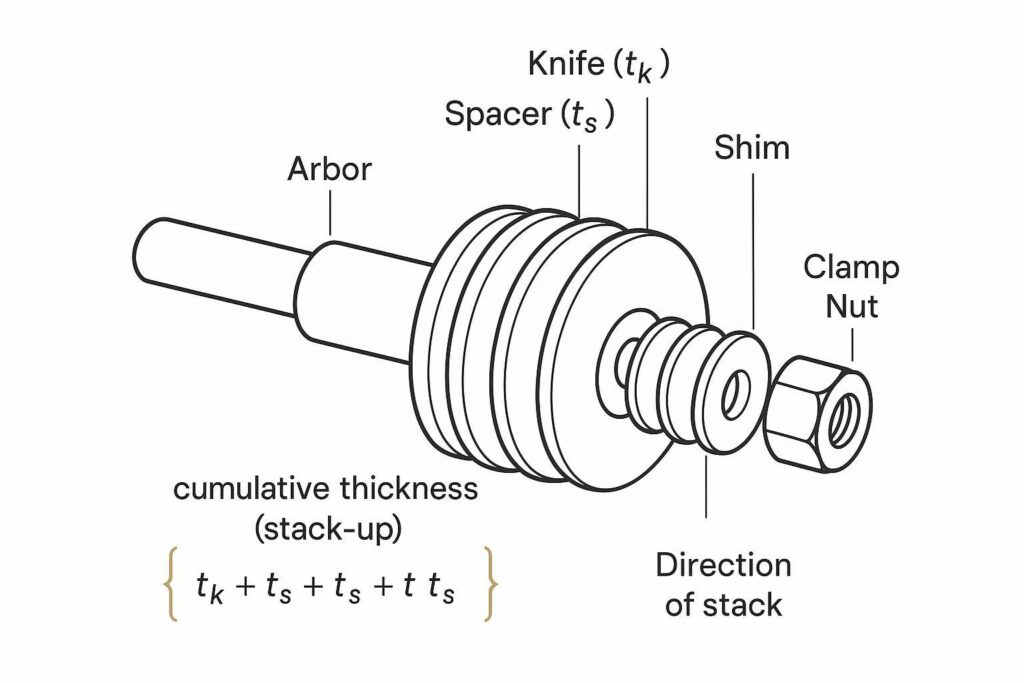
Maxtor Metal builds custom, precision-ground industrial knives for converting and slitting lines. In day-to-day slitting, one of the fastest ways to lose slit-width stability (and OEE) is to ignore what small thickness errors do when you stack many knives, spacers, and shims on one arbor. Basics of cumulative thickness tolerance Definition and terms Cumulative thickness […]
HSS vs Carbure : Associer le matériau et la vitesse pour prolonger la durée de vie du tranchant
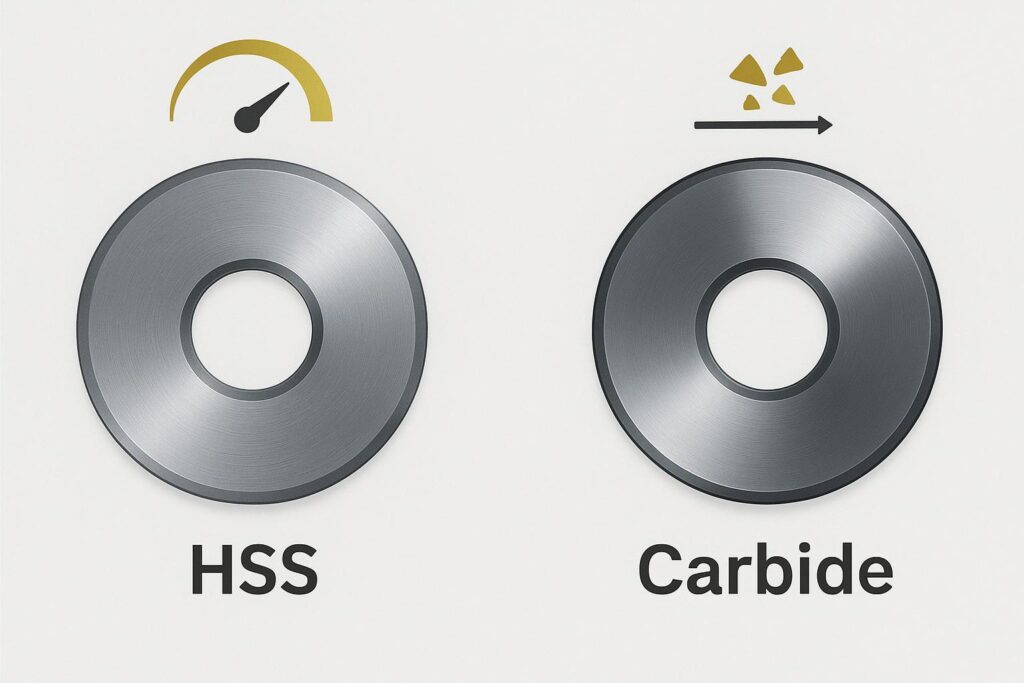
Points clés à retenir : Pourquoi le choix entre HSS et Carbure impacte la durée de vie du tranchant, l'OEE et le TCO. La durée de vie du tranchant détermine la fréquence de vos arrêts pour changer les couteaux, la stabilité de votre bord de coupe et la quantité de rebuts générés avant que l'on ne remarque que la coupe dévie. Sur les lignes de transformation, cela se traduit par trois indicateurs de performance : Les variables clés à enregistrer avant […]
Couteaux circulaires inférieurs : Comment les associer aux couteaux supérieurs pour une coupe sans bavure

Last updated: 2026-05-12 Note: Always verify knife geometry, overlap/pressure, and safety procedures against your OEM slitter manual and holder design. The ranges below are starting points and must be validated on your line at low speed before running production. Shear slitting fundamentals Shear slitting is a controlled “scissor cut” between a top knife and a bottom knife. […]
Rapport sur la longévité des couteaux circulaires en carbure pour le découpage d'électrodes
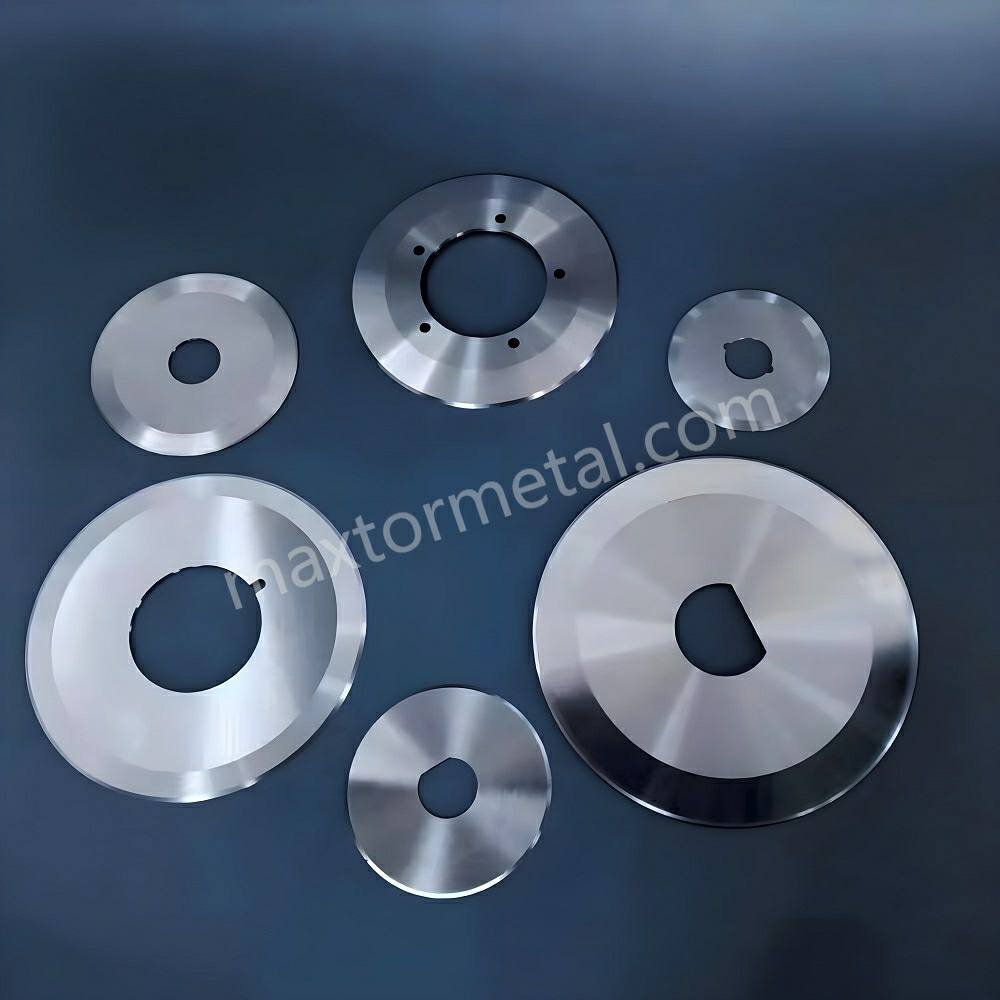
Scope & limitations (read first): This report provides practical measurement and process-control guidance for Li-ion electrode and separator slitting. Target values, settings, and inspection cadence depend on your equipment design (shear/score slit architecture), material system (Cu/Al, coating, separator type), line speed, and measurement capability. Validate any changes through controlled trials on your line and follow your […]
Comment les entretoises de refendage optimisent le contrôle des bavures et la précision de largeur
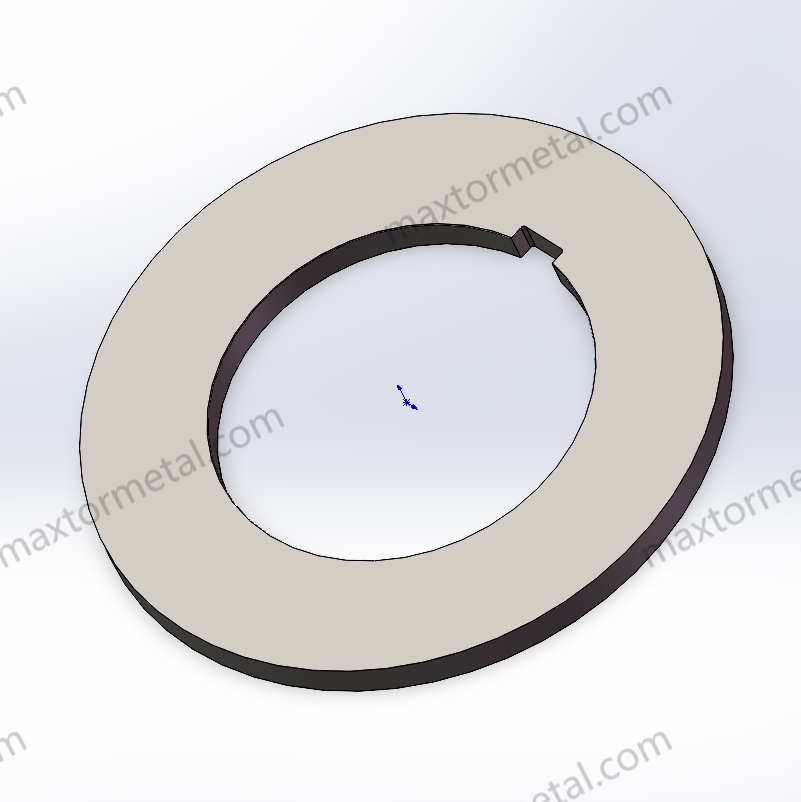
Points clés : Les bavures ne sont pas qu’un défaut esthétique. Dans les films, les feuilles d’aluminium, les textiles et les bandes enduites, une arête rugueuse peut entraîner des ruptures, des plis, un mauvais enroulement et des réclamations clients. Dans les métaux, les bavures peuvent provoquer des blessures lors de la manutention, des problèmes d’ajustement et une usure prématurée lors du formage. La dérive de la largeur de la fente est tout aussi coûteuse. Si vous ne pouvez pas maintenir la largeur […]
Solutions instantanées contre les bavures de refendage plébiscitées par les responsables de production
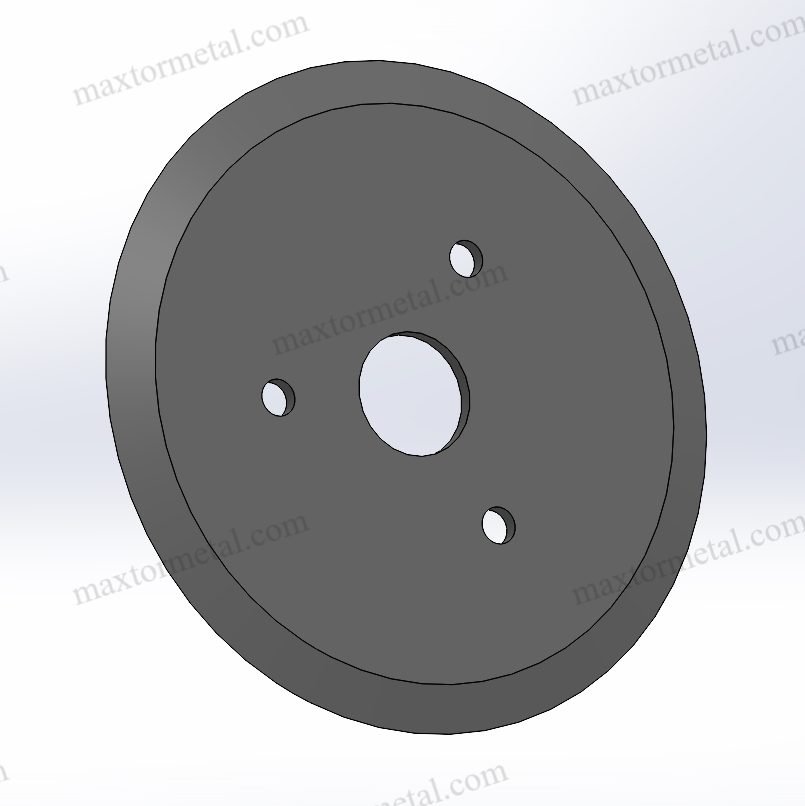
Slitting burrs show up as a raised lip, fuzzy edge, dusting, or “chewed” strands along the slit—often worst on one side of the web. They don’t just look bad; they drive scrap (edge trim, rejects), downstream jams, and unplanned stops when operators have to chase a moving setup. The good news: many burr spikes are […]
Guide de réglage du coupe en cisaille pour des bords nets et des lames durables
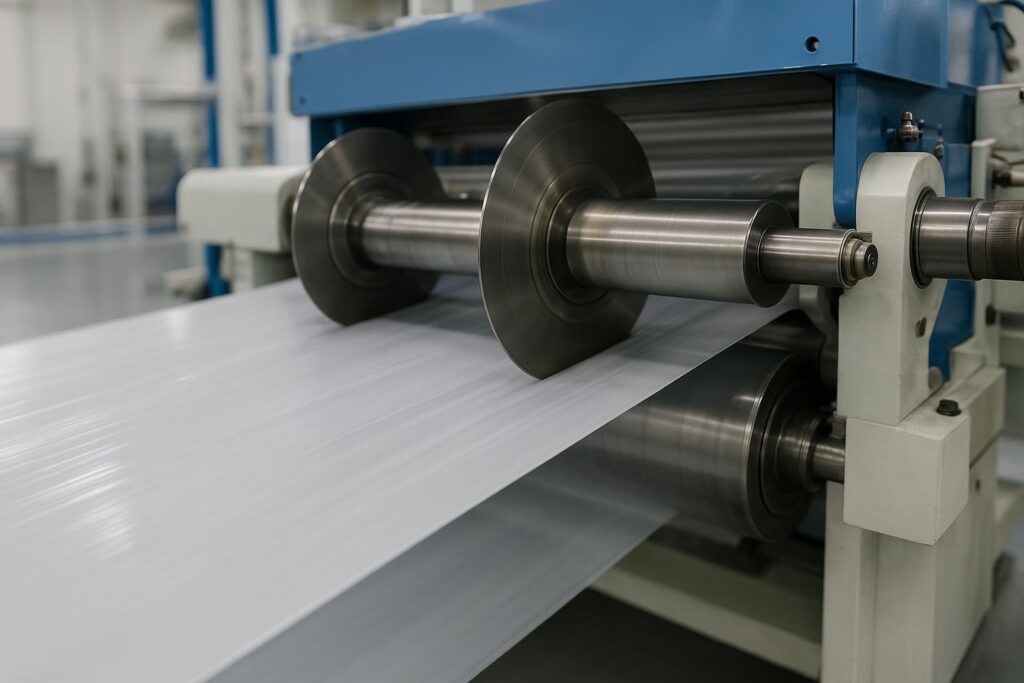
If you’re chasing cleaner edges and longer knife life, the biggest wins usually don’t come from “sharper knives” alone. They come from a repeatable setup order, tight verification, and a logbook that makes your parameter windows obvious by SKU. This guide is written as a shop-floor checklist: what to set, what to verify, and what to record […]
Comment choisir un fabricant de lames de trancheuse pour un approvisionnement à long terme
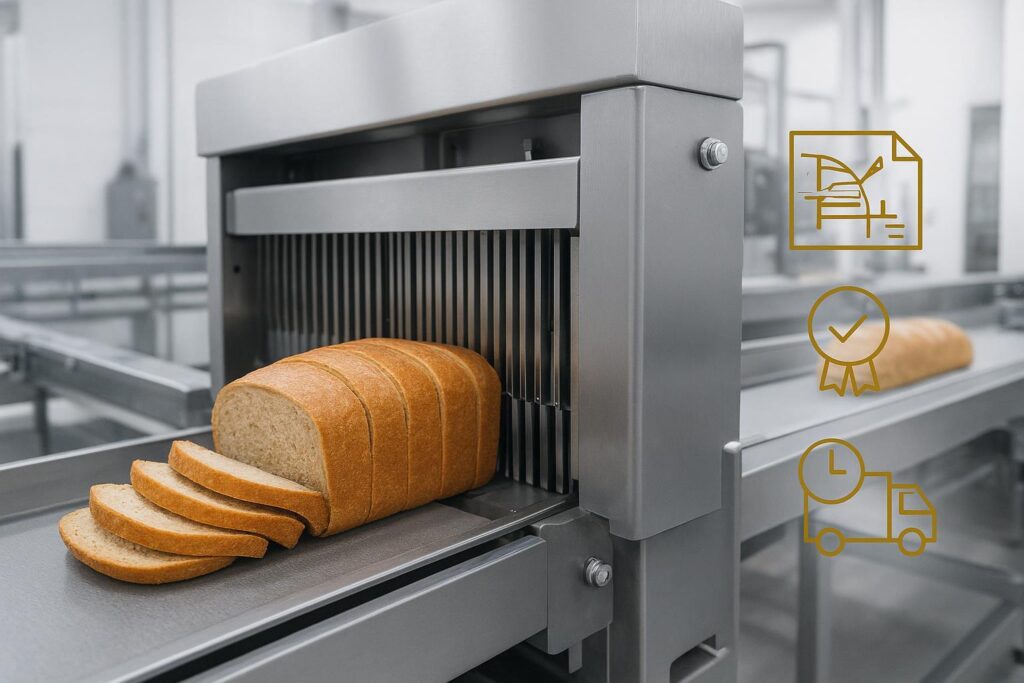
Choosing a bread slicer blade manufacturer is a long-term operations decision, not just a spare-parts purchase. If you qualify the supplier correctly—engineering capability, QA/compliance discipline, and supply reliability—you get cleaner slices, fewer crumbs and defects, longer run time between changeovers, and a lower total cost of ownership (TCO). This guide is written for industrial bread […]
Quand choisir des lames de trancheuse à pain revêtues de PTFE par rapport aux revêtements durs
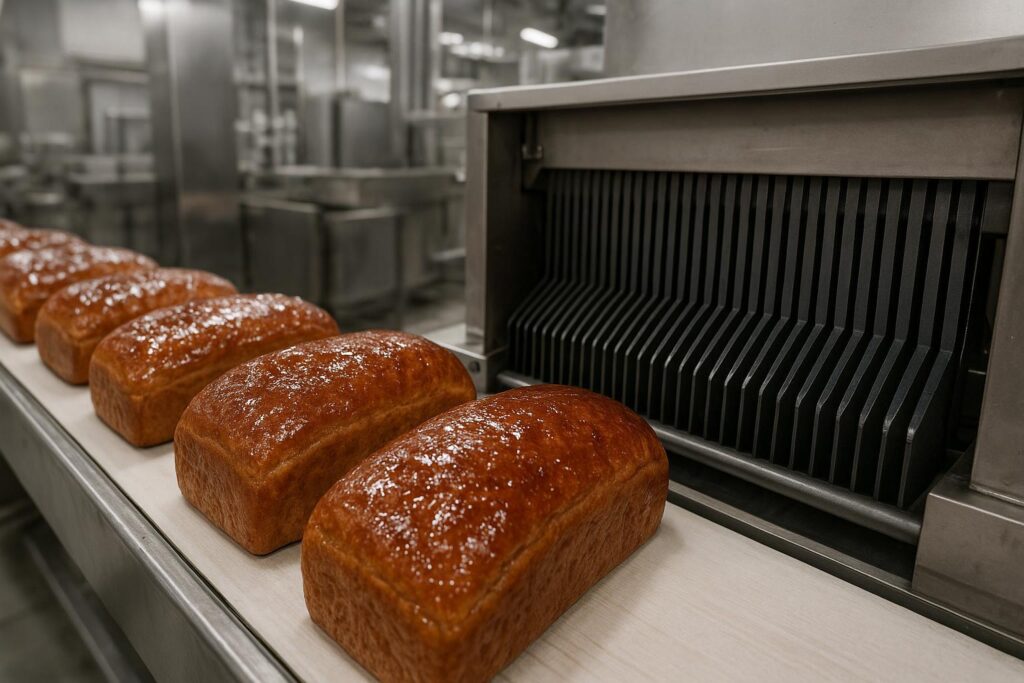
How PTFE helps on sticky breads PTFE (often called Teflon) is a non-stick, low-friction surface. In bread slicing, that matters when your biggest enemy isn’t “dullness” yet—it’s adhesion: sugars, glazes, warm crumb, and moisture building up on the blade path until the machine starts tearing, dragging, or jamming. In other words: if you’re evaluating non-stick coating for bread […]
Comment la denture et les revêtements peuvent réduire le gaspillage de miettes de pain en usine
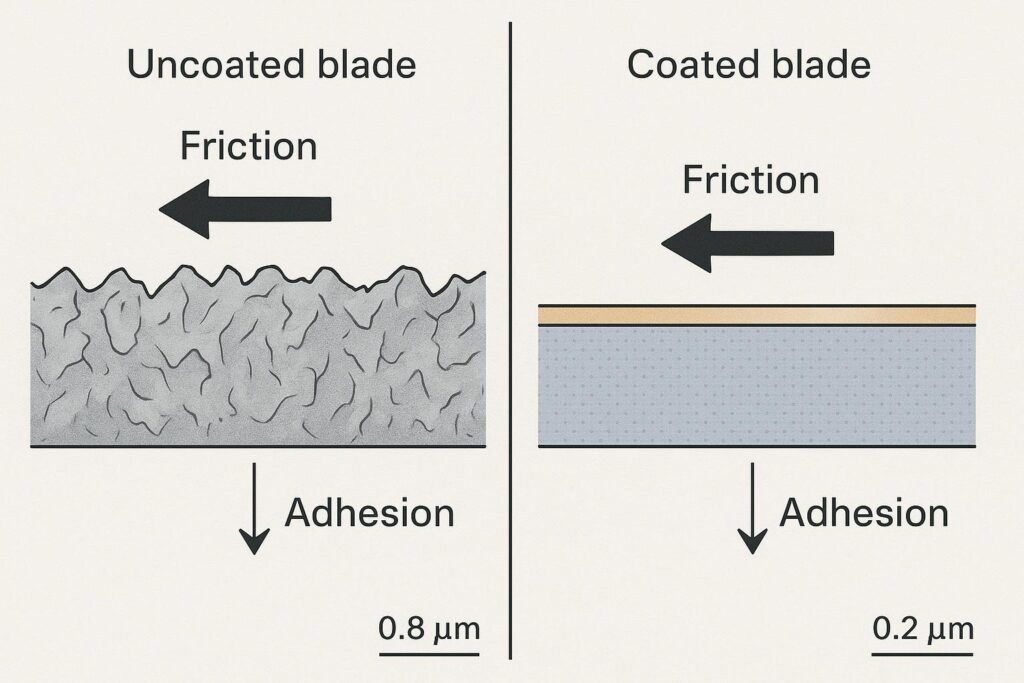
Bread crumb waste is easy to dismiss as “just housekeeping.” On an industrial slicing line, it’s a yield leak, an OEE problem, and a food-safety risk all at once. Disclosure: MAXTOR METAL supplies industrial cutting blades. The principles in this article are vendor-agnostic and focus on measurable process controls (crumb mass, thickness tolerance, downtime) so you […]

 English
  Spanish
  Italian
  French
  Portuguese
  Russian
  German
  Arabic
  Hindi
Hindi  Vietnamese
  Indonesian
  Japanese
  Korean