
Granulazione a filo vs. ad anello d'acqua: scelta in base al materiale e al TCO
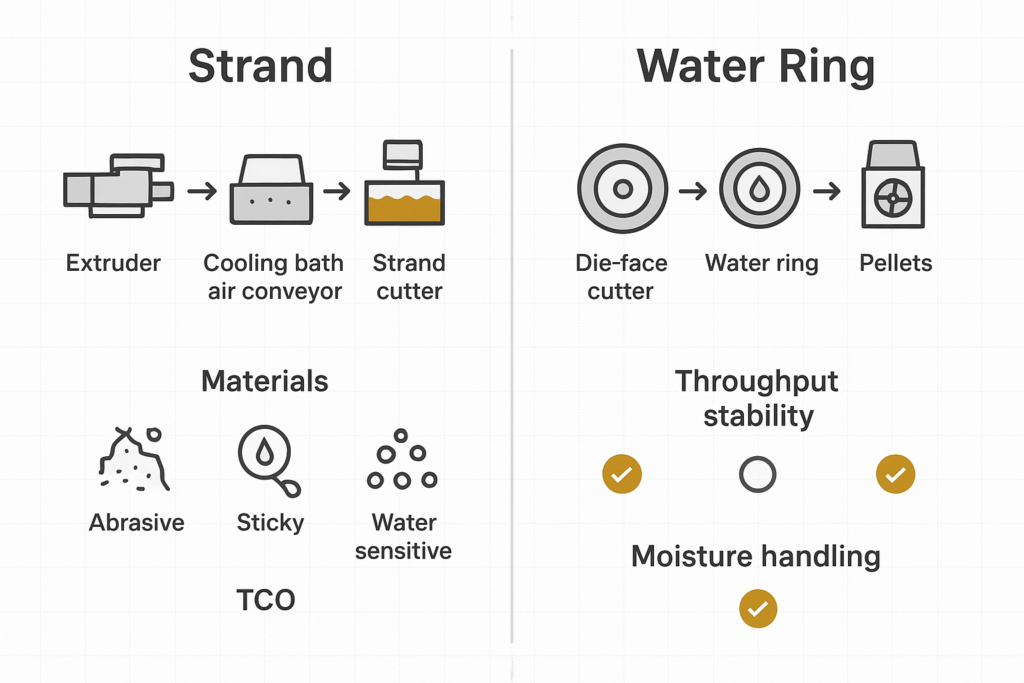
Choosing between strand pelletising and water ring pelletising isn’t just a preference for “wet” or “dry” cutting. It changes what controls pellet quality, what fails first during a disruption, and where your real cost-per-tonne sits (wear parts, drying, changeovers, and scrap). In UK compounding and recycling—especially when you’re running high-fill, glass fibre, mineral-loaded, or high-recycled-content […]
Migliori pratiche di revisione dei rotori per granulatori per linee a filo
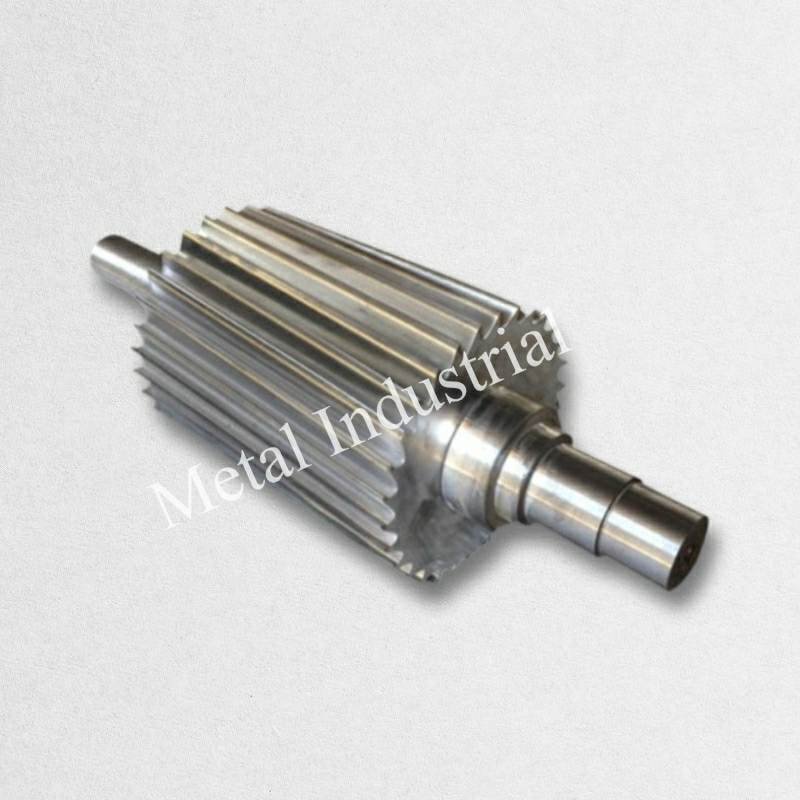
By Tommy Tang, Senior Sales Engineer, Nanjing METAL Industrial (12 years in industrial cutting tools and refurbishment supply programs; certifications: CSE, CME, Six Sigma Green Belt, PMP). Last updated: 2026-04-02. Revision history Why trust this guide This best-practices checklist is based on common failure modes and QA controls used in pelletizing and industrial cutting applications. […]
Numero di denti della fresa rotativa per velocità di linea e lunghezza del granulo
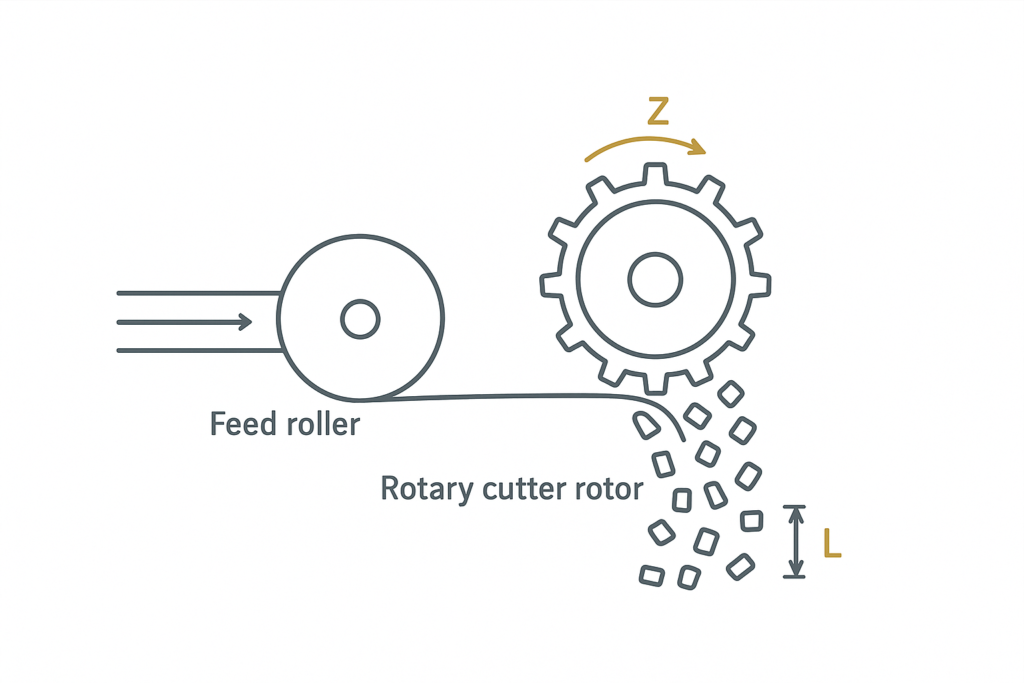
Rotary cutter tooth count (how many knives/teeth are on the rotor) is one of the fastest levers you have for stabilising pellet length on a strand pelletiser — and it’s the cleanest way to stay within a realistic cutter RPM ceiling. Get it wrong and you’ll see it immediately: long/short variation, tails, more fines, and […]
Checklist di sicurezza per il cambio della fresa rotativa nei granulatori
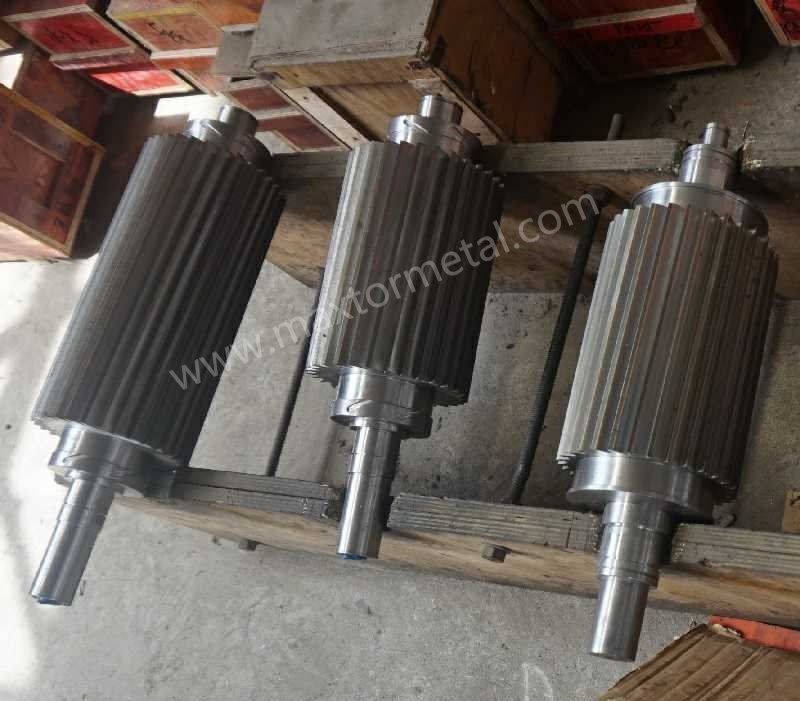
This checklist is for strand pelletisers (pull‑strand / strand-cut systems) — not underwater pelletising. If you’re looking for a strand pelletiser changeover sequence your team can run the same way every time, start here. Scope & responsibility (read first): This checklist is written for strand pelletisers and focuses on the rotary cutter / knife changeover. It does not replace your OEM manual, site risk assessment, […]
Rigenera i macchinari obsoleti con ricambi di frese rotative personalizzate
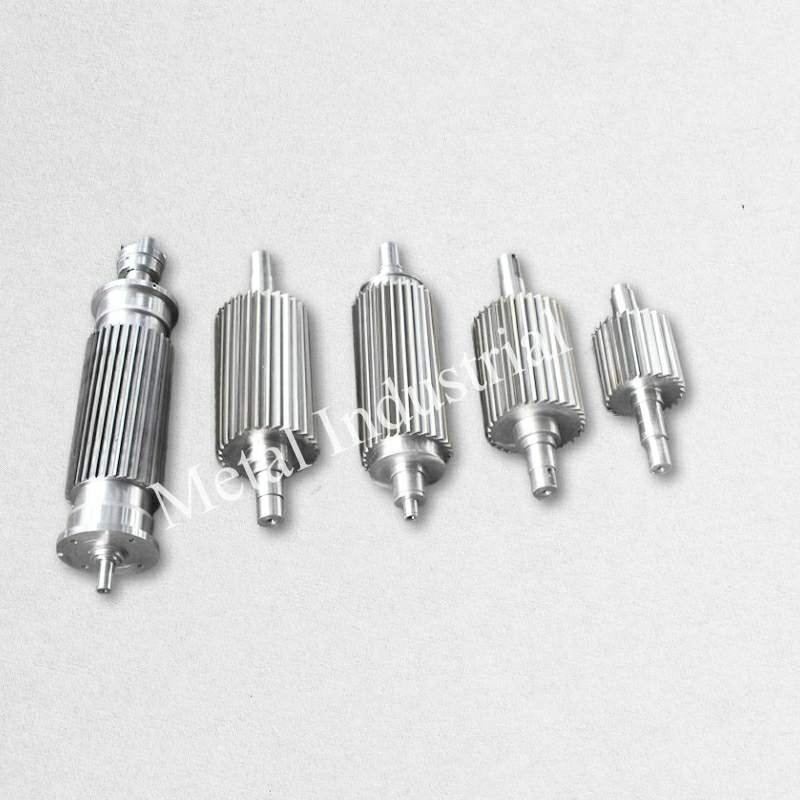
Last updated: 2026-03-30 Safety & compliance note (UK): This article provides general best-practice guidance for rotary cutter replacements. It does not replace your site risk assessment, OEM documentation, or competent engineering judgement. Always verify guarding clearances, runout limits, and safe systems of work under PUWER before returning equipment to service. Disclosure: This article references MAXTOR METAL products […]
Frese rotative: Guida definitiva alla granulazione a filo d'acqua
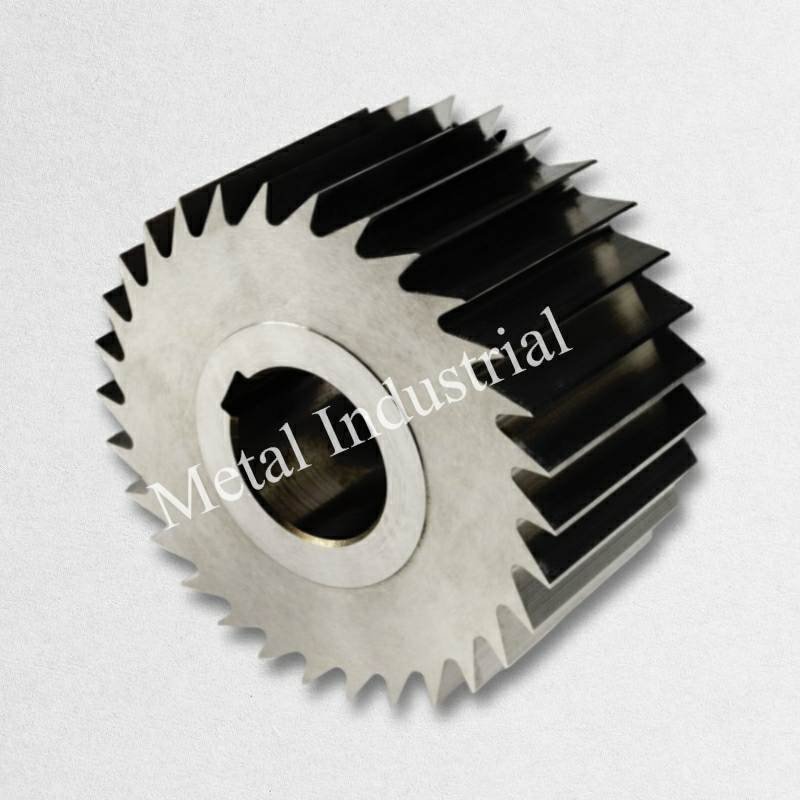
This guide is for compounding leaders running water‑strand pelletising lines who need dependable cut quality with fewer changeovers and predictable costs. You’ll learn the technical requirements that stabilise pellet length and shape, how to vet a China rotary‑cutter/knife factory with confidence, what to ask for in QC documentation, and how to model landed cost and […]
Ridurre i fini della granulazione: cinque tattiche da officina
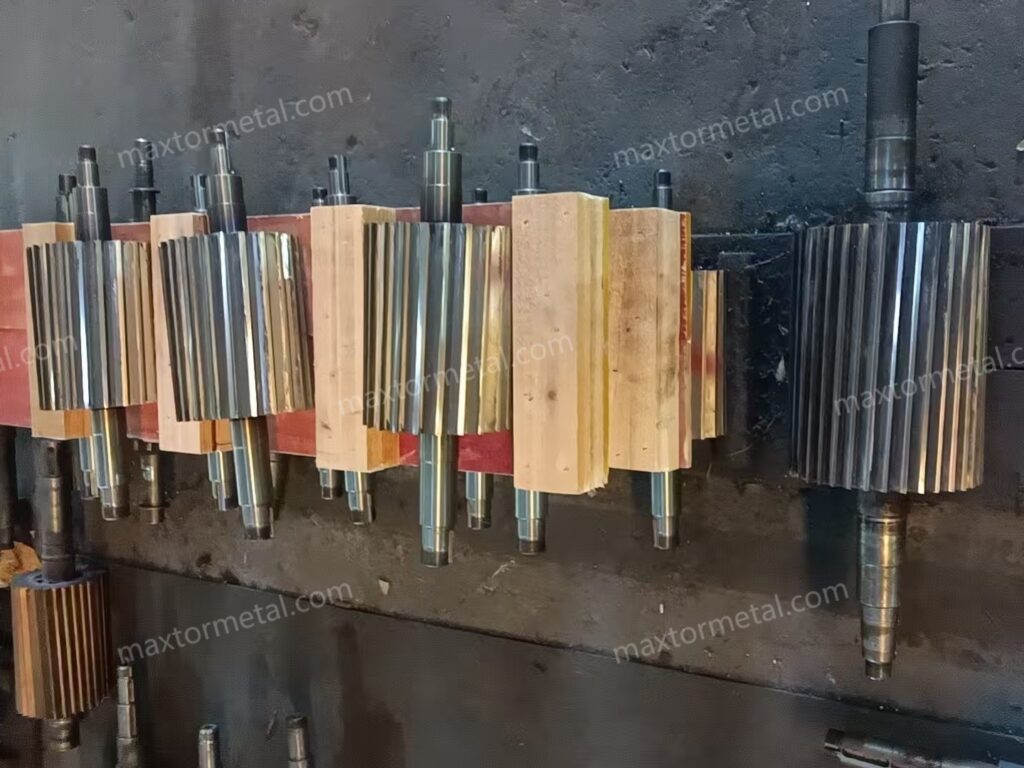
Fines and dust rise on water‑strand pelletising lines when three things overlap: unstable cutting mechanics, strands entering the cutter with residual surface water that promotes slippage, and die‑face wear that encourages tails and chipping. Mixed regrind with moisture fluctuation makes each of these more likely: brittle particles within the melt favour micro‑fracture at the cut, […]
Rotore per granulatore a sbalzo: Guida al cambio rapido di colore
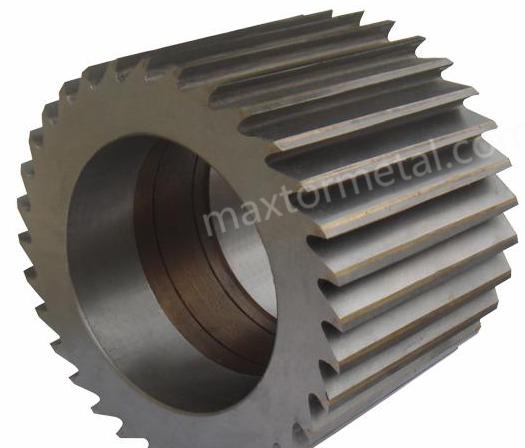
A cantilevered pelletizer rotor on a water‑strand line uses a swing‑open or slide‑open cutting chamber so the rotor, bed knife, and feed area are exposed in seconds, without dismantling the front bearing set. Fewer fasteners and components stand between you and the cutting zone, which means faster cleaning, quicker knife swaps, and less time for […]
Come ottenere l'uniformità dei granuli — Configurazione della granulazione a filo d'acqua
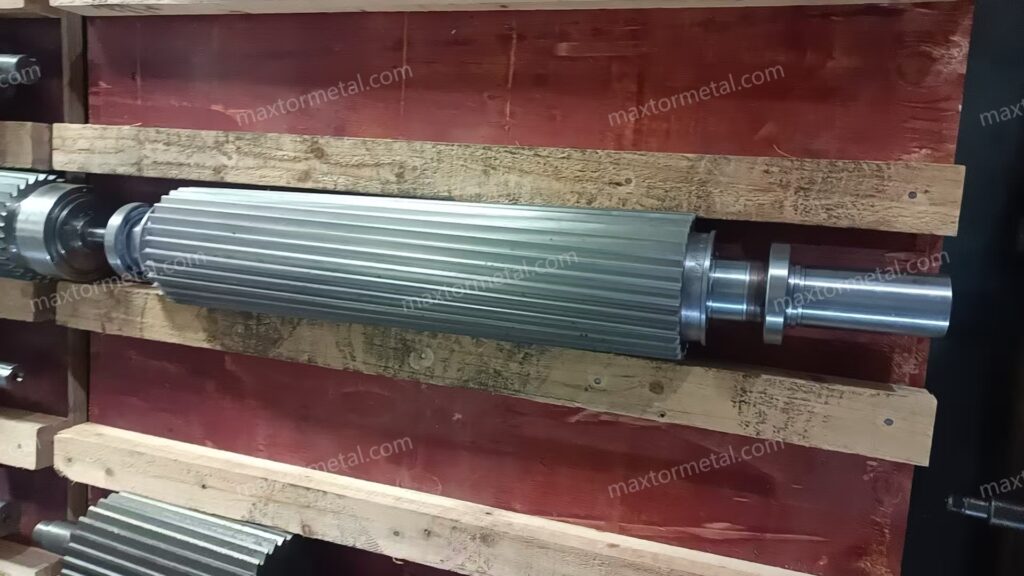
Injection moulding needs pellets that feed cleanly, melt uniformly, and meter consistently shot after shot. That means tight pellet length control, minimal fines and tails, and low variability in pellet weight and rheology. Strand lines vary because several stations—melt delivery and die, water bath, dewatering, and the cutter—each add their own tolerances and drift. Stabilising […]
Guida definitiva: Frese rotative a lame inserite per granulazione a filo d'acqua
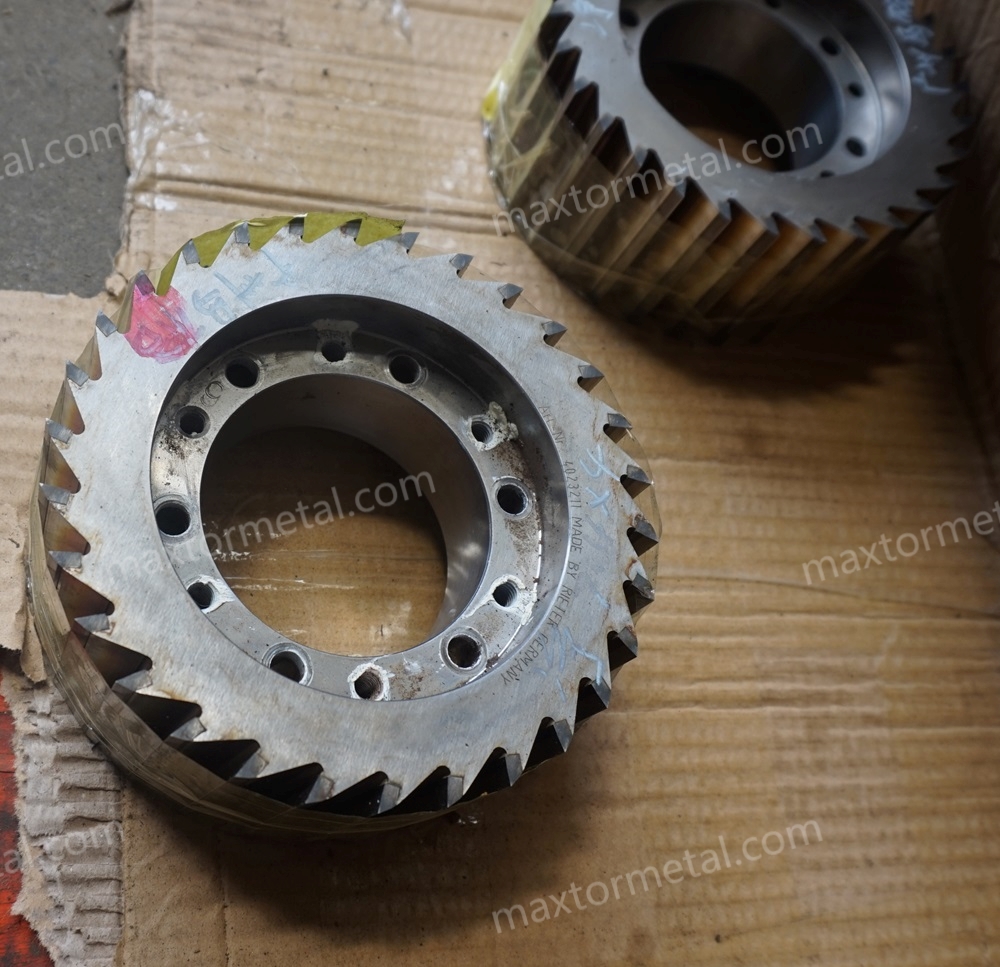
Water‑strand pelletising is a workhorse in UK compounding and recycling. Yet in abrasive, high‑fill and recycled formulations, solid rotary knives wear fast, changeovers drag on, and pellet quality drifts—fines and tails creep up, and operators chase clearances. Inserted blade rotary cutter designs attack the root causes by letting you index or replace edges in situ, […]

 English
  Spanish
  Italian
  French
  Portuguese
  Russian
  German
  Arabic
  Hindi
Hindi  Vietnamese
  Indonesian
  Japanese
  Korean