

By Tommy Tang (Senior Sales Engineer, Nanjing METAL Industrial). 12 years in slitting & industrial cutting applications. Certifications: CSE, CME, Six Sigma Green Belt, PMP.
Introduzione
Glass fiber–reinforced polymers (GFRP) are unforgiving on cutting edges. Hard, silica-based fibers abrade the knife, rounding the edge and seeding micro‑chips that show up as tails and later break into fines. As fines rise, dryers clog faster, operators chase quality drift, and unplanned stoppages creep in. The net effect: shortened runtime between regrinds and replacements.
Tungsten carbide inlaid rotary cutters counter this with a wear‑stable WC–Co tip bonded to a tougher steel body. The carbide inlay resists abrasive rounding far better than HSS, while the steel backing absorbs impact events common on strand/traction pelletizers. When paired with disciplined setup and resharpen SOPs, plants typically see longer continuous runs, steadier pellet shape, and fewer emergency stops.
What you’ll learn here: how to choose the right inlaid cutter for GFRP duty, field‑tested operating practices (gap, alignment, geometry, grade), the QA documents to request, and the KPIs/TCO model to validate gains on your line.
Punti chiave
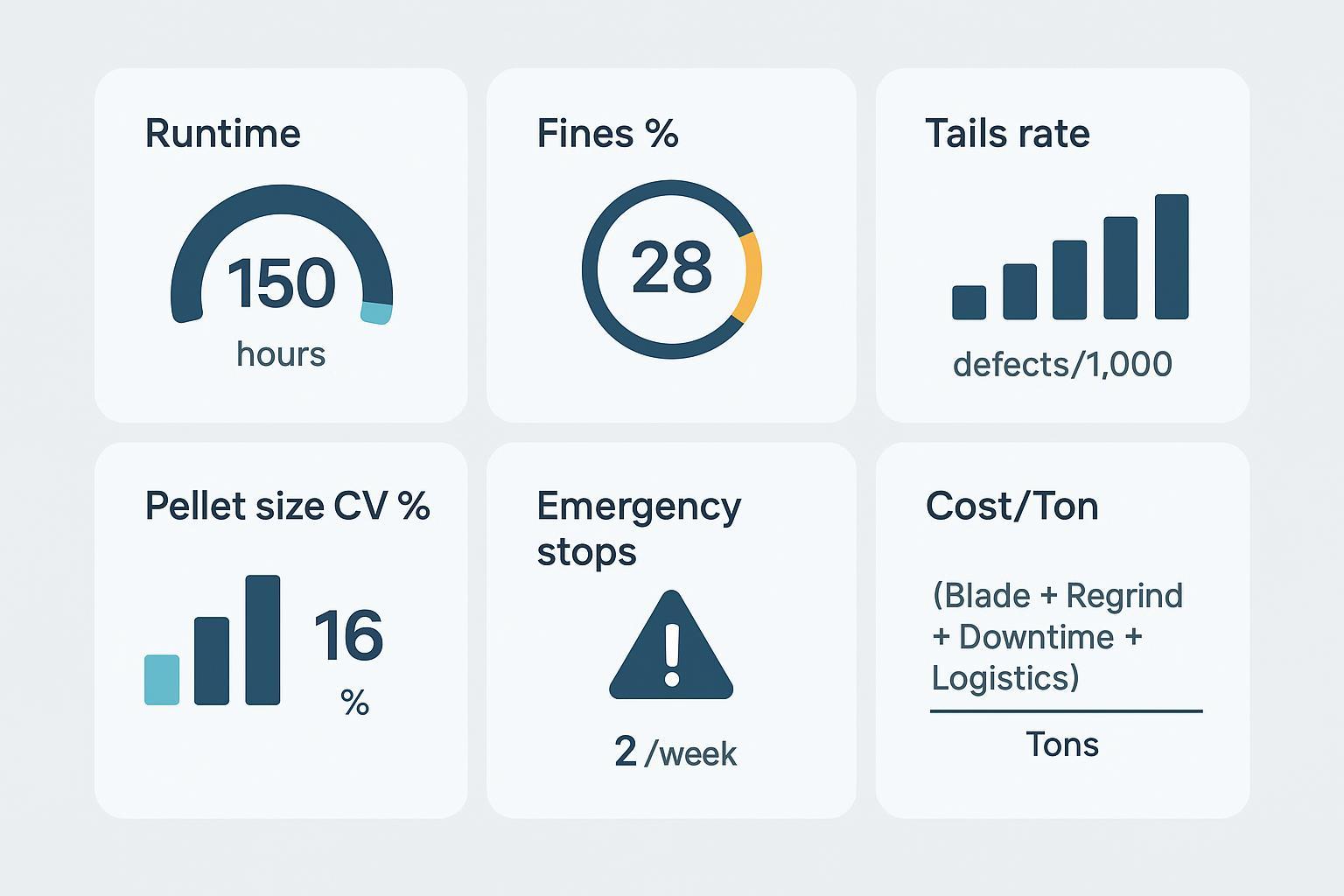
- Hero KPI: maximize mean runtime between scheduled regrinds/replacements; use fines% and tails rate as early‑warning indicators.
- Tungsten carbide inlaid rotary cutters maintain a sharper effective edge in abrasive service, while the steel body mitigates chipping risk vs. solid carbide.
- For strand pelletizers, control knife‑to‑die gap within a tight window (~0.03–0.08 mm; confirm per OEM) and verify rotor runout/seat flatness to stabilize cuts.
- Match WC–Co grade and micro‑geometry (hone/chamfer) to fiber load and impact risk; set resharpen thresholds tied to fines% delta and edge radius.
- Standardize procurement: dimensional tolerances, hardness targets, CMM and hardness records, and full traceability; plan a 4–8 week A/B pilot and compute cost/ton.
Why Tungsten Carbide Inlaid Rotary Cutters
Abrasive wear vs HSS and solid carbide
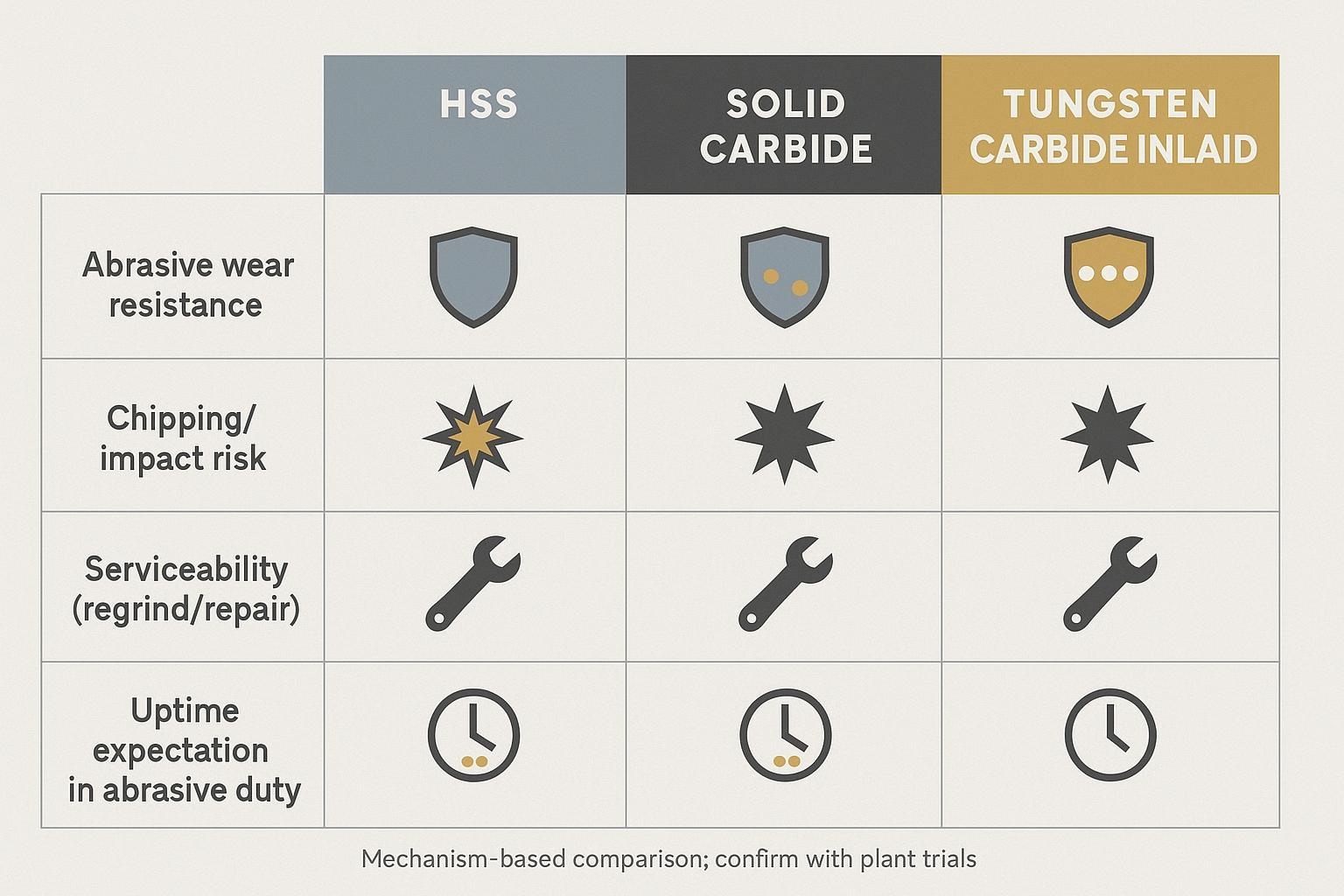
HSS loses its edge quickly in GFRP as glass fibers plow and micro‑abrade the cutting radius, accelerating tails and fines. Solid carbide holds hardness but is brittle; a strand snap or rethread bump can chip corners, forcing premature changeouts. Inlaid carbide places a high‑hardness WC–Co tip at the wear zone and supports it with a tough steel body, combining wear life with impact tolerance. General cutting literature reports substantially longer life for carbide‑tipped vs HSS in abrasive media, consistent with shop‑floor experience in plastics converting; see mechanism context in the 2018 brief from American Cutting Edge and a 2025 explainer on HSS vs TCT vs PCD in cutting tools for why carbide tips retain sharpness better in abrasive duty (American Cutting Edge overview, 2018).
Additionally, erosive studies show glass fibers produce significant wear compared with some carbon fiber systems, reinforcing the abrasive‑duty premise (Mendoza et al., 2021).
Inlay construction: wear edge, tough body
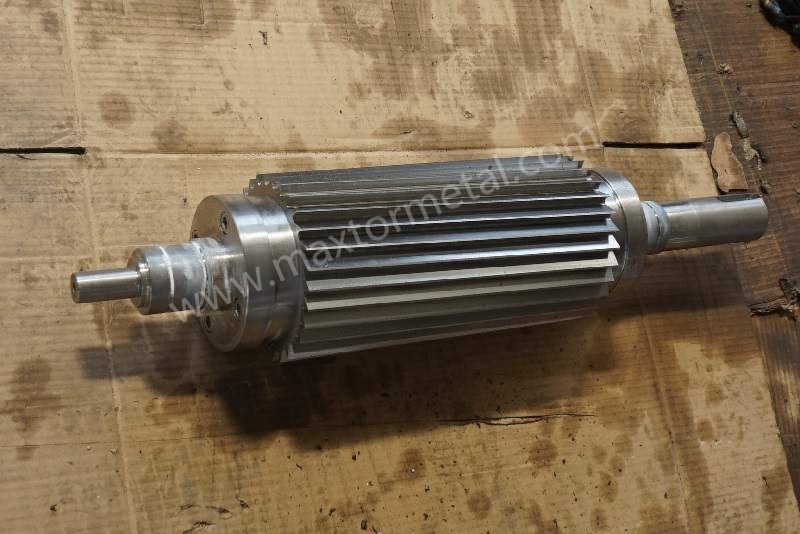
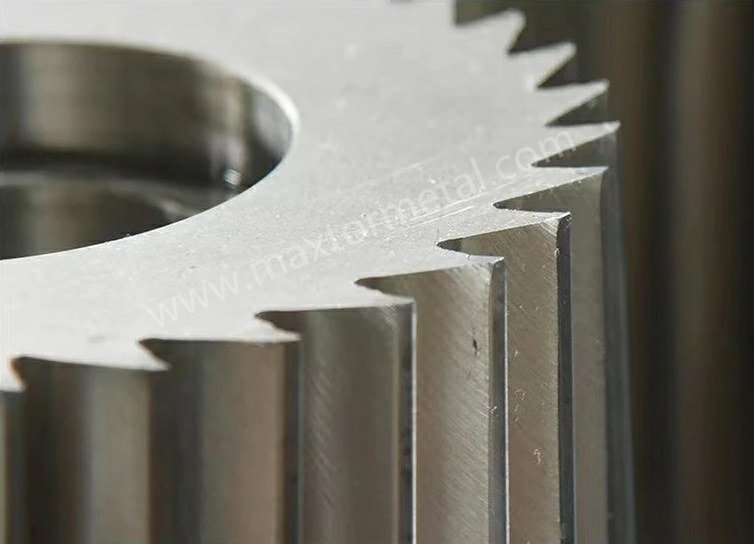
A brazed inlay concentrates extremely hard WC–Co at the cutting line (typical HRA ~90–94; ≈1400–1800 HV) while the backing steel is heat‑treated for support and shock resistance (commonly HRC mid‑40s to upper‑50s depending on geometry and regrind allowance). Submicron WC grades improve edge retention; slightly higher Co content can trade a bit of hardness for toughness on impact‑prone lines. See materials libraries for hardness ranges and grade behaviors (e.g., Hyperion materials resources, accessed 2025–2026: Hyperion materials library). For pelletizer‑specific values, validate with your supplier’s QA.
Expected gains: runtime, fines, cost/ton
Mechanistically, a more wear‑stable edge maintains a clean shear plane longer. That reduces tails that later fragment into fines, cuts down dryer/filter cleanouts, and extends mean runtime—the hero KPI. Secondary effects typically include steadier pellet size CV% and a lower emergency‑stop rate. Because downtime drives cost, improving runtime often yields a favorable cost/ton even if blade unit cost rises. Public, pelletizer‑specific multipliers are scarce; treat improvements as hypotheses to test via the trial plan below. Troubleshooting guides tie tails/fines directly to cut quality, supporting this linkage (Plastics Technology underwater pelletizing troubleshooting, 2020).
Operating Practices for Clean Cuts
Knife-to-die gap and alignment
For strand pelletizers, start by blue‑checking or lightly contacting the die face, then back off to a small, uniform clearance. Typical practitioner windows are about 0.03–0.08 mm with control tolerance around ±0.02–0.05 mm; confirm exact setpoints and methods per your OEM manual. Verify rotor runout with a dial indicator at the cutting circle; aim for low TIR and adjust eccentric mechanisms evenly. Uneven gap shows up first as localized tails and fines spikes. Field troubleshooting consistently links improper gap to pellet defects (Plastics Technology, 2015).
Convert these quick checks into SOP steps: measure seat flatness across the knife contact area to prevent rocking; torque fasteners in sequence; recheck gap hot vs. cold to account for thermal growth; and after the first minutes of run‑in, re‑verify contact marks and back‑off evenly.
Edge geometry and carbide grade match
Match geometry to fiber content and impact risk. For high glass loadings (e.g., 20–50% GF), a submicron WC–Co grade with a small edge hone or micro‑chamfer reduces micro‑chipping while maintaining sharpness. On lines with frequent strand breaks or rethread bumps, consider a slightly tougher grade (higher Co) and a conservative micro‑chamfer to blunt peak stresses. Keep rake and relief angles within OEM norms; extreme sharpness without a hone can chip prematurely in GFRP.
Process stability and resharpen thresholds
Tie maintenance to data, not guesswork. Two practical triggers:
- Fines% rises >20% vs. your stable baseline (same polymer, same throughput);
- Edge radius growth approaches ~0.2 mm on magnified inspection or profilometry. Both indicate the shear plane is degrading. Because tails become fines with handling and drying, react before tails proliferate (Plastics Technology troubleshooting, 2020). Standardize the inspection interval (e.g., every 2–4 hours initially, then extend as data stabilize).
Selection & Compatibility

Match resin, fiber content, impact risk
Think in terms of abrasion vs. shock. High GF content and mineral‑filled blends call for harder, finer‑grain WC inlays and reinforced micro‑geometry. If your line sees frequent strand snaps, prioritize toughness (slightly higher Co) and consider geometry that diffuses impact (micro‑chamfer). For cleaner, lower‑fill resins, sharper edges with minimal hone can improve surface finish.
Tolerances, flatness, runout for OEMs
OEM brochures emphasize precise, often toolless gap adjustment but rarely publish numeric limits. In practice, maintenance teams target low rotor TIR at the cutting circle and tight seat flatness to keep the gap uniform. As pragmatic starting points used in precision cutting work (always confirm the exact method and acceptance limits in your OEM manual/service documentation):
- Rotor runout: strive for ≤0.05–0.10 mm TIR at the cutting circle;
- Knife seat flatness: ≤0.02–0.05 mm across the contact area.
These are typical practice ranges to validate per model; OEM literature often describes adjustment mechanisms without publishing numeric limits publicly (see MAAG’s T‑Series strand pelletizer overview (MAAG, 2019), IL Scheer S3500 brochure (MAAG, 2019)e il Coperion SP EN/PURE brochure (Coperion, 2018)).
Coatings and when they help
I rivestimenti PVD possono rallentare ulteriormente l'usura abrasiva e ridurre l'incollaggio. Opzioni pratiche:
- TiN/TiAlN per la robustezza termica a temperature di pellettizzazione più elevate;
- Rivestimenti simil-DLC per un comportamento a bassa temperatura e bassa adesione. I fornitori documentano che i rivestimenti abbinati migliorano la durata del tagliente in condizioni di lavoro abrasive/adesive; scegliere in base alla finestra di temperatura e alla chimica della resina (Panoramica del rivestimento DURIT; si veda anche la guida generale sulle lame taglierine per la selezione del rivestimento di American Cutting Edge, periodo 2018-2020).
Procurement & Documentation
È qui che molti programmi falliscono o decollano. Bloccate le specifiche e la tracciabilità fin dall'inizio, quindi convalidate al ricevimento.
Esempio neutrale di integrazione delle capacità del fornitore: alcuni produttori di coltelli personalizzati per pellettizzatrici possono produrre frese rotative con inserti in carburo di tungsteno su disegno e fornire documentazione di controllo qualità come schede dimensionali CMM, note sul trattamento termico e registri di durezza. Ad esempio, MAXTOR METAL offre lame industriali personalizzate con opzioni con riporto in carburo e condivide approfondimenti di processo sul trattamento termico e sulla selezione dei materiali (Knowledge Base Source). Vedere la panoramica dei prodotti e la guida al trattamento termico per il contesto: MAXTOR METAL products E guida al trattamento termico delle lame rotative per cesoia. Richiedere documenti di controllo qualità specifici per ogni ordine; non affidarsi esclusivamente alle panoramiche web.
Checklist delle specifiche: dimensioni, durezza, materiali
- Disegno con tutte le quote critiche e le tolleranze (GD&T dove necessario);
- Grado dell'inserto (WC–Co) e intervallo di durezza nominale (ad es. HRA e/o HV), classe di grano (submicronico/micronico);
- Grado dell'acciaio di supporto e durezza target (intervallo HRC) con tolleranza di riaffilatura per altezza del tagliente;
- Specifica della geometria del tagliente (dimensione della raccordatura o micro-smusso), angoli di spoglia inferiore/superiore;
- Tipo di rivestimento e spessore se applicato;
- Criteri di bilanciamento/eccentricità (runout) se il gruppo rotore è incluso.
Registri di qualità: CMM, durezza, tracciabilità
- Rapporto CMM con l'elenco di tutte le dimensioni critiche e i risultati di planarità/eccentricità;
- Registri di durezza: Vickers per la punta in carburo, Rockwell C per il supporto (notare che le conversioni HV↔HRC sono approssimative e dipendono dal metodo);
- Certificato di trattamento termico con numeri di lotto/colata; tracciabilità completa del lotto che collega le lame ai certificati dei materiali e ai risultati delle ispezioni.
Esempio di micro-workflow: durante l'ispezione del primo articolo (FAI), eseguire i controlli indicati di seguito prima dell'installazione. Un fornitore in grado di confezionare questi elementi come pacchetto FAI (revisione del disegno, CMM, durezza, registro del trattamento termico) ridurrà il ciclo di accettazione.
| Elemento di controllo FAI | How to measure | Pass criteria | Registro da conservare |
|---|---|---|---|
| Altezza e sporgenza del tagliente rispetto alla sede | Calibri/micrometro; confrontare con il disegno e il riferimento della sede | Entro la tolleranza del disegno; uniforme su tutti i coltelli | Scheda FAI + foto della configurazione di misura |
| Planarità e rettilineità della sede | Piano di riscontro in granito + spessimetro o planarità CMM; verificare l'assenza di oscillazioni | Entro la tolleranza di planarità; nessuna oscillazione sulla sede | Rapporto CMM o registro di planarità |
| Durezza entro l'intervallo di specifica | HV per la punta in carburo; HRC per l'acciaio di supporto (stesso metodo per ogni lotto) | Conforme all'intervallo specificato per la punta e il supporto | Rapporto di durezza + certificato di trattamento termico (n. lotto/colata) |
Logistica: tempi di consegna, imballaggio, importazione
- Confermare i tempi di produzione e di transito con margini per i cicli di riaffilatura;
- Imballaggio che protegge le punte fragili (protezioni per i taglienti, schiuma, carta VCI, essiccanti), con etichette di movimentazione;
- Per le importazioni, assicurarsi che i codici doganali (HS), l'accuratezza della fattura commerciale e gli eventuali accordi IVA siano chiari; richiedere foto dell'imballaggio prima della spedizione.
KPIs & TCO Model
Qualità del granulo: polveri, code, CV%
Monitorare i difetti dei granuli come indicatori principali. Definire le polveri % in peso dopo l'essiccazione o tramite filtrazione dell'acqua a circuito chiuso; standardizzare le dimensioni del campione e la tempistica. Registrare la presenza di code per 1.000 granuli con un semplice controllo visivo/ingrandito. Calcolare il CV% delle dimensioni dei granuli (diametro o massa) per quantificare la stabilità. Plastics Technology offre tassonomie pratiche dei difetti e linee guida per il campionamento (articolo sulla perfezione del granulo, 2023).
Tempo di attività: tempo medio di funzionamento, arresti di emergenza
Impostare il KPI principale: tempo medio di funzionamento tra le riaffilature/sostituzioni programmate. Registrare i tempi di avvio/arresto e le cause; separare gli arresti di emergenza dai cambi pianificati. Puntare a prolungare il tempo di funzionamento mantenendo stabili i limiti di qualità. Utilizzare una dashboard in modo che manutenzione, produzione e acquisti condividano un'unica vista (panoramica delle pratiche per le dashboard, 2018).
Calcolatore del costo/tonnellata e piano di prova
Per rendere riproducibile il vostro progetto pilota di 4-8 settimane (ed evitare discussioni basate sulle “sensazioni”), utilizzate una semplice scheda di raccolta dati come questa per ogni ciclo:
| Campo | Come rilevare | Note |
|---|---|---|
| Resina / GF% / additivi | Scheda di lotto o COA | Keep formulation constant for A/B |
| Pelletizer type & model | Nameplate / maintenance record | Strand vs underwater; rotor diameter matters |
| Knife set ID + drawing rev | Label + receiving docs | Tie to CMM/hardness records |
| Knife-to-die gap setpoint | Feeler/shim method per OEM | Record cold + hot if you adjust |
| Rotor TIR at cutting circle | Dial indicator | Record pre-run and after first run-in |
| Start/stop timestamps | Line log / MES | Separate planned vs emergency stops |
| Hero KPI: runtime per edge (hours) | Stop time minus start time | Define “edge” consistently (per knife set) |
| Changeover time (minutes) | Stopwatch | Include cleanout time if it’s driven by fines |
| Fines% sampling method | Standard sample mass + sieve/filtration + dry weight | Same sample location and interval |
| Tails rate | Count per N pellets under consistent lighting/magnification | Define “tail” threshold (length) |
| Throughput (kg/h) & total tons | Line report | Needed for cost/ton |
| Resharpen trigger met? | Yes/No + reason | Fines% delta, edge radius, visual chips |
If you keep this sheet consistent across 2–3 cycles, the runtime delta and cost/ton model become much more defensible to production and purchasing.
A simple, transparent calculator keeps teams aligned:
cost/ton = (blade cost + regrind cost + downtime cost + logistics) / tons produced over the blade’s service life.
Inputs to document:
- Blade unit price and expected regrinds per inlay height;
- Average runtime hours per edge until resharpen, at constant resin/throughput;
- Downtime cost/hour (labor + lost margin) and average change time;
- Logistics and inventory carrying costs.
4–8 week pilot plan:
- Baseline with incumbent knives on matched runs; capture runtime, fines%, tails, emergency stops.
- Install tungsten carbide inlaid rotary cutters with documented grade/geometry; verify gap, alignment, and QA docs on receipt.
- Run to predefined resharpen triggers (fines% delta or edge radius); collect KPIs and notes on operator interventions.
- Compute runtime delta (hero KPI) and model cost/ton with sensitivity bands (optimistic/typical/conservative on downtime cost and runtime).
- Decide on standardization after 2–3 cycles to average variability.
Conclusione
Tungsten carbide inlaid rotary cutters align well with the abrasive reality of GFRP. By pairing a hard, wear‑stable tip with a tough body—and by dialing in knife‑to‑die gap, alignment, and micro‑geometry—you can extend mean runtime, stabilize pellet quality, and lower cost/ton. The rest is discipline: lock specs and QA, watch fines% and tails as leading indicators, and run a tight resharpen cadence.
Next steps: pick one strand line, run the 4–8 week pilot with clear QA docs and KPIs, and schedule a review to confirm runtime gains and standardize what works.

 English
 Spanish
 Italian
 French
 Portuguese
 Russian
 German
 Arabic
 Hindi
 Vietnamese
 Indonesian
 Japanese
 Korean