
OEM-Kreismesser-Bauplan: Spindelpassungs-Audit, ISO-Toleranzen & TIR-Grenzwerte

A slitting line can have excellent knife steel and still struggle with burrs, width drift, and premature chipping if the bore–arbor interface is poorly specified or inconsistently verified. This checklist is meant to be used as an engineering audit: you take an OEM slitter knife blueprint, compare it against the spindle/arbor reality, and log pass/fail gates before […]
Beschaffung von Ersatzmessern für Zerkleinerer: Spezifikationskontrolle, CMM-Plan, MTR-Validierung und Überprüfung der funktionalen Passung.
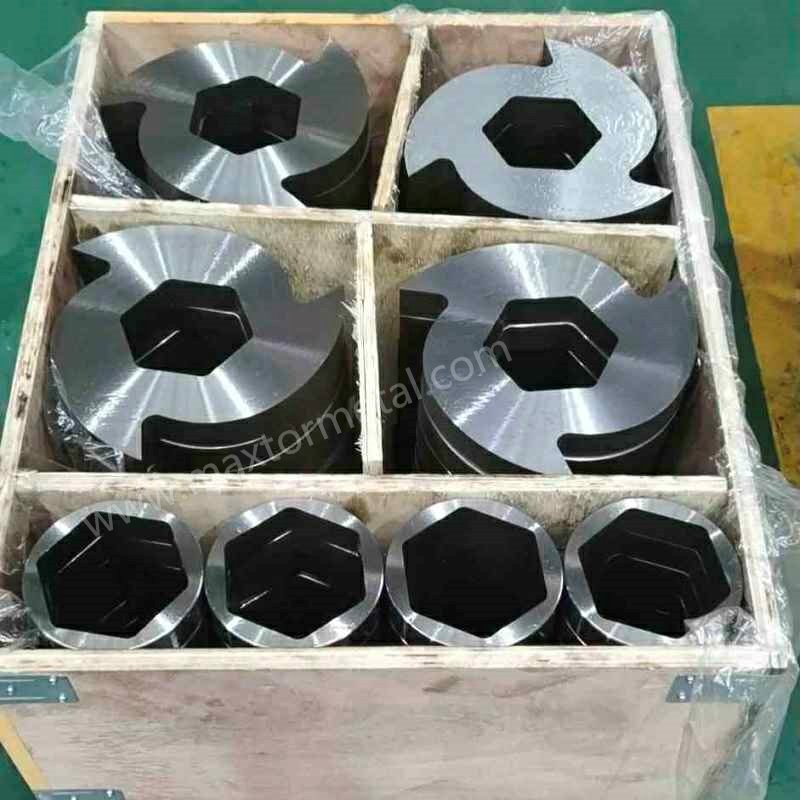
Disclosure: This guide is written by Maxtor Metal to document an audit-ready acceptance workflow. The methods and decision rules described here are supplier-agnostic and can be applied to OEM parts or any qualified aftermarket supplier. Where a Maxtor Metal page is referenced, it is used only as a geometry-family terminology reference; you may substitute any approved reference page or drawing package […]
Zentrierbohrungstoleranz und Rundlauffehler: Optimierung von ISO 286-Passungen zur Minderung von Vibrationen bei Hochgeschwindigkeits-Längsschneidemaschinen.
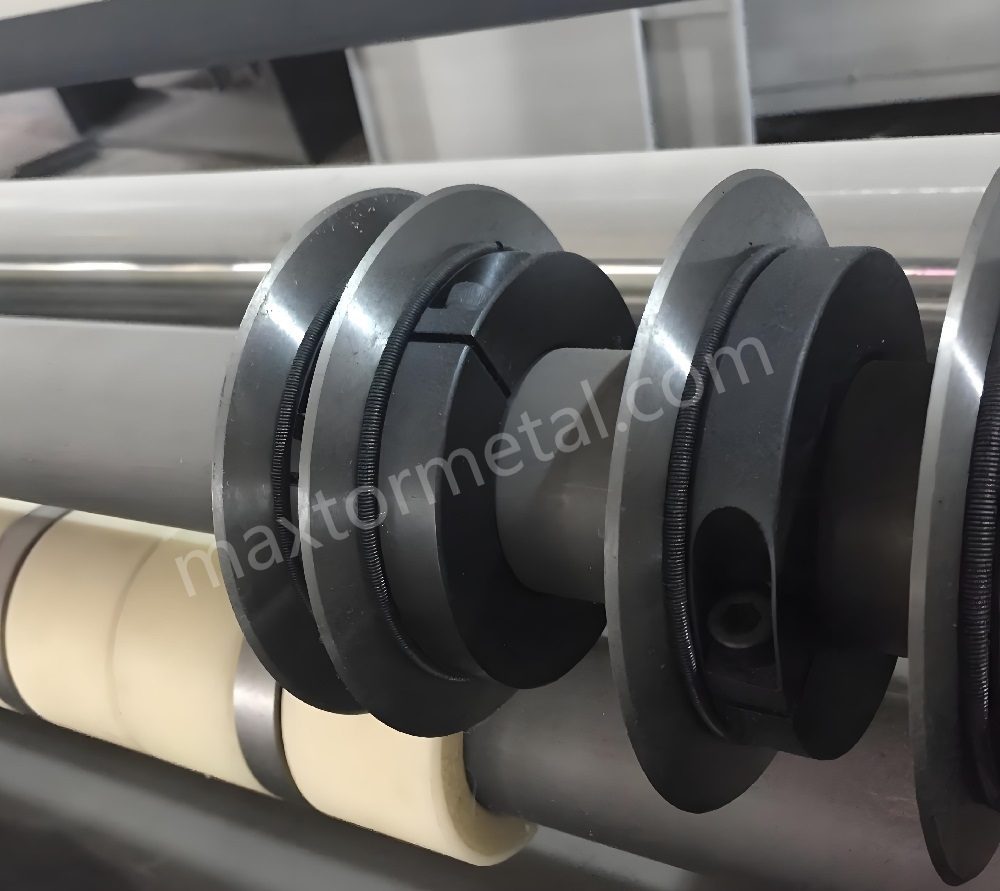
High-speed slitting is unforgiving: if a circular knife doesn’t rotate true, the cut edge quality degrades before the blade is even “dull.” In this article, Maxtor Metal ties central bore tolerance runout (how bore size + geometry show up as edge TIR at speed) to the numbers you can specify—and the checks you can repeat. Engineering Note: For knife-level specifications, […]
Einseitige, zweiseitige und kombinierte Fasen für Kreismesser: Ein steifigkeitsorientierter Auswahl- und Einrichtungsleitfaden
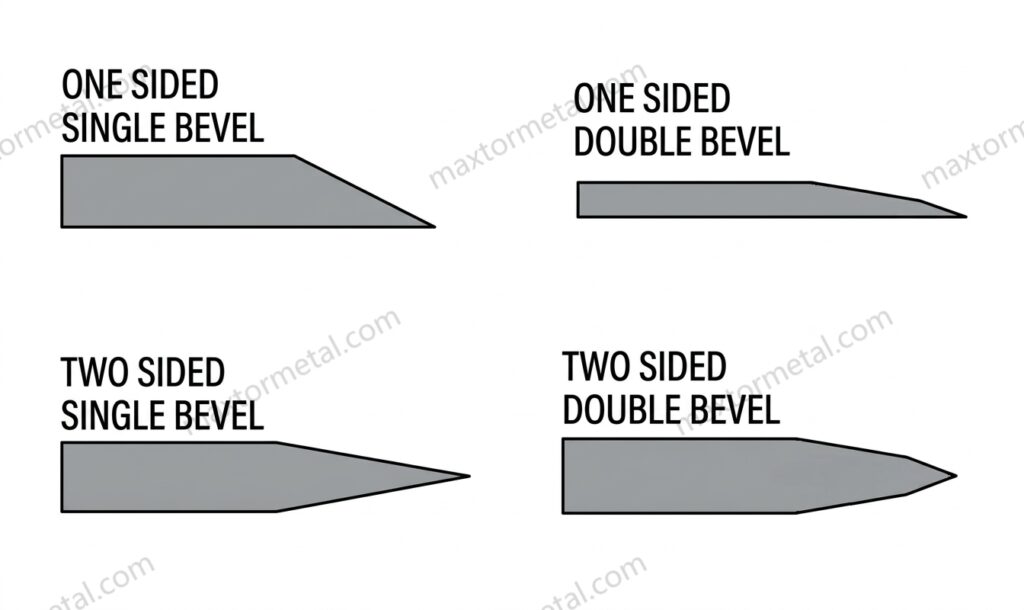
How to use this guide (scope & assumptions): The ranges and troubleshooting steps below are practical starting points for circular slitter knives in typical converting lines. Actual optimum settings depend on your machine design (holder stiffness, runout, spacer stack), web support, and substrate variability—always validate with a controlled trial and change one variable at a time. Engineering […]
Optimierung von Überlappungstiefe und Seitenspiel bei Kreismessern: Mechanik, DOE und Pareto-Kompromisse für Kantenqualität und Messerstandzeit
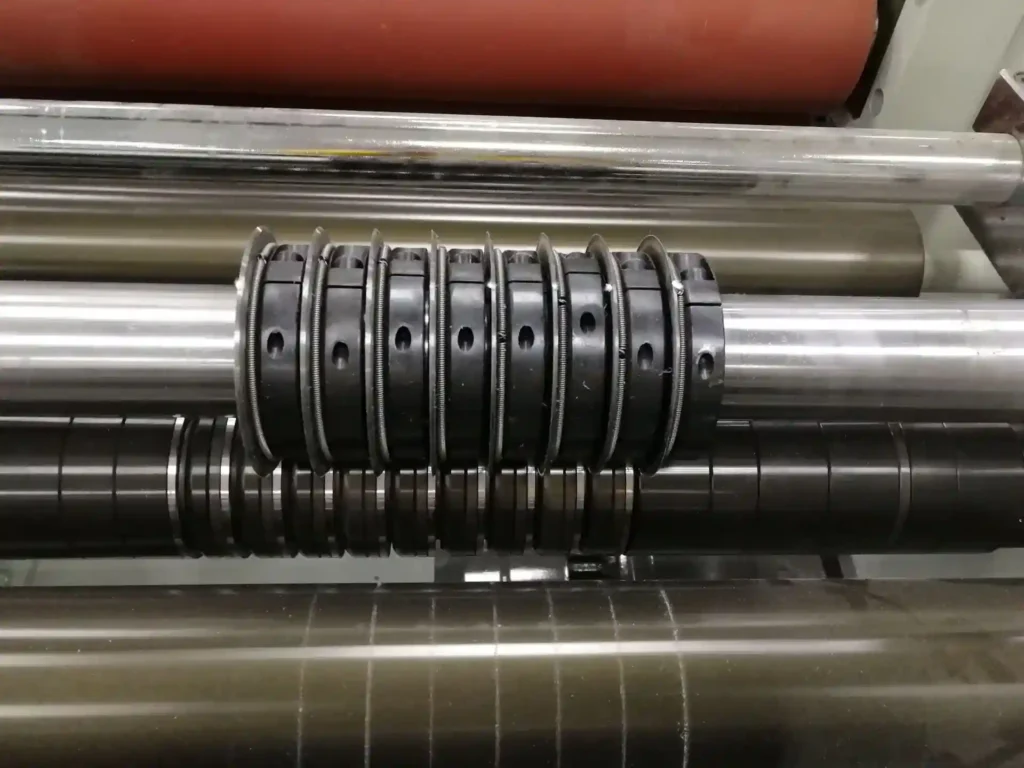
Published: 2026-05-28 | Last updated: 2026-05-28 If you’re chasing cleaner edges, less dusting, and longer knife life on a slitter/rewinder, Maxtor Metal sees the same pattern again and again: the fastest wins often come from two setup variables you can actually control—overlap depth and side clearance. In shear slitting, overlap depth and side clearance jointly create (or destroy) a […]
Axiallaufabweichung, dynamischer TIR und Schnittkantenqualität: Mechanismen, Messung und Minimierung für Hochgeschwindigkeits-Converting-Anlagen
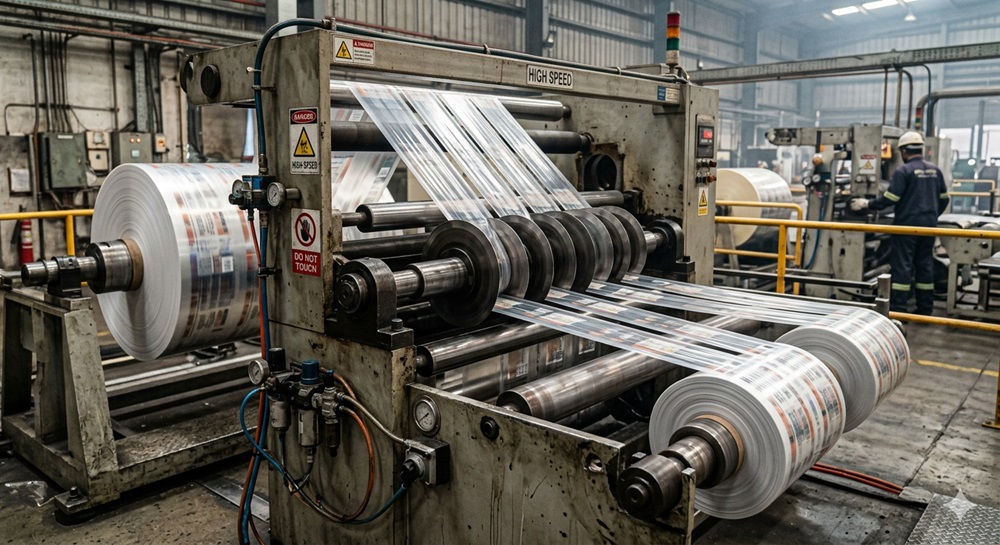
High-speed slitting is unforgiving: small geometry errors show up as burrs, feathering, and unstable lanes long before they show up on a maintenance checklist. At Maxtor Metal, we see runout problems most often when a line is pushed for higher OEE but the slit edge has to stay clean enough for downstream lamination, printing, or welding. […]
Fehlerbehebung bei Schnittbreitenabweichungen: Kontrolle der kumulierten Dickentoleranz beim Mehrbänderschneiden
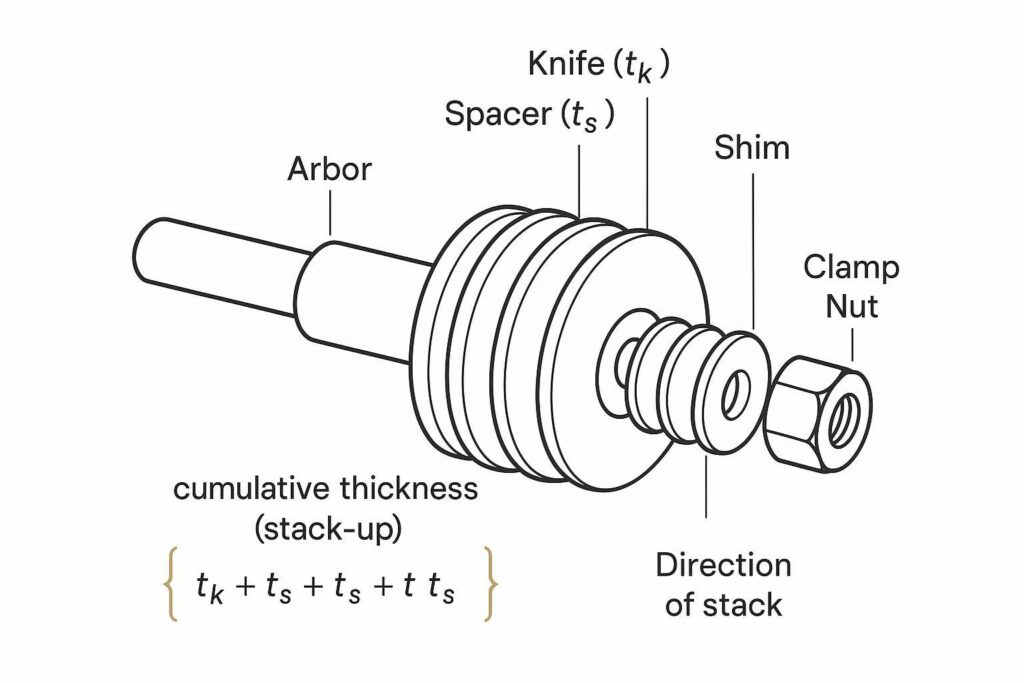
Maxtor Metal builds custom, precision-ground industrial knives for converting and slitting lines. In day-to-day slitting, one of the fastest ways to lose slit-width stability (and OEE) is to ignore what small thickness errors do when you stack many knives, spacers, and shims on one arbor. Basics of cumulative thickness tolerance Definition and terms Cumulative thickness […]
HSS vs. Hartmetall: Material und Geschwindigkeit für längere Standzeiten optimal abstimmen
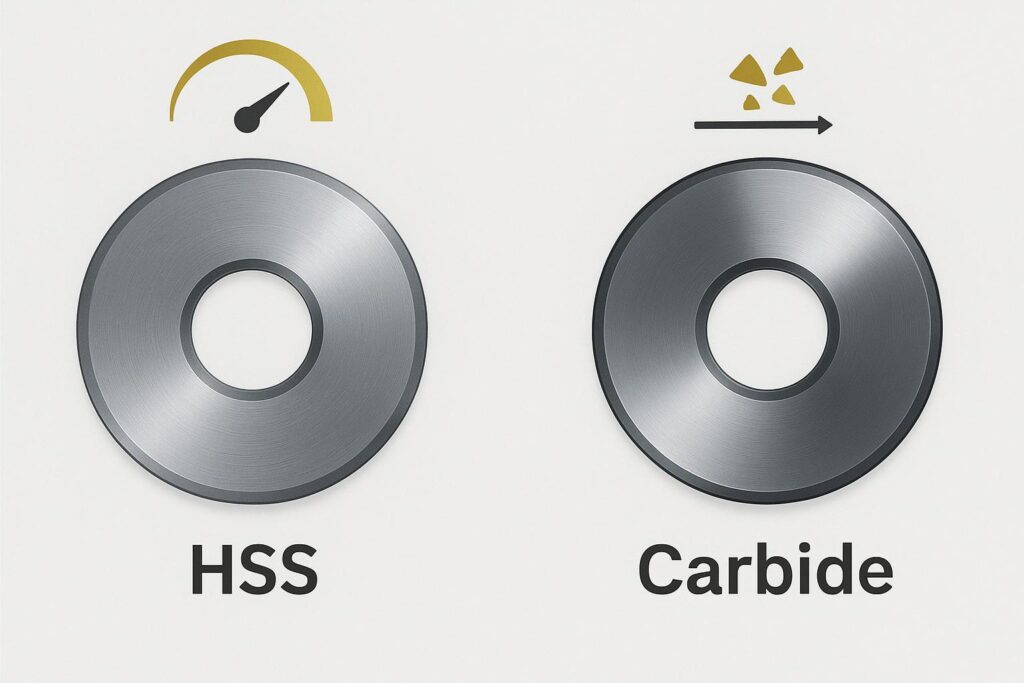
Key takeaways Why HSS vs Carbide impacts edge life, OEE, and TCO Edge life drives how often you stop to change knives, how stable your slit edge stays, and how much scrap you create before someone notices the cut is drifting. In converting lines, that turns into three business metrics: Key variables to log before […]
Untermesser: Die perfekte Paarung mit Obermessern für gratfreien Schnitt

Last updated: 2026-05-12 Note: Always verify knife geometry, overlap/pressure, and safety procedures against your OEM slitter manual and holder design. The ranges below are starting points and must be validated on your line at low speed before running production. Shear slitting fundamentals Shear slitting is a controlled “scissor cut” between a top knife and a bottom knife. […]
Langlebigkeitsbericht für Hartmetall-Rundmesser beim Elektrodenschneiden
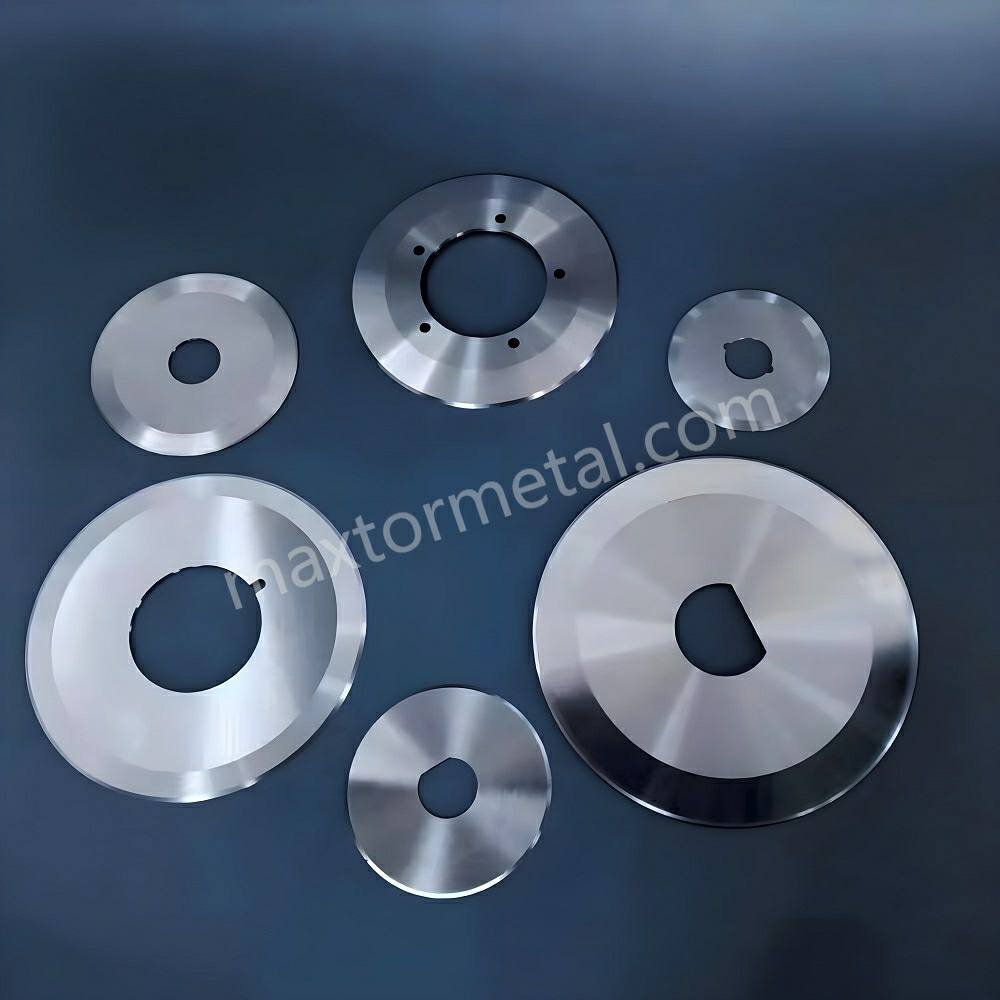
Scope & limitations (read first): This report provides practical measurement and process-control guidance for Li-ion electrode and separator slitting. Target values, settings, and inspection cadence depend on your equipment design (shear/score slit architecture), material system (Cu/Al, coating, separator type), line speed, and measurement capability. Validate any changes through controlled trials on your line and follow your […]

 English
  Spanish
  Italian
  French
  Portuguese
  Russian
  German
  Arabic
  Hindi
Hindi  Vietnamese
  Indonesian
  Japanese
  Korean