
Plan de couteau à refendre OEM : Audit d'ajustement broche, tolérances ISO et portes TIR

Une ligne de refendage peut être équipée d'aciers de lames d'excellente qualité et néanmoins présenter des problèmes de bavures, de dérive de largeur et d'écaillage prématuré si l'interface alésage-arbre est mal spécifiée ou vérifiée de manière incohérente. Cette liste de contrôle est conçue pour servir d'audit technique : vous prenez le plan de lame de refendeuse du fabricant d'origine, vous le comparez à la réalité de la broche/de l'arbre et vous consignez les résultats (conformité/non-conformité) avant […]
Achat de couteaux de déchiqueteuse après-vente : Contrôle des spécifications, plan CMM, validation MTR et vérification de l'ajustement fonctionnel
Disclosure: This guide is written by Maxtor Metal to document an audit-ready acceptance workflow. The methods and decision rules described here are supplier-agnostic and can be applied to OEM parts or any qualified aftermarket supplier. Where a Maxtor Metal page is referenced, it is used only as a geometry-family terminology reference; you may substitute any approved reference page or drawing package […]
Tolérance de l'alésage central et faux-rond : optimisation des ajustements ISO 286 pour atténuer les vibrations des refendeuses à haute vitesse.
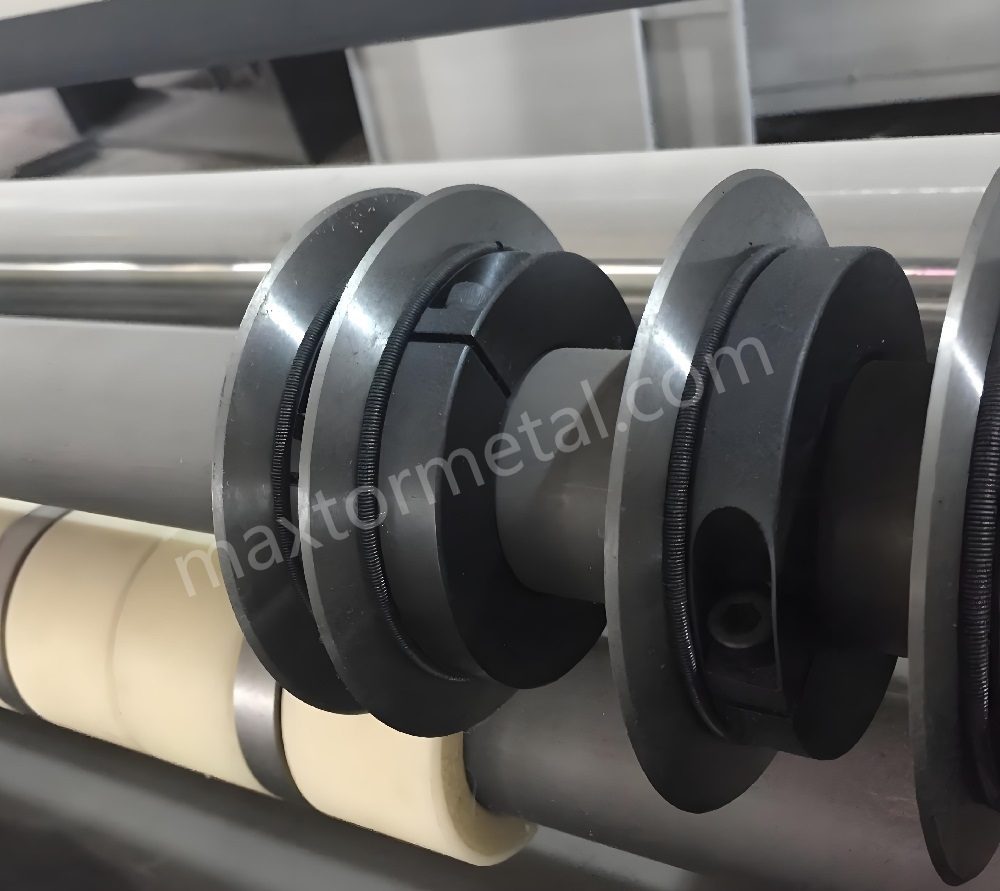
High-speed slitting is unforgiving: if a circular knife doesn’t rotate true, the cut edge quality degrades before the blade is even “dull.” In this article, Maxtor Metal ties central bore tolerance runout (how bore size + geometry show up as edge TIR at speed) to the numbers you can specify—and the checks you can repeat. Engineering Note: For knife-level specifications, […]
Biseaux simples, doubles et composites pour couteaux circulaires de refendage : Un guide de sélection et de réglage basé sur la rigidité
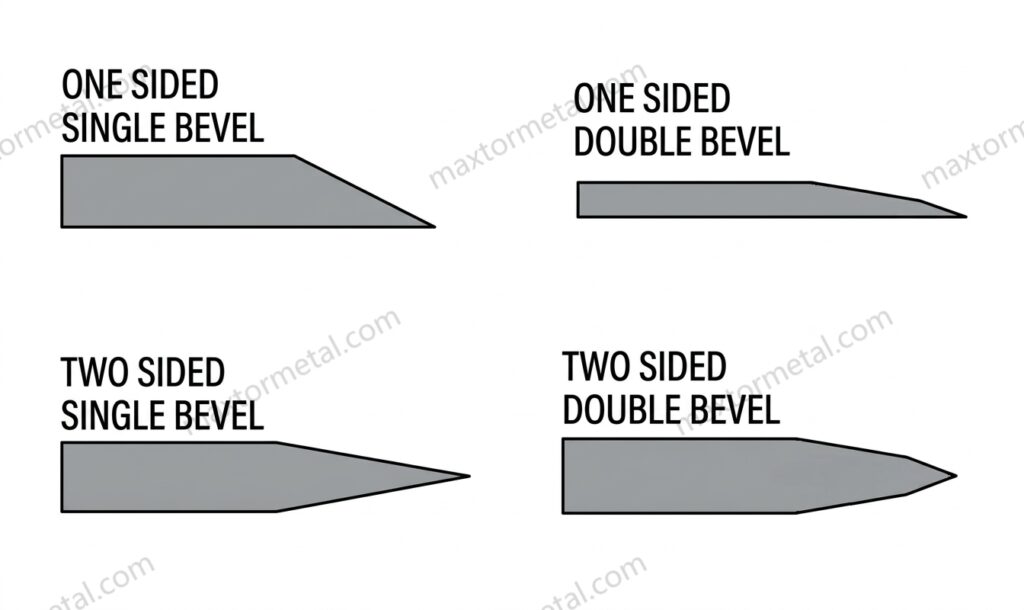
How to use this guide (scope & assumptions): The ranges and troubleshooting steps below are practical starting points for circular slitter knives in typical converting lines. Actual optimum settings depend on your machine design (holder stiffness, runout, spacer stack), web support, and substrate variability—always validate with a controlled trial and change one variable at a time. Engineering […]
Optimisation de la profondeur de chevauchement et du jeu latéral des couteaux circulaires : Mécanique, DOE et compromis de Pareto pour la qualité du tranchant et la durée de vie
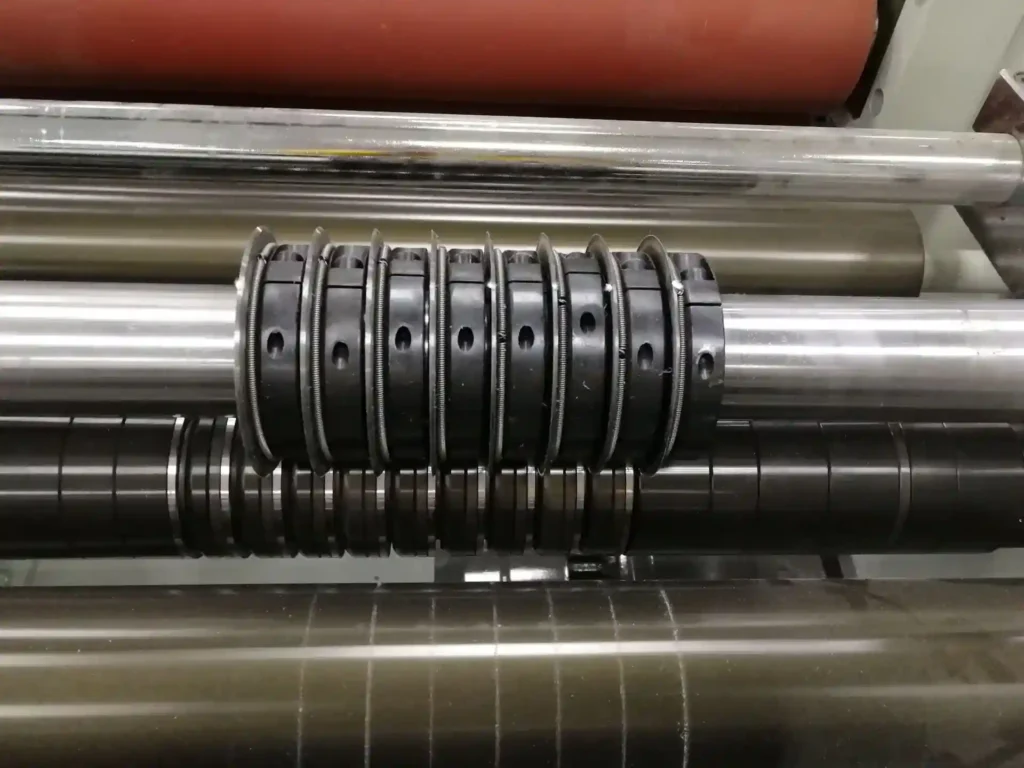
Published: 2026-05-28 | Last updated: 2026-05-28 If you’re chasing cleaner edges, less dusting, and longer knife life on a slitter/rewinder, Maxtor Metal sees the same pattern again and again: the fastest wins often come from two setup variables you can actually control—overlap depth and side clearance. In shear slitting, overlap depth and side clearance jointly create (or destroy) a […]
Faux-rond axial, TIR dynamique et qualité des bords de refendage : Mécanismes, mesure et atténuation pour les lignes de transformation à grande vitesse
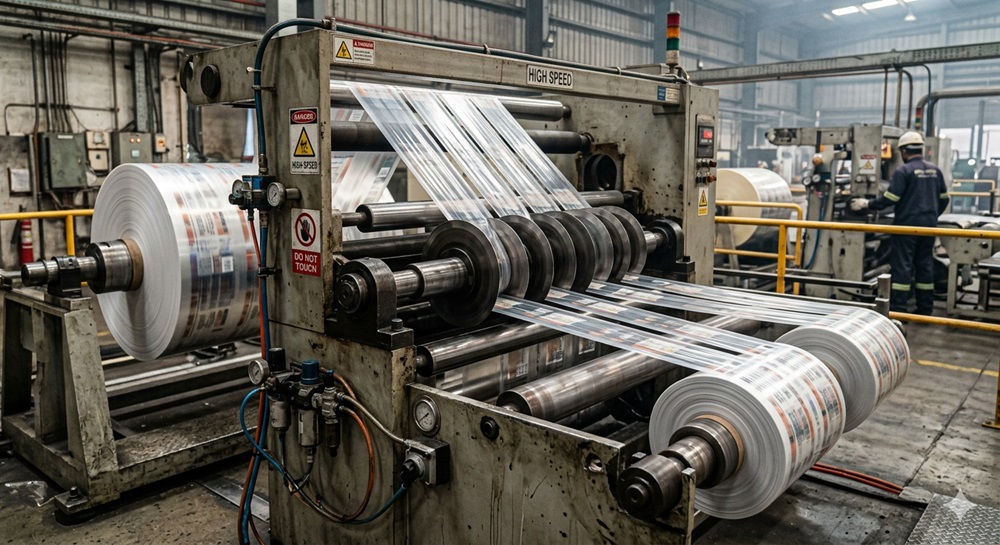
High-speed slitting is unforgiving: small geometry errors show up as burrs, feathering, and unstable lanes long before they show up on a maintenance checklist. At Maxtor Metal, we see runout problems most often when a line is pushed for higher OEE but the slit edge has to stay clean enough for downstream lamination, printing, or welding. […]
Dépannage des variations de largeur : Contrôler la tolérance d'épaisseur cumulative en refendage multilames
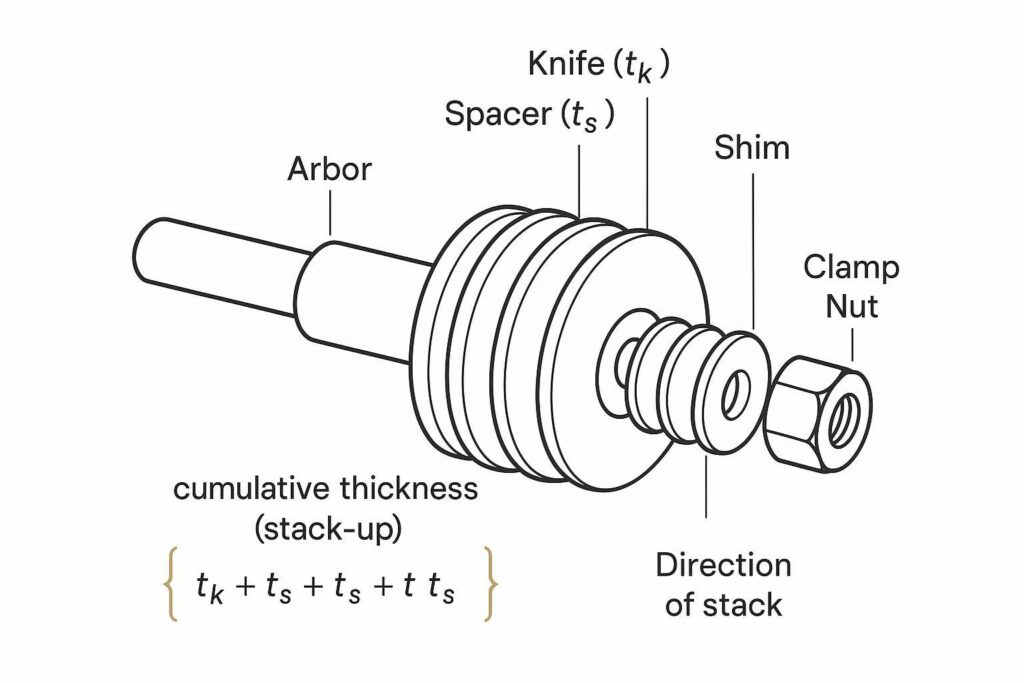
Maxtor Metal builds custom, precision-ground industrial knives for converting and slitting lines. In day-to-day slitting, one of the fastest ways to lose slit-width stability (and OEE) is to ignore what small thickness errors do when you stack many knives, spacers, and shims on one arbor. Basics of cumulative thickness tolerance Definition and terms Cumulative thickness […]
HSS vs Carbure : Associer le matériau et la vitesse pour prolonger la durée de vie du tranchant
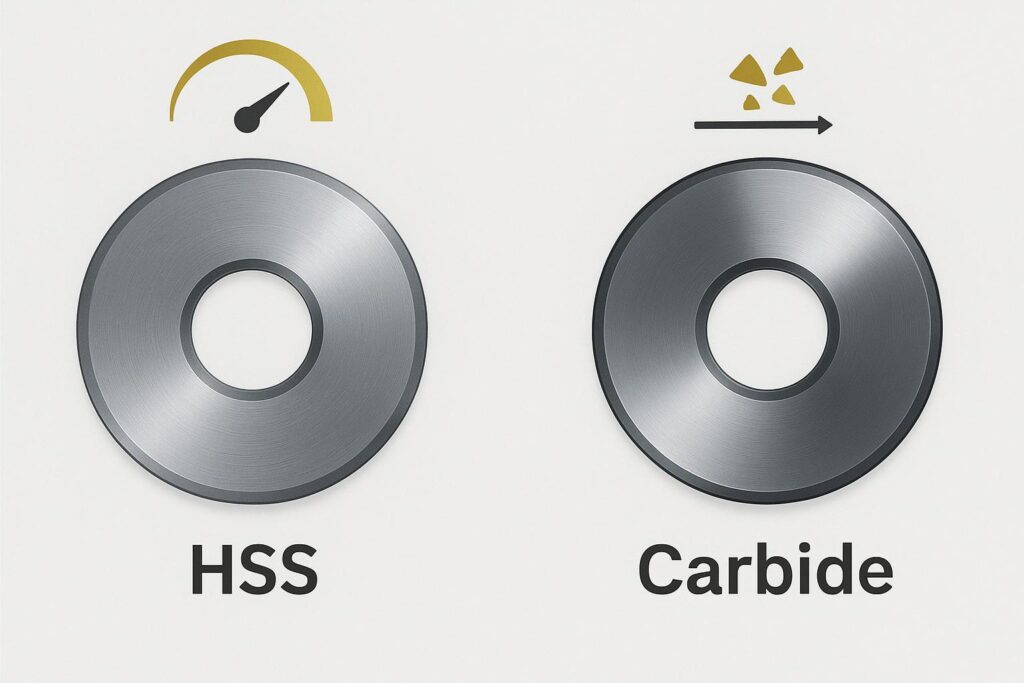
Points clés à retenir : Pourquoi le choix entre HSS et Carbure impacte la durée de vie du tranchant, l'OEE et le TCO. La durée de vie du tranchant détermine la fréquence de vos arrêts pour changer les couteaux, la stabilité de votre bord de coupe et la quantité de rebuts générés avant que l'on ne remarque que la coupe dévie. Sur les lignes de transformation, cela se traduit par trois indicateurs de performance : Les variables clés à enregistrer avant […]
Couteaux circulaires inférieurs : Comment les associer aux couteaux supérieurs pour une coupe sans bavure

Last updated: 2026-05-12 Note: Always verify knife geometry, overlap/pressure, and safety procedures against your OEM slitter manual and holder design. The ranges below are starting points and must be validated on your line at low speed before running production. Shear slitting fundamentals Shear slitting is a controlled “scissor cut” between a top knife and a bottom knife. […]
Rapport sur la longévité des couteaux circulaires en carbure pour le découpage d'électrodes
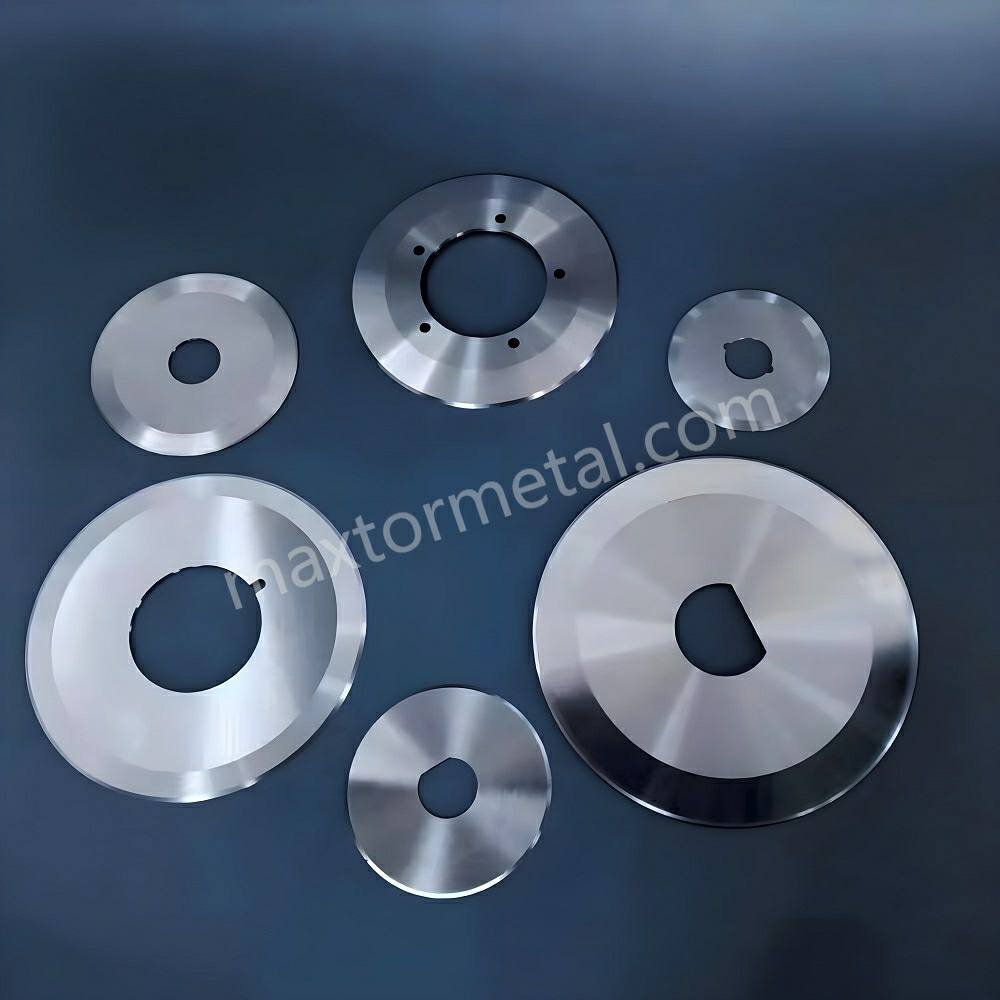
Scope & limitations (read first): This report provides practical measurement and process-control guidance for Li-ion electrode and separator slitting. Target values, settings, and inspection cadence depend on your equipment design (shear/score slit architecture), material system (Cu/Al, coating, separator type), line speed, and measurement capability. Validate any changes through controlled trials on your line and follow your […]

 English
  Spanish
  Italian
  French
  Portuguese
  Russian
  German
  Arabic
  Hindi
Hindi  Vietnamese
  Indonesian
  Japanese
  Korean