

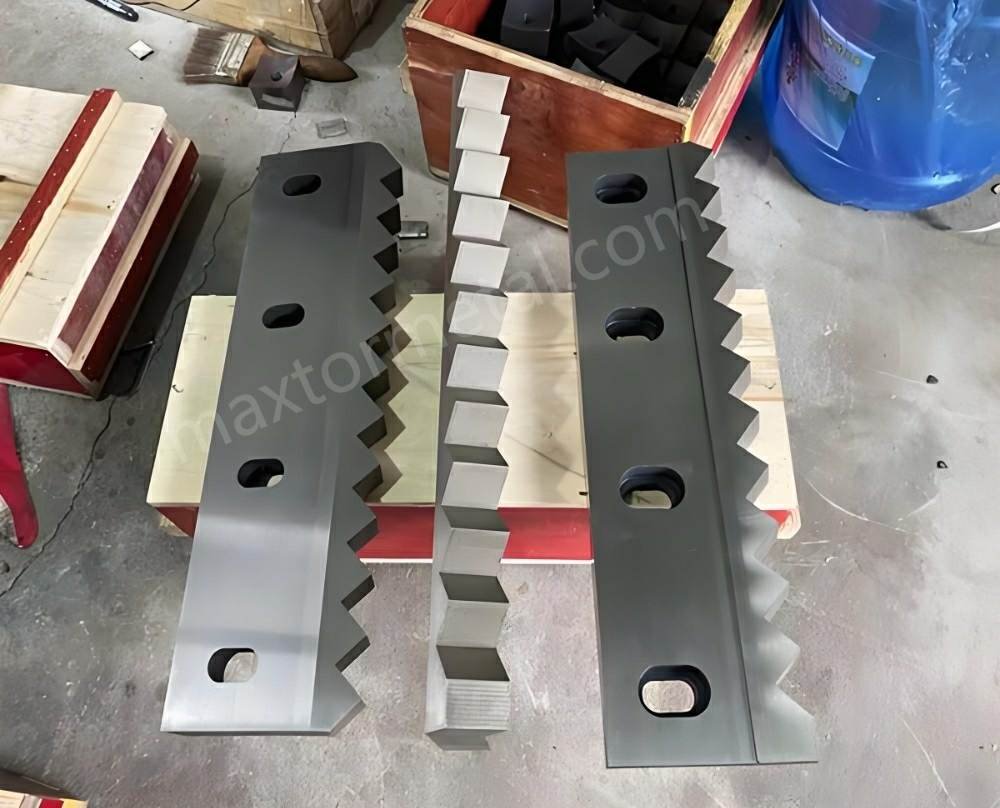
Concave shredder blades change the first contact between material and rotor in a single-shaft shredder. Instead of presenting a mostly flat edge that relies heavily on pusher force and friction to initiate a cut, a concave edge tends to create a more “hooking” engagement that encourages bite and controlled self-feeding.
In the field, energy-per-ton and throughput gains are realistic when the shredder is already mechanically healthy and the process is limited by cutting efficiency rather than downstream conveying or screen plugging. Under those conditions, a measured improvement on the order of ~5–15% is often achievable—but it’s not automatic, and it’s not just about knife geometry.
This guide breaks down the mechanisms (why concave geometry can reduce specific energy), the setup levers that determine whether you actually see gains, the wear and maintenance trade-offs, and a practical TCO framework to decide whether a retrofit is worth it.
Key takeaways (for maintenance & process teams):
Sobre el autor: This guide is written from a practical engineering and procurement-support perspective, focused on how knife geometry, knife gap, counter-knife condition, screen pairing, and control settings interact in day-to-day single-shaft shredder performance. (No site-specific test data is assumed—use the trial template below to document your own results.)
- Concave shredder blades can reduce torque spikes and re-cuts when bite is the limiting factor—often improving throughput and lowering kWh per ton.
- Results depend heavily on knife gap, counter-knife condition, screen selection, y pusher/torque control logic.
- Track trials by outcomes (kWh/ton, tons/hour, reversals per ton, screen-cleaning events)—not by “visual wear” alone.
- Concave geometry can shift wear concentration; steel/heat treatment consistency and regrind/indexing discipline matter.
- Use a single-variable trial and a simple TCO framework to decide whether a retrofit pays back.
How Concave Geometry Reduces Energy
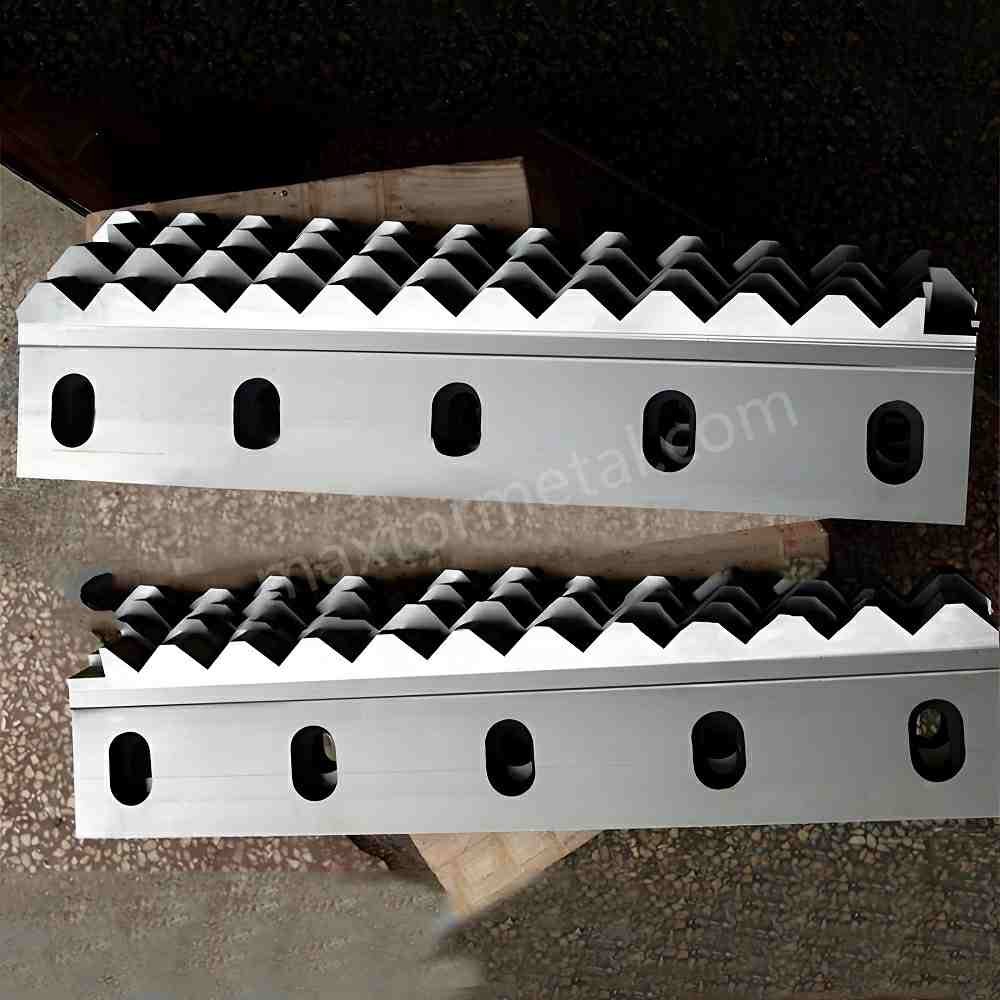
Specific energy (kWh per ton) is a simple KPI with a lot behind it. For a single-shaft shredder, it’s driven by how efficiently the rotor converts torque into useful shear instead of waste heat, rubbing, and re-cutting.
Bite and self-feeding mechanics
Concave edges can increase the probability of a clean initial bite—especially when processing slippery or flexible feed where the pusher is doing most of the work. When bite improves, two things happen:
- The pusher spends less time “staging” material against the rotor.
- The rotor spends more of its rotation doing productive shear instead of no-load spinning between inconsistent grabs.
That’s the first pathway to improved throughput: fewer dead cycles.
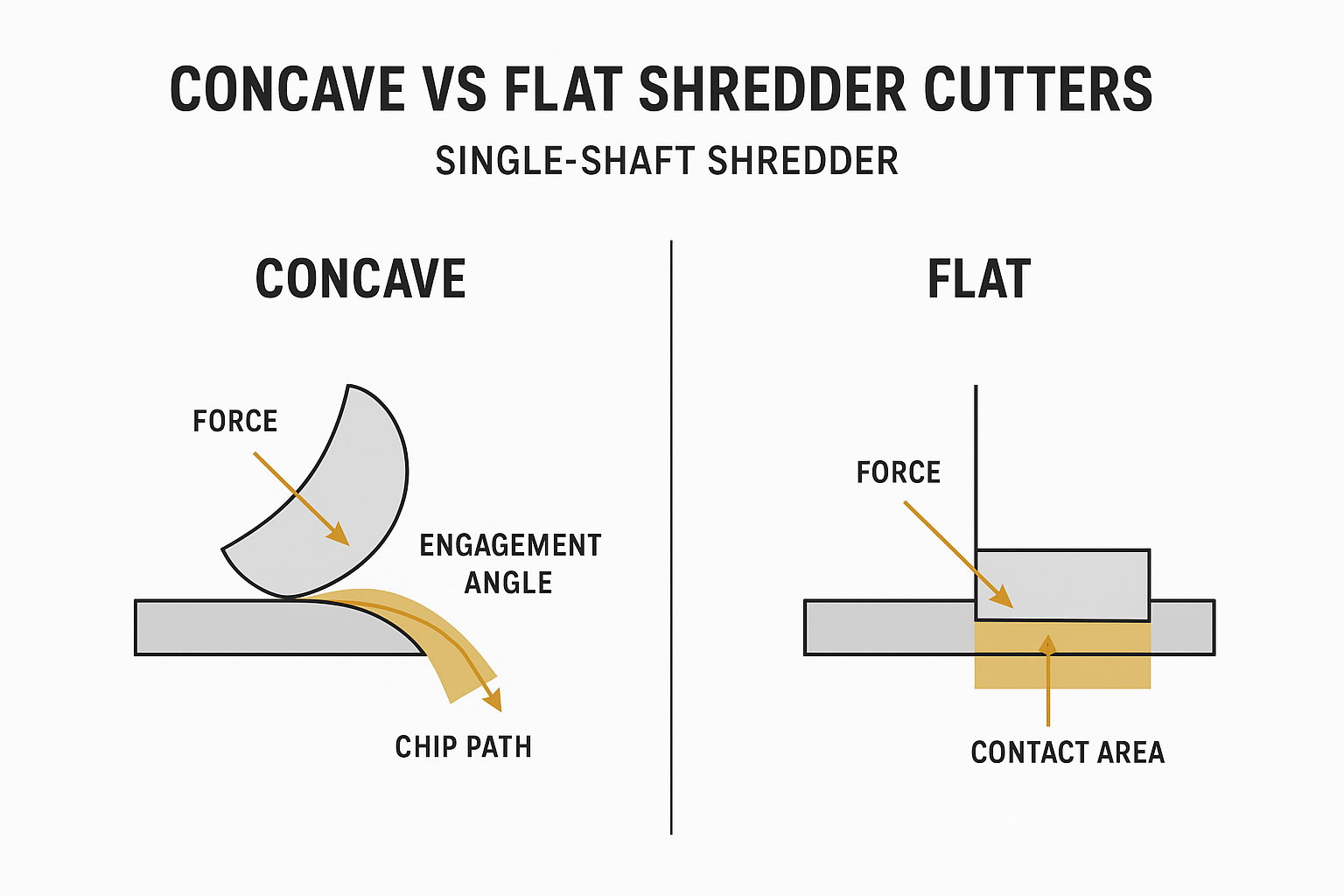
Localized shear and smaller contact area
A concave edge can concentrate the engagement into a smaller effective contact zone at the start of a cut. In practice, that often reduces the peak force needed to initiate shear because you’re not trying to shear across a wide edge all at once.
Lower peak cutting force matters because it reduces the frequency and severity of torque spikes. When torque spikes are reduced, the shredder can maintain steadier rotor speed and spend less time in control interventions (e.g., slowdowns, reversals, or dwell periods).
Fewer re-cuts and steadier chip formation
If the geometry and setup produce more consistent chip formation, material is less likely to “bounce” or smear and then get dragged back into the cutting zone for multiple partial cuts. Re-cutting is expensive: it consumes energy and rotor time without producing new mass throughput.
A more predictable chip path also helps stabilize discharge through the screen—assuming the screen is correctly paired and not becoming the bottleneck.
Where Concave Shredder Blades Work Best
Concave geometry is a tool—not a universal upgrade. It tends to show the best results when cutting efficiency and feed consistency are limiting performance.
Material classes and screen pairing
You’re more likely to see benefits when:
- The feed has a tendency to slip, wrap, or deform before cutting (films, certain flexible polymers, fibrous blends).
- The process is sensitive to stable discharge size and you’re dialing in screen selection.
OEMs emphasize that screen selection directly controls discharge size and influences how “hard” the rotor must work to push material through. WEIMA notes that interchangeable screens allow you to tune output size and that smaller openings yield finer discharged material on its WLK series pages (which also implies higher cutting work when you over-restrict the screen) (WEIMA’s WLK 1000 shredder page).
Knife gap, counter-knife sharpness, and rotor speed
Concave knives won’t rescue a poor mechanical setup. In many installations, the gap and counter-knife condition dominate results more than the edge shape.
Key principles:
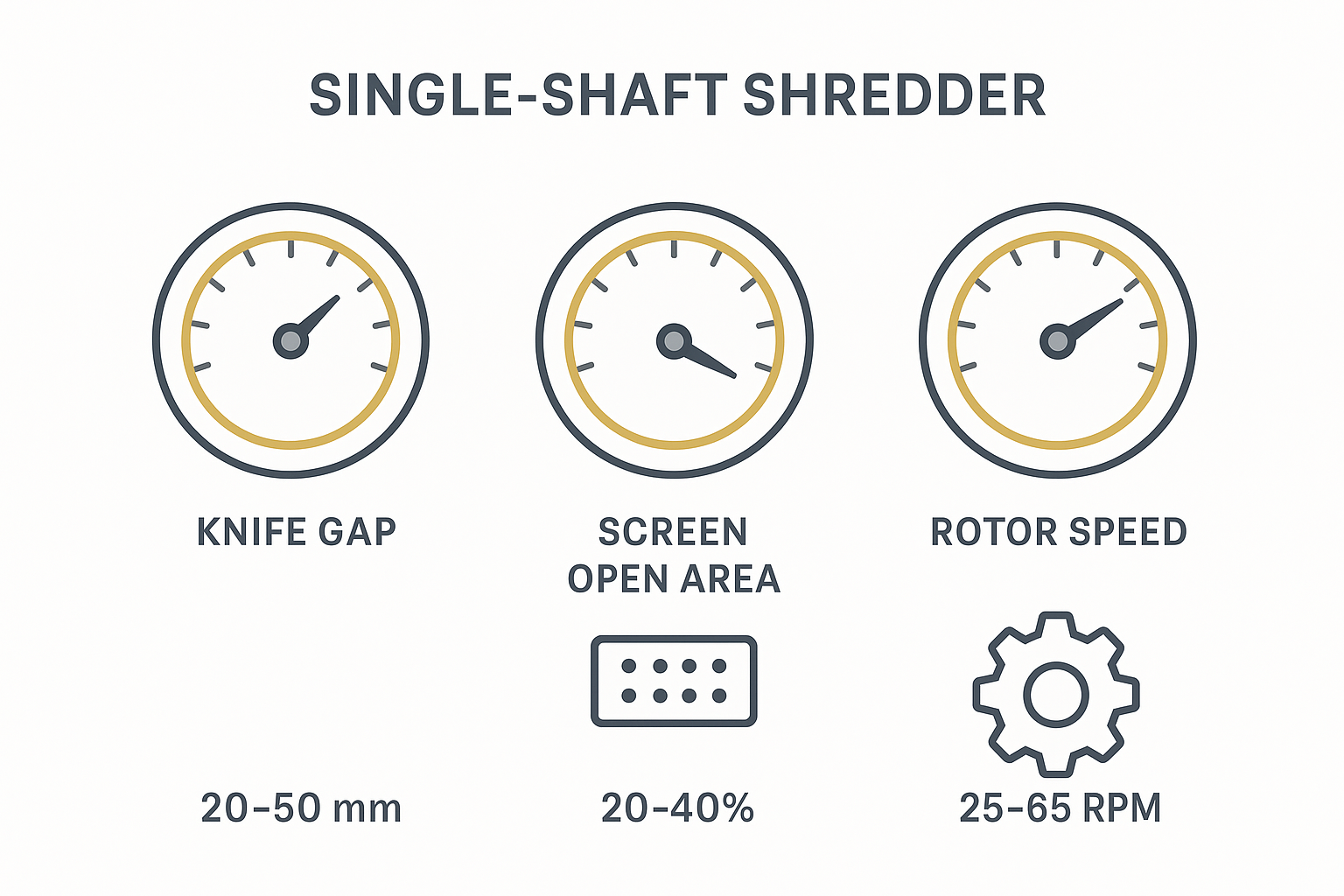
- Shredder knife gap and counter-knife alignment: If the gap is too large, you shift from shearing to tearing/rubbing. If it’s too tight, you increase heat, noise, and risk of edge damage.
- Counter-knife condition: A blunt counter-knife turns clean shear into compress-and-smear behavior. That increases kWh/ton and worsens granulate consistency.
- Velocidad del rotor: Una mayor velocidad puede ayudar al agarre en algunos materiales, pero también puede aumentar el calor y el desgaste. Utilice la velocidad como una variable controlada; no la “aumente al máximo” para ocultar un problema de holgura.
WEIMA destaca explícitamente el mantenimiento de una holgura de corte constante mediante el uso de contracuchillas ajustables y reversibles, y señala que la interacción entre la cuchilla y la contracuchilla influye considerablemente en el rendimiento y los resultados de trituración (Guía de WEIMA sobre el mantenimiento de la holgura de corte).
Lógica del empujador y gestión del par
Si tiene acceso al control (o puede ajustarlo mediante la configuración del fabricante OEM), trate el comportamiento del empujador y la lógica de par como parte de la modernización, no como un aspecto secundario.
Comprobaciones prácticas:
- Fuerza del empujador frente a temporización del empujador: Un empuje demasiado agresivo puede aumentar la fricción y el calor; una alimentación insuficiente genera “tiempo en vacío” del rotor.”
- Límite de par y umbrales de inversión de marcha: Si es demasiado sensible, perderá tiempo invirtiendo el sentido; si es demasiado laxo, someterá el filo a cargas de impacto.
- Consistencia de la alimentación: Bloques grandes y rígidos mezclados con material fino y flexible pueden anular las ventajas del agarre cóncavo.
Trade-offs, Wear, and Maintenance
La geometría cóncava puede desplazar where el lugar donde se concentra el desgaste. Eso no es intrínsecamente malo, pero cambia la forma de planificar los rectificados, la rotación de posiciones y las compras.
Concentración del desgaste del filo y rotación/rectificado
Dado que un filo cóncavo puede localizar la zona de inicio del corte, también puede concentrar el desgaste abrasivo, especialmente en residuos mixtos con contaminantes duros.
Para mantener un rendimiento estable:
- Controle el desgaste por toneladas procesadas por filo (no por tiempo de calendario).
- Cambie de posición o rote las cuchillas recambiables antes de que el filo se redondee lo suficiente como para aumentar el consumo de kWh/tonelada.
- Rectifique en función de resultados medidos: aumento de la carga del motor, mayor número de inversiones de marcha, descarga más caliente o empeoramiento de la distribución granulométrica.
Consejo profesional: Si está probando cuchillas cóncavas, registre kWh/ton, las inversiones por tonelada y las limpiezas de criba. Esas tres señales suelen ofrecer un diagnóstico más rápido que preguntar “¿parece desgastada?”.”
Selección de acero, tratamiento térmico y recubrimientos
Si las cuchillas cóncavas reducen los picos de fuerza pero aumentan el desgaste abrasivo localizado, la selección del acero y la consistencia del tratamiento térmico influyen aún más en su tiempo de actividad.
Aquí es donde la evidencia del proveedor resulta clave. Para cuchillas de trituradora y contracuchillas, MAXTOR METAL documenta las opciones de materiales más habituales (p. ej., 65Mn, 9CrSi, Cr12MoV, SKD-11, además de opciones de acero rápido) y describe las prácticas de inspección multietapa, como la inspección de material entrante, los controles en proceso y la inspección final en sus páginas de cuchillas para trituradoras monoeje (Cuchillas giratorias para trituradoras monoeje MAXTOR METAL y Cuchilla fija para trituradora monoeje MAXTOR METAL).
Para los equipos de mantenimiento y compras, la conclusión práctica es sencilla:
- Pedir material certificates vinculadas al lote.
- Solicite evidencia del tratamiento térmico (objetivos de dureza y método de ensayo) y consérvela en el registro de repuestos.
- Asegúrese de que el proveedor pueda proporcionar documentos de control de calidad/inspección que coincidan con su sensibilidad a las tolerancias, ya que el rendimiento de la holgura entre cuchillas no tolera inconsistencias en el espesor, la planitud o la dureza.
Los recubrimientos pueden ayudar en alimentaciones abrasivas, pero también pueden alterar el comportamiento del filo y la formación de viruta. Trate los recubrimientos como una variable de prueba controlada; no acumule varios cambios a la vez.
Cuándo son preferibles las geometrías planas o achaflanadas
Los filos planos o achaflanados pueden superar a los cóncavos en escenarios donde:
- Su material de alimentación ya es fácil de agarrar (geometría rígida y constante) y está limitado por la capacidad de paso de la criba o la capacidad del proceso posterior.
- Necesita un soporte de filo más amplio para alimentaciones con alto impacto (bloques grandes y rígidos, presencia frecuente de metales extraños) donde el astillado del filo es el modo de fallo dominante.
- Su proceso de mantenimiento requiere rectificados rápidos y predecibles, y su equipo utiliza calibres de inspección estandarizados para filos planos.
El perfil cóncavo no es una “mejora” universal. Es una elección geométrica que debe adaptarse al comportamiento del material y a sus limitaciones operativas.
Operating Boundaries and Safety Notes

- Siga siempre los procedimientos de seguridad del fabricante del triturador para el bloqueo y etiquetado (lockout/tagout), así como para cualquier cambio en la holgura de la cuchilla, la velocidad del rotor o los parámetros de control.
- Si observa un aumento de la temperatura de descarga, ruidos anómalos, mellado frecuente del filo o un incremento rápido de la carga del motor, detenga la prueba y vuelva a comprobar la holgura de las cuchillas, la alineación de la contracuchilla y la consistencia de la alimentación.
- Trate los recubrimientos, los cambios de grado de acero y los cambios de geometría como variables independientes. Si cambia más de una variable a la vez, resulta difícil atribuir las mejoras (o fallos) a la causa correcta.
TCO and Decision Guidance
El rendimiento y el consumo de kWh/tonelada son solo una parte de la decisión. La evaluación completa de costes suele incluir la vida útil de la cuchilla, la mano de obra en los cambios y el valor del tiempo de actividad.
Cálculo de energía, vida útil de las cuchillas y tiempos de parada
A practical TCO frame for a retrofit trial:
- Energy cost impact = (baseline kWh/ton − trial kWh/ton) × $/kWh × tons processed
- Blade cost impact = (baseline cost per ton of knives) − (trial cost per ton of knives)
- Downtime impact = (changeovers/year × downtime hours/changeover) × $/hour value of line uptime
If your operation is downtime-driven, the fastest payback often comes from fewer unplanned stops—not from a small reduction in kWh/ton.
Material-dependent selection cues
Use these cues before you commit:
- If output size distribution is unstable, prioritize gap, counter-knife condition, and screen pairing before changing geometry.
- If the shredder reverses frequently with acceptable edge sharpness, look for feed inconsistency, pusher timing, or torque thresholds.
- If edges round quickly without chipping, consider whether concave geometry plus a more wear-resistant steel/heat treatment spec is a better fit.
Implementation checklist after retrofit
Plantilla de registro de ensayo (copiar/pegar)
| Categoría | Qué grabar | Target / notes |
|---|---|---|
| Material & feed | Material type/grade, bulk density (if known), contamination notes, feed consistency | Keep feed mix consistent across baseline vs trial |
| Screen | Screen hole size, open area (if known), screen condition/plugging | Screen restrictions often dominate energy/throughput |
| Knife setup | Knife geometry (concave/flat), knife gap setting method & gauge, counter-knife condition | Use the same measurement method every time |
| Controls | Rotor speed, pusher force/timing, torque limit & reversal thresholds | Freeze settings for the first trial window |
| Trial window | Start/end timestamps, tons processed in the window | Use fixed tonnage windows (e.g., every X tons) |
| Performance KPIs | tons/hour, kWh/ton | Compare like-for-like windows |
| Stability signals | reversals per ton, screen-cleaning events, motor current (avg/peak) | Often explains KPI changes faster than visual wear |
| Wear notes | edge rounding, chipping, wear location on edge, tons per edge | Photograph at consistent intervals |
| Product quality | basic size distribution check (sieve/yield proxy), downstream issues | Ensure throughput gains don’t harm quality |
Keep the trial controlled. Change one main variable at a time.
- Verify counter-knife condition and alignment before installing the new knives.
- Set and record knife gap (and keep the same gauge/process for repeatability).
- Keep rotor speed and torque thresholds unchanged for the first run unless your baseline is unstable.
- Run a fixed-tonnage trial window and log:
- tons/hour
- kWh/ton
- reversals per ton
- screen-cleaning events
- granulate size distribution (basic sieve check or downstream yield proxy)
- Inspect edge wear pattern at the same tonnage interval each run.
Referencias
- WEIMA — WLK 1000 shredder page: https://weima.com/us/shredders/wlk-800-2000/wlk-1000/
- WEIMA — Cutting gap maintenance guidance (WLK 10 page): https://weima.com/us/shredders/wlk-6-s-20/wlk-10/
- MAXTOR METAL — Single-shaft shredding motorized blades: https://maxtormetal.com/product/single-shaft-shredding-motorized-blades/
- MAXTOR METAL — Single-shaft shredder fixed blade: https://maxtormetal.com/product/single-shaft-shredder-fixed-blade/
Conclusión
Concave shredder blades can improve throughput and cut kWh/ton when conditions align—especially when the baseline process is limited by inconsistent bite, high re-cut rates, or unstable chip formation.
But realized results typically depend more on setup discipline (knife gap, counter-knife sharpness, screen pairing, and controls) than geometry alone. OEM guidance also points to the knife/counter-knife interaction and maintaining a stable cutting gap as central to throughput and shredding quality.
Start with controlled trials, verify granulate quality, and track kWh/ton alongside operational signals like reversals and screen cleaning. If you’re sourcing replacement knives, make documentation part of the spec: material certs, heat-treatment evidence, and QC records are what make geometry improvements repeatable—not just anecdotal.

 English
 Spanish
 Italian
 French
 Portuguese
 Russian
 German
 Arabic
 Hindi
 Vietnamese
 Indonesian
 Japanese
 Korean