
PE/PPライン向け水リングペレタイザーナイフの選び方
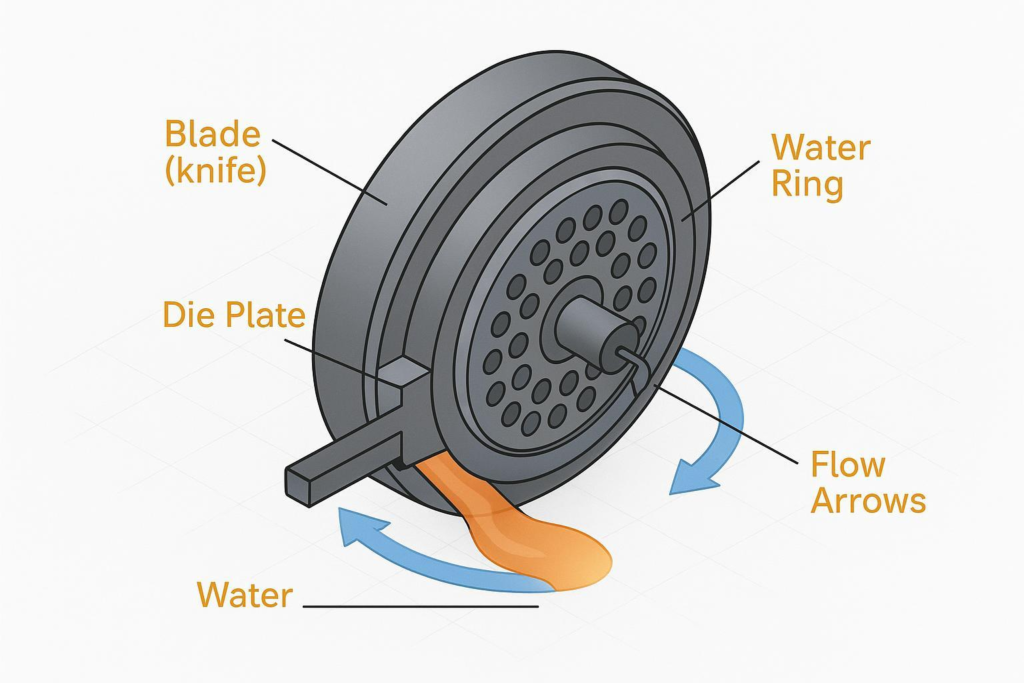
ペレットの品質、稼働時間、およびトン当たりの総コストは、ウォーターリング(ダイフェースホットカット)ラインが真に性能を発揮しているかどうかを決定づけます。PE/PP用途では、ブレードの材質、コーティング、エッジ形状、および寸法公差が、ダイフェースの状態、ウォーターループの安定性、およびブレード速度と相互作用します。これらのいずれかが間違っていると、テール、微粉、不均一なカット長、または回避可能なダウンタイムが発生します。このガイドでは、PE/PPライン用のウォーターリングペレタイザーブレードを自信を持って選択する方法を示します。材質とコーティングの明確な選択基準、実用的な形状とプリロードのガイダンス、起動および停止のSOP、要求すべきOEM適合公差とQC文書、日々の操作のヒント、およびトン当たりのコストのシンプルなモデルについて説明します。主なポイント 材料と表面エンジニアリング […]
ストランドおよび水中カットシステムに最適なマスターバッチペレタイザーナイフ
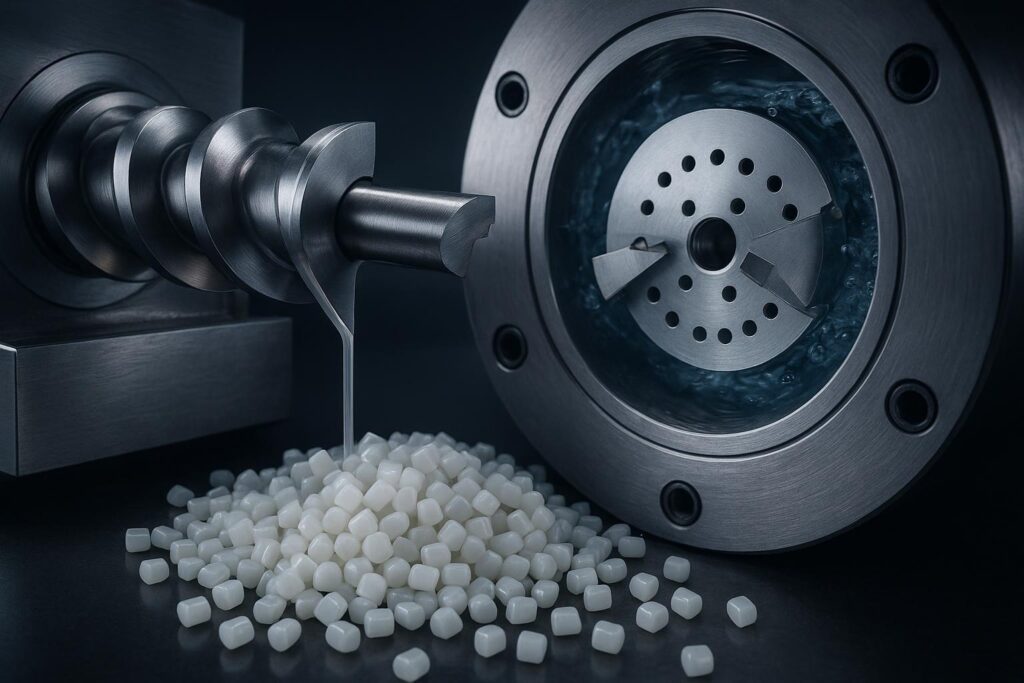
Blade selection is one of the fastest levers you can pull to improve pellet uniformity, uptime, and total cost. In strand pelletizing, the blade story is about helical scissor geometry, rotor‑to‑bed knife gap, and how quickly wear drifts that gap. In underwater pelletizing (die‑face/water‑ring), it’s about keeping a clean, stable cut through controlled knife contact pressure, thermal balance at startup, and robust process‑water flow. In this guide, you’ll compare materials, geometries, gap/pressure windows, and coatings for masterbatch pelletizer blades. We focus on two real production pain points: underwater startup stability and knife pressure control (tails/fines), and strand gap drift and changeover cadence—while providing a practical selection matrix to speed decisions. […]
均一な粒度を実現するためのペレタイザーナイフの鋭利さの最適化
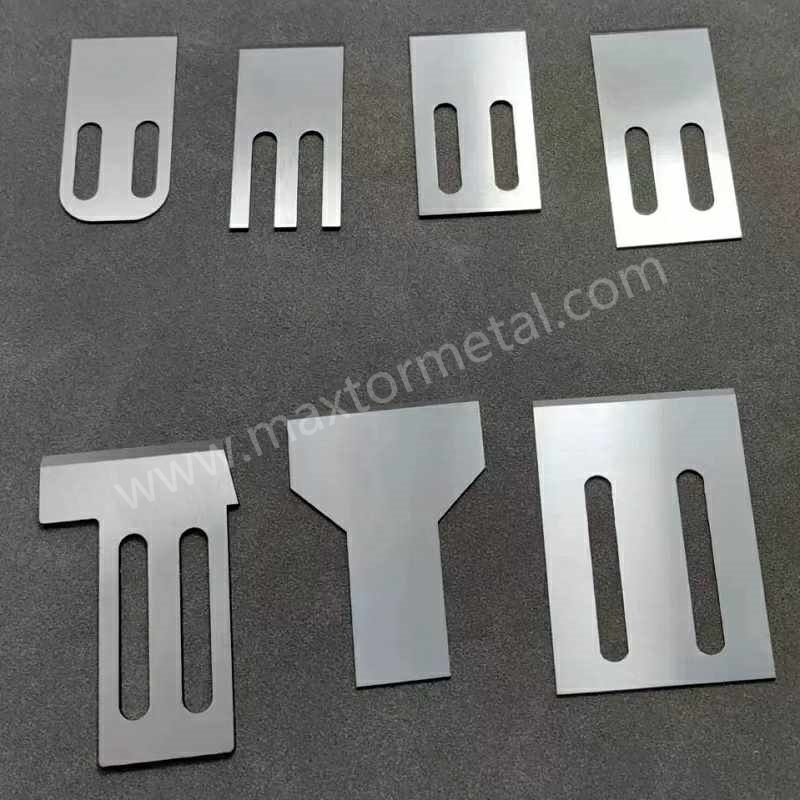
Uniform granule size is not just an aesthetic goal—it drives downstream stability, drying efficiency, metering accuracy, and perceived product quality. The fastest lever you control on the line is blade sharpness, but it only delivers consistent results when it’s linked to the right process window: line speed, cutter RPM, cooling, and die-face conditions. This guide shows how to make that linkage explicit across three common setups—strand (PP/PE), underwater (PA/PBT/PC), and hot-face/water-ring (masterbatch and high-fill)—and how to maintain it with measurable KPIs. Key takeaways KPI framework for uniform granule size Start with a measurement-first framework. Use ASTM D1921 as your reference method for pellet size distribution, which supports full sieve-based distributions […]
ペレタイザーナイフの圧力調整とダイ保護
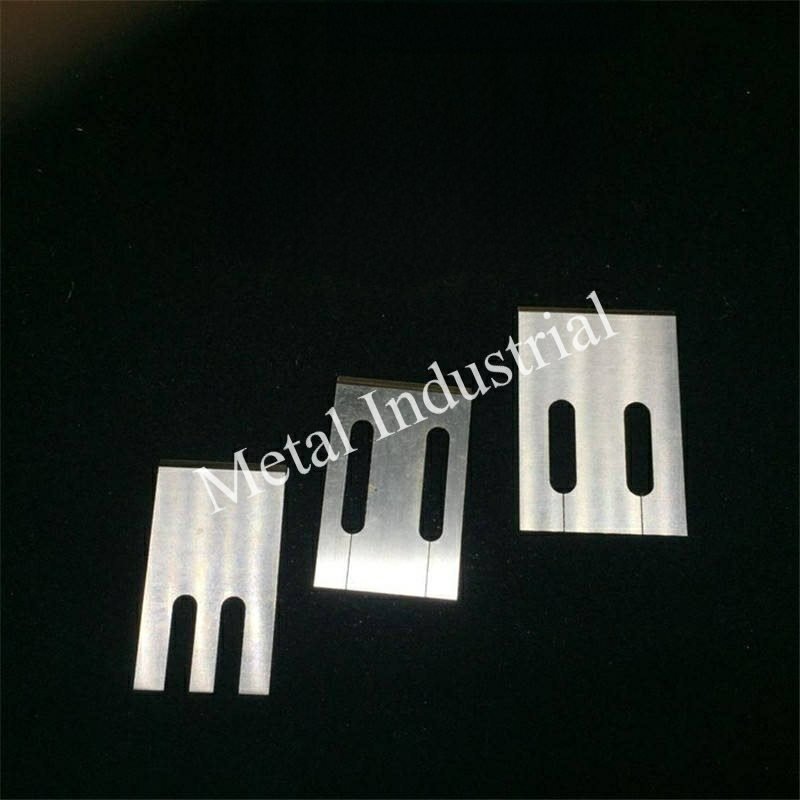
If your underwater pelletizer throws tails, fines, or intermittent leaks, the fix often starts at the knife–die interface. This guide gives operators and engineers a stepwise playbook for pelletizer blade pressure adjustment and die protection across startup, steady long runs, abrasive formulations, and extreme MFI conditions—so you can reduce die wear, extend time between leak events, and stabilize pellet consistency. Key takeaways Safety and disclosure The core method: pelletizer blade pressure adjustment Getting contact right is less about a magic number and more about a routine tied to observable signals. Scenario A — Startup/changeover: prevent leaks and stabilize cut Startup and changeovers are when most leaks and knife marks appear […]
なぜ高負荷材料には CPMペレタイザーナイフ が最適なのか
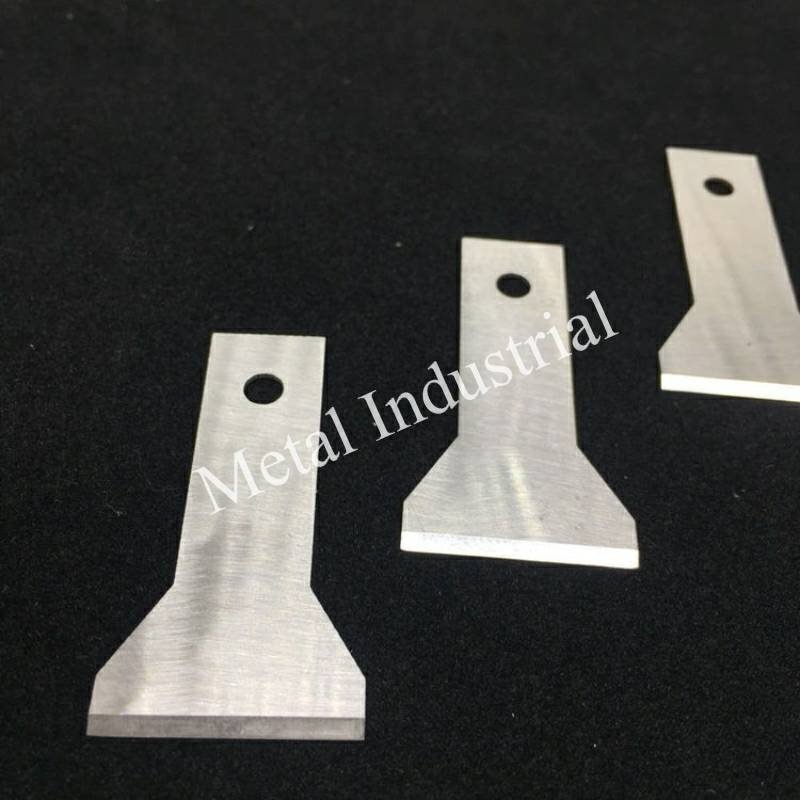
ペレタイジング(造粒)の条件が過酷な場合(研磨性フィラー、断続的な衝撃、湿式チャンバー、急激な温度上昇など)、不適切なペレタイザーナイフを使用すると、生産ラインがダウンタイムの温床となってしまいます。ここで言うCPMとは、Crucible Particle Metallurgy(クルーシブル粒子冶金)の略であり、微細で均一に分散した炭化物を生成することで、優れた耐摩耗性と信頼性の高い靭性を実現する粉末冶金プロセスのことです。注:CPMは有名なCalifornia Pellet Millのブランド名でもありますが、本記事におけるCPMは製鋼プロセスおよびそこから得られる工具鋼を指します。主なポイント:高負荷ペレタイジングにおける損傷モードとその要因。最適な材質の選択は、損傷の兆候から判断できます。稼働後の刃先に実際に現れているのは、均一な摩耗、チッピング、凝着(スミア)、ピッティング、あるいは[…]のいずれでしょうか。
高負荷ペレタイザー刃の材質比較:CPM vs D2 vs 超硬 (2026)
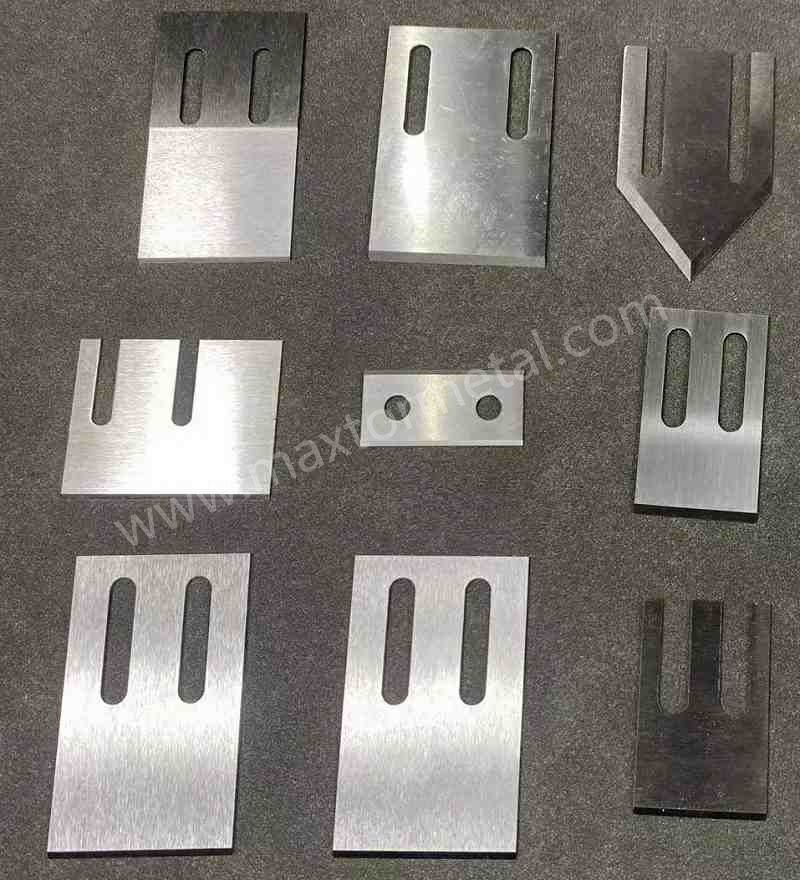
High‑load pelletizing punishes cutting edges with abrasive fillers, intermittent impacts, and heat. There’s no universal winner. If edge chipping is your dominant failure mode, CPM tool steels usually outperform conventional D2 and low‑binder carbides. If pure abrasive wear dominates under steady load, cemented carbide can deliver the longest life and most regrinds. Where heat and thermal softening creep in, CPM M4 or hot‑work steels paired with heat‑resistant coatings make a real difference. Key takeaways Side‑by‑side comparison (indicative — consult datasheets for exact values) Best‑for scenario Material family & example grades Microstructure highlights Typical hardness window Edge chipping resistance Abrasive wear resistance Hot hardness / temper resistance Plastic deformation resistance Regrind […]
超硬合金(タングステンカーバイド)製ペレタイザーナイフ:ベストプラクティスガイド
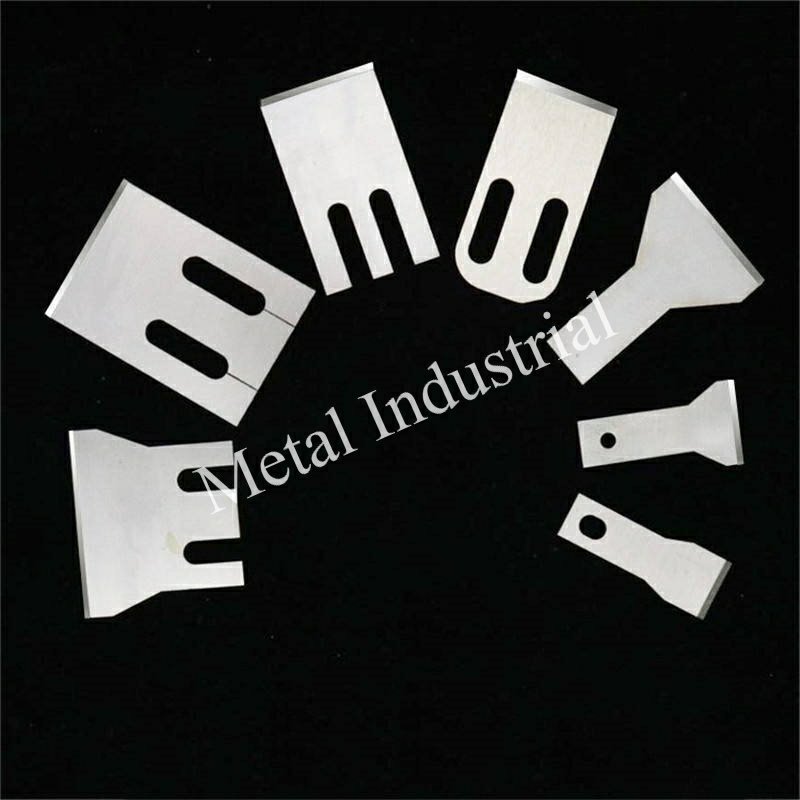
If abrasive-filled compounds keep chewing through your blades, you’re not alone. Between 0–50% glass fiber, talc/CaCO3 fillers, high line-speed shear, and frequent start/stop cycles, edge life collapses—and pellet quality goes with it. Upgrading to tungsten carbide pelletizer knives addresses the core failure modes while stabilizing pellets and trimming unplanned downtime across strand, die-face/underwater, and ring/centrifugal systems. Key takeaways Why Tungsten carbide pelletizer knives matter: the wear you’re really fighting Abrasive mineral fillers (talc, CaCO3) and glass fiber ends act like sandpaper at the cutting interface. At high line speeds, the edge sees three-body abrasion that rounds the cutting radius and elevates fines. Frequent start/stop increases impact loading and thermal cycling, […]
ペレットの連なりを防ぐ:ストランドペレタイザー用ナイフのベストプラクティス
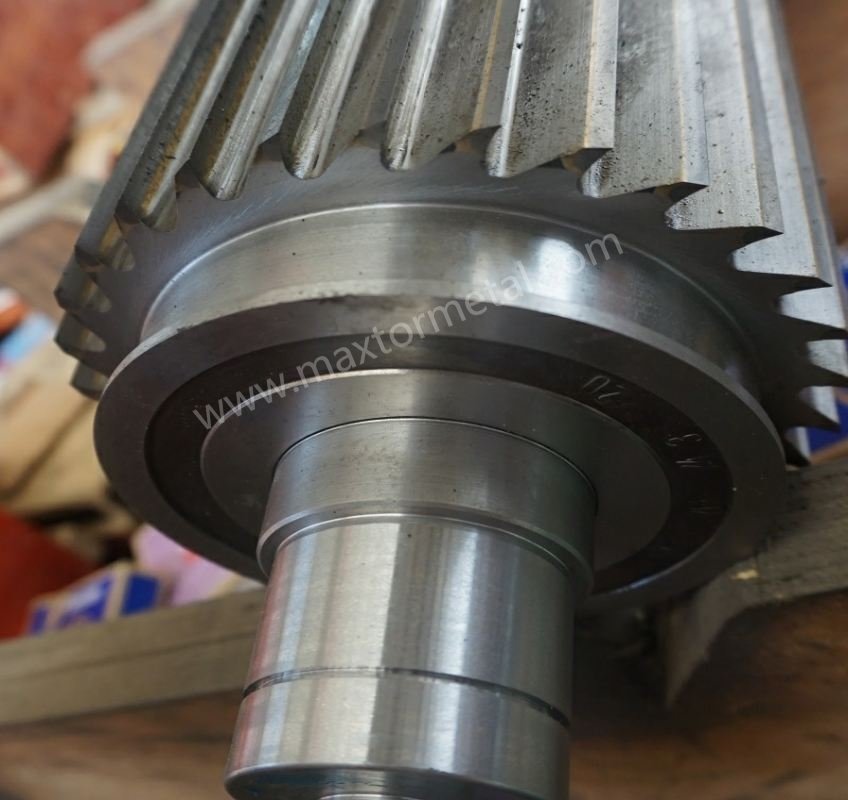
Pellet linking—pellets sticking or fusing together after cutting—wastes time, increases fines, and forces unplanned downtime. In strand pelletizing, the cut must be a clean shear on a fully solidified strand. When knives are dull or mis-set, when runout is present, or when cooling/traction aren’t matched to the polymer, you’ll see smearing, tails, and linked pellets. This guide consolidates field-proven troubleshooting steps, setup ranges, and knife geometry/materials guidance so you can fix linking fast and keep lines stable. Key Takeaways Strand Pelletizer Knives: A Step-by-Step Troubleshooting Workflow Pellet linking has multiple interacting causes. Work the checks in order and document adjustments to your strand pelletizer knives setup. Safety and Symptom Logging […]
「安物買いの銭失い」の理由:プレミアムなロータリースリッターナイフの経済性を解明
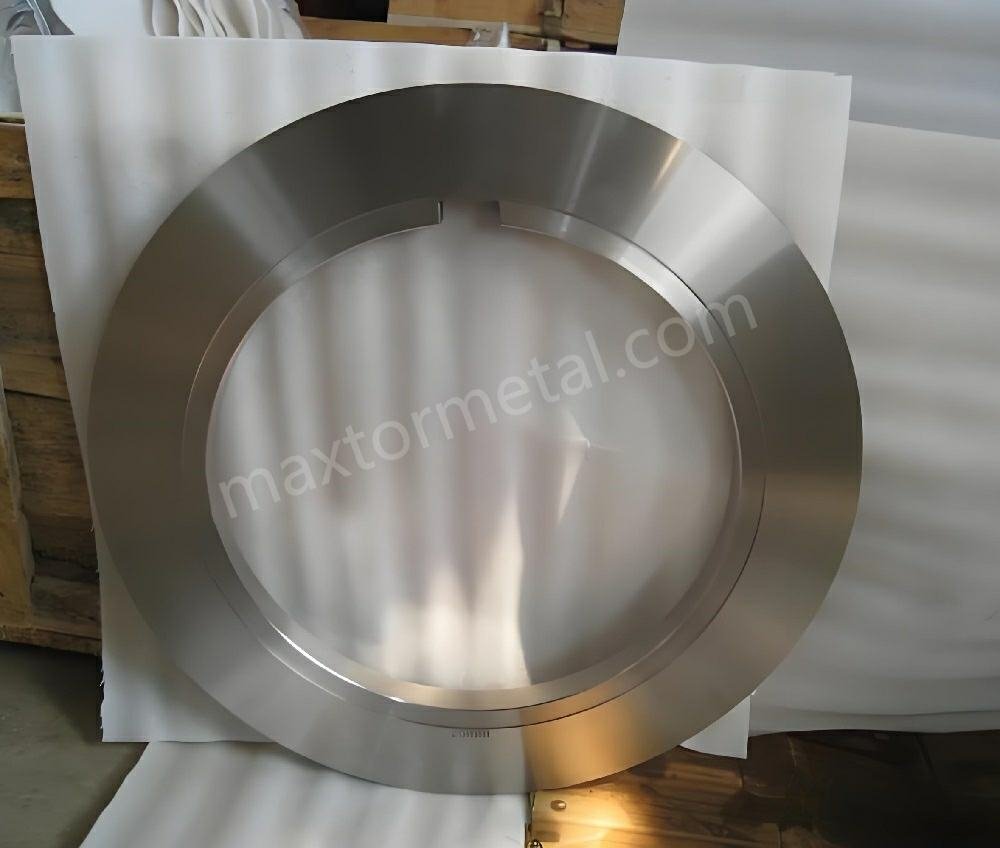
Verdict in 30 seconds: If you’re slitting stainless or high‑strength steels at moderate-to-high speeds—or your downtime costs run above roughly $50,000 per hour—premium Rotary Slitter Knives (HSS/PM‑HSS/Carbide, precision‑ground, coated) win on total cost of ownership. They cut scrap, stretch regrind intervals, and slash changeovers. If you’re a small shop on mild CR/HR steel with downtime under ~$10,000 per hour and conservative speeds, budget D2 or basic HSS can still be the economical choice. Our math anchors on three numbers: A) unplanned downtime $/h, B) total cost per changeover/regrind, and C) savings per 1% scrap‑rate reduction. Key takeaways Cheap vs premium Rotary Slitter Knives: the fast comparison (as of 2026‑01‑20) Below […]
AHSSの課題に挑む:自動車用高張力鋼(ハイテン)向けスリッターナイフの選
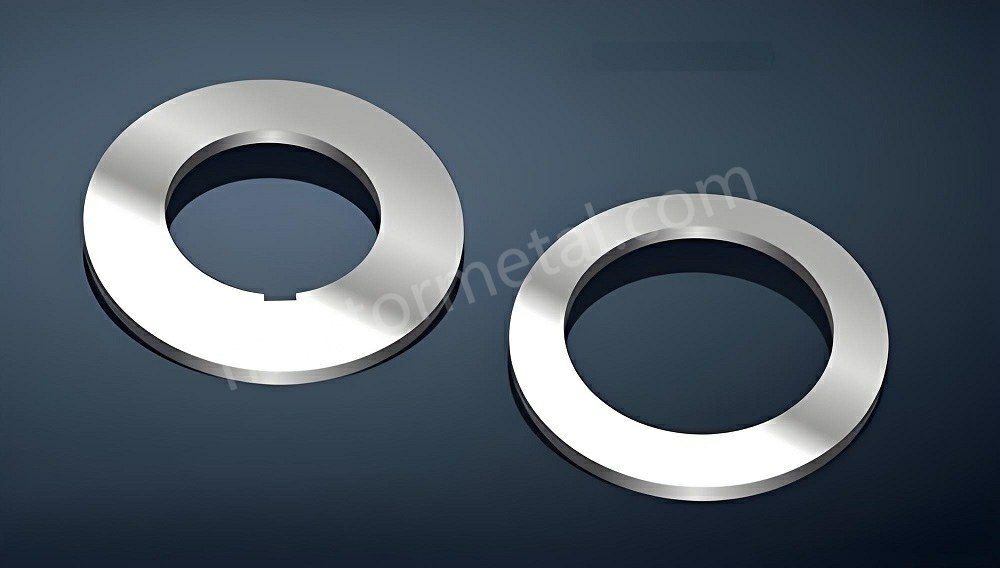
Automotive AHSS grades like DP, TRIP, and martensitic steels can turn a routine slit into a line-stopping headache. Burrs and micro‑chipping surge, edge ductility drops, and downstream formability (HER) suffers. This guide gives plant, process, and maintenance leaders practitioner-grade parameters—material and hardness ranges, coating choices, edge geometry targets, and clearance settings—plus a concise troubleshooting matrix. The goal: cleaner edges, fewer defects, and predictable performance when slitting AHSS. Key takeaways Why AHSS changes the rules AHSS combines high tensile strength with multiphase microstructures (martensite in ferrite), which raises cutting forces and amplifies sensitivity to parameter errors. Mechanical cutting reduces edge ductility; minimizing damage in the shear-affected zone is essential for better […]

 English
  Spanish
  Italian
  French
  Portuguese
  Russian
  German
  Arabic
  Hindi
Hindi  Vietnamese
  Indonesian
  Japanese
  Korean