

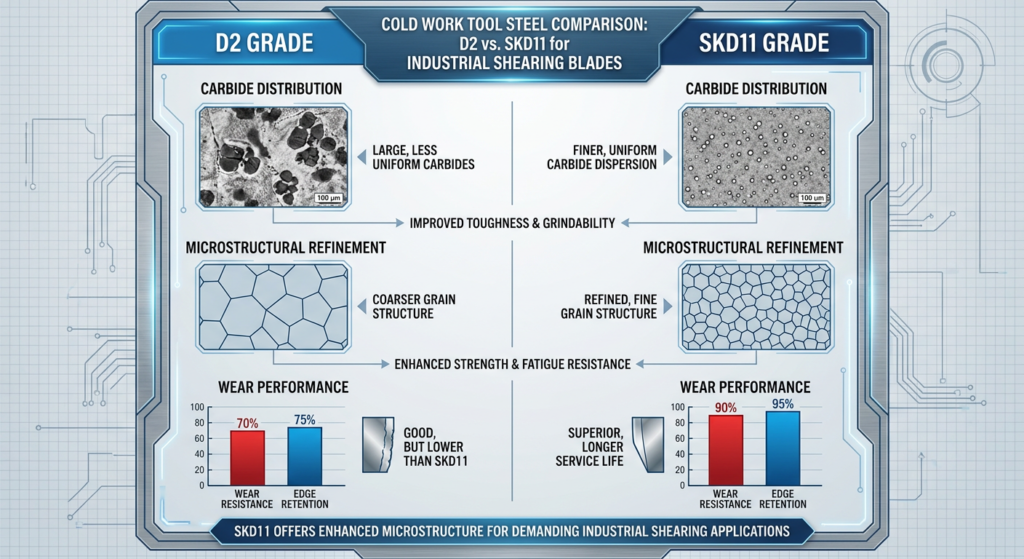
Краткий ответ: D2 и SKD11 — это практически идентичные по химическому составу высокоуглеродистые высокохромистые инструментальные стали для холодной обработки, однако более высокое содержание ванадия в D2 (0.50–1.10%) обеспечивает повышенную стойкость к абразивному износу для чистой высокопроизводительной резки материалов толщиной менее 6 мм, в то время как более мелкозернистая карбидная структура SKD11 обеспечивает лучшую ударную вязкость при обработке нержавеющей стали, переменной подаче или в операциях с высоким риском выкрашивания. Выбор зависит от преобладающего вида отказа — износа или выкрашивания, а не только от маркировки стали. Качество электрошлакового переплава (ESR) от вашего поставщика имеет такое же важное значение, как и марка стали.
Техническое примечание: Выбор инструментальной стали D2 или SKD11 для ножей для ножниц — это решение, основанное на микроструктуре карбидов, а не просто замена бренда. Обе марки относятся к одному семейству ледебуритных сталей для холодной обработки (высокоуглеродистые, высокохромистые), и диапазоны их номинального химического состава существенно перекрываются в стандартах ASTM A681, JIS G4404 и DIN 1.2379. Разница в эксплуатационных характеристиках обусловлена содержанием ванадия, технологией выплавки и контроля термообработки — переменными, которые можно подтвердить только сертификатами испытаний материалов и контролем карбидной структуры. См. Maxtor Metal технические характеристики и варианты материалов ножей для ножниц.
Обе марки, D2 и SKD11, принадлежат к одному семейству высокоуглеродистых высокохромистых инструментальных сталей для холодной обработки, однако покупатели ножей часто считают их взаимозаменяемыми, не вникая в металлургические нюансы. При подборе сменного инструмента для гидравлических гильотинных ножниц, механических приводных ножниц или линий продольной резки рулонов выбор между этими двумя спецификациями требует анализа параметров, выходящих далеко за рамки базовых показателей твердости.
Реальное различие в работе ножей для ножниц заключается не в названии марки, а в распределении карбидов и в том, как каждая марка реагирует на конкретные виды отказов. Хотя таблицы номинального состава сплавов выглядят почти идентично, незначительные различия в содержании ванадия, технологии плавки и реакции на термообработку определяют, подвергнется ли нож преждевременному микровыкрашиванию или сохранит острую кромку на протяжении сотен тысяч резов.
В этом руководстве подробно рассматриваются химический состав, карбидная структура и характер износа обеих сталей, что поможет вам выбрать подходящий нож для резки листового металла толщиной менее 6 мм. Понимание этих металлургических основ позволит инженерам по инструменту и специалистам по закупкам, оценивающим высокопроизводительные прецизионно шлифованные ножи для ножниц оптимизировать ресурс инструмента, снизить стоимость одного реза и исключить непредвиденные простои на металлообрабатывающих производствах.
Химический состав сталей D2 и SKD11
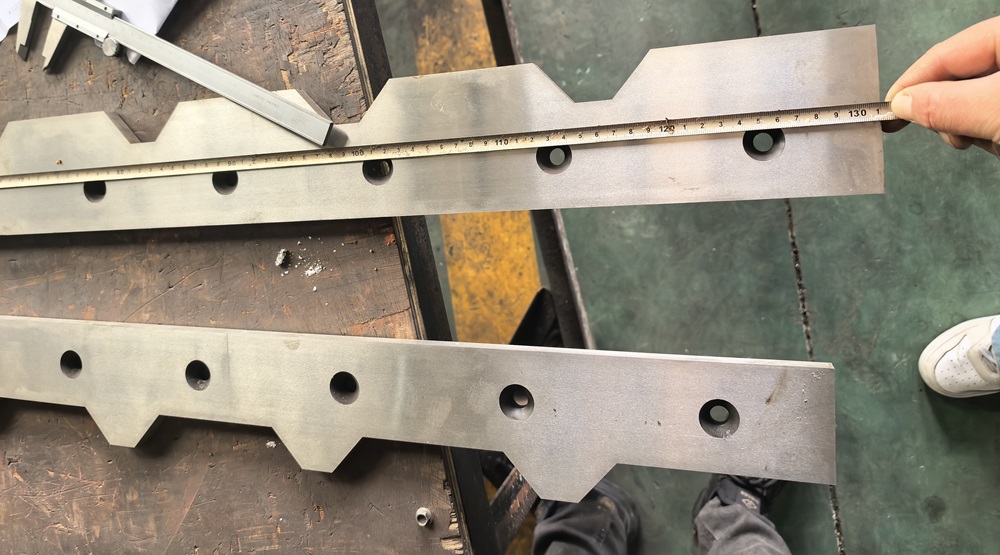
Обе марки имеют практически одинаковый диапазон содержания углерода и хрома, с незначительными различиями по ванадию и молибдену, которые формируют их микроструктуру. По своей сути оба сплава содержат примерно 1.5% углерода и 12% хрома, что классифицирует их как ледебуритные инструментальные стали. При затвердевании эта высокая концентрация хрома и углерода образует значительную объемную долю твердых первичных эвтектических карбидов (типа M₇C_3), внедренных в мартенситную матрицу после термообработки.
Понимание этих различий в составе — первый шаг к оценке того, как каждая сталь проявит себя в вашей конкретной операции резки. Хотя номинальное совпадение характеристик заставляет многих поставщиков позиционировать их как взаимозаменяемые, небольшие изменения в легирующих элементах определяют выделение карбидов, реакцию на вторичную закалку и способность к измельчению зерна.
Суммируя: D2 и SKD11 имеют одинаковую основу Cr-C, но более широкий диапазон содержания ванадия в D2 (до 1.10%) обеспечивает большее количество твердых монокарбидов VC — ключевого фактора стойкости к абразивному износу.
Сравнительная таблица состава проясняет техническое совпадение и показывает, где металлургический контроль имеет наибольшее значение:
| Элемент | AISI D2 (ASTM A681) | JIS SKD11 (JIS G4404) | DIN 1.2379 (EN ISO 4957) | Металлургическая роль |
|---|---|---|---|---|
| Углерод (C) | 1.40% – 1.60% | 1.40% – 1.60% | 1.45% – 1.60% | Твердость матрицы и образование карбидов |
| Хром (Cr) | 11.00% – 13.00% | 11.00% – 13.00% | 11.00% – 13.00% | Износостойкость и первичные карбиды M₇C_3 |
| Молибден (Mo) | 0.70% – 1.20% | 0.80% – 1.20% | 0.70% – 1.00% | Прокаливаемость и вторичная закалка |
| Ванадий (V) | 0.50% – 1.10% | 0.20% – 0.50% | 0.70% – 1.00% | Сверхтвердые монокарбиды VC и измельчение зерна |
| Кремний (Si) | 0.10% – 0.60% | ≤ 0,40% | 0.15% – 0.60% | Раскисление и твердорастворное упрочнение матрицы |
| Марганец (Mn) | 0.10% – 0.60% | ≤ 0,60% | 0.20% – 0.60% | Глубокая прокаливаемость и раскисление |
Стандартные обозначения и свойства D2
Сталь D2 охватывает несколько мировых стандартов, включая AISI D2 в Северной Америке, ASTM A681 (стандартная спецификация на инструментальные легированные стали) и европейский DIN EN ISO 4957, марка 1.2379, что обеспечивает ее широкую доступность в цепочках поставок Северной Америки и Европы.
Более высокое содержание ванадия (обычно от 0.50% до 1.10%) способствует образованию более мелких монокарбидов ванадия (VC). Эти частицы VC обладают чрезвычайно высокой твердостью (около 2800 HV по сравнению с 1500–1800 HV для хромистых карбидов M₇C_3), что вносит значительный вклад в сохранение остроты кромки в условиях высокоабразивной резки.
Стандартные обозначения и свойства SKD11
Сталь SKD11 соответствует стандарту Стандарт на легированные инструментальные стали JIS G4404, широко представлена на складах азиатских производственных центров и ценится за стабильность размеров и предсказуемую реакцию на термообработку.
Более низкое содержание ванадия (от 0.20% до 0.50%) приводит к тому, что в микроструктуре преобладают хромистые карбиды M₇C_3. Это незначительное изменение химического состава слегка снижает устойчивость к экстремальному абразивному износу по сравнению с плавками D2 с высоким содержанием ванадия, но оно формирует характеристики вязкости, делая материал менее склонным к внезапному микроразрушению при умеренных ударных нагрузках.
Распределение карбидов: что на самом деле отличает эти стали

Маркировка стали указывает на диапазон химического состава, но именно размер, распределение и измельчение карбидов определяют, как нож покажет себя в реальном производстве. Два стальных блока с идентичными сертификатами химической лаборатории могут демонстрировать радикально разный срок службы инструмента, если один из них содержит грубые, сгруппированные карбидные сетки, а другой — мелкие, равномерно распределенные частицы карбидов.
Грубые, полосчатые первичные карбиды создают концентраторы напряжений, выступая в качестве очагов зарождения микротрещин при циклическом ударном воздействии, в то время как мелкие, равномерно распределенные карбиды обеспечивают лучшую вязкость режущей кромки и стабильность размеров. При тяжелых режимах резки ударные волны проходят через кромку ножа в момент соприкосновения с листом; крупные скопления карбидов нарушают непрерывность матрицы и провоцируют микровыкрашивание.
При оценке поставщиков ножей покупателям следует смотреть глубже маркировки и изучать структуру карбидов. Проверка степени рафинирования расплава и коэффициента уковки гарантирует, что исходная заготовка была обработана для разрушения эвтектических карбидных сеток.
Суммируя: Два ножа с одинаковыми сертификатами могут работать по-разному. Размер карбидов (3–8 µm против 8–20 µm) и качество ESR-рафинирования являются ключевыми отличиями — запрашивайте у своего поставщика металлографические подтверждения, а не просто клеймо марки стали.
Как размер и распределение карбидов влияют на стойкость режущей кромки
Традиционные плавки D2 обычно характеризуются крупными первичными карбидами размером от 8 до 20 micrometers (µm). Эти крупные строчечные карбиды M₇C_3 обеспечивают высокую стойкость к абразивному износу при резке чистой малоуглеродистой стали, но они создают повышенный риск выкрашивания вдоль острых режущих кромок.
Рафинированные плавки и стали типа SKD11 обеспечивают более мелкие карбиды в диапазоне от 3 до 8 micrometer. Такое измельчение микроструктуры повышает вязкость кромки при циклической и ударной нагрузке, предотвращая выкрашивание мелких участков передней поверхности режущей кромки при высокоскоростной резке.
Роль процессов рафинирования в обеспечении качества карбидной структуры
Maxtor Metal закупает только рафинированную методом ESR или VAR сталь марок D2 и SKD11 для производства ножей для ножниц — стандарт закупок, который исключает нестабильность карбидной полосчатости, характерную для инструментальной стали традиционной отливки.
Электрошлаковый переплав (ESR) и контролируемые режимы плавки снижают ликвацию и карбидную полосчатость, обеспечивая более мелкое и равномерное распределение карбидов по всей металлической матрице. Путем переплава расходуемых электродов через ванну с активным шлаком процесс ESR устраняет неметаллические включения и подавляет образование грубой эвтектической ликвации в процессе затвердевания.
Важно отметить, что само по себе обозначение JIS не гарантирует уровень рафинирования ESR — два ножа из стали SKD11 от разных поставщиков могут показывать совершенно разные эксплуатационные характеристики в зависимости от того, были ли они произведены методом обычной электродуговой плавки или с применением вторичного ESR-рафинирования.
Чтобы гарантировать стабильность свойств от партии к партии, ведущие инженеры по промышленному инструменту подчеркивают важность строгого контроля качества сырья, отдавая предпочтение высококачественной инструментальной стали, прошедшей ESR-рафинирование, для прецизионно шлифованных ножей для ножниц. На предприятии Maxtor Metal производство ножей для ножниц сочетает в себе контролируемую вакуумную термообработку и калиброванное шлифование на станках с ЧПУ для устранения внутренних напряжений и грубой карбидной полосчатости. Каждая производственная партия сопровождается картами распределения твердости и, по запросу, снимками металлографического контроля, подтверждающими соответствие размеров и распределения карбидов техническим условиям. Это гарантирует, что режущая кромка каждого ножа сохраняет стабильное положение, высокую остроту и оптимальную стойкость к ударному выкрашиванию.
Износостойкость и виды отказов при резке листового металла толщиной менее 6 мм

Для листового металла толщиной менее 6 mm как сталь D2, так и SKD11 могут обеспечить длительный срок службы, однако именно преобладающий характер износа определяет, какая марка прослужит дольше на вашей производственной линии. Выбор неподходящей марки стали часто приводит к частым демонтажам ножей для преждевременной перешлифовки, что увеличивает расходы на инструмент и трудозатраты.
Процессы с преобладанием абразивного износа требуют превосходной абразивной стойкости стали D2, в то время как условия с высокими ударными нагрузками и риском выкрашивания требуют повышенной ударной вязкости стали SKD11. Соответствие микроструктурных преимуществ стали механическим условиям работы вашей линии предотвращает катастрофическое разрушение режущей кромки.
Понимание характера износа — это самый прямой путь к снижению стоимости одного реза и сокращению незапланированных простоев. При оценке изношенных ножей во время планового технического обслуживания осмотрите режущую кромку под увеличением, чтобы определить, является ли основной проблемой износ по задней грани, микровыкрашивание или образование крупных трещин.
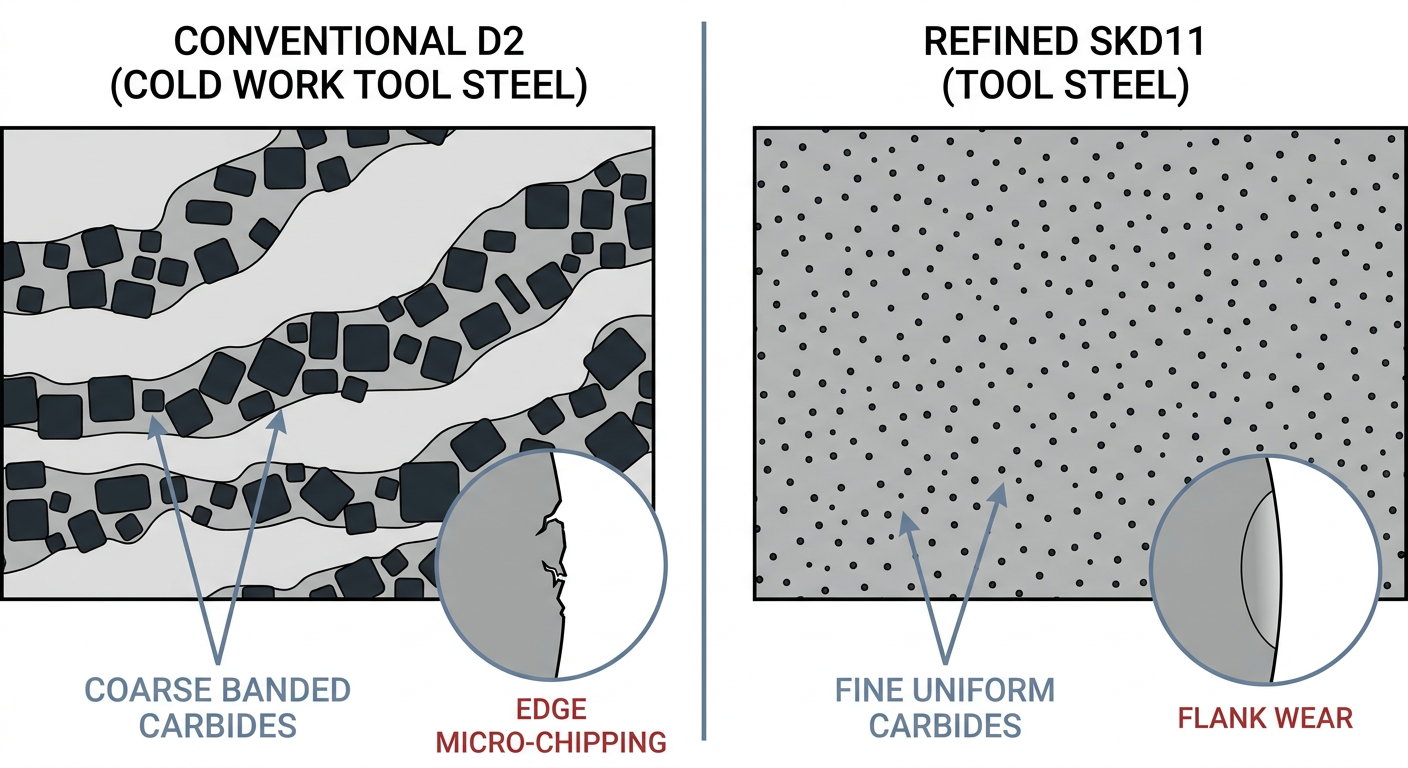
Суммируя: Сначала определите преобладающий характер износа вашего ножа. Износ по задней грани требует абразивной стойкости стали D2; микровыкрашивание требует ударной вязкости стали SKD11. Неправильный выбор ускоряет оба типа разрушения.
Ключевой вывод: Абразивный износ по задней грани требует большего объема карбидов и более высокой твердости (преимущество D2), тогда как выкрашивание кромки и образование трещин требуют однородности микроструктуры и более мелкого размера карбидов (преимущество ESR-рафинированной стали SKD11).
Износостойкость: удержание остроты кромки и срок службы ножа
Сталь D2 с целевой твердостью 60–62 HRC обеспечивает более высокую стойкость к абразивному износу, как правило, дольше сохраняя остроту режущей кромки при крупносерийной резке листов из углеродистой и низколегированной стали. Высокая объемная доля карбидов ванадия и хрома действует как микроскопическая броня, защищая мартенситную матрицу от абразивного износа.
Сталь SKD11 с целевой твердостью 58–60 HRC жертвует незначительной частью износостойкости ради повышенной ударной вязкости, что делает ее использование более безопасным в неидеальных условиях работы оборудования, где могут возникать небольшие прогибы, деформация станины или механический люфт.
Стойкость к выкрашиванию и растрескиванию: когда важна ударная вязкость
Выкрашивание происходит, когда ударная нагрузка, несоосность или колебания зазора концентрируют напряжение на кромке ножа — в таких условиях более мелкая карбидная структура стали SKD11 обеспечивает лучшую стойкость к зарождению трещин. В гильотинных ножницах при резке высокопрочного листового проката удар в момент входа в металл может легко скалывать крупные частицы карбидов в обычной стали D2, вызывая быструю деградацию кромки.
Риск растрескиванию возрастает при более высоких уровнях твердости, особенно вблизи верхнего предела 62 HRC, при тонкой геометрии кромки или нестабильной подаче. Работа при твердости 62 HRC оставляет минимальный запас на ошибку в случае колебаний толщины листа или наличия твердых участков в рулонном прокате.
Выбор подходящего ножа для вашей операции резки
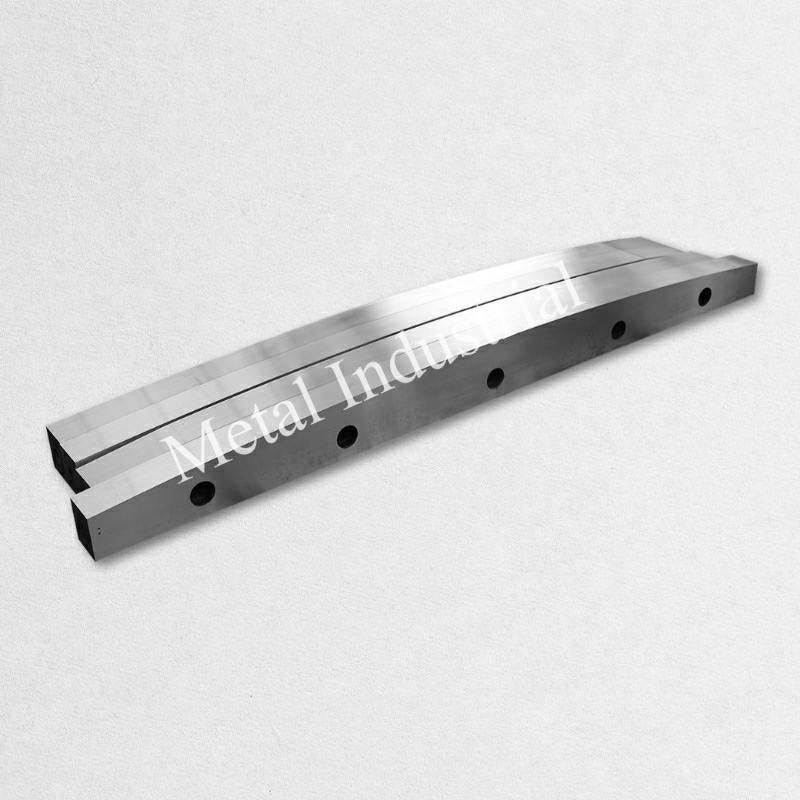
Практическое правило выбора простое: определите, выходит ли ваш нож из строя из-за износа или из-за ударов и выкрашивания, а затем выберите соответствующую марку стали. Детальный осмотр демонтированных ножей покажет, округлялась ли режущая кромка постепенно или подверглась преждевременному микроразрушению.
Чистая, стабильная, высокообъемная резка позволяет в полной мере использовать преимущества износостойкости стали D2, в то время как процессы с нестабильной подачей, колебаниями зазора или частыми изменениями толщины листа выигрывают от устойчивости стали SKD11 к погрешностям эксплуатации.
Установите зазор между ножами в пределах 5–10 процентов от толщины листа и контролируйте износ по задней грани для своевременного проведения перешлифовки. Установка неправильного зазора является главной причиной преждевременного выхода ножей из строя; избыточный зазор приводит к образованию заусенцев и изгибу листа, в то время как недостаточный зазор увеличивает усилие резания и ускоряет выкрашивание кромки.
Суммируя: Демонтируйте изношенный нож и осмотрите его под увеличением. Скругление задней грани = проблема износа → D2. Выкрашивание или скол кромки = проблема вязкости → ESR SKD11.
Схема принятия решений для операций с преобладанием износа
Если ваши ножи выходят из строя из-за постепенного скругления кромки и роста заусенцев при резке чистой углеродистой стали, сталь D2 с твердостью 58–60 HRC обеспечит максимальный срок службы ножа. В таких стабильных условиях эксплуатации основной экономической целью является максимизация объема нарезанного металла между циклами перешлифовки.
Интервалы между перешлифовками могут достигать примерно 100 000 резов на низкоуглеродистой стали толщиной 5 мм до достижения порога износа задней грани 0,4 мм, при условии, что жесткость станка и зазор между ножами остаются правильно откалиброванными.
Для получения стандартной операционной процедуры (SOP) по ротации и перешлифовке на основе измерений — включая предельные значения высоты заусенцев и готовые к аудиту шаблоны журналов — см. SOP по графику ротации 4-сторонних поворотных ножей и критериям перешлицовки.
Схема принятия решений для сценариев с ударными нагрузками и выкрашиванием
Если на ваших ножах появляются сколы, микротрещины или изломы кромки, сталь SKD11 с твердостью 58–60 HRC обеспечит необходимый запас вязкости для вашего производства. Более мелкозернистая морфология карбидов в SKD11 более эффективно рассеивает локальные концентрации напряжений, предотвращая распространение микротрещин по режущей фаске.
При высоконагруженной обработке рулонов — например, резке листов из нержавеющей стали толщиной 4 мм (AISI 304) с частыми ударными нагрузками на входе — промышленные испытания показывают, что переход с обычной стали D2 электродуговой плавки (EAF) на очищенную методом ЭШП (ESR) сталь SKD11 увеличивает интервалы между перешлифовками ножей примерно на 25%–30%, главным образом за счет устранения микровыкрашивания кромки. Это увеличение интервала согласуется с показателями перешлифовки, зафиксированными Maxtor Metal для клиентов, обрабатывающих нержавеющую сталь толщиной 4 мм на гидравлических гильотинных линиях (внутренние производственные данные; n = 3 заказчика, 4-месячный период наблюдения).
Повторно проверьте настройки зазора, параллельность ножей и соосность подачи — корректировка технологического процесса часто продлевает срок службы ножей эффективнее, чем просто смена марки стали. Обеспечение жесткости направляющих станка и параллельности посадочных мест ножей предотвращает локальные перегрузки во время рабочего хода.
Before switching grades, confirm the chipping mode by reading the fracture surface: fatigue-mode chipping (beach marks, clam-shell pattern) means a setup or grinding variable is the root cause and a grade change will not resolve it; impact-mode chipping (coarse cleavage, irregular facets) is the genuine indication for a tougher grade such as ESR-refined SKD11. The Shear Blade Edge Chipping Root Cause Analysis: Fractography and Decision Tree provides the shop-floor reading method and confirms when a metallurgy correction is actually warranted.
Проверка качества материала ножей от вашего поставщика
Маркировка стали, выбитая на ноже, указывает на то, какой сталь должна быть, а не на то, какая она есть на самом деле — верификация необходима для стабильной работы. В глобальных цепочках поставок инструмента номинальная маркировка марки стали может скрывать колебания качества лома, методов раскисления и степени уковки при ковке.
Запрос сертификатов испытаний материалов, отчетов о твердости и металлографического контроля карбидов гарантирует, что вы получите подлинную сталь с правильной термообработкой. Установление четких критериев приемки с производителем инструмента предотвращает попадание некачественных ножей на ваше производство.
Суммируя: Маркировка стали — это лишь заявление, а не гарантия. Сертификат MTC 3.1, отчет о картировании твердости и снимок контроля карбидной структуры — это минимальный пакет документов, который необходимо запросить перед приемкой партии ножей.
Что необходимо проверить перед заказом ножей для листовых ножниц
Чтобы гарантировать долговечность инструмента и исключить риски преждевременного выхода из строя, потребуйте от поставщика ножей предоставить следующую документацию перед отгрузкой:
- Требуйте сертификат EN 10204 / MTC 3.1, подтверждающий номер плавки, проверенный химический состав и состояние термообработки для каждого заказа ножей.
- Запрашивайте металлографические снимки, показывающие размер и распределение карбидов (для подтверждения отсутствия выраженной эвтектической полосчатости или избыточных скоплений карбидов размером более 15 мкм).
- Запрашивайте протоколы проверки твердости по Роквеллу (HRC), выполненной в нескольких точках по длине готового ножа, для подтверждения равномерности термообработки.
- Запросите стандартный пакет документации по качеству от Maxtor Metal — сертификат MTC 3.1, карта твердости и снимки контроля карбидной структуры предоставляются с каждым заказом прецизионных ножей для листовых ножниц и доступны для стороннего аудита.
Если ваше производство осуществляет резку сталей AHSS или UHSS, рассмотрите ножи со вставками из карбида вольфрама в качестве третьего варианта для высокопроизводительных линий, где частота перешлифовки D2/SKD11 становится сдерживающим фактором. См. руководство по окупаемости инвестиций (ROI) для ножей для листовых ножниц со вставками из карбида вольфрама на линиях резки AHSS для полного сравнения совокупной стоимости владения (TCO).
FAQs:
Является ли сталь SKD11 идентичной инструментальной стали D2?
Хотя стали SKD11 (JIS G4404) и D2 (ASTM A681 / DIN 1.2379) принадлежат к одному семейству высокоуглеродистых высокохромистых сталей для холодной обработки и имеют схожие диапазоны основного химического состава, они не идентичны на 100%. D2 обычно содержит больше ванадия (до 1.10%), что способствует образованию твердых карбидов ванадия для сопротивления абразивному износу, в то время как SKD11 отличается несколько меньшим содержанием ванадия (0.20%–0.50%), обеспечивая более мелкий средний размер карбидов, что повышает ударную вязкость.
Какая марка стали лучше подходит для резки листов из нержавеющей стали толщиной менее 6 мм?
Для резки нержавеющей стали (например, AISI 304 или 316) обычно предпочтительнее использовать SKD11 или очищенную методом ЭШП (ESR) сталь D2 с термообработкой до 58–60 HRC. Нержавеющая сталь склонна к наклепу и обладает более высоким сопротивлением сдвигу, что создает повышенные ударные нагрузки на режущую кромку. Превосходная вязкость стали SKD11 противостоит выкрашиванию кромки, которое часто вызывается сопротивлением нержавеющей стали при резке.
Какая твердость рекомендуется для ножей для листовых ножниц из сталей D2 и SKD11?
Для резки листового металла толщиной менее 6 мм рекомендуемый диапазон твердости составляет 58–60 HRC для универсальной резки, требующей высокой ударной вязкости, и 60–62 HRC для высокопроизводительной резки малоуглеродистой стали в условиях повышенного износа. Твердость выше 62 HRC значительно увеличивает риск выкрашивания режущей кромки и катастрофического разрушения ножа.
Что вызывает микровыкрашивание на ножах для листовых ножниц из стали D2?
Микровыкрашивание на ножах для листовых ножниц из стали D2 в первую очередь вызвано скоплениями крупных первичных карбидов (8–20 µm), выступающими в роли внутренних концентраторов напряжений, неправильной настройкой зазора между ножами (менее 5% или более 10% от толщины листа), прогибом станины станка или резкой материала, прочность которого превышает расчетные характеристики ножа.
Почему электрошлаковый переплав (ESR) важен для ножей для листовых ножниц?
Электрошлаковый переплав (ESR) — это процесс вторичного рафинирования, который очищает расплавленную сталь, удаляет неметаллические включения и предотвращает грубую ликвацию карбидов при затвердевании. Инструментальная сталь, полученная методом ESR-переплава, имеет мелкозернистую однородную карбидную структуру (3–8 µm), что значительно повышает ударную вязкость и стойкость режущей кромки по сравнению со сталью обычного литья.
Как часто необходимо перетачивать ножи для листовых ножниц?
Частота переточки зависит от материала листа, объема резки и стандартов технического обслуживания. В качестве базового ориентира, правильно отрегулированный нож из стали D2 или SKD11 при резке малоуглеродистой стали толщиной 5mm подлежит переточке, когда износ по задней грани достигает примерно 0.4mm, что обычно соответствует 80 000–100 000 резов.
Заключение
Стали D2 и SKD11 являются металлургическими аналогами, однако распределение карбидов, стабильность термообработки и соответствие характеру износа определяют, какой нож обеспечит большую эффективность на вашей линии резки. Выбор между ними требует анализа конкретных эксплуатационных условий, а не простого сопоставления по таблицам номинальных аналогов.
После выбора подходящей марки стали следующим важным шагом является контроль уменьшения толщины в процессе циклов переточки. Метод расчета регулировочных прокладок и протокол проверки перекрытия после каждой переточки см. в руководстве по компенсации уменьшения толщины при переточке и подбору пакета регулировочных прокладок.
Для резки листов толщиной менее 6mm, где преобладает абразивный износ, D2 обеспечивает превосходную стойкость кромки благодаря более высокому содержанию карбидов ванадия; для операций с высокой ударной нагрузкой или линий с нестабильными свойствами проката SKD11 обеспечивает необходимый запас вязкости для предотвращения преждевременного выкрашивания.
Запрашивайте у поставщика ножей подтверждение качества карбидов, стабильности термообработки и результатов испытаний на твердость HRC для обеспечения стабильности от партии к партии и предсказуемого срока службы инструмента. Maxtor Metal поставляет прецизионно шлифованные ножи для листовых ножниц из сталей D2 и SKD11, изготовленные из заготовок инструментальной стали ESR-переплава, с вакуумной термообработкой и контролем твердости в качестве стандарта для каждого заказа. Для предприятий, впервые переходящих на другую марку стали, Maxtor Metal может предоставить сравнительные комплекты ножей с идентичной геометрией для проведения параллельных испытаний.
Профиль автора
Нэнси Ву
Старший инженер-технолог, производственный инжиниринг (PE) | Maxtor Metal
Обладая более чем 12-летним опытом в производстве промышленных ножей, Нэнси специализируется на характеристиках механической обработки, термообработки и поведении поверхностных покрытий высокоуглеродистых инструментальных сталей для холодной деформации (включая SKD11, D2), быстрорежущих сталей (M2), сталей для горячей деформации (H13), порошковых сплавов и карбида вольфрама. Она имеет высокую квалификацию в области программирования высокоточного шлифования на станках с ЧПУ и оптимизации технологических процессов.
Сертификаты: Сертифицированный инженер-технолог SME (CMfgE), специалист по управлению проектами (PMP), Черный пояс Шести Сигм (Six Sigma Black Belt), сертификаты ASM International по металлургии инструментальных сталей.

 English
  Spanish
  Italian
  French
  Portuguese
  Russian
  German
  Arabic
  Hindi
Hindi  Vietnamese
  Indonesian
  Japanese
  Korean