1. Industrielle Schreddermesser: Technische Spezifikation & Materialauswahl
Dieses Whitepaper basiert auf der Fertigungserfahrung von Maxtor Metal in den Bereichen industrielle Zerkleinerung, Recycling und Abfallverarbeitung.
Dieses technische Dokument legt die technischen Grundlagen, metallurgischen Kriterien und Fertigungsprotokolle für Hochleistungs-Schreddermesser fest, die in schweren industriellen Recycling-, Festabfallmanagement- und Biomasseverarbeitungssystemen eingesetzt werden. Dieses Whitepaper dient als Kernreferenz für Einkaufsleiter, Maschinenbauingenieure und OEM-Spezialisten (Original Equipment Manufacturer), die eine kalkulierbare Werkzeugstandzeit, eine hohe Schnitthaltigkeit und eine fehlerfreie Kontrolle katastrophaler Ausfälle (Null-Fehler-Prinzip) fordern.
Key takeaway:
- Maxtor Metal manufactures single-shaft and multi-shaft industrial shredder blades in AISI D2, DC53, H1.|3, M6V, and martensitic stainless steel grades, adhering to strict audit-ready quality and procurement protocols for every blade produced. Blades are vacuum hardened, cryogenically stabilized at −196℃, and precision-ground to tolerances as tight as ±0.01 mm for OEM compatibility with Weima, SSI, UNTHA, Vecoplan, and Andritz systems.
1.1 Technical Specifications Matrix
| Parameter | Einwellen-Schredderklingen | Multi-Shaft Shredder Blades (Double/Four-Shaft) |
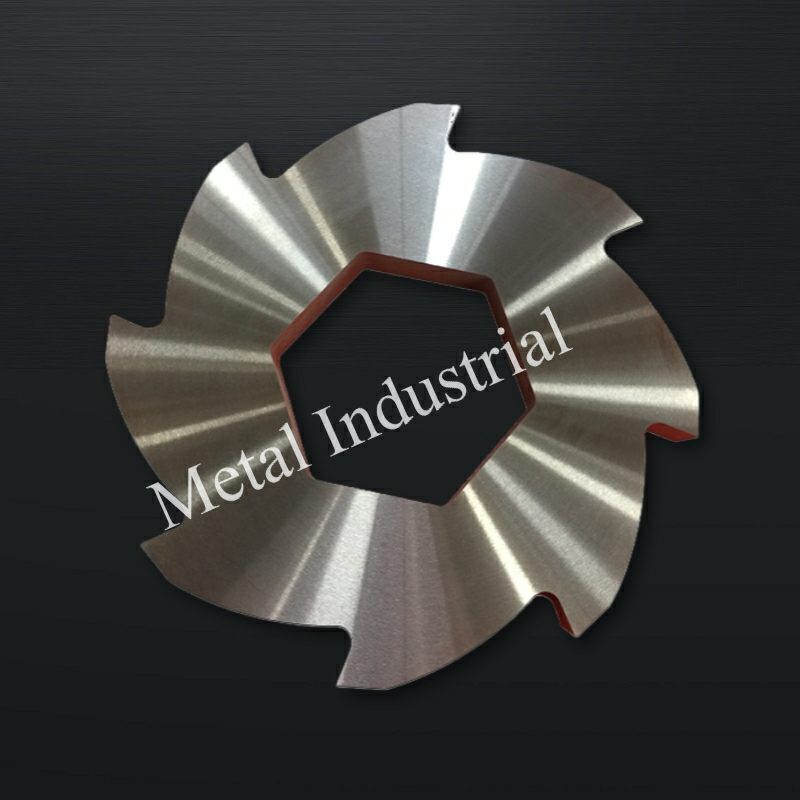
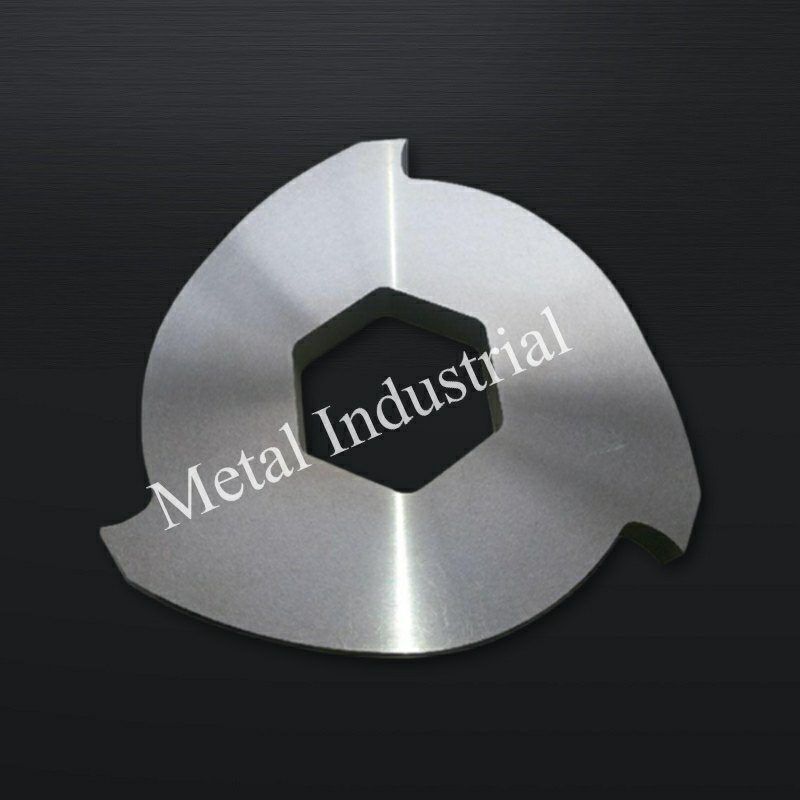
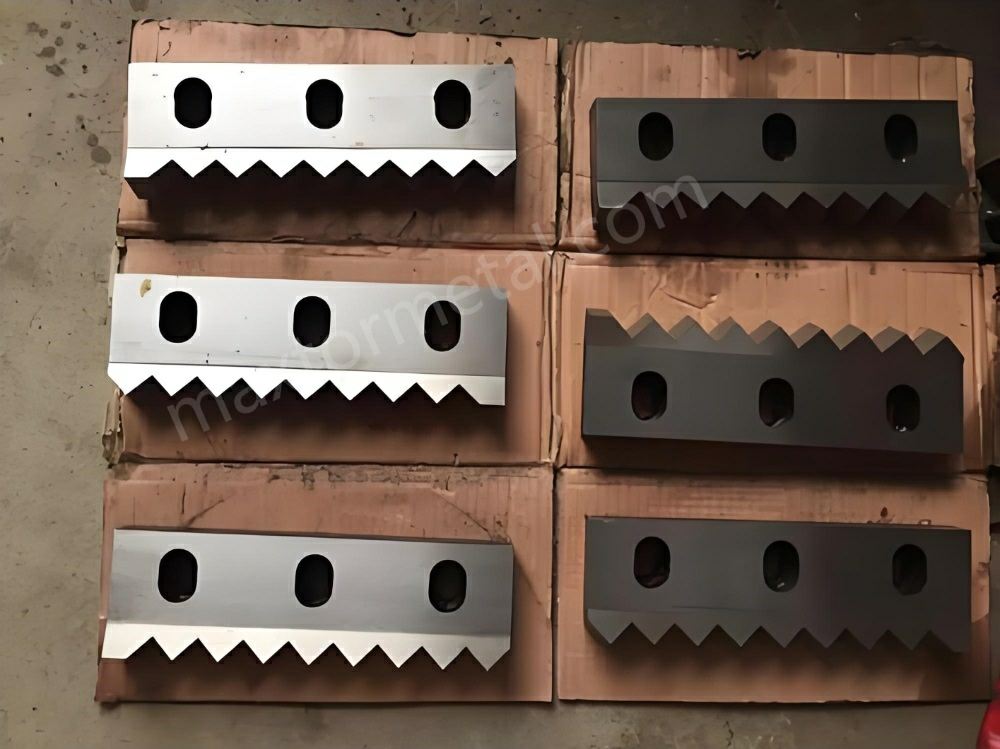
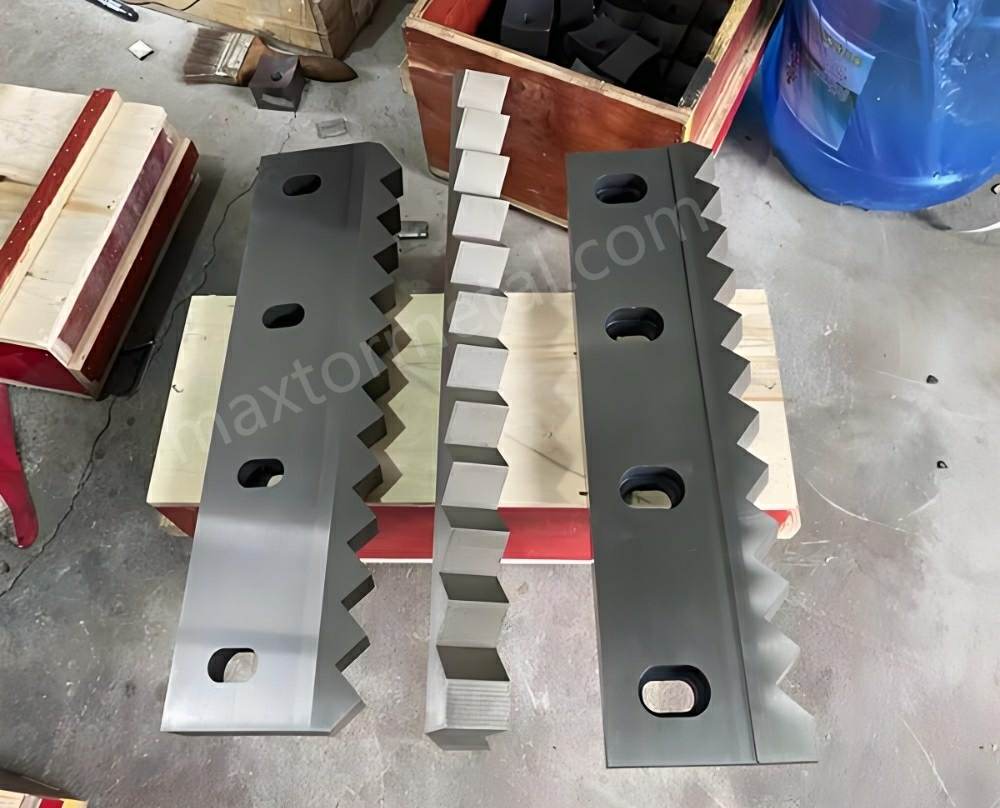
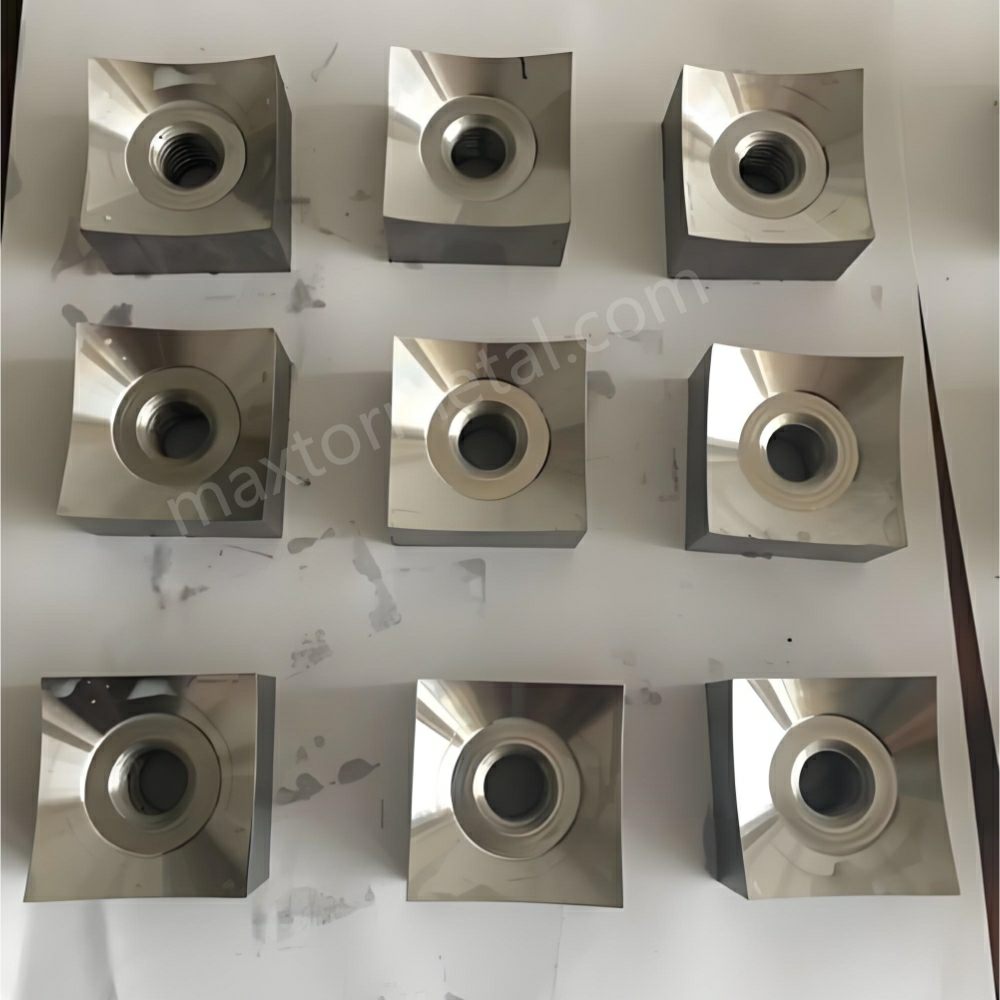
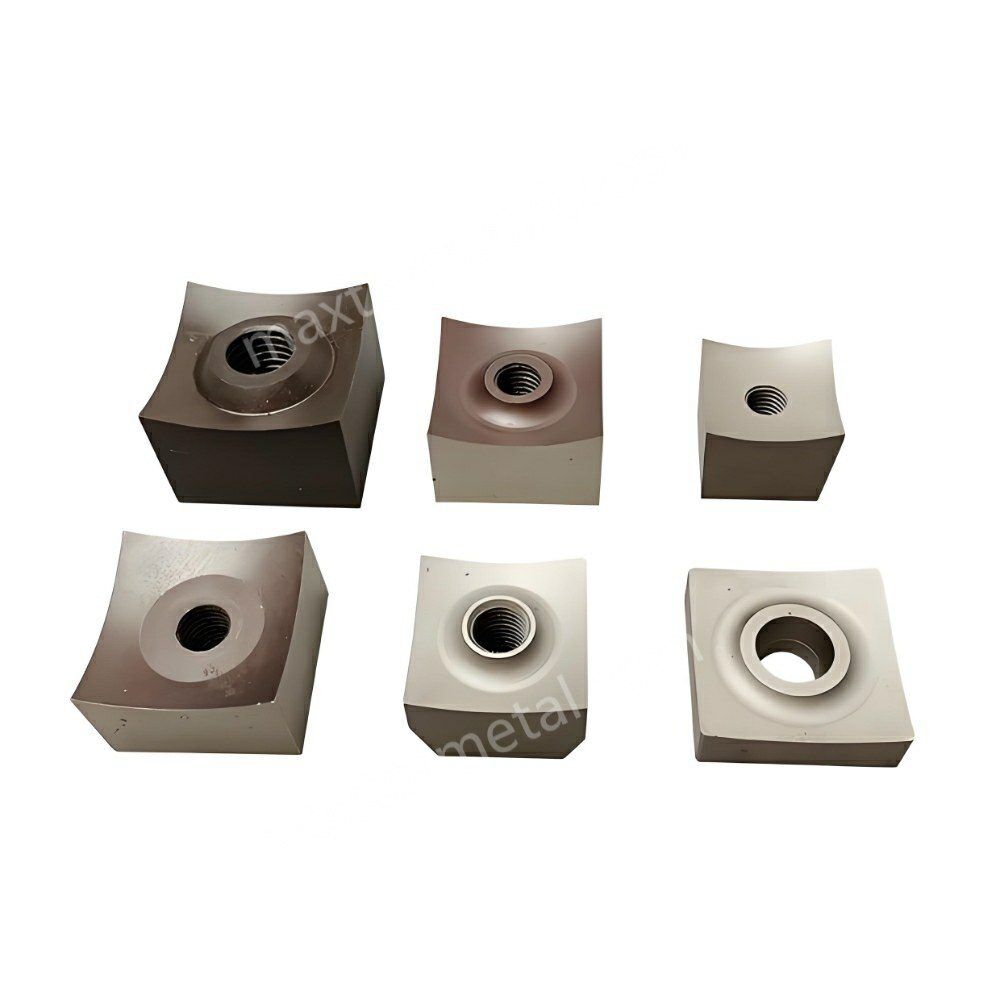
| Primary Blade Profiles | Multi-angle square concave rotary blocks, stator bed blades. | Multi-claw interlocking disc blades (3-claw, 5-claw, 8-claw configurations). |
| Schneidmechanismus | High-speed, high-frequency precision shearing via hydraulic ram feed against a stator. | Low-speed, ultra-high torque counter-rotating volumetric gripping, tearing, and high-pressure crushing. |
| Core Materials | AISI D2 (1.2379), DC53, AISI 4140 / AISI 1045 base with brazed Tungsten Carbide inserts. | AISI H13 (1.2344), AISI A8 Mod, AISI D2, AISI 4140, M6V Vanadium steel, DC53, AISI 420, AISI 440C. |
| Härtespektrum | Tool steel: 58–60 HRC (vacuum hardened). Carbide inserts: 89–92 HRA on a toughened matrix. | 48–54 HRC (toughness-driven), 56–60 HRC (wear-driven), 48–52 HRC (anti-corrosive), 58–60 HRC (high-carbon martensitic). |
| Key Dimensions | 34×34×20 mm, 40×40×20 mm, 60×60×30 mm with central countersunk bolt holes. | Outer Diameter (OD): 150–600 mm. Thickness: 15–60 mm. Bore: Hexagonal, octagonal, or involute spline. |
| Maßtoleranzen | General: ISO 2768-mK. Base seating & shaft mating faces: Strict ±0.02mm. | Thickness: ISO 2768-mK. High-precision applications: End-face flatness down to ±0.01mm. |
| Oberflächenfinish | Concave cutting face: Ra< 0.8μm. Mounting seat: Ra< 1.6μm. | Milled/ground end faces: Ra< 0.8μm. Core working profile: Ra< 3.2μm. |
| Assembled Clearance | Micro-clearance fly-knife setup: 0.1–0.5 mm adjusting for specific material thickness. | Axial open-interlocking clearance: 0.15–0.40 mm side gap (spacer is 0.3–0.8 mm wider than blade). |
| Compatible OEMs | Weima, Vecoplan, Lindner, Herbold, and equivalent global single-shaft systems. | Weima (Four-Shaft), SSI, UNTHA, Andritz heavy-duty environmental processing lines. |

2. Technische Übersicht des Schreddermesser-Engineerings
Industrial size reduction depends on two distinct mechanical shearing processes: high-frequency precision clipping and low-speed high-torque tearing. Understanding the mechanics of these operations is vital for predicting tool life and system efficiency.
2.2 Multi-Shaft Tearing Dynamics
Multi-shaft industrial shredders (dual or quad-shaft configurations) operate via counter-rotating shafts turning at lower speeds but with high torque. The process relies on interlocking hook-like claw profiles that pull large, dense materials down into the center of the cutting chamber.
The shredding action uses a combination of hook tensile tearing, high-pressure lateral crushing, and interlocking side-face shearing. Rather than clean shearing, the mechanics focus on volumetric displacement and severe structural tearing. The open axial clearance system (0.15mm – 0.4mm side-gap per blade) permits independent thermal expansion and handles structural deformation under high loads.
2.1 Single-Shaft Cutting Dynamics
Single-shaft shredding systems run at higher rotational velocities, using a hydraulic ram to push bulk materials against a rotor turning at moderate-to-high speeds. The cutting mechanism is a precise, micro-gap scissor-like action occurring between the rotating square insert (rotary blade) and the stationary counter-knife (stator blade).
The primary stress applied to the material is pure shear stress, defined by:
$$\tau = \frac{F_{cutting}}{A_{shear}}$$
The dominant stress mode is shear, with the cutting force per unit shear area defined by τ = F/A. In practice, the narrow clearance (0.1–0.5 mm) also induces compressive stress normal to the shear plane, accelerating plastic deformation and clean fracture of the workpiece. The square concave profile of the rotary insert creates an acute positive rake angle that lowers the peak power needed from the main drive shaft. Final output particle size is strictly governed by a classification screen positioned beneath the rotor assembly.
2.3 Industrial Wear Characterization
Shredder blades operate in demanding tribological environments, with tool degradation following four distinct industrial wear patterns:
- Abrasive Wear (Micro-Ploughing): Small, hard particles like sand, scale, glass fiber, or mineral dust slide across the tool steel matrix, cutting microscopic grooves and rounding the sharp cutting edges. This blunts the edge, increases power draw, and causes material pull-out or stretching instead of clean cutting.
- Impact Fatigue (Chipping & Micro-Spalling): When heavy metallic impurities or uncrushable tramp components enter the machine, they exert high localized contact forces on the cutting edge. If the material’s fracture toughness (K1c) is insufficient, this contact stress causes immediate micro-chipping or catastrophic section failure.
- Adhesive Wear & Thermal Softening: Processing dense polymers or highly elastic elastomers generates high friction at the cutting interface. This localized heat can cause localized temper-softening, which accelerates material loss and leads to polymer adhesion on the blade faces.
- Intergranular Chemical Corrosion: Processing municipal solid waste, food waste, or animal tissue exposes the steel to high moisture, chlorides, organic acids, and salts (pH < 4). This reactive environment induces rapid pitting and intergranular oxidation, stripping the steel matrix of chromium and accelerating mechanical wear.
3. Anwendungen für industrielle Schreddermesser
3.1 Advanced Plastics & Polymer Reclamation
- Target Processing Machinery: High-throughput single-shaft shredders with variable-torque hydraulic rams.
- Input Material Composition: Heavy-wall polyolefin pipes, injection-molded purges, automotive bumpers, and post-agricultural film contaminated with sand or soil.
- Operational Engineering Criteria: High abrasive friction from glass fibers and mineral fillers. Requires excellent edge retention to prevent plastic film from stretching and wrapping around the rotor.
- Recommended Specification: AISI D2 or DC53 rotary inserts through-hardened to 58–60 HRC. For heavy sand contamination, use an AISI 4140 base with brazed Tungsten Carbide (89–92 HRA) inserts.
3.2 High-Capacity Electrical Cable & E-Waste Processing
- Target Processing Machinery: High-precision, micro-clearance single-shaft granulators and shredders.
- Input Material Composition: Armor-clad copper/aluminum power cables, communication lines, and electronic waste assemblies.
- Operational Engineering Criteria: Requires precise, low-clearance cutting (0.1mm – 0.2mm) to cleanly separate copper strands from elastomer jackets without generating excess heat or insulation smear.
- Recommended Specification: DC53 tool steel to prevent micro-chipping caused by hidden steel fasteners. Apply a physical vapor deposition (PVD) Titanium Nitride (TiN) coating (>2000HV) to the stator face to extend service life.
3.3 Heavy-Duty Industrial Solid Waste & Hazardous Waste Management
- Target Processing Machinery: High-torque, low-speed dual-shaft or quad-shaft heavy industrial shredders.
- Input Material Composition: Steel drums, structural automotive scrap, reinforced storage containers, and mixed hazardous waste containing structural steel plates.
- Operational Engineering Criteria: Extreme shock loading and high torsion forces on the cutting claws when encountering thick uncrushable components.
- Recommended Specification: AISI H13 (1.2344) or modified AISI A8 tool steel through-hardened to 48–54 HRC. This selection prioritizes high impact toughness and structural resistance over pure abrasive wear resistance to prevent blade shattering. A closely related hazardous-material application is lithium-ion battery recycling, where low-speed shear, controlled atmosphere, and HF-resistant materials are required in addition to impact toughness — see our Lithium-Ion Battery Shredding Hazards guide for the full engineering control framework.
3.4 End-of-Life Vehicle (ELV) Tire & Rubber Processing
- Target Processing Machinery: Double-shaft heavy environmental shredders equipped with progressive hook designs.
- Input Material Composition: Whole commercial vehicle tires containing thick, high-tensile steel bead wire bundles.
- Operational Engineering Criteria: Severe combination of high abrasive friction from vulcanized rubber compounds and high tensile/shear loads from cutting high-carbon spring steel wire.
- Recommended Specification: Special M6V vanadium-rich wear-resistant tool steel or premium DC53 hardened to 56–58 HRC to prevent claw breakage under wire tension. The right hardness target here is a trade-off, not a maximum — pushing HRC too high sacrifices the impact toughness needed to survive bead-wire shock and tramp metal strikes. See our guide on balancing hardness vs. toughness for scrap tire and ELV shredder blades for the full cost-per-ton analysis and a documented failure case.
3.5 Large-Scale Biomass & Agricultural Fuel Processing
- Target Processing Machinery: High-torque quad-shaft shredder systems utilizing multi-claw configurations.
- Input Material Composition: High-density baled agricultural straw, crop stalks, forestry residues, and wood pallets containing structural fasteners.
- Operational Engineering Criteria: Fibrous biomass materials easily wrap around shredding shafts, creating high radial forces and friction. Hidden stones or metal wires can cause sudden impact loads.
- Recommended Specification: AISI 4140 (1.7225) structural tool steel through-hardened to 48–54 HRC for standard operations requiring cost-effective toughness. For continuous RDF (Refuse-Derived Fuel) processing lines, upgrade to premium M6V vanadium steel. Material selection alone doesn’t guarantee sizing compliance on these lines — cutter geometry, screen open-area ratio, and shear-gap control are equally decisive. See our guide on die technische Vermeidung von Überkorn-Ausschuss für die Effizienz der EBS-Aufbereitung (RDF/SRF) for the full system-level approach.
3.6 Organic Municipal Waste, Food Waste & Animal Rendering
- Target Processing Machinery: Double-shaft organic waste shredders with liquid-tight sealing arrays.
- Input Material Composition: Post-consumer food waste with mixed cutlery/ceramics, whole animal carcasses, dense bone structures, and hooves from rendering operations.
- Operational Engineering Criteria: Severe exposure to high-moisture organic acids, high salt concentrations, and continuous corrosive wear, combined with shock impacts from dense bone or mixed tableware.
- Recommended Specification: For highly acidic food waste containing mixed ceramics/cutlery, use AISI 420 martensitic stainless steel hardened to 48–52 HRC. For pure carcass processing and animal rendering without heavy tramp metal, use high-carbon AISI 440C martensitic steel hardened to 58–60 HRC for high corrosion resistance and bone-shredding edge life.
4.Häufige Ausfallprobleme und technische Lösungen
4.1 Single-Shaft Tool Chipping from Tramp Metal
- Ursachenanalyse: When uncrushable steel components (e.g., hardened bolts, structural brackets) enter a single-shaft shredder, they get trapped between the high-hardness rotary knife (58–60 HRC) and the stator bed. This sudden obstruction generates localized stresses that exceed the fracture toughness (K1c) of AISI D2 steel, causing severe edge chipping or body fracturing.
- Engineering Redesign & Trade-offs: Replace AISI D2 with DC53 steel. DC53 features uniform, fine carbide structures that double the Charpy V-notch impact energy compared to traditional D2. Technischer Kompromiss: Material costs increase by approximately 25%, but tool lifetime and resistance to catastrophic failure improve substantially.
4.2 Multi-Shaft Claw Fracture Under High Biomass Stress
- Ursachenanalyse: Processing dense, fibrous biomass or agricultural straw bundles can cause long fibers to wrap tightly around the root of the cutter claws. This wrapping action wedges material between adjacent blades, creating high bending moments and tensile loads that can snap the claws off at the root.
- Engineering Redesign & Trade-offs: Change the blade material from high-hardness D2 steel to high-toughness AISI H13 (1.2344) or a modified AISI A8 steel, heat-treated to 48–54 HRC. This shifts the steel matrix from a wear-focused carbide structure to a shock-resistant martensitic structure. Technischer Kompromiss: Lowering the hardness reduces abrasive wear resistance, requiring more frequent edge sharpening to maintain throughput.
4.3 Inner Drive Bore Cracking via Wire EDM Residual Stress
- Ursachenanalyse: Precise internal driven profiles (such as hex or octagonal shapes) are commonly finished using Wire Electrical Discharge Machining (EDM) after heat treatment. The high temperatures of the EDM process melt and re-solidify the steel surface, creating a microscale brittle “white layer” filled with residual tensile stresses. Under high torque, these internal corners act as stress concentrators, initiating cracks that propagate outward and split the blade.
- Engineering Redesign & Trade-offs: Implement an immediate post-EDM low-temperature stress-relief temper at 180℃ – 200℃ for 4 hours to relieve the residual tensile stresses. Alternatively, upgrade the material to DC53, which can absorb these stresses without requiring special multi-step tempering steps.
4.4 Axial Expansion and Seizure of Multi-Shaft Assemblies
- Ursachenanalyse: Processing dense materials over long, continuous runs generates high friction, heating the shredder blades up to 80℃ – 120℃. If the thermal expansion of the blades exceeds the original engineered axial clearances, the side faces of the interlocking cutters will grind against each other, leading to frictional lockup, shaft deflection, and gear drive overload.
- Engineering Redesign & Trade-offs: Increase the thickness of the spacer collars relative to the blades, setting a single-side clearance gap of 0.15 mm to 0.40 mm (making the spacer 0.3 mm to 0.8 mm wider than the corresponding blade). Additionally, apply a -196℃ cryogenic treatment during heat treatment to eliminate retained austenite, ensuring high dimensional stability over a wide temperature range. Technischer Kompromiss: Larger clearance gaps can allow thin sheet materials to pass through without being fully shredded. For the full tolerance-chain analysis behind these clearance targets — including GD&T flatness/parallelism/perpendicularity callouts, spacer selective-fit binning, and post-assembly TIR acceptance gates — see our Multi-shaft Blade Tolerance Stacking guide.
4.5 Rapid Chemical Corrosion and Edge Softening in Biomass Processing
- Ursachenanalyse: Processing organic food waste or animal carcasses releases high-moisture organic acids and chlorides (pH < 4). Standard cold-work tool steels like AISI D2 or DC53 lack sufficient free chromium, causing them to form iron oxides and pit rapidly under these conditions. This corrosion compromises the steel matrix, accelerating mechanical wear and causing the cutting edge to dull quickly.
- Engineering Redesign & Trade-offs: Upgrade the cutter material to AISI 420 martensitic stainless steel (hardened to 48–52 HRC) or AISI 440C high-carbon stainless steel (hardened to 58–60 HRC), depending on the amount of mixed tramp metal present. Technischer Kompromiss: Stainless tool steels are more difficult to precision-grind, increasing manufacturing costs and lead times.
4.6 Single-Shaft Rotary Blade Seating Loosening
- Ursachenanalyse: High-frequency cutting forces apply cyclic, pulsing loads to single-shaft rotary inserts. If the dimensional tolerance between the insert’s bottom seating face and the rotor’s machined pocket exceeds 0.05 mm, the insert can shift micro-axially during operation. This movement puts high cyclic shear stresses on the central fastening bolt, leading to bolt fatigue and eventual failure.
- Engineering Redesign & Trade-offs: Tighten the dimensional tolerances on the blade’s bottom seating and locator faces to a strict ±0.02mm via precision grinding. Technischer Kompromiss: Requires high-precision CNC grinding fixtures, which increases tool manufacturing costs.
4.7 Severe Abrasive Edge Rounding from Glass-Fiber Reinforced Polymers
- Ursachenanalyse: Glass fibers (GF) used in engineering plastics act as high-hardness abrasives during shredding. When these fibers slide across standard tool steel, they cause micro-ploughing that rapidly rounds the sharp cutting edge. Once rounded, the blade can no longer cut the plastic cleanly, increasing power consumption and generating friction that melts the polymer.
- Engineering Redesign & Trade-offs: Use composite blades featuring an AISI 1045 or 4140 structural steel body with brazed Tungsten Carbide (WC-Co) inserts at the cutting edges. The carbide inserts provide high hardness (89–92 HRA) to resist fiber abrasion, while the steel body maintains structural toughness. Technischer Kompromiss: High-vibration environments or tramp metal impacts can cause the brittle carbide inserts to crack or debond from the steel base.
4.8 Premature Corner Chipping on Square Concave Inserts
- Ursachenanalyse: The four corner tips of single-shaft square concave inserts concentrate stress during operation. If the concave radius is ground too deep, the resulting edge geometry becomes too fragile, making the corners prone to micro-chipping under standard impact loads.
- Engineering Redesign & Trade-offs: Optimize the grinding geometry by reducing the concave depth and introducing a small, controlled 0.1 mm chamfer or hone to the cutting edge. This reinforces the corner geometry with minimal impact on overall cutting sharpness.
4.9 Frictional Galling on Multi-Shaft Interlocking Faces
- Ursachenanalyse: When shredding ductile materials like aluminum alloys or soft polymers, high lateral pressures can force the material into the side gaps between interlocking blades. This trapped material undergoes high friction and pressure, leading to localized cold-welding and material transfer (galling) onto the blade faces, which increases torque and friction.
- Engineering Redesign & Trade-offs: Precision-grind the blade side faces to a smooth surface finish of Ra< 0.8μm to reduce friction. For highly ductile applications, add shallow radial escape grooves across the blade faces to help eject trapped particles. Introduce radial scraper fins onto the side profiles of the blades to help eject fine particles from the gap.
4.10 Thermal Cracking (Heat Checking) from Continuous Friction
- Ursachenanalyse: Shredding highly elastic materials can generate high continuous friction, creating localized thermal gradients across the blade edge. The resulting cyclical thermal expansion and contraction can cause microscale thermal cracks (heat checking) perpendicular to the cutting edge, which can lead to larger structural failures.
- Engineering Redesign & Trade-offs: Select tool steels with high thermal conductivity and temper resistance, such as AISI H13. Ensure the shredding system uses an automated reverse cycle or external cooling to manage operating temperatures.
5.Leitfaden für Werkstofftechnik
Selecting the proper steel alloy requires balancing three conflicting properties: wear resistance, impact toughness, and manufacturability (grindability).
5.1 Metallurgical Matrix Comparison
The following alloy comparison reflects Maxtor Metal’s qualified material library for shredder blade production.
| International Alloy Standard | Primary Microstructural Carbides | Charpy V-Notch Impact Energy (Toughness) | Abrasiver Verschleißwiderstand | Machining & Grindability Index |
| AISI D2 / DIN 1.2379 / SKD11 | Large, banded eutectic chromium carbides (Cr7C3). | Low (20 – 25 J/cm2). | High. | Difficult; high wheel wear. |
| DC53 (Premium Cold-Work) | Fine, evenly dispersed secondary alloy carbides. | Very High (28 – 45 J/cm2). | Excellent. | Fair; superior to D2. |
| AISI H13 / DIN 1.2344 | Fine vanadium/molybdenum carbides. | Exceptional (50 – 80 J/cm2). | Moderate. | Good; high machinability. |
| AISI A8 Mod (Toughness Tool) | Balanced chromium/molybdenum matrix. | Excellent (80 – 100J/cm2). | Medium-High. | Fair. |
| M6V (High-Vanadium Tool) | Ultra-hard vanadium carbides (VC, 2800HV). | Moderate-High (35 – 40J/cm2). | Superior long-life. | Difficult; requires specialized wheels. |
| AISI 4140 / DIN 1.7225 | Homogeneous tempered martensite (no primary carbides). | High structural ductility. | Low; requires base support. | Excellent; low manufacturing cost. |
| AISI 420 / DIN 1.4021 | Dispersed chromium carbides in a stainless matrix. | High (60 – 80J/cm2). | Medium. | Good. |
| AISI 440C / DIN 1.4125 | High-density primary chromium carbides. | Low-Moderate (15 – 22J/cm2). | High. | Difficult. |
| Tungsten Carbide (WC-Co) | Pure sintered Tungsten Carbide grains. | Brittle; low impact threshold. | Maximum Industrial. | Requires diamond grinding. |
Impact energy values are measured at target working hardness after vacuum hardening and triple tempering. Values at annealed state are significantly higher and are not representative of service conditions.
5.2 Advanced Metallurgical Selection Guidelines
5.2.1 AISI D2 vs. DC53
Traditional D2 steel contains large, non-uniform chromium carbides that form during solidification. These carbides act as stress concentration sites where micro-cracks can easily initiate under heavy shock loads. In contrast, DC53 modifies the chemical composition to eliminate these large carbide bands, resulting in a fine, uniform carbide distribution. This microstructural improvement doubles the material’s impact toughness while maintaining equivalent or superior wear resistance at high hardness levels (58–60 HRC).
5.2.2 Specialized Environmental Alloys (M6V, 420, 440C)
- M6V: Contains high amounts of vanadium, which forms ultra-hard vanadium carbides throughout the matrix. This alloy is ideal for high-volume, continuous processing lines like RDF generation, where long tool life is critical to reducing downtime.
- AISI 420 & 440C: These martensitic stainless steels are selected for highly corrosive applications. AISI 420 provides the impact toughness needed to handle mixed municipal waste containing occasional hard impurities. AISI 440C features higher carbon and chromium content, providing excellent edge retention and wear resistance for pure organic processing, such as animal carcass rendering. 440C’s corrosion resistance also extends to HF-exposed environments such as lithium-ion battery shredding; for material mitigations and wetted-component guidance in that setting, see Gefahren beim Schreddern von Lithium-Ionen-Batterien: Steuerung durch Langsamläufer-Scheren, Auslegung von Inertgasatmosphären und HF-Behandlung.

6. Wärmebehandlung & Härtebalance von Schreddermessern
Industrial shredder blades require precise heat treatment to achieve the proper balance of hardness and toughness. Incorrect tempering or incomplete phase transformation can lead to premature tool failure.
6.1 Vacuum Austenitizing & Controlled Quenching
Blades are heat-treated in a high-vacuum furnace (10-4mbar) to prevent surface decarburization and oxidation. For premium tool steels like D2 and DC53, the material is preheated in stages to minimize thermal distortion before being brought to its final austenitizing temperature (1020℃ – 1040℃). Once uniform carbon dissolution is reached, the parts undergo a high-pressure gas nitrogen quench (6 – 10bar) to quickly transform the austenite matrix into hard martensite.
6.2 Deep Cryogenic Transformation Process
Following the quench, the steel matrix can retain up to 5% to 15% unstable retained austenite. To ensure long-term dimensional stability and prevent distortion or cracking under heavy structural loads, blades undergo a deep cryogenic treatment:
- The temperature is lowered at a controlled rate (1℃/min) down to -196℃ using liquid nitrogen.
- The blades are held at -196℃ for 12 to 24 hours.
This process forces the complete transformation of retained austenite into martensite and promotes the precipitation of fine η-carbides, improving both wear resistance and structural stability.
6.3 Precision Tempering Strategies
Tempering modifies the hard, brittle martensitic structure into a tougher, more resilient tempered martensite.
- High-Temperature Tempering (Secondary Hardening Window): For D2 and DC53 blades used in high-wear applications, triple tempering is performed at 520℃ – 540℃. This triggers secondary carbide precipitation, maximizing wear resistance while maintaining a stable hardness of 58–60 HRC.
- Low-Temperature Tempering (Toughness Window):
- For shredder blades utilizing AISI D2, tempering is conducted at 180℃ – 200℃ to relieve quenching stresses and achieve peak impact toughness while maintaining a high working hardness of 58–61 HRC. To prevent micro-cracking during subsequent Wire EDM for internal shaft bores, a mandatory post-EDM stress-relief temper at 180℃ – 200℃ for 4 hours must be enforced.
- For multi-shaft claw configurations subjected to severe operational shock loads, AISI H13 items must undergo high-temperature tempering cycles within 550℃ – 580℃. This drives complete secondary transformation and matrix stress-relief, establishing a stable tempered martensite structure that delivers its peak Charpy impact energy while targeting a hardness of 48–54 HRC.
7. Messergeometrie & Schneidkanten-Engineering
The geometric design of a shredder blade determines its cutting efficiency, material throughput, and structural durability.
7.1 Single-Shaft Insert Architecture
Single-shaft rotary knives are typically designed as multi-angle square concave inserts. The concave face creates an aggressive, positive rake angle (α = +10°to +15°) that helps pull material into the cutting zone, lowering the required drive motor power.
The center of the insert features a precision-machined countersunk hole designed to accept high-tensile socket head cap screws, securing the blade tightly into its rotor pocket. This pocket provides multi-surface support to absorb high radial and axial cutting forces.
7.2 Multi-Shaft Claw Profiles and Bore Mechanics
Multi-shaft blades are styled as disk cutters featuring a variable number of cutting claws (typically 3-claw, 5-claw, or 8-claw configurations).
- 3-Claw Profile: Features deep, aggressive hooks with a tall profile, making it ideal for grabbing and tearing bulky, hollow items like plastic drums or car body shells.
- 8-Claw Profile: Features shorter, closely spaced claws designed for high-density, uniform sizing applications, such as tire shredding or fine biomass processing.
The design of the internal drive bore is critical for delivering high torque from the main drive shaft:
- Hexagonal / Octagonal Bores: Provide positive mechanical engagement but feature sharp internal corners that act as stress concentrators.
- Involute Spline Bores: Feature a series of matching internal teeth that distribute torsional loads evenly across the entire circumference. This design significantly reduces localized stress concentration, making it ideal for heavy-duty recycling operations.
8. Fertigungsprozess & Qualitätsprüfung von Schreddermessern
To ensure reliable performance in demanding recycling environments, shredder blades must follow strict, quality-controlled manufacturing stages.
8.1 Advanced Manufacturing Workflow
Maxtor Metal’s standard manufacturing sequence for industrial shredder blades follows eight controlled stages:
- Material Sourcing & Forging: Use clean, vacuum-degassed tool steel ingots. Perform 3D multi-directional forging to ensure uniform grain structure and break up coarse carbide bands.
- Spheroidized Annealing: Heat-treat to produce a uniform distribution of granular carbides within a soft ferrite matrix, ensuring consistent machinability and dimensional stability.
- CNC Rough Machining: Mill the core blade profiles, drill countersunk holes, and rough-turn the outer diameter, leaving a uniform 0.3mm – 0.5mm grinding allowance across all critical faces.
- Vacuum Heat Treatment & Cryogenic Stabilization: Execute the complete vacuum hardening, liquid nitrogen deep freeze, and triple tempering sequence to fix the material’s microstructural properties.
- Precision Super-Grinding: Use specialized CNC surface grinders equipped with vitrified CBN (Cubic Boron Nitride) or diamond wheels to finish the cutting edges to a smooth surface finish of Ra< 0.8μm.
- Wire EDM Profiling (For Complex Bores): Use high-precision wire EDM to cut internal hexagonal or spline bores into the hardened blade body.
- Low-Temperature Stress-Relief Tempering: Immediately temper the parts at 180℃ – 200℃ for a minimum of 4 hours to eliminate residual tensile stresses and the brittle EDM “white layer”.
- Final Quality Control Inspection: Validate all dimensions using automated Coordinate Measuring Machines (CMM).
8.2 Metrology Protocols & Inspection Tolerances
Every finished blade must pass three quality control checks before release:
- End-Face Flatness Verification: Measured using an optical flat or high-precision digital indicator across the entire blade diameter. For high-precision applications, flatness variation must not exceed ±0.01mm.
- Dual-Face Parallelism Testing: The thickness variation between opposing parallel faces is verified at four symmetric points. Total thickness deviation must remain within ±0.05mm to ensure uniform seating when blades are stacked together on a multi-shaft assembly.

9. Fallstudien / Case Studies
9.1 Case Study 1: Preventing Cracking in Industrial Silver Recycling
The following data comes from Maxtor Metal’s project support for a precious metals reclamation operator; the customer name has been anonymized.
- Industrial Operator Profile: A high-volume precious metals reclamation plant processing dense, high-purity industrial silver scrap.
- Original Equipment Configuration: Multi-shaft heavy shredder using standard AISI D2 steel blades through-hardened to 60 HRC. Internal drive engagement was handled via a standard wire EDM-cut internal hexagonal bore.
- Operational Failure Analysis: The original D2 blades frequently cracked and split from the sharp corners of the internal hex bore outward during early operation. Investigation revealed that the high torque required to process dense silver scrap amplified the residual tensile stresses left behind by the wire EDM process. The localized micro-cracking was heavily aggravated by the uncontrolled tensile stress fields generated during the legacy vendor’s post-EDM wire cutting, which omitted the critical stress-relief tempering protocol required to eliminate the brittle recast white layer. The large, brittle carbide structures typical of standard D2 steel could not absorb these combined loads, leading to rapid crack propagation and failure.
Evaluation of Engineering Solutions
Solution A: Upgrade to Material DC53
- Engineering Approach: Replace AISI D2 steel with premium DC53 cold-work tool steel while maintaining standard, high-efficiency manufacturing methods.
- Result Matrix: The fine, uniform carbide structure of DC53 doubled the material’s impact energy compared to D2. This increased toughness allowed the steel matrix to naturally absorb the residual stresses from the EDM process and handle the high torque loads without cracking. The blades maintained a high surface hardness of 58–60 HRC, preserving full wear life while shortening manufacturing lead times.
Solution B: Modify Manufacturing via a Four-Step Process
- Engineering Approach: Maintain the original AISI D2 material but completely restructure the manufacturing sequence to isolate and relieve internal stresses:
- Vacuum-harden the blank to a lower, tougher hardness level of 52 HRC.
- Rough-grind both faces, leaving a 0.1mm – 0.2mm machining allowance.
- Wire-EDM cut the internal hexagonal bore profile.
- Perform a long, low-temperature stress-relief temper at 180℃ – 200℃ to relieve internal tensile stresses before a final finish grind.
- Result Matrix: This process successfully prevented internal bore cracking and achieved a precise flatness tolerance of ±0.01mm. However, lowering the hardness to 52 HRC reduced the blades’ wear life by roughly 35%. This approach also significantly increased manufacturing costs, required more complex processing steps, and extended production lead times.
- Final Implementation Decision: The operator chose Solution A. Upgrading to DC53 eliminated the cracking failures, maintained optimal edge wear life, simplified manufacturing, and reduced overall tool production times.
9.2 Case Study 2: Extending Tool Life in Corrosive Organic Waste Processing
The following data comes from Maxtor Metal’s project support for a municipal solid waste processing facility; the customer name has been anonymized.
- Industrial Operator Profile: A municipal solid waste facility operating continuous organic waste and animal rendering lines.
- Original Equipment Configuration: Heavy-duty dual-shaft shredder fitted with standard AISI D2 tool steel multi-claw blades.
- Operational Failure Analysis: The original D2 blades showed severe surface rust and pitting corrosion within hours of processing acidic organic waste (pH < 4.5). This chemical corrosion quickly dulled the cutting edges, causing fibrous materials to wrap around the shafts and clog the machine. The resulting friction led to high operating temperatures, motor overloads, and frequent unscheduled maintenance shutdowns.
- Implemented Engineering Redesign: The D2 blades were replaced with high-carbon martensitic stainless steel (AISI 440C), vacuum-hardened and low-temperature tempered to a stable 59 HRC. The side clearance gaps were also opened to 0.25 mm using wider, corrosion-resistant spacers to handle thermal expansion.
- Quantified Performance Improvement: The upgraded AISI 440C stainless blades resisted organic acid pitting, maintaining a clean cutting edge over long runs. Continuous operating life between sharpening intervals increased from 72 hours to 300 – 580 hours depending on waste stream acidity and throughput rate. Frictional heat generation was significantly reduced, eliminating thermal clogging and lowering overall motor power consumption by 14%.
10. FAQ-Bereich (Häufig gestellte Fragen)
Warum neigt AISI D2-Stahl beim Zerkleinern von gemischtem Hausmüll häufig zu Ausbrüchen oder Versagen?
AISI D2 enthält große, ungleichmäßige Chromkarbide, die sich während der Erstarrung bilden. Diese Karbidbänder sind spröde und wirken als interne Spannungskonzentratoren. Wenn der Schredder auf nicht zerkleinerbare Störstoffe aus Metall oder schwere Steine trifft, überschreiten die schlagartigen Stoßbelastungen die Bruchzähigkeit der D2-Matrix, was zu Mikroausbrüchen oder schweren Rissen im Messerkörper führt.
Wie hilft das Upgrade auf DC53, das Reißen von Schreddermessern zu verhindern?
DC53 reduziert die für D2 typischen großen Chromkarbidbänder und ersetzt sie durch eine feine, gleichmäßige Karbidverteilung. Basierend auf den Materialqualifikationstests von Maxtor Metal verdoppelt diese mikrostrukturelle Anpassung die Charpy-V-Kerbschlagarbeit im Vergleich zu Standard-D2 bei gleicher Arbeitshärte (58–60 HRC) annähernd, sodass das Messer plötzliche Stöße und hohe Drehmomente besser aufnehmen kann, ohne zu brechen.
Was ist das optimale Flankenspiel für Mehrwellen-Schreddermesser und warum ist es notwendig?
Basierend auf den Mehrwellen-Montagespezifikationen von Maxtor Metal liegt das standardmäßige einseitige Flankenspiel zwischen 0.15 mm und 0.40 mm. Dies wird erreicht, indem der Distanzring um 0.3 mm bis 0.8 mm breiter als die Messerdicke ausgelegt wird. Dieses eingebaute Spiel gleicht Dickentoleranzen (ISO 2768-mK) aus und ermöglicht es den Messern, sich bei betriebsbedingter Reibungserwärmung frei auszudehnen, was ein axiales Klemmen und Festfressen verhindert.
Wann sollten Hartmetall-Wendeschneidplatten (Wolframkarbid) anstelle von massivem Werkzeugstahl für Einwellen-Schredder verwendet werden?
Hartmetall-Einsätze sind ideal für hochabrasive Anwendungen mit geringem Risiko von schweren Stößen, wie das Zerkleinern von sandverschmutzter Agrarfolie oder die Verarbeitung von glasfaserverstärkten technischen Kunststoffen. Die Hartmetallspitzen bieten eine hohe Härte (89–92 HRA), um abrasivem Verschleiß zu widerstehen, während ein zäher Stahlkörper wie AISI 4140 die strukturelle Unterstützung bietet.
Warum wird eine Tiefkühlbehandlung (-196 °C) für Hochleistungs-Schreddermesser empfohlen?
Die kryogene Behandlung erzwingt die vollständige Umwandlung von instabilem Restaustenit in stabilen Martensit. Im Wärmebehandlungsprotokoll von Maxtor Metal werden die Messer nach dem Abschrecken 12 bis 24 Stunden lang bei −196 °C gehalten. Dies beseitigt mikrostrukturelle Eigenspannungen, die im Betrieb zu Verzug oder Verformungen führen könnten, und fördert die Ausscheidung feiner Sekundärkarbide, die die allgemeine Verschleißfestigkeit verbessern.
Was führt dazu, dass innere Antriebsbohrungen (Sechskant oder Achtkant) aufreißen, und wie kann dies behoben werden?
Die Schlichtbearbeitung von Innenantriebsbohrungen mittels Drahterodieren (wire EDM) erzeugt eine dünne, spröde „Weiße Schicht“ auf der Stahloberfläche, die hohe Eigenspannungen aufweist. Die scharfen Ecken von Sechskant- oder Achtkantbohrungen wirken zudem als natürliche Spannungskonzentratoren. Bei hohem Drehmoment können Risse leicht an diesen Ecken entstehen und sich nach außen ausbreiten. Dies kann durch ein anschließendes Entspannungstempern nach dem Erodieren bei 180 °C – 200 °C oder durch ein Upgrade des Messermaterials auf hochzähen DC53 verhindert werden.
Welches Messermaterial eignet sich am besten für die Verarbeitung von korrosiven organischen Lebensmittelabfällen?
Für organische Abfälle mit hohem Feuchtigkeits- und Säuregehalt werden die martensitischen Edelstähle AISI 420 oder AISI 440C empfohlen. AISI 420 bietet eine gute Schlagzähigkeit für gemischte Abfallströme, während AISI 440C eine höhere Härte (58–60 HRC) und eine hervorragende Schnitthaltigkeit für großvolumige Tierkörperbeseitigungs- und Verwertungsanwendungen (Rendering) wie die Kadaververarbeitung aufweist.
Welche Oberflächengüte ist für die Stirnflächen von Einwellen-Rotormessern erforderlich?
Gemäß den Schleif- und Prüfstandards von Maxtor Metal muss die konkave Schnittfläche präzisionsgeschliffen werden (Ra < 0.8 μm), um eine scharfe, reibungsarme Schneidkante zu erhalten, während die flachen Montageflächen Ra < 1.6 μm erfordern, um einen starren, sicheren Sitz in der Rotortasche zu gewährleisten.
Warum sind Standard-Werkzeugstähle für die Tierkörperverwertung und Kadaververarbeitung unwirksam?
Tierische Flüssigkeiten enthalten hohe Konzentrationen an organischen Säuren und Salzen, die dazu führen, dass Standard-Werkzeugstähle wie D2 oder DC53 schnell rosten und Lochfraß bilden. Dieser korrosive Verschleiß zersetzt die Stahlmatrix und stumpft die Schneidkante schnell ab, was zu Materialblockaden (Wrapping), Reibung und letztendlich zur Überlastung der Maschine führt. Um diesen Bedingungen standzuhalten, sind martensitische Edelstähle wie AISI 440C erforderlich.
Welchen Zweck erfüllt eine PVD-TiN-Beschichtung auf Einwellen-Statormessern?
Eine Titannitrid-Beschichtung (TiN) erhöht die Oberflächenhärte auf den Hauptscherflächen auf über 2000 HV. Diese Beschichtung wirkt als Barriere gegen abrasiven Verschleiß und ist daher äußerst effektiv bei Präzisionsanwendungen wie dem Recycling von Elektrokabeln, bei denen das Aufrechterhalten einer sauberen, scharfen Schneidkante entscheidend ist, um ein Verschmieren der Isolierung zu verhindern.
Wie unterscheidet sich das Anwendungsprofil eines 3-Zahn-Mehrwellenmessers von einem 8-Zahn-Messer?
Ein 3-Zahn-Profil zeichnet sich durch hohe, aggressive Haken aus, die darauf ausgelegt sind, sperrige, hohle Materialien wie Kunststofffässer, Altreifen oder Autoschrott zu greifen und zu zerreißen. Ein 8-Zahn-Profil verfügt über kürzere, zahlreichere Haken, die zwar weniger aggressiv reißen, aber eine homogenere und feinere Materialkorngröße liefern, was ideal für die Verarbeitung von loser Biomasse oder vorzerkleinertem Gummi ist.
Warum sind die Maẞtoleranzen für Einwellen-Messerdrücke auf ±0.02 mm begrenzt?
Einwellen-Schredder arbeiten mit einer hochfrequenten, pulsierenden Schneidwirkung. Maxtor Metal schreibt eine strenge Toleranz von ±0.02 mm für den Messersitz und die Anlageflächen vor —verifiziert durch Präzisions-CNC-Schleifen—, um einen starren Sitz in der Rotortasche zu gewährleisten und Mikrobewegungen zu verhindern, die zum Ermüdungsbruch der Hauptbefestigungsschrauben führen.
Welche technischen Kompromisse entstehen, wenn die Messerhärte verringert wird, um die Zähigkeit zu verbessern?
Das Verringern der Messerhärte (z. B. durch Anlassen von D2-Stahl auf 52 HRC) erhöht die Schlagzähigkeit und die Rissbeständigkeit. Dies verringert jedoch den abrasiven Verschleißwiderstand, sodass die Schneidkanten schneller stumpf werden und häufiger nachgeschliffen oder ausgetauscht werden müssen, was die betrieblichen Ausfallzeiten erhöht.
Welchen Vorteil hat eine Evolventen-Keilwellenbohrung (involute spline) gegenüber einer Standard-Sechskantbohrung bei Mehrwellenantrieben?
Eine Sechskantbohrung konzentriert die Torsionsspannungen an ihren sechs scharfen Ecken, was im Laufe der Zeit zu Ermüdungsrissen führen kann. Eine Evolventen-Keilwellenbohrung nutzt eine Reihe geschwungener Zähne, um das Antriebsdrehmoment gleichmäßig über den gesamten Wellenumfang zu verteilen, was die lokale Belastung erheblich reduziert und die Lebensdauer der Messer unter schweren Lasten verlängert.
Wie lässt sich feststellen, ob ein Messerausfall durch abrasiven Verschleiß oder durch Ermüdung durch Stoßbelastung (Schlagermüdung) verursacht wurde?
Abrasiver Verschleiß zeigt sich im Laufe der Zeit durch glatte Mikrorillen, Kratzer und eine allmähliche Verrundung der Schneidkante. Schlagermüdung führt zu plötzlichen Mikroausbrüchen, Abplatzungen (Spalling) oder großen, gezackten Rissen im Messerkörper, die typischerweise durch das Auftreffen auf ein nicht zerkleinerbares Störstoffobjekt ausgelöst werden.
Finaler Engineering-CTA
Optimieren Sie den Durchsatz Ihres Schreddersystems
Does your production line experience frequent downtime due to blade chipping, corner cracking, or rapid wear? Shifting from generic replacement parts to precision-engineered shredder blades can stabilize your processing costs and improve system reliability.
Maxtor Metal’s engineering team can review your system drawings and material requirements to develop customized solutions:
- Custom Alloy Matching: We select and treat materials (including DC53, M6V, and AISI 440C) based on your specific waste stream dynamics.
- Präzisionsfertigung: All parts are finished with advanced vacuum heat treatments, cryogenic stabilization, and precision CNC grinding down to ±0.01mm tolerances.
- Direct RFQ Support: Submit your CAD files (.STEP, .DWG) or OEM part numbers today for a detailed technical review and production quote.
Contact our engineering consulting office directly to speak with an industrial knife specialist.
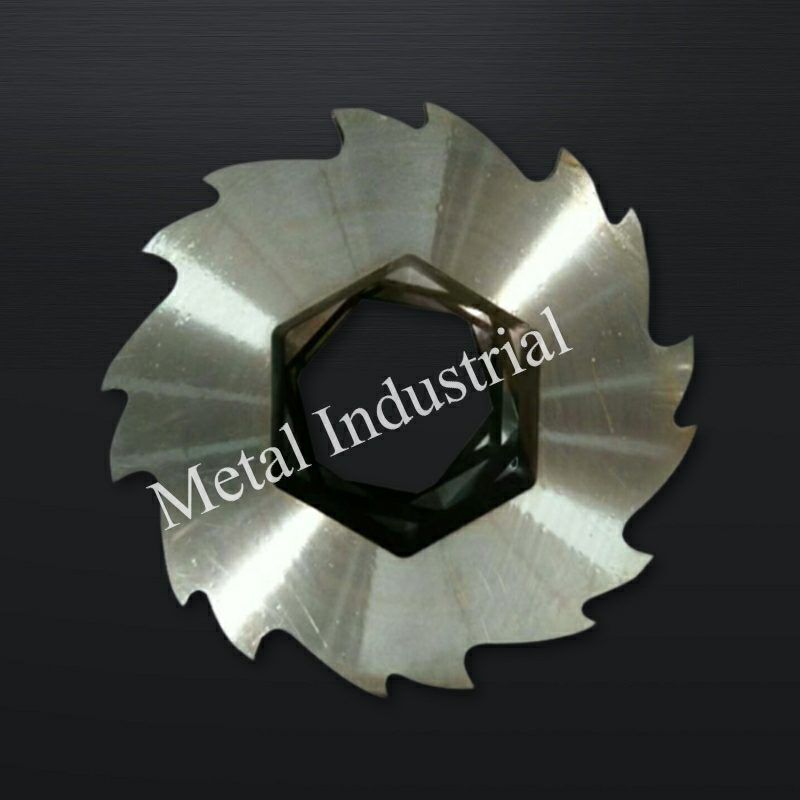
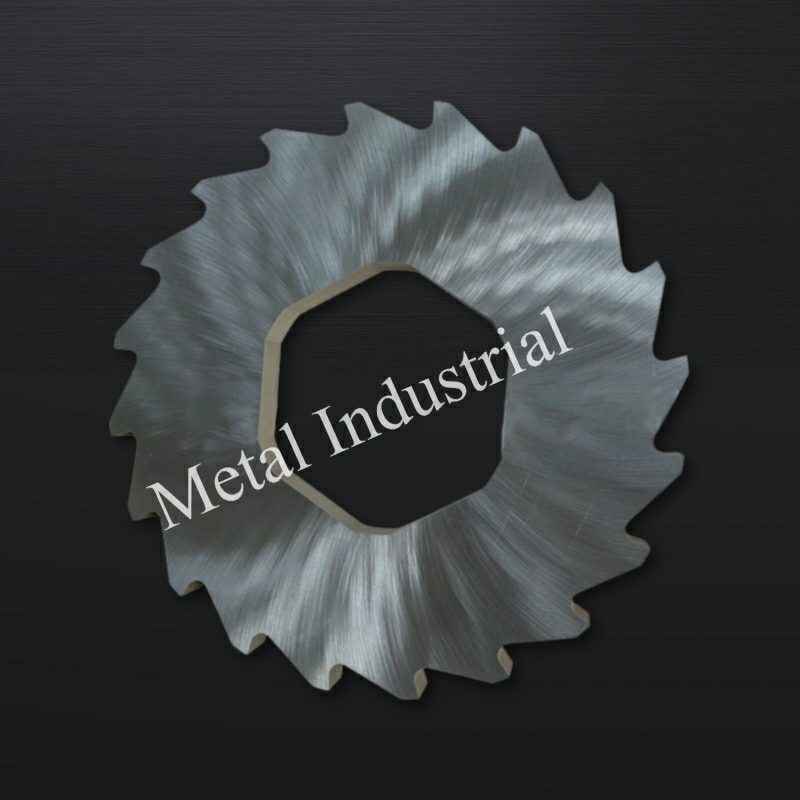
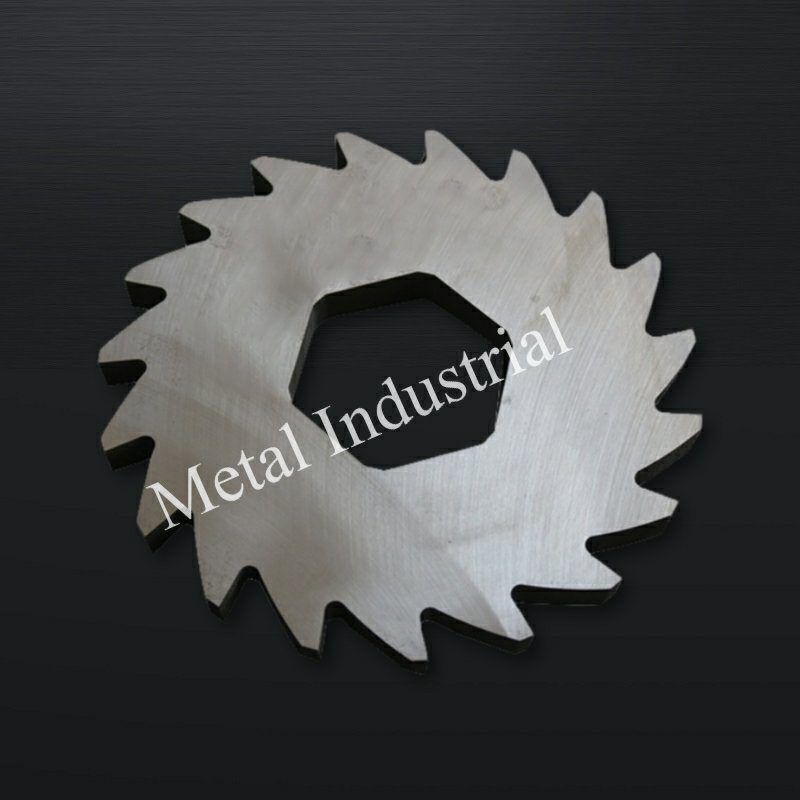
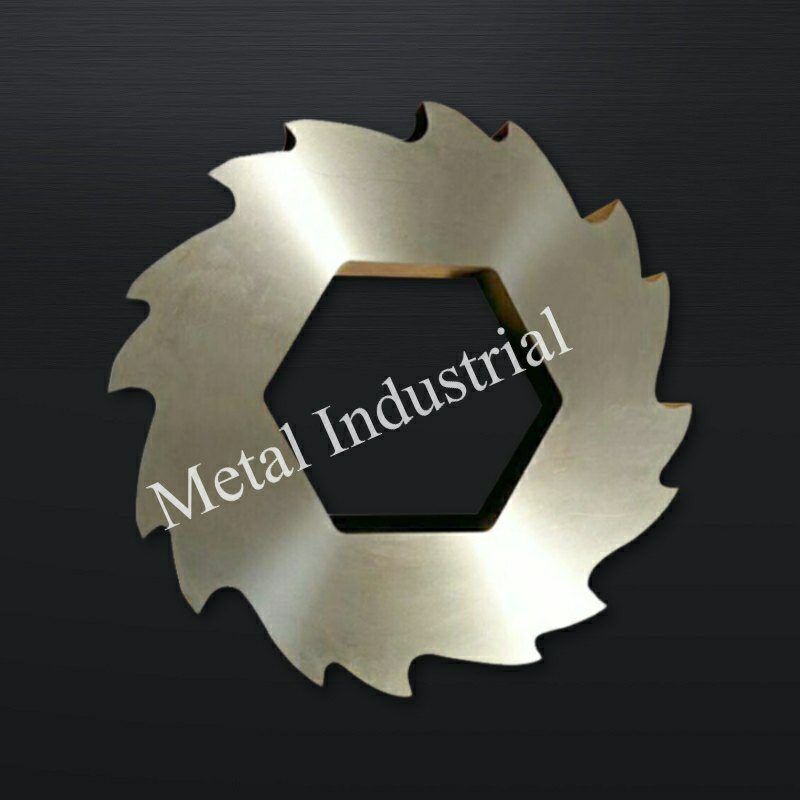
Zerkleinerungsklingen Anzeige:


Video:
Verwandte Blogs:
-
Umfassende Analyse von Zweiwellenzerkleinerern
-
Umfassender Leitfaden für Einwellen-Zerkleinerer: Typen, Arbeitsprozess, Komponenten, Wartung und Messer
-
Schredderblätter: Analyse der Klassifizierung, Materialauswahl, Lebensdauer und Designtechniken
Weitere Blogs……


 English