
Selección de Cuchillas para Polímeros de Grado Médico: Acero Inoxidable 420 vs 440C, Acabado Superficial y Control del Anillo de Agua
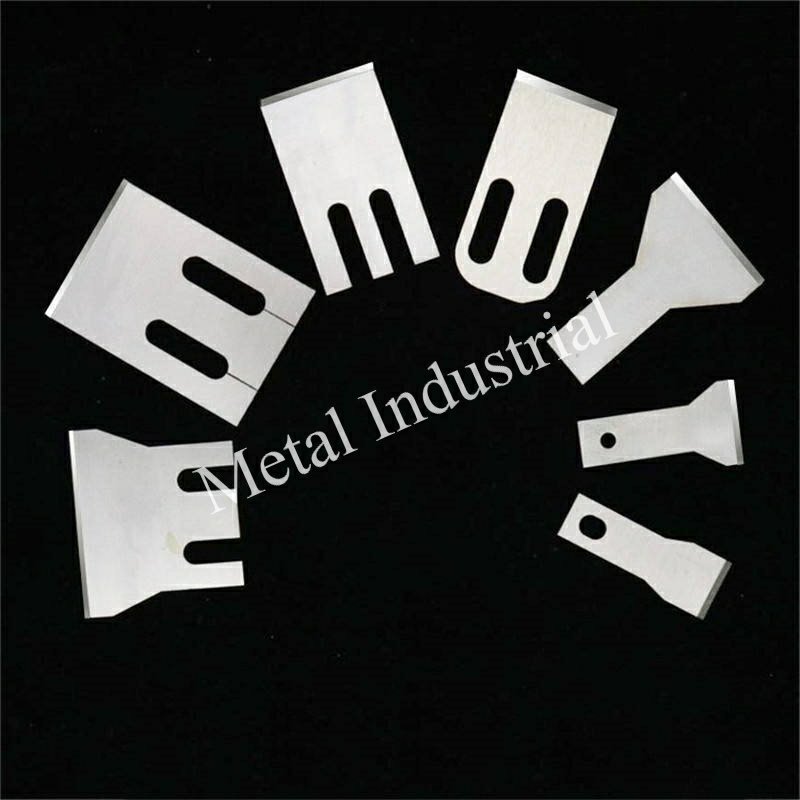
Respuesta rápida: En el peletizado de polímeros de grado médico, los aceros inoxidables 420 y 440C no son intercambiables: el 420 ofrece una mayor tenacidad, mejor capacidad de pulido y mayor tolerancia a la corrosión en circuitos de agua con química variable o de sanitización intensiva; el 440C proporciona una retención de filo superior para polímeros abrasivos en circuitos estables de química controlada. Ambos grados requieren un acabado espejo Ra ≤ 0.4 µm y una pasivación verificada según la norma ASTM […]
Cuchillas granuladoras de metalurgia de polvos M390 vs CPM S90V: Selección de grado bajo alto desgaste por fibra de vidrio
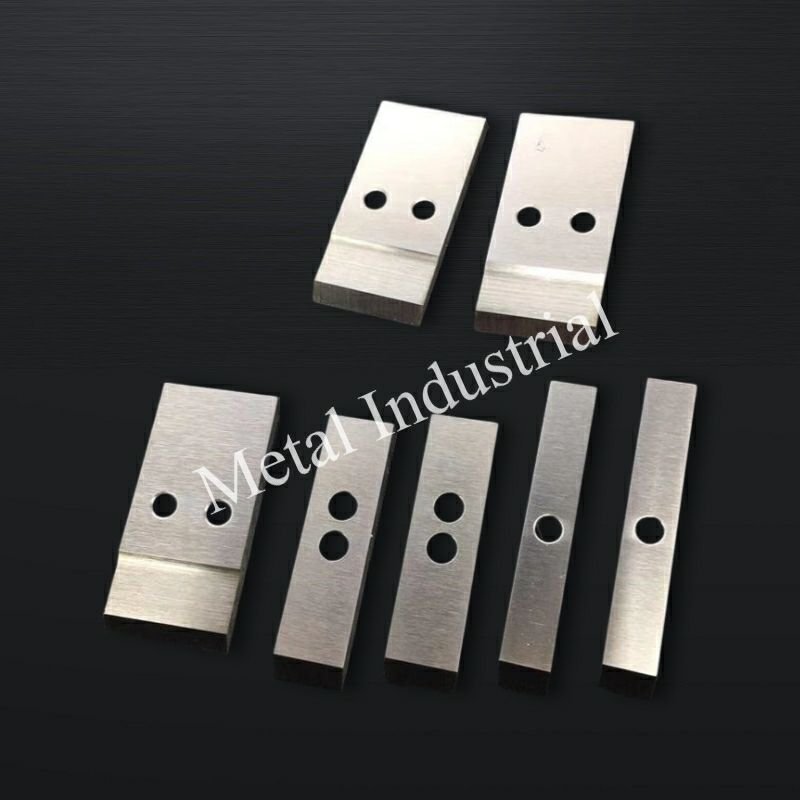
Respuesta rápida: Para las cuchillas de peletizado sometidas a un alto desgaste por fibra de vidrio, los aceros inoxidables pulvimetalúrgicos superan a los aceros de herramientas convencionales porque su distribución fina y uniforme de carburos resiste el micro-arado sin los compromisos de tenacidad de los aceros de lingote de alta aleación. Entre M390 y CPM S90V: elija CPM S90V cuando la carga de abrasión sea el modo de fallo dominante (>30% GF, agua neutra); elija M390 cuando […]
Engomado de cuchillas en peletización subacuática de TPU: selección de recubrimientos DLC vs PTFE y ventanas de operación.
Respuesta rápida: El engomado de las cuchillas en el peletizado bajo agua de TPU es un problema del sistema, no solo un problema del recubrimiento. La solución más rápida es abordar primero el mecanismo (restaurar la estabilidad del plano de corte y la consistencia del enfriamiento) y luego seleccionar los recubrimientos: DLC en las caras del filo de corte para obtener dureza y bajo coeficiente de fricción, PTFE en las caras sin filo de bajo desgaste para reducir la adhesión. Utilizar DLC sin solucionar […]
Grado, diseño y control de insertos de carburo de tungsteno para el tiempo de actividad de la peletizadora bajo agua
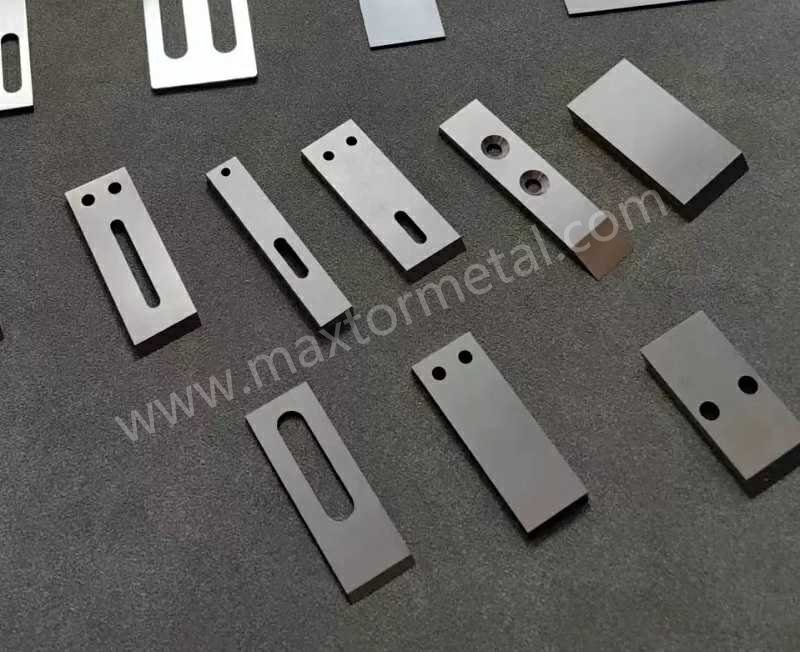
Respuesta rápida: El corte estable de la cara de la matriz en las líneas de peletización subacuáticas depende de cuatro variables que actúan en conjunto: grado de carburo (HRA 88–92 para la mayoría de las plaquitas de WC–Co), geometría del filo (radio controlado, no solo “afilado”), gestión de la presión de contacto (enganche → recorte, no seguimiento de presión) y estabilidad del circuito de agua (40–60 °C, filtrada, desgasificada). Cambiar las plaquitas sin abordar el estado de la cara de la matriz o el equilibrio del cabezal de corte es lo más […]
Cualificación técnica de bloques de cuchillas para producción petroquímica a gran escala
Respuesta rápida: Un bloque de cuchillas para peletizadora de anillo de agua está calificado para la producción en alto volumen al verificar cuatro aspectos: desviación/TIR en los puntos de referencia funcionales (normalmente ≤0,03–0,04 mm), grado de equilibrio según ISO 21940 (G6.3 base, que se ajusta a G2.5 a velocidades más altas), aceptación de vibraciones según ISO 20816 (a menudo ≤2,8 mm/s RMS) y trazabilidad completa del material mediante certificados EN 10204 3.1/3.2 vinculados a […]
Peletizado por tiras vs. anillo de agua: elegir según el material y el TCO
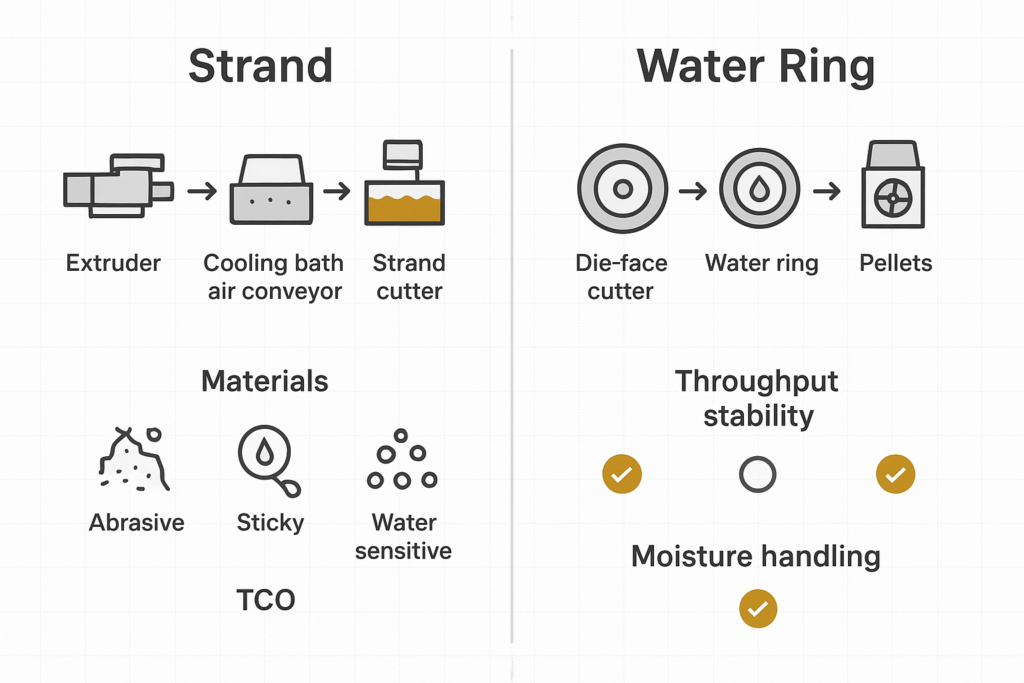
Elegir entre la peletización por extrusión de filamentos y la peletización por anillo de agua no se trata solo de una preferencia por el corte en húmedo o en seco. Cambia lo que controla la calidad del pellet, qué falla primero durante una interrupción y dónde se sitúa el costo real por tonelada (piezas de desgaste, secado, cambios de formato y desechos). En el sector de la composición y el reciclaje en el Reino Unido, especialmente cuando se trabaja con materiales de alto contenido de relleno, fibra de vidrio, minerales o material reciclado […]
Cortadores rotativos: La guía definitiva para peletizado por tiras en agua
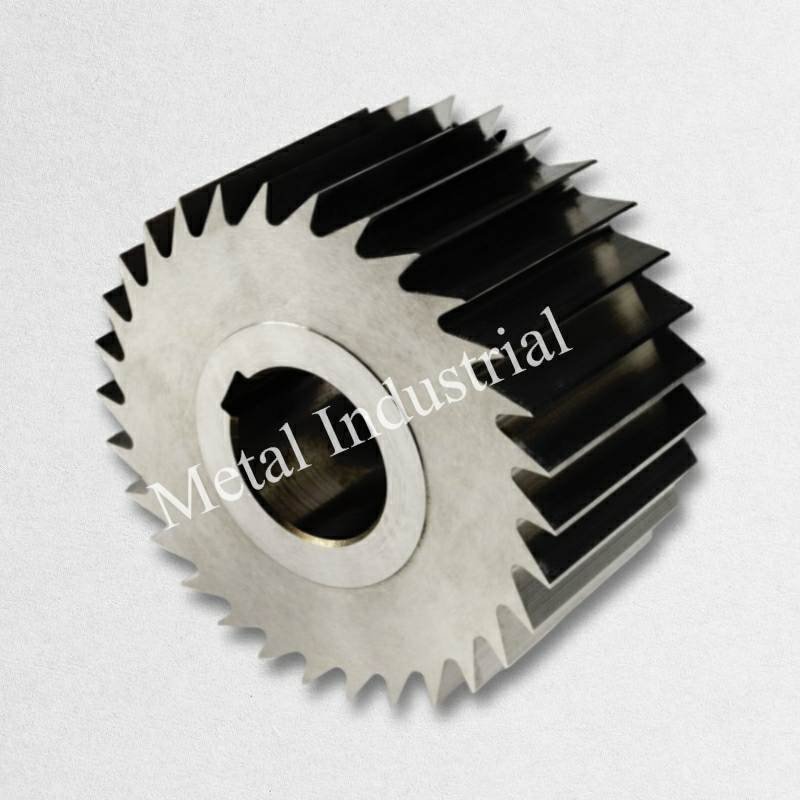
Esta guía está dirigida a los responsables de la producción de compuestos que gestionan líneas de peletización por inmersión en agua y que necesitan una calidad de corte fiable con menos cambios de formato y costes predecibles. Aprenderá los requisitos técnicos que estabilizan la longitud y la forma de los pellets, cómo evaluar con confianza una fábrica china de cortadoras rotativas/cuchillas, qué solicitar en la documentación de control de calidad y cómo modelar el coste final y […]
Cómo elegir cuchillas de peletización en caliente para PE/PP enfriado por aire
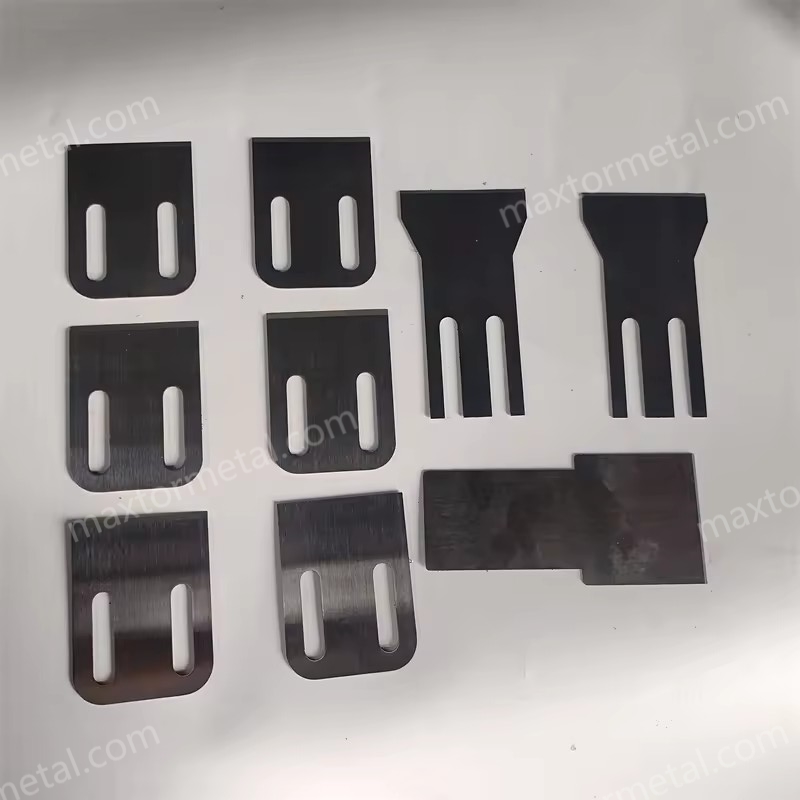
Seleccionar las cuchillas de peletización de cara caliente adecuadas para PE/PP refrigerado por aire no se trata solo de los nombres de los materiales en un presupuesto. La elección correcta reduce directamente los residuos y las partículas finas, estabiliza la calidad del corte en todos los turnos y mantiene un tiempo de actividad predecible para que el costo total de propiedad (TCO) se ajuste a lo previsto. Esta guía le muestra cómo especificar el sustrato de la cuchilla, la dureza, […]
Cuchillas de peletizadora que vencen la abrasión en resinas reforzadas con fibra de vidrio
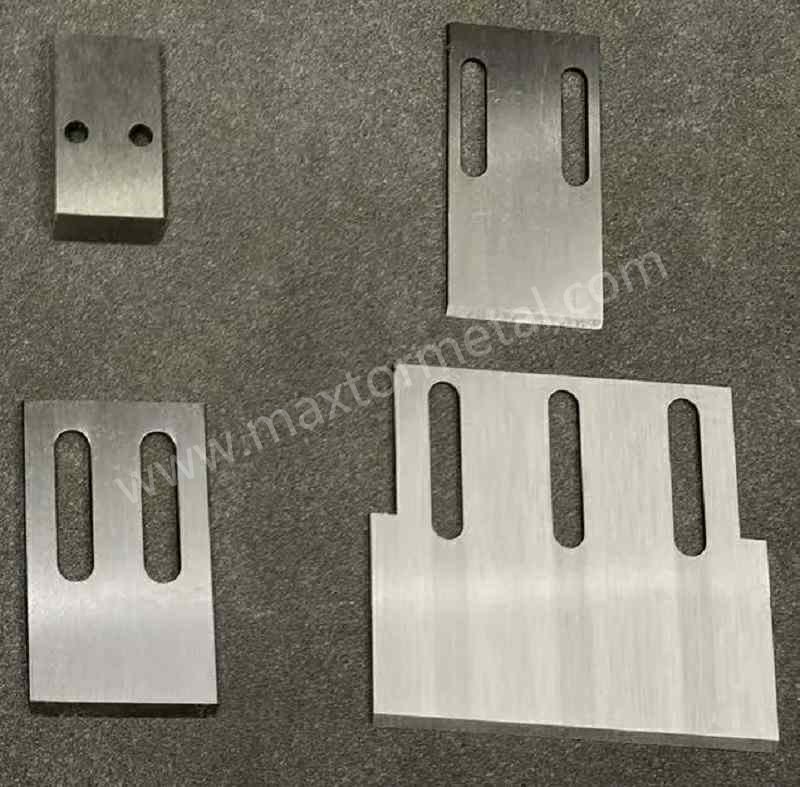
Introducción Las fibras de vidrio convierten una colada de poliolefina ordinaria en una pasta abrasiva. Cada hebra cortada actúa como una lima microscópica, acelerando el redondeo de los bordes de las cuchillas y grabando surcos tenues en la superficie de la matriz. ¿El resultado? Mayor cantidad de finos y colas, vibraciones crecientes y cambios o reafilados de cuchillas más frecuentes. En la peletización de PP/PE en la superficie de la matriz/anillo de agua (bajo el agua) con […]
Extensión de la vida útil de la cuchilla de la peletizadora: acciones de mantenimiento para reducir el tiempo de inactividad

Por Tommy Tang, Ingeniero de Ventas Senior (Nanjing METAL). 12 años de experiencia en aplicaciones de peletización y reducción de tamaño de cuchillas. Certificaciones: CSE, CME, Six Sigma Green Belt, PMP. Nota sobre el alcance y la validación: Los rangos numéricos de esta guía son puntos de partida típicos utilizados en la práctica de la planta. Siga siempre primero el manual del fabricante y las normas de seguridad de la planta, y luego confirme los puntos de ajuste finales con el […]

 English
  Spanish
  Italian
  French
  Portuguese
  Russian
  German
  Arabic
  Hindi
Hindi  Vietnamese
  Indonesian
  Japanese
  Korean