

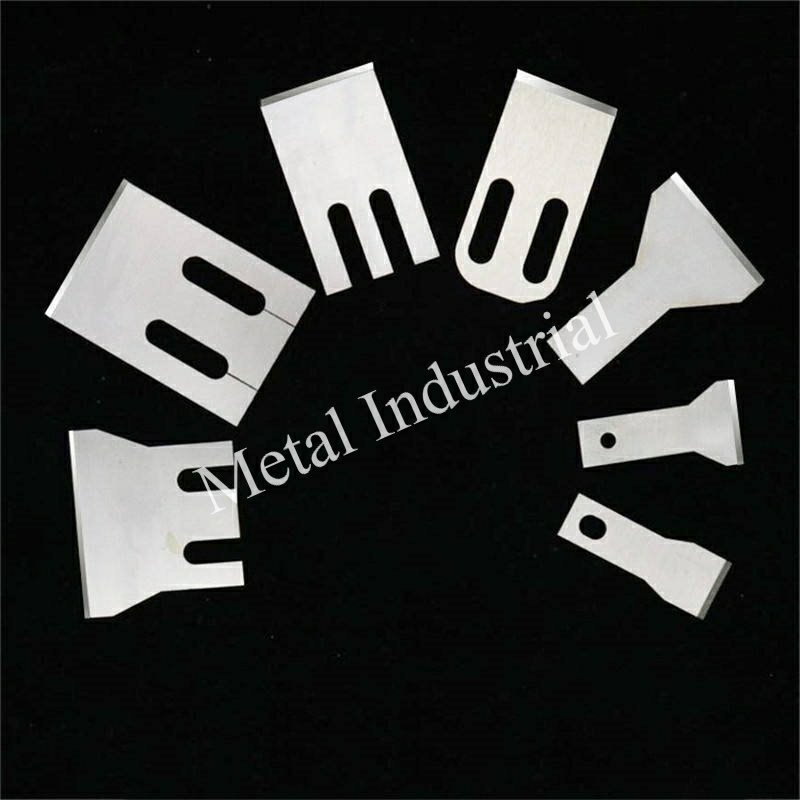
Respuesta rápida: En la peletización de polímeros de grado médico, los aceros inoxidables 420 y 440C no son intercambiables: el 420 ofrece una mayor tenacidad, mejor pulibilidad y mayor tolerancia a la corrosión en circuitos de agua con desinfección intensiva o química variable; el 440C proporciona una retención de filo superior para polímeros abrasivos en circuitos con química estable y controlada. Ambos grados requieren un acabado espejo Ra ≤ 0.4 µm y pasivado verificado según ASTM A967 — la ingeniería de superficies, y no solo el grado de la aleación, es el control principal para la prevención de la contaminación. Los puntos negros en los pellets médicos suelen ser un problema sistémico: restos de corrosión del circuito de agua y fragmentos de desgaste de una cuchilla subespecificada que actúan de forma conjunta.
Los puntos negros en los pellets de polímeros de grado médico raramente tienen una sola causa. Los equipos de producción suelen atribuirlos a la degradación de la resina o a residuos de purga, solo para descubrir, tras una investigación metódica, que el factor principal son los restos de corrosión que migran del circuito de agua templada y los fragmentos de desgaste de las cuchillas generados por un sistema de corte mal especificado.
Las cuchillas peletizadoras para aplicaciones poliméricas exigentes deben cumplir con tolerancias dimensionales estrictas y requisitos rigurosos de control de contaminación, particularmente en líneas de grado médico donde la ausencia total de contaminación visible y la uniformidad del pellet son innegociables. La selección adecuada del grado de acero inoxidable, el acabado superficial y el protocolo de gestión del circuito de agua constituyen la base de ingeniería para garantizar dicho rendimiento. Para líneas que procesan compuestos abrasivos o reforzados con fibra de vidrio donde el desgaste predomina sobre la corrosión, la lógica de selección cambia; Cuchillas granuladoras de metalurgia de polvos M390 vs CPM S90V: Selección de grado bajo alto desgaste por fibra de vidrio aborda ese escenario en detalle.
En los programas de cuchillas peletizadoras a medida de Maxtor Metal para líneas de polímeros técnicos y de grado médico, las investigaciones sobre la causa raíz de los puntos negros (black specks) se remontan de forma constante a tres variables controlables: la corrosión del circuito de agua, un acabado superficial inadecuado de la cuchilla y la incompatibilidad del grado de acero, cada una de las cuales se puede solucionar mediante especificaciones precisas y disciplina en el proceso.
Puntos Negros: Fuentes y Riesgos
Diferenciación entre puntos de polímero y puntos metálicos
No todos los puntos negros comparten el mismo origen, y la identificación errónea de la fuente hace perder tiempo de investigación. Una simple evaluación inicial separa las dos categorías:
- Puntos metálicos son duros, arenosos y a menudo magnéticos. Bajo un estereomicroscopio muestran brillo metálico o superficies de fractura angulares. Un imán de disco de tierras raras pasado sobre una muestra de pellets extendida atraerá estas partículas.
- Puntos de polímero son blandos, compresibles, se untan bajo la presión de la uña y con frecuencia muestran una sección transversal carbonizada o térmicamente degradada. Se originan en zonas muertas del cilindro de la extrusora, derivaciones del cambiador de filtros (screen-pack bypass) o por contacto con superficies de hileras sobrecalentadas.
La contaminación mixta (donde los residuos metálicos propician la carbonización del polímero) es común en campañas de producción largas. Resolverla requiere abordar ambas vías simultáneamente.
Vías de corrosión en el circuito de agua templada
El circuito cerrado de agua templada en un sistema de peletización bajo agua es una fuente persistente de contaminación cuando se gestiona de manera deficiente. Un boletín técnico de la NIH de 2025 sobre la corrosión en sistemas de agua de circuito cerrado identifica el óxido de hierro magnético negro (magnetita) y los residuos de cascarilla de laminación como los principales contribuyentes de puntos negros en los sistemas de recirculación. El mecanismo es directamente aplicable a los circuitos de peletización.
El ciclo de corrosión sigue una trayectoria predecible: la entrada de oxígeno junto con niveles elevados de cloruros desencadena picaduras en las superficies metálicas húmedas, se forma magnetita, las partículas migran a través del circuito y la contaminación llega a la cara de la hilera y al flujo de pellets. Para los circuitos que operan fuera de los límites químicos controlados, este ciclo se acelera hasta que las desviaciones de color en los pellets se vuelven habituales.
Impacto en el cumplimiento y la OEE
ISO 13485 may be relevant when the polymer-processing operation is part of a medical-device organization’s controlled supply chain or QMS. It should not be treated as a universal production standard for all medical-grade polymer pelletizing lines. Where ISO 13485 controls apply, black-speck events should be handled through the site’s documented nonconformance, investigation, change-control, and CAPA procedures.
Desde la perspectiva de la OEE, los eventos de puntos negros no controlados degradan los tres componentes. La disponibilidad se ve afectada ya que las purgas correctivas, los cambios de hilera y los lavados del sistema consumen tiempo de producción. El rendimiento disminuye cuando los operadores reducen la capacidad de producción para controlar el historial térmico. Las pérdidas de calidad se acumulan a través de lotes en cuarentena o desechados.
Conclusión clave: Los puntos negros metálicos procedentes del desgaste de las cuchillas o de la corrosión del circuito son un evento de cumplimiento en las líneas de polímeros médicos, no un problema estético. La vía de investigación y la acción correctiva deben documentarse y cerrarse dentro del sistema de calidad.
En resumen: los puntos negros en los pellets de polímero médico son un problema del sistema: los residuos de corrosión del circuito de agua y los fragmentos de desgaste de una cuchilla mal especificada suelen actuar juntos, y abordar solo uno sin el otro rara vez funciona
Fundamentos de Acero 420 vs 440C
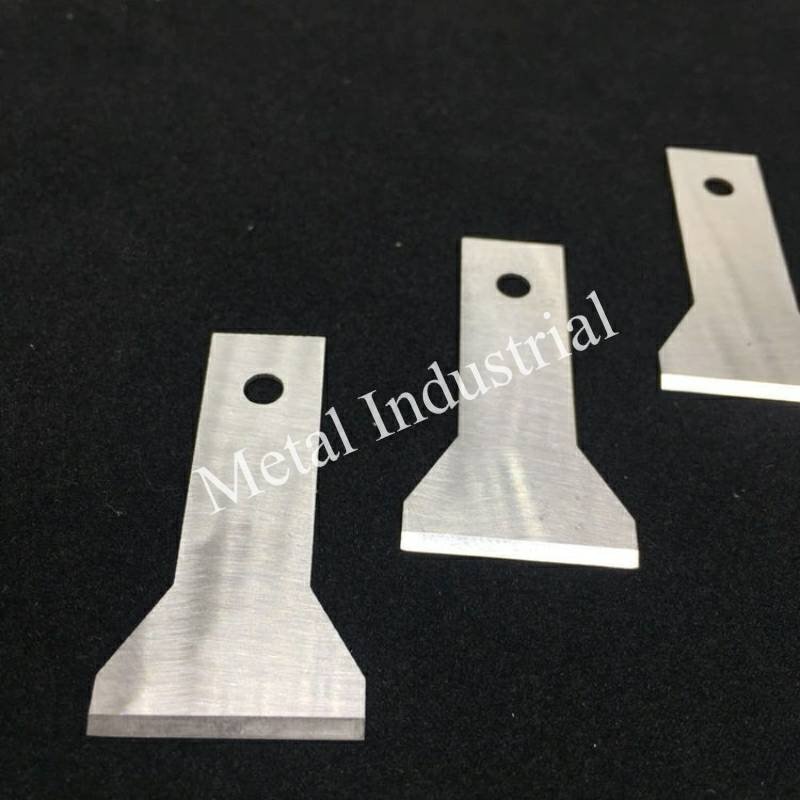
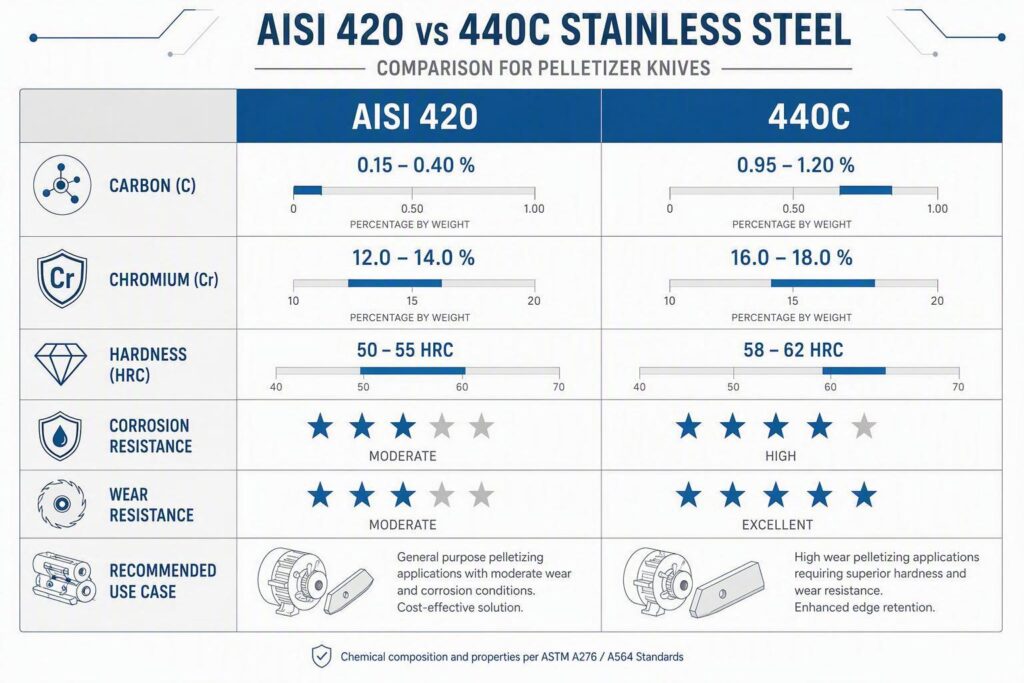
Composición, dureza, desgaste frente a corrosión
Tanto el AISI 420 como el 440C son aceros inoxidables martensíticos: grados con contenido de cromo tratables térmicamente capaces de alcanzar la dureza necesaria para aplicaciones de herramientas de corte de precisión. Sus diferencias son determinantes para la selección de cuchillas para peletizadoras.
| Propiedad | AISI 420 | AISI 440C |
|---|---|---|
| Carbon (%) | 0.15 – 0.40 | 0.95 – 1.20 |
| Chromium (%) | 12 – 14 | 16 – 18 |
| HRC típico (templado) | 50 – 52 | 58 – 60 |
| Resistencia al desgaste | Moderado | Alto |
| Resistencia a la corrosión | Buena (alto Cr libre en solución) | Buena (la formación de carburos reduce el Cr libre) |
| Tenacidad | Más alto | Más bajo |
| Pulibilidad | Excelente | Bien |
440C’s high carbon content drives significantly more hard chromium carbides into the microstructure, which is the source of its wear advantage. Those carbides, however, reduce the chromium available in the matrix to sustain the passive oxide film — a trade-off reflected in Crucible Industries’ 440C material data, que especifica el grado para una alta resistencia al desgaste con solo una resistencia moderada a la corrosión en entornos suaves. En entornos corrosivos o con un uso intensivo de desinfección, este compromiso es crucial.
El 420 retiene más cromo libre en solución. Atlas Steels’ Grade 420 data sheet lo describe como un grado de cromo 12% templable que ofrece una buena resistencia a la corrosión en estado templado y pulido, un estado directamente relevante para las líneas donde los ciclos semanales de CIP y el contacto con agua templada son estándar.
Selección por perfil de riesgo y calidad del agua
La decisión práctica de selección depende de tres factores: la abrasividad del polímero, la calidad del agua del circuito y las consecuencias de la contaminación aguas abajo.
| Condición | Grado preferido |
|---|---|
| Polímero abrasivo (compuestos con carga de vidrio o mineral) | 440 °C |
| Agua desionizada en el circuito, cloruros sistemáticamente < 50 ppm | 440C aceptable |
| Agua acondicionada municipalmente o con niveles fluctuantes de cloruro | 420 |
| Ciclos frecuentes de CIP cáustico (pH > 9.5) | 420 |
| El objetivo principal es la máxima retención del filo | 440 °C |
| Se requiere la máxima tenacidad y resistencia al astillamiento | 420 |
Para una orientación rápida en planta, la siguiente matriz de decisión sintetiza la abrasividad del polímero, la calidad del agua del circuito y las consecuencias de la contaminación en una única recomendación basada en el riesgo. Se trata de un marco de síntesis propio y no sustituye al ensayo de calificación específico para la línea que se describe más adelante en este artículo.
| Abrasividad | Calidad del agua del circuito | Consecuencia de la contaminación | Grado recomendado |
|---|---|---|---|
| Bajo | Controlada (cloruros < 50 ppm) | Crítica | 420 with premium finish |
| Bajo | Variable / elevated chlorides | Crítica | 420 |
| Alto | Controlled | Crítica | 440 °C |
| Alto | Variable | Crítica | 440C with enhanced loop control |
| Alto | Controlled | Moderado | 440 °C |
| Bajo | Controlled | Moderado | Either — finish drives outcome |
Neither grade is universally superior. The selection should be documented in the knife specification and formally linked to the water-quality SOP for the specific line.
Finish and Passivation Dominance
For black-speck control, surface condition often matters more than alloy choice. A properly polished and passivated 420 knife will outperform a poorly finished 440C knife in contamination-sensitive applications. Grade selection sets the performance ceiling; surface engineering determines where the knife actually operates within it.
En resumen: the 420 vs 440C decision comes down to which failure mode governs your line — choose 440C for edge retention under abrasive load in a stable loop, and 420 for corrosion tolerance and polishability when loop chemistry varies or sanitization intensity is high.
Ingeniería de Superficies para Cuchillas
Surface Roughness and Polish Targets
El Australian Stainless Steel Development Association identifies Ra ≤ 0.5 µm as a critical surface roughness threshold for maintaining effective passive-film integrity on abraded stainless steel. For medical-grade pelletizer knives, apply the following zonal targets:
- Cutting edge and die-face contact zones: Ra ≤ 0.4 µm (≤ 0.2 µm preferred for highest cleanability)
- Side flanks and blade body: Ra ≤ 0.8 µm
- Bore and mounting surfaces: Ra ≤ 1.6 µm
These targets require CBN or diamond grinding followed by mechanical polishing. Electropolishing is optional but improves passive-film uniformity and eliminates the micro-crevice points that trap biomass or corrosion product on conventionally polished surfaces.
ASTM A967 Passivation and Verification
ASTM A967/A967M is the governing specification for chemical passivation of stainless steel parts. It covers both nitric acid and citric acid treatment protocols, with defined concentration, temperature, and immersion-time windows for each.
Passivation removes free iron contamination — grinding swarf, embedded tooling particles, iron-tool marks — that would otherwise become active corrosion sites in service. It does not alter surface roughness or repair mechanical defects. The specification requires the treated part to show no etching, pitting, or frosting on visual inspection after treatment.
Verification methods specified under ASTM A967 include the water immersion test, high-humidity exposure (48 h at 95–100% RH), salt spray per ASTM B117, copper sulfate test, and potassium ferricyanide–nitric acid test. For medical-grade knife supply, the potassium ferricyanide test or salt spray test should be the minimum acceptance criterion, with results documented on the material certificate.
Coating Choices and Flake Risk
Thin hard coatings (TiN, TiAlN, DLC) can extend knife life in abrasive polymers, but they carry a flake-risk burden in medical applications. The three coating families used on pelletizer knives differ sharply in what they deposit, how thick they sit, and what they demand of the substrate.
| Revestimiento | Typical thickness | Hardness / friction | Medical-grade suitability |
|---|---|---|---|
| PVD TiN / TiAlN | 1–4 µm | ~2,000–3,500 HV; COF 0.4–0.6 | Permitted with validated adhesion; hard and diffusion-bonded to substrate |
| DLC (a-C:H, ta-C) | 1–3 µm | 2,000–6,000 HV; COF 0.05–0.15 | Lower friction, but internal stress and flake sensitivity require interlayer control |
| PTFE (dry-film lubricant) | 5–25 µm | Soft; applied as a low-friction layer | Generally not preferred where the coating contacts the pellet stream — soft film sheds |
Two thickness effects matter for a medical pelletizer knife. First, PVD hard coatings at 1–4 µm usually need no dimensional compensation — a 2 µm film adds 2 µm per coated face, well inside the ±0.005 mm flatness and typical edge tolerances for precision pelletizer knives. Second, PTFE at 5–25 µm is thick enough to shift geometry: a fully coated diameter can grow 10–50 µm, which measurably alters edge relief, slot width, and knife-to-die contact unless the drawing carries an explicit coating allowance. For a knife specified to ±0.005 mm/100 mm flatness, that is not a rounding error — it is a design change.
Flake risk can be quantified rather than assumed. Adhesion is measured by scratch testing per ISO 20502, which defines progressive critical loads (Lc): Lc1 marks the first cohesive cracking, Lc2 the onset of adhesive chipping, and Lc3 the first spalling. Published TiN-on-stainless studies report Lc values around 20 N, 40 N, and 65 N for the successive failure stages, while well-adhered DLC duplex systems with chromium interlayers exceed 49–51 N at first critical load. A practical acceptance framework for medical tooling follows from those values:
| Adhesion criterion | Lc2 (adhesive chipping) | Rockwell HF class | Risk interpretation |
|---|---|---|---|
| Minimum acceptable | ≥ 30 N | HF 1–3 | Coating survives service loading; monitor at tool change |
| Robust industrial | ≥ 50 N | HF 1–2 | Low flake probability under cyclic thermal and mechanical load |
| Preferred for medical | ≥ 70 N | HF 1 | Negligible flake risk with controlled interlayer and roughness |
| Reject | < 20 N | HF 5–6 | Coating not industrially admissible; HF6 is a known fail class even for DLC |
A coating without a bonding interlayer regularly lands in the HF5–HF6 range and should not be deployed on a medical line. Substrate preparation is not optional: a chromium or Cr/CrC interlayer plus controlled pre-treatment is what moves DLC from a few newtons of critical load to the 70 N class. Require the coating supplier to report Lc2 values and the Rockwell HF class on the certificate, measured on the same substrate and heat treatment as the delivered knife, not on a generic test coupon.
⚠️ Advertencia: In ISO 13485-regulated lines, any knife coating must be validated for flake-generation behavior under process conditions before deployment. An unvalidated coating change is a formal process change requiring documented risk assessment and change control.
For most medical-grade polyolefin, PET, and PEEK pelletizing applications, uncoated and well-passivated 420 or 440C is the lower-risk choice. Where a coating is justified by abrasive loading, specify a PVD TiN or TiAlN system at 2–4 µm with a documented Lc2 ≥ 50 N, and confirm the added thickness does not disturb the knife-to-die contact recorded during installation.
En resumen: surface finish and passivation are the primary contamination controls in medical polymer pelletizing — alloy grade sets the ceiling, but Ra ≤ 0.4 µm and verified ASTM A967 passivation are what keep metallic specks out of the product stream.
Control del Anillo de Agua Templada
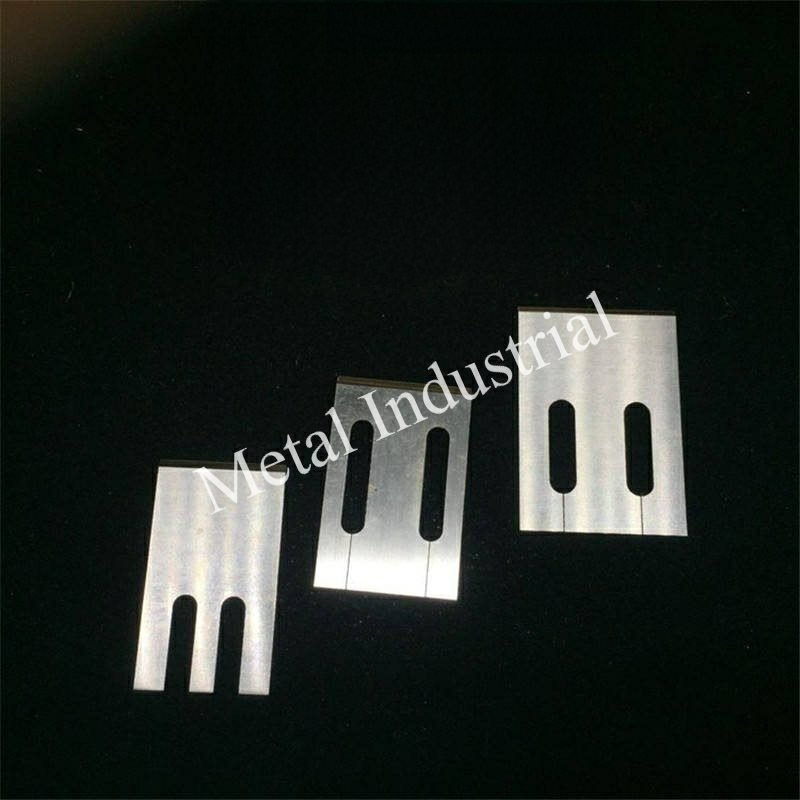
Water Chemistry and Numeric Targets
Applying NIH closed-loop water chemistry guidance and stainless steel corrosion control principles to a warm-water pelletizer system yields the following parameter framework. The water-loop disciplines here apply equally to TPU and EVA lines — for the intersection of loop control and knife coating selection in those materials, see Engomado de cuchillas en peletización subacuática de TPU: selección de recubrimientos DLC vs PTFE y ventanas de operación..
| Parámetro | Target Range | Action Limit |
|---|---|---|
| pH | 7.0 – 9.0 | < 6.5 or > 10.0: investigate makeup source |
| Chlorides | < 50 ppm | > 100 ppm: drain and recharge loop |
| Total iron | < 0.3 mg/L | > 1.0 mg/L: flush and identify corrosion source |
| Conductividad | 100 – 400 µS/cm | > 800 µS/cm: check makeup water and dosing |
| Suspended solids | < 5 mg/L | > 20 mg/L: increase filtration frequency |
The NIH technical bulletin targets pH 9.0–10.5 for carbon steel service. For a loop dominated by stainless steel contact surfaces, the lower setpoint range of 7.0–9.0 is defensible and reduces scaling risk while maintaining passive-film stability.
Consejo profesional: A rising chloride trend in a closed loop is almost always a signal of external ingress — makeup water contamination, resin leachables, or cleaning chemical carryover. Trend the data; do not treat chloride as a one-time acceptance check.
Filtration Architecture and Hydraulics
A two-stage filtration architecture is the practical minimum for medical-grade loops:
- Coarse strainer (100–200 µm mesh): Installed on the main circulation line upstream of the pump and die head. Captures flakes, scale, and large debris. Schedule cleaning against the differential pressure indicator, not a fixed calendar interval.
- Side-stream bag or cartridge filter (5–25 µm): Polishes approximately 5–10% of total loop flow continuously. Effective at capturing magnetite fines that pass the coarse strainer and would otherwise reach the die face.
Sanitation and Degassing Strategy
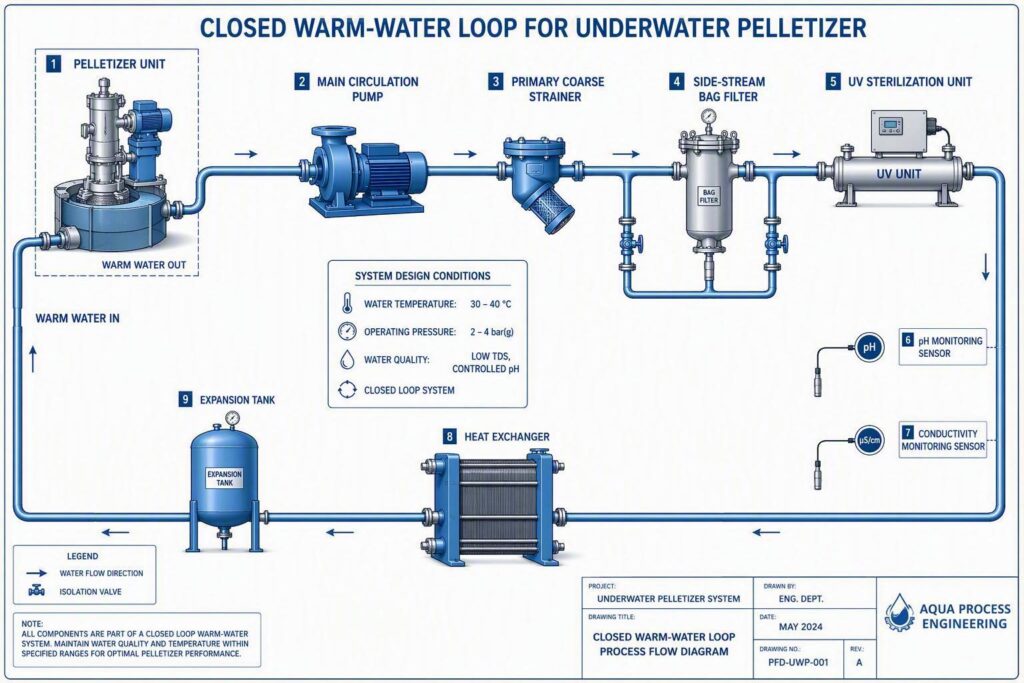
UV sterilization at 254 nm (minimum 30 mJ/cm² dose) on the main return line suppresses biofilm accumulation that concentrates corrosion products and increases under-deposit attack on wetted surfaces.
A membrane degasser or closed expansion tank with nitrogen blanket reduces dissolved oxygen to below 0.1 mg/L on critical lines. Dissolved oxygen is the primary accelerant of pitting corrosion in warm recirculating loops — reducing it is one of the highest-return engineering controls available.
Following any maintenance event involving pipe or component replacement, flush the system of debris and passivate new stainless surfaces before returning to production, consistent with NIH guidance on system startup after tie-ins.
En resumen: the warm-water loop is not a utility — it is a process variable, and without pH, conductivity, and filtration targets codified in a formal SOP linked to the knife specification, loop-sourced black specks will recur regardless of knife grade.
Especificaciones Técnicas y Procedimientos Operativos Estándar (SOP)
Controlled A/B Trial: 420 vs 440C on a Medical-Grade PP Line
The selection logic above becomes concrete when it is tested under a controlled comparison. The following trial was run by Maxtor Metal’s engineering team on an anonymized medical polymer compounding line producing medical-grade PP pellets. The goal was not to declare a universally superior grade, but to quantify the difference in particle-quality stability and edge retention under identical process conditions.
Trial setup and controlled variables
| Parámetro | Control Requirement |
|---|---|
| Melt temperature | ±3 °C |
| Pelletizer speed | ±2% |
| Temperatura del agua | ±2 °C |
| Water flow | ±3% |
| Rendimiento | ±2–3% |
| Die plate | Same plate for both runs |
| Polymer grade | Same grade (medical-grade PP, unfilled, 0% regrind) |
| Knife pressure | Held identical for A and B |
| Artículo | Case A — 420 |
| Industria | Medical polymer compounding |
| Filler / regrind | None / 0% |
| Line | Underwater pelletizer, ~2–3 t/h |
| Estampación | AISI 420, approx. 52–55 HRC |
| Acabado superficial | Polished, Ra ≤ 0.4 µm |
| Run period | Approx. 6–8 weeks |
| Cumulative output | Approx. 250–350 t |
Measurement sequence
- Incoming blade inspection — hardness, thickness, edge straightness, edge roughness, and visual inspection under magnification.
- Cutter installation — record cutter-head runout, blade protrusion, knife-to-die contact, and tightening torque.
- Start-up stabilization — the first 30–60 minutes of data are excluded from the A/B comparison, since start-up pellet quality does not represent steady-state production.
- Production sampling — every 4 hours: collect a 500–1,000 g pellet sample; sieve for fines; inspect 1,000 pellets for size and shape; count black specks per the specified sampling method.
- Blade condition — at each planned stop: microscope inspection of the edge, wear-land measurement, micro-chipping check, and cumulative tonnage logged.
Observed outcome (A vs B)
| Indicadores clave de rendimiento (KPI) | 420 (A) | 440C (B) | Direction |
|---|---|---|---|
| Black specks | approx. 18–30 ppm | approx. 8–15 ppm | ↓ approx. 40–60% |
| Multas | approx. 0.30–0.50 wt% | approx. 0.18–0.30 wt% | ↓ approx. 30–40% |
| Off-size / irregular pellets | approx. 0.8–1.3% | approx. 0.4–0.8% | ↓ approx. 30–50% |
| Tool life to regrind | approx. 180–260 h | approx. 300–420 h | ↑ approx. 1.5–1.8× |
| Unplanned knife changes | approx. 3–4 per 6 weeks | approx. 1–2 per 6 weeks | ↓ approx. 40–60% |
| Production yield | approx. 98.5–99.1% | approx. 99.1–99.5% | + approx. 0.3–0.6 pp |
How the failure mode actually developed
The 420 blades were not “non-conforming” at the outset. For the first 2–3 weeks, pellet dimensions were normal, fines held around 0.3–0.4 wt%, and black specks stayed low. As cumulative output increased, a predictable drift appeared: the edge dulled slightly, cutting load rose, the die-face contact shifted toward a more abrasive wiping action, and trace polymer residue began to accumulate near the blade and die plate. Cleaning temporarily cleared the symptom, but it returned after further running.
The first corrective attempt was simply to raise knife pressure. Tails dropped briefly, but the black-speck issue persisted and edge wear accelerated. Only then was the grade changed from 420 to 440C while holding knife pressure, pelletizer speed, die plate, and polymer formulation constant.
Conclusión clave: During the controlled trial, black-spec occurrence decreased by approximately 40–60% after changing from hardened 420 to 440C blades. This is a trial result under the stated conditions — not a universal guarantee, since black-spec contamination in medical plastics can also originate from pellet conveying, dust, and material handling rather than the cutting tool alone.
For context, both grades are established martensitic stainless steels in the medical tooling family, and ASTM F899 lists 420 and 440C within the martensitic stainless system used for surgical instruments. That is why the comparison is a genuine qualification question rather than a manufactured contrast — and why the honest conclusion is conditional:
Engineering conclusion: The A/B trial indicated that 440C provided longer edge retention and lower particle-quality drift under the tested medical-grade PP conditions, while 420 remained a viable option where toughness, machining cost, and moderate wear requirements were prioritized.
Maxtor Metal’s own technical documentation lists 420/440C martensitic stainless with Ra ≤ 0.4 µm mirror finishing as a material system for medical-grade and food-packaging pelletizer applications. This is a brand-side engineering basis; it should not be presented as independent third-party validation.
En resumen: a knife specification that stops at alloy grade and hardness is incomplete — material traceability, surface finish, passivation verification, and a linked water-loop SOP are what make a pelletizer knife program auditable to ISO 13485 expectations.
Knife Spec Template (420/440C)
A formalized knife specification eliminates ambiguity in procurement and incoming inspection. The following framework reflects the precision-grinding capabilities and documentation practices — including EN 10204 MTC 3.1 certificates — that apply to custom pelletizer knife programs for technical and medical polymer lines. Maxtor Metal’s approach to custom knife manufacturing integrates material traceability, heat-treatment records, and verified surface finish from a single source.
| Atributo | AISI 420 Specification | AISI 440C Specification |
|---|---|---|
| Base material | AISI 420 (UNS S42000) | AISI 440C (UNS S44004) |
| Tratamiento térmico | Vacuum hardened + tempered; 50–52 HRC ±1 | Vacuum hardened + tempered; 58–60 HRC ±1 |
| Surface finish — cutting edge | Ra ≤ 0.4 µm | Ra ≤ 0.4 µm |
| Surface finish — blade body | Ra ≤ 0.8 µm | Ra ≤ 0.8 µm |
| Passivation standard | ASTM A967/A967M, citric or nitric acid method | ASTM A967/A967M, citric or nitric acid method |
| Passivation verification | Potassium ferricyanide test, pass | Potassium ferricyanide test, pass |
| Material certificate | EN 10204 MTC 3.1 | EN 10204 MTC 3.1 |
| Dimensional tolerance | Per drawing; flatness ≤ 0.005 mm/100 mm | Per drawing; flatness ≤ 0.005 mm/100 mm |
| Revestimiento | Sin recubrimiento | Sin recubrimiento |
For the component-level qualification framework that governs how these dimensional and hardness tolerances are verified at incoming inspection — covering runout/TIR acceptance, balance grade per ISO 21940, and QA dossier structure — see our Guía de cualificación del bloque de cuchillas para peletizadoras de anillo de agua.
For a full overview of knife formats and configurations available for underwater and die-face pelletizing systems, see Maxtor Metal’s industrial blades for plastic processing guide, which covers material options, dimensional standards, and application-matched configurations across pelletizer types.
Water-Loop Quality Specification
The water-loop SOP must be formally linked to the knife specification to create a coherent, auditable contamination-prevention program. Key document elements include: makeup water source and treatment with acceptance criteria; chemical inhibitor type, dose, and monitoring interval; filtration change schedule; analytical sampling plan (weekly pH and conductivity; monthly total iron and chlorides during normal operation; daily during startup or post-maintenance); alert and action limits as defined in the chemistry table above; loop flush and passivation procedure for post-maintenance restart; and records retention for a minimum of three years.
Maintenance, Inspection, and Records
For knife assemblies: inspect cutting edges and die-face contact surfaces at each tool change for chipping, pitting, and corrosion discoloration; record regrind cycles per knife set and replace at the minimum height specified in the OEM drawing; retain hardness test and passivation verification records for each incoming lot; log every observed black-speck event with date, lot number, retained pellet sample, and investigative findings.
Diagnóstico y Recuperación de Procesos
Microscopy and Magnet Tests
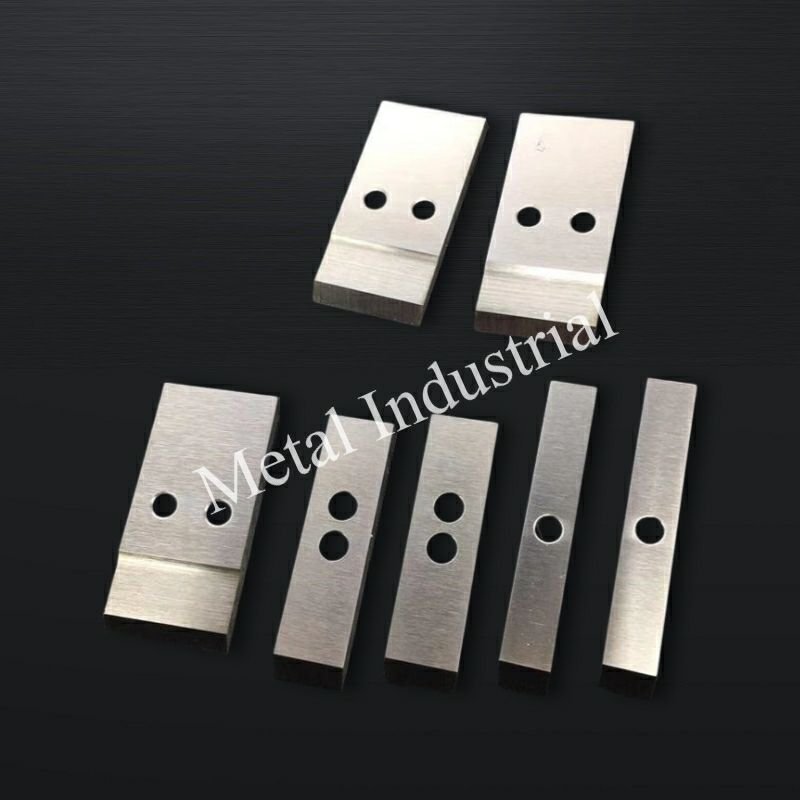
When a black-speck event occurs, the initial classification requires no laboratory equipment. Spread a 200 g pellet sample on white paper and draw a rare-earth disc magnet across the surface at 5–10 mm standoff. Metallic specks migrate toward the magnet; polymer carbonization particles remain stationary.
For confirmation, mount five to ten particles from each category at 40–100× magnification. Metallic particles show angular fractures and bright metallic surfaces, with possible brown-black magnetite smear under oblique illumination. Polymer particles are amorphous, compressible, and show laminar carbonization layers when cross-sectioned with a razor.
Correlation with Water Metrics
Plot total iron and suspended solids values from the loop log against the production record for the same period. A sustained upward trend in loop iron typically correlates with metallic speck events that appear within 24–72 hours — the lag reflecting loop volume and filtration efficiency. When total iron exceeds 1.0 mg/L without a corresponding maintenance event, treat it as an active corrosion indicator and inspect wetted surfaces before the next production run.
Remediation and Verification Steps
- Drain and flush the warm-water loop with clean deionized water until effluent total iron is below 0.1 mg/L
- Inspect the knife set for edge chipping, pitting, and corrosion — replace if any corrosion pitting is visible on the die-face contact zone
- Verify passivation on replacement knives before installation (potassium ferricyanide or salt spray per ASTM A967)
- Restart the loop with a fresh inhibitor charge; verify pH, conductivity, and chloride are within specification before resuming production
- Run a 15-minute qualification lot: inspect pellets under 10× magnification and perform a magnet test before releasing. For die-face systems running WC–Co insert blocks, the parallel restart discipline — verifying contact pressure, insert condition, and braze integrity before resuming production — is covered in our guide on selección de grados de insertos de carburo de tungsteno, soldadura fuerte y control de contacto para peletizadoras subacuáticas.
- Close the CAPA record with documented root cause, corrective action, and preventive action — including any spec or SOP revision triggered by the event
For lines where the black-speck or contamination event traces back to blade contact instability — specifically, hydrodynamic lift at operating speed overcoming the axial preload and opening a micro-gap at the die face — the force-balance diagnostic and gap measurement sequence is covered in our guide on dynamic blade float, preload mechanics, and the 0.03 mm contact threshold.
En resumen: when black specks recur after a knife or loop change, the magnet test and microscopy results together tell you whether the source is metallic or polymeric — treating the wrong source first is the most common recovery delay.
FAQs
P: ¿Cuál es la diferencia principal entre el acero inoxidable 420 y el 440C para cuchillas peletizadoras?
R: El 420 contiene un 0,15–0,40 % de carbono y un 12–14 % de cromo, alcanzando 50–52 HRC con buena resistencia a la corrosión y mayor tenacidad. El 440C contiene un 0,95–1,20 % de carbono y un 16–18 % de cromo, logrando 58–60 HRC con una resistencia al desgaste superior, pero con menor tenacidad y una ligera reducción en la tolerancia a la corrosión debido a la formación de carburos. Seleccione 440C para polímeros abrasivos con agua de circuito controlada; elija 420 para entornos corrosivos o que requieran una desinfección intensiva.
P: ¿Por qué aparecen puntos negros metálicos en los granulos (pellets) de polímero de grado médico?
R: Los puntos negros metálicos se originan típicamente en tres fuentes: microdespostillado (micro-chipping) del filo de la cuchilla por fractura frágil o carga de impacto; residuos de corrosión (magnetita, óxido de hierro) que migran del circuito de agua templada; o contaminación de hierro libre en superficies de cuchillas no pasivadas adecuadamente. Las pruebas con imán y la microscopía óptica son las herramientas diagnósticas de primera línea para distinguir los puntos metálicos de los de origen polimérico.
P: ¿Qué rugosidad superficial (Ra) deben alcanzar las cuchillas peletizadoras de grado médico?
R: El filo de corte y las zonas de contacto con la placa de matriz (die-face) deben alcanzar un valor Ra ≤ 0,4 µm. La Asociación Australiana para el Desarrollo del Acero Inoxidable (ASSDA) identifica Ra ≤ 0,5 µm como el umbral crítico para la integridad de la capa pasiva en el acero inoxidable lijado o mecanizado; por debajo de este valor, la resistencia a la corrosión mejora de forma notable. Un acabado superficial más rugoso aumenta tanto la susceptibilidad a la corrosión como la liberación de partículas en el flujo de gránulos.
P: ¿Qué se logra con la pasivación según ASTM A967 y es suficiente para prevenir los puntos negros (black specks)?
R: La pasivación según ASTM A967/A967M elimina el hierro libre, las partículas de rectificado incrustadas y la contaminación superficial del acero inoxidable, restaurando la capa pasiva de óxido de cromo. No altera la rugosidad superficial ni repara defectos mecánicos. La pasivación es necesaria pero no suficiente: la cuchilla debe pulirse hasta alcanzar el valor Ra objetivo antes de la pasivación, y el circuito de agua templada debe gestionarse de forma independiente.
P: ¿Qué concentración de cloruro es segura en un circuito de agua templada de peletización con cuchillas de acero inoxidable?
R: La concentración de cloruro debe mantenerse por debajo de 50 ppm para el uso de cuchillas de acero 420 o 440C. Concentraciones superiores a 100 ppm aceleran la corrosión por picadura (pitting) en ambos grados, y los residuos de corrosión resultantes migran directamente al flujo de gránulos (pellets). La guía de corrosión para circuitos cerrados del NIH recomienda monitorear la tendencia del cloruro como un indicador continuo del proceso, en lugar de tratarlo como un criterio de aceptación puntual.
P: ¿Se deben usar recubrimientos de TiN o DLC en las cuchillas peletizadoras de grado médico?
R: Solo tras una validación completa del comportamiento de generación de escamas (desprendimiento) en condiciones reales de proceso. Los recubrimientos duros delgados prolongan la vida útil de la cuchilla en aplicaciones abrasivas, pero la delaminación del recubrimiento representa un riesgo real de contaminación en líneas médicas. Según la norma ISO 13485, la introducción de un recubrimiento en la cuchilla es un cambio de proceso formal que requiere una evaluación de riesgos documentada y una validación previa a su uso en producción.
P: ¿Con qué frecuencia se debe tomar muestras y tratar el circuito de agua templada?
R: Tome muestras de pH y conductividad semanalmente durante el funcionamiento normal; mida el hierro total y los cloruros mensualmente. Después de cualquier evento de mantenimiento que disponga el reemplazo de tuberías o componentes, realice un lavado completo del circuito y una recarga antes de reanudar la producción. Si el hierro total supera 1,0 mg/L sin una justificación de mantenimiento reciente, trátelo como un evento de corrosión activa y lave el circuito.
P: ¿Qué documentación debe acompañar a un pedido de cuchillas peletizadoras de grado médico?
R: Cada lote debe incluir un certificado de prueba de material EN 10204 MTC 3.1 con trazabilidad de colada y composición química, resultados de ensayos de dureza (HRC medido en las piezas suministradas), certificado de medición de acabado superficial y registro de verificación de pasivado (ferrocianuro de potasio o niebla salina según ASTM A967). Estos registros respaldan la cualificación de proveedores y los requisitos de inspección de entrada según la norma ISO 13485.
Conclusión
Para el peletizado de polímeros de grado médico, la elección entre 420 y 440C es una decisión de ingeniería adaptada al riesgo, no una respuesta única. El 440C ofrece una retención del filo superior para polímeros abrasivos en entornos de agua de circuito controlado. El 420 ofrece una mejor tenacidad, pulibilidad y tolerancia a la corrosión en lugares donde la intensidad de desinfección o la variabilidad de la calidad del agua son mayores.
En ambos casos, el acabado superficial de Ra ≤ 0,4 µm en el filo de corte y la pasivación verificada según ASTM A967/A967M son los principales controles de prevención de contaminación, no solo el grado de aleación. Un SOP codificado para el circuito de agua templada, con objetivos químicos, filtración en dos etapas, desinfección por UV y desgasificación, cierra la vía de corrosión que genera puntos negros metálicos. En combinación con las especificaciones de cuchilla vinculadas a la documentación EN 10204 MTC 3.1, estos controles crean un programa auditable totalmente alineado con las expectativas de la norma ISO 13485.
El hoja de ruta de implementación es directo: especificar la cuchilla correctamente para la combinación de polímero y química del agua, verificar el acabado superficial y la pasivación en la inspección de entrada, establecer el SOP de química del circuito y el plan de monitoreo analítico, y cerrar el ciclo, tanto de forma literal como procedimental, entre el rendimiento de la cuchilla y los datos de calidad del agua.
For precision-ground plastic pelletizer blades and pelletizing knives manufactured to the tolerances described above, contact the Maxtor Metal engineering team with your machine drawing and polymer program requirements.
Normas Téchnicas y Referencias
The specifications and controls in this article are drawn from the following standards and sources. Readers qualifying a specific line should consult the current revision of each document.
Metallurgy and material data
- AISI 420 (UNS S42000) and AISI 440C (UNS S44004) grade data — Atlas Steels Grade 420 data sheet; Crucible Industries 440C material data.
- ASTM F899 — Standard Specification for Wrought Stainless Steels for Surgical Instruments.
- ASTM A276 / A314 — Standard specifications for stainless steel bars and billets (440C and 420 forms).
- ASM Handbook, Vol. 16 — Machining (tool material selection context).
Surface finish and passivation
- ASSDA (Australian Stainless Steel Development Association) — pickling and passivation of stainless steel; Ra ≤ 0.5 µm passive-film threshold.
- ASTM A967/A967M — Standard Specification for Chemical Passivation Treatments for Stainless Steel Parts.
- ASTM B117 — Standard Practice for Operating Salt Spray (Fog) Apparatus.
Coating adhesion
- ISO 20502 — Fine ceramics (advanced ceramics, advanced technical ceramics) — Determination of adhesion of ceramic coatings by scratch testing.
- Published TiN-on-stainless and DLC duplex scratch-test critical-load studies (Lc1/Lc2/Lc3 data).
Water-loop corrosion and control
- NIH Technical Bulletin (2025) — Corrosion in Closed Loop Water Systems, Part 2: Evaluation and Prevention.
- ISO 13485:2016 — Medical devices — Quality management systems.
- FDA 21 CFR 211.67(a) — Equipment cleaning and maintenance.
Brand engineering basis
- Maxtor Metal technical documentation — 420/440C martensitic stainless with Ra ≤ 0.4 µm mirror finishing as a material system for medical-grade and food-packaging pelletizer applications. Note: brand-side engineering basis, not independent third-party validation.
Sobre el autor
Nancy Wu is a Senior Manufacturing Engineer in Production Engineering at Maxtor Metal, with 12 years of experience in industrial cutting-blade manufacturing. She specializes in the machining and material behavior of common industrial blade steels — including SKD11, 420, 440C, D2, M2, H13, powder metallurgy steels, and cemented carbide — covering their processing characteristics, material properties, and coating behavior, alongside high-precision CNC grinding programming. She holds SME CMfgE, PMP, Six Sigma Black Belt, and ASM International certifications.

 English
 Spanish
 Italian
 French
 Portuguese
 Russian
 German
 Arabic
 Hindi
 Vietnamese
 Indonesian
 Japanese
 Korean