

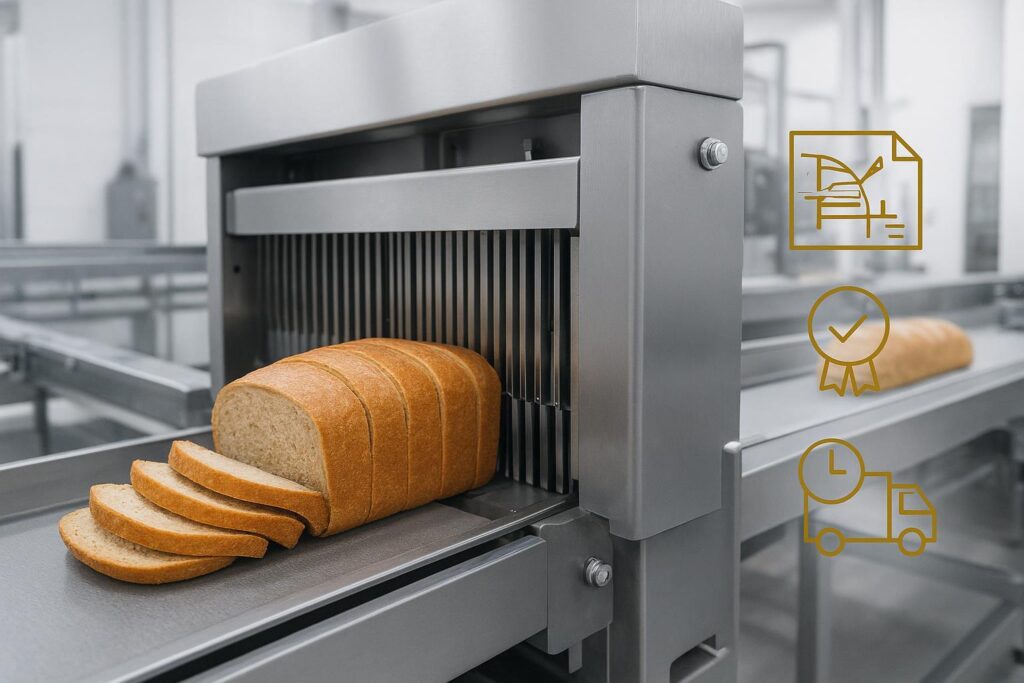
Escolher um fabricante de lâminas para fatiadoras de pão é uma decisão operacional de longo prazo, e não apenas uma compra de peças de reposição. Se você qualificar o fornecedor corretamente — considerando sua capacidade de engenharia, disciplina de controle de qualidade/conformidade e confiabilidade no fornecimento — você obterá fatias mais limpas, menos migalhas e defeitos, maior tempo de operação entre as trocas de lâminas e um custo total de propriedade (TCO) menor.
Este guia foi escrito para lâminas industriais de corte de pão usadas em linhas de produção de padarias de alto rendimento e programas de fabricação OEM, onde a repetibilidade entre lotes é mais importante do que uma única amostra boa.
O que você irá avaliar: engenharia, garantia da qualidade/conformidade, confiabilidade do fornecimento
Resultados: melhor qualidade de corte, menor custo total de propriedade (TCO), menos trocas de lâminas e defeitos.
Como usar este guia: solicite dados, execute projetos-piloto, verifique documentos e, em seguida, expanda.
Estrutura de seleção para um fabricante de lâminas de fatiador de pão

Qualificando um fabricante
Comece com um processo de qualificação difícil de manipular. Para um fornecimento a longo prazo, você busca repetibilidade entre lotes, não uma única "boa amostra".
Capacidade de engenharia (eles conseguem construir o que sua linha precisa?)
- Eles conseguem trabalhar a partir de desenhos, amostras ou fotos e transformar isso em dimensões controladas e geometria de borda?
- Eles podem explicar como escolhem o aço, o tratamento térmico, os níveis de dureza desejados e o acabamento das bordas para diferentes tipos de pão e velocidades de linha?
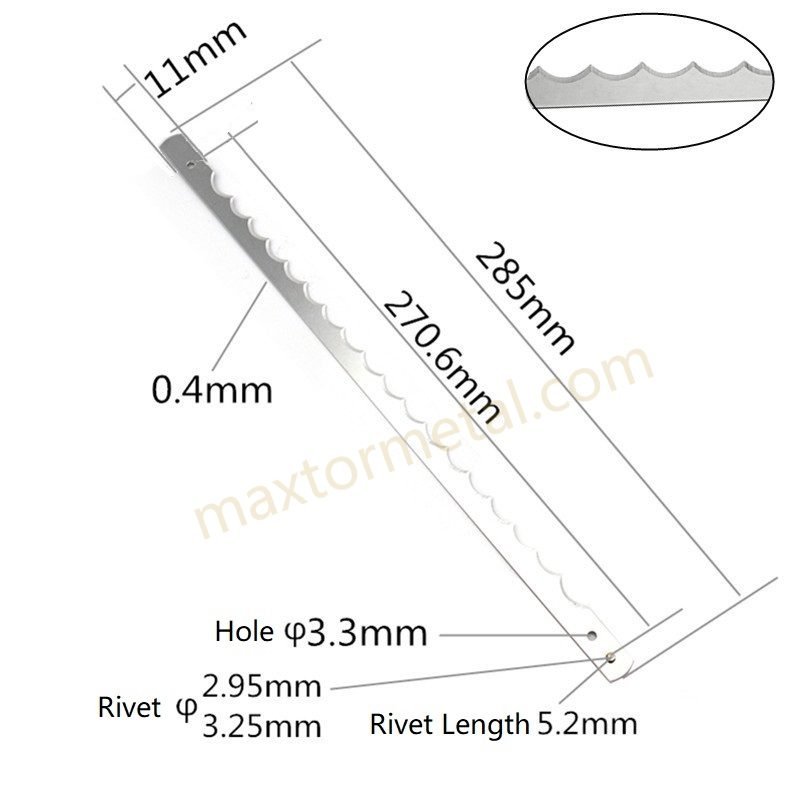
- Eles podem fornecer uma lista de verificação de compatibilidade (modelo da máquina, número de lâminas, comprimento/largura/espessura, padrão de furos, guias, método de tensionamento) e confirmar as tolerâncias antes de enviar o orçamento?
Capacidade de garantia da qualidade/conformidade (você consegue passar por auditorias com a documentação deles?)
- Eles conseguem fornecer rastreabilidade por lote (matéria-prima → tratamento térmico → moagem → inspeção final → embalagem)?
- Eles podem fornecer a documentação de contato com alimentos e de higiene adequada para sua região e para os requisitos do cliente?
- Eles possuem etapas de inspeção controladas (matéria-prima recebida, verificações durante o processo, inspeção final) e registros que você pode auditar?
Confiabilidade de fornecimento (eles conseguem manter o fornecimento funcionando por 12 a 36 meses?)
- Eles podem se comprometer com os prazos de entrega e as metas de desempenho de entrega no prazo e na íntegra (OTIF)?
- Eles conseguem manter um estoque de segurança/VMI caso as trocas de produto sejam frequentes ou a demanda seja sazonal?
- Existe um processo de escalonamento definido para quando um defeito aparece em uma linha de produção?
Conclusão principalUm fornecedor de lâminas "qualificado" é aquele de quem você pode fazer novos pedidos sem precisar reaprender as lições difíceis, porque os processos de engenharia, os registros de controle de qualidade e o modelo de fornecimento são todos controlados.
KPIs e planejamento de testes
A comparação entre fornecedores falha quando os KPIs são vagos ("corta bem") ou a configuração do piloto muda de uma execução para outra. Defina seus KPIs e as condições de teste antes de cortar o primeiro pão.
Defina KPIs que você possa medir na prática.
- variação da espessura da fatiaMedir a distribuição da espessura da fatia (alvo, faixa de tolerância e deriva ao longo do tempo).
- Geração de migalhasPese as migalhas por X pães ou meça o volume de migalhas capturado pelo seu sistema de coleta durante um período definido.
- Taxa de defeitos: rasgos, fatias comprimidas, bordas irregulares, "cabelo de anjo", falhas nas extremidades das fatias.
- Vida da lâmina: pães ou horas até um limite definido de fim de vida útil (por exemplo, taxa de miolo acima do limite, variação de espessura acima do limite ou defeitos visuais acima do limite).
- Tempo de transição: minutos desde o fechamento até a verificação do primeiro pão bom.
- impacto de linha: minutos de inatividade atribuíveis à troca/ajuste das lâminas; eventos de retensionamento ou alinhamento pós-troca.
Condições de teste de fechadura
- Tipo e especificação do pão (pão macio para sanduíche, pão crocante, pão enriquecido, etc.).
- Faixa de temperatura do produto (especialmente se o fatiamento a quente estiver nos planos).
- Configurações da fatiadora: ponto de ajuste de tensão, condição da guia, velocidade e intervalo de limpeza.
Se você precisa de uma referência básica sobre o que mais importa na interface lâmina/linha, a BakingBusiness destaca o passo, a aresta e a tensão como as propriedades essenciais que determinam o desempenho de fatiamento em ambientes de produção (As três propriedades essenciais das lâminas de corte de pão — Baking Business).
Aumento gradual e requalificação
O fornecimento a longo prazo exige controles após o projeto piloto.
- Plano de aceleraçãoDefina como você passará de quantidades piloto para o volume total de produção (ex.: 1 linha → 1 fábrica → várias unidades).
- Amostra dourada + controle de revisãoBloquear uma lâmina de referência (dimensões + especificação da aresta + especificação do acabamento) e exigir notificação de alteração controlada.
- Gatilhos de requalificação: novo aquecimento do aço, novo rebolo/processo de retificação, novo revestimento, nova embalagem ou qualquer iteração de design.
- Verificação em andamento: verificações periódicas de entrada (dimensões, verificação de dureza/bordas, conforme aplicável) e monitoramento de tendências nos KPIs de quebra e espessura.
Engenharia e desempenho

Materiais e metas de dureza
O material da lâmina e os níveis de dureza devem ser escolhidos com base em três fatores principais: tipo de pão, ambiente sanitário e o tipo de falha que você não pode tolerar.
- Resistência à corrosão versus retenção de bordaAmbientes de contato com alimentos exigem superfícies fáceis de limpar e resistência à corrosão, mas ainda é necessária estabilidade nas bordas sob alta produtividade.
- Resistência versus fragilidadeUma lâmina muito dura pode manter o fio por mais tempo, mas pode ser menos tolerante se o alinhamento ou a tensão forem inconsistentes. Em aços para ferramentas, dureza e tenacidade geralmente se invertem — condições mais duras tendem a lascar/trincar mais facilmente sob impacto, enquanto condições mais tenazes podem se desgastar mais rapidamente (visão geral: https://www.edconsteel.com.au/articles/steel-and-metal-articles/hardness-vs-toughness-tool-steel/).
O que solicitar a um fabricante:
- Opções de qualidade de materiais e por que os recomendamos para o seu tipo de pão e fatiador.
- Método de tratamento térmico e faixa de dureza controlada (e como isso é verificado em cada lote). O tratamento térmico é um fator primordial para ajustar a dureza, a ductilidade, a tenacidade e o comportamento ao desgaste (explicação geral: https://www.metalsupermarkets.com/how-heat-treatment-of-metals-work/).
- Quaisquer opções de acabamento ou revestimento de superfície destinadas a reduzir a aderência/arrasto (avalie-as em seus testes de miolo e pão quente).
Para obter informações adicionais sobre materiais e fatores de seleção para lâminas de pão, consulte o guia interno da MAXTOR METAL. Lâminas de corte de pão para uso industrial.
Geometria e acabamento das bordas
A geometria da lâmina é o ponto de encontro entre a qualidade do corte, o comportamento do miolo e a vida útil da lâmina. Se o seu fornecedor não consegue descrever a geometria em termos mensuráveis, você está comprando às cegas.
- Forma e inclinação do dente: afeta a agressividade com que a lâmina penetra no miolo e na crosta.
- Acabamento de bordaO controle da rebarba e a qualidade da afiação influenciam a geração de resíduos e a rapidez com que a lâmina se desgasta.
- Conjuntos combinadosPara pás com múltiplas lâminas, a consistência em todo o conjunto é tão importante quanto a média.
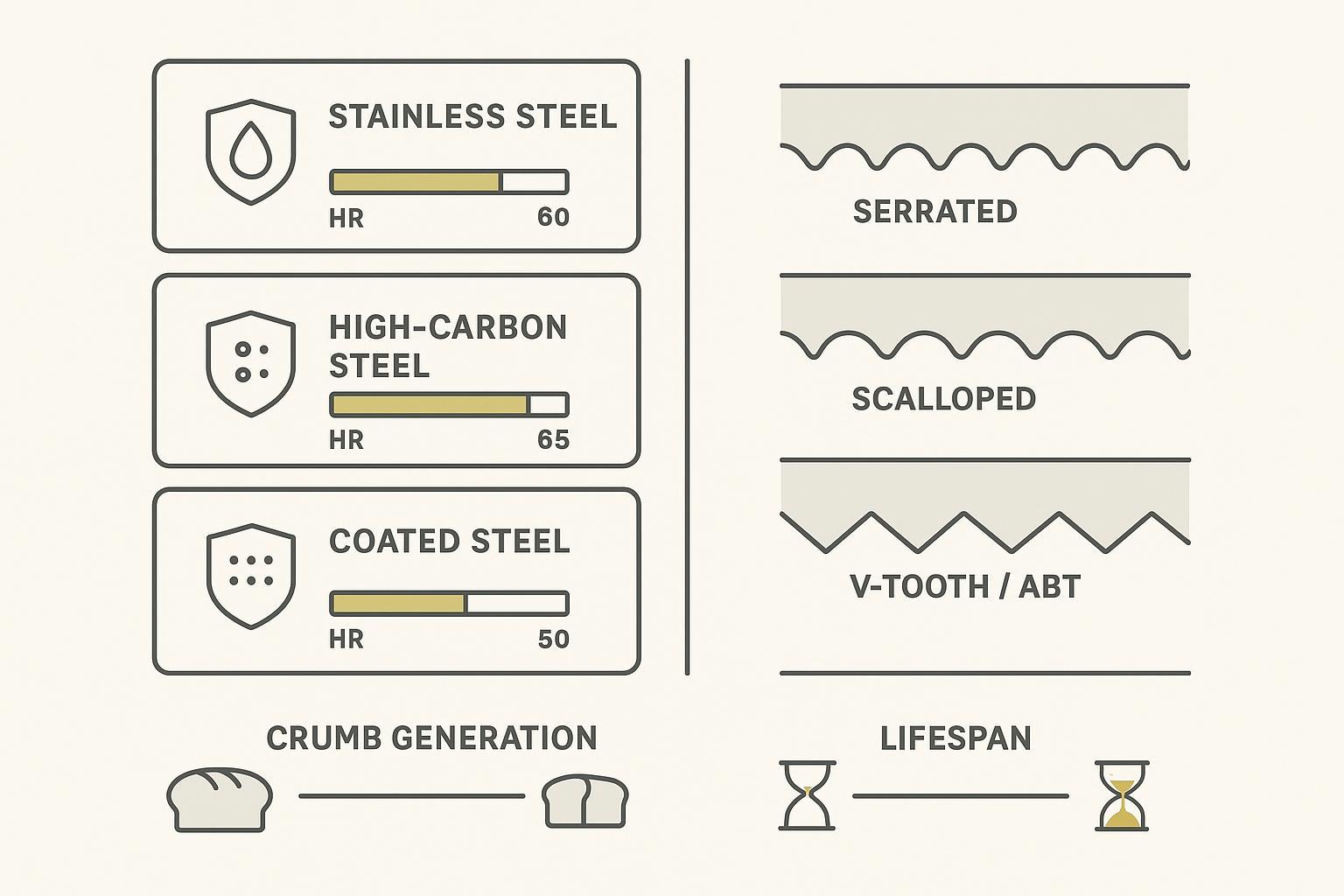
Uma forma prática de comparar perfis é mapeá-los aos seus modos de defeito:
- Se você lutar rasgos e bordas irregularesA geometria e a estabilidade à tensão são geralmente as primeiras variáveis a serem verificadas.
- Se você lutar carga de migalhas e ônus de saneamentoO acabamento das bordas (controle de rebarbas) e o comportamento de atrito do perfil são importantes.
Para uma análise interna mais detalhada das opções de borda (sem transformar este post em um catálogo de produtos), veja a comparação da MAXTOR METAL. Lâminas de cortador de pão com formato de vieira, dente em V e ABT.
Pão quente e controle de migalhas
O corte a quente é onde muitas lâminas "perfeitas em laboratório" falham na prática. À medida que a temperatura do produto aumenta, o miolo amolece, a aderência aumenta e pequenas diferenças geométricas se manifestam como compressão, arrasto e rasgos.
O que validar em um projeto piloto de pão quente:
- Aderência/deslizamento e arrastoA lâmina começa a puxar o pão ou corta de forma limpa e em alta velocidade?
- padrão de acúmulo de migalhasOnde se acumulam os detritos (guias, face da lâmina, pontos de tensão) e isso causa variação na espessura?
- Sensibilidade do intervalo de limpezaA qualidade das fatias cai drasticamente se a higienização for atrasada em um ciclo?
Dica profissionalConsidere o fatiamento de pão ainda morno como uma condição de qualificação em si. Se a sua produção por vezes fatia pão ainda morno, não aceite um fornecedor que só teste em pães completamente frios.
Conformidade e Garantia de Qualidade
Base de contato com alimentos e higiene
Para padarias e fabricantes de equipamentos originais (OEMs), "contato com alimentos" não é um slogan — é uma disciplina de documentação e higienização.
Para os mercados da UE, a documentação do seu fornecedor deve estar em conformidade com os requisitos do quadro regulamentar da UE para o contacto com alimentos e com as boas práticas de fabrico — no mínimo, os princípios gerais de segurança. Regulamento (CE) n.º 1935/2004 e controles GMP em Regulamento (CE) n.º 2023/2006 (ver a visão geral da Comissão Europeia sobre materiais em contato com alimentos: https://food.ec.europa.eu/food-safety/chemical-safety/food-contact-materials_en).
Especificamente para metais e ligas, também é comum fazer referência a... Diretrizes da EDQM (Conselho da Europa) sobre metais e ligas utilizados como materiais em contato com alimentos., que fornece orientações sobre limites de liberação e abordagens de teste utilizadas em toda a Europa (página de atividades do EDQM: https://www.edqm.eu/en/metals-and-alloys-used-in-food-contact-materials-and-articles).
No mínimo, você quer que o fabricante declare claramente:
- Quais materiais de lâminas são adequados para ambientes de contato com alimentos e como eles controlam a condição da superfície (acabamento, rebarbas, risco de corrosão) para lâminas de fatiadores de qualidade alimentar?
- Quais produtos químicos de limpeza/desinfecção são considerados nas recomendações de materiais?
- Como as lâminas são embaladas para evitar corrosão e contaminação durante o transporte e armazenamento.
Rastreabilidade e ISO 9001
A rastreabilidade é o caminho mais rápido para a análise da causa raiz quando a qualidade da fatia muda.
O que solicitar:
- Rastreabilidade ao nível do lote: lote/forno do material, lote de tratamento térmico, registros de inspeção em processo, resultados da inspeção final e identificação da embalagem.
- Documentação ISO 9001: validade do certificado, escopo e registros reais de inspeção e controle de não conformidades do fornecedor relacionados ao seu produto. Para os compradores, uma verificação prática é se o fornecedor pode apresentar “informações documentadas” controladas e evidências de auditoria consistentes com as expectativas da ISO 9001:2015 (visão geral da ISO: https://asq.org/quality-resources/iso-9001).
- Pacote de certificado de análise/certificado de materialComposição (quando aplicável), método/faixa de verificação de dureza e relatório de inspeção dimensional.
Nota sobre capacidade neutra (MAXTOR METAL): A MAXTOR METAL pode fornecer pacotes de documentação de garantia de qualidade padrão para lâminas industriais — normalmente incluindo um Certificado de Análise (CoA) vinculado ao lote e uma Declaração de Conformidade (DoC) mediante solicitação, juntamente com registros de inspeção alinhados a uma abordagem de gestão da qualidade ISO 9001 — para que os compradores possam atender aos requisitos de aprovação do fornecedor e auditoria interna.
Procedimentos Operacionais Padrão (POP) de saneamento e registros de auditoria
Para garantir o fornecimento a longo prazo, não se limite a solicitar documentos — verifique se os controles de higiene do fornecedor correspondem à sua realidade.
- Solicite um Procedimento Operacional Padrão (POP) de sanitização que abranja manuseio, embalagem e controle de contaminação.
- Solicite exemplos de registros de auditoria ou relatórios de inspeção (com detalhes sensíveis ocultados) que demonstrem a execução repetível.
- Defina como as não conformidades são tratadas: contenção, causa raiz, ação corretiva e critérios de relançamento.
Compatibilidade e personalização

Ajuste e guias OEM
A maioria dos "problemas com lâminas" se manifesta como problemas de encaixe e guia na produção.
Antes de expandir a parceria com um novo fornecedor, verifique:
- Blade dimensions and mounting interface match your slicer design.
- Guides and wear parts are within spec; worn guides can turn a good blade into a crumb generator.
- The supplier can provide a fitment confirmation checklist tied to your machine model and drawing revision.
If you need a reference point for what information a supplier typically requests to avoid fitment surprises, MAXTOR METAL’s bread slicer blades page summarizes common configurations and manufacturing scope.
Non-standard designs and iterations
OEMs and high-mix bakeries often need iteration: tooth form changes, finish changes, material changes, or small dimensional adjustments.
To make iterations safe and fast:
- Require revision control on drawings/specs.
- Define what changes require requalification (material, heat treat, coating, edge geometry).
- Run short “A/B” pilots with the same bread spec and the same sanitation cycle.
Changeover, tension, alignment
Changeover is where supply decisions become OEE decisions.
What to evaluate in a supplier’s solution:
- Does the blade set arrive as a matched set that reduces time spent chasing tension balance?
- Are installation and tensioning instructions explicit, verifiable, and safe?
- Does the blade hold alignment across a run, or do you see repeated re-tension events?
If you want a quick refresher on how tension and edge properties drive slice outcomes, refer back to BakingBusiness’ pitch/edge/tension overview cited earlier.
Modelo de fornecimento e aspectos comerciais

Lead times, MOQ, VMI options
A long-term blade supplier is also a supply-chain partner. For high-volume lines, the best engineering outcome still fails if you stock out.
Options to evaluate:
- Lead time bands (standard vs expedited) with documented historical performance.
- MOQ policy that doesn’t force you into excess inventory.
- VMI / safety stock for plants with seasonal demand or frequent changeovers.
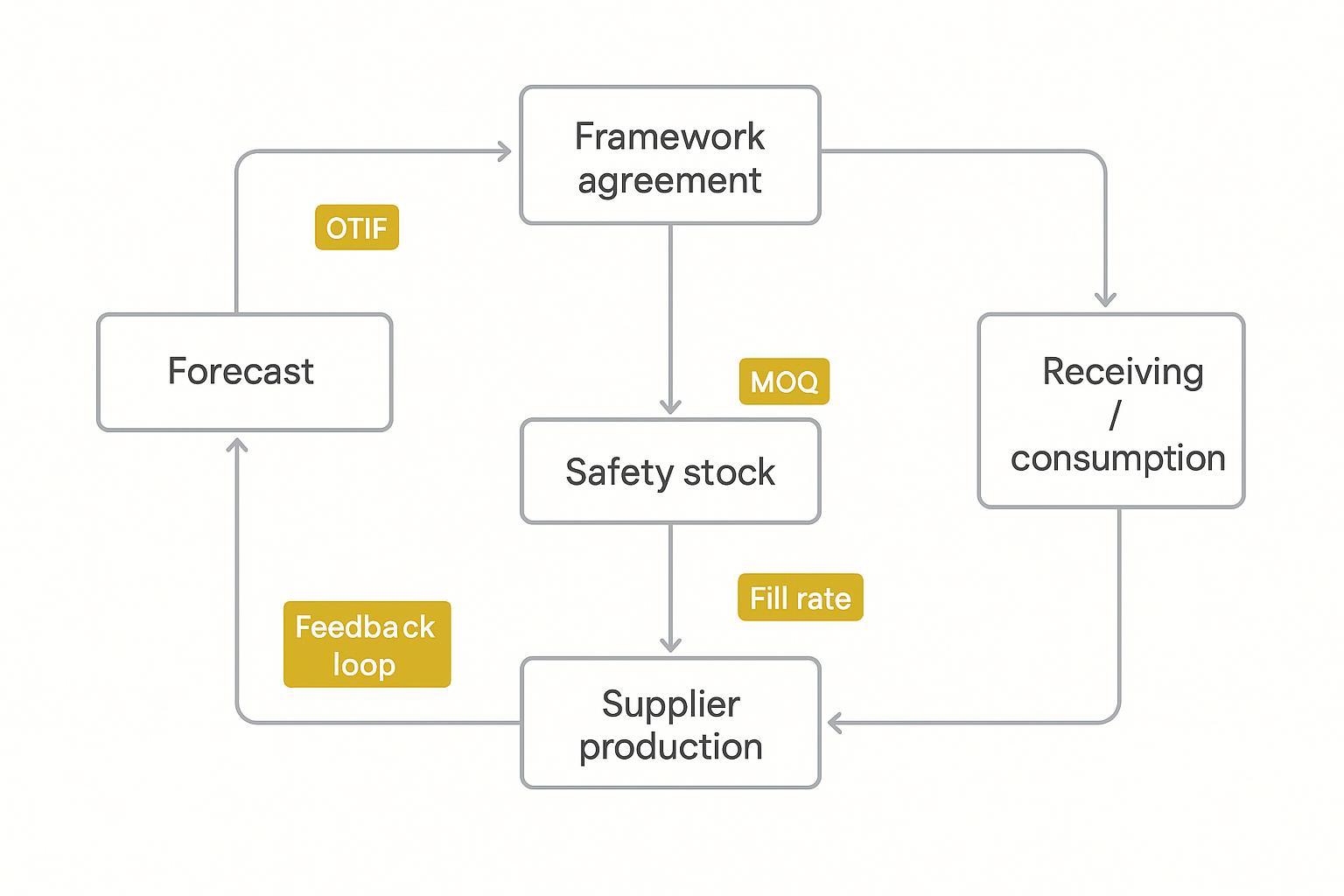
A practical VMI model for blades usually includes:
- rolling forecast (your demand signal)
- agreed safety stock at the supplier or local hub
- OTIF tracking and an escalation path when performance slips
Terms, SLAs, and KPIs
If you want long-term stability, put operational definitions into the commercial agreement.
Exemplos:
- OTIF: define “on time” and “in full” precisely.
- Quality escape rate: what counts as a defect in your process, and how it’s measured.
- Corrective action timing: response time, containment timeline, and replacement policy.
- Change notification: mandatory notice for material/process changes and the requalification requirement.
Warranty and after-sales
Blades are consumables, but the supplier relationship shouldn’t be disposable.
Check whether the manufacturer provides:
- Clear warranty scope tied to measurable criteria (not vague promises).
- After-sales support for troubleshooting: tension guidance, fitment checks, and iteration support.
- A documented feedback loop: how pilot data becomes the next design iteration.
Para uma abordagem prática e orientada para a operação para manter o desempenho estável após a instalação, o da MAXTOR METAL guia de manutenção de lâminas para fatiador de pão é uma referência interna útil que você pode alinhar com seus próprios POPs.
Conclusão
Principais pontos: verifique KPIs, documentos de conformidade e termos de fornecimento antes do compromisso
Próximos passos: emitir RFI/RFQ, realizar piloto em seus SKUs, finalizar o acordo de cooperação e VMI
Se você deseja passar de “cotações de fornecedores” para uma decisão de fornecimento controlada de longo prazo, estruture seu RFI/RFQ em torno do modelo de qualificação acima, anexe seus desenhos/especificações e exija um plano piloto com KPIs de aceitação (geração de migalhas, variação de espessura, taxa de defeitos, vida útil da lâmina e tempo de setup).
Aviso: Este artigo é um guia para compradores operacionais. Quaisquer referências à MAXTOR METAL são fornecidas como exemplos opcionais e leitura complementar; você deve validar a compatibilidade, o desempenho e a conformidade em relação às condições específicas da sua linha e aos requisitos regionais.
Última atualização: 2026-05-03
Quando estiver pronto para realizar um piloto, MAXTOR METAL pode apoiar a revisão de engenharia a partir de desenhos/amostras e alinhar o pacote de documentos de garantia de qualidade (por exemplo, CoA/DoC e requisitos de rastreabilidade de lote) para que sua decisão de ganho de escala seja baseada em dados verificados — não em suposições.
Perguntas frequentes
Quais informações devo enviar a um fabricante para obter uma cotação correta?
Envie um desenho sempre que possível, além de um checklist de montagem: modelo do fatiador, quantidade de lâminas, comprimento/largura/espessura, padrão de furos, estilo de guia e como sua estrutura tensiona as lâminas. Inclua também o tipo de pão, velocidade da linha, produtos químicos de limpeza e se você costuma fatiar o pão quente — essas informações direcionam as decisões de material, dureza e geometria do fio.
Quais KPIs são mais importantes em um piloto de lâminas?
Use KPIs mensuráveis e práticos para o chão de fábrica: variação de espessura da fatia, geração de migalhas, taxa de defeitos (rasgos, bordas irregulares, compressão), vida útil da lâmina até um limite definido de fim de vida útil e tempo de setup. A chave é a consistência: fixe suas condições de teste para que os resultados sejam comparáveis entre lotes e fornecedores.
Como evitar ser enganado por uma “boa amostra” que não pode ser replicada?
Trate o piloto como uma qualificação de processo, não como um teste único. Solicite rastreabilidade baseada em lote, confirme dimensões controladas e especificações de fio, e exija controle de revisão na “amostra de ouro” (golden sample). Em seguida, defina gatilhos de requalificação (nova corrida de aço, novo rebolo/processo de retificação, alterações de revestimento ou alterações de embalagem) antes de expandir a escala.
O que os compradores da UE devem solicitar em relação à conformidade para contato com alimentos?
No mínimo, solicite ao fornecedor que declare os materiais destinados ao contato com alimentos, os produtos químicos de higienização previstos e o método de embalagem que evita corrosão/contaminação. Para os mercados da UE, certifique-se de que eles possam atender às expectativas gerais de segurança sob a estrutura da UE para materiais em contato com alimentos e controles de BPF (Boas Práticas de Fabricação) — resumidos pela Comissão Europeia em Materiais em contato com alimentos— e ser capaz de discutir como eles avaliam metais e ligas em relação às diretrizes europeias reconhecidas, tais como Metais e ligas do EDQM usados em materiais e artigos em contato com alimentos.
O que a ISO 9001 me diz sobre a disciplina de qualidade de um fornecedor?
A ISO 9001 não garante “zero defeitos”, mas indica que o fornecedor deve ter controles estruturados para informações documentadas, auditorias internas e tratamento de não conformidades. Ao avaliar um fornecedor, verifique se o escopo do certificado realmente cobre seu produto/processo e se eles podem apresentar registros de inspeção e ações corretivas vinculados ao produto, consistentes com os conceitos da ISO 9001:2015 descritos pela Visão geral da ISO 9001 da ASQ.
Como os materiais e o tratamento térmico afetam a geração de migalhas, rasgos e a vida útil da lâmina?
Na prática, você está equilibrando resistência à corrosão, resistência ao desgaste e resistência à fratura. Condições de maior dureza geralmente melhoram o desgaste, mas podem lascar mais facilmente sob impacto ou desalinhamento, enquanto condições de maior tenacidade podem tolerar a variabilidade, mas desgastam mais rapidamente — uma visão geral é descrita em Discussão sobre dureza vs tenacidade da Edcon Steel. O tratamento térmico é uma das principais alavancas que altera esse equilíbrio ao modificar a microestrutura e as propriedades mecânicas; veja Visão geral do tratamento térmico da Metal Supermarkets.
Devemos qualificar o fatiamento a quente separadamente?
Sim. O produto quente aumenta a aderência e a deformação, de modo que pequenas diferenças de geometria e acabamento aparecem rapidamente como arrasto, compressão e rasgos. Se o fatiamento a quente ocorrer em sua operação — mesmo que ocasionalmente —, trate-o como uma condição de qualificação separada, com seus próprios limites de aceitação e verificações de sensibilidade ao intervalo de limpeza.
Autor
Jesse Xu — Engenheiro de Qualidade Sênior, QA (Garantia de Qualidade). 15 anos de experiência em qualidade de lâminas industriais e análise de falhas.
- Foco em análise de falhas: Capaz de distinguir se problemas como lascamento de aresta e baixa resistência ao desgaste são causados principalmente por problemas no processo de tratamento térmico ou por segregação de material.
- Certificações: ASQ – CQE; Auditor Líder ISO 9001; ASNT Nível II.

 English
  Spanish
  Italian
  French
  Portuguese
  Russian
  German
  Arabic
  Hindi
Hindi  Vietnamese
  Indonesian
  Japanese
  Korean