

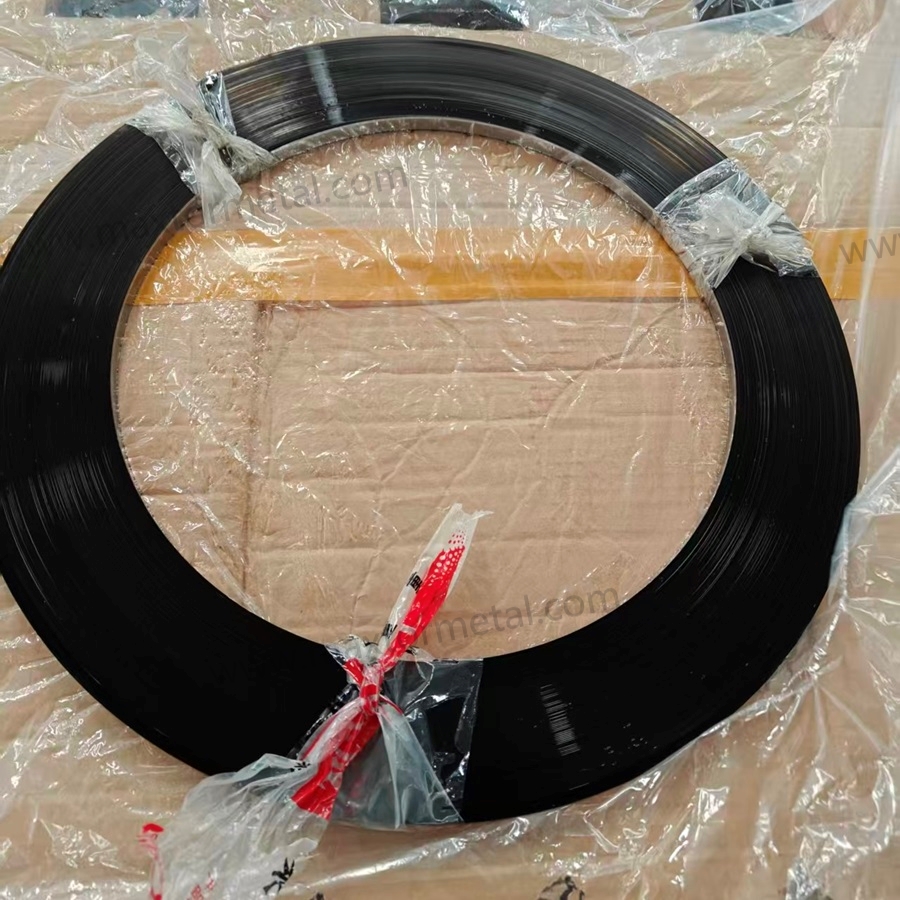
Resposta rápida: A redução da frequência de troca de bobina melhora o OEE principalmente ao cortar o tempo de inatividade planejado — um impacto direto na Disponibilidade. Ganhos secundários aparecem no Desempenho (menos períodos de aceleração após as reinicializações) e na Qualidade (menos janelas de defeitos relacionadas a emendas). O efeito é quantificável com quatro variáveis: taxa de consumo de tira, comprimento da bobina, tempo de troca por parada e refugo gerado por troca. Em um exemplo prático com consumo de 2.000 m/turno, a mudança de bobinas de 100 m para 500 m recupera mais de 3 horas de Disponibilidade e aproximadamente $3.700 em valor de oportunidade de rendimento por turno.
As linhas de corte e puncionamento/slitting alimentadas por bobina geralmente não perdem OEE porque alguém "esqueceu de rodar rápido". Elas perdem OEE porque a linha é forçada a parar — frequentemente de forma repetida — para trocas de bobina, passagem da tira (threading) e estabilização.
Se você busca operar com janelas de produção mais longas e estáveis, a alavanca mais rápida costuma ser a redução da frequência de troca de bobinas. É por isso que muitas equipes começam auditando os setups como uma perda de Disponibilidade do OEE dentro da estrutura do OEE (o OEE é normalmente calculado como Disponibilidade × Desempenho × Qualidade, conforme definido na ISO 22400-2:2021 — Definições de KPI para gerenciamento de operações de manufatura.
Na prática, o comprimento e a consistência da bobina importam tanto quanto a técnica de troca. Se o fornecimento de tira for estável o suficiente para suportar corridas mais longas, você gerasse planejar menos interrupções por turno, mantendo um controle dimensional rigoroso.
Nota de Engenharia: Se a especificação de fornecimento de suas bobinas precisa se alinhar aos requisitos de qualificação de fitas de aço para lâminas — incluindo comprimento da bobina, tolerância dimensional e rastreabilidade do tratamento térmico — consulte a página de referência da Maxtor Metal sobre aço em fita para lâminas industriais em bobinas chanfradas para especificações de formato e controles de consistência de longo prazo.
- Por que reduzir a frequência de troca de bobinas melhora a Disponibilidade, a mão de obra e o desperdício
- O que este modelo abrange: cálculo de OEE, mão de obra, refugo de emenda, valor de produtividade
- Dados de entrada necessários: metros/turno, minutos/troca, metros de refugo/troca, equipe, taxas, velocidade, rendimento
- Guia rápido: o que você inserirá, o que obterá e quando este modelo se aplica
Entradas rápidas da calculadora (copiar/colar)
| Entrada | Símbolo nas fórmulas | Unidade | Notas / onde obter |
|---|---|---|---|
| Consumo de fita por turno | metros_por_turno | m/turno | Do MES, registro de uso de bobinas ou folha de controle |
| Comprimento da bobina | metros_por_bobina | m/bobina | Especificação do fornecedor / inspeção de recebimento |
| Tempo de setup (interno) | minutos_por_troca | min/troca | De estudo de tempos em vídeo ou registro de inatividade |
| Tamanho da equipe (efetivo) | tamanho_da_equipe | pessoas | Use a equipe efetiva se o trabalho for paralelizado |
| Refugo por troca | sucata_m_por_troca | m/troca | Fim de bobina na emenda + refugo de passagem |
| Velocidade da linha (regime permanente) | velocidade_da_linha_m_por_min | m/min | Use a velocidade de operação estável |
| Rendimento de reinício / first-pass yield | rendimento | 0–1 | Meça a janela pós-troca separadamente, se necessário |
| Valor de contribuição (opcional) | valor_por_metro | $/m | Prefira a margem de contribuição, não a receita |
Dica: Se a sua linha não for o gargalo, converta “metros perdidos” em “tempo disponível perdido” e valorize-o usando a margem de contribuição por hora em vez de $/m.
Como menos trocas de bobinas impulsionam a disponibilidade do OEE — e por que o cálculo é mais simples do que você pensa
Availability, Performance, Quality linkages
Reducing coil changes primarily improves Disponibilidade—often tracked as perda de Disponibilidade do OEE—because fewer changeovers means fewer planned stops inside scheduled production time.
It can also lift Desempenho e Qualidade in small but real ways:
- Desempenho: fewer restarts means fewer ramp-up periods, fewer “micro-stops” while stabilizing tension, and less speed derating immediately after a splice.
- Qualidade: each splice or threading event can create a small window of higher defect risk—mis-tracking, burr changes, edge waviness, or dimensional drift until tension and guide alignment settle.
Conclusão principal: If you want a model that management accepts, keep the OEE logic clean: changeovers hit Availability directly. This article’s equations primarily quantify Availability losses and recovery from coil changes. Performance and Quality often improve too (fewer restarts, fewer defect windows), but those secondary gains are usually smaller and more site-specific—so measure them in a pilot using the same data dictionary and accounting rules before claiming total OEE uplift.
Downtime and labor equations
Use these as a practical starting point. Keep units consistent (minutes, meters, pieces).
Model boundaries (read before you use the formulas)
- “Lost meters” assumes the line is the constraint. The equation
lost_meters = downtime_min × line_speed × yieldonly reflects opportunity value if the line can actually convert recovered time into saleable output. - Separate internal vs external changeover work. If prep can happen while running (tools, next coil staging), treat it as external and do not count it in
minutos_por_trocafor Availability. - Use an effective crew size. If only one operator is truly blocked during the stop while others continue value-added work, use
crew_size = 1(or a fraction). - Value per meter should be conservative. Prefer contribution margin (or opportunity value) rather than revenue, and document the assumption.
- Restart yield is not always the same as steady-state yield. If defects cluster after changes, measure the post-change window separately and use a lower
rendimentofor that period.
- Change count per shift
changes_per_shift = meters_per_shift / meters_per_coil
(If you need an integer, round up—because partial coils still force a changeover.)
- Downtime per shift from coil changes
downtime_min = changes_per_shift × minutes_per_change
- Labor minutes per shift for changeovers
labor_min = downtime_min × crew_size
- Labor cost per shift (optional)
labor_cost = labor_min/60 × labor_rate_per_hour
This is intentionally simple: it counts the people tied up in the changeover window. If your crew is truly parallelized (one person changes coil while others keep value-added work going), reduce the effective crew size.
Splice scrap and lost throughput value
Two common “hidden” losses are easy to quantify.
- Splice / threading scrap
splice_scrap_m = changes_per_shift × scrap_m_per_change
If scrap is measured by weight instead of meters:
splice_scrap_kg = splice_scrap_m × kg_per_meter
- Lost throughput value from downtime
If your line has a stable selling value per meter (or a contribution margin per meter), you can estimate the value of time lost:
lost_meters = downtime_min × line_speed_m_per_min × yieldlost_value = lost_meters × value_per_meter
Where rendimento is the fraction of output that becomes saleable product in that operating window. If you don’t have a clean value-per-meter, substitute contribution margin per hour or a conservative “opportunity value” rate.
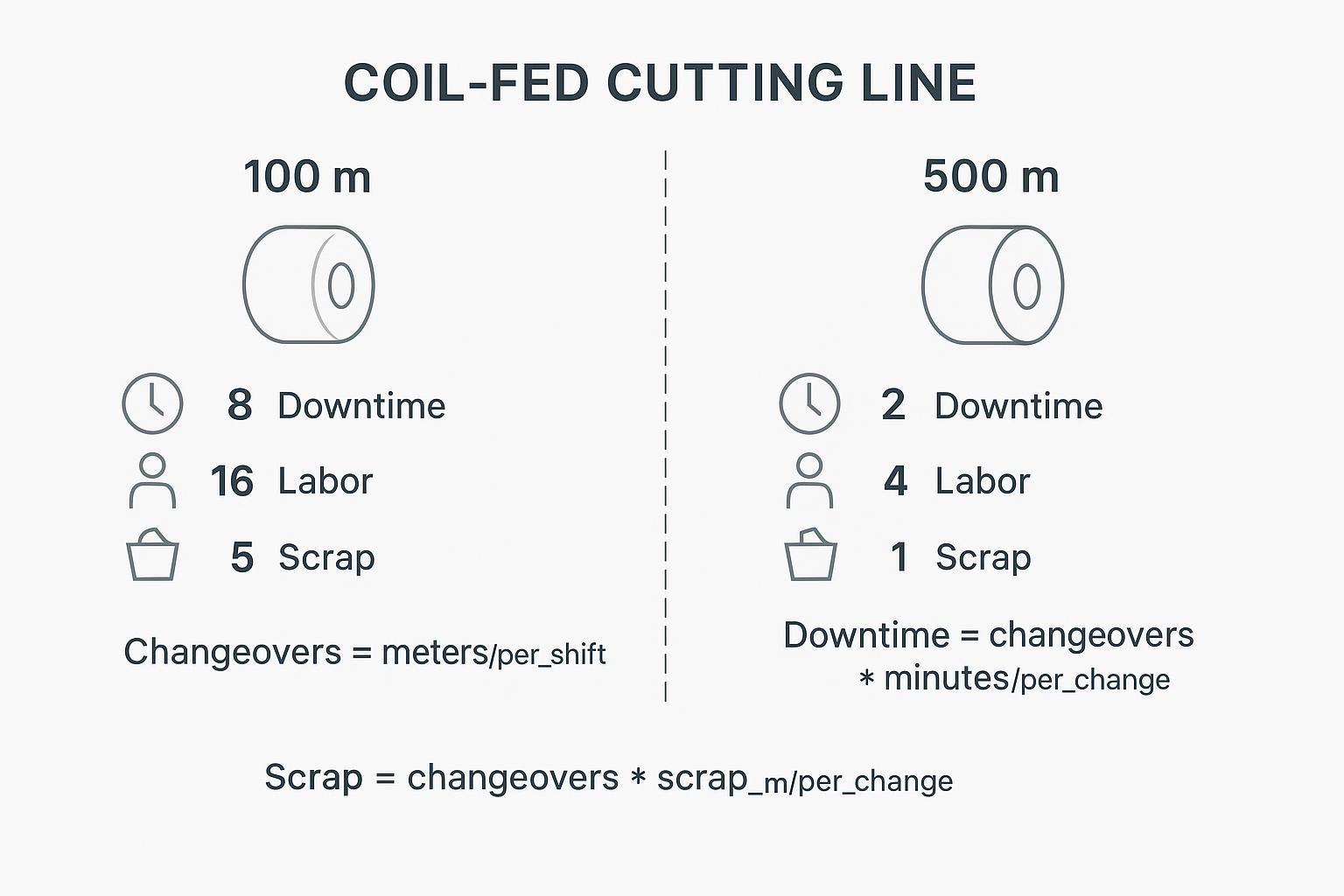
Comparatif bobines 100 m vs 500 m (fréquence de changement de bobine)
Assumptions and formula setup
This section shows how frequência de troca de bobinas changes when you move from short coils to long coils, using the same line consumption rate.
The point of this comparison isn’t that 500 m is always better. The point is to expose the math so you can plug in your own plant data.
We’ll compare the impact of moving from 100 m coils to 500 m coils on:
- number of coil changes per shift
- changeover downtime
- changeover labor
- splice scrap
Worked example with conservative inputs
Assume a line consumes:
meters_per_shift = 2,000 mminutes_per_change = 12 minscrap_m_per_change = 3 mcrew_size = 2line_speed_m_per_min = 25 m/min(during steady running)yield = 0.98value_per_meter = $0.80(use contribution value, not revenue, if you can)
Case A: 100 m coils
changes_per_shift = 2,000 / 100 = 20downtime_min = 20 × 12 = 240 min(4.0 hours)labor_min = 240 × 2 = 480 min(8.0 labor-hours)splice_scrap_m = 20 × 3 = 60 mlost_meters = 240 × 25 × 0.98 = 5,880 mlost_value = 5,880 × $0.80 = $4,704 per shift
Case B: 500 m coils
changes_per_shift = 2,000 / 500 = 4downtime_min = 4 × 12 = 48 minlabor_min = 48 × 2 = 96 min(1.6 labor-hours)splice_scrap_m = 4 × 3 = 12 mlost_meters = 48 × 25 × 0.98 = 1,176 mlost_value = 1,176 × $0.80 = $940.80 per shift
Delta (100 m → 500 m)
- Changeovers: -16 per shift
- Tempo de inatividade: -192 min per shift
- Labor time: -384 labor-min per shift (6.4 labor-hours)
- Splice scrap: -48 m per shift
- Throughput opportunity value: -$3,763 per shift (using the assumptions above)
These numbers look dramatic because the model assumes coil changes are true line stops and your line speed is meaningfully higher than “changeover pace.” If your line runs slower, or changeovers are partly externalized, the deltas shrink—but the direction usually stays the same.
Sensitivity levers and break-even notes
The economics of longer coils depend on a few levers you can sanity-check quickly:
- Minutes per change: If your changeover is 5 minutes instead of 12, the benefit is smaller—but still meaningful when changes are frequent.
- Meters per shift (consumption rate): Higher consumption makes coil length more valuable because you “burn through” small coils quickly.
- Refugo por troca: Even modest splice scrap becomes significant when it happens 15–30 times per shift.
- Line speed during steady-state: Faster lines pay a higher opportunity cost for every stop.
- Yield during restart: If quality dips after a change (tracking, burr, surface marks, dimensional drift), your real value loss can exceed the simple downtime estimate.
A practical break-even check is to compare:
- added material/handling cost of longer coils (including storage, crane time, and any risk controls) versus
- recovered value from reduced downtime + reduced labor + reduced scrap.
O que deve ser verdade antes que bobinas mais longas realmente melhorem o OEE
Handling, tension, cores, and storage
Longer coils reduce changeovers, but they raise the bar for handling discipline e tension stability.
Key constraints to review before increasing coil length:
- Coil weight vs your crane and lifting fixtures (including sling angles and WLL)
- Mandrel and core spec compatibility (ID/OD, expansion range, core crush resistance)
- Brake capacity and unwind torque control (especially during acceleration/deceleration)
- Closed-loop tension control (dancer response, load-cell feedback, web/strip guide stability)
- Storage space, rack rating, and floor loading
When the strip steel itself is part of your stability problem (edge variation, thickness drift, residual stress), longer coils can amplify the pain: you’ll run longer before you realize the batch is unstable.
This is where supplier-side process control matters in a very practical way. When discussing coil length and quality control for blade strip supply, it’s reasonable to ask for evidence of heat treatment consistency e dimensional tolerances that hold over long, continuous runs—the same controls that determine whether a validated material grade like 440C will perform predictably across an extended coil. For a detailed framework on how those supplier-side controls are specified and verified for blade strip steel, see Validating 440C Dicer Replacement Blades at HRC 56–58. Maxtor Metal provides thickness tolerance records, periodic hardness sampling logs, and heat-treatment batch documentation formatted for audit-ready supplier review.
Safety, SOP, and training updates
Longer or heavier coils change the risk profile of a coil-fed line. Treat this as a controlled change: update standard work, re-train operators, and verify that handling limits and guarding assumptions still hold.
At a minimum, refresh (or add) the following:
- Training and competency: define who is qualified to run coil changes, who can operate lifting equipment, and what “sign-off” looks like after retraining.
- Lift plan and fixtures: approved fixtures only, WLL verification, exclusion zones, and clear hand signals/spotter rules.
- Lockout/tryout: isolate stored energy in brakes, pinch rolls, and tension systems before threading or clearing jams.
- Start-up recipe: documented tension/brake setpoints and a defined ramp-up sequence to reduce restart variability.
- First-meter validation: what to inspect right after restart (tracking, edge condition, burr changes, surface marks, and any dimensional checks).
For general material handling and storage guidance, see OSHA’s Materials Handling and Storage (OSHA 2236).
Use this as a lightweight standard-work checklist. Adjust to your machine’s guarding and interlock rules.
Before stop (external work)
- Next coil verified: ID/OD, core spec, edge protection intact
- Lifting plan confirmed: approved fixtures, WLL check, exclusion zone
- Tools and consumables staged: splice materials, knives, wrenches, gauges
- Correct unwind “recipe” ready: brake/torque setpoints, dancer/load-cell targets
During stop (internal work)
- Lockout/tryout per SOP for stored energy (brakes, pinch rolls, tension system)
- Coil head alignment and threading path verified (avoid twist and mis-tracking)
- Splice quality check: alignment, bonding, and tail-out management
After restart (first-meter verification)
- Tension stability: confirm dancer/load-cell response and steady tracking
- Edge/quality check: burr change, edge waviness, surface marks
- Dimensional check: width/thickness drift as applicable
- Record any ramp-up micro-stops and re-tune only via defined parameters (avoid “tribal” tweaks)
Any move to longer/heavier coils should trigger a short SOP refresh and competency check. For general handling and storage guidance, see OSHA’s “Materials Handling and Storage (OSHA 2236)” booklet: https://www.osha.gov/sites/default/files/publications/OSHA2236.pdf
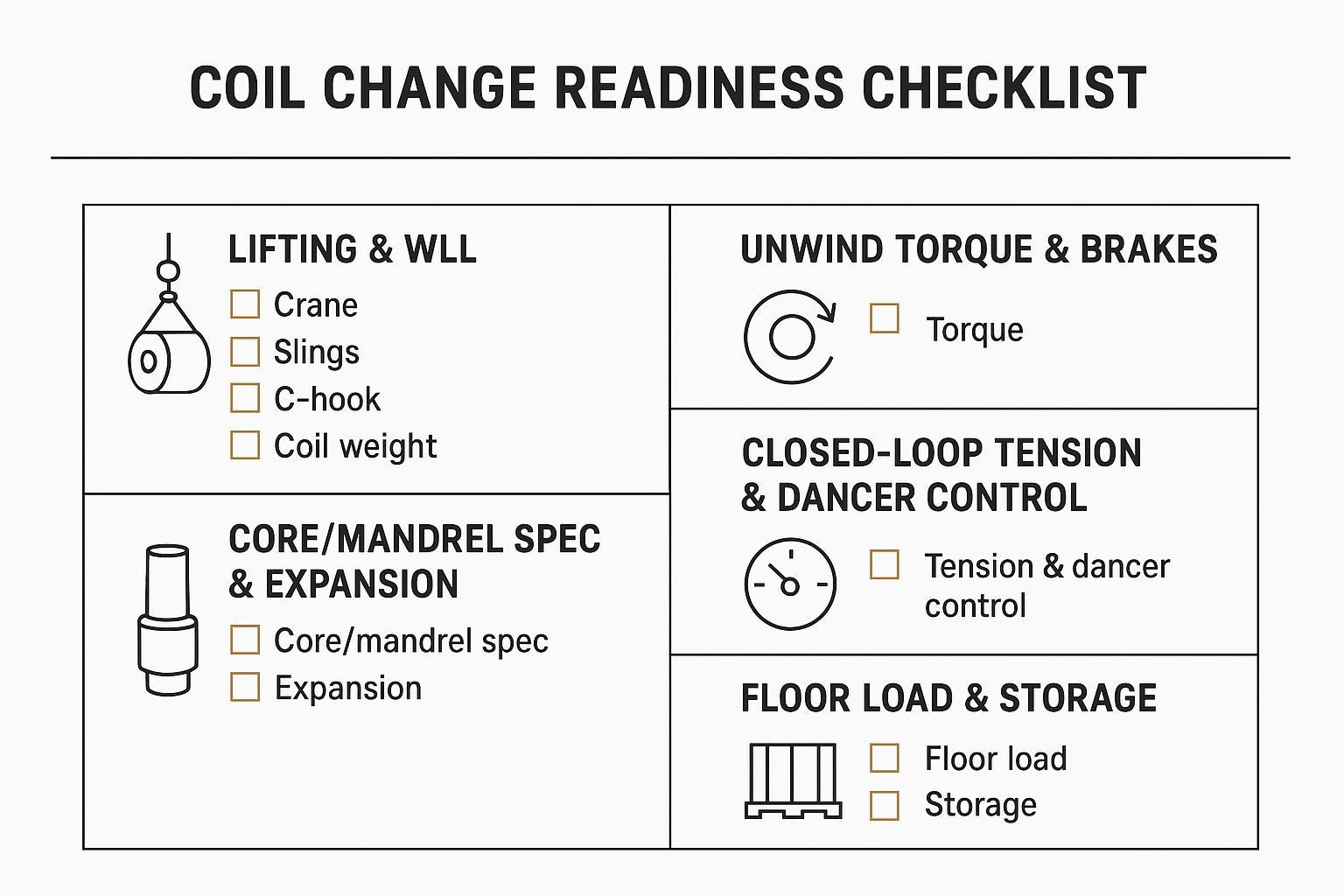
Update (or add) the following to standard work:
- Lifting plan: approved fixtures, WLL verification, exclusion zones, tag lines, and “hands-off” rules
- Lockout/tryout: isolate stored energy in brakes, pinch rolls, and tension systems before threading
- Threading method: defined path, guarding/interlocks, and safe hand positions
- Tension setpoints: start-up recipe and verification checks (what “stable” looks like)
- First-piece / first-meter validation: what to inspect after a change (tracking, edge condition, burr, surface)
Integration with auto-splicing and SMED
Reducing coil change frequency is one lever. Reducing the time and variability of the remaining changes is the other.
Two practical integrations:
- Auto-splicing (optional upgrade path): Auto-splicing can reduce the effective impact of coil changes by externalizing parts of the work and reducing restart variability. In many plants, it is a capital and integration decision (equipment capability, material compatibility, safety/guarding, and validation requirements), so it is not quantified in the simple equations above. Treat it as a next-step option after you baseline changeover time, scrap per change, and restart yield.
- SMED: The core SMED idea is to convert internal work (machine stopped) to external work (machine running), then standardize what remains. The method was developed by Shigeo Shingo and is documented in detail in A Revolution in Manufacturing: The SMED System. Productivity Press, 1985 (Primary source for SMED methodology.).
A simple SMED starter checklist for coil-fed lines:
- Pre-stage the next coil (ID verified, core verified, edge protected)
- Standardize threading tools and torque settings
- Use visual marks for alignment and strip path
- Parallelize the crew: one on mechanical change, one on verification and documentation
Caso piloto: Linha de tira de aço para facas 440C (anonimizado)
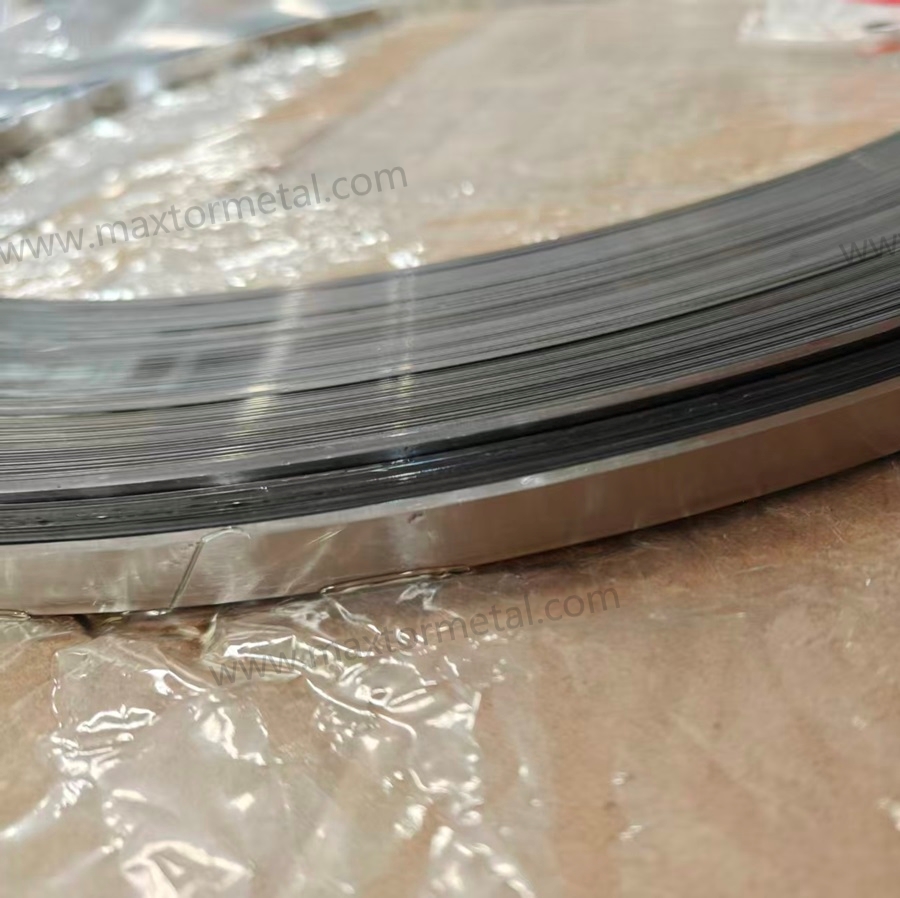
This anonymized case shows how a blade strip producer improved OEE by reducing coil change frequency while keeping product specs stable.
Project background
- Product: 440C blade strip steel, supplied to food-cutting blades and industrial band-knife makers
- Goal: reduce changeovers by increasing coil length (not by simply pushing rolling speed)
- Duration: ~5 weeks
- Data ownership and anonymization: This dataset was collected by Maxtor Metal’s technical team during a joint supplier qualification and process optimization project with the customer. Customer-identifying details have been anonymized with permission.
Preconditions (held constant)
- Same steel grade, thickness, width, and heat-treatment process
- Same crew/team; standardized changeover training
- No new equipment added (process + changeover workflow optimization only)
- First-coil validation performed each shift
- OEE accounting rules unchanged
Measurement method
Data dictionary (what each metric means)
| Data field | Definition (what to record) | Unidade | Typical source |
|---|---|---|---|
| metros_por_turno | Actual strip consumed during the shift | m/turno | MES + coil usage log |
| minutos_por_troca | Time from changeover start to stable production (exclude external prep when possible) | min/troca | Video time study + downtime log |
| sucata_m_por_troca | Scrap length tied to the splice/threading window (tail-out + threading scrap) | m/troca | Measurement at splice + scrap log |
| changes_per_shift | Count of coil changes in the shift | count/shift | Operator record + downtime log |
| planned_downtime_min | Sum of planned stop minutes tied to coil changes | min/shift | Downtime log |
| availability_delta | Change in Availability points vs baseline | points | OEE report (same accounting rules) |
| oee_delta | Change in overall OEE points vs baseline | points | OEE report (same accounting rules) |
Note: In this pilot, “stable production” was defined as reaching the normal running window where tension, tracking, and quality checks passed the shift’s first-meter validation.
Per shift:
- record actual strip consumption (m/shift)
- time each changeover from start to stable production (min/change)
- measure scrap length around the splice/threading window (m/change)
- count changes per shift and sum planned downtime
- compute Availability and overall OEE deltas
Baseline (before)
| Item | Linha de base |
|---|---|
| Comprimento da bobina | 1,000–1,200 m/coil |
| Blade strip consumption | 2,600–3,100 m/shift |
| Coil changes | 2–3 / shift |
| Tempo de transição | 16–20 min/change |
| Scrap generated | 7–10 m/change |
Video review suggested ~60% of stoppage time was not the physical coil swap itself, but delays such as finding lifting fixtures, aligning the coil head, waiting for confirmation, and re-stabilizing tension—this pattern is commonly addressed by SMED-style analysis (separating internal vs external work and standardizing what remains).
First improvement attempt (coil length only)
Coil length was increased by approximately 30% (from the 1,000–1,200 m baseline to ~1,300–1,550 m) without changes to the unwind parameters or changeover workflow. Change count per shift dropped as expected, but the team recorded:
- Higher inertia with larger OD — unwind tension fluctuated ±15–20% during the first 8–12 minutes after a change (vs ±5% at baseline)
- Slight strip snaking during the first ~20 minutes after a change, requiring operator intervention
- Scrap per change increased from the 7–10 m baseline to 11–15 m, partially offsetting the reduction in change count
- Net Availability improvement: near zero — fewer stops, but longer restart windows per stop
The team rejected this approach and concluded that coil length increases must be paired with unwind parameter re-tuning and standardized changeover work. The lesson: coil length is a system variable, not an isolated lever.
Final improvement (coil length + process + standard work)
Actions taken:
- increased coil length by ~35–45%
- re-tuned unwind parameters
- pre-staged tools and fixtures
- standardized coil-head positioning before stop
- used a checklist for changeover + restart verification
Results:
| Item | Antes | Depois |
|---|---|---|
| Comprimento da bobina | 1,000–1,200 m | 1,400–1,700 m |
| Blade strip consumption | 2,600–3,100 m/shift | ~unchanged |
| Tempo de transição | 16–20 min/change | 11–14 min/change |
| Refugo por troca | 7–10 m | 4–6 m |
Improvement summary
| Métrica | Melhoria |
|---|---|
| Coil changes per shift | ↓ ~25–35% |
| Tempo de inatividade planejado | ↓ ~35–45% |
| Changeover scrap | ↓ ~30–45% |
| Disponibilidade | + ~2–4 points |
| Overall OEE | + ~3–6 points |
Operator behaviors that mattered
High-performing crews typically:
- prepped the next coil ~10 minutes in advance
- confirmed fixtures and lifting plan before stopping
- loaded the correct unwind tension recipe early
- performed immediate first-meter checks after restart
Lower-performing crews tended to:
- search for tools after the line stopped
- delay first-coil checks
- rely on ad-hoc tension tuning
Even on the same equipment, the difference between shifts was often ~2–4 min/change.
Applicability limits
This approach is most effective when:
- production is stable (same grade/spec for long runs)
- coil weight/OD increases are within handling limits
- the unwind system can control higher inertia reliably
If your schedule frequently changes grade/width/spec, the benefits of longer coils may be offset by SKU changeovers—so combine coil length strategy with SMED, scheduling discipline, and standardized work rather than relying on coil length alone.
FAQ:
P: Como a frequência de troca de bobina afeta o OEE?
Cada troca de bobina é uma parada planejada dentro do tempo de produção programado, o que reduz diretamente a Disponibilidade do OEE. Também cria uma janela de reinicialização onde o Desempenho (aceleração da velocidade, estabilização da tensão) e a Qualidade (defeitos adjacentes à emenda, desvio dimensional) podem cair. O efeito combinado significa que a frequência de troca de bobina é uma das alavancas de OEE com retorno mais rápido em linhas alimentadas por bobina, pois acumula três perdas recuperáveis: tempo de inatividade, mão de obra e refugo de emenda.
P: Qual é uma meta realista para o tempo de troca em uma linha de tira de aço para facas alimentada por bobina?
Com base nos dados piloto deste artigo, uma linha de base de 16–20 min por troca é comum antes da otimização no estilo SMED. Após padronizar o trabalho de preparação externa, pré-posicionar os dispositivos e verificar a receita de desenrolamento antes da parada, a mesma equipe alcançou 11–14 min por troca — uma redução de cerca de 25–35% — sem adicionar equipamentos. Linhas com capacidade de emenda automática podem reduzir ainda mais o tempo de troca interna, mas o maior ganho individual geralmente vem da conversão do tempo reativo de "buscar e encontrar" em trabalho externo pré-posicionado.
P: Como calcular a perda de Disponibilidade do OEE devido às trocas de bobina?
Utilisez la formule : temps_arret_min = (metres_par_poste / metres_par_bobine) × minutes_par_changement. Divisez par le temps de production programmé para obtenir l'impact sur la Disponibilité en pourcentage. Par exemple, 20 changements/poste × 12 min/changement = 240 min d'arrêt planifié. Sur un poste de 8 heures (480 min), cela représente une baisse de 50% de la Disponibilité due aux seuls changements de bobines — avant même de comptabiliser les arrêts non planifiés.
For grid-blade lines where slot-bottom fractures are a recurring unplanned-stop source, see Stopping Grid Blade Snapping at Slot Bottoms for the geometry and metallurgical controls that reduce snap-related line interruptions.
P: O comprimento da bobina afeta a qualidade da tira ou o desempenho da faca?
O comprimento da bobina em si é neutro para a qualidade da tira — o que importa é se o controle de processo do fornecedor se mantém ao longo de todo o comprimento da bobina. Bobinas mais longas amplificam qualquer desvio dimensional ou inconsistência no tratamento térmico existente: você roda mais antes de detectar o problema. É por isso que aumentar o comprimento da bobina deve ser associado a uma revisão da documentação do fornecedor, e não tratado puramente como uma decisão logística. Especificamente para o aço em tira para facas, a tolerância de espessura ao longo do comprimento da bobina e a amostragem periódica de dureza são os dois indicadores de controle de processo mais importantes a solicitar ao seu fornecedor.
P: Quando uma bobina mais longa não melhora o OEE?
Três cenários comuns onde o benefício é limitado ou negativo: (1) seu cronograma muda de tipo de material, largura ou especificação com frequência — as trocas de SKU compensam os ganhos de menos trocas de bobina; (2) seu sistema de desenrolamento não consegue controlar a maior inércia de bobinas com diâmetro externo (OD) maior de forma confiável, o que cria instabilidade na reinicialização e apaga a economia de tempo de inatividade; (3) sua linha não é a restrição — se as operações a jusante forem o gargalo, recuperar o tempo de Disponibilidade na linha de bobina não se traduz em valor de rendimento adicional.
P: Quais documentos devo solicitar a um fornecedor de tira de aço para facas ao mudar para bobinas mais longas?
No mínimo: registros de tolerância dimensional (espessura e largura) amostrados ao longo do comprimento da bobina (não apenas nas extremidades), registros de lote de tratamento térmico vinculados aos números de lote da bobina e logs de amostragem de dureza. Para aplicações de facas em contato com alimentos, registros de passivação e acabamento de superfície (Ra ≤ 0,8 µm) também são relevantes. A Maxtor Metal fornece este pacote de documentação — formatado para programas de auditoria de fornecedores — para clientes que qualificam o fornecimento de bobinas para aplicações de tiras de aço para facas.
For a step-by-step guide on how to read and verify these documents at incoming inspection — including EN 10204 3.1 certificate structure, chemistry cross-check against ASTM A681/ISO 4957, and 9-point hardness mapping — see the Tool Steel MTC Reading & QA Checklist for Strip Blades.
Conclusão
- Key gains: fewer changeovers, higher Availability, lower setup labor, less splice scrap
- Next steps: plug in plant data, validate with a short pilot, review handling and safety limits
Reducing coil change frequency is a clean OEE play because it attacks a visible loss bucket: planned downtime for changeovers. The ROI often survives conservative assumptions because you’re stacking three effects—Availability time back, fewer labor-minutes tied up in non-value-added work, and fewer splice-related scrap events.
If you want this to hold up in a technical review, treat coil length as a process capability question, not only a purchasing question. Longer stable runs require consistent heat treatment and tight dimensional control over the whole coil—which means your supplier’s QC documentation is part of the equation, not just the strip price.
Maxtor Metal supports customers running formal coil supply validation programs with batch-level documentation: dimensional tolerance records across coil length, heat-treatment consistency data, and hardness sampling logs formatted for audit-ready review. If your internal review requires a concrete long-coil supply spec as a reference point, the aço em fita para lâminas industriais em bobinas chanfradas product page is the relevant starting point.
Once coil change frequency is optimized, the next operational lever is blade lifecycle management. A structured regrind program — with measurable scrap/regrind thresholds and proactive sharpening intervals — can reduce annual knife consumable costs by 45–60%. See the Regrinding Industrial Strip Blades: Sharpening vs Scrap Guide for the full decision framework.
Referências
Notas de transparência
- Última atualização: 2026-07-11
- Aviso: This article includes a product example from Maxtor Metal for illustration. The OEE model and the pilot methodology can be applied with any qualified coil supplier.
- How the pilot data was measured: The pilot section summarizes an anonymized 5-week field trial with consistent OEE accounting rules, per-change time studies, and measured scrap length around the splice/threading window. In this context, changeover time means from changeover start to stable production (exclude external prep where possible), and scrap per change means tail-out + threading scrap measured around the splice/threading window.
- Nota de segurança: Always follow your site’s safety procedures, lifting plans, and equipment OEM instructions when changing coils or tuning tension systems.
- ISO. ISO 22400-2:2021 — Automation systems and integration — Key performance indicators (KPIs) for manufacturing operations management — Part 2: Definitions and descriptions. https://www.iso.org/standard/54497.html
- Shingo, S. A Revolution in Manufacturing: The SMED System. Productivity Press, 1985. (Primary source for SMED methodology.) https://books.google.com.pe/books?id=ooXVVIfqEQwC&printsec=frontcover
- OSHA. “Materials Handling and Storage (OSHA 2236).” https://www.osha.gov/sites/default/files/publications/OSHA2236.pdf
- OSHA. “OSHA procedures for safe weight limits when manually lifting (Standard Interpretations).” https://www.osha.gov/laws-regs/standardinterpretations/2013-06-04-0
- ASME. ASME B30.20 — Below-the-Hook Lifting Devices. American Society of Mechanical Engineers. https://www.asme.org/codes-standards/find-codes-standards/b30-20-hook-lifting-devices
Tommy Tang is a Senior Sales Engineer at Maxtor Metal with 12 years of experience supporting industrial customers with custom blade and blade strip supply, including coil-fed cutting and slitting applications. He holds CSE, Educação Médica Continuada, Certificação Six Sigma Green Belt, e PMP credentials, and focuses on helping engineers and technical buyers reduce downtime risk through material selection, dimensional consistency, and audit-friendly quality control.

 English
  Spanish
  Italian
  French
  Portuguese
  Russian
  German
  Arabic
  Hindi
Hindi  Vietnamese
  Indonesian
  Japanese
  Korean