
شفرات قطع الرغوة (Foam) لـ EPS/XPS: قطع نظيف مع دخان منخفض
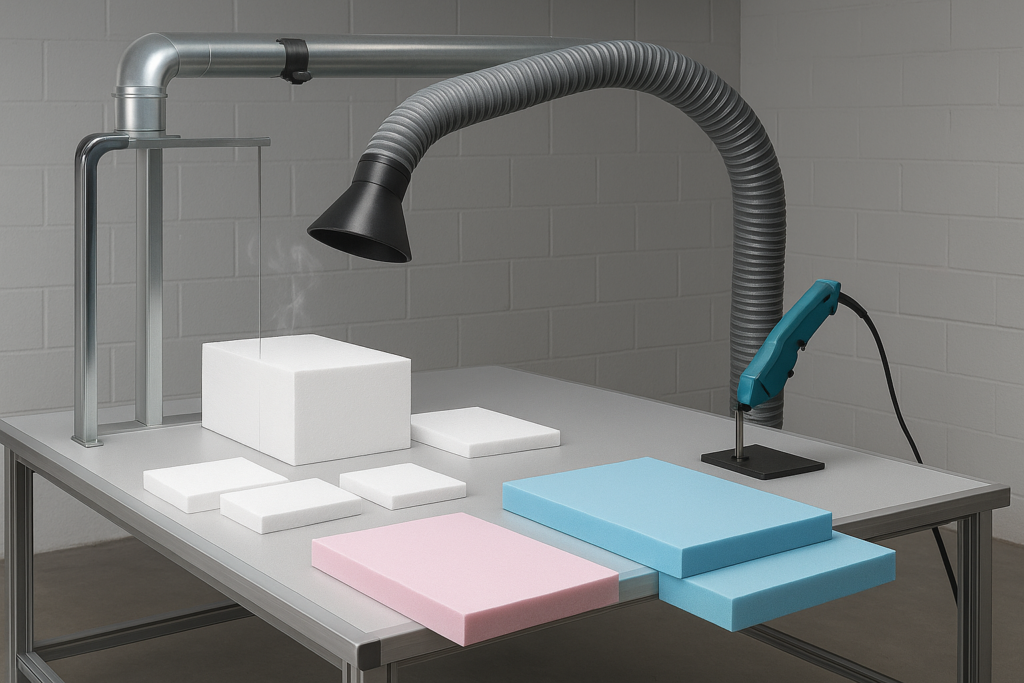
Scope & safety note: This guide focuses on handheld hot knives/thermocutter blades used on EPS and XPS. Treat it as practical process guidance—not a substitute for your facility’s EHS program. Always follow your material SDS, local regulations, and equipment manufacturer instructions, and validate ventilation and PPE with your safety team. Clean, low-smoke cutting isn’t just a “nice-to-have” for EPS and […]
كيف يعمل السكين الساخن للأقمشة الاصطناعية على تحسين العائد وكفاءة المعدات (OEE)
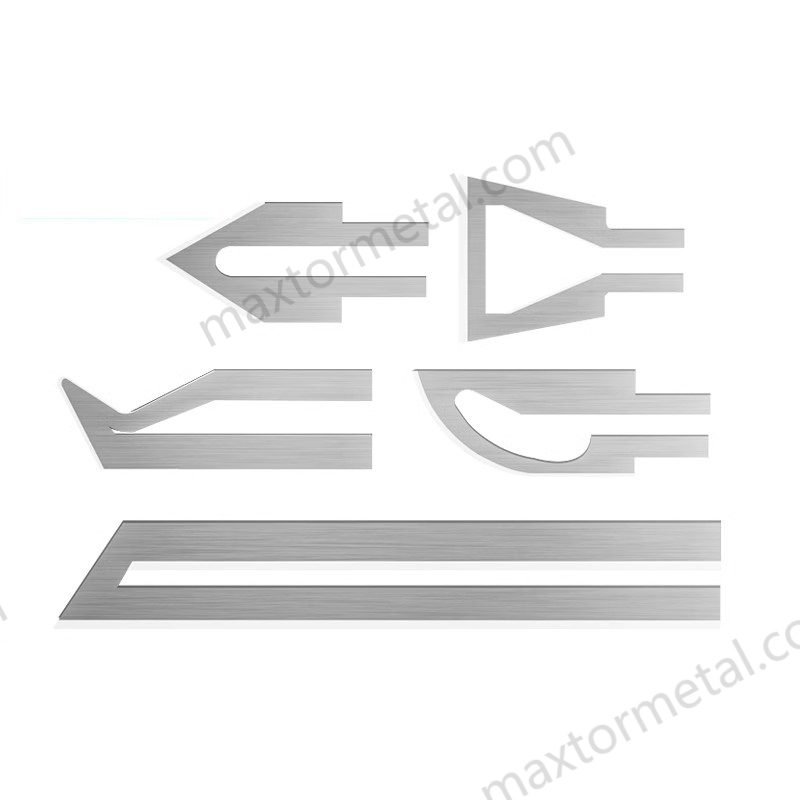
When you’re cutting nylon webbing, synthetic rope, or strap material at volume, “a little fray” isn’t cosmetic—it’s a process defect. Frayed ends trigger rework, slow assembly, and create inconsistent downstream quality checks. That adds up fast in yield loss and in OEE. A synthetic fabric hot knife (often called a thermocutter) solves the root issue […]
هندسة شفرات إعادة تدوير البلاستيك للقواطع الثابتة والمربعة
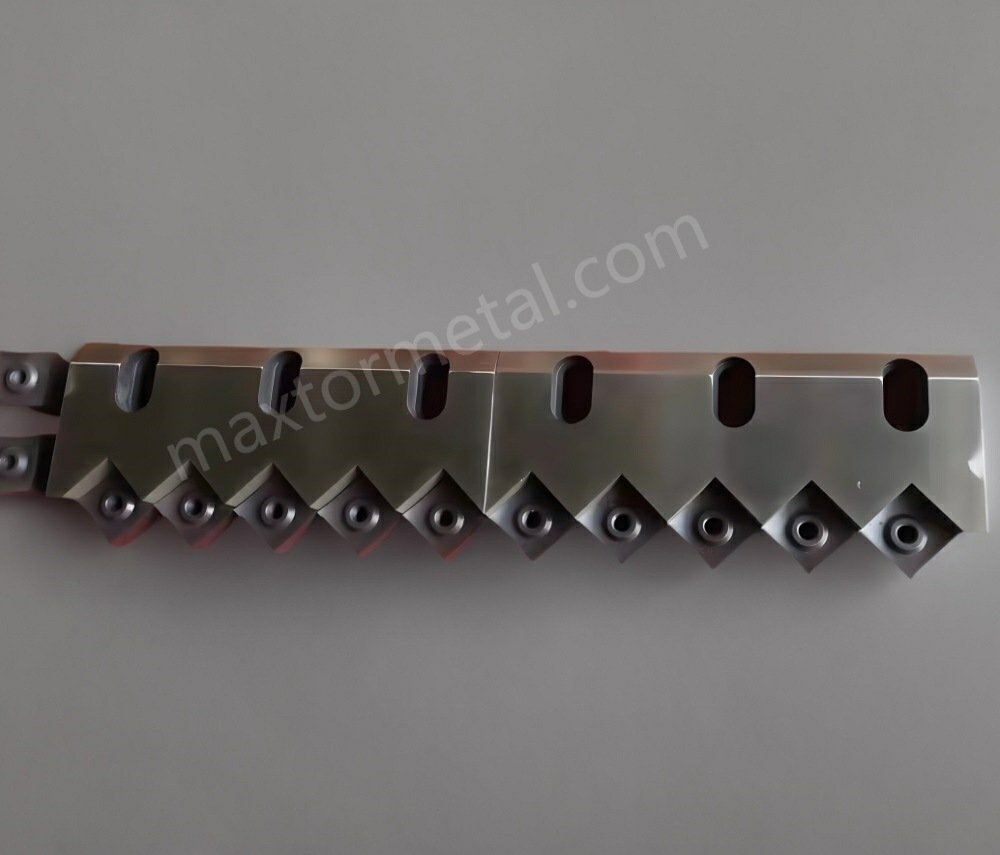
Blade geometry is one of the few levers you can pull on a single-shaft shredder that changes throughput, particle size consistency, energy per ton, wear life, and total cost of ownership (TCO)—without buying a new machine. But it only works if you treat geometry as a system: square cutters + fixed counter-knife + screen + cutting gap […]
تصفيح شفرات آلة التقطيع المصممة للتآكل الشديد
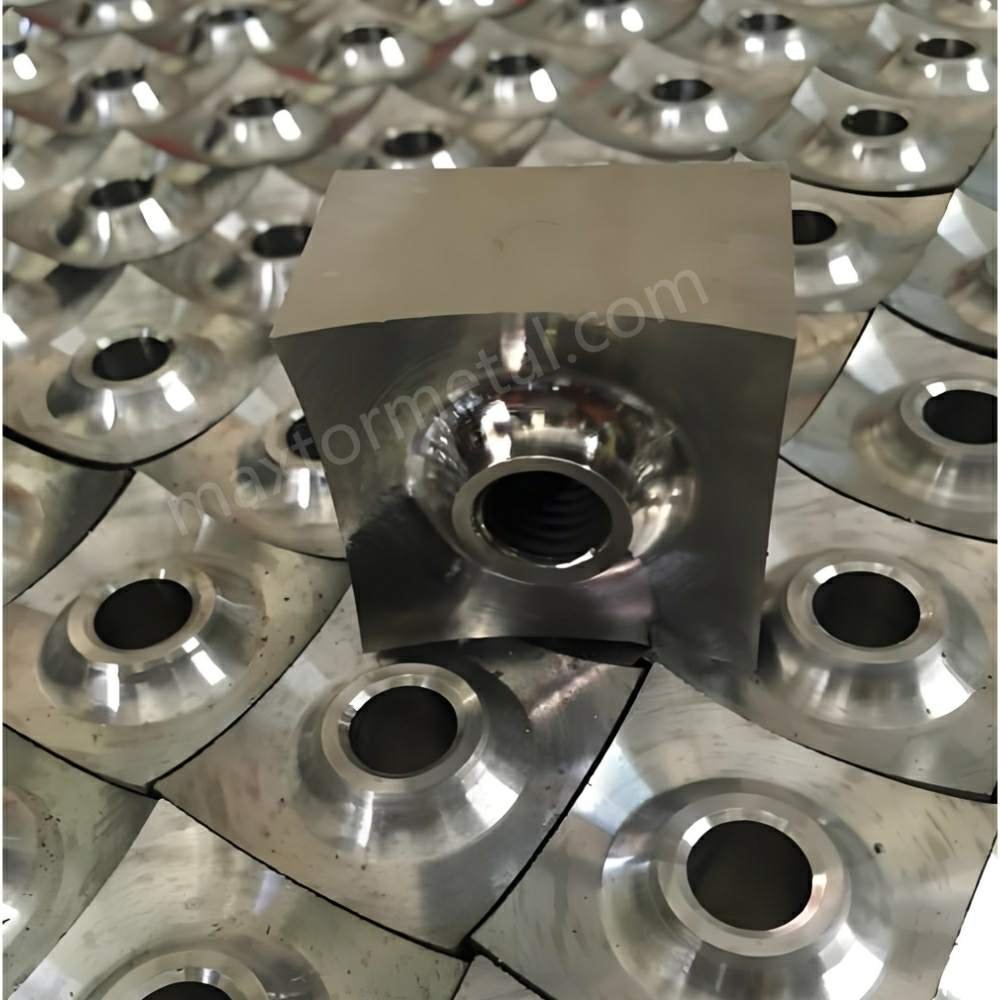
Mineral grit doesn’t “wear a knife” the way clean plastic does. It turns your cutting zone into a grinding zone: more sliding contact, more heat, and faster edge rounding. Once the edge rounds, you typically see the same cascade: higher torque variation, more vibration, wider particle-size scatter, and more stoppages. This is why abrasive duty […]
Maintaining Single-Shaft Shredder Blades Sharpen vs Replace

Single-shaft shredders don’t “slow down” randomly. Key Takeaway: If your team is stuck on the single-shaft shredder blades sharpen vs replace decision, don’t guess—measure clearance, verify torque, and trend amps/ton and PSD first. Most of the time, it’s the cutting system losing its geometry: rotor cutter blocks/tips and bed knives (stator) stop shearing cleanly, clearances drift, or […]
إعدادات تحمي شفرات إعادة التدوير في آلات تقطيع البلاستيك الكاشطة
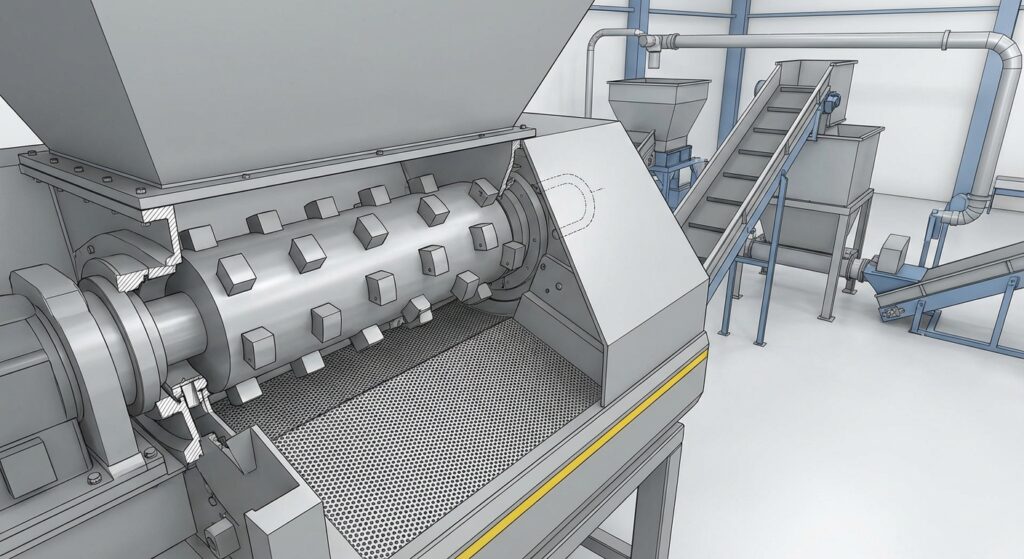
In abrasive plastic streams—glass-filled regrind, mineral-filled compounds, or bales that carry sand and grit—blade wear is rarely “just a materials problem.” In a single-shaft shredder, setup choices decide whether knives stay in steady cutting or spend their life heating, rubbing, and reverse-cycling. You control more levers than most plants document: feed rate uniformity, the speed/torque […]
شفرات آلة التقطيع المقعرة تعمل على تحسين الإنتاجية وتقليل الكيلوواط/ساعة لكل طن
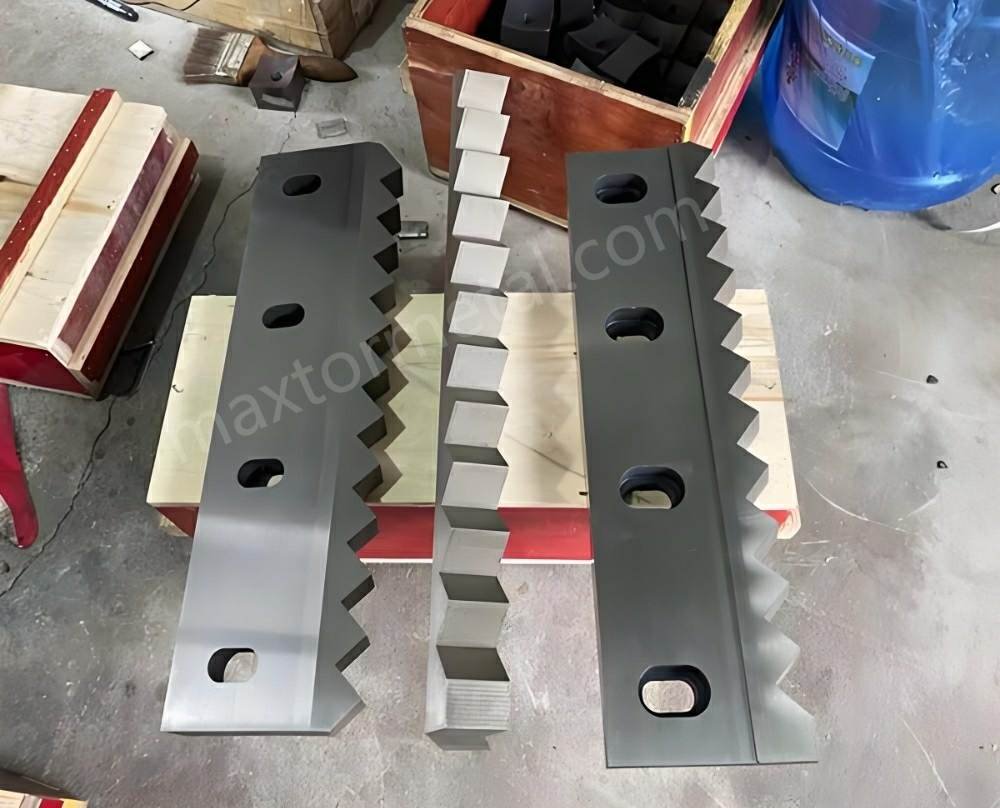
Concave shredder blades change the first contact between material and rotor in a single-shaft shredder. Instead of presenting a mostly flat edge that relies heavily on pusher force and friction to initiate a cut, a concave edge tends to create a more “hooking” engagement that encourages bite and controlled self-feeding. In the field, energy-per-ton and throughput gains […]
إعداد خلوص شفرات آلة التقطيع خطوة بخطوة للدوار والثابت (الستاتور)
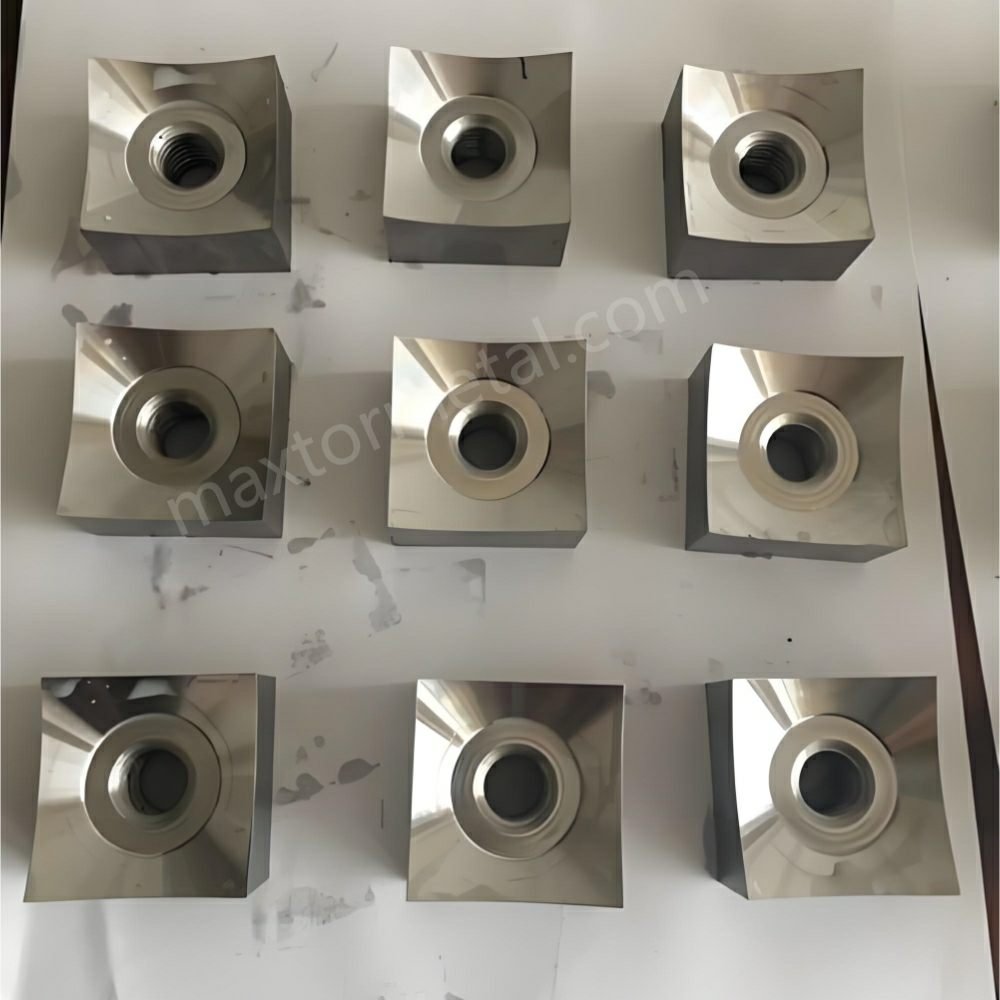
Shredder blade clearance (the gap between the rotor knives and the fixed bed/stator knife) is one of those settings that quietly controls everything you care about on a single-shaft shredder: cut quality and output size, throughput, energy draw, and how long your knives survive before they chip, roll, or start “polishing” instead of cutting. Set […]
شفرات بديلة لآلات التقطيع مصممة لحجم مخرجات مستقر
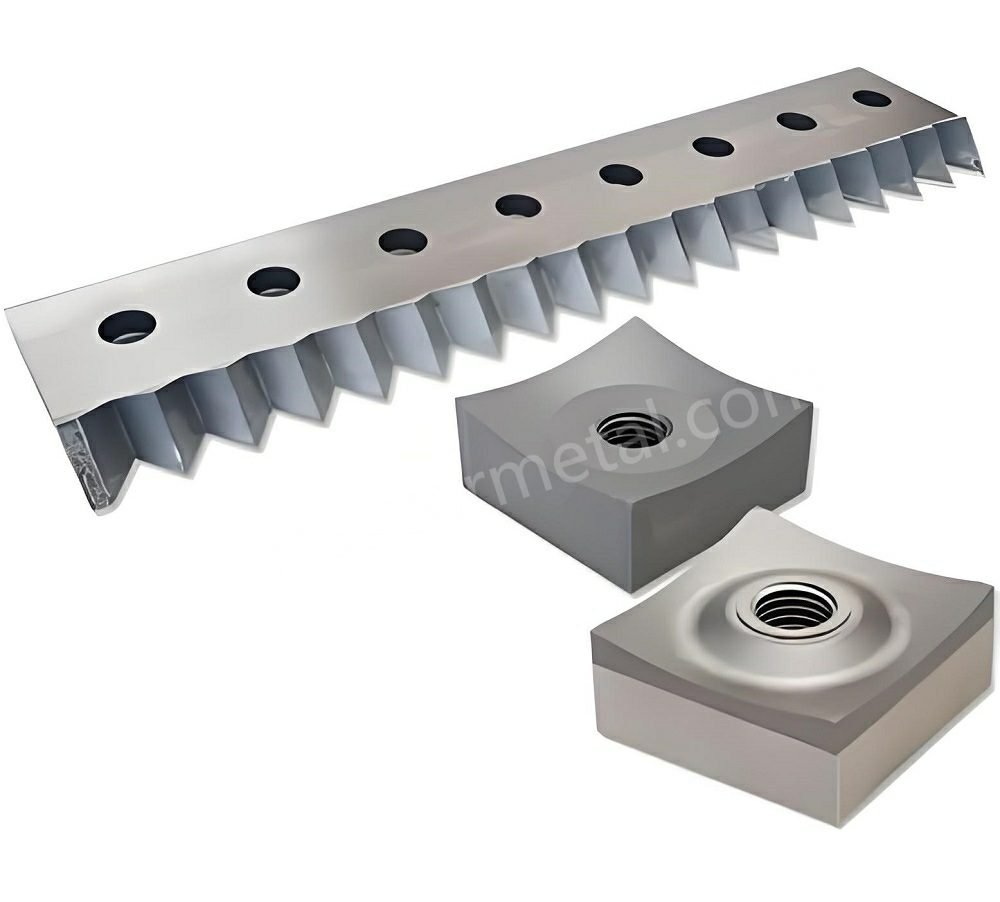
Stable output size isn’t a “nice to have.” It’s what protects three things you feel every shift: throughput, energy, and downstream quality. When particle size drifts, screens load unevenly, amps climb, and the next step (wash line, air classification, granulation, pelletizing, or sorting) starts fighting variation instead of running steady. Replacement Shredder Blades change more […]
تشرذم شفرات آلة التقطيع أحادية المحور: دليل استكشاف الأخطاء وإصلاحها لمنع فشل السكين المبكر

Unplanned downtime from chipping is rarely “bad luck.” In most single-shaft shredders, shredder blade chipping is a repeatable failure mode caused by a small number of controllable factors: feed contamination, incorrect clearance, poor seating/torque, misalignment, or a blade material/heat-treatment choice that doesn’t match the job. This guide is written for maintenance, process, and procurement teams running single-shaft […]

 English
  Spanish
  Italian
  French
  Portuguese
  Russian
  German
  Arabic
  Hindi
Hindi  Vietnamese
  Indonesian
  Japanese
  Korean